




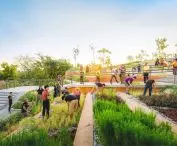

Thammasat Urban Rooftop Farm (TURF),
design: LANDPROCESS
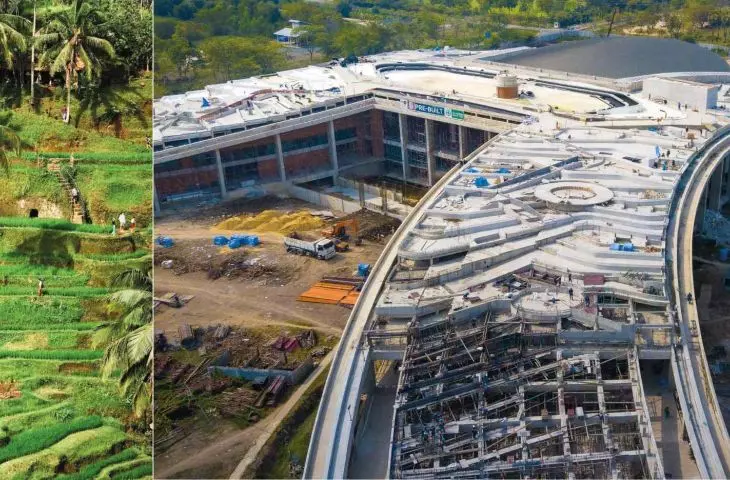
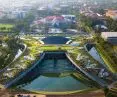
On the rooftop of Bangkok University stretches a landscape that resembles mountain rice fields. Thammasat Urban Rooftop Farm (TURF) is Asia's largest organic rooftop farm, designed by the {tag:Pracownie} studio. This project shows that architecture can not only protect from the sun and rain, but also... nourish, teach and inspire.
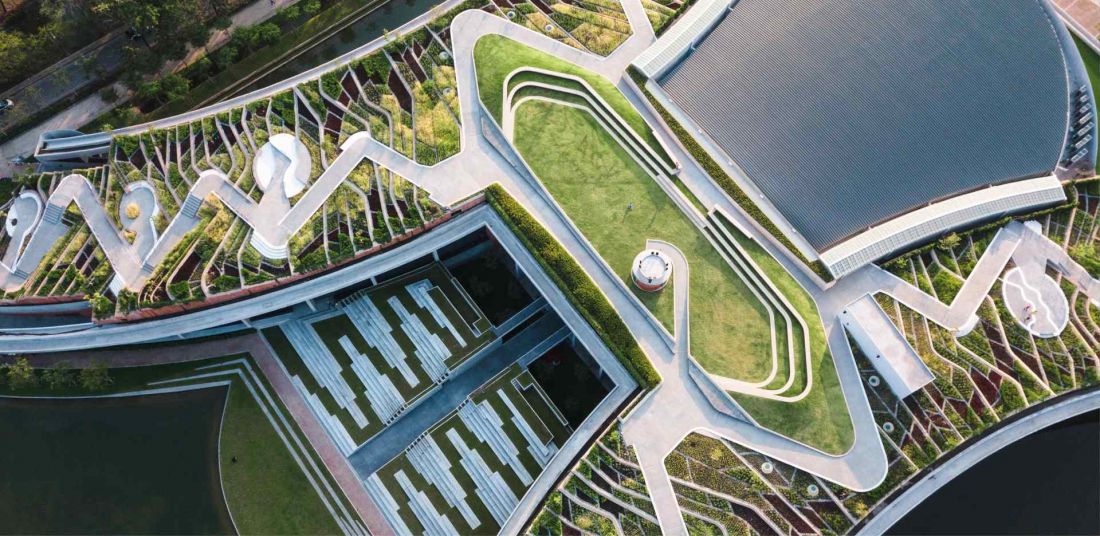
Asia's largest organic rooftop farm
Photo: Panoramic Studio / LANDPROCESS
The mound that became a symbol
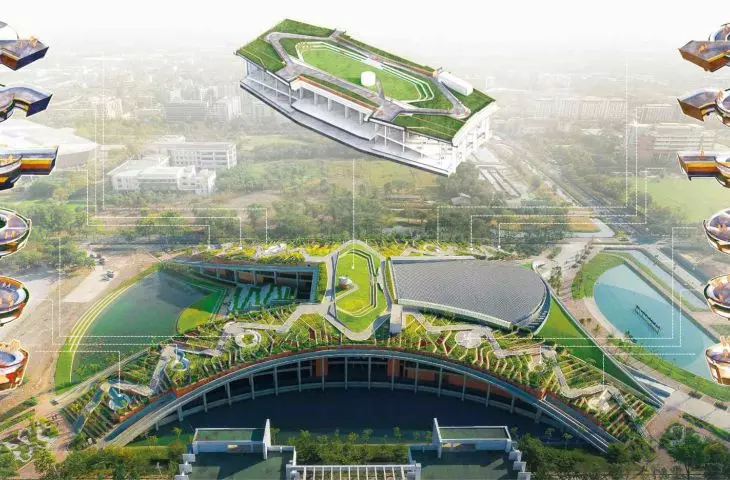
TURF's design was based on a simple but highly meaningful gesture - a roof formed into two arched, cascading wings, with a mound in the middle. This form has a deep meaning. It refers to the figure of the university's former rector, Dr. Puey Ungphakorn. In Thai, his name means "mound under the tree" or "nourishment" - a metaphor for the place where the earth gives life.
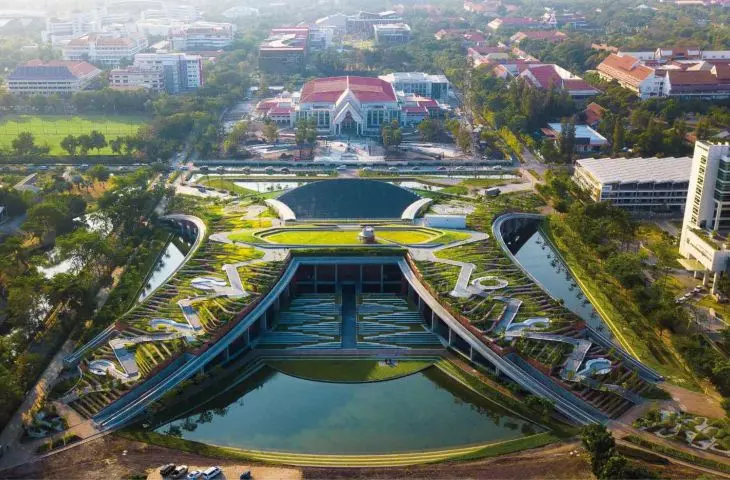
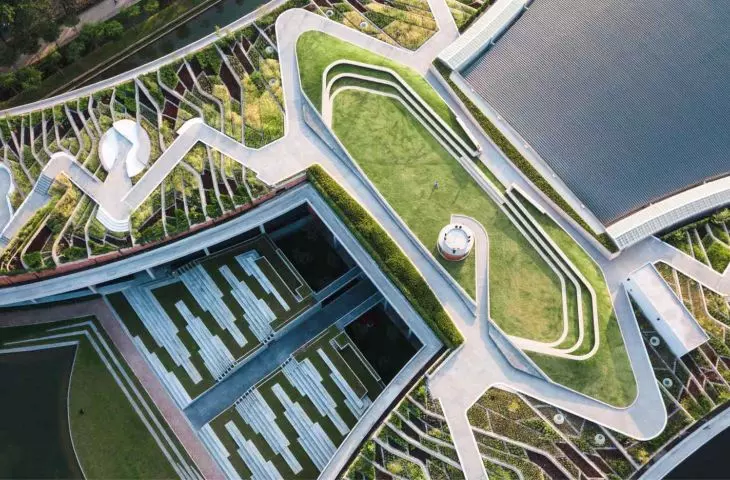
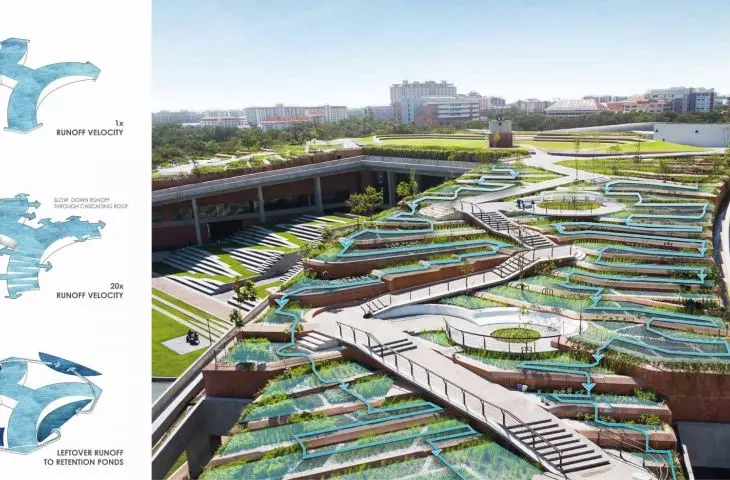
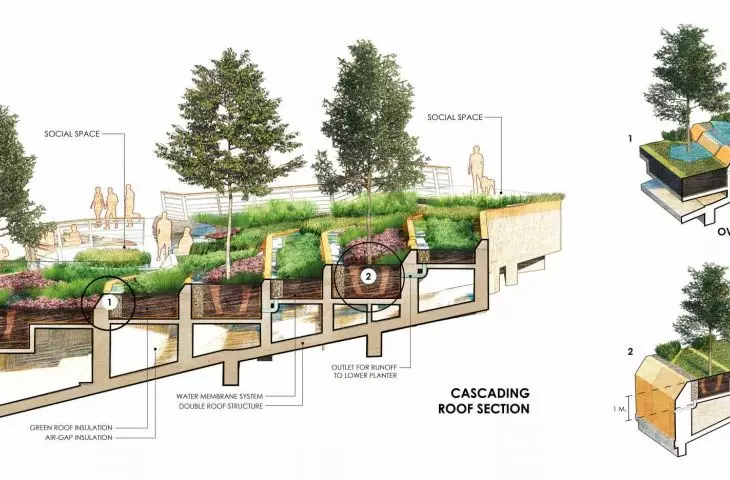
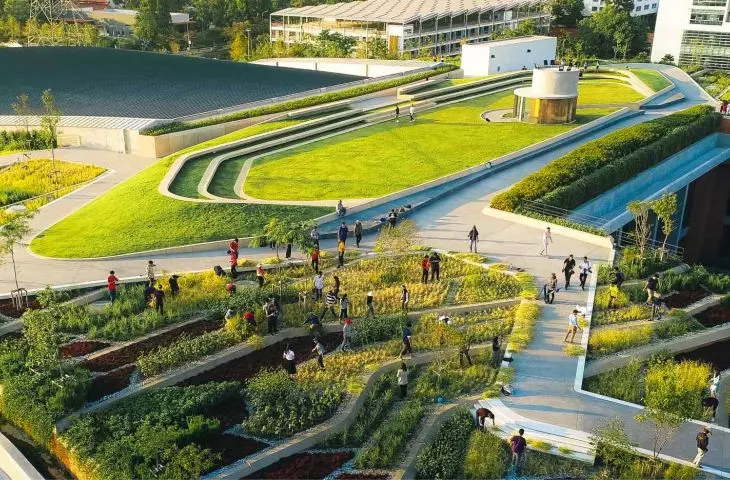
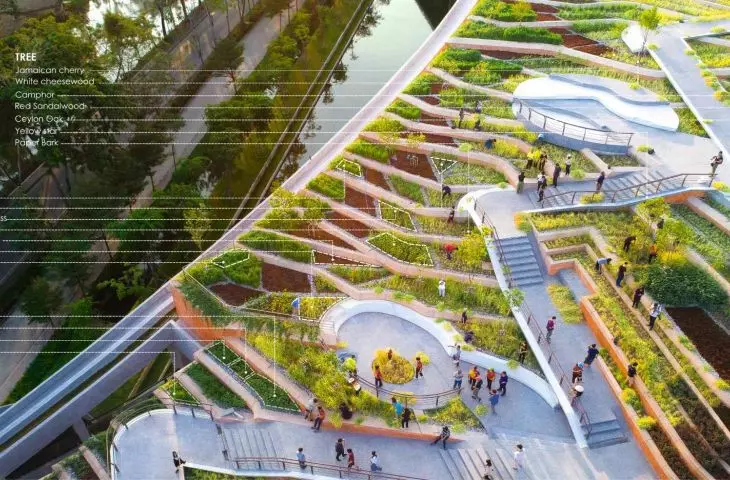
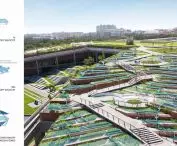
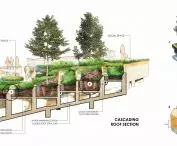
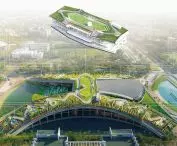
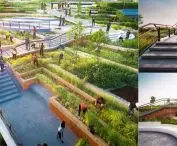
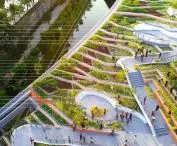
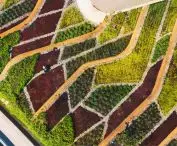
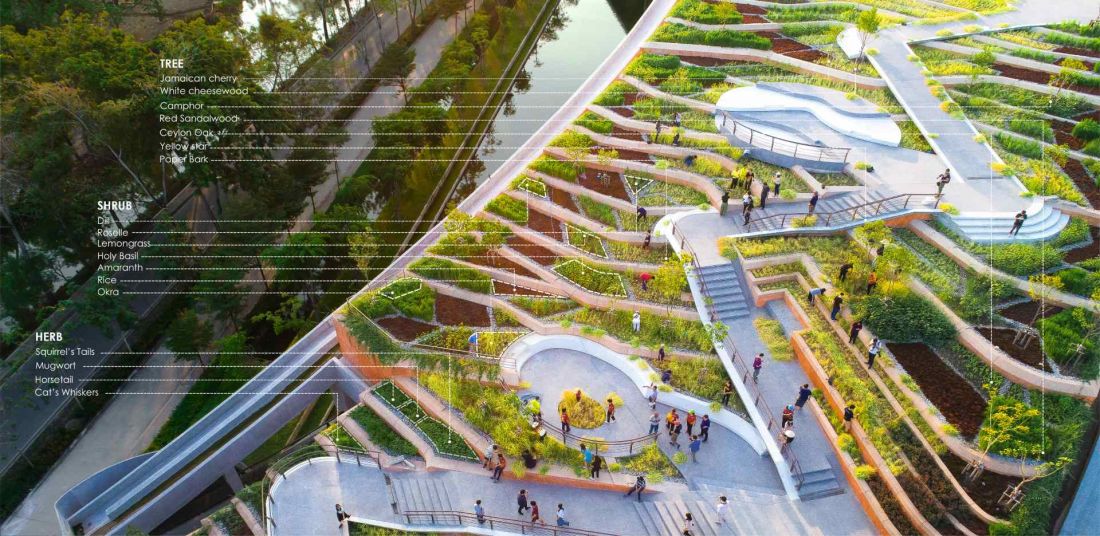
The cascading roof structure is not just an homage to the past. It's a thoughtful system that collects, filters and slows down rainwater runoff as much as 20 times more effectively than concrete. Water from rainfall travels down zigzag terraces, irrigating successive levels of crops before it reaches four retention tanks. It's a natural circulation - simple, logical, ecological. Looking from a bird's eye view, the roof resembles a green amphitheater, whose rows form strips of vegetation. Up close - it's a living topography: full of smells, sounds and micro-worlds. The lump of the building blends into the landscape without dominating it. It's as if the architecture gives way to nature - and benefits from it.
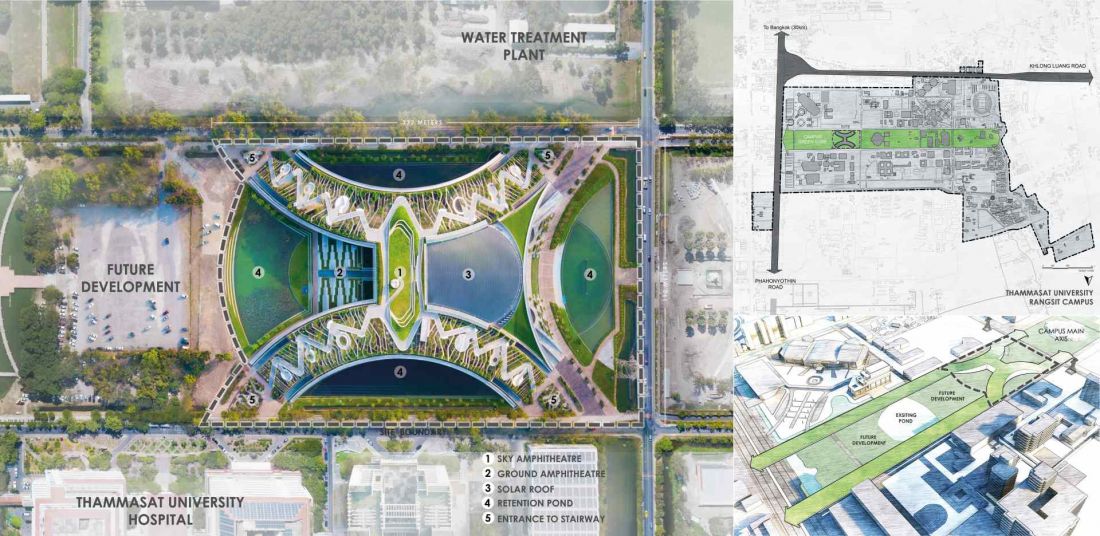
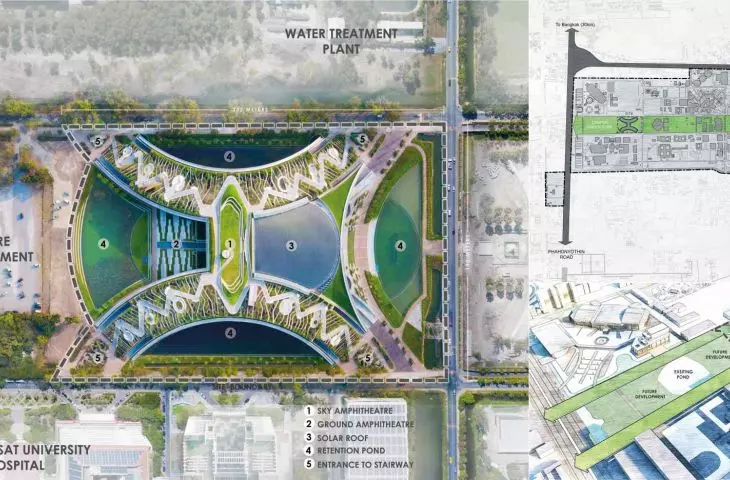
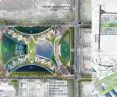
Organic rooftop farm in Thailand - floor plan and site plan.
photo by LANDPROCESS
A city that can grow again
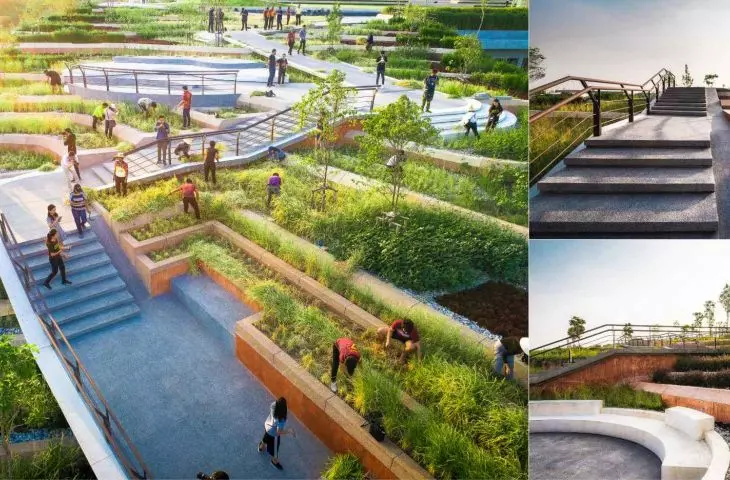
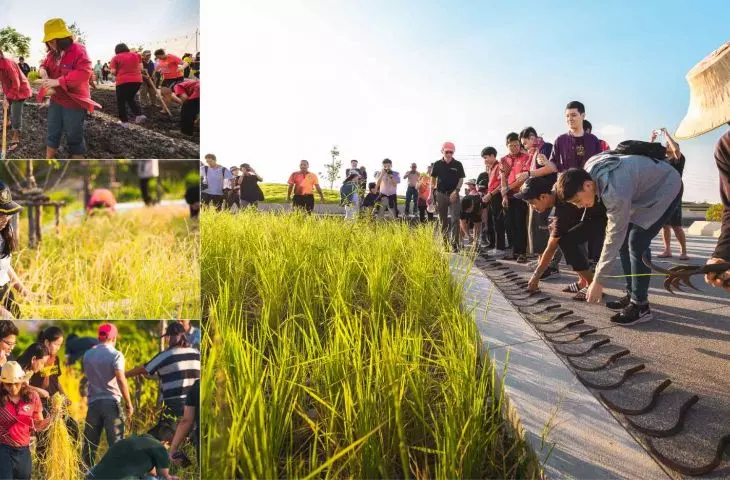
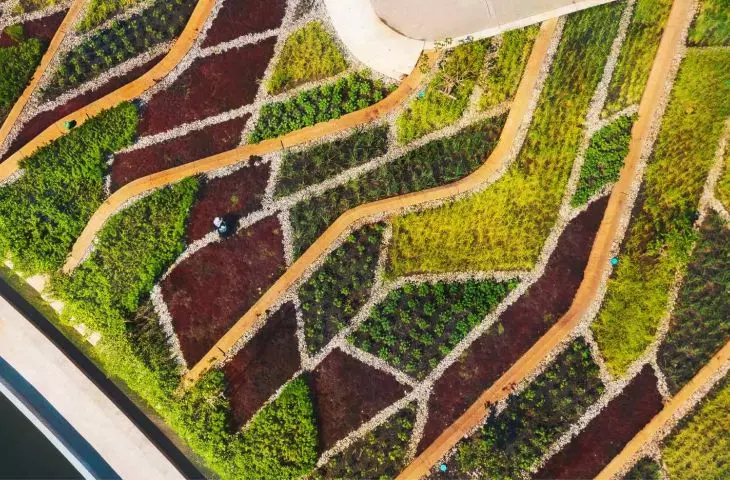
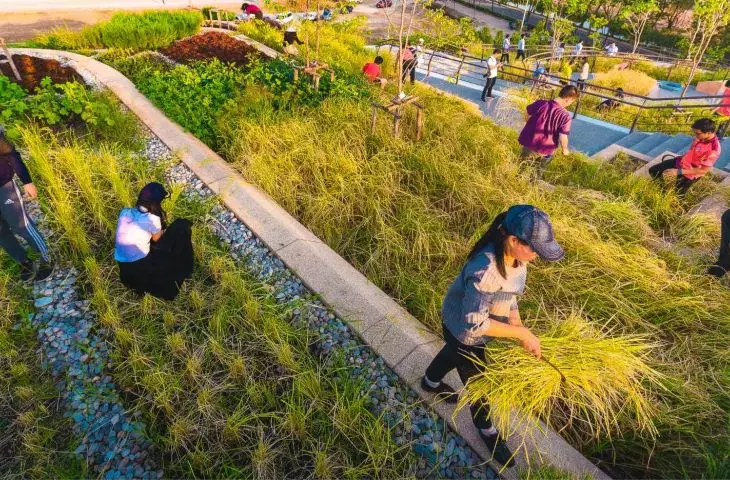
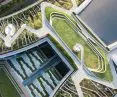
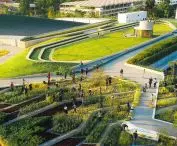
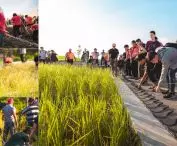
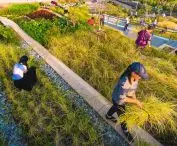
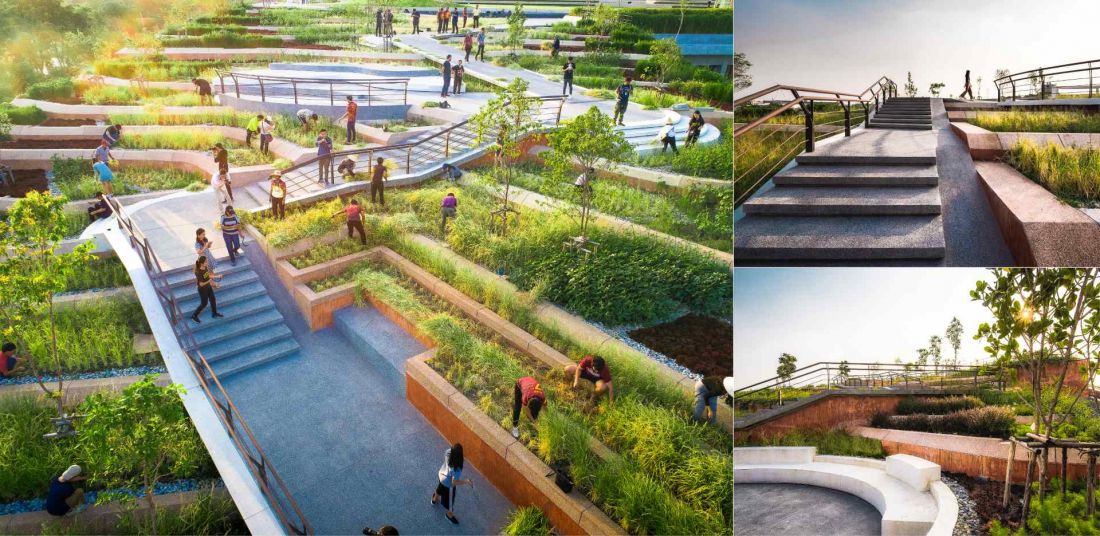
The farm grows vegetables, herbs and rice - all using organic methods. The crops go to university cafeterias, and students learn what sustainable food production looks like in practice. It's a lesson in humility toward the land, but also an example that urban space can be productive, not just utilitarian.
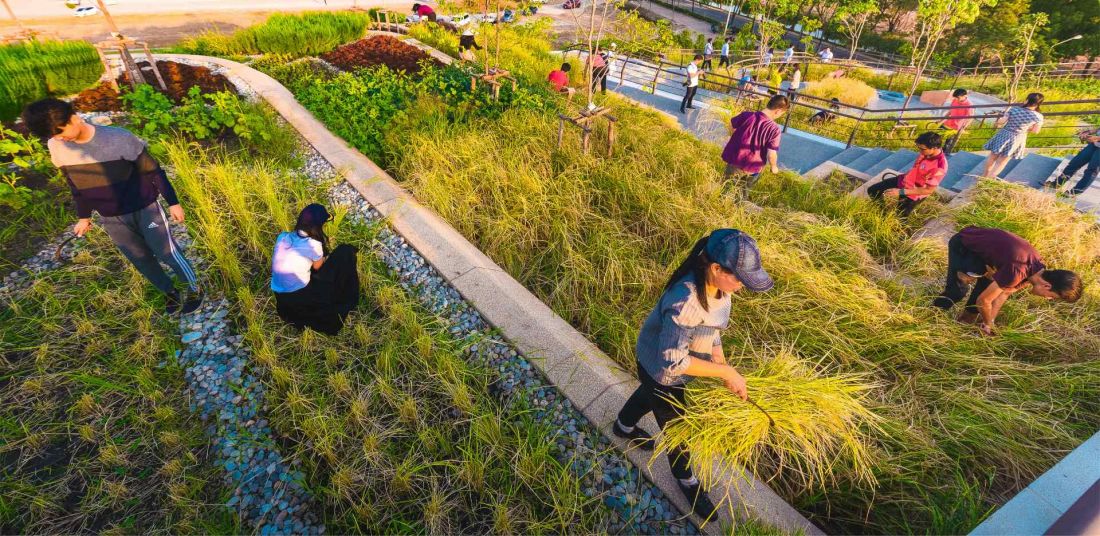
Vegetables, herbs and rice are grown on the farm - all using organic methods
photo: Panoramic Studio / LANDPROCESS
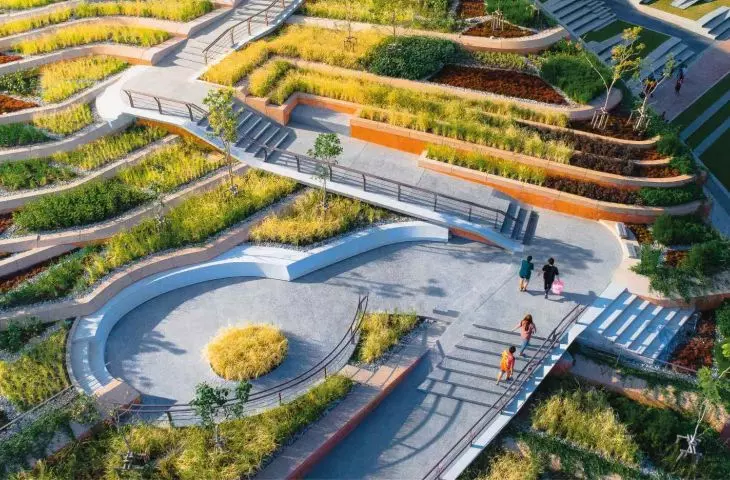
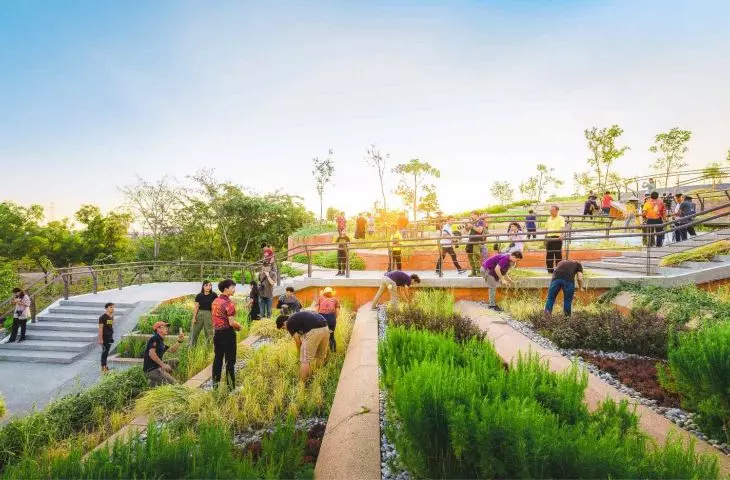
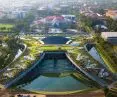
TURF has also become a space for environmental education. Workshops and classes are held among the terraces, and anyone who climbs to the roof can see how nature interacts with architecture. Instead of a concrete horizon - a view of green terraces and Bangkok in the background. It's a daily contact with what is so often lost in the city: the cycle of growth, the work of hands, attentiveness.
Organic rooftop farm in Thailand - a bird's eye view.
Photo: Panoramic Studio / LANDPROCESS
Energy in circulation, not in excess
Sustainability at TURF is not just a slogan. On top of the roof are photovoltaic panels that produce up to 500,000 watts per hour. They power irrigation and lighting systems, as well as, in part, the building below the farm. Organic waste from the campus goes into composters to return to the fields as fertilizer. This is an example of an urban closed loop: water, energy and matter circulate in a rhythm that resembles natural processes. There is no waste here - everything that is created has a further life.
Organic rooftop farm in Thailand
Photo: Panoramic Studio / LANDPROCESS / Dsignsomething
A space that brings people together
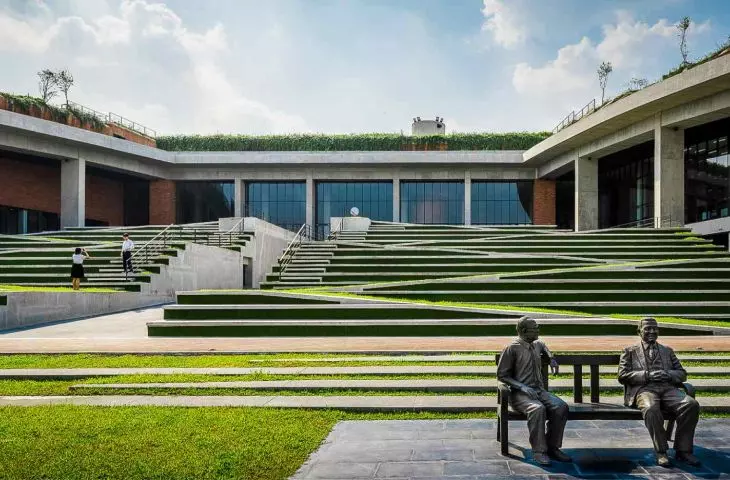
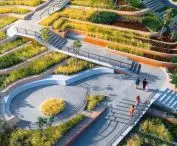
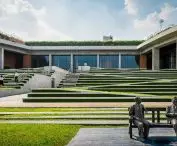
On one of the highest terraces is an amphitheater with a panoramic view of Bangkok. This is the heart of the project - a place for meetings, concerts and activities. In the shade of the solar panels, there are lectures on sustainability, film screenings and communal meals. TURF is thus not just an infrastructure, but a new urban agora - a space that combines function, education and community. In a world where cities are increasingly divisive, this farm is a reminder that public space can be a tool for collaboration, not competition.
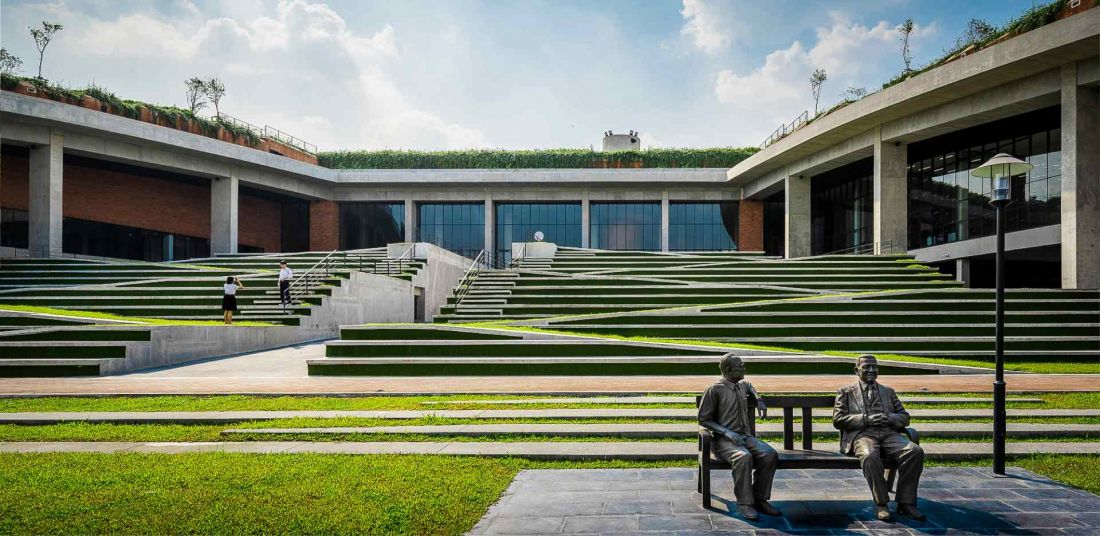
An organic rooftop farm in Thailand - this project shows that architecture can not only protect from sun and rain, but also... nourish, educate and inspire
photo: Dsignsomething / Jinnawat Borihankijanan
LANDPROCESS - where the land meets the city
The Bangkok office behind the project is LANDPROCESS, founded in 2011 by Kotchakorn Voraakhom - a landscape architect known for projects that combine nature with urban infrastructure. Working in a city threatened by flooding, the office focuses on creating climate-resilient landscapes: green roofs, parks, wetlands and urban farms. LANDPROCESS's philosophy is based on the idea of process - understood as a dialogue between man, land and place. Instead of imposing a form on nature, designers seek to cooperate with it. In the case of TURF, this collaboration has taken a literal form: a roof that breathes, feeds and provides shelter.
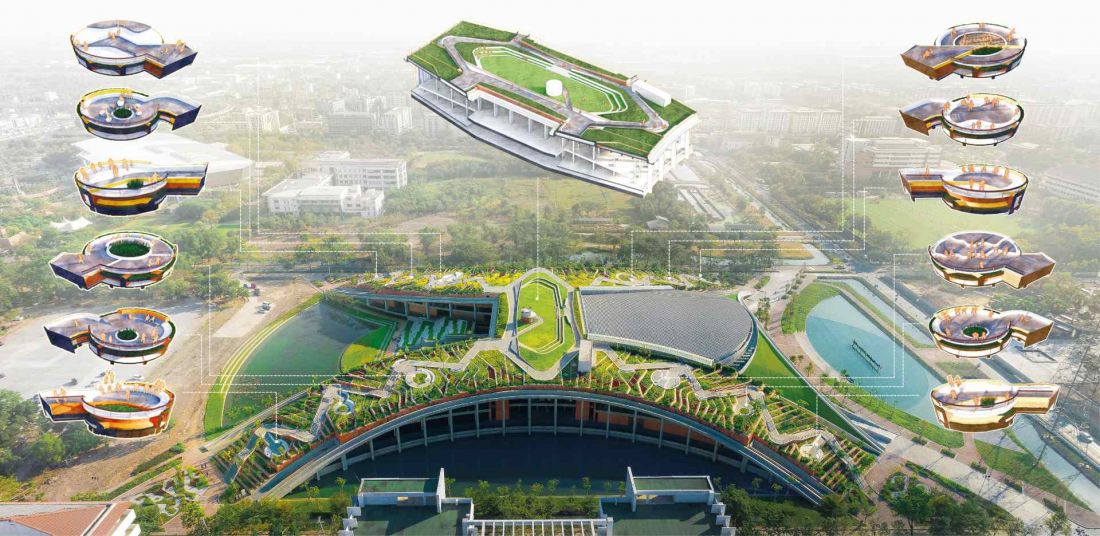
An organic rooftop farm in Thailand - a diagram of the farm's individual spaces
photo: Panoramic Studio / LANDPROCESS
Cities of the future will be green - or not at all
Thammasat Urban Rooftop Farm is not only an architectural project, but also a vision of the future in which the city is no longer the antagonist of nature. At a time when the urban landscape is increasingly becoming a battlefield for water, shade and oxygen, such a project shows an alternative - a city capable of coexisting with the ecosystem. TURF teaches that sustainability is not a fad or a luxury. It is a necessity - and an opportunity. Thanks to such realizations, architecture regains its original meaning: creating places where one can live in harmony with nature, not against it. In a world where every square meter in the city comes at a price, Thammasat Urban Rooftop Farm is a reminder that the value of space is not always measured in money. Sometimes what is most valuable grows where no one expects it - on the roof.
Elaborated: Anastazja Gibas
Illustrations provided courtesy of LANDPROCESS studio .