




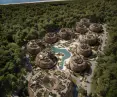

As many as 500 units will be built near the valuable "Bird Paradise" nature reserve, just half a kilometer from the sea. Developer Dekpol is planning nine buildings, including investment apartments and a hotel, on land left over from the former Alma 2 resort in Gdansk Sobieszewo.
Investment pressure in coastal areas is not slowing down, raising questions about the limits of development and responsibility for common space. In Gdansk, 500 meters from the beach, developer Dekpol plans to erect as many as seven service and apartment buildings housing some 500 investment apartments. There will also be a service facility with a restaurant and a hotel building with infrastructure and a wellness zone.
Great construction near the habitat of 200 species of birds
The grandly conceived project called Silva Maris will be built near the "Bird Paradise" nature reserve. It is located on Sobieszewska Island, a part of Gdansk that is famous for its less crowded beaches and wildlife. The "Bird Paradise" reserve is a habitat for more than 200 species of birds, including the bald eagle. In this easternmost district of the city, hitherto associated with natural areas (almost a thousand hectares of forests grow here), new development is coming.
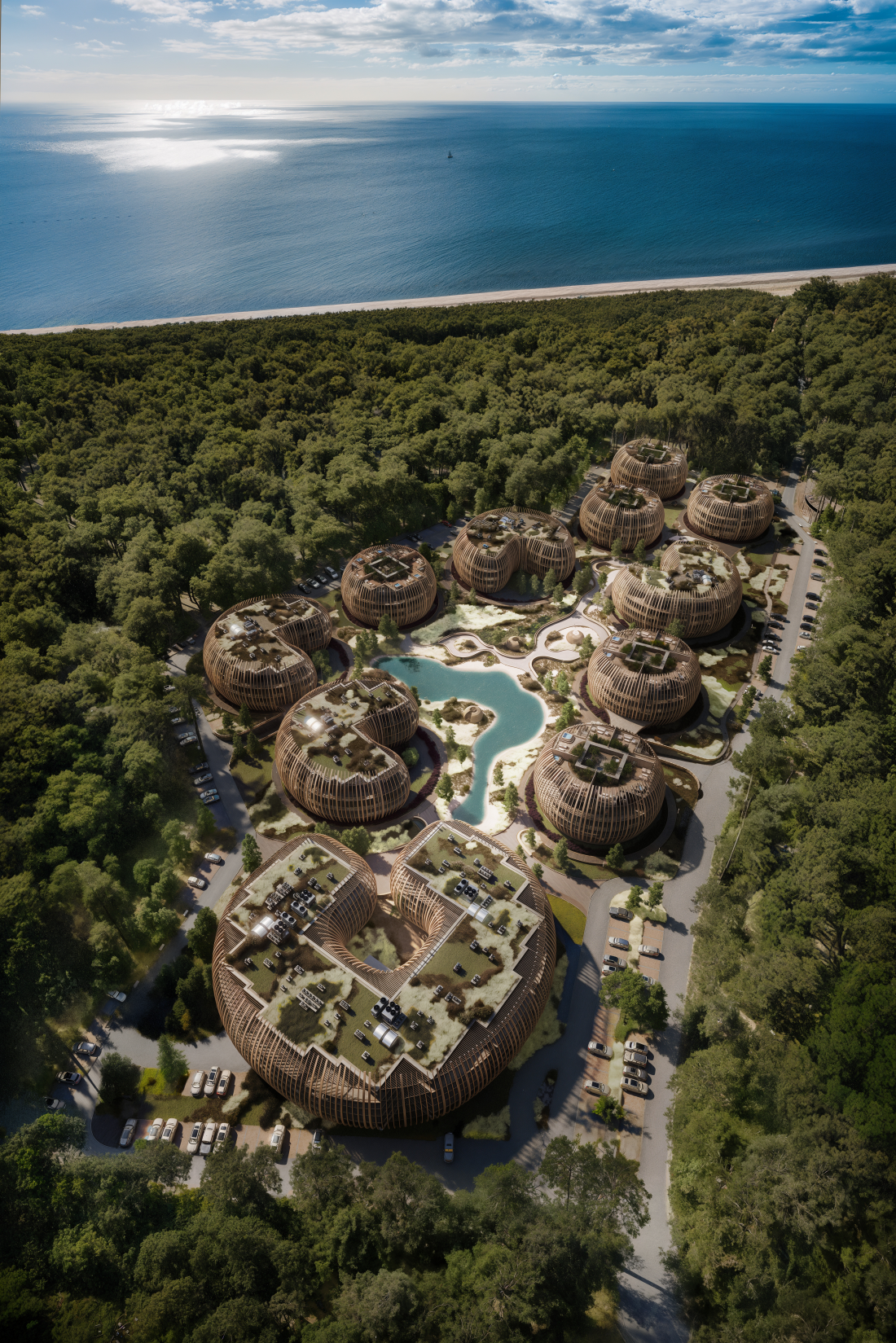
Previously the owner of the site, located just 500 meters from the sea, was the Military Property Agency, and until 2015 the site was home to the "Alma 2" resort consisting of ten buildings. When the lease agreement ended, the Agency sold the attractive site: in 2017 the plot was purchased for almost PLN 8 million by developer Dekpol.
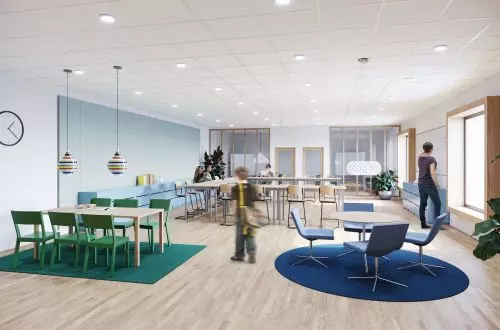
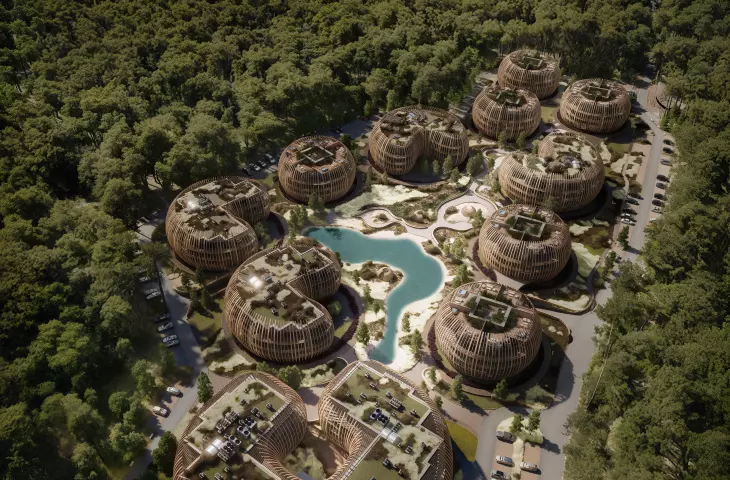
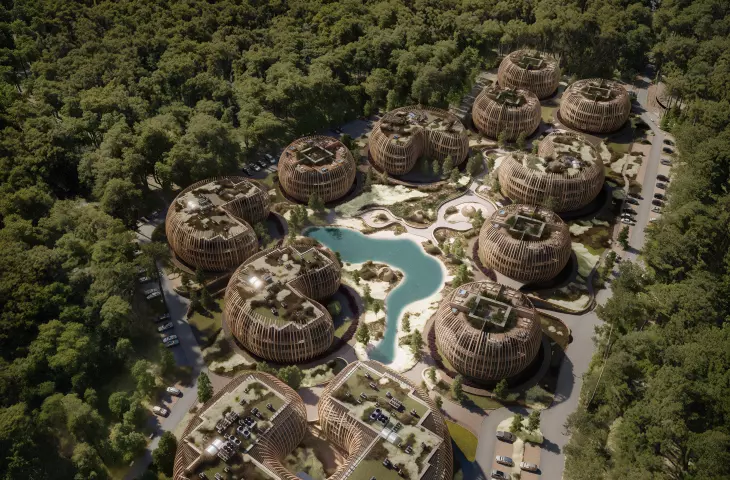
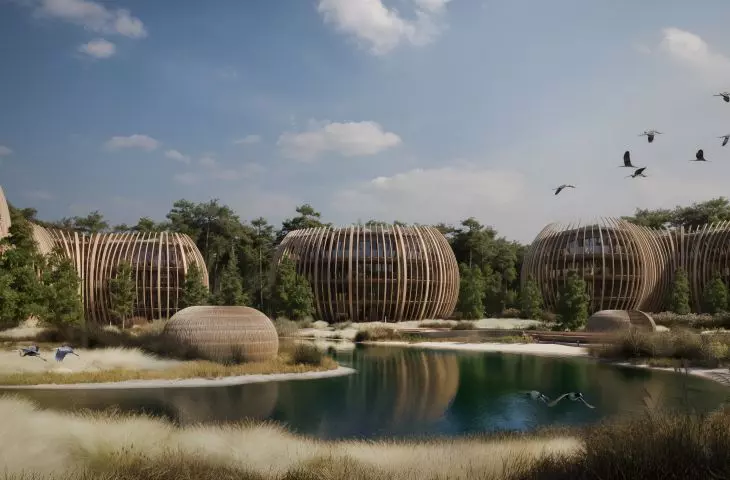
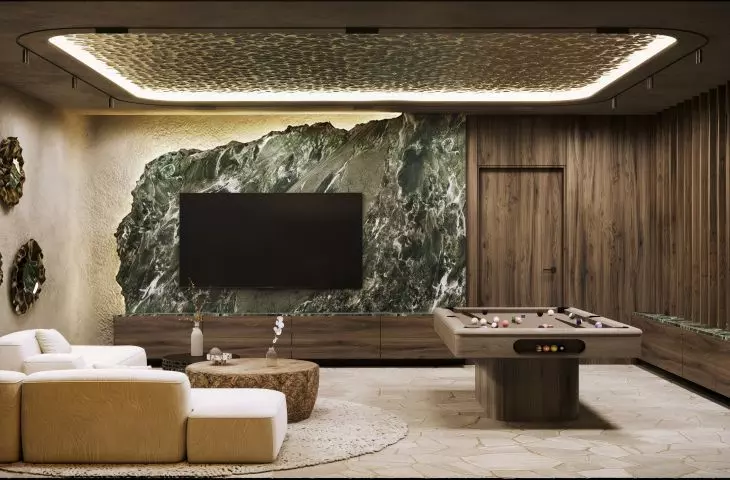
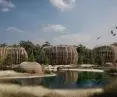
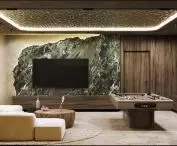
In its promotional materials, the investor describes that the valuable "Bird Paradise" reserve was to be the inspiration for the investment: the blocks refer to the form of birds' nests. The architect of the volume and interiors is Paulina Czurak-Czapiewska and the Ideograf studio.
Investor: "Biophilic Architecture".
Biophilic architecture is based on designing spaces in close relationship with their surroundings - so as to enhance human contact with nature through light, materials and landscape. In practice, this means moving away from dominant, imposing form to solutions that promote regeneration and everyday comfort. The space between the buildings was largely given over to local nature, introducing new dunes, coastal grasses and pine trees, thus preserving the biological continuity of the area, Dekpol argues.
The developer states that it will use wood, stone and glass for construction - kept in the colors of sand, water and vegetation.
The buildings are arranged irregularly, evoking an association with nests hidden among trees and seaside grasses, and the wooden panels also serve a protective function, reducing the risk of birds colliding with the glazing, Dekpol reports. And it adds that the development will include green roofs, rain gardens to collect rainwater and charging areas for electric vehicles.
Dekpol reports that the biggest challenge flowing from the environmental decision was to reconcile the scale of the investment with the highly sensitive natural context of Sobieszewska Island.
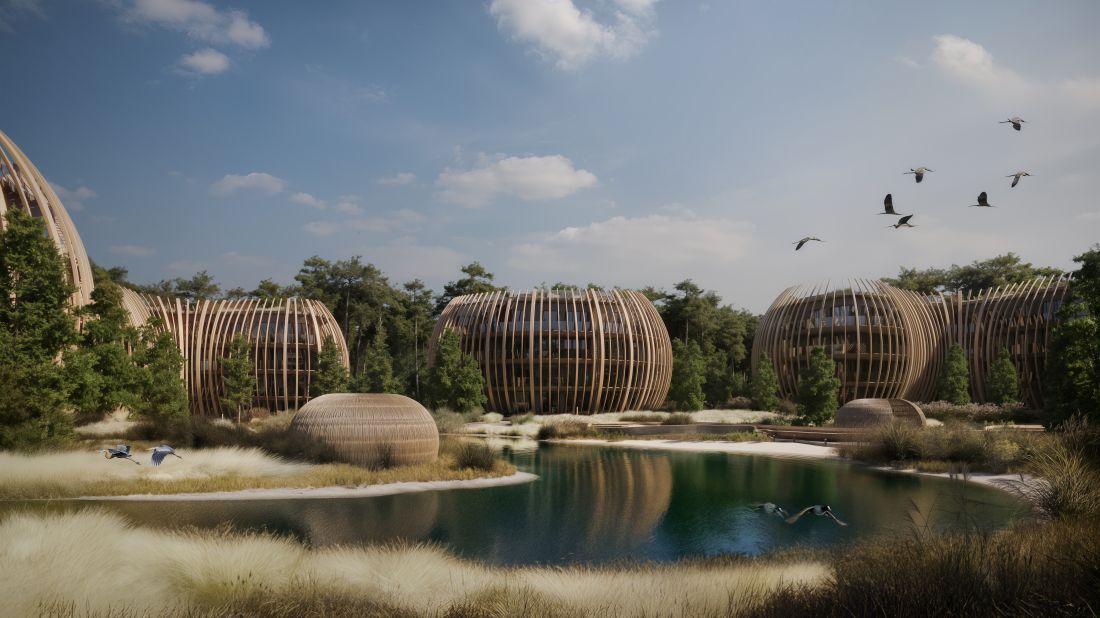
The project had to take into account, among other things, the white-tailed eagle protection zone, protection of birds from collisions with glazing, migration of amphibians and small mammals, and high groundwater levels This was solved by limiting access from the side of the white-tailed eagle protection zone, designing a public walkway towards the beach, using low-reflective glass and glazing shielding elements, planning places for bats, passages for small animals and special solutions in storm drainage manholes, the investor notes.
The grand project is to be carried out in stages, with the investment starting as early as the second quarter of 2026 and ending in the first quarter of 2028.
The new buildings are to range from one to five stories. The development of the former Alma 2 holiday resort located here previously reached two stories above ground.