




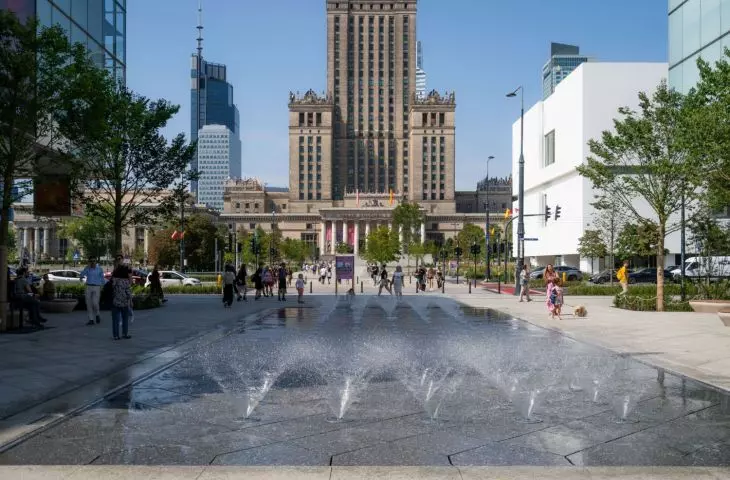
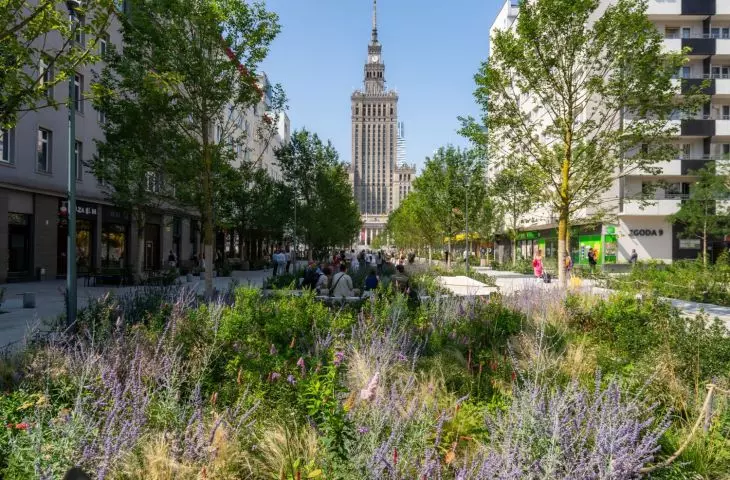
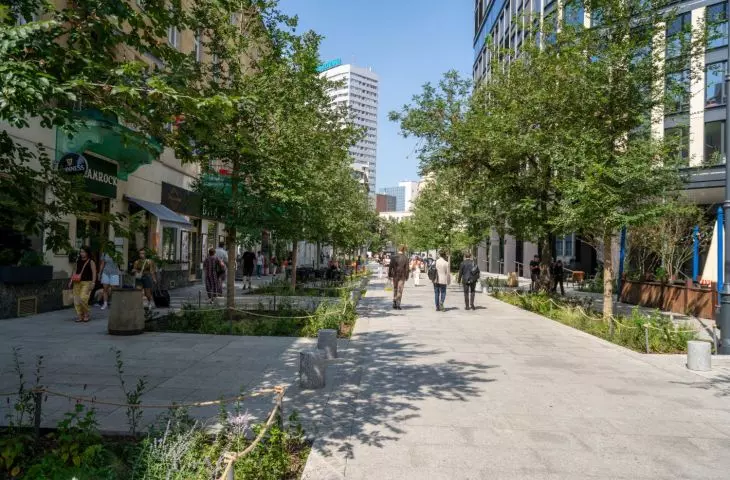
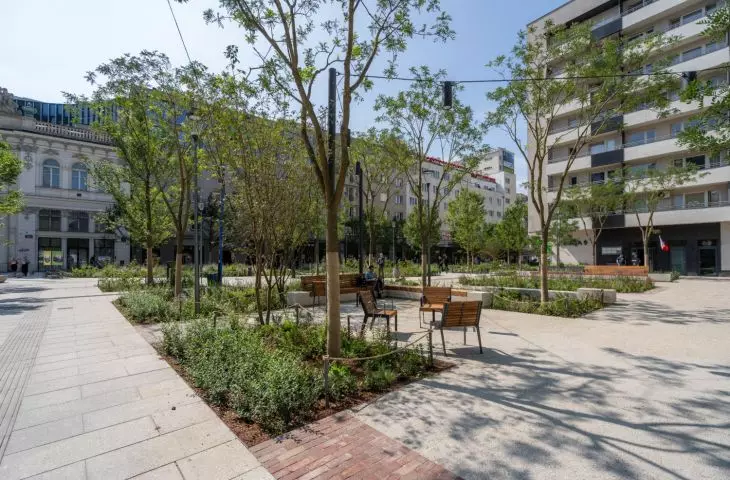

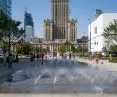
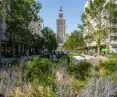
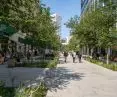
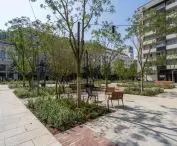
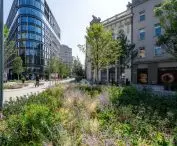

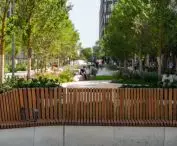
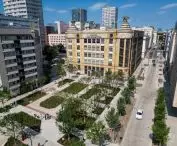

The Złota-Zgoda Quarter has officially opened! It used to be a concrete maze, with endless rows of parked cars and barriers protecting pedestrians from vehicles. Today, the new Złota and Zgoda streets in Warsaw are places full of greenery, water, and residents enjoying some downtime. What else remains to be done as part of the New Center of Warsaw?
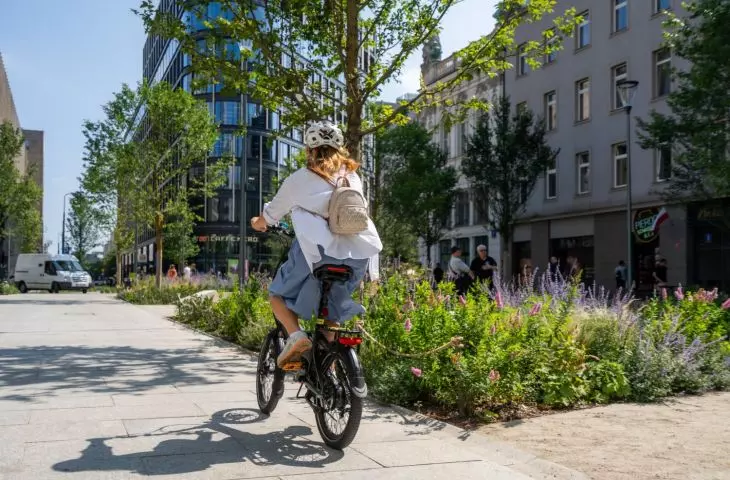
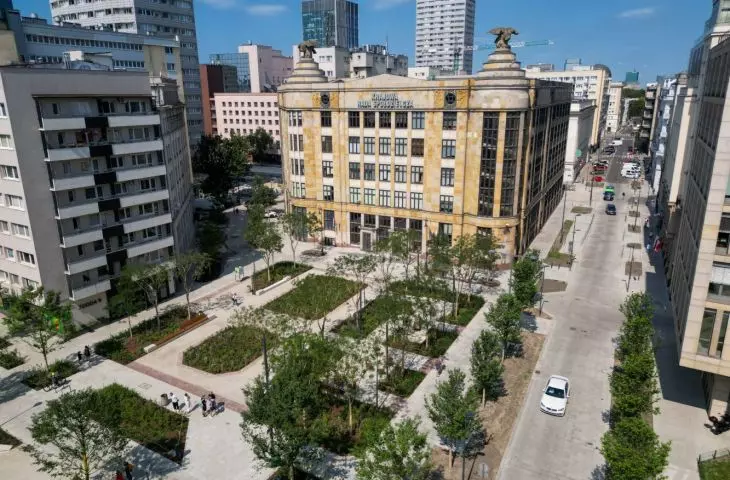
The endless parking lots and cars circling between them have disappeared from Zgoda and Złota Streets—now pedestrians and cyclists reign supreme there. As part of the project, a comprehensive redevelopment of the block between Złota and Zgoda Streets was carried out; the interventions also include sections of Jasna and Sienkiewicza Streets. The project was based on a concept with which the RS Architektura studio won a competition in 2021. On August 3, 2026, a ceremonial opening was held for the green corridor, which connected further sections of Warsaw’s New Center.
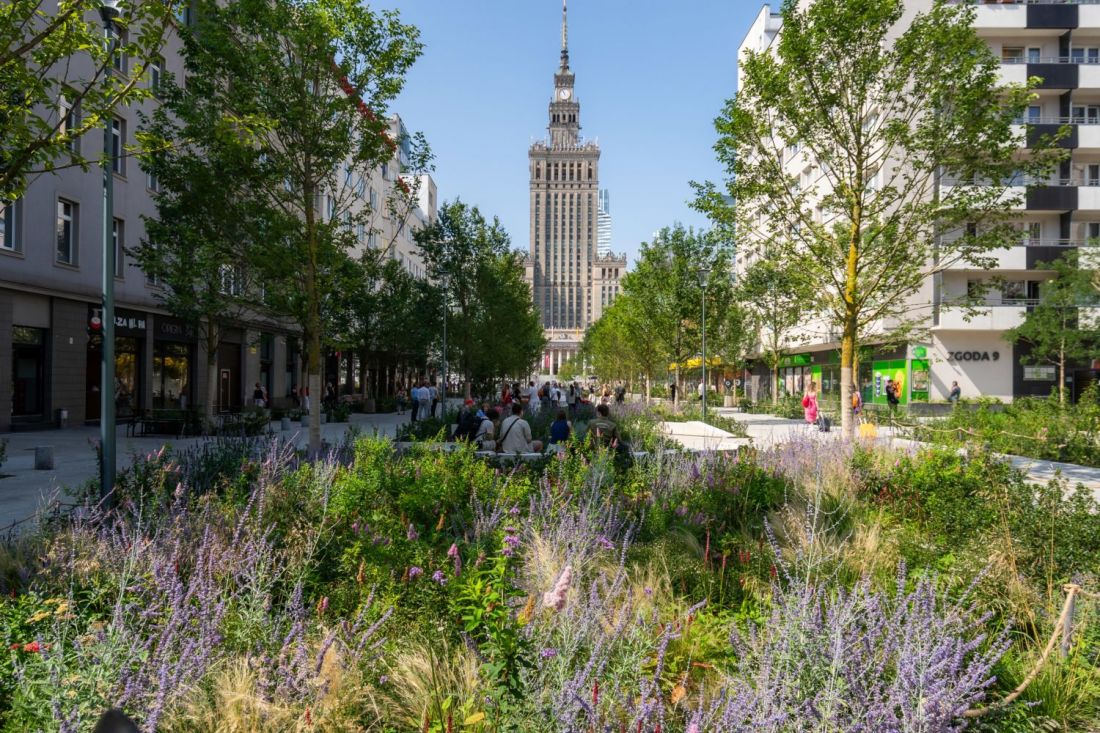
Złota and Zgoda Streets in Warsaw after the renovations
Photo used with permission © ZDM Warsaw
200 new trees and 30 ares of green space on Złota Street
As with other projects under the New Center of Warsaw initiative, the most important measure on Złota Street was the removal of concrete and the replacement of hard, impermeable surfaces with greenery:
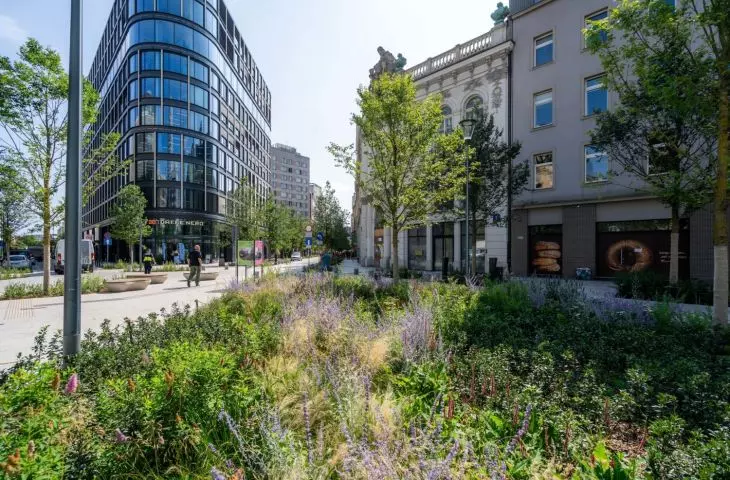
One of the most visible results of the redevelopment is the new green space. In the Złota-Zgoda-Jasna-Sienkiewicza block, 200 trees were planted and nearly 3,000 square meters of green space featuring shrubs and perennials were created. The plantings are supported by an automatic irrigation system that uses water collected in underground retention tanks. New squares, flower beds, and tree-lined avenues improve the aesthetics of the space, but above all, they help lower temperatures in the city center, reduce the urban heat island effect, and retain stormwater.
— according to the City of Warsaw.
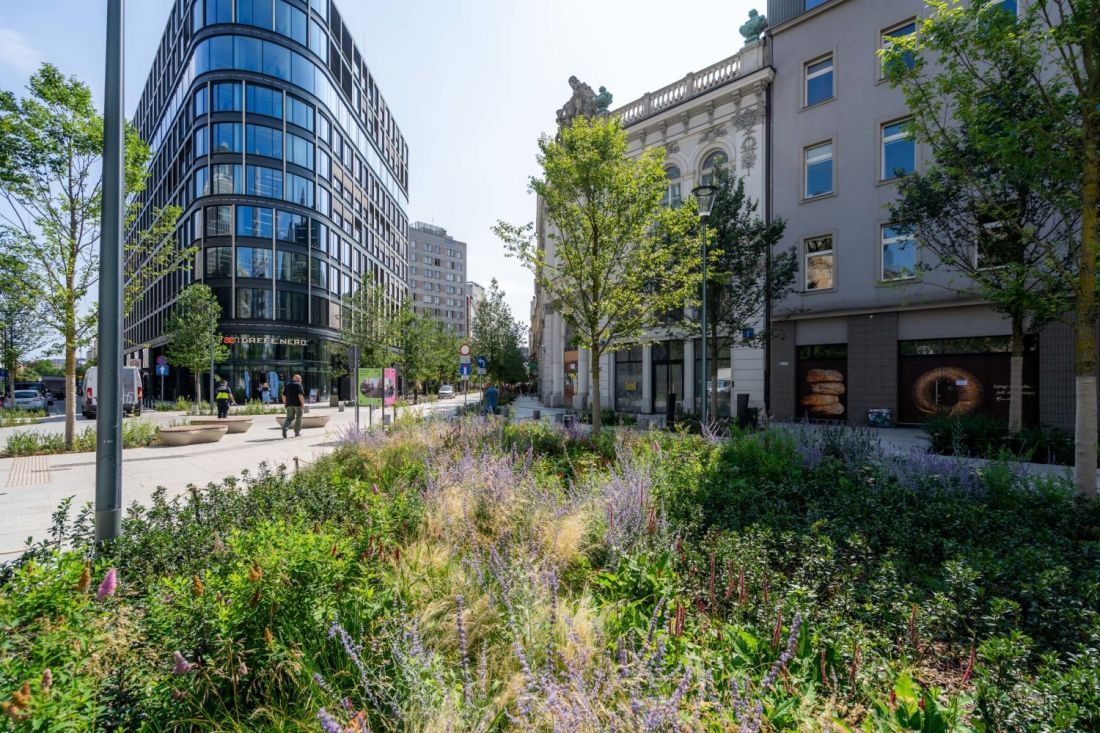
Złota and Zgoda Streets in Warsaw after the renovations
Photo used with permission © ZDM Warsaw
The previously concrete-covered Złota and Zgoda Streets will now absorb rainfall like a sponge, ensuring that even heavy downpours will not threaten to flood the city center. Rainwater will flow into retention reservoirs with a total capacity of three million liters, located on the site of the former tunnel under Marszałkowska Street, which was closed in July 2024.
The collected rainwater is used to water green spaces. The system operates automatically and is equipped with sensors that monitor water quality. If the water’s parameters do not meet the required standards, the system automatically switches to water from the municipal water supply. Additionally, sensors have been installed to monitor salinity levels and the presence of petroleum-based substances. Meanwhile, winter maintenance of the new space will be carried out without the use of road salt, utilizing alternative methods.
— as reported on the city’s website.
Złota and Zgoda Streets in Warsaw after the renovations
Photo used with permission © ZDM Warsaw
Gold, Green, and Blue
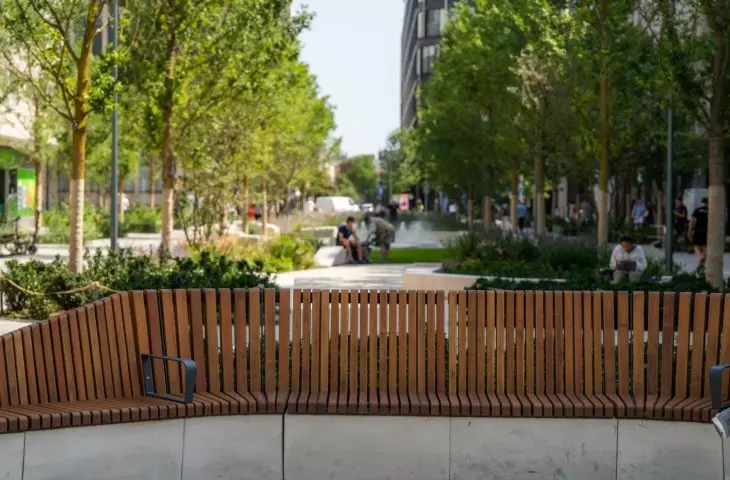
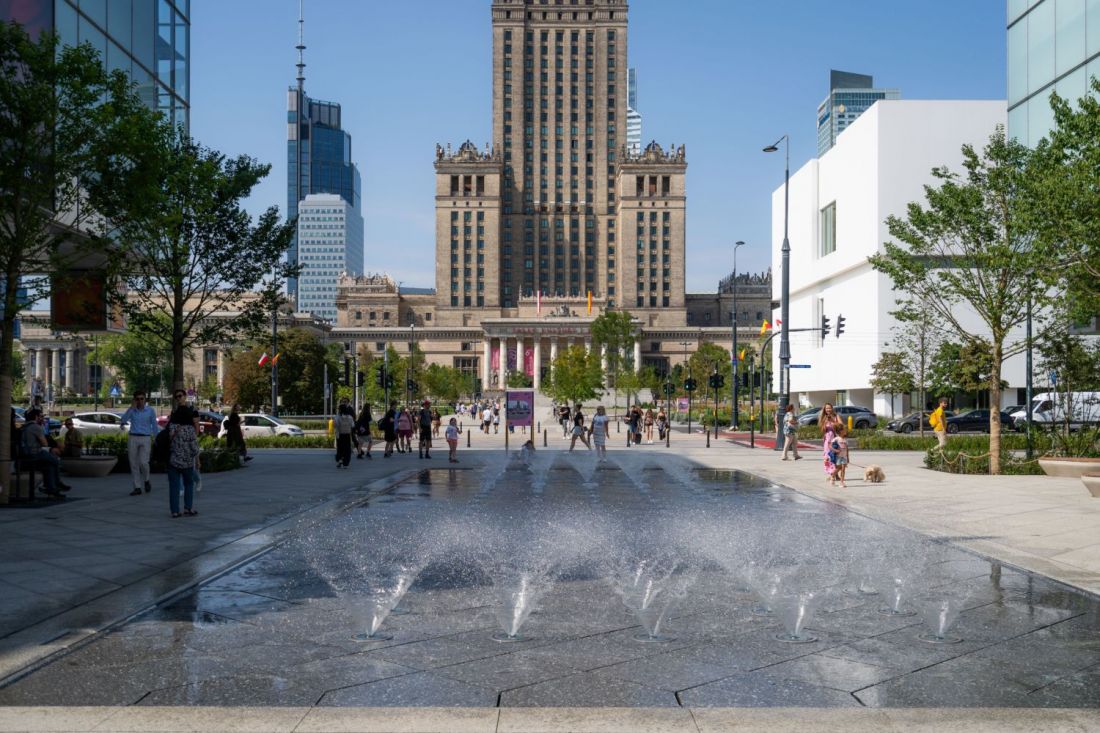
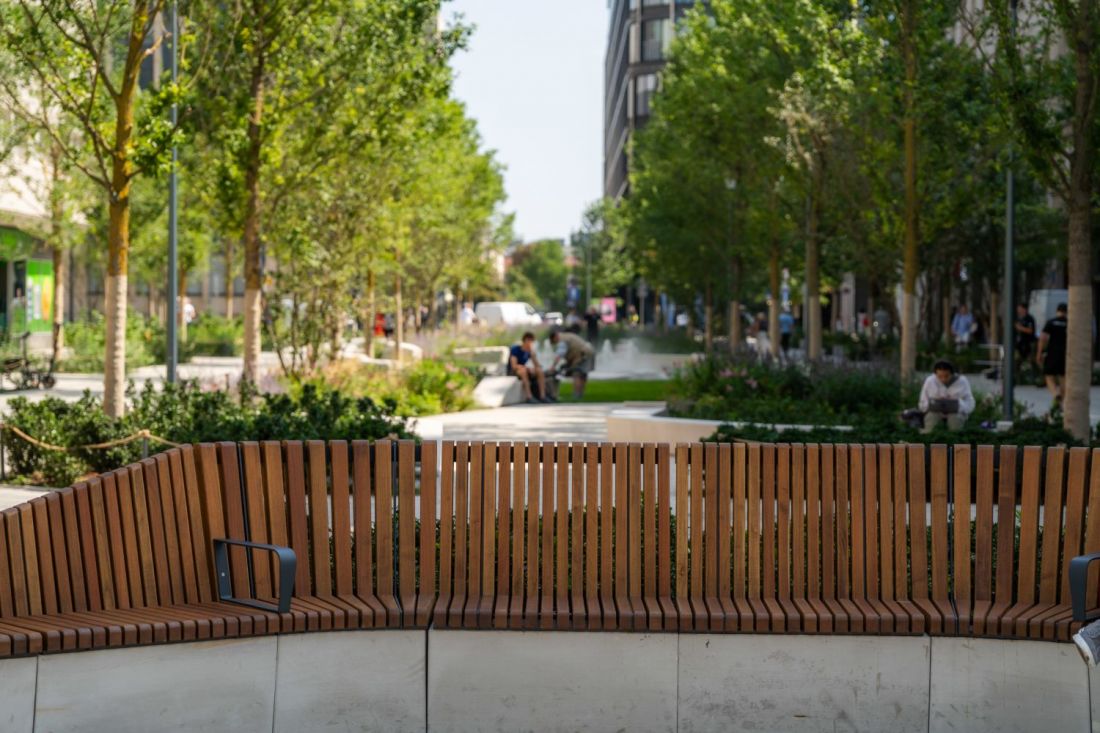
Water will also play a significant role from the perspective of pedestrians, the main users of this space. Following the redevelopment, two new fountains were installed. The first is located at the junction of Złota Street and Marszałkowska Street. It takes the form of an in-ground fountain, ensuring it does not obstruct the view of Central Square and the Palace of Culture and Science beyond it. A curved bench was installed right in front of the fountain, allowing visitors to comfortably admire the Socialist Realist skyscraper. The second fountain is located in the center of the block, in the middle of Złota Street. It was designed asa “landscape fountain,”which in practice means that it imitates a natural rock formation from which water flows in places.
Złota and Zgoda Streets in Warsaw after the renovations
Photo used with permission © ZDM Warsaw
The “rocks” have also “spread out” across the lawns that make up a large part of Złota Street’s new look, taking the form of freestanding boulders, permeable paths, and a large number of benches that delineate green groves. As a result, a space resembling a green meadow has been created in the heart of Złota Street, filled with seating areas and a network of pedestrian paths.
Złota and Zgoda Streets in Warsaw after the renovations
Photo used with permission © ZDM Warsaw
Greenery within the design grid
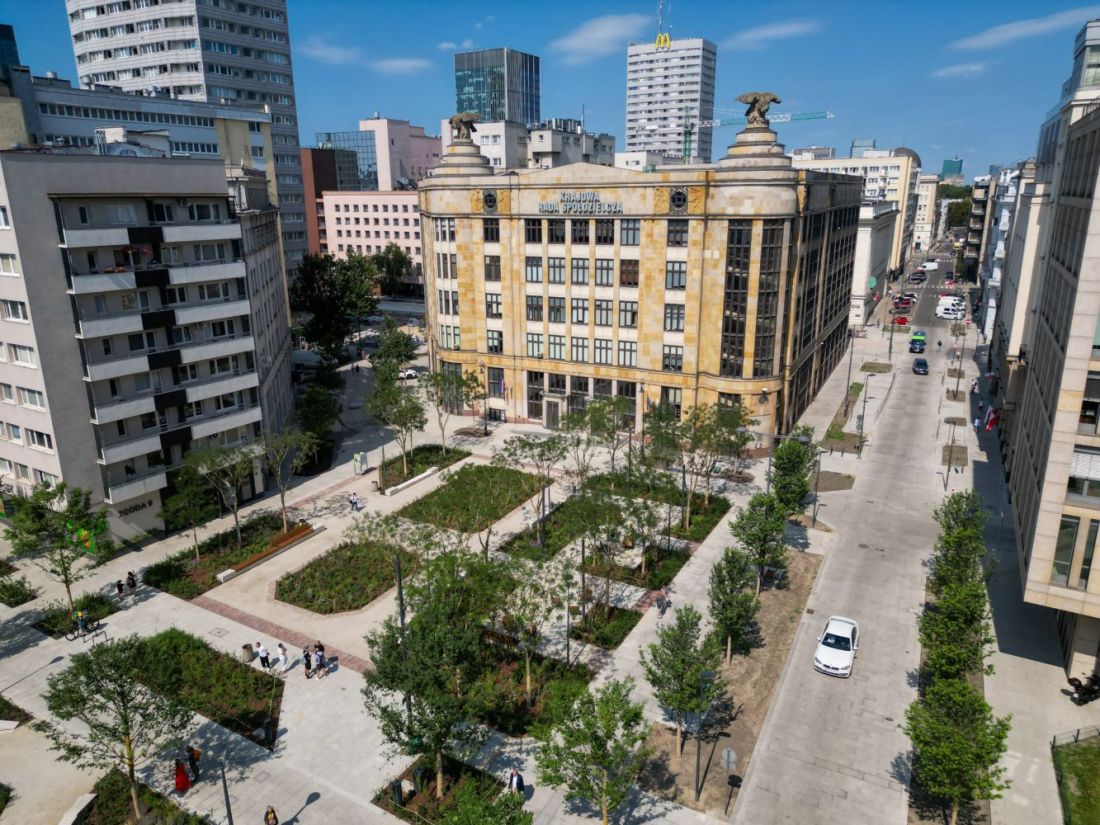
Probably due to its width, Zgoda Street has taken on a slightly different, more transit-oriented character and a layout that fits within the orthogonal grid. This does not mean there is a lack of greenery or that cars are speeding down the street— rows of trees have been planted along Zgoda Street, and they appear to have sufficient space to grow properly. It’s clear that Warsaw has learned its lesson from Five Corners Square, where tree trunks were tightly encircled by large-format slabs. Due to the new traffic organization, only cars with the appropriate NC identifier—granted primarily to residents—are allowed to enter the redeveloped area.
Eventually, automatic retractable bollards will also be installed, which will lower for residents after their license plate is scanned or a special card is used.
— as reported on the website dedicated to the redevelopment of the Złota-Zgoda quarter.
Similarly to the redesign of Zgoda Street, the plaza in front of Dom pod Orłami has been landscaped. The geometric layout and low-growing greenery provide a fitting setting for this stately building.
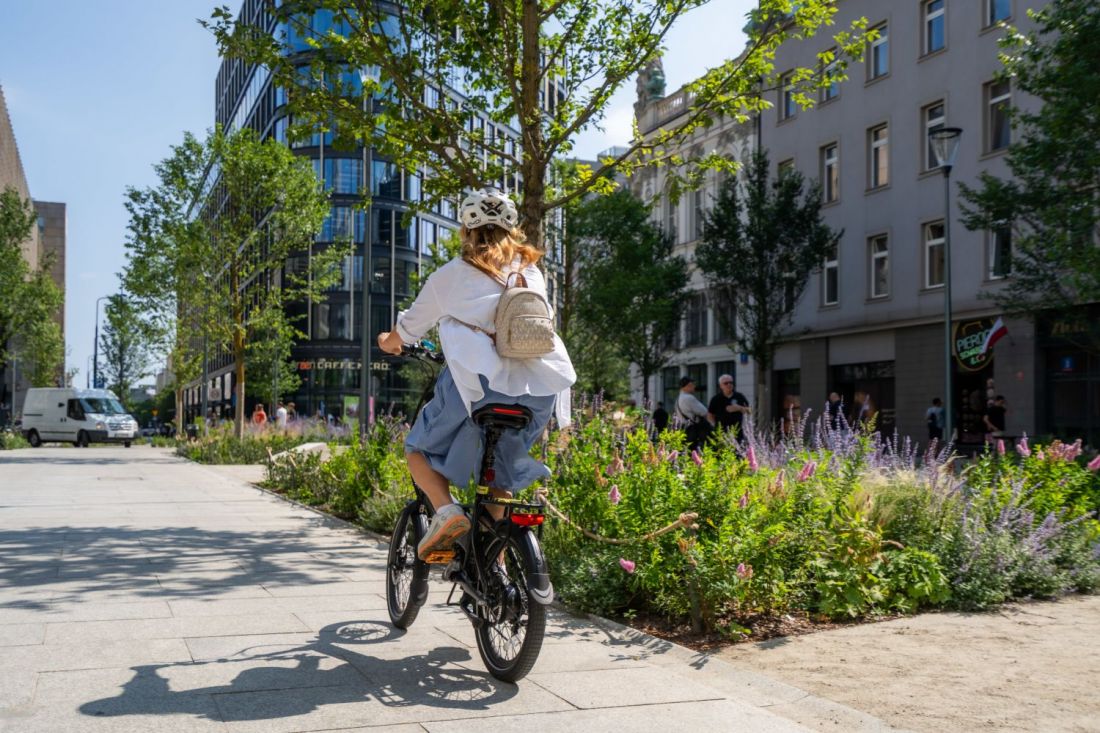
Złota and Zgoda Streets in Warsaw after the changes
Photo used with permission © ZDM Warsaw
Warsaw’s green link
One of the greatest advantages of the recently completed redevelopment is clearly visible “on the map.” The redeveloped Złota and Zgoda streets have become a green link connecting other spaces that were greened early on as part of the New Center of Warsaw project. Central Square has gained an extension along its axis in the form of a green space on the eastern side of Marszałkowska Street. From there, it’s easy to reach other sections of the New Center of Warsaw that are already green or are currently being landscaped—Chmielna Street, Pięciu Rogów Square, and Powstańców Warszawy Square.
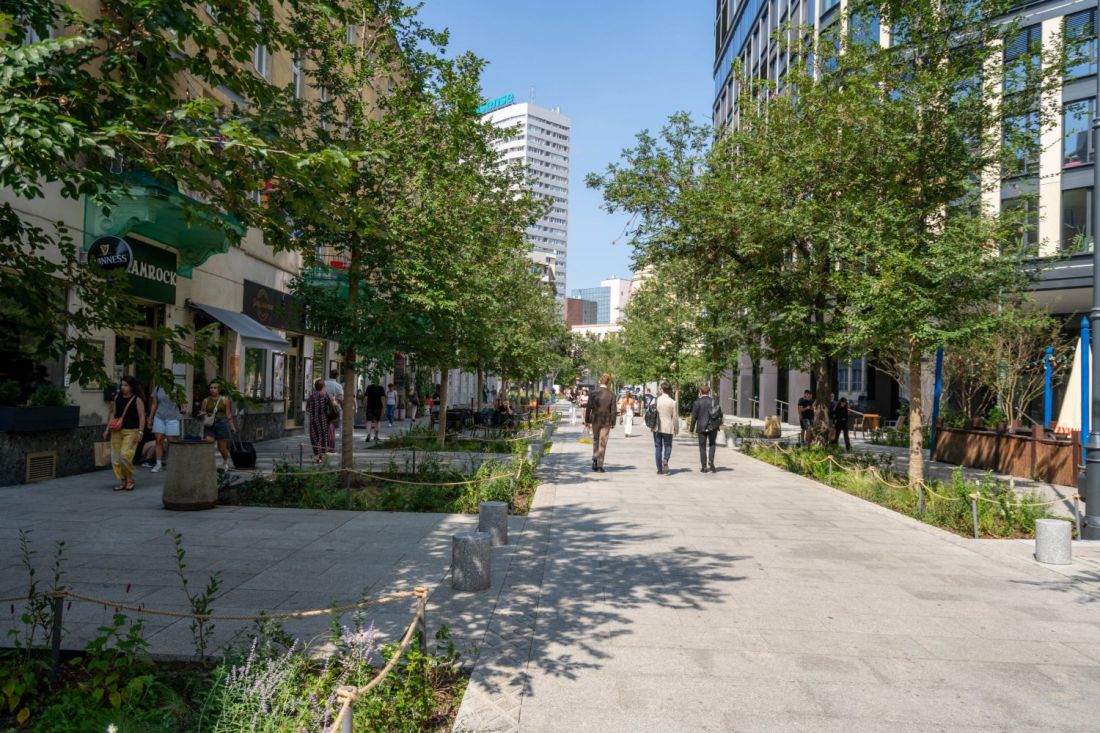
Złota and Zgoda Streets in Warsaw after the renovations
Photo used with permission © ZDM Warsaw
How will Warsaw change in the coming years?
In 2025, Kacper Kępiński wrote in A&B about Warsaw’s “gapped smile,” referring to the slow pace of change in the capital. Today, there are slightly fewer gaps in Warsaw’s New Center, and it is becoming easier to speak of it not so much in terms of “green islands” but rather as a sequence of friendly and sustainable public spaces. As part of the project, in addition to Złota and Zgoda Streets, the Museum of Modern Art was established, and a number of public spaces have already been redesigned:
-
John Paul II Avenue
Currently, as part of the New Center of Warsaw, work (administrative, design, or construction) is underway on many other public spaces. Major changes are coming to the immediate vicinity of the Palace of Culture and Central Square. As early as 2026, work will begin on Central Avenue, which will stretch between the Warsaw Śródmieście Train Station and the Palace of Culture and Science. This project, designed primarily for travelers transferring between different modes of transportation, will transform a chaotic part of the city into a green space adapted to the needs of people with disabilities. Right next to it, the“New Streets Near the Palace of Culture and Science”project will be carried out, under which the immediate surroundings of the Palace of Culture and Science will gain new green spaces and two new transportation routes. A new version of the southeast corner of Świętokrzyski Park will also be built nearby (Studio Widoki won the architectural competition; the tender will not be announced until 2027), work is underway on the renovation of the Congress Hall, and the building of the Rozmaitości Theater is slowly taking shape.
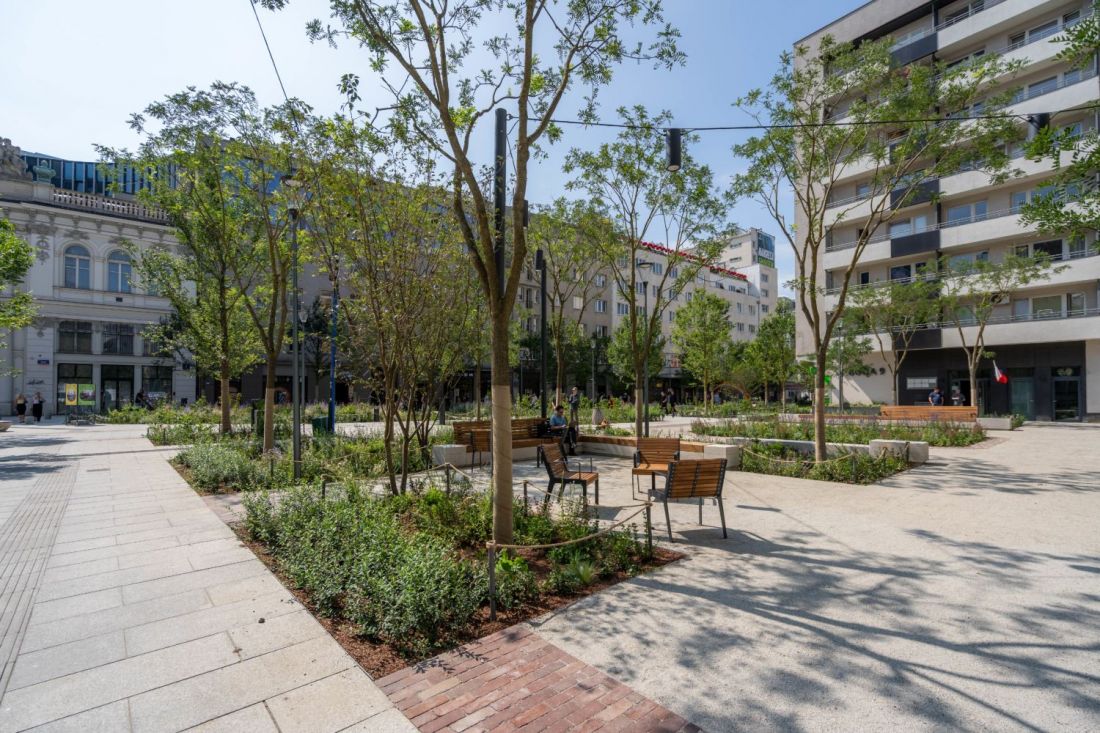
Złota and Zgoda Streets in Warsaw after the renovations
Photos used with permission © ZDM Warsaw
By the end of summer, Warsaw Uprising Square will get its fourth new look, and Marszałkowska Street continues to change — sections between Bankowy Square, Królewska Street, and Widok Street have already been rebuilt, with green tram tracks and several new crosswalks added. Further work is planned, this time on the section between Nowogrodzka Street and Constitution Square. The concept for the reconstruction of Karowa Street was selected through an architectural competition won by the RS Architektura firm. The project is scheduled to be completed in the spring of 2028, so there is still some time to wait for its implementation. Despite numerous difficulties, and even opposition from the historic preservation authority, the redevelopment of Krucza Street will proceed and is scheduled to be completed in 2028. However, we still do not know exactly what Żelazna Brama Square will look like in the future (the concept is to be developed by December 2026).
The New Center of Warsaw will also extend to the right bank of the Vistula River. As early as 2022, a redesign plan for Okrzei Street was published, with construction scheduled to last until December 2026. Last summer, the competition to design the redevelopment of Stara Praga’s streets was also decided, with the RS Architektura Krajobrazu studio winning the project.