









Why do some cities care about the well-being of their residents, while others do not? What problems are common to all cities in the world? Where to look for good practices for urban development? What might the cities of the future look like? We seek answers to these questions in a conversation with Camilo Osorio, a Colombian-born architect and co-founder of CityMakers, a platform that enables cities to learn from each other.
Camilo Osorio will be a guest at Urban Future in Lodz, an international event aimed at people whose mission is to change cities for the better.

Urban Future in Lodz
© organizers archive
Ola Kloc: You are an architect, but you chose the path of education. Why?
Camilo Osorio: I grew up in a very difficult city: Medellín, Colombia. Thirty years ago, Medellín was a city in very bad shape in many ways, it was quite dangerous, and the public space was dominated by criminals, so it didn't belong to everyone. I grew up watching this city that didn't belong to anyone, it was empty. So when the opportunity came to leave Colombia, I started traveling a lot and exploring different cities around the world. I compared them and asked myself: why do some cities care about the well-being of their residents, while others do not? Is there a gap between them, or maybe there are specialists in these great cities who know how to create them, and other cities lag behind because they don't have such experts? I came to the conclusion that the key is education and knowledge transfer. I realized that cities want to learn from each other. A city that has a polluted river wants to learn from another city that has been able to transform its river and offer its surroundings to residents as a park where they can spend time. What was missing was a bridge between cities, and I think that was the main reason I decided to create CityMakers, because education is needed in cities in developing countries like Colombia. Why not learn from cities that have done it better? That's what the beginnings of CityMakers looked like, and I think that as this bridge of knowledge we are functioning quite well.
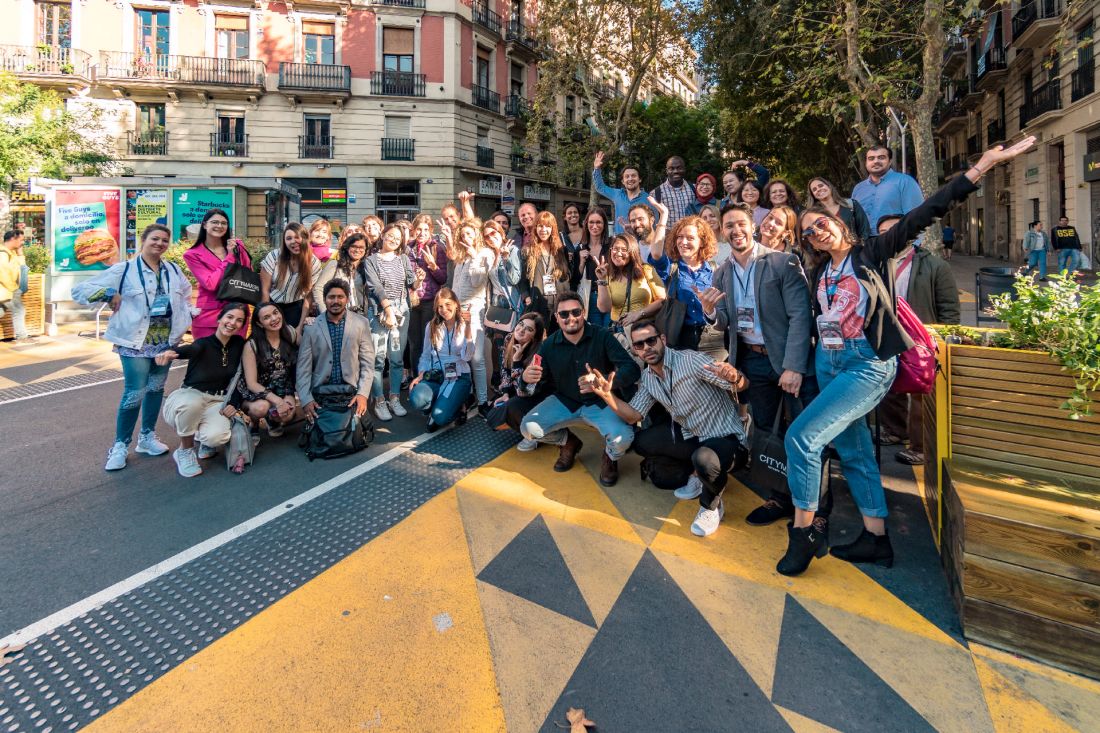
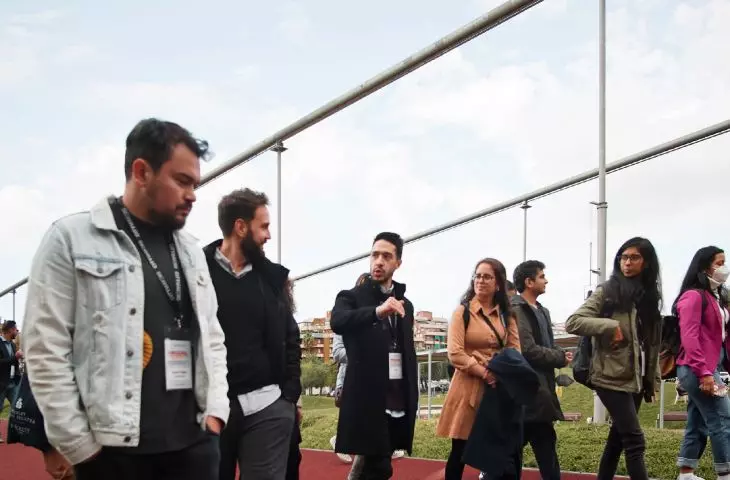
photo report of CityMakers activities
© CityMakers
Ola Kloc: What is the goal of CityMakers?
Camilo Osorio: The main goal of CityMakers is to act as a knowledge bridge between cities. Cities want to learn from each other, but there is a lack of a platform or space where knowledge can flow from one place to another. We believe that every city has a story waiting to be told, at CityMakers we are developing audiovisual, educational and pedagogical formats to tell these stories and share them with other cities around the world. We want to promote knowledge about cities, knowledge that is accessible, democratic, understandable and based on a methodology that is accessible to many people, so that cities can learn from each other.
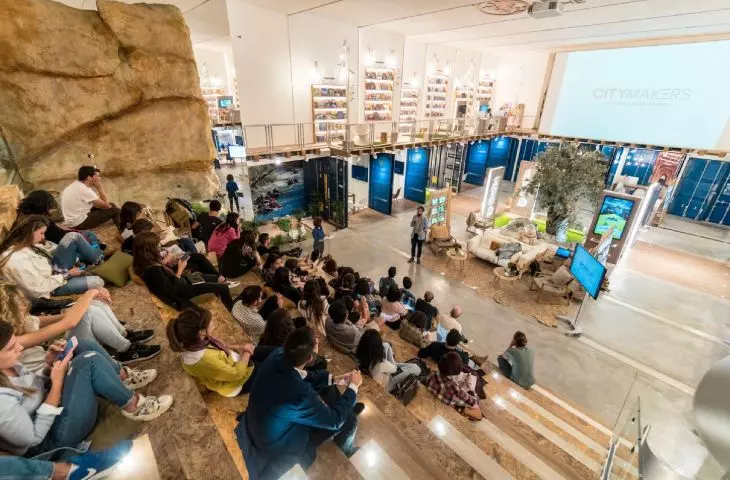
© CityMakers
Ola Kloc: Who participates in your programs?
Camilo Osorio: In the three years we have been operating, we have noticed that there are three main profiles of people who are particularly interested in our programs: the first is local missionaries, including mayors working for their cities, who are very interested in what is happening in other cities. The second profile is advanced students who are finishing their bachelor's or master's degrees and want to tie their future to urban planning in some way, so they want to learn from other cities and are very open to learning about good practices. The last profile is professionals: urban planners, architects, engineers, sociologists who want to learn from cities, but can't find a place to do it.
Ola Kloc: Do you see any common problems of contemporary cities, regardless of their geographic location?
Camilo Osorio: The problem of many cities is their fragmentation, I mean spatial fragmentation, that is, that urban spaces, understood as a physical environment, are not compact, they lack proximity. Cities still do not create a mix of functions, which is now the paradigm of urban planning. The opposite of mixing functions is the modernist city, the city of 100 years ago, a functional city where people worked in one place and lived in another. This results in dead zones, a complete fragmentation of the city.
Another aspect of fragmentation is social fragmentation: there are neighborhoods for some and neighborhoods for others. The opposite of social fragmentation is social mix, the coexistence of people from different ethnic groups or of different social status. I believe that when such fragmentation occurs, a city ceases to be a city.
There is also institutional fragmentation, that is, a city without citizen participation, where decisions are made in isolation and processes are not sufficiently systematized. In many cities there is a lack of continuity in projects: the mayor comes up with something, and when a new one comes in, he says: "I don't like it, let's do something else." A city doesn't work that way, a city is not built every four years, cities are built continuously. If a project turned out to be good, regardless of political affiliation, we must ensure that it continues. Successful cities are those that guarantee the continuity of their projects. There is no administrative or institutional fragmentation in them.
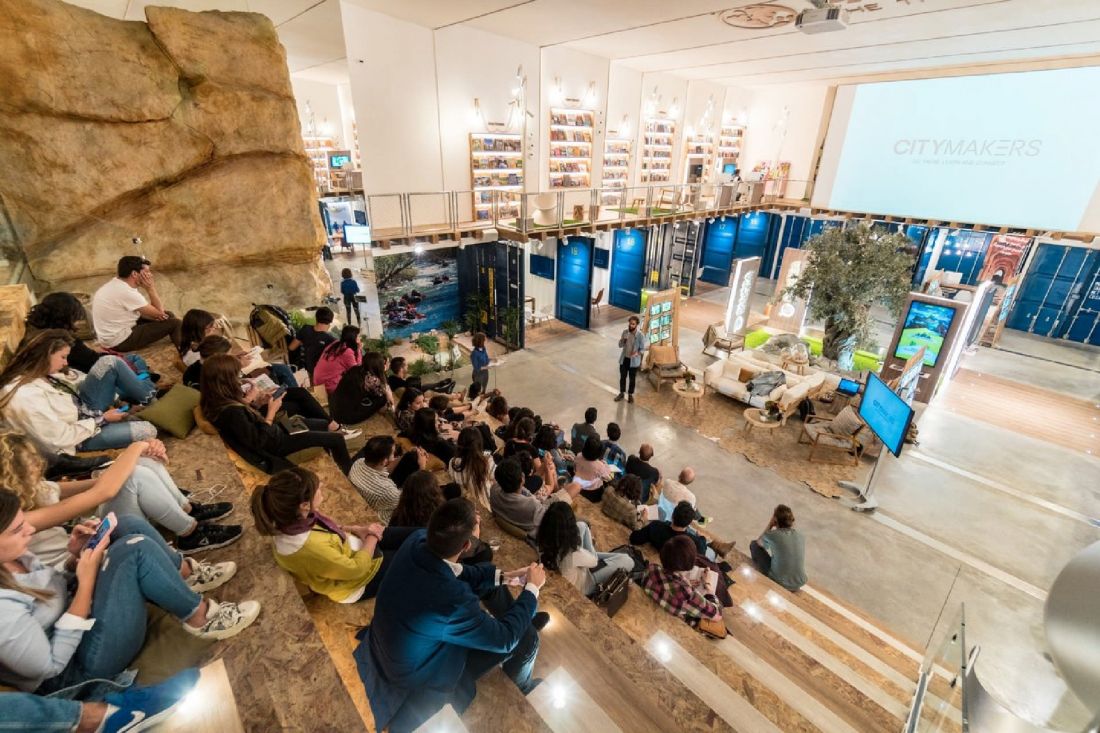
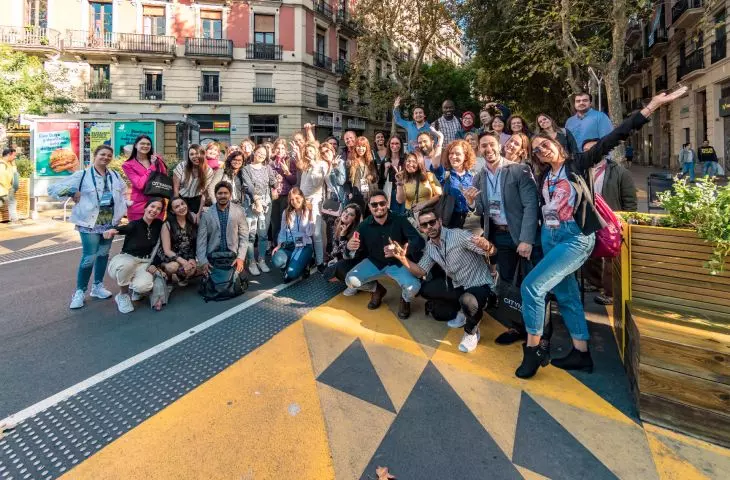
photo report of CityMakers activities
© CityMakers
Ola Kloc: Are there cities that function well, where projects continue, where there is not so much fragmentation? It's not easy to find good examples...
Camilo Osorio: It's certainly not easy, cities face different challenges. If I were to list the ones we should pay attention to for interesting practices, programs and projects, I would mention Barcelona. Barcelona is a model city in many ways. It has been able to defend its projects regardless of administrative changes. Barcelona has one peculiarity: it is located between mountains, sea and rivers, so it has little room for expansion. The entire area is already built up, with nowhere to expand. Most of the area is occupied by buildings, so there is a lack of public space, so the projects underway in Barcelona are those driven by a need that goes beyond the four- or five-year term of the government. Streets are being turned into squares, and the interiors of quarters, previously private, are becoming public gardens. Sixty of the 500 urban interiors have already been developed in this way.
Another city worth noting is Medellín in Colombia. In 30 years, huge changes have taken place there, as many mayors, regardless of political affiliation, believed in the same projects. Public spaces have been created, green corridors that have lowered the temperature by two degrees, which is very important in the current context of climate change.
Rotterdam is a remarkable example of resilience. This is a city that could consider water its greatest enemy, but treats it like a friend: for example, when it rains, one of the squares turns into a pond, which prevents the city from flooding. There are many similar projects: green facades and roofs that prevent water from attacking the city.
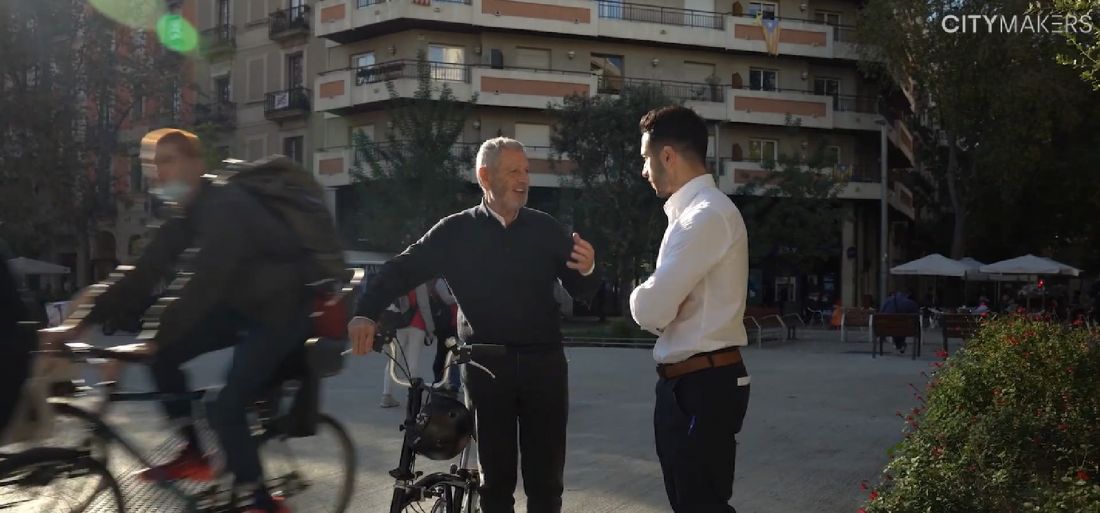
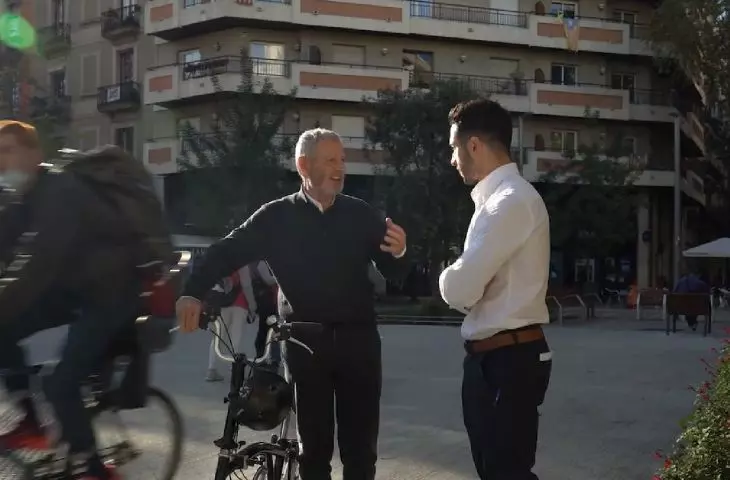
excerpt from a video story prepared by CityMakers
© CityMakers
Although each city has its own problems, we can see that a common challenge is the climate crisis that is brutally attacking cities. We don't realize it until a flood, an earthquake, a tsunami, a disaster strikes.... Then we discover that climate change is a real thing and that the city we live in is at risk. Therefore, I would say that in addition to the fragmentation mentioned, the problem is the impact of climate change on cities. Medellín is dealing with it through green corridors that lower the temperature, Barcelona through Superblocks that generate less noise on the streets and provide cleaner air. Rotterdam - through water management. It's important to showcase cities that are doing well so that other cities can learn about and adapt their projects, approaches or ways of solving a common problem. If in my city in Indonesia, Argentina or Mexico I have a problem similar to the one Barcelona is solving, why shouldn't I take Barcelona's example to create a public space, for example?
Ola Kloc: You will soon participate in Ubran Future in Lodz, Poland. Will this be your first visit to Poland?
Camilo Osorio: I have had the opportunity to visit Poland before. I like the country very much, because in many ways it resembles my homeland , Colombia. Of course, in a different context, but at least culturally I see similarities. I've had the opportunity to visit Warsaw, Krakow and experience the magnificent mountains in Zakopane. This will be my second visit to Lodz, I know the city and think it has a bright future.
Ola Kloc: What would the city of the future of your dreams look like?
Camilo Osorio: I think the city of the future will be very different from the city of 100 years ago. City planners and architects a hundred years ago designed the cities of the future and made a big mistake - they thought the city was a machine. A city is a place where we live and is related to the well-being of its inhabitants. The city of the future is a very green, safe, pedestrian-friendly place, where the elderly, women, children, people with disabilities and all minorities can walk in peace. An open, barrier-free, porous city, that is, one that allows people to occupy the streets, because when streets, parks and squares are occupied by people, the city is safer. An inclusive city, where institutions involve citizens in decision-making, a city that is not designed in the mayor's office. A compact city where I don't need two hours to get to work. It's not about density, but compactness: in a compact city I can quickly get to all the places I need to go: supermarket, pharmacy, work, kindergarten, library. A city with clean air, where I can breathe, where noise is not a common thing, there are no honking cars or pollution. A resilient city that can regenerate quickly. I have listed many qualities of an ideal city, and I believe that we are not far from achieving it.
Ola Kloc: Thank you for the interview.