








Several years ago, while serving as works manager at one of Poland's most famous historic parks, I was given the task of remodeling an existing garden. The area had trees and shrubs, including huge rhododendrons several meters tall. These were specimens of considerable value. According to the project documentation, they and other plants were thoughtlessly doomed to annihilation during the reconstruction of the garden. This also applied to inanimate forms. In the middle of this work, observing this destructive process, something awoke in me. The thought that something must be done about it .
Economically, environmentally and morally it was illogical, it was also an unfair approach to resources. The investor and general contractor did not agree to bear the cost of moving the plants, because it was cheaper, faster, simpler to cut them out. My executive team and I then made the decision that we would move the twenty or so mature rhododendrons to another part of the park at our own expense and risk. Today, these plants please the eye of visitors in one of the most representative places in the park, and are living proof that dismantling and reuse in landscaping is not only possible, but also brings tangible benefits. At the time, I didn't know what GOZ was, and that we had just introduced one of its basic principles - "Reuse" - into the construction process of this project. This experience, and several others like it, became a starting point for me to think more deeply about the life cycle of landscaping facilities and the possibilities of implementing the principles of the circular economy in our industry.
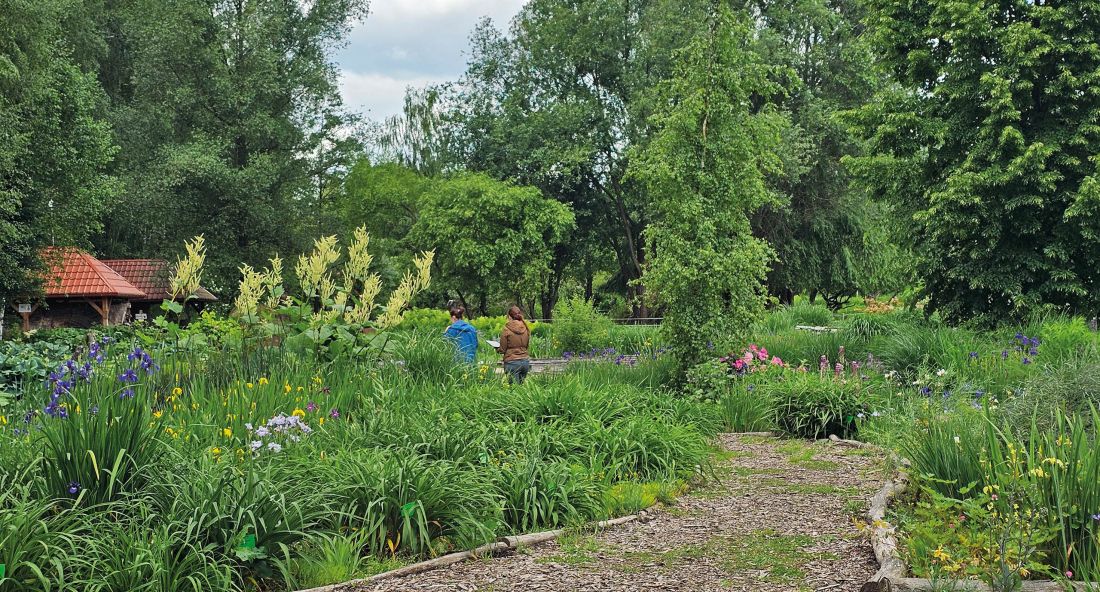
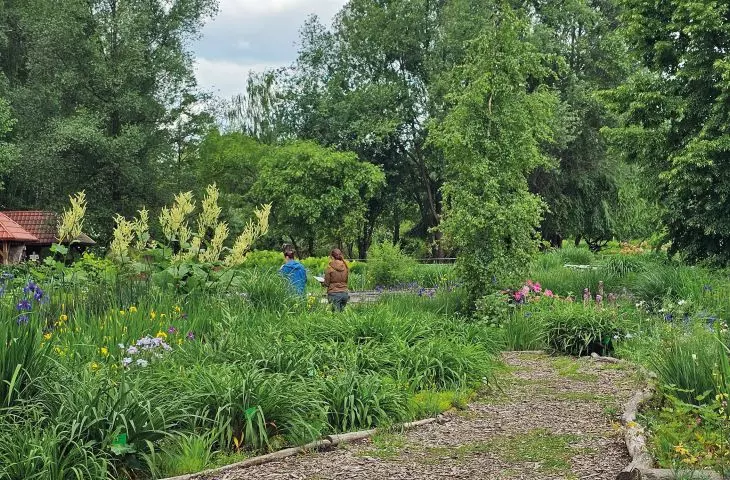
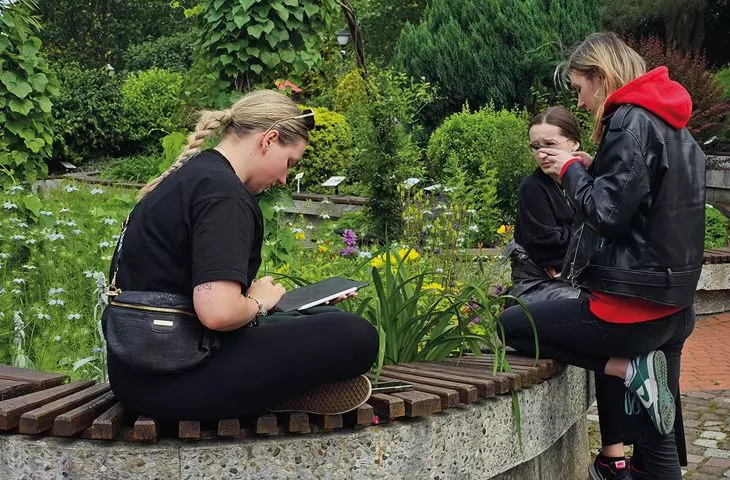
Documentation of field work from the greenery demolition exercise at the Arboretum in Bolestraszyce
photo: Wojciech Januszczyk
new paradigm of thinking
The traditional approach to landscape architecture is based on a linear model: we design, implement, use, and then decommission facilities without considering their further potential. This way of thinking leads to a systematic waste of material and biological resources that could serve much longer in new configurations and uses. Shifting to a circular model requires a fundamental shift in thinking. For this to happen in our heads, it doesn't take much effort at all. It is enough to connect the dots. However, it may take, as it did for me, several years. Now I have a lot to fix, to at least make up for the energy and harm I have done in my unconscious design and construction of gardens, parks or other green creations. For example, in the name of the biodiversity so fashionable today. For me, this is in the past. Now changes are underway and the discovery of new outposts of GOZ in landscape architecture.
Among these and many other considerations, the topic of demolishability and reuse of materials and plants has recently appeared in my mind. Because why extract, produce, transport, exploit and add to the garbage pool again? After all, you can already have a lot of material in a closed loop and use it consciously throughout the construction process. And this is what I want to share.
When to start?
The whole thing, in my opinion, starts already at the inventory stage of the pre-design phase, but the designer of future transformation scenarios must also take into account in the design phase. This means a whole new thinking about design. It is no longer just function, technology, ergonomics and aesthetics, but also the possibility of dismantling, reconfiguring and reusing all components, both material and biological, that should preoccupy us when we do an inventory, create a construction project, technical design, technical specifications for the execution and acceptance of construction works(STWIORB) or the basis for investor cost estimates. And this is what should be boiling in the minds of us designers creatively from the very beginning. It is this STWIORB that can play a key role in curbing destructive zeal.
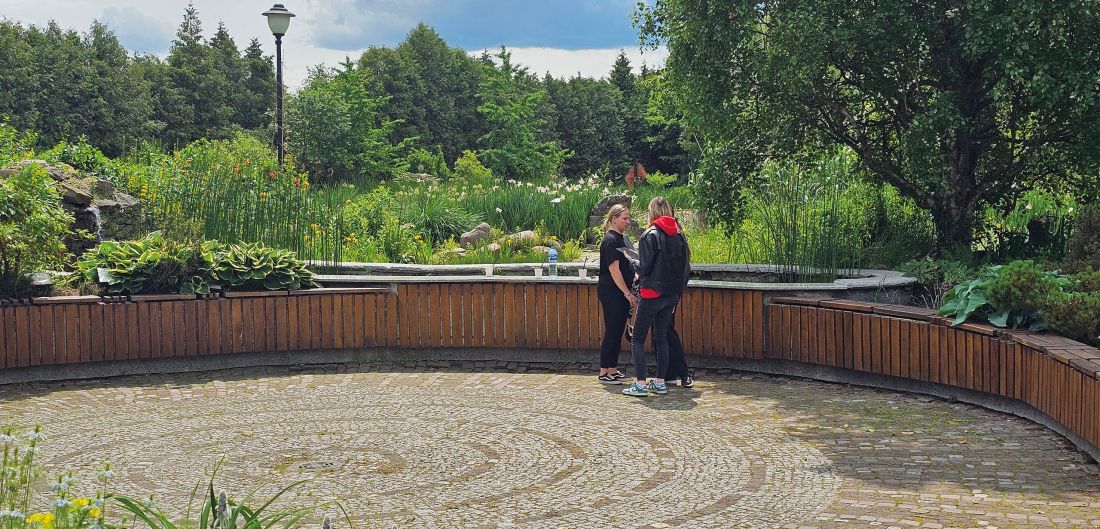
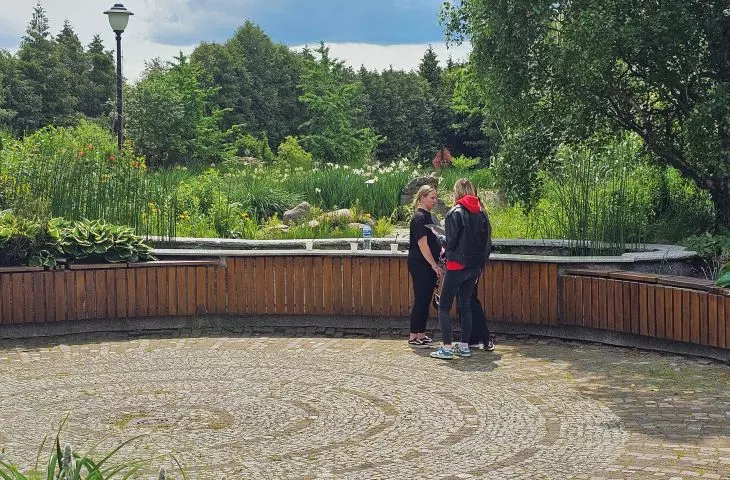
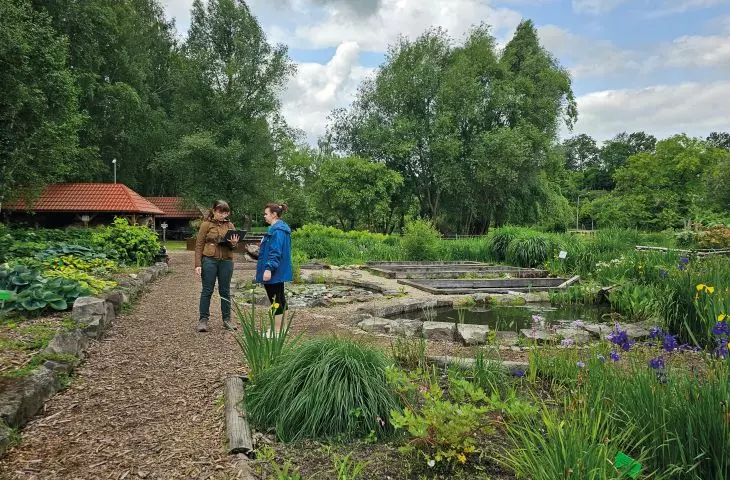
Documentation of field work from demolition exercises of green areas in the Arboretum in Bolestraszyce
photo: Wojciech Januszczyk
phases of the construction process vs. reuse
The construction process in landscaping includes five key phases, each of which has a significant impact on the potential for future dismantling and, importantly, reuse of resources that become waste in a given phase, and may in fact be a resource. I note the biggest shortcomings in the context of the circular economy in the first two phases, which then prevents effective implementation of circularity principles in subsequent phases. Below is an outline of my comments on each phase.
1. pre-project phase - strategic circularity planning
In the pre-design phase, strategic planning of the entire life cycle of the designed facility, including scenarios for its future decommissioning, should take place. This is where fundamental decisions are made about the project philosophy that will determine the circularity options decades from now. The site analysis itself must include an inventory of existing resources on the plot for use in implementation. Utilization, and not, as is sometimes the case in our implementations, destruction, such as cutting down existing trees and shrubs or eliminating entire communities. This is also where we begin to consider the different time horizons of the existence of different parts of our site, because not everything will end at one time.
2. design phase - documenting and recording future opportunities for dismantling and recovering resources from waste
Traditional design documentation focuses solely on the process of implementation from scratch, leaving out aspects related to future opportunities for dismantling and reconfiguration. This gap needs to be filled by introducing new documentation standards that take into account the full life cycle of a facility. However, I would not count on the role of legislators here. Rather, it is our individual action. The project should include a clear description of the transformation of the existing site into the one being designed, as well as an indication of what and how to protect to make use of inventoried trees or shrubs, for example. The definition of tree protection zones (SODs) is necessary for their survival. This is also where the fate of trees that we can easily and thoughtlessly cut down, instead of preserving them and replanting them, for example, is at stake. Well-prepared specifications in technical projects play a key role here. The potential also lies in existing inanimate forms or even in the terrain.
3. implementation phase - building with future dismantling in mind and taking waste from the implementation process seriously as a resource
Here it is very important to be aware of the realization team, to properly construct the facility and to assemble its various elements in accordance with the design guidelines for dismantling. Deviations from the design principles for dismantling can mean the loss of the circular use of an element. The second, equally important aspect is the actual work with waste during the implementation stage. It should be treated as a resource, not trash or nuisance waste. This, in my opinion, is one of the most difficult mental tasks. And the last element of this phase - the skillful safeguarding of what, during the transformation of the area, is to be used for the realization of the project facility.
4. use and operation phase - preserving the potential of circularity, slow secondary use, minimizing product exploitation
During the operation of the facility, processes occur that may affect the potential for future disassembly and reuse of components. The manner of maintenance, the type of repairs and rebuilding performed can preserve or destroy the circularity potential of the facility. There are two aspects to consider here: dismantlability at the very end, during decommissioning, and what will become reusable material during the life of the facility. The best example for landscaping facilities is biological spoil, or biomass, which we can close in internal or external circuits.
5. closure phase - realization of final circular potential
The decommissioning phase of a facility is the moment to verify all previous design decisions for dismantling. A properly designed and constructed facility should allow efficient selective dismantling without the use of destructive techniques. This process requires a detailed final inventory of the condition of all elements, their classification for reusability and proper preparation for the next cycle of use. It is worth mentioning that some of these activities in all phases are happening independently, without calling it circularity, but this is nevertheless a drop in the bucket of needs, and ubiquitous consumerism is pushing its way into construction processes, as in many other industries, and this is not the thing that facilitates the development of GOZ for minimizing the effects of climate change.
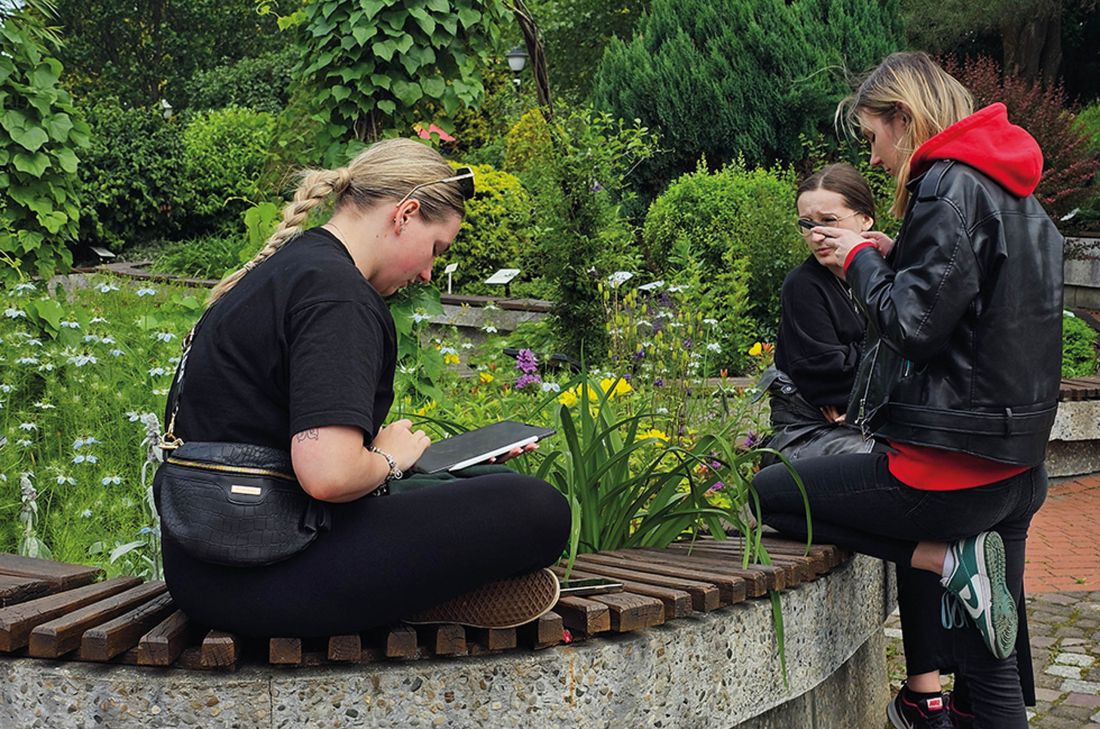
Documentation of field work from demolition exercises of green areas in the Arboretum in Bolestraszyce
Photo: Wojciech Januszczyk
designing for dismantling
Designing for disassembly and reuse in landscape architecture is based on several principles that, consistently applied at all stages of the design process, will produce the intended results. Modularity and standardization, hierarchy of connections, accessibility of structural nodes, closed cycles, biodegradable materials are the basic ones concerning inanimate forms. Biological components are an important structure, in contrast to typical building structures. Plants are the most valuable and most often ignored element of landscaping in the context of reuse. Properly prepared, they can be moved and reused many times, a unique feature of landscape architecture compared to other construction disciplines. This can be done by relying on phase one, which is the inventory during the transformation of the site, instead of simply uprooting everything that stands in the way of the volumes. The same applies to the operation phase, when vegetation, for example, grows excessively and can be moved to other developments. The situation regarding the decommissioning phase of the facility is also obvious, when most of the plants can be reused. Importantly, I am addressing here all local government officials, architects, and investors: it's time to say goodbye to the myth of not replanting large or old trees - large trees are replanted!
what's the harm?
In planning transplants. Successful relocation of plants requires proper preparation. Sometimes several years in advance. Different groups of plants require different preparation techniques, but all of them can be relocated safely with the right methodology. So, even from an economic point of view, is it worth paying several hundred thousand in fines for cutting down? Maybe it ' s better to take care of the replanting in advance, instead of dimming to the partnership with the local government and the investor that one will do compensatory or replacement plantings, which will not really do anything except temporarily cloud the conscience, if the designer has them while putting a cross on the tree.
Experience - what we bring to our studies in the studio
So much for theory. I wouldn't be writing this text if it weren't for the process we are in. In the studio we try to implement all kinds of GOZ principles into documentation. So there is a place for biological documentation as an environmental resource with a prospect of use. Other circular documentation tools are based on the 10R principles(Refuse, Rethink, Reduce, Reuse, Repair, Refurbish, Remanufacture, Repurpose, Recycle, Recovery) and we are starting from them in the project. For selected objects, we have taken from the construction industry life cycle charts of elements, which means no less than that every significant component of the object should have documentation describing its potential in the circular system. Information on provenance, technical parameters, expected service life and reusability form the basis for planning future transformations. However, we started with the most important one and introduced cards on the potential for replanting existing trees and vegetation. Because this is the most urgent topic and one that requires the most discussions with investors.
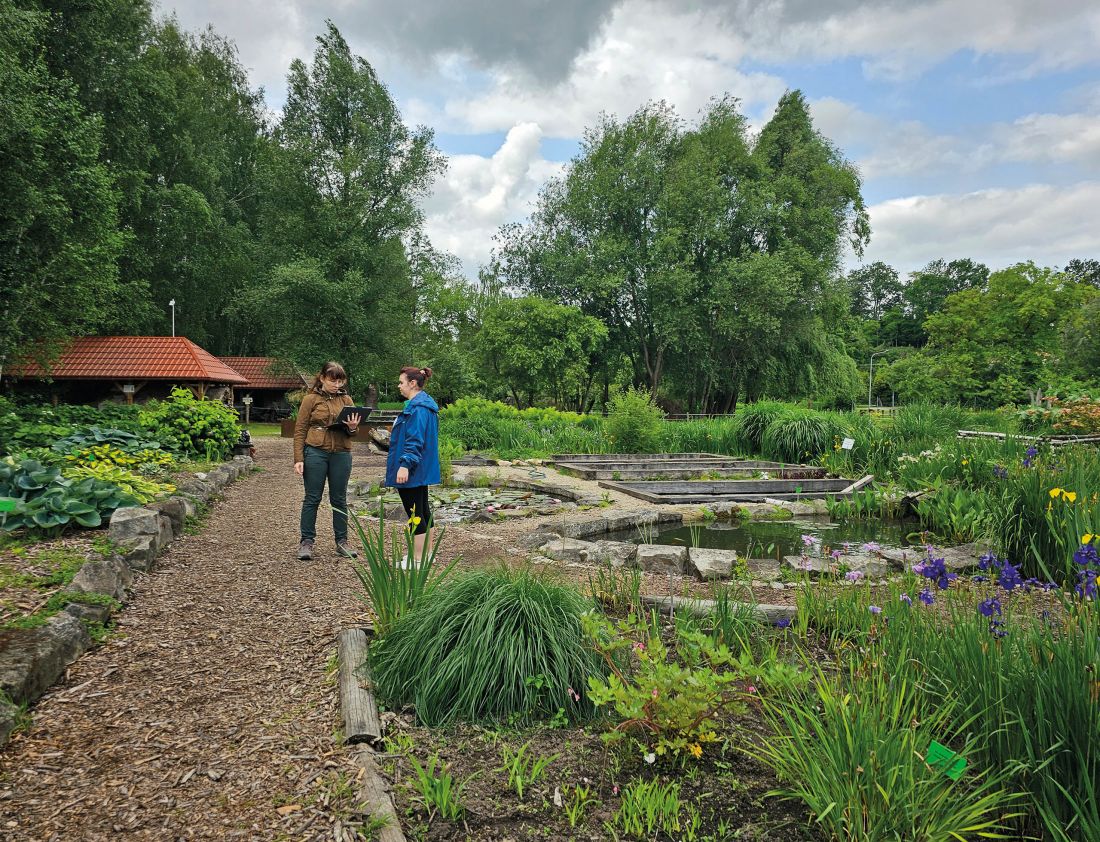
Documentation of field work from greenery demolition exercises at the Arboretum in Bolestraszyce
photo: Wojciech Januszczyk
verification in didactic practice - garden demolition cards
Taking advantage of the opportunities provided by working with students, I was able to transfer the theoretical assumptions about the documentation being developed to the experimental field. I subjected the economic benefits of selective dismantling in landscape architecture to practical verification in field classes with students of Landscape Architecture of the Catholic University of America. Taking building demolition cards as a model, we developed a proprietary system of garden demolition cards, which we then tested in the field. Each student was tasked with a detailed inventory of a section of the Arboretum in Bolestraszyce with the prospect of selective dismantling. The goal was to extract the maximum value from the assigned site - describing all elements of infrastructure and vegetation, assessing their technical condition and valuing them based on current market prices. We subtracted the costs of dismantling, transporting and preparing for reuse from the value of recovered materials and plants. The results of this experiment proved unequivocal - in all analyzed cases financial profit came out, ignoring environmental benefits or compliance with GOZ principles. The value of recovered resources significantly outweighed the expenses of dismantling and preparing them for reuse. This practical experiment confirmed that selective dismantling in landscaping is not just an environmental postulate, but a rational economic decision. It only requires proper preparation, planning and executive competence.
Landscape architecture has the opportunity to become a sector for implementing the principles of the closed-loop economy in the built environment. The specifics of the industry, the ease of modularization, the natural regeneration of biological components, the relative simplicity of construction create favorable conditions for the development of circular practices. Development towards circularity does not require revolutionary changes, but the consistent application of new design and execution standards. The education of all participants in the development process is crucial to me. The future of landscape architecture lies in responsibility for natural resources. The circular model is not a limitation of design creativity, but a new dimension of professionalism that puts our actions in the context of global environmental and social challenges. After that, it's only a step to using the mechanisms of nature in a real way - and this is where bionics with its powerful capabilities in construction processes comes into play.
But about that some other time.
Wojciech Januszczyk
more: A&B 11/2025 - Krakow from scratch,
download free e-publications of A&B