








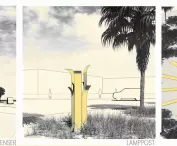

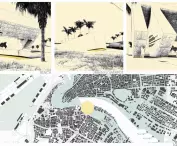
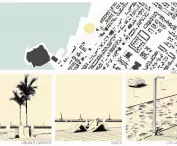


A city is a whole system of connections, and the quality of life in it is influenced even by the tiniest elements of small architecture. Members of the design circle Generation of New Ideas from Akademia Techniczno-Artystyczna Nauk Stosowanych w Warszawie (ATA) took part in an international competition organized by the Buildner platform to select designs for an urban furniture system for Dubai.
The team consisted of Dominik Bartnik, Bartlomiej Warmiak, Julia Kubicka and the circle's supervisor Mikolaj Michalak.
Dubai is a city that was supposed to not exist - and yet it pulsates with life in the heart of a desert that was once filled with silence. Against logic and against nature, an organism composed of concrete, glass and steel powered by human ambition was created
- describe the authors.
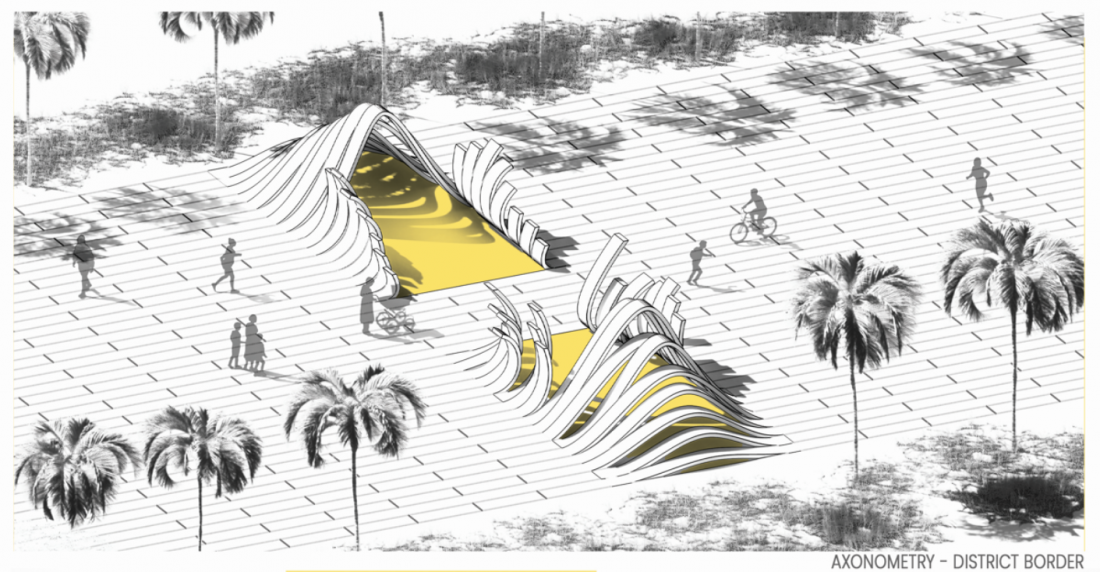
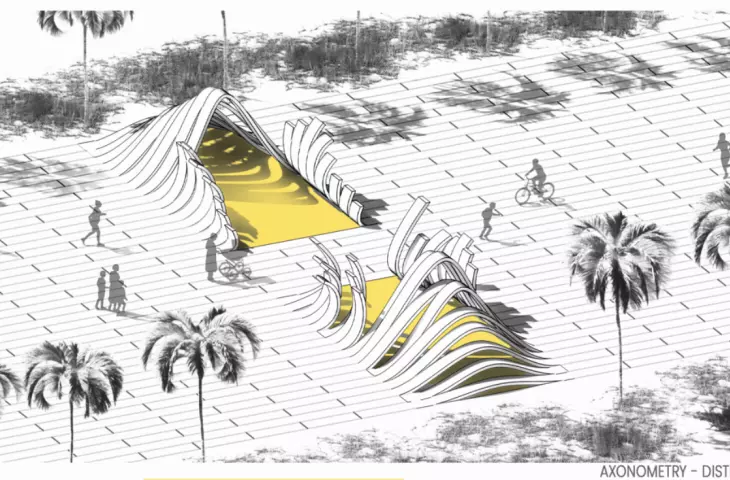
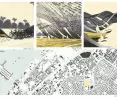
axonometrics
proj.: Mikołaj Michalak, Dominik Bartnik, Bartłomiej Warmiak, Julia Kubicka
discovered identity of the city
The authors of the project paid special attention to the ground of Dubai - it is from the layers of the ground, as it were, that the construction of the designed urban furniture grew, symbolically revealing the hidden layer of the city's symbolism.
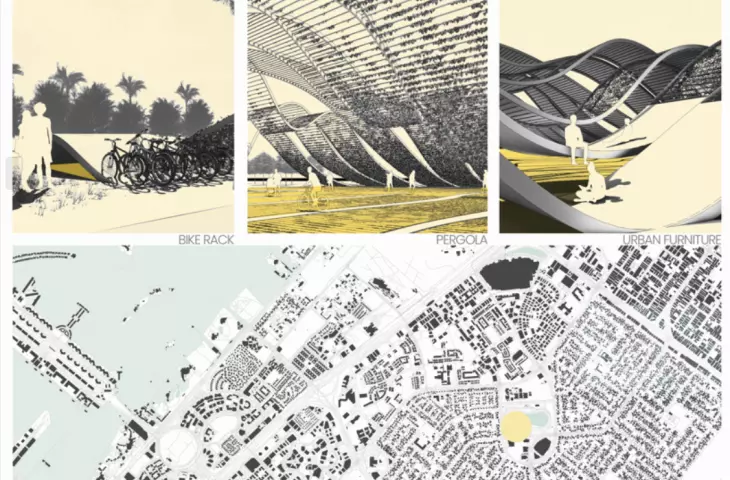
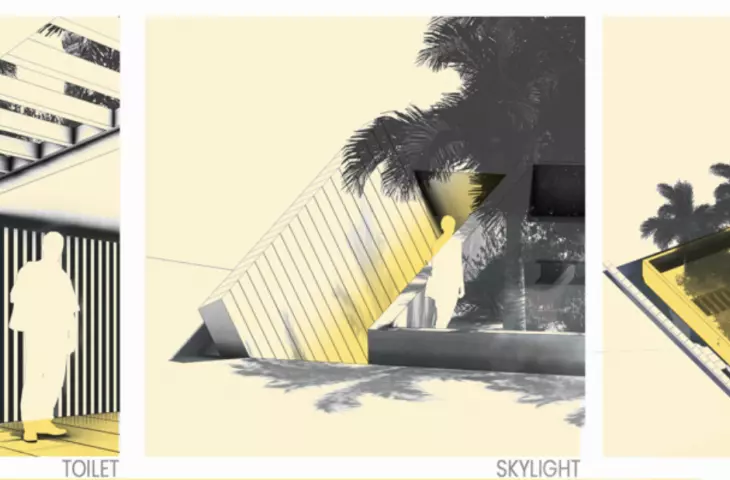
The project was divided into areas: residential, suburban, complex, industrial, historical-artistic and premium zone. In each of them, the designed buildings are maintained in the same style and color scheme - shades of yellow combined with concrete, steel, aluminum and wood. The elements emerging from beneath the surface, meanwhile, are distinguished by resin, ceramic and glass finishes.
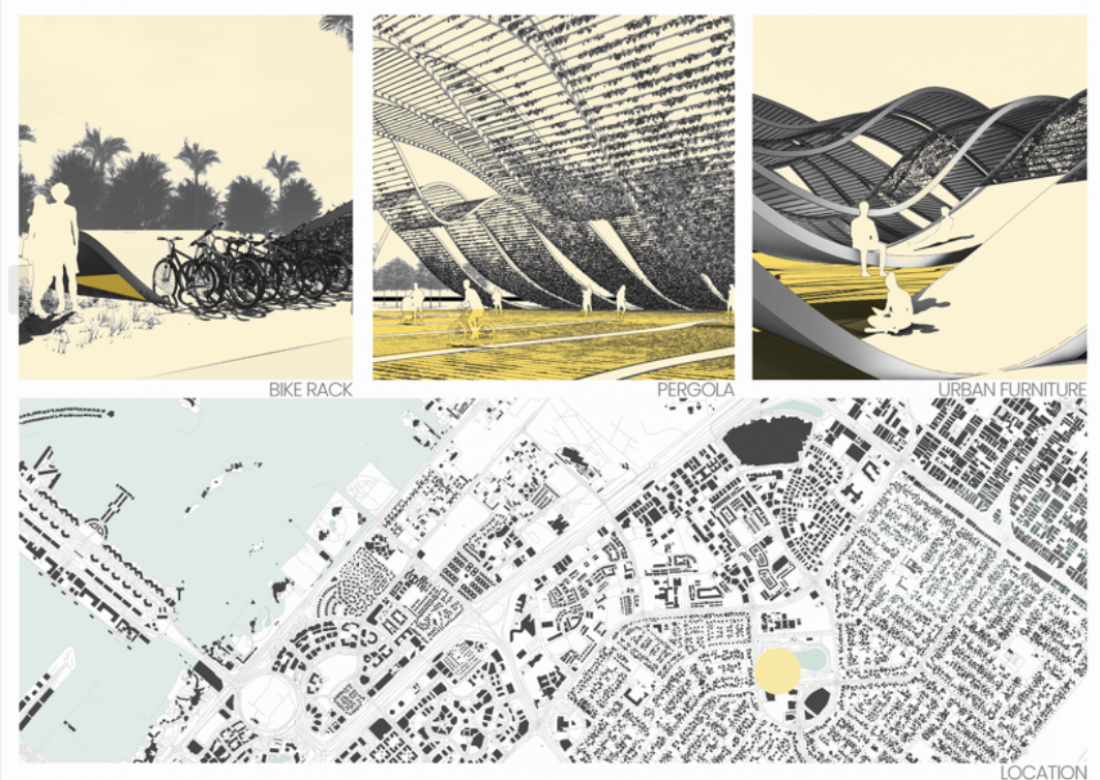
residential area
designed by Mikołaj Michalak, Dominik Bartnik, Bartłomiej Warmiak, Julia Kubicka
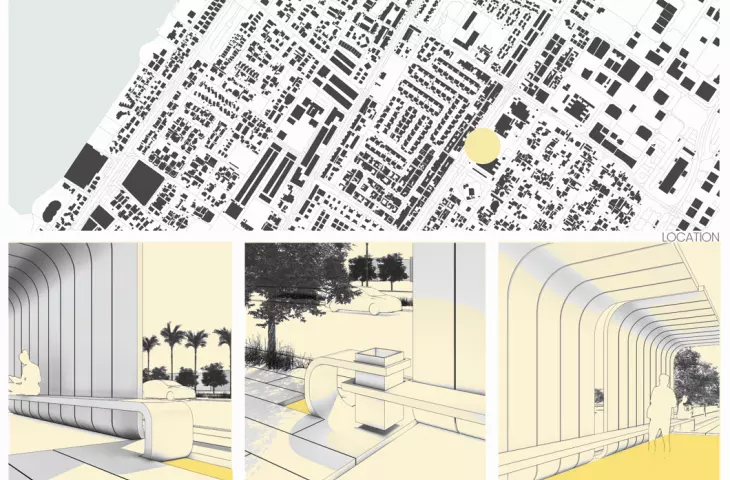
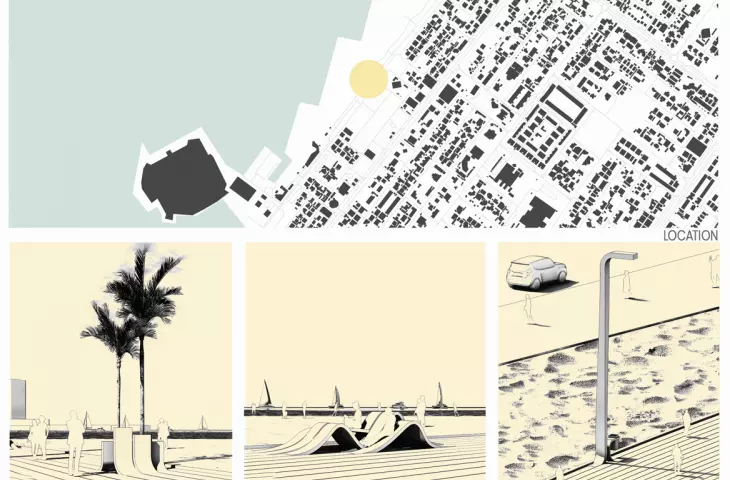
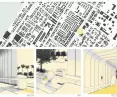
The residential zone reflects the peaceful rhythm of the residents' lives. The authors proposed installing seating areas in this zone, which allow for relaxation in the shade. The designed furniture is integrated with the sidewalks, created from fragments growing out of the ground.
A magical layer subtly emerges from each form as a glow, pattern or contrast. The materials are familiar, but the detail transforms them into symbols. Each bench and basket becomes a threshold between surface and history
- explain the authors.
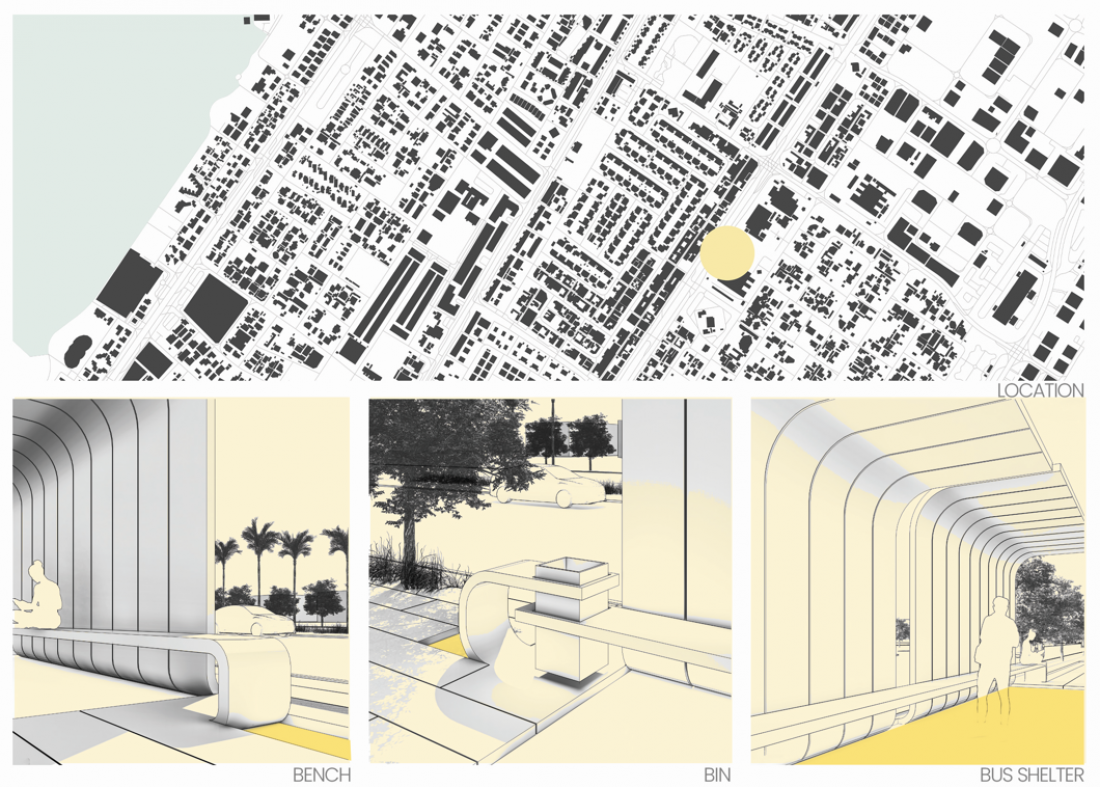
residential area
proj.: Mikołaj Michalak, Dominik Bartnik, Bartłomiej Warmiak, Julia Kubicka
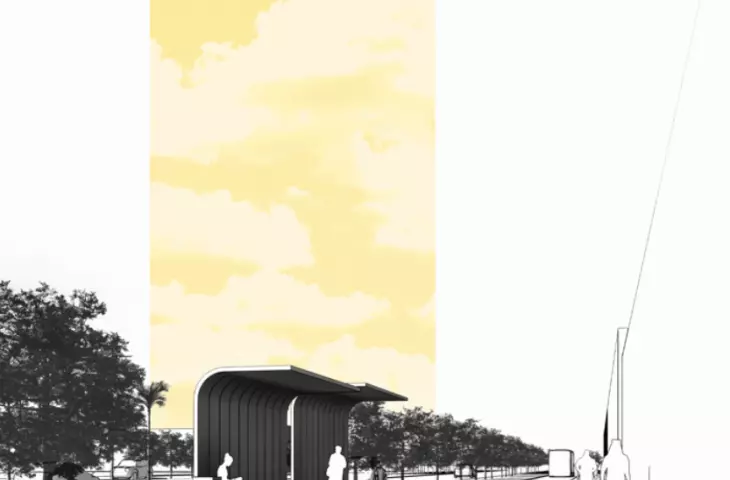
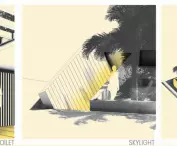
The second residential area is denser, and its residents live a faster lifestyle. In this area, the project involves the creation of functional urban elements such as bus stops and benches, and trash garbage cans integrated with them. Each structure has its own living interior. The objects come to life through the play of light and shadow filtered through the designed structure.
design that wraps
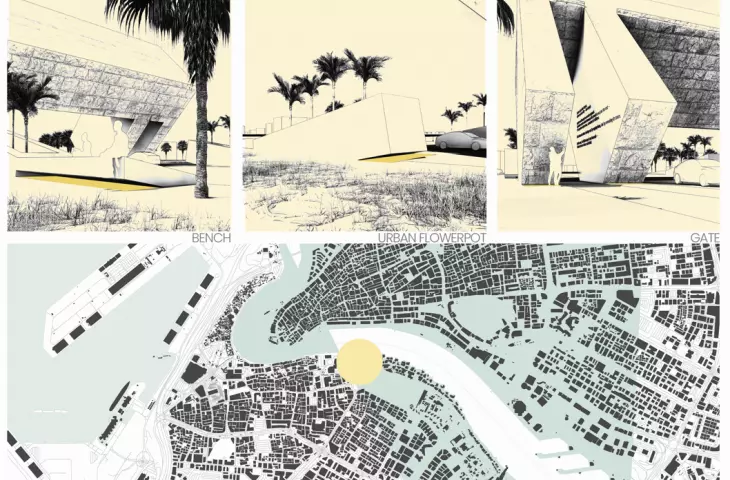
Dubai residents live a slower pace of life in the suburban zone, for which the designers created sloping benches, pots for desert flowers and solar-powered ponds.
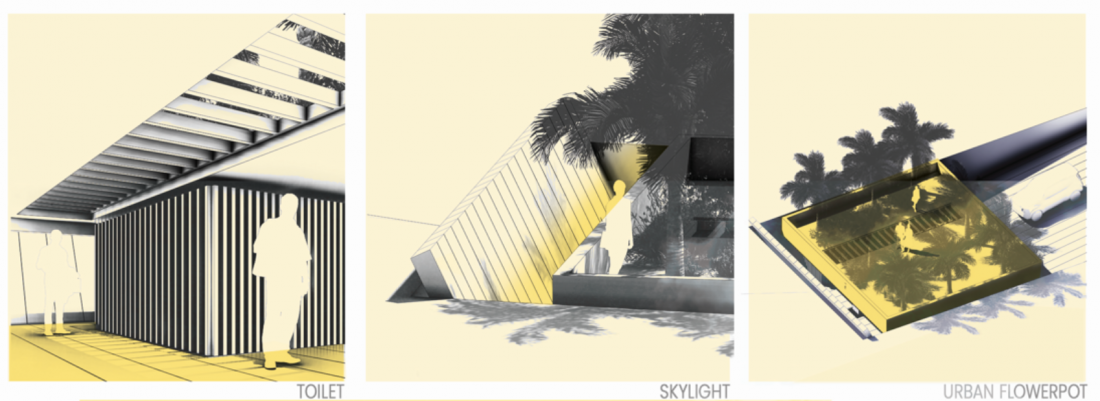
suburban area
proj.: Mikołaj Michalak, Dominik Bartnik, Bartłomiej Warmiak, Julia Kubicka
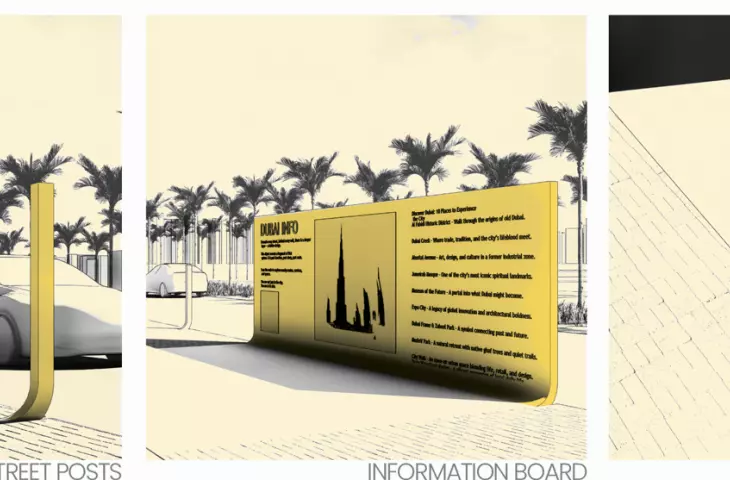
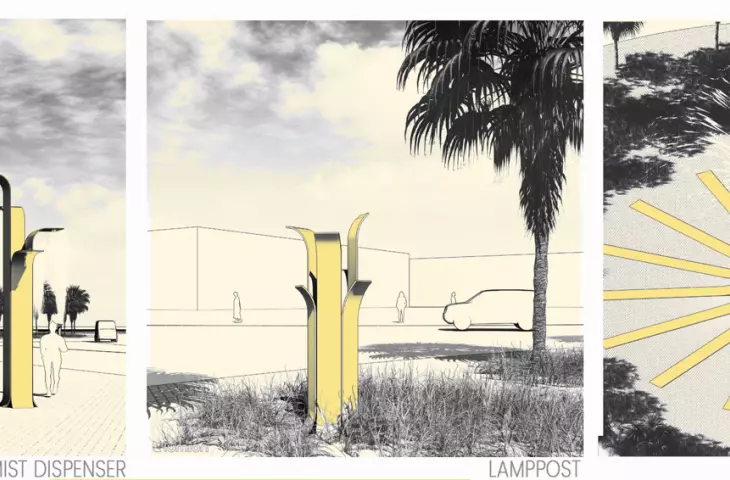
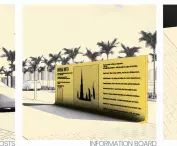
The comprehensive area includes elements that are found in different parts of the city, such as street poles, information boards and street lamps.
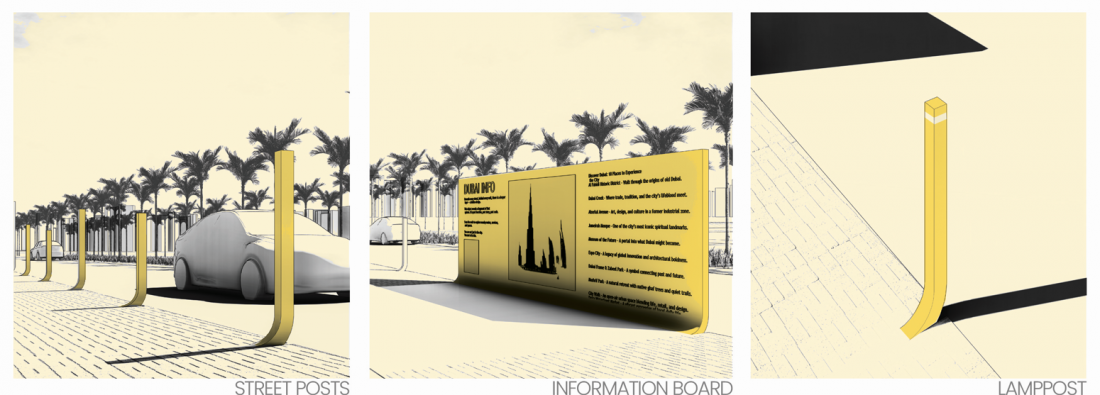
visualization
proj.: Mikołaj Michalak, Dominik Bartnik, Bartłomiej Warmiak, Julia Kubicka
Here the city does not have a decorative function - it is supposed to communicate. Objects become indicators of a larger system of reading and responding to signals. Design becomes a translation of complexity into tranquility
- the authors add.
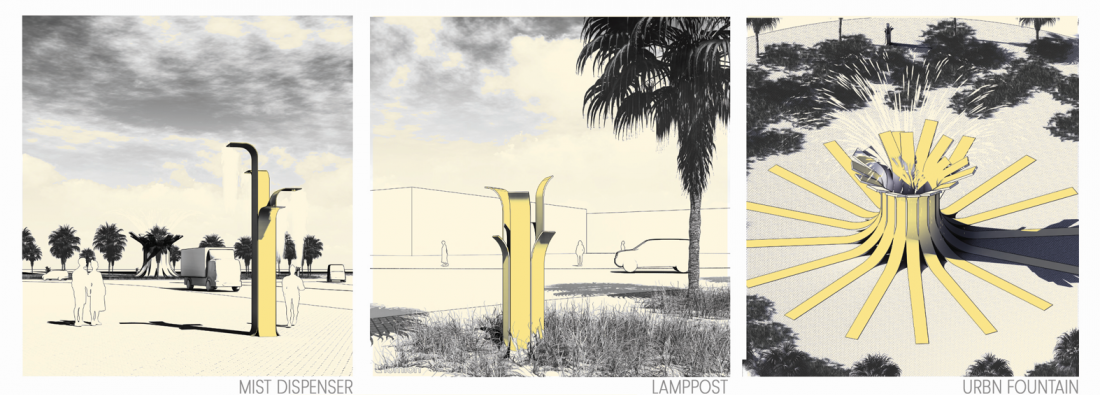
industrial area
proj.: Mikołaj Michalak, Dominik Bartnik, Bartłomiej Warmiak, Julia Kubicka
The industrial area includes water objects - fountains and sprinklers. In form they correspond with each other and with the street lamps. The historical and artistic area, on the other hand, was complemented by a gate with benches and flower pots. These are the geometrically heaviest objects in the series, whose form alludes to the traditions of the region.
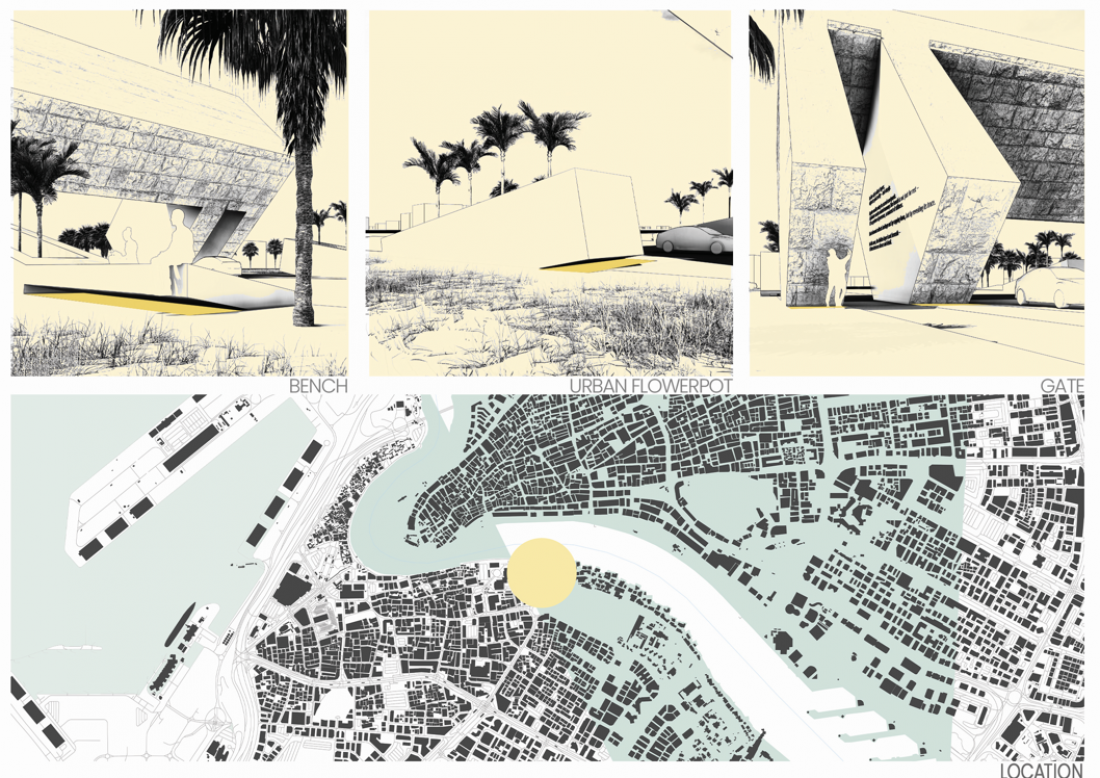
historical-artistic area
designed by Mikołaj Michalak, Dominik Bartnik, Bartłomiej Warmiak, Julia Kubicka
The premium, or high-end, area, characterized by simple lines and minimalism in spatial layout, gained lanterns, flower pots and seats in the design.
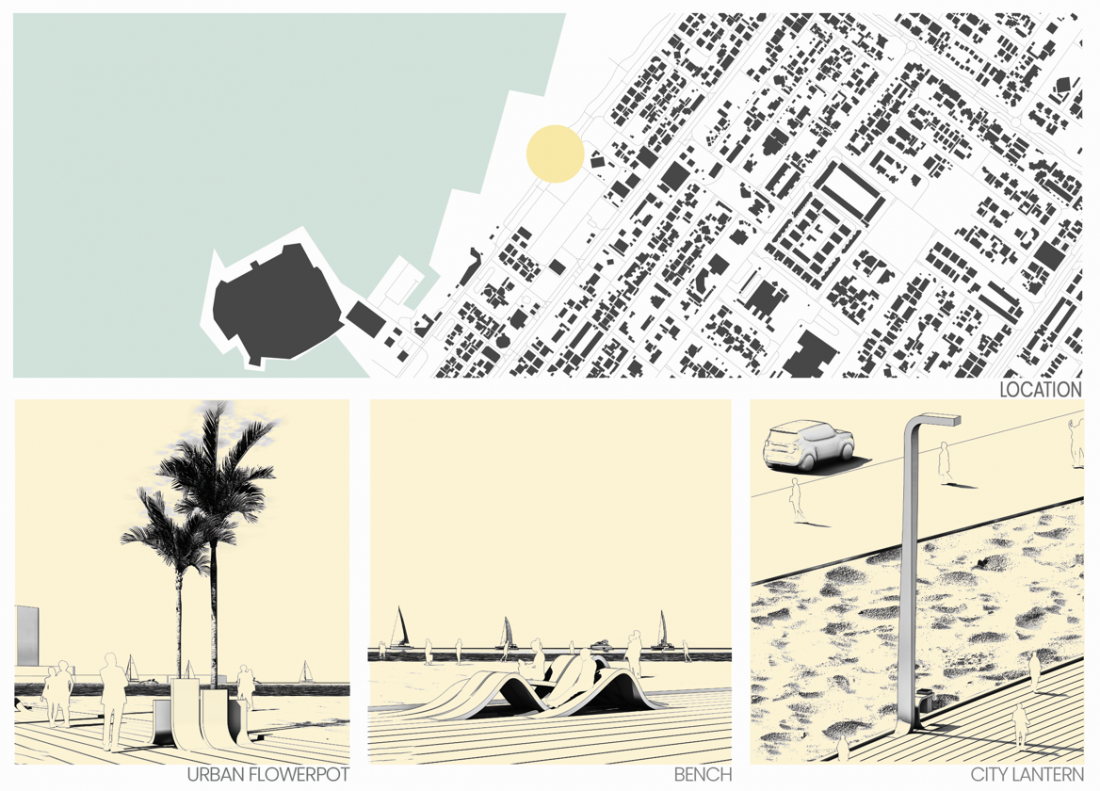
premium area
proj.: Mikołaj Michalak, Dominik Bartnik, Bartłomiej Warmiak, Julia Kubicka
The authors of the project emphasized prefabrication, modularity and digital techniques, so that the proposed facilities can be easily adapted to different locations in the city, while combining infrastructure with Dubai's identity.
The activities of the New Ideas Generation design circle can be followed on its profile on Instagram.