















How can traditional materials and modern design coexist to meet the challenges of climate change and social justice? What role does local craftsmanship play in shaping a more sustainable future? How can we overcome fear and greed and embrace a design philosophy based on love and intuition? In this inspiring conversation with architect Anna Heringer, we explore her vision - from her pioneering work in Bangladesh to ongoing projects in Europe and Africa - as we discover how she is changing the future of architecture, building by building.
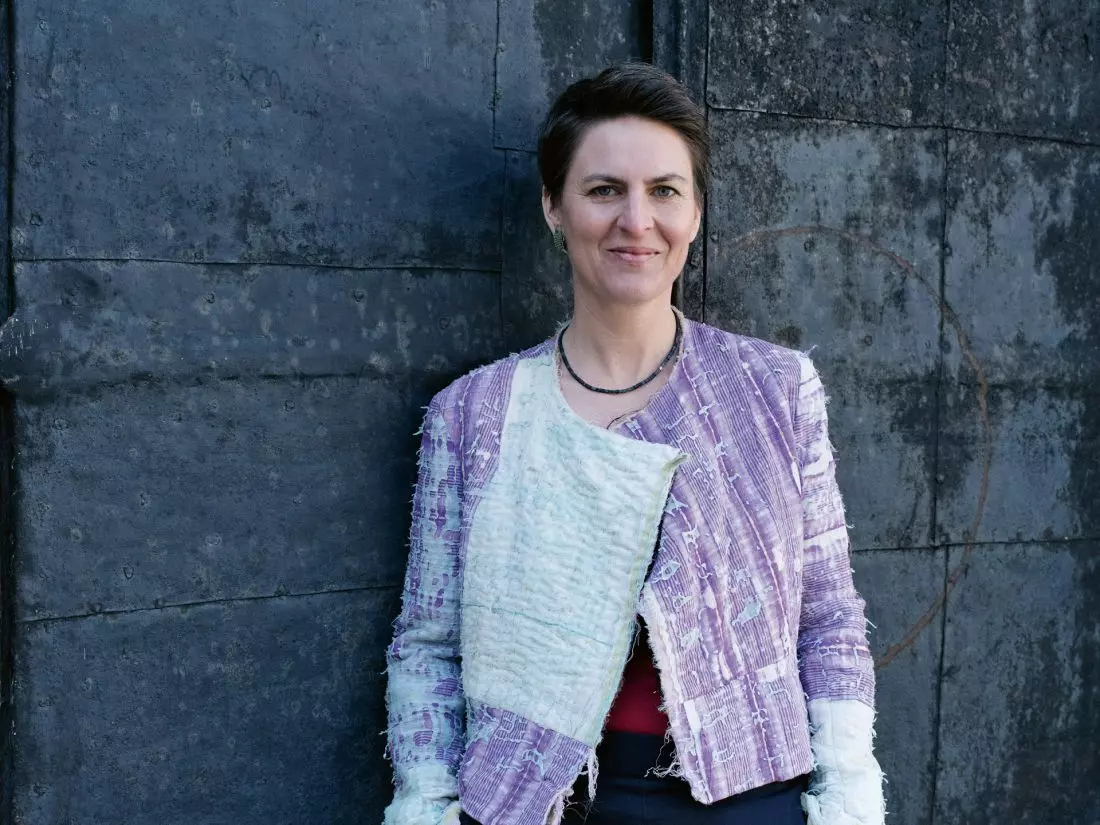
Anna HERINGER - For Anna Heringer, architecture is a tool to improve lives. She gained international fame with the construction of the METI school in Bangladesh, which she designed as her thesis at the Linz University of Art and Design. Since then, Heringer has developed and disseminated her award-winning architectural approach through buildings in Asia, Africa and Europe, and by teaching architecture at the University of Liechtenstein, Harvard University, ETH Zurich and TU Munich, among others. Her main goal is to use architecture as a catalyst for local development, particularly through the use of natural building materials such as clay, bamboo and wood, and the involvement of users in the construction process. Her work has been exhibited in many museums around the world, including MoMA in New York, Cité de l "architecture in Paris, Museo ICO in Madrid, V&A Museum in London and the Venice Architecture Biennale. Her work has earned her the Aga Khan Award for Architecture, the Global Award for Sustainable Architecture, the New European Bauhaus Prize 2021, the Philippe Rotthier European Prize for Architecture 2021, the Archdaily Building of the Year 2020 Award and the OBEL Award 2020, among others. UNESCO awarded her an honorary professorship for "Earth Architecture, Building Cultures and Sustainable Development." In 2023, she was awarded the Federal Cross of Merit by President Steinmeier. In addition to her work as an architect, activist and teacher, Anna Heringer is also CEO of Dipdii Textiles, a women's cooperative dedicated to fair fashion and textile art, as well as an author and mother. Her motto in creative work and in life is: form follows love.
Izabela Kutyła-Sztuk: You are a well-known advocate of sustainable design. How do you define it in the context of architecture and its impact on users?
Anna Heringer: First of all, sustainability is not just about resources, money, technology, materials or research. It's more about innere Haltung (sustaining a certain state). What I see now, especially in Europe, but also in the United States, is that all our design decisions are based on fear, legal liability and greed. This is fueled by the materials industries and lobbyists. This is a dangerous trend, and I think we need to start by asking: "Why are we so afraid, and how can we overcome these fears?".
One of the problems that causes them is that we know less and less about materials. We are proficient with computers, but we know less and less about working with materials and craftsmanship. If we compare this familiarity with the old days, when designers really understood finishing materials and were often craftsmen themselves, we see that we have completely lost it. We model buildings on screens and simply erect them, losing the relationship with the material. I believe we need to get back to material science and the manual skills involved in construction to overcome these fears.
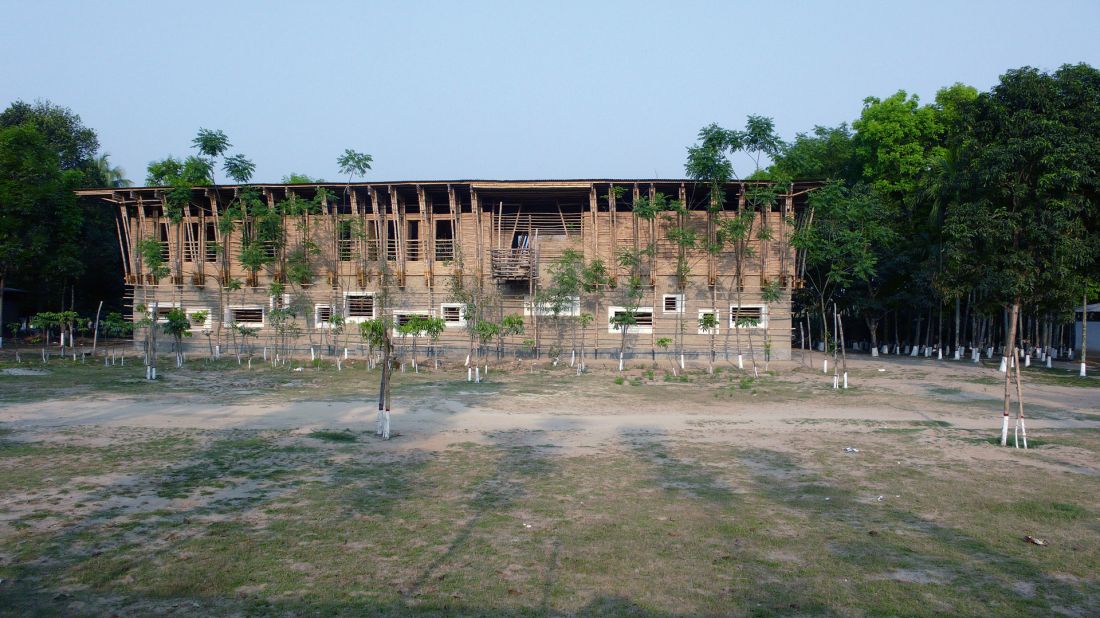
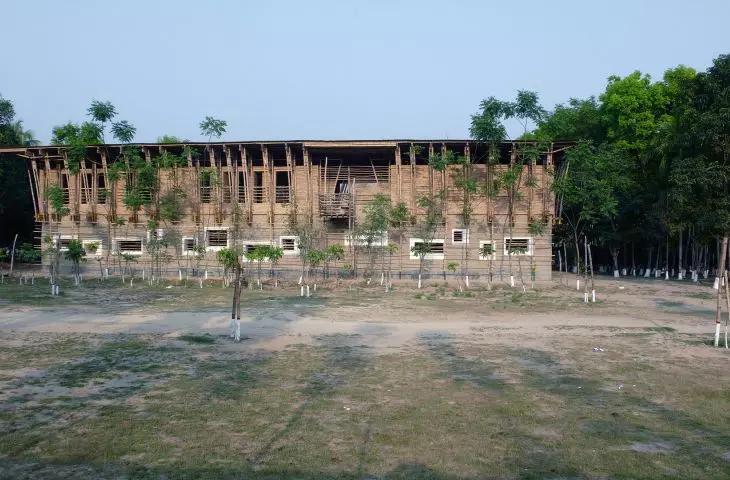
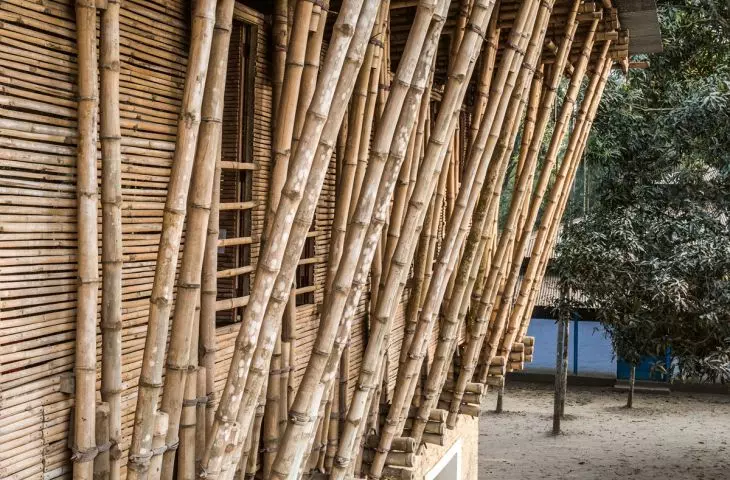
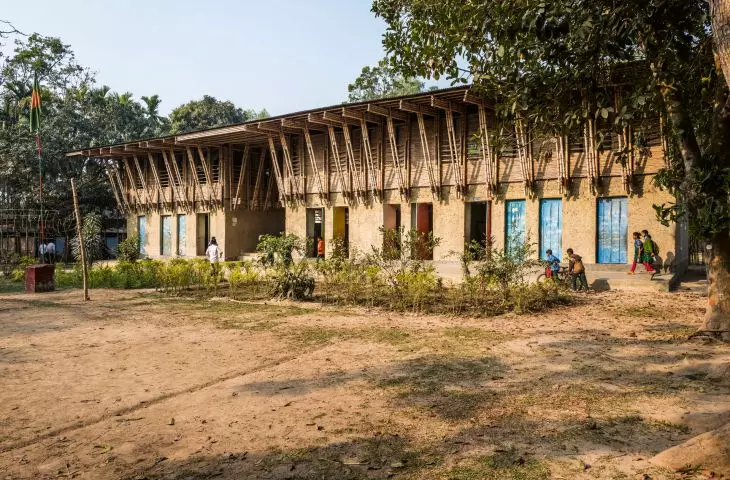
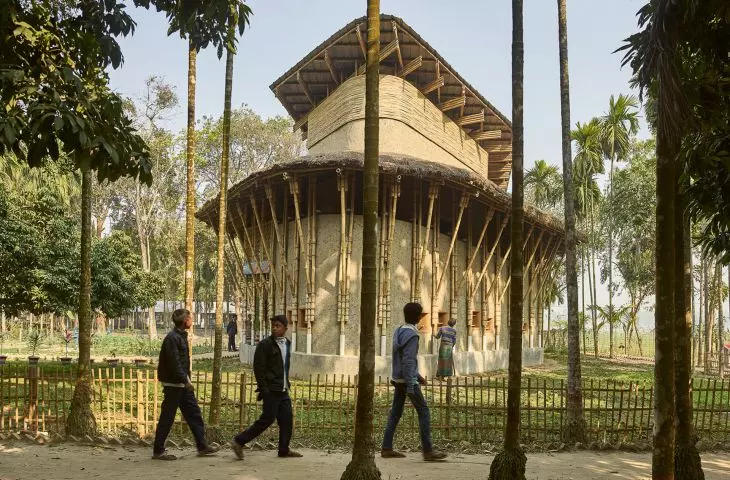
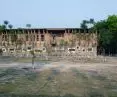
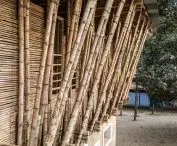
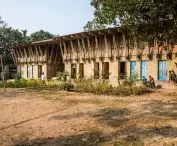
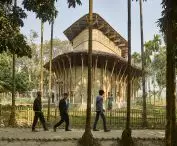
METI (Modern Education and Training Institute) school in Bangladesh
Photo: © B.K.S. Inan
Izabela Kutyła-Sztuk: What else do you try to talk about in your daily activities?
Anna Heringer: We also have to take into account the actual cost of buildings and building materials. We are constantly looking for cheaper alternatives, which are actually very costly for the environment. Currently, we don't know the true costs. To move toward sustainability, we need to overcome fear by gaining more knowledge and introduce fair prices for materials to overcome greed.
Nature provides us with many valuable resources. However, if we are destroying resources and the planet, there is a cost that must be factored into material prices. These issues should be regulated. For me, however, the most important thing is to overcome fear. There is only one emotion stronger than fear, and that is love. If we act out of love for other people, society and our planet, sustainability happens quite naturally. For me, this is the first and ultimate foundation. Design is a constant decision-making process, we can make decisions from rational or economic motives; when we are guided by intuition, gut feelings and love, we will achieve true sustainability.
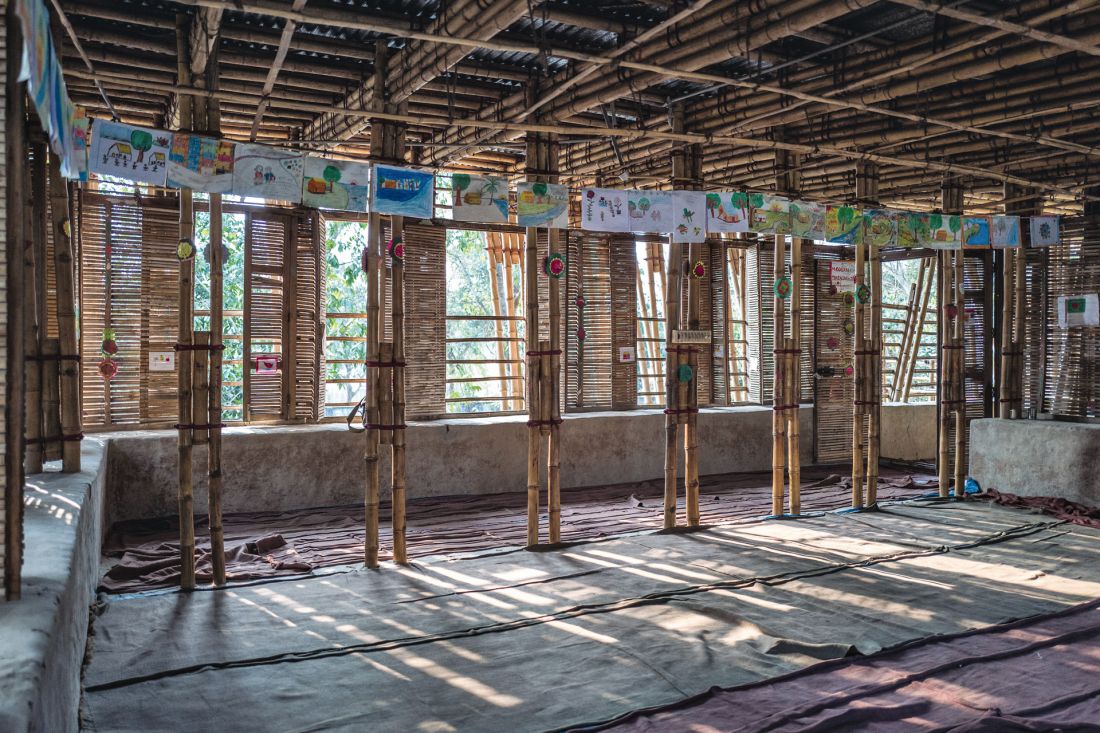
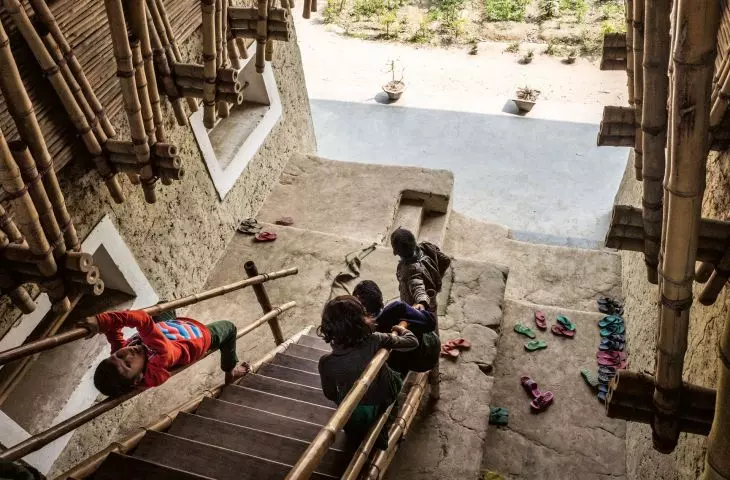
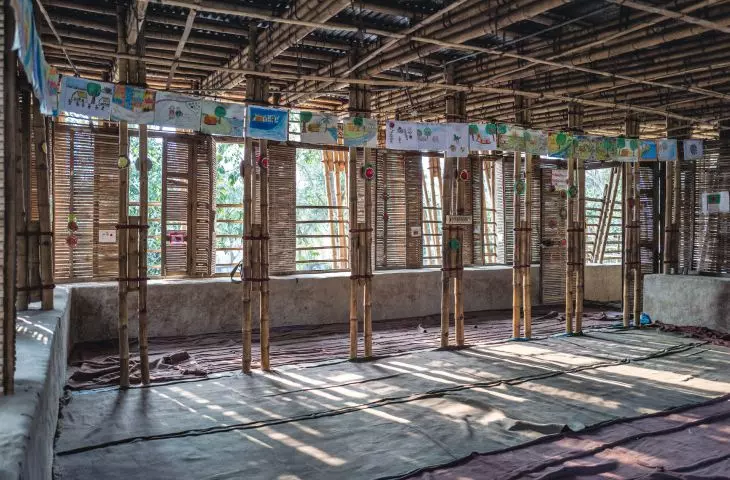
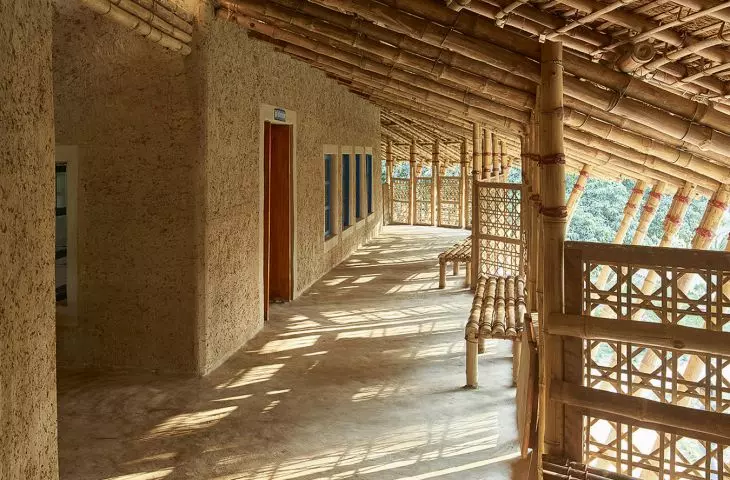
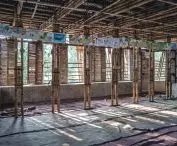
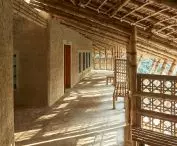
Meti school in Bangladesh - interior of upstairs classroom
Photo: © Benjamin Staehli
Izabela Kutyla-Sztuk: Cost is also an environmental impact. What obstacles do you encounter most often when designing and promoting sustainable development based on local resources?
Anna Heringer: There is a perception today that it is cheaper to buy imported material from China, which harms the environment, than to turn to a local artisan who uses local wood. We see that materials don't have a fair price, meanwhile their impact on the planet is very costly - a price that future generations will pay. The price of carbon emissions, the recyclability of the material, the amount of waste it leaves behind, its toxic impact on water or soil - all of these should be included in the actual cost of purchasing the materials. Now a portion is passed on to society as a whole, not just to the person who uses or buys the material. Even people in the Global South, who are still able to live in a very sustainable environment, bear these costs.
Izabela Kutyla-Sztuk: Regulations need to be updated for this to happen.
Anna Heringer: Yes, but someone has to demand it. Someone has to say loudly, "This is not right." We say that building sustainably is so expensive that we can't afford it. That's an excuse. We should stand up, speak out and convince politicians that the issue is urgent and important. We architects are the experts in this field, and we have to say that change is necessary. We also have our objections. Sustainable planning takes more time, it's easier to build according to the usual pattern, using standard solutions. In fact, reaching for sustainable solutions enriches our building culture and architecture. We should go back to using local, natural building materials, local craftsmanship and maximizing their potential. This is how our building culture began.
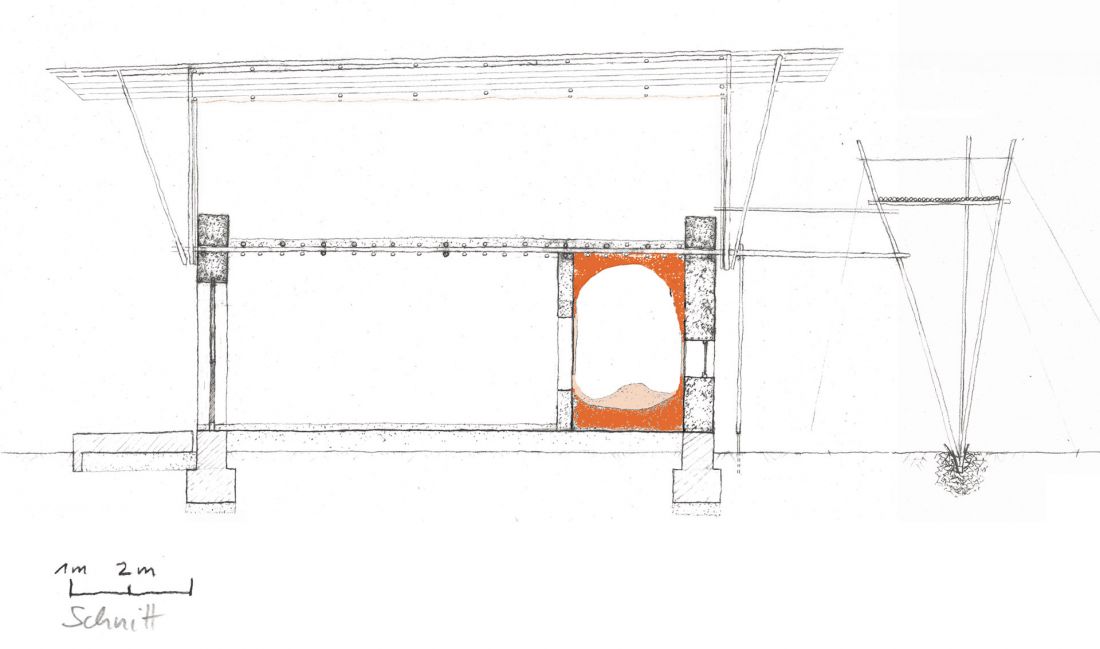
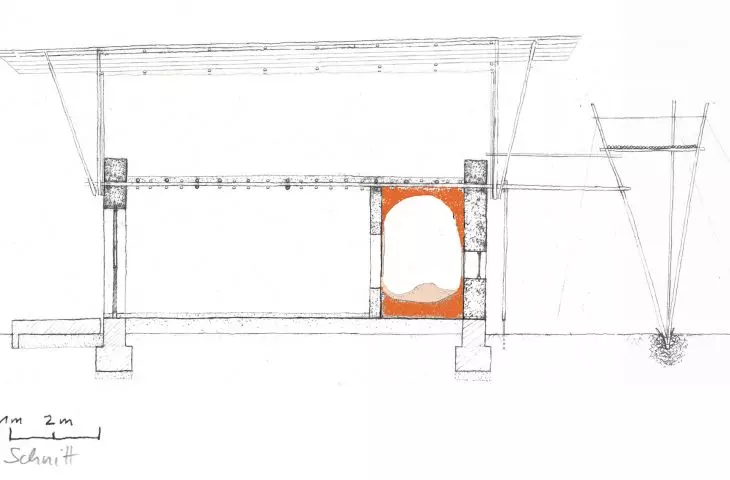
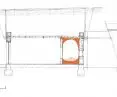
Meti school in Bangladesh cross section
pic: © Studio Anna Heringer
Every local material is different, depending on climate and environmental susceptibility. If we take these two parameters seriously, a site-specific architectural language will emerge. I believe we need to return to this - not only for sustainability reasons, also because contemporary architecture is becoming more random, less authentic. One building tries to be more expressive than another. As a result, we have a lot of "artistic" buildings standing next to each other, each trying to stand out from its surroundings, but none referring to the context of the place.
Izabela Kutyla-Sztuk: In this case, "form follows form." We are talking about newly constructed buildings. What strategies can architecture adopt to respond to climate, social and economic changes, both in new and existing buildings?
Anna Heringer:The best strategy for sustainability is to use what you have in your immediate environment, without depending on external factors. This is what I learned as a student in Bangladesh - you always have more than you think. You think you have nothing, but when you look around, you realize you actually have a lot. We need to see the value of what we have and strive to consciously save. We don't need more square meters or more furniture that we later throw away because it's perishable or we get bored. We no longer inherit things or pass them on to future generations. We simply have them for a while and then get rid of them. We need to downsize, and downsizing doesn't mean lowering the quality of life - it requires better design.
When you have less square meters, you need to optimize the space and think about how to use it. We can save a lot if we do the right analysis. I'm working on a project in Germany, a sustainability center, and we initially went way over budget. However, we looked at every room and square meter and found ways to save money. Eventually we reduced the entire floor. I also discovered that clients often want to make sure there will be enough space, are afraid of running out, and don't want to make final decisions. They want to leave themselves every option open, so we end up with twice as much space as we need.
I believe that if we fill our buildings with emotions and memories, we don't need so many square meters. One very important point is to participate in the building process, because that's how we become emotionally attached to the building. You can sense this energy in the materials, surfaces and walls. It is not empty space. Good quality does not depend on quantity or parameters.
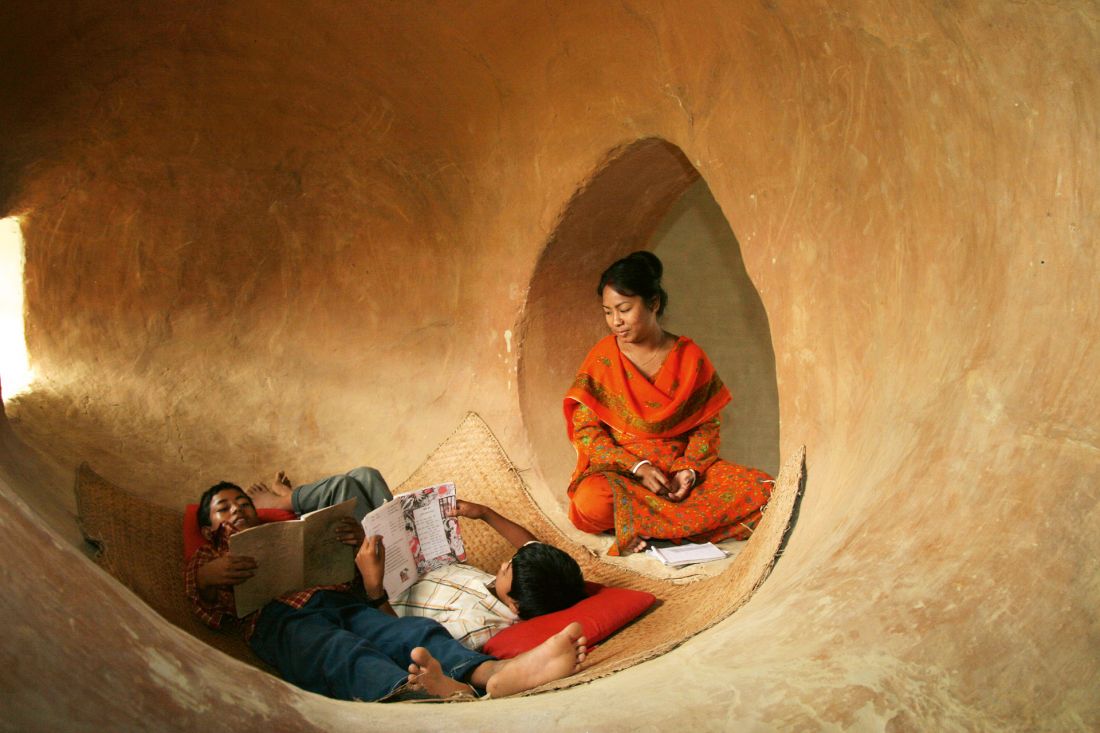
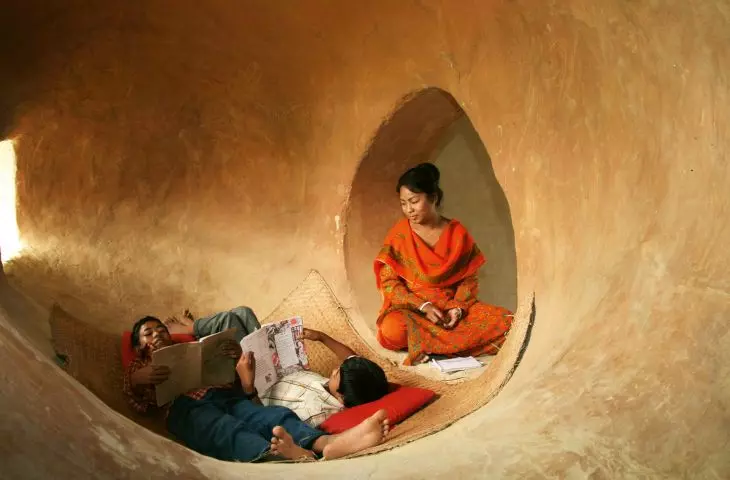
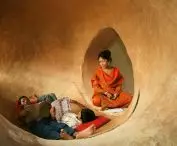
Meti school in Bangladesh - the interior of a "cave," a space for tranquility and relaxation
Photo: © Peter Bauerdick
Izabela Kutyla-Sztuk: You have dedicated your career to sustainability. Which project is the most sustainable and why?
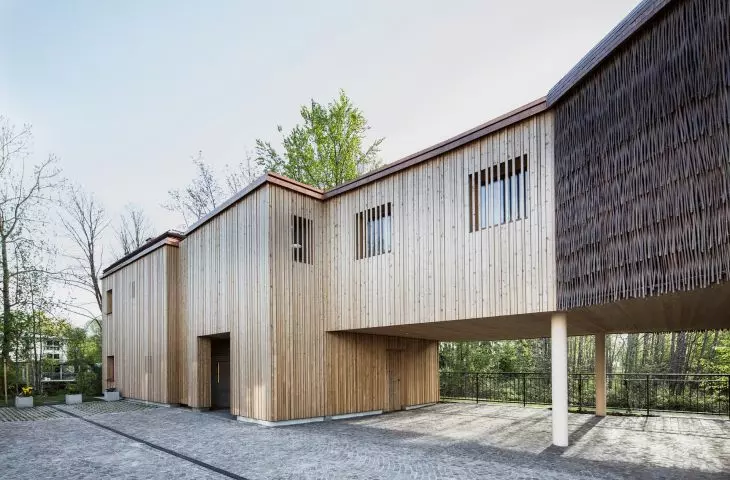
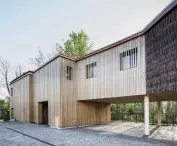
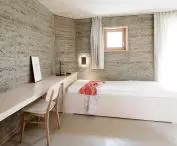
Anna Heringer: I think the projects in Bangladesh and the ones I'm working on now in Ghana are among the most sustainable. Also the Birth Space in Vorarlberg, Austria, and the building in Rosenheim are great examples. The best part is that building sustainably can be really cheap. I hope we get to the point where ecology is supported systemically.
Izabela Kutyla-Sztuk: Could you share your experience with the METI school project in Bangladesh? How did local craftsmanship and Western knowledge come together, inspiring you to create a new way of using them?
Anna Heringer: I would say that the METI school was the beginning. That was twenty years ago. Since then I've built several facilities in the village, and the most recent one is the Anandaloy center, which is the most polished project. When you start working with a material you don't know, you don't dare to do too much and you don't see its full potential yet. I designed the METI school in a very rectangular form; it was important to show that you can build precise architecture with straight corners out of the most humble materials - basically clay.
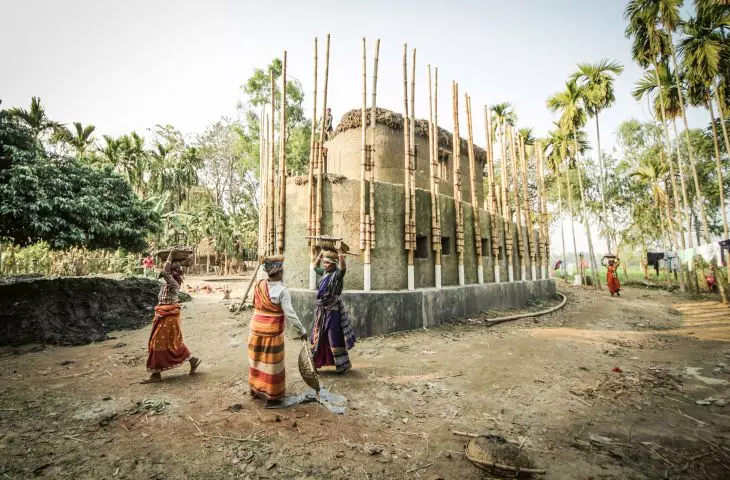
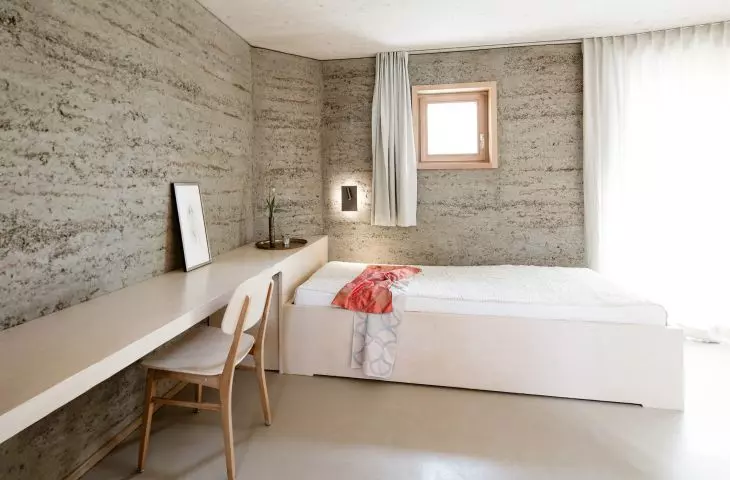
With the Anandaloy building, which is a center for people with disabilities, I wanted to show that going beyond the usual patterns is beautiful. Diversity is something to be welcomed with openness; it is good that we are not all the same. The building literally "dances" in its curves. This works great with clay, as it is a very versatile material. It can be molded into rounded shapes just as easily as straight lines. The technique we use is the "cob" method. It is based on a natural building material consisting of soil, water, fibrous organic material (usually straw) and sometimes lime. It does not require formwork. The better you understand the technique, the better you get to know the material and its potential.
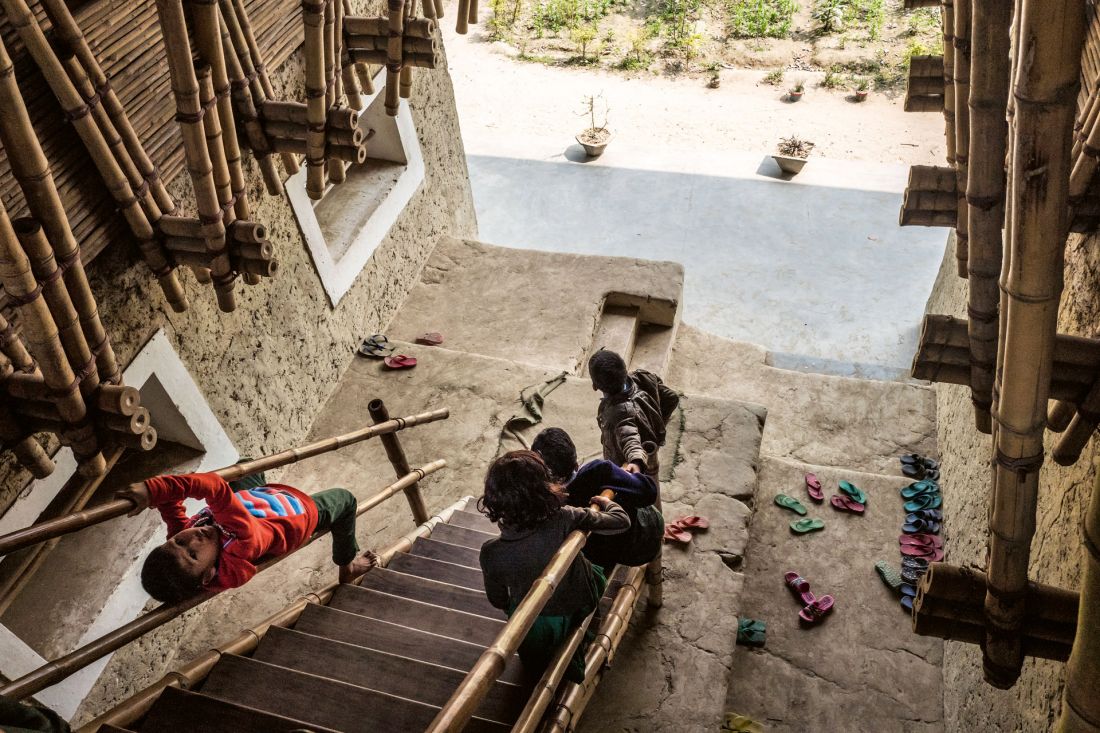
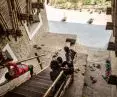
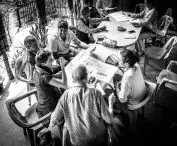
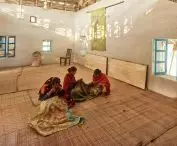
Meti school in Bangladesh - daily life; 168 students study at the school
Photo: © Benjamin Staehli
METI School was, of course, the first project in which I used the material. The plasticity of clay and its expressiveness are most evident in this latest building. The first was built under the supervision of my team and me, but the latest was largely supervised by the local community. As a result, I learned a lot. It fascinates me that clay has so many layers of expression and potential. METI School was my graduation project. At first I felt very limited in materials, but now I feel that clay is a whole universe - so much can be done with it. If you focus on something and explore it, it becomes richer and more satisfying.
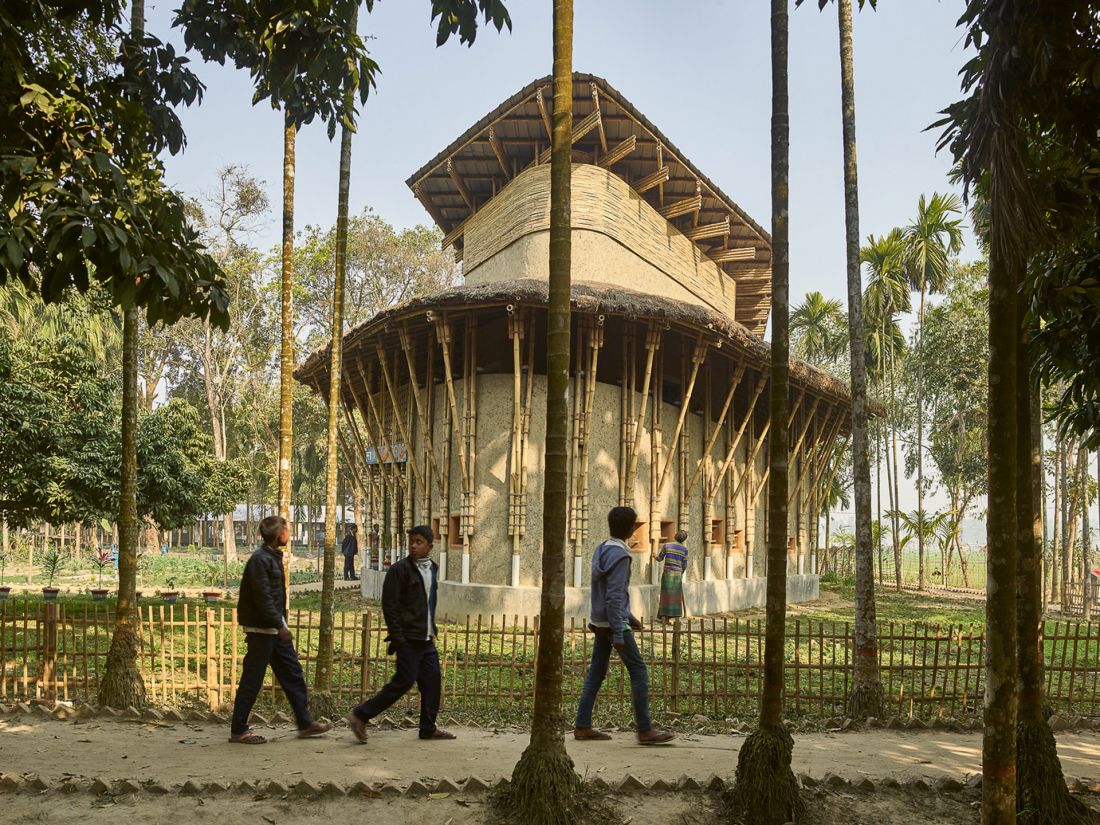
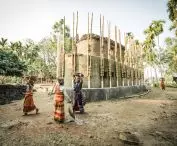
Anandaloy center for people with disabilities in Bangladesh
Photo: © Kurt Hoerbst
Izabela Kutyla-Sztuk: Social issues are also important to you in the design process. How does architecture affect its users and its surroundings?
Anna Heringer: First of all, I always ask myself questions about who benefits from what I design, and what impact my choices of building materials and construction techniques have. With AI, this challenge becomes even more pronounced, because you can easily see it on a computer screen: you design a structure on the screen, and then ask AI to translate it into concrete, aluminum, steel or wood. You see all the options and choose the one that suits you best or that the customer prefers. The choice of material ultimately determines who benefits and whether it is harmful to the environment. Huge amounts of money pass through our hands as planners and architects. For me, it is crucial that the profits go to those who really need them: local artisans, not just big corporations. Often, through our profession, we serve those who are powerful and wealthy, not only because we get commissions from them, but also by how we design and what materials we choose. Through our choice of materials and technology, we have a huge impact on society and social justice.
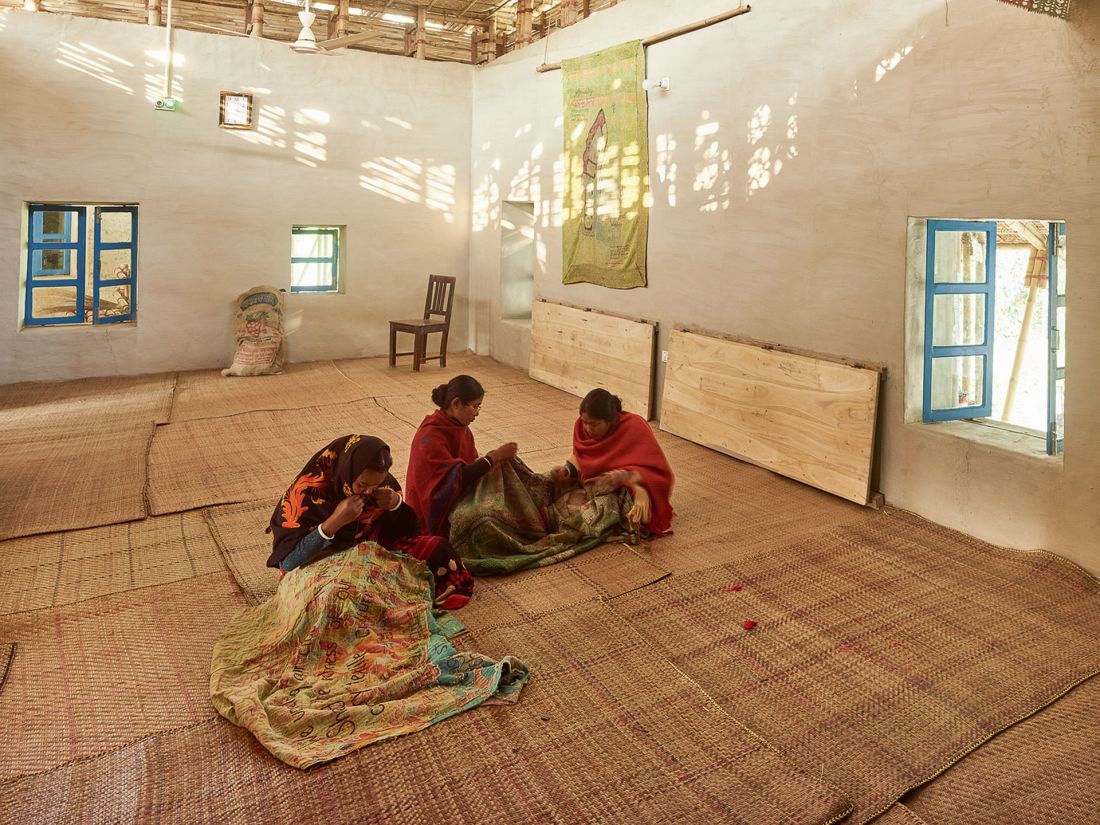
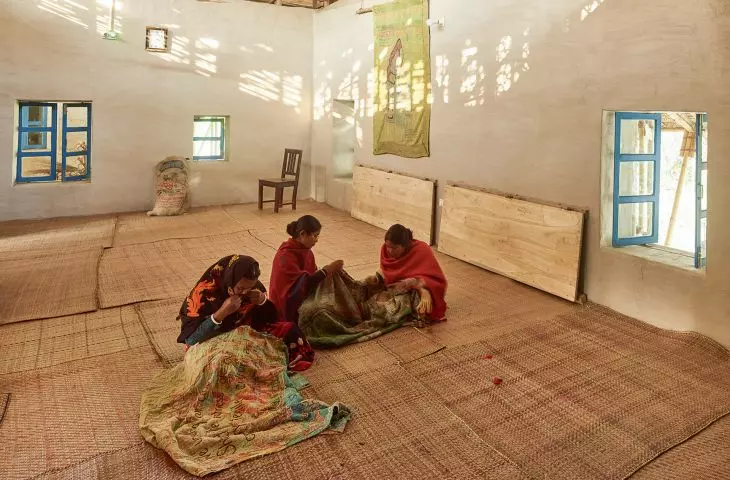
Anandaloy center for people with disabilities - in addition to supporting people with disabilities, the center also professionally activates local women
Photo: © Kurt Hoerbst
Izabela Kutyla-Sztuk: What have you learned from working in such different places? How does this influence your design in Europe?
Anna Heringer: It makes no difference whether I design in Bangladesh or in Europe. I always try to use local materials, and clay is everywhere. If sustainability refers only to the Global North or South, it ceases to be sustainable at the same time. I strive for a global strategy based on local, natural building materials.
I remember coming back from Bangladesh and designing locally. I was looking online for washbasins, and the selection was overwhelming. I became frustrated and lost a lot of time looking for the perfect one. In Bangladesh, in a similar situation, I simply went to a potter and asked him to make a bowl with a hole. I decided to do it again: instead of trying to keep up with trends, we should make our own things with local artisans, start with what we have, and really appreciate it. This comes naturally when you're in a place where you don't have access to luxury things. You start with what you have on hand, and that's what you use. That's how the old cities were built - there's great wealth in the process.
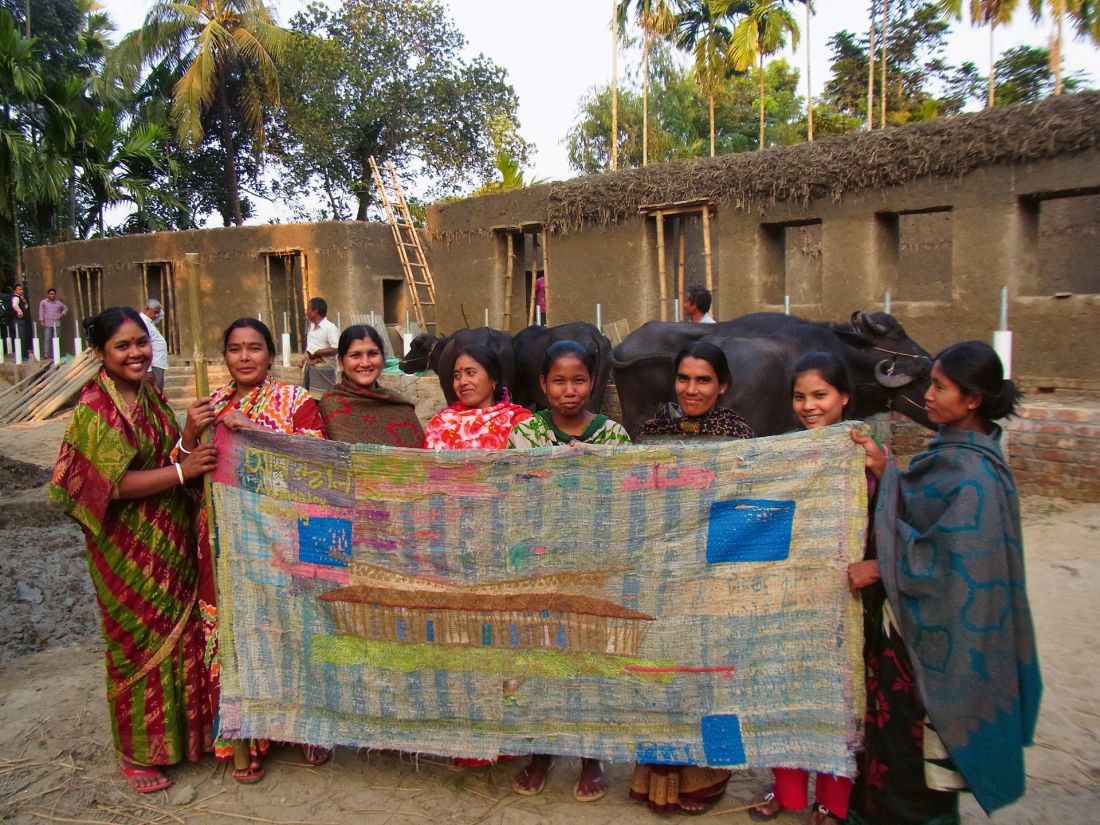
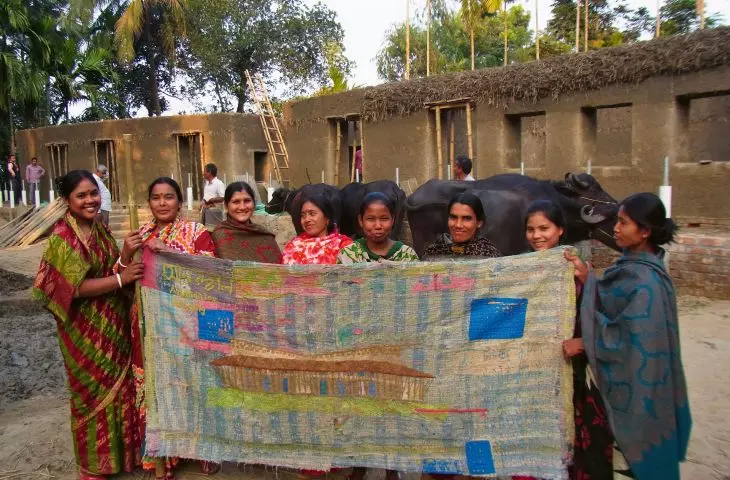
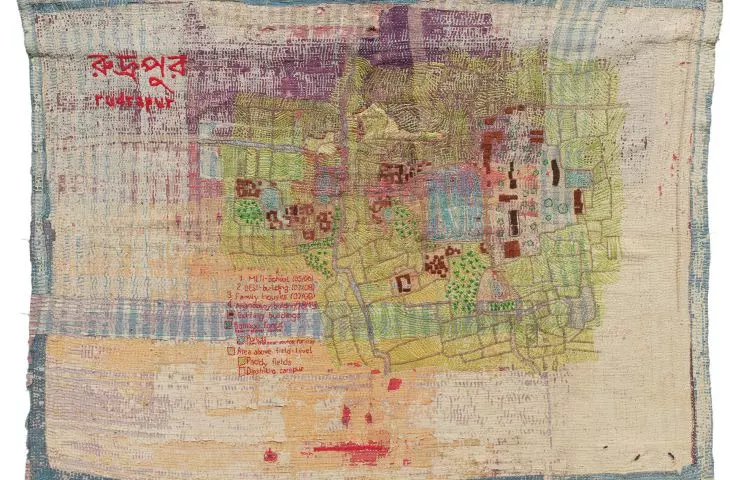
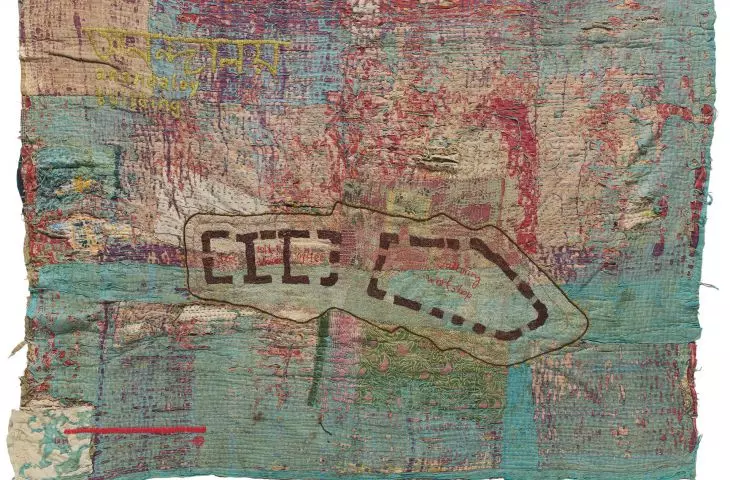
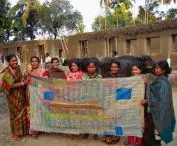
The proud authors of the embroideries that are made in the center of Anandaloy
© Studio Anna Heringer
Izabela Kutyla-Sztuk: Is it important to include the community in the construction process?
Anna Heringer: What I've learned from working in the Global South is the power of process and the value of participation. It's not just about design - architects are designers, and it won't be good to entrust the design of a school to a 12-year-old child. Although this child will use the building, he doesn't have the knowledge necessary to design. This is our core competency as architects: design. We need to listen carefully and understand what people really need, for example through workshops, but the design process itself should remain in our hands.
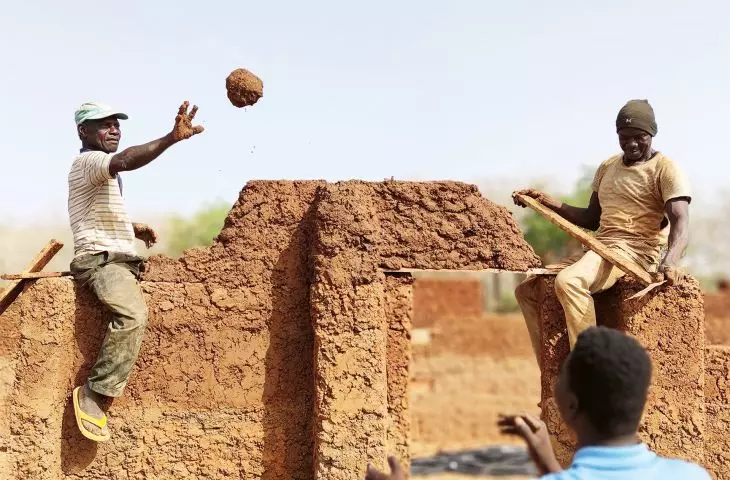
In turn, the involvement of people is crucial in the construction process. The act of building is part of our human nature. Every child plays at building: with cardboard boxes, branches, snow or blankets. We build as children, but as adults we delegate this activity to experts.
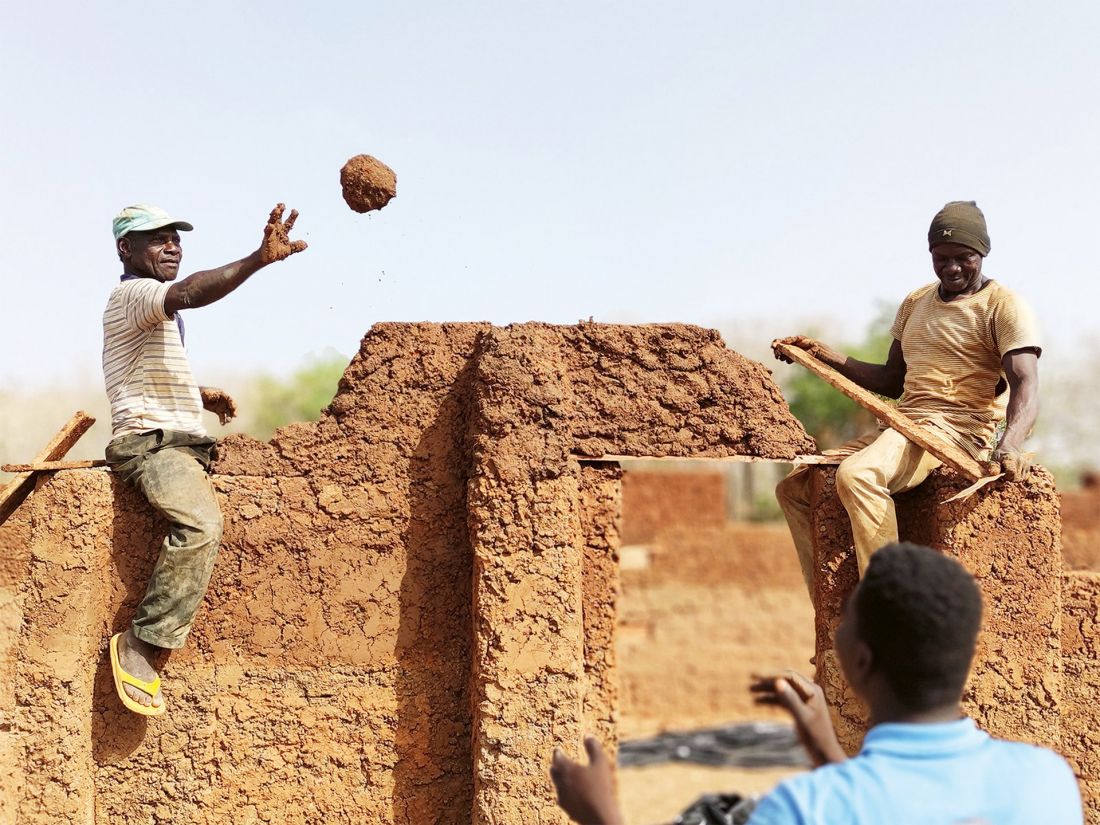
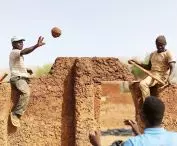
Ghana Don Bosco Earth Campus Tatale - selecting local contractors is part of sustainable design
Photo: © Katharina Lehmann
Architects often take photos of buildings before users move in, because that's when the selection of furniture, plants and other things begins. It's a natural instinct to make a nest, but the process is not very satisfying because you are limited to passive purchases rather than creating something with your own hands. After a few years, you feel unsatisfied, so you buy another couch, a new kitchen built-in. This only fuels further consumption. That's why in every project I leave space for future users to do something themselves, build a wall or apply clay plaster with us. There is great power in the building process, especially when done in teams. By building, we create community and team spirit.
Izabela Kutyla-Sztuk: How do you see the development of design in the context of digitalization and modern technologies? You mentioned artificial intelligence, can these tools interact with sustainable architecture?
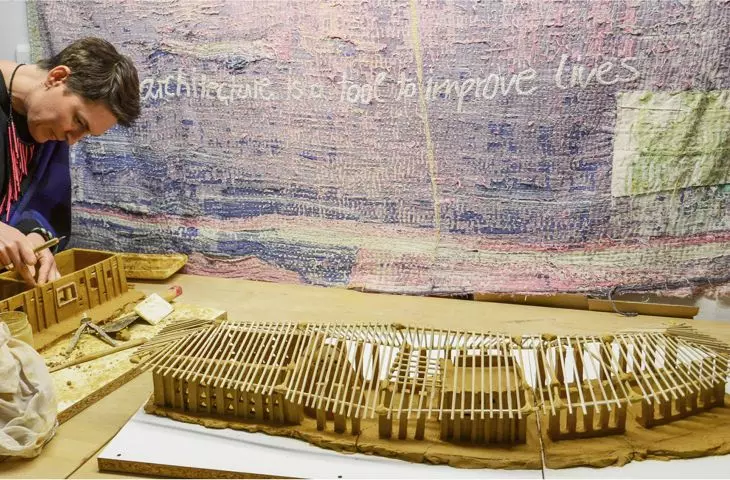
Anna Heringer: I find climate simulations interesting. When I design, I use analog methods - I model buildings from large lumps of clay and then digitize them. Climate simulations are done by experts to adjust things like window openings, and this is where technology comes in very handy. Then we go back to analog methods.
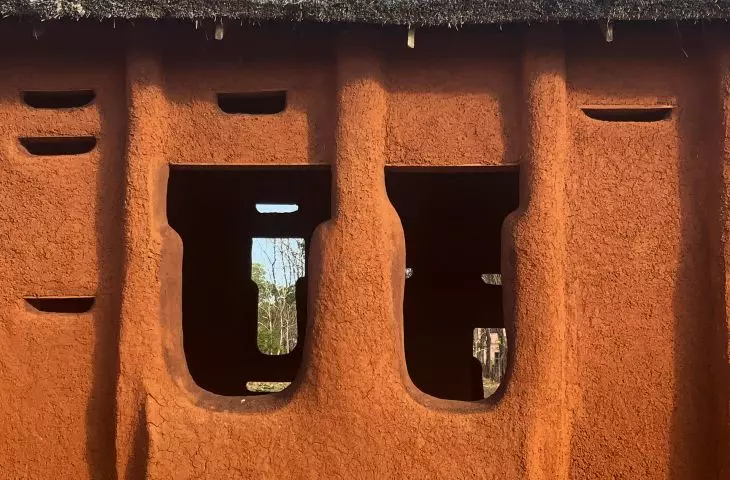
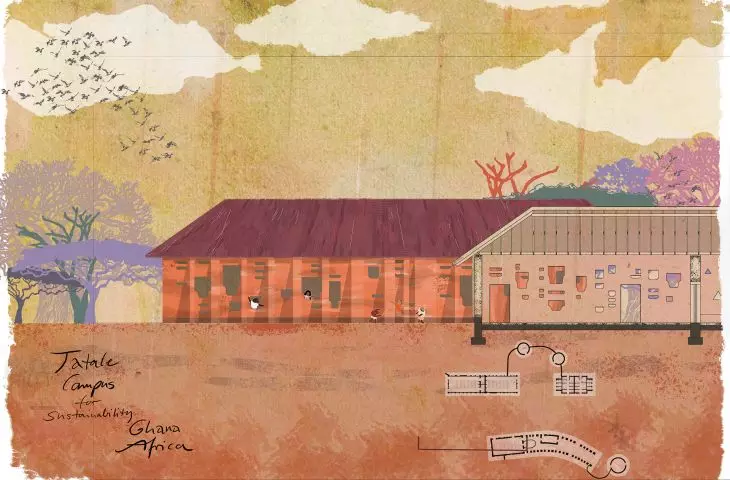
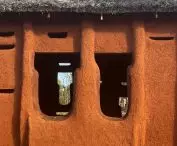
In Ghana, for example, the building was formed by hand. I originally designed simple, rectangular windows, but when the women began work, they shaped the windows themselves into a rounded shape by hand. The windows became unique, something I would never have designed, and something no artificial intelligence would have come up with. That's authenticity, that's the power that AI can't create. The emotions and bonds created during the construction process - when you physically participate and collaborate - cannot be replaced by a computer or 3D printer. These moments build our sense of well-being and a sustainable, happy society. We need to feel the energy in the process, to feel that when the building is finished, we can stand in front of it and say, "We created this." We didn't need anything but the ground under our feet and our own muscles. No AI can give that feeling. I think 3D printers and AI can take care of some tasks, but they will never replace the essence of the process.
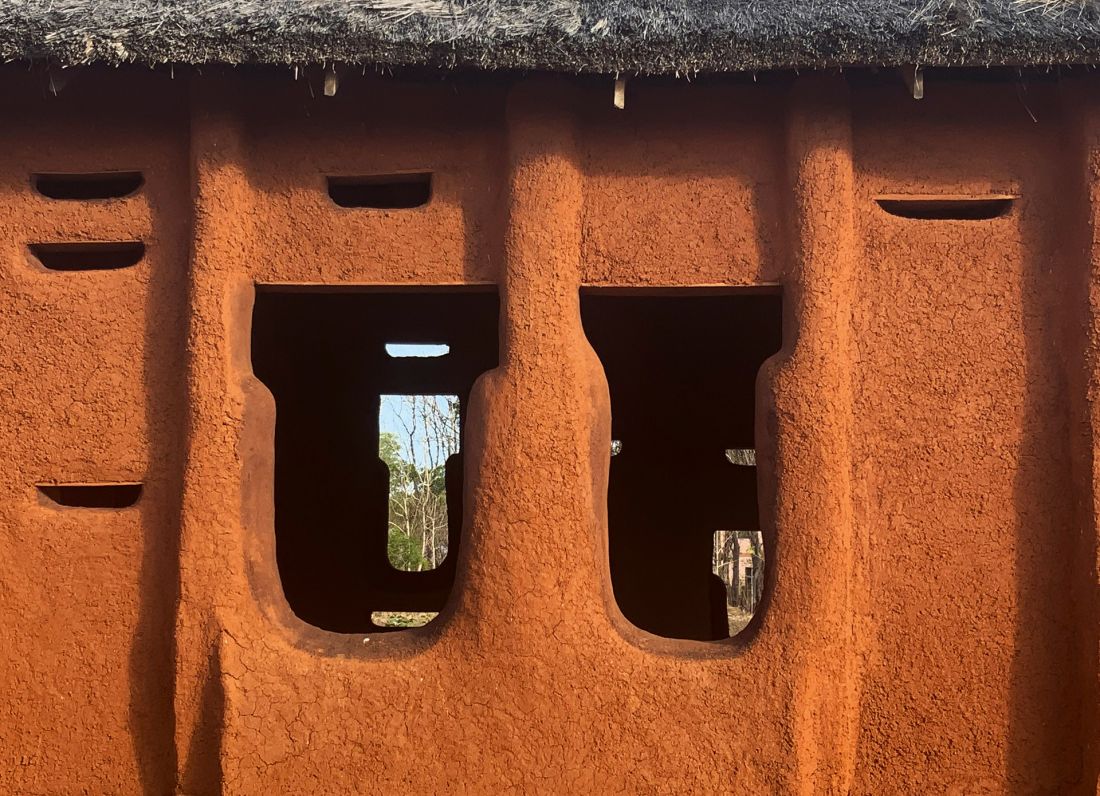
Ghana Don Bosco Earth Campus Tatale - hand carved window openings
Photo: © Studio Anna Heringer
Izabela Kutyla-Sztuk: Some people wonder if their profession can be replaced by AI. What will it be like for architects?
Anna Heringer: Historic parts of cities or places we visit while on vacation, in Italy or Greece, attract us because they are unique and authentic. We recognize them because they have a unique character. AI can threaten this authenticity, and that is at stake in this game.
Izabela Kutyla-Sztuk: What are your dreams for the future of architecture and related fields?
Anna Heringer: I hope that trust in intuition will return. AI optimizes everything. For example, our playlists are generated by AI, and soon it may also decide what we eat based on our digital twin.The more we entrust decisions to AI, the more we lose touch with our inner self and intuition. Intuition is deeply human, it is that inner voice. I hope we don't lose touch with it. I hope we listen to our hearts, not to the voices trying to sell us "perfect", optimized solutions. They will not bring true happiness. I hope we will choose love over greed and fear.
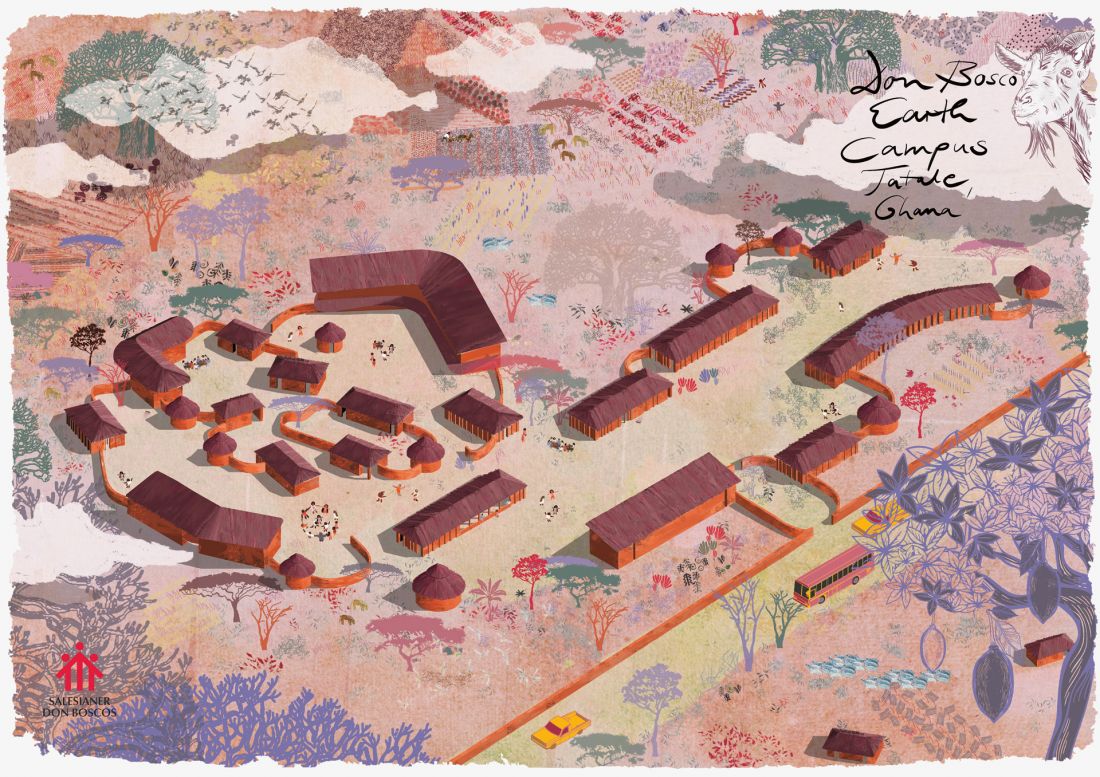
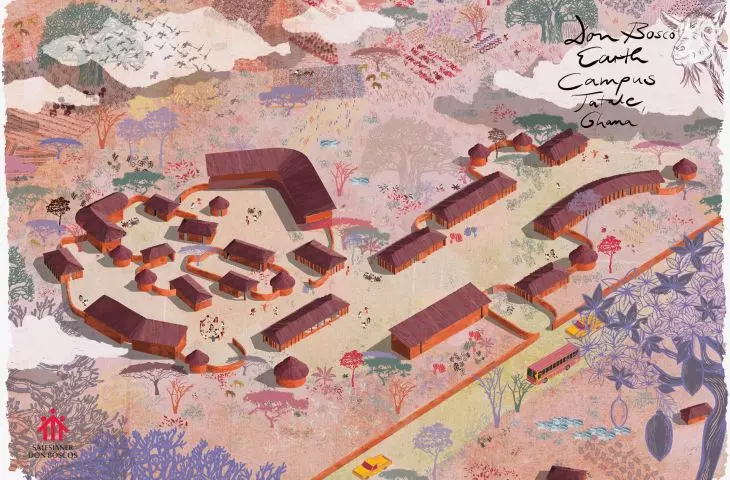
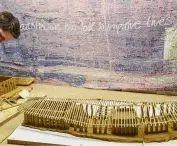
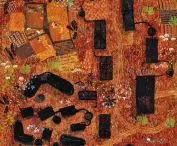
Ghana Don Bosco Earth Campus Tatale - perspective
© Studio Anna Heringer
Izabela Kutyla-Sztuk: You are a professor, teaching future architects. What is your advice to them to make them less afraid of designing in a sustainable way?
Anna Heringer: I teach them intuition. You can train intellect, but you can also train intuition. We start each semester with a "clay brainstorm," an intuitive design process. During the semester, all of our design decisions are based on intuition, we really try to connect with it. It's a process I developed with Martin Rauch that helps students trust what they feel. It's the best compass you can have if you can access your intuition and inner voice.
Izabela Kutyla-Sztuk: In what colors do you see the future?
Anna Heringer: It's difficult to be sure about the future. It's easy to fall into pessimism, to be overwhelmed by anxiety. We may think, "What I do doesn't matter," but it does. Every decision we make matters. The world doesn't change because of one big decision; it changes because of the everyday decisions we make consciously or unconsciously. I want future generations to believe in their ability to make an impact. Architecture is a powerful profession because we operate with huge amounts of materials and money. It is important to take this responsibility and use it in the best possible way.
Izabela Kutyla-Sztuk: Thank you very much. Sometimes we forget how much power and influence we actually have.
Anna Heringer: I would also like to mention that I just wrote a book: "Form Follows Love.

"Form Follows Love. Building according to intuition - from Bangladesh to Europe and beyond."
Anna Heringer, Birkhäuser Publishers, 2024
Izabela Kutyla-Sztuk: Can you tell us about this book?
Anna Heringer: I wrote it to inspire courage. I was not a genius at school or university, rather average. However, I always believed that I could make a difference. When I was young, I participated in a Boy Scout camp, during which we built an entire village with only a few pieces of cloth. I saw with my own eyes what power we have and how much strength lies in the process.
Life gives each of us a certain set of talents. If you follow your passions, that's where your talents lie. If others say you can't make a living at it, don't listen to them. I didn't follow a standard path, but I followed my heart. Life supports you when you do what you are made for. I went to Bangladesh at the age of nineteen, even though my reason was telling me, "Are you crazy? You're leaving everything behind." But my instinct told me it was the right decision, and it was.
Izabela Kutyla-Sztuk: Thank you very much for the interview.
interviewed: Izabela KUTYŁA-SZTUK
architect, A&B editor
Illustrations courtesy of Studio Anna Heringer
more: A&B 2/2025 - TIME OF TRANSFORMATION | KWK Promes,
download free e-publications of A&B