




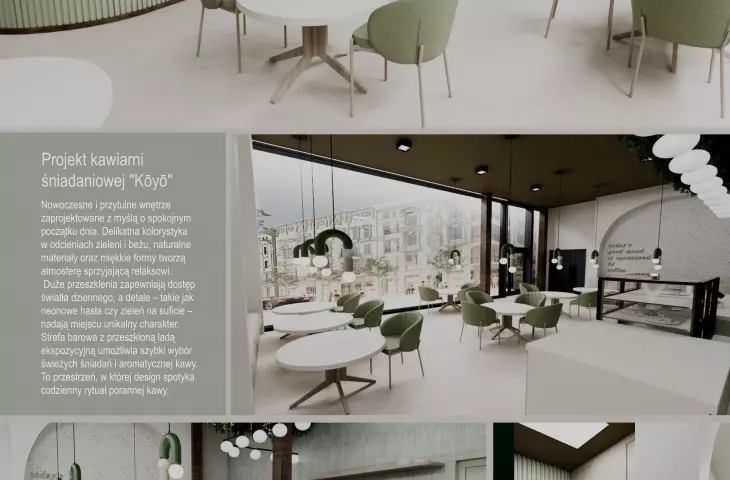
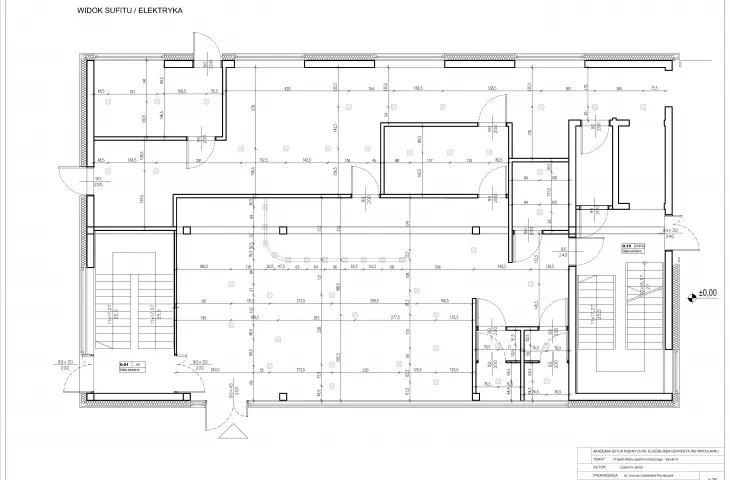
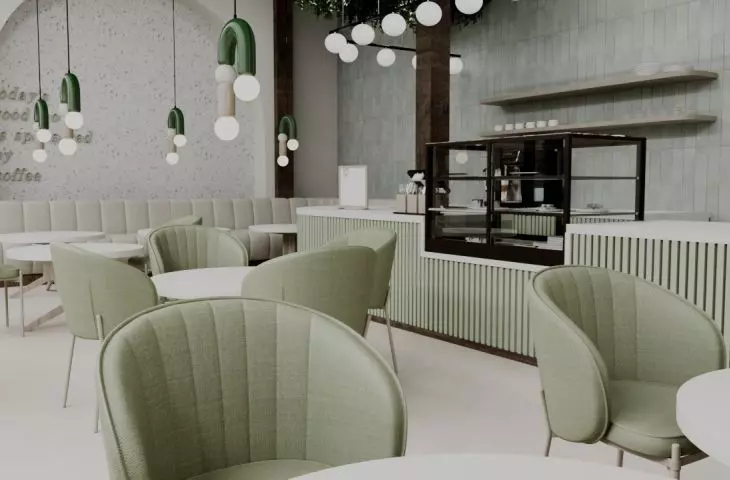
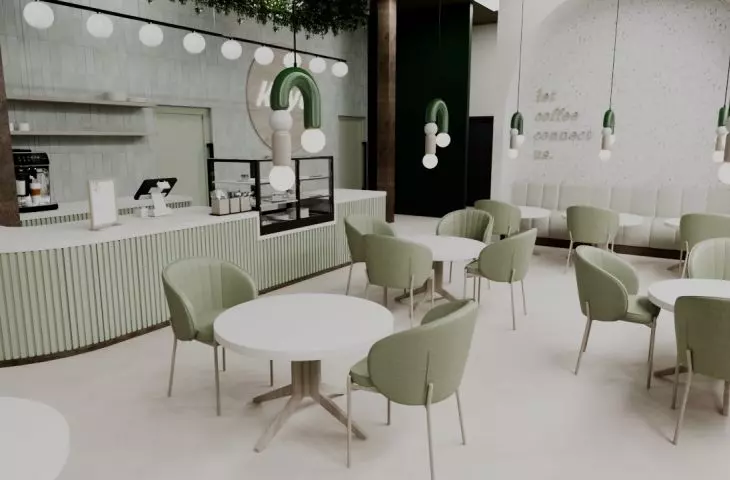
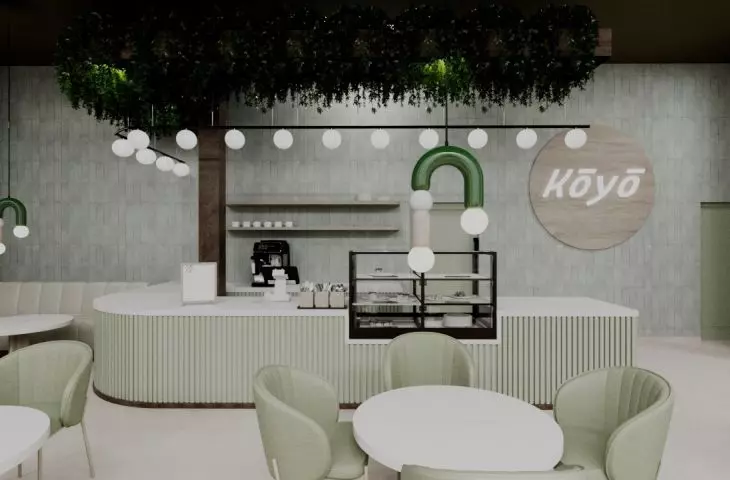





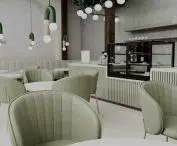

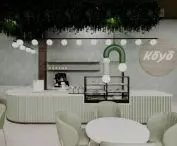
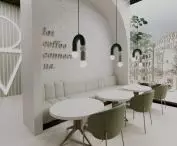
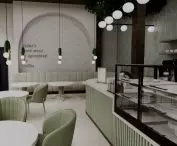


"Kōyō" is a conceptual interior design for an urban cafe by Zuzanna Jęcek, a student of interior architecture at the Academy of Fine Arts in Wroclaw. It was created as part of the class "Industry-integrated interior design," taught by Prof. Wojciech Hora and Dr. Filip Żuchowski.
visualization © Zuzanna Jęcek 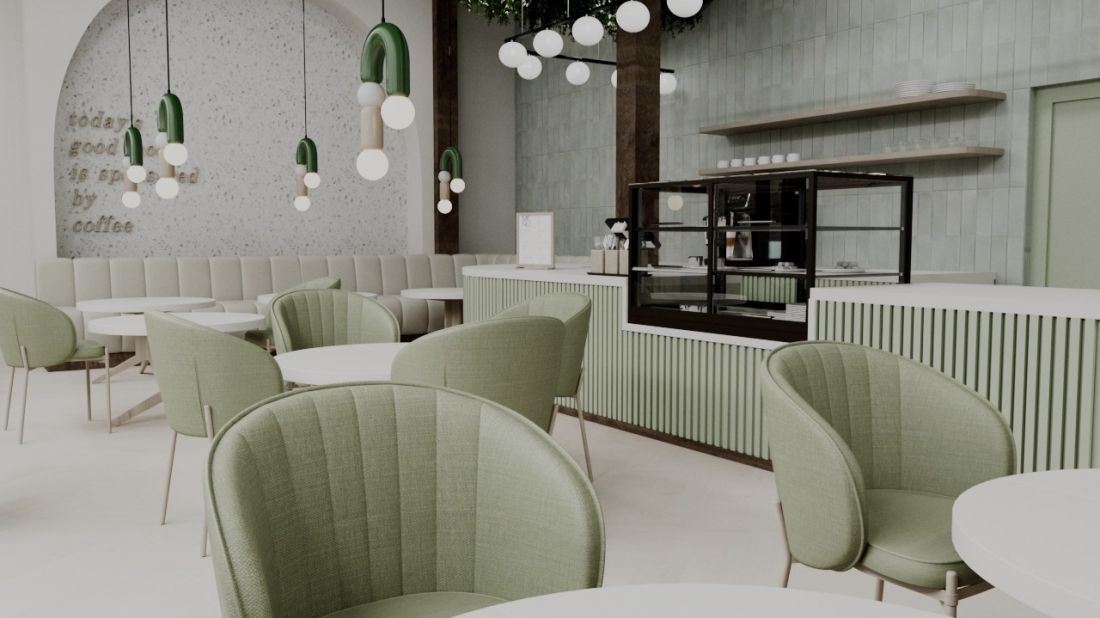
a place of tranquility and daily rituals
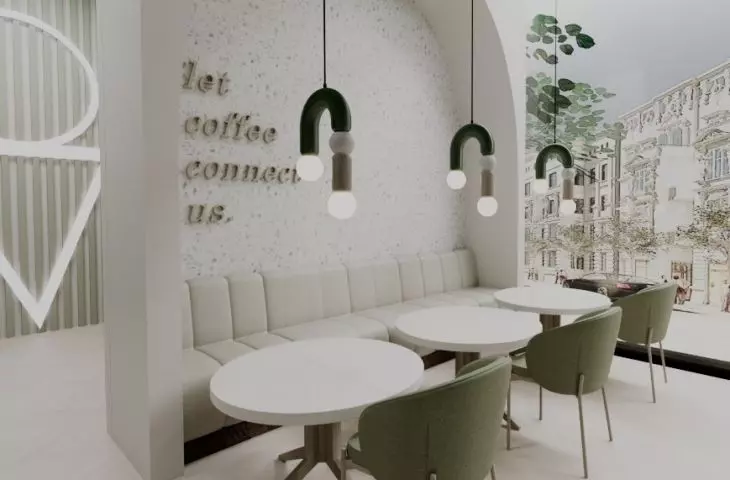
"Kōyō" is not another café with trendy decor - it is a space designed for regeneration, stopping and reflection. The name, taken from the Japanese term for the autumn transformation of leaves, symbolizes nature's cyclical nature, changeability, yet rhythm and tranquility. The project is a response to the overload of stimuli brought by daily city life.
The interior of the "Kōyō" café is intended to act as an urban retreat - a place where one can stop for a moment, feel attentiveness, take a deep breath. The aesthetics of the project refer to nature, minimalism and sensuality. The designer assumed that the interior should soothe, not stimulate.
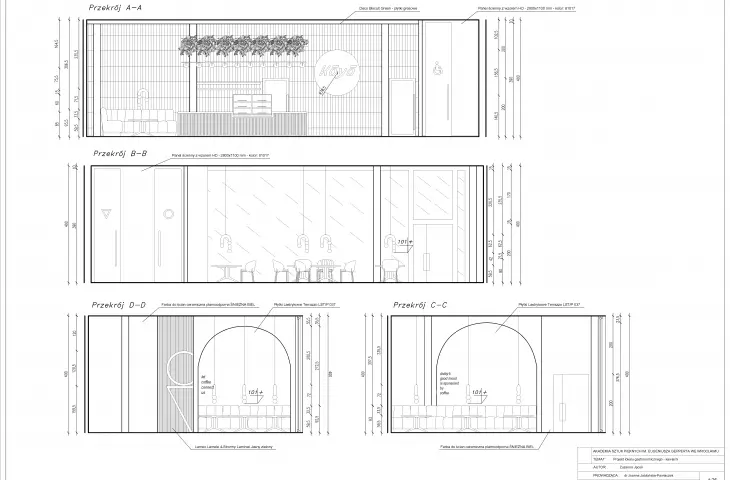
cross sections © Zuzanna Jęcek 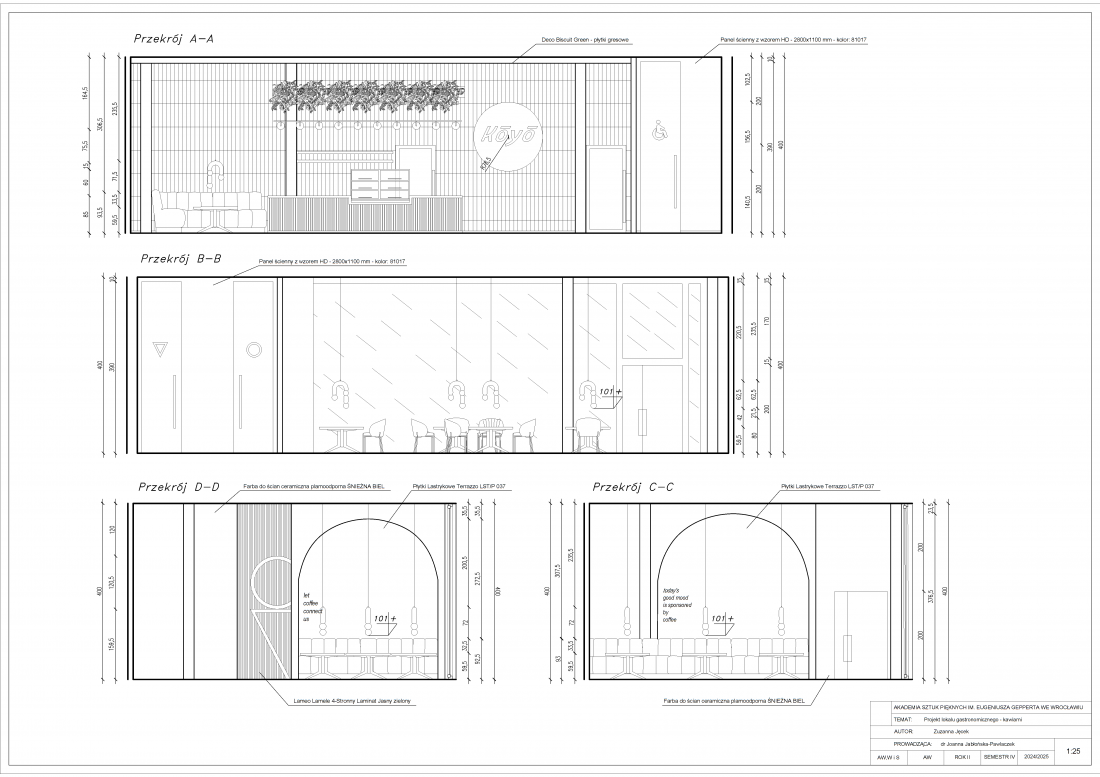
naturalness as a design language
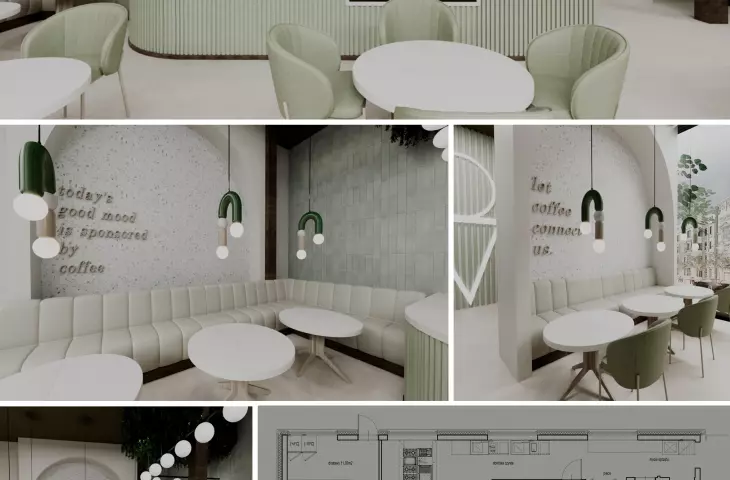
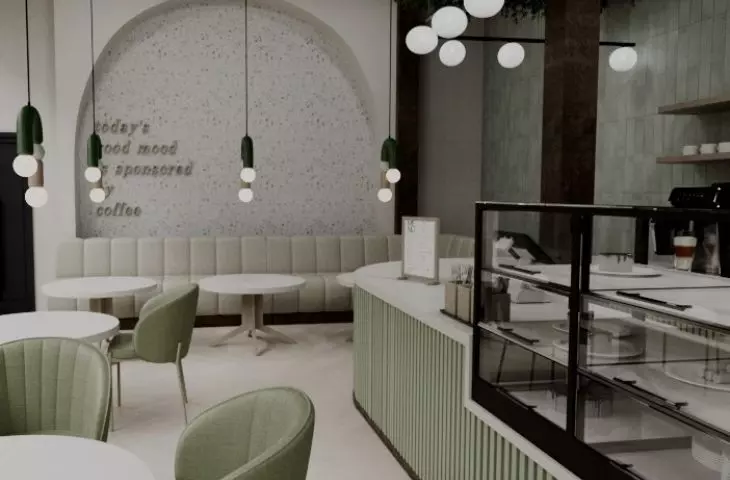
The design is based on harmony of forms, soft lines and natural materials. The color scheme of the interior is subtle shades of green, gray, broken white and wood, which create an atmosphere of lightness and freshness. Everything in the design is meant to work on the senses - light, textures, acoustics and scent are meant to promote relaxation and a feeling of home comfort.
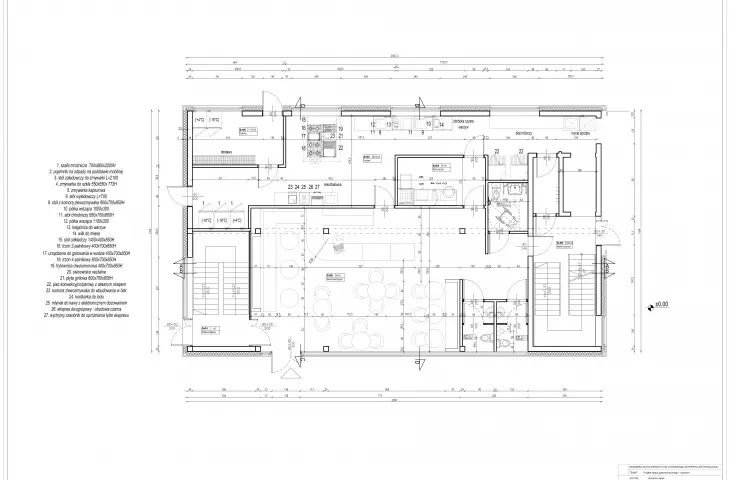
The layout of the space allows for different types of use - from a quick visit, to a quiet coffee with a book, to informal meetings. The front of the café, with its large glass and display of baked goods , invites visitors to enter, creating an atmosphere of hospitality. The interior, on the other hand, is divided into intimate and open zones to suit different needs.
visualization © Zuzanna Jęcek 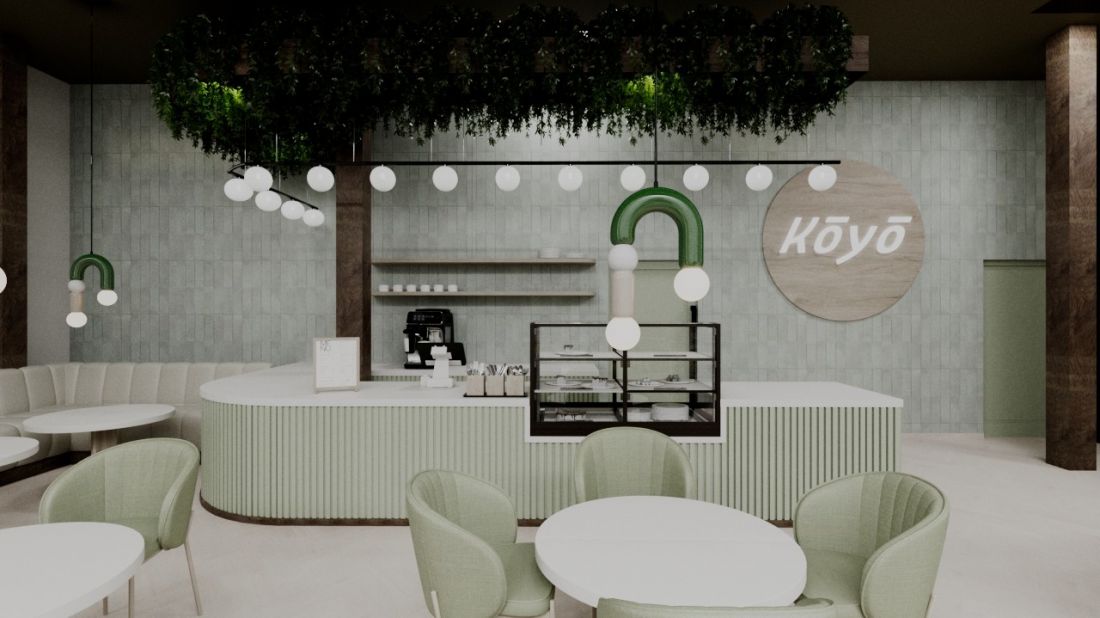
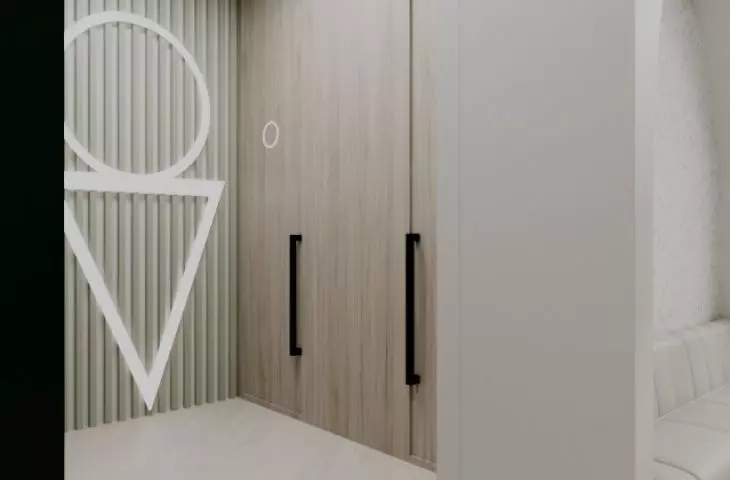
The designer also took care of details on the borderline between function and aesthetics - rounded forms of furniture, sound-dampening fabrics, soft lighting, perforated wood panels and subtle neon signs with slogans. All this to make the user feel taken care of, but not overwhelmed.
Sensual minimalism - a conscious response to overstimulation
At "Kōyō," the design does not focus solely on aesthetics. The interior was thought out in terms of experience - what one feels not only with the eyes, but also with the body.The quality of the acoustics, thermal comfort, the ergonomics of the seating and the appropriate placement of light points were important . The presence of vegetation also plays an important role , introducing not only a decorative value, but also a symbolic one - rootedness and balance.
Although the project has not been realized, it is a full-fledged concept of public space, which is in line with current social needs. It responds to the growing awareness of users - the need for attentiveness, presence and mental comfort.
design with empathy
Café "Kōyō" as conceived by Zuzanna Jęcek reminds us that design is not only about form, but above all about experience. The project shows that functionality does not exclude sensuality, and aesthetics can be a means to enhance well-being.
visualization © Zuzanna Jęcek 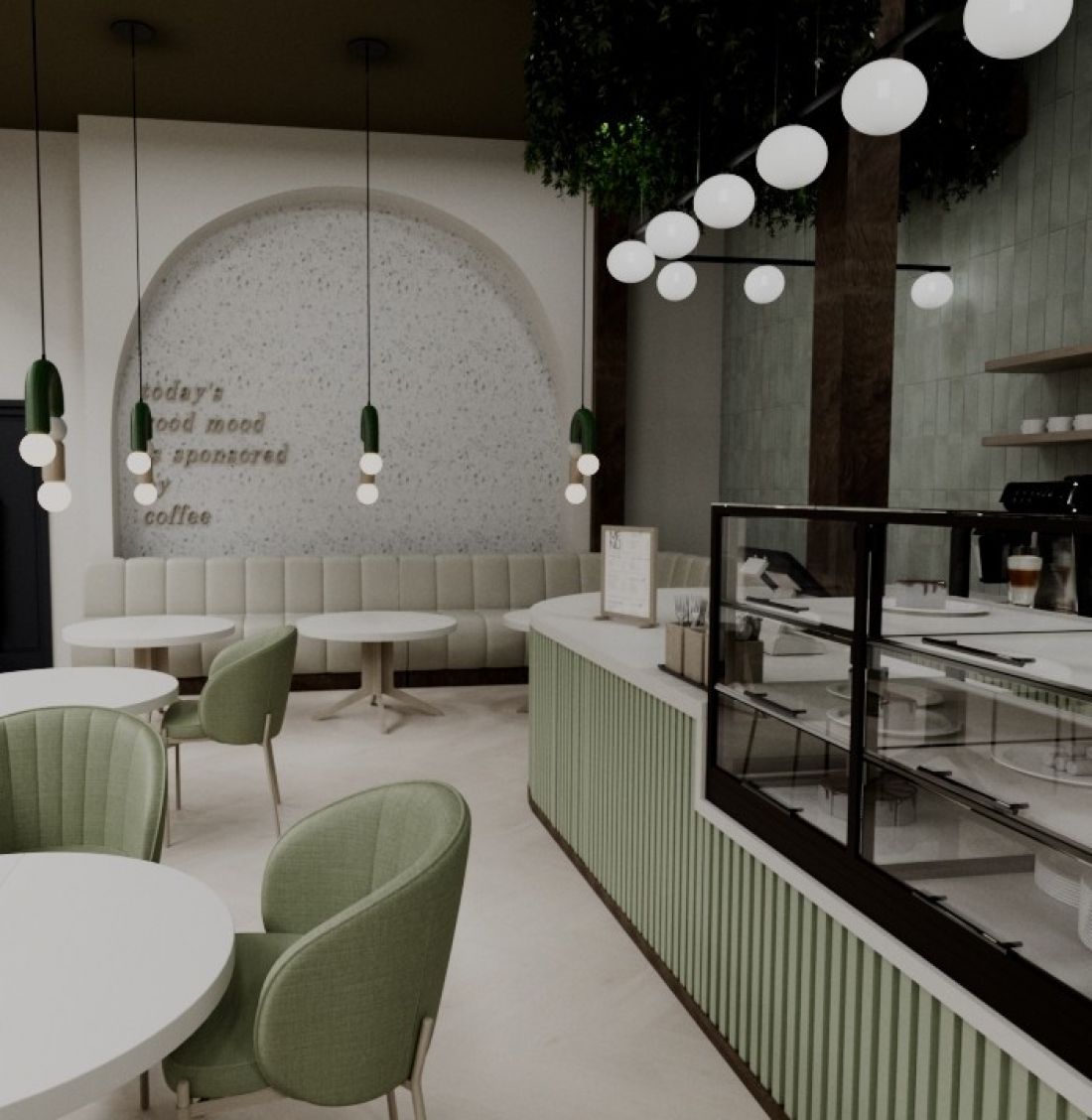
This is an interior that doesn't scream - it says in a whisper: you are here, you are important, you can breathe.