



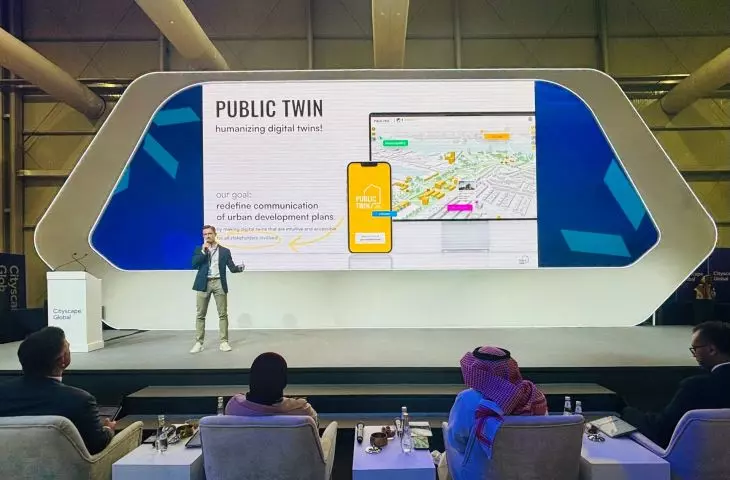


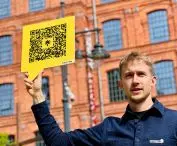

Do we have a real influence on how the spaces around us are designed? An official will probably say yes, a resident - not necessarily. Przemek Ciępka talks with Michal Kasperski and Jacek Baczkowski, creators of the PublicTwin platform, about the ills of public consultation, the ways in which new technologies and artificial intelligence can improve participatory processes, and whether building design is the only path for those studying architecture.
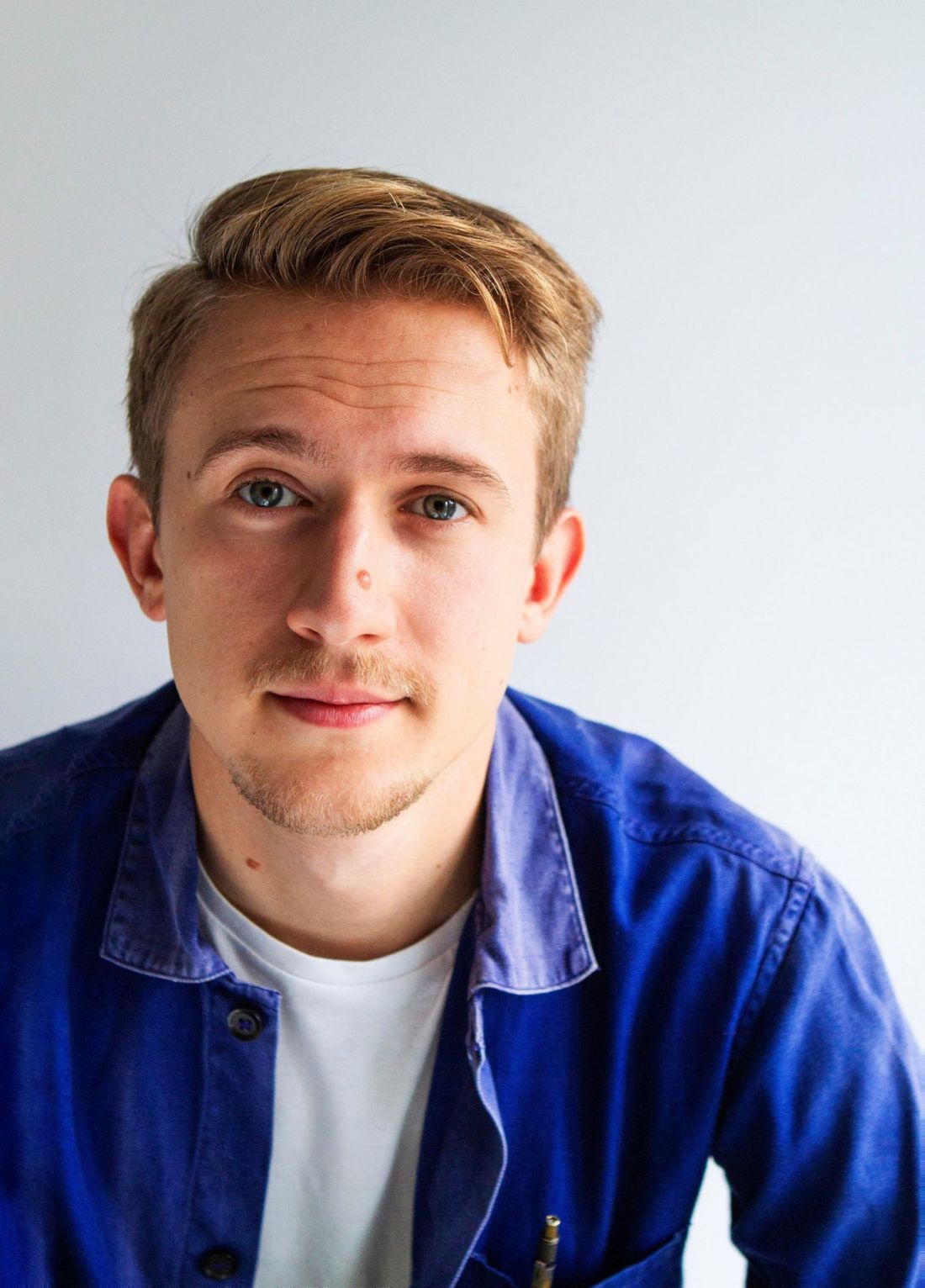
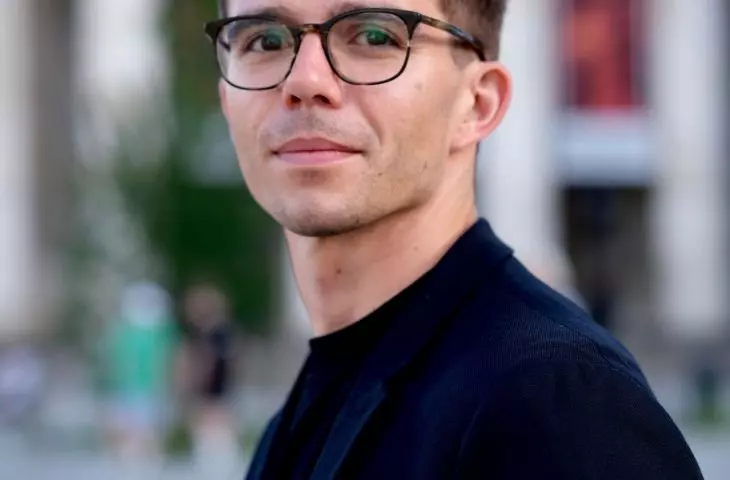
MichalKASPERSKI - co-founder and chief executive officer (CEO) of drip visual and the PublicTwin platform.A graduate of Cardiff University (WSA, BSc), he gained his first professional experience working at Loyn + Co Architects. He continued his education at TU Delft's Faculty of Architecture - his diploma project, exploring new forms of provincial revitalization and local community engagement in design, was nominated for ArchiPrix 2023 and awarded the EUmies Young Talent Architecture Award at the Venice Architecture Biennale 2023. Today, he focuses on PublicTwin's growth strategy, business model and vision. He is responsible for fine-tuning the solution to meet the needs of the market, building partnerships and overseeing the direction of the platform, looking for innovative ways to make the technology respond to the challenges of local governments and residents.
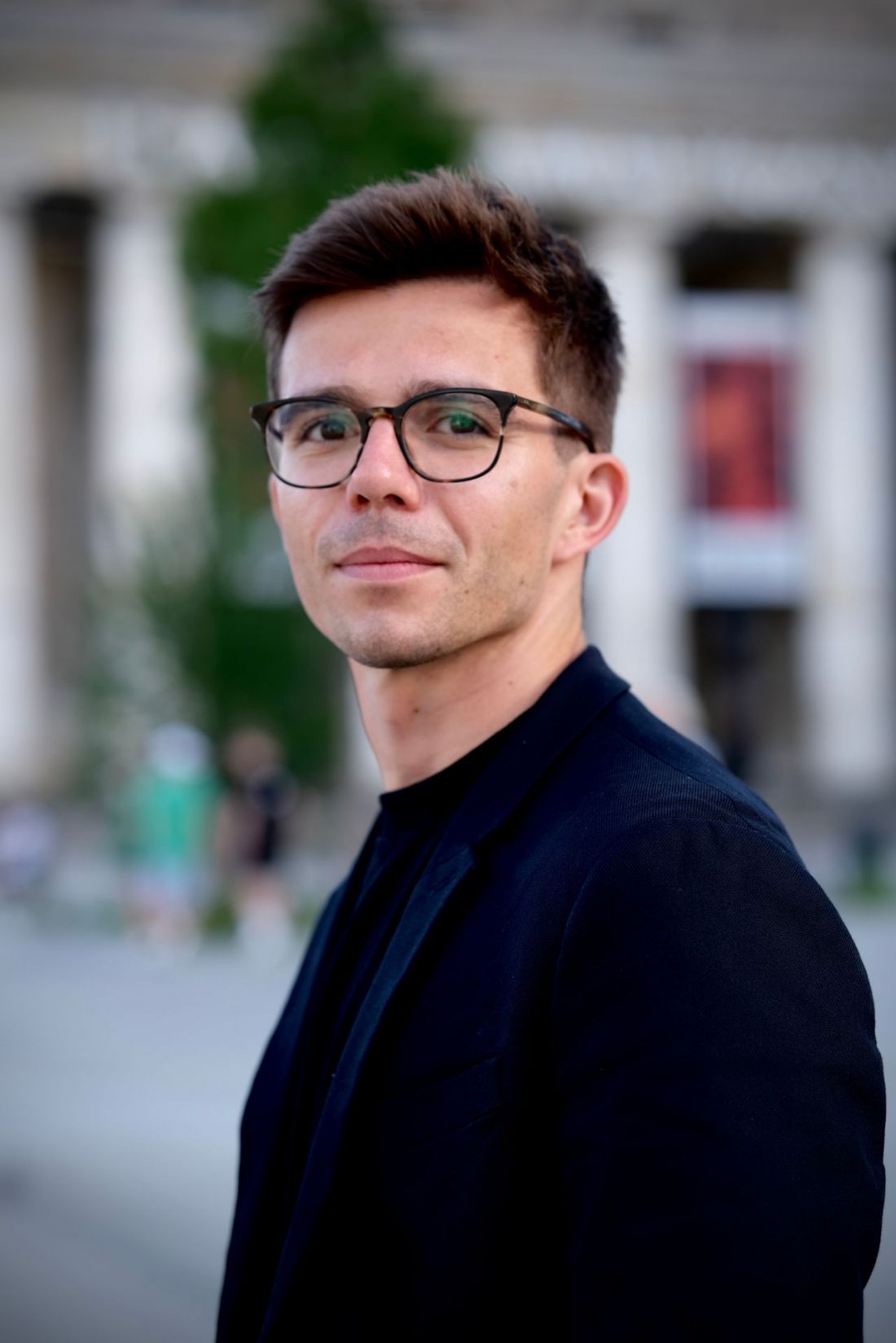
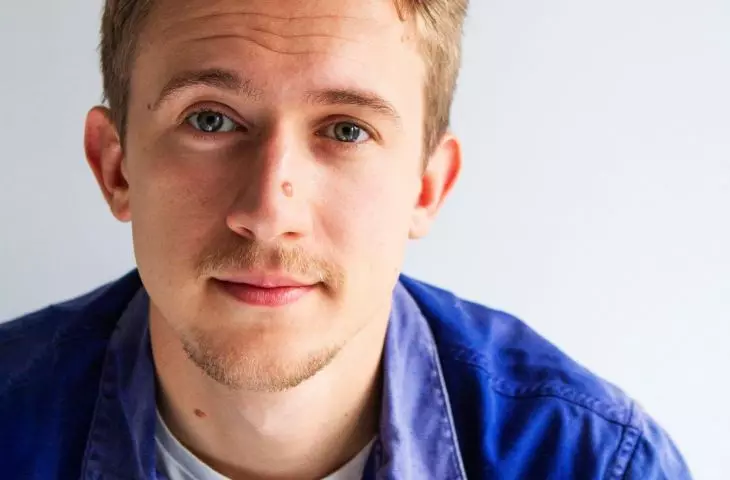
Jacek BACZKOWSKI - co-founder and chief technology officer (CTO) of drip visual and the PublicTwin platform. A graduate of Cardiff University (WSA, BSc), he gained experience at Bjarke Ingels Group, working on international projects. Graduated from TU Delft's Department of Architecture; his thesis was on gamification of residential design. He was a finalist in the Young Leader program during this year's UrbanFuture. During his studies, he developed a passion for game development, interactive web technologies and programming, which became the foundation for co-founding PublicTwin. He is responsible for the technological development of PublicTwin - from designing the system architecture, to implementing new features, to ensuring data security and scalability of the platform, and leads the process of translating user needs into innovative digital solutions.
Przemek Ciępka: In the case of many activities planned in urban spaces, conducting public consultations is not only advisable, but also a legal requirement. Is this type of participation really effective?
Michal Kasperski: The effectiveness of consultations depends on two factors - the way they are conducted and the number of opinions collected. Unfortunately, at present, they often boil down to meetings held at inconvenient times, for example, on Thursday at 5 pm, attended mainly by people who are sufficiently motivated or have a specific interest in it. Under such conditions, a wide group of people who would like to attend the meeting, but for various reasons cannot, are excluded.
Przemek Ciępka: Is it possible to reach them in some alternative way?
Michal Kasperski: I think the problem here is primarily the lack of solutions that work in both scenarios. Currently, solutions such as geo-surveys or other forms of conducting online consultations are being tested, but none of them offer integration of results obtained from physical and digital workshops. As a result, all the data must undergo painstaking analysis before any conclusions can be reached.
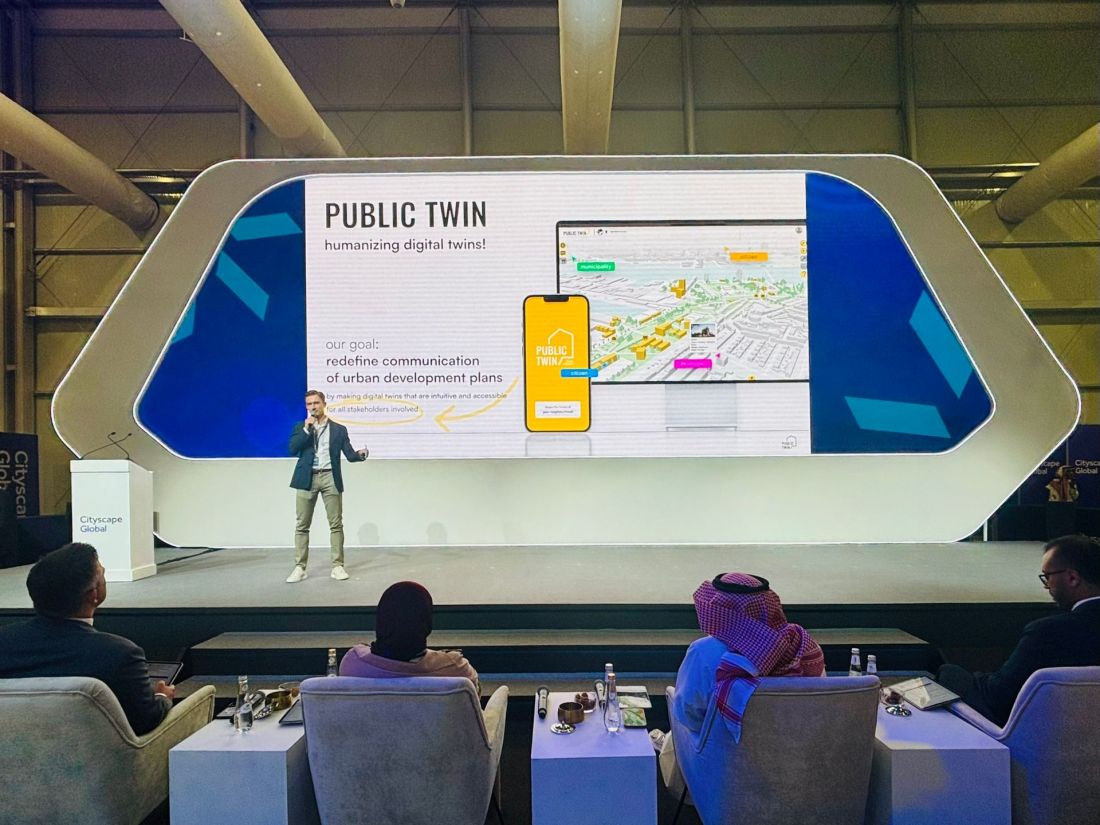
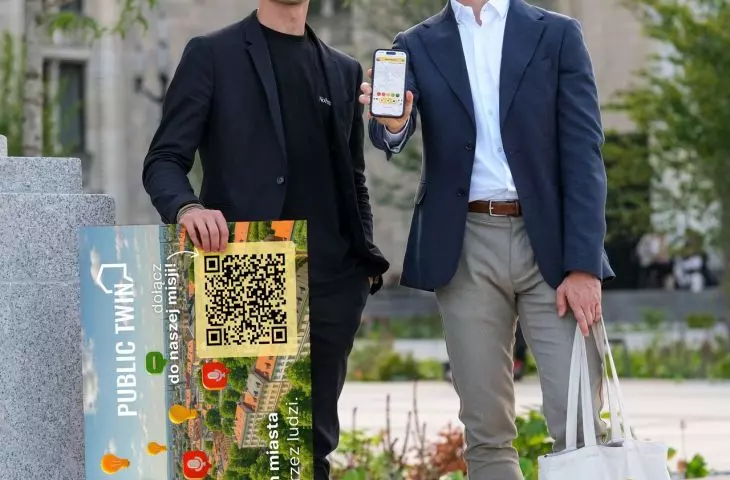
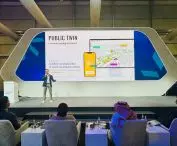
Public Twin
© mat. provided courtesy of the interviewees
Przemek Ciępka: And this is where your PublicTwin platform comes in.
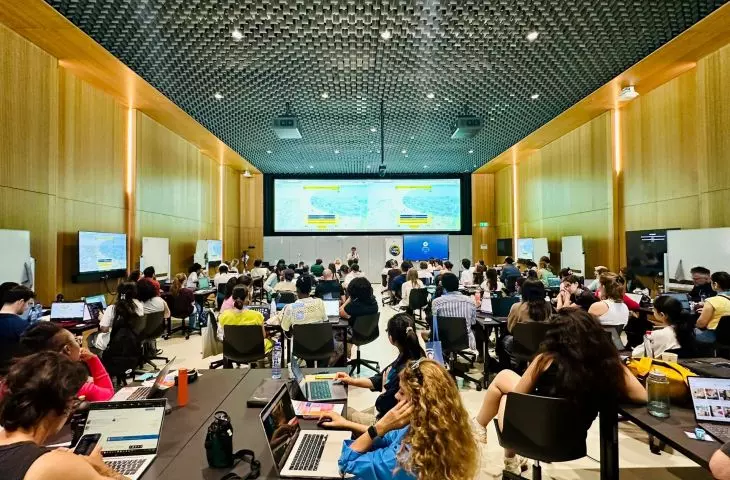
Jacek Baczkowski: Yes. The key differentiator of our project is the hybridization of the consultation process. We collect data from both digital and physical sources in one consistent database, which helps to better understand the perspectives of a wide range of residents in real time. We're committed to ensuring that every person - whether digitally proficient or not - can participate in the consultation and get realistically involved in creating a better future for our cities.
Michal Kasperski: We're about combining online and offline sources, physical workshops and online surveys, lowering the threshold for residents to enter the participation process, and creating a set of tools that could help participation practitioners, facilitators and city halls analyze those dozens, hundreds of comments received during consultations.
Jacek Baczkowski: We don't want to overturn the existing process - rather, we want to integrate with it to make participation more accessible. Fitting into the existing workflow is key for us.
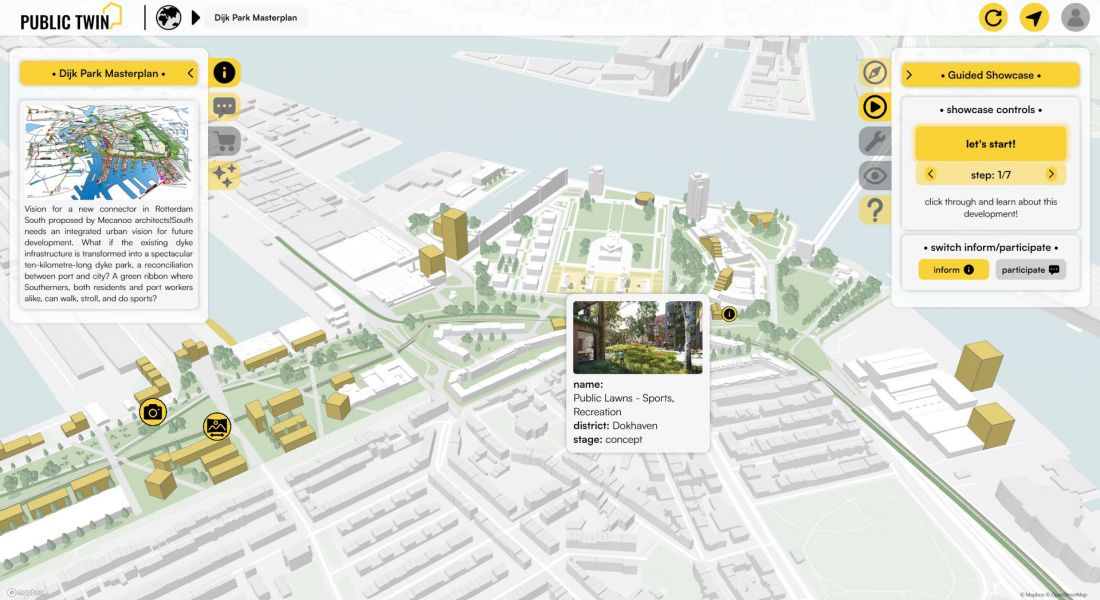
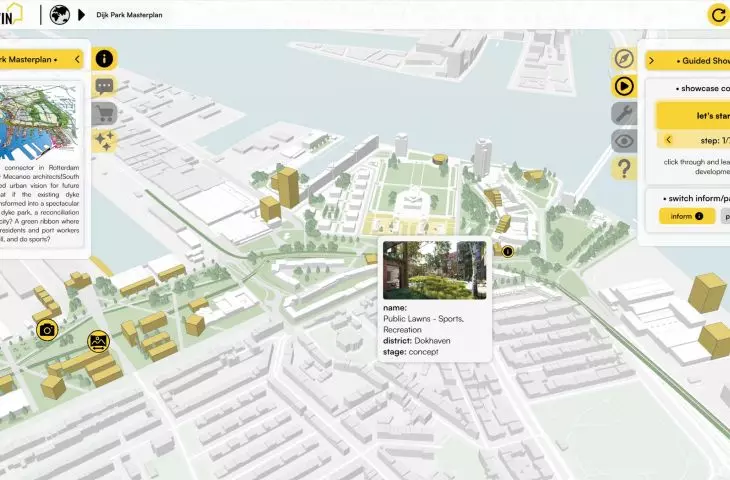
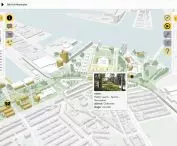
Public Twin platform
© mat. provided courtesy of the interviewees
Przemek Ciępka: So what exactly is PublicTwin and what tools does it offer?
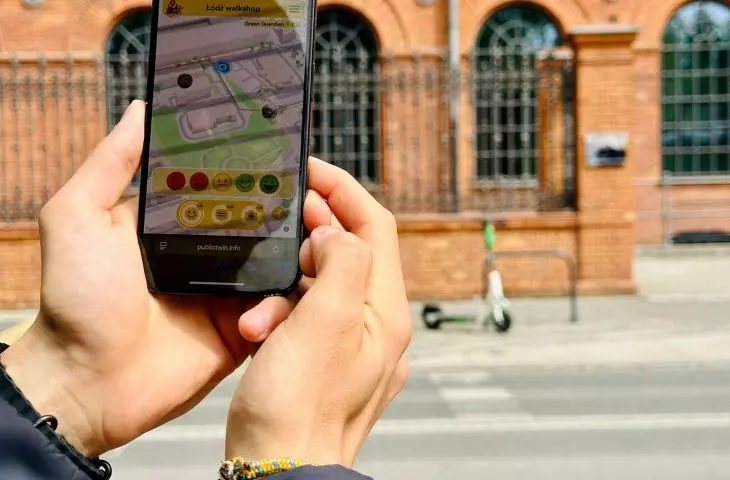
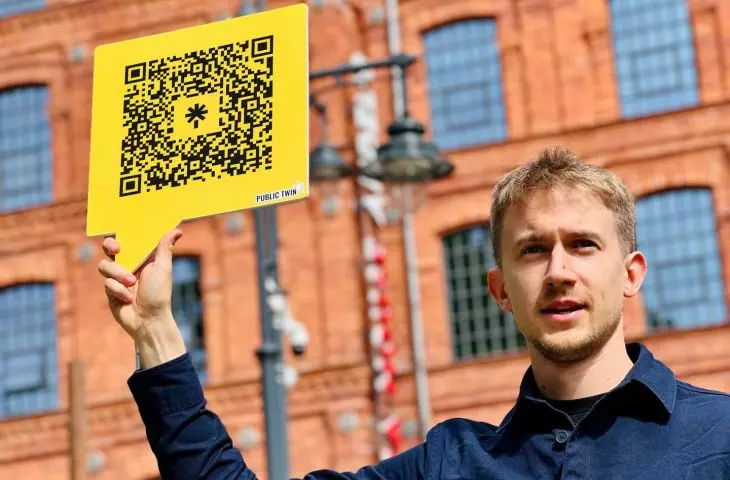
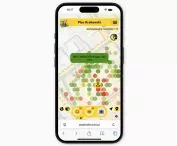
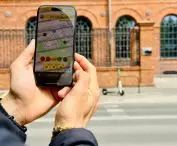
Michal Kasperski: Good participation starts with effective information. So we are developing tools that - in simple terms - combine the interactivity of Google Maps and the simplicity of communicating Instagram Stories with the ability to give opinions and collect feedback. To get to them, a person sitting at a bus stop, for example, can scan a code on a poster or advertisement or come across it on social media or in a local newspaper. While waiting for the bus, she will learn about the activities planned in her immediate area.
Przemek Ciępka: What happens next?
Michal Kasperski: When it comes to the consultation process itself, we have a number of tools we can use - from simple surveys to co-creation tools that allow consultation organizers to ask users about their needs. Identifying needs prior to giving an opinion on projects gives a lot of feedback to designers and decision-makers, so they can spot problems that were previously overlooked, or learn which actions to prioritize.
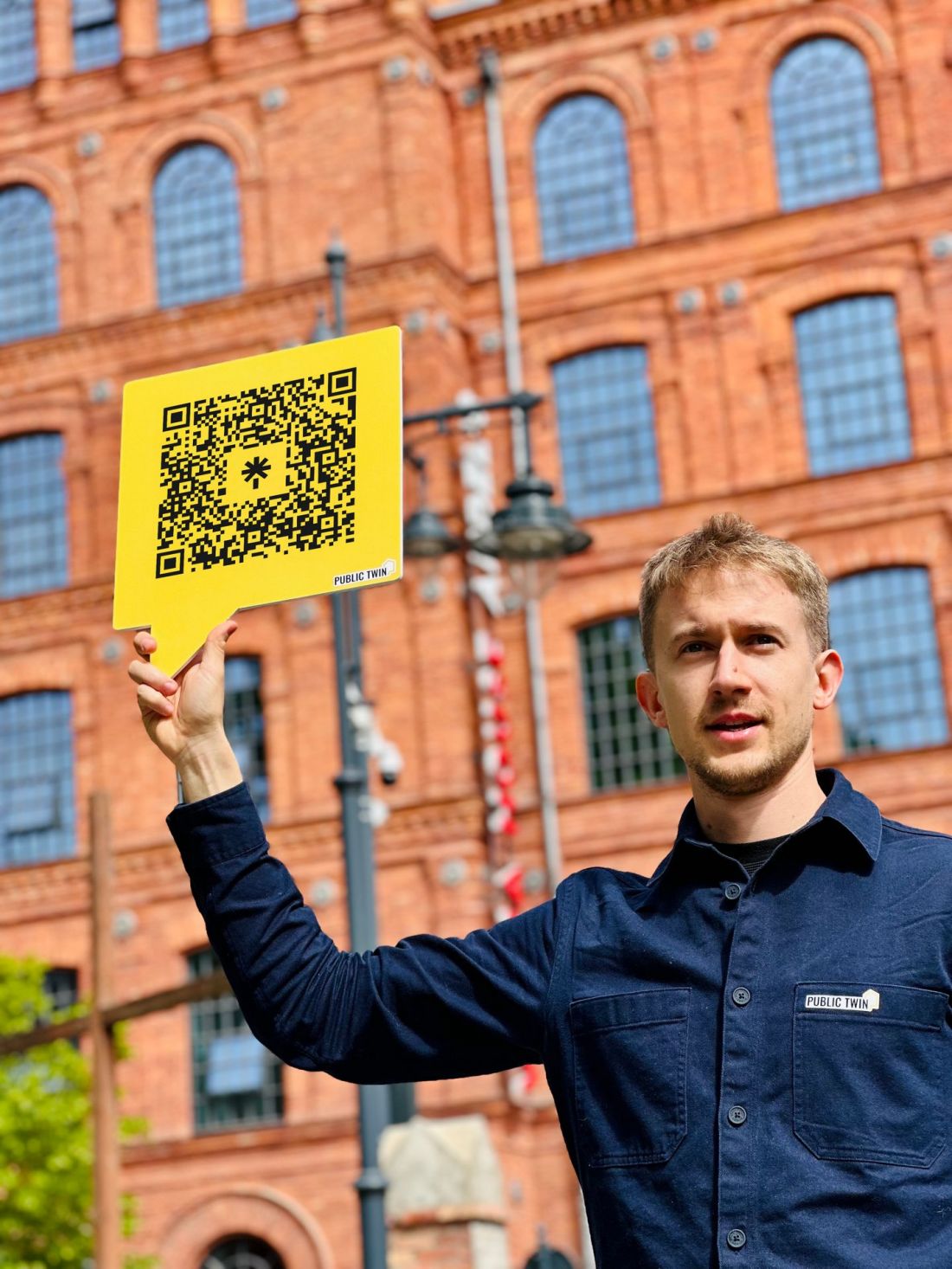
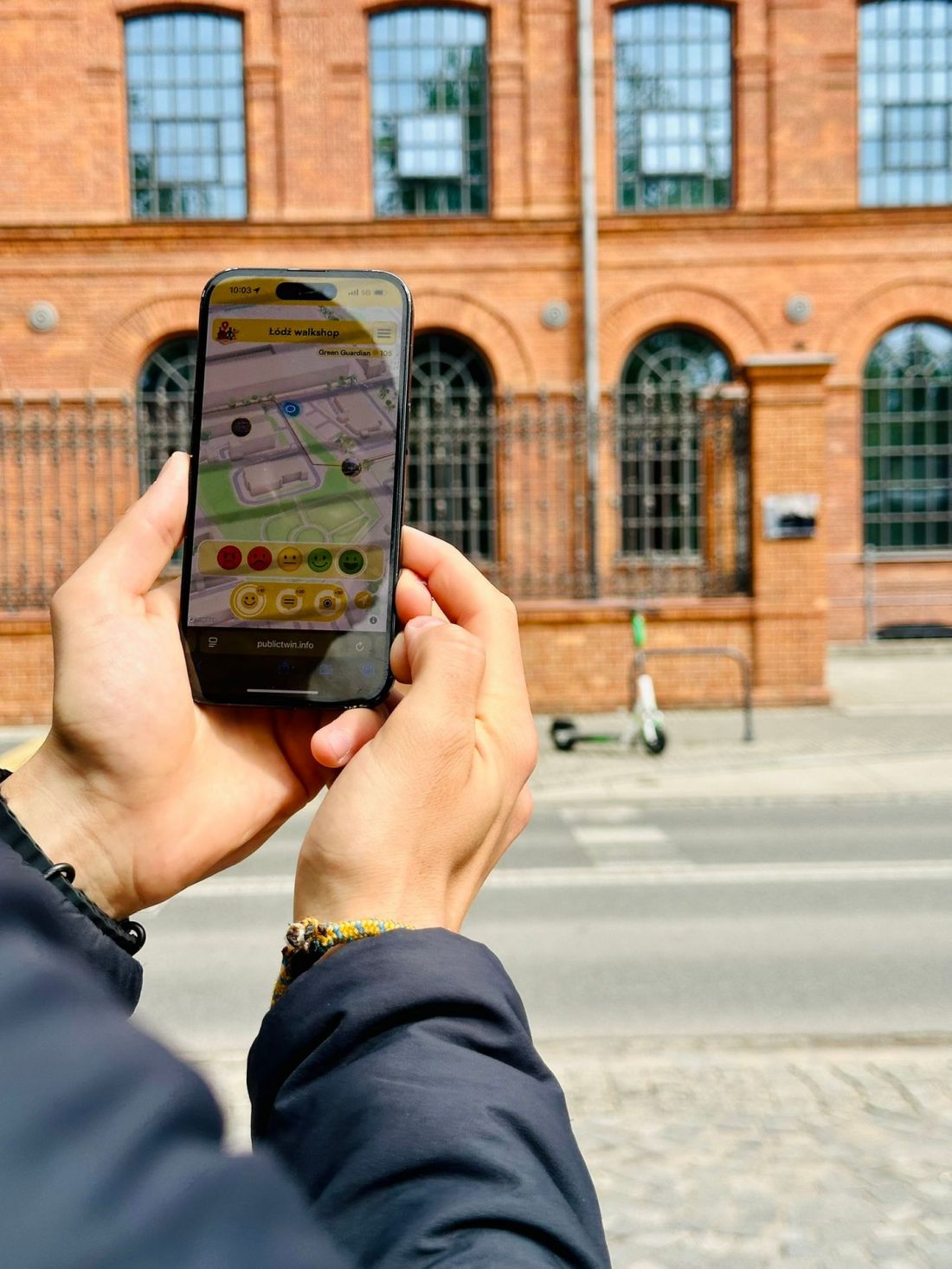
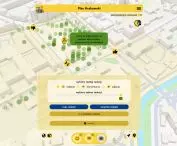
Public Twin - workshop
© mat. provided courtesy of the interviewees
Przemek Ciępka: Have you already used PublicTwin in practice? If so, how has it worked out?
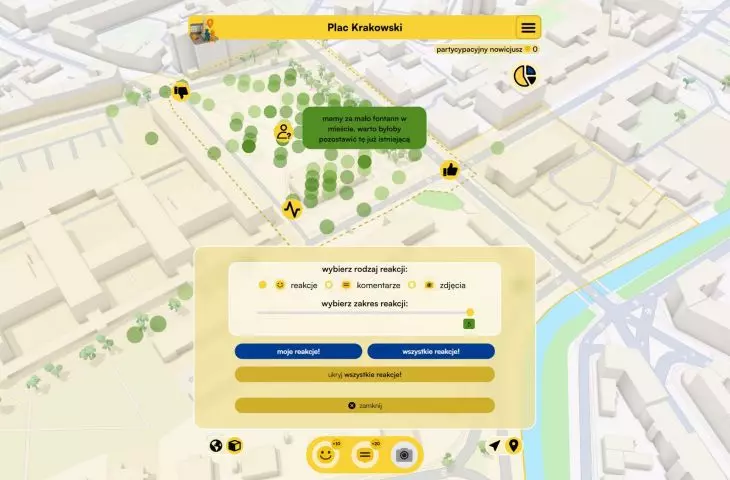
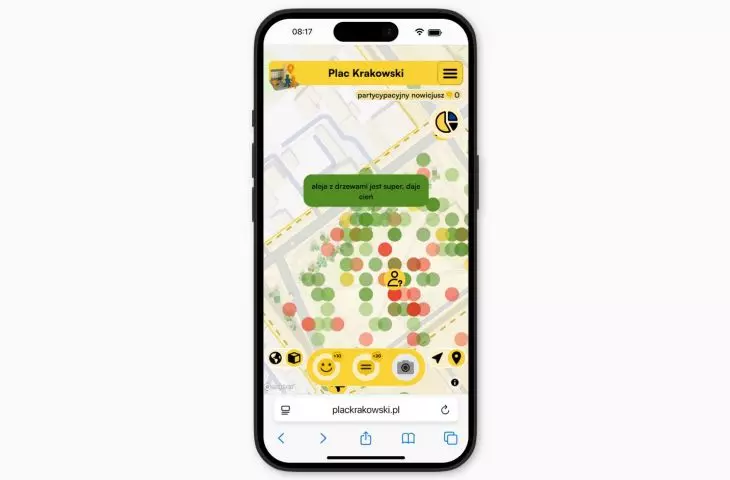
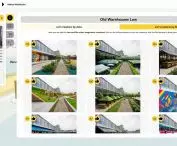
Jacek Baczkowski: We recently used our platform to conduct consultations to help select a new concept for Krakow Square in Gliwice. We wanted to understand residents' perspectives on this area of the city as best we could, so we started collecting data even before any design initiative was created. We did this by giving residents the opportunity to leave pins pinned to a virtual map of the square, which answered questions posed by workshop organizers. We also gave residents the opportunity to leave comments in a geolocation-based manner. As a result, we collected thousands of opinions on how residents currently perceive Krakowski Square - what positive aspects of the space they see, and where they would like to see changes. The information gathered helped move the project forward, creating concepts that respond to a range of real needs.
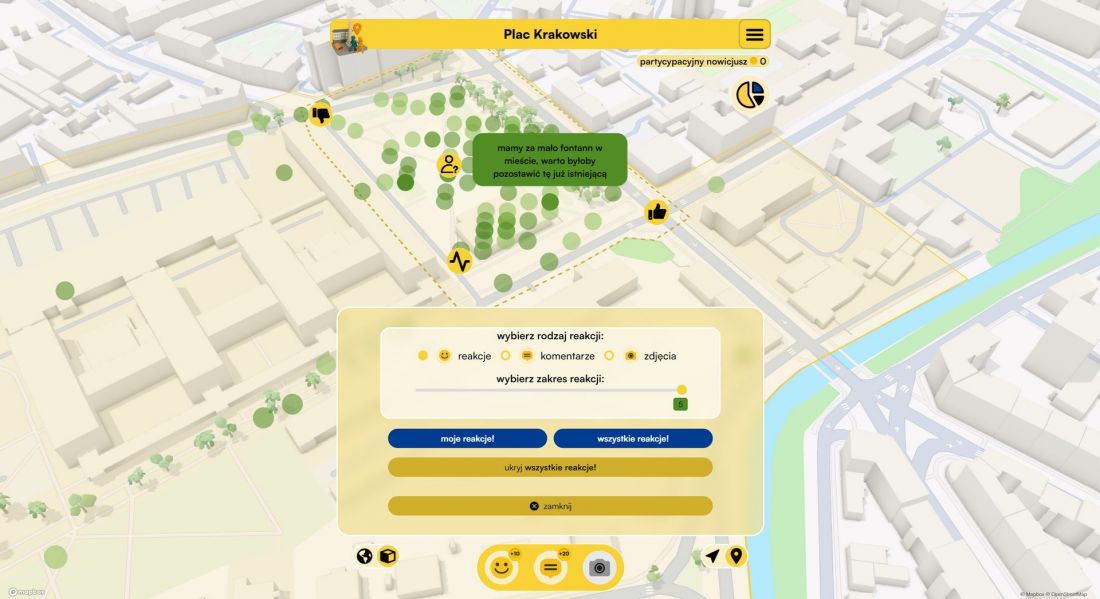
Public Twin platform
© mat. provided courtesy of the interviewees
Przemek Ciępka: Have you also been able to apply your solutions in other places?
Michal Kasperski: Yes, we have a dozen or so pilot projects in various European cities, from which we collected feedback on what tools are useful, what we should develop further, and what we should give up. We have carried out projects with leading urban planning studios such as Mecanoo and White Arkitekter, as well as developers and consultants in Rotterdam, Malmö, Delft, but also in Poland in cooperation with Silesian Urban Lab. We are also preparing for direct cooperation with the Wrocław City Hall.
Przemek Ciępka: I understand that you have ambitions for PublicTwin to become a tool used universally?
Jacek Baczkowski: We hope exactly that. In all documents talking about the requirement for participation, it is noted that it should be carried out in a customary manner. We would very much like Public Twin to become just that customary solution.
Michal Kasperski: The key to achieving this is to simplify participation from two sides - not only from the client's side, but also from the resident's side. We want it to be easy to go to our website, get acquainted with the project and, depending on your desire, fill out a short survey, or answer in-depth questions. In our opinion, this is the way to go in each participatory process to increase the number of respondents, and thus the available perspectives.
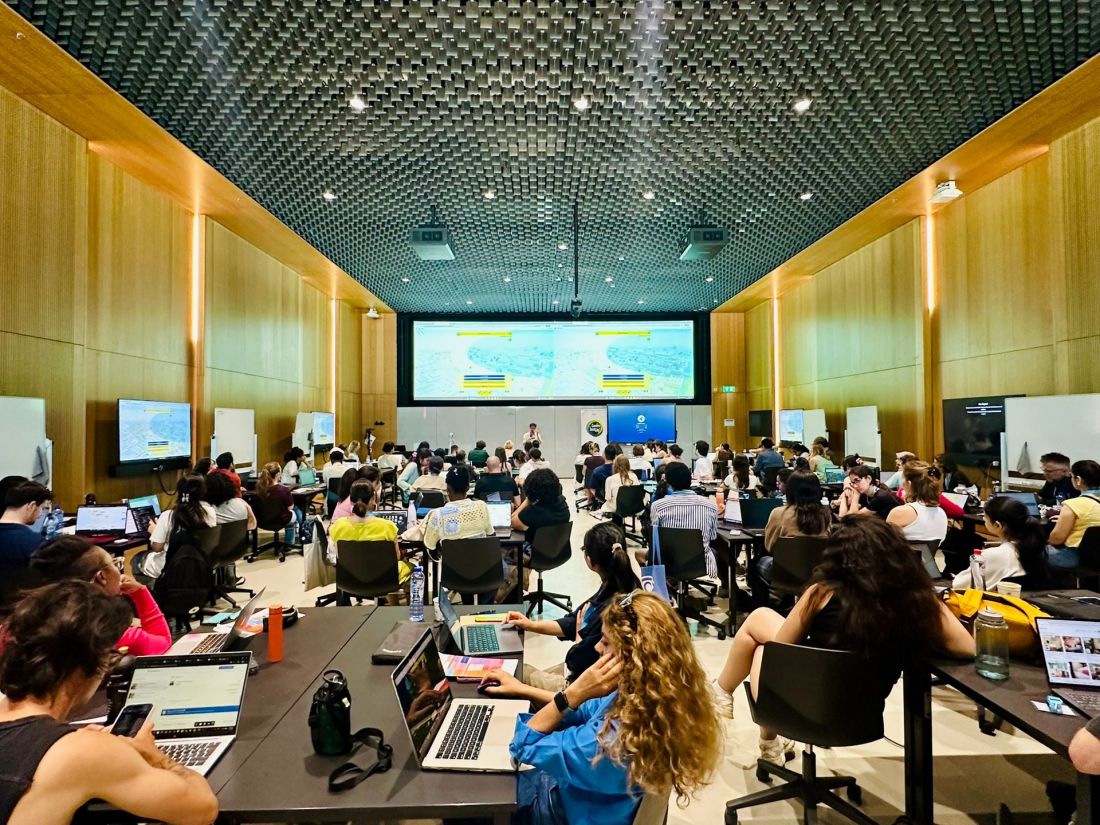
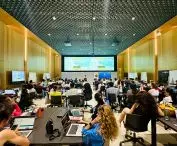
Public Twin - workshop
© mat. provided courtesy of the interviewees
Przemek Ciępka: You mentioned the client, that is, the organizer of the consultation. Do you direct your platform to local government officials, or do you consider other groups of PublicTwin's audience?
Michal Kasperski: The most important audience group is residents - because building a tool that actually works and speaks to residents is the best thing we can do for our potential clients - increasing not only the quantity, but also the quality of opinions collected while saving hundreds of hours of analytical work, combining digital and analog channels.
Przemek Ciępka: Is it difficult for organizers at PublicTwin to set up such consultations?
Jacek Baczkowski: We are currently striving to create a scalable version of the platform. So far we have relied on pilot projects, each of which required our direct work. However, the goal is to create a platform where the client can configure the project in a simple way.
Michal Kasperski: We also want PublicTwin to be integrated with tools that are already in use in a municipality or city. We have assumed that our goal is that a simple participatory action can be configured in one or two days, working with all stakeholders at the same time. It is crucial that such a participatory action be accessible to both investors and local government officials or architects. Such integration reduces the amount of unnecessary correspondence, for example, and thus saves time.
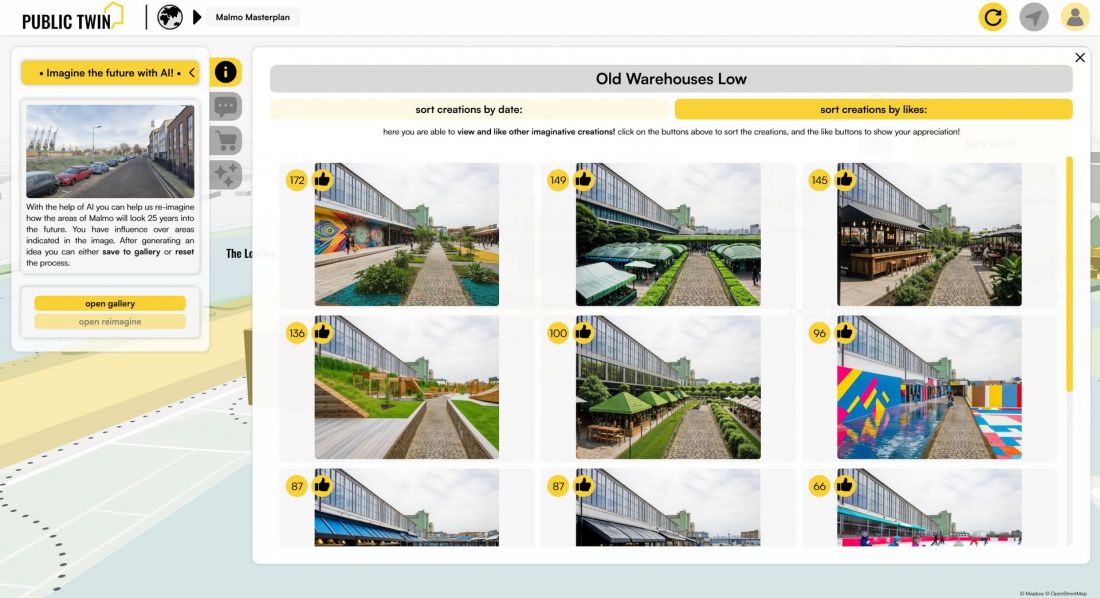
Public Twin platform
© mat. courtesy of the interviewees
Przemek Ciępka: There is more and more talk about the use of artificial intelligence in various industries - including architecture and urban planning, although usually in the context of design. Can AI also support participatory processes?
Michal Kasperski: Currently, decision-makers have a mass of quantitative data at their disposal - demographics, traffic volume, density and parameters of development, and so on. With PublicTwin, we want to supplement this picture with unique qualitative data - the human perspective and experiences of local residents, businesses and stakeholders providing an often unique perspective on the needs and challenges of a place. Artificial intelligence does a great job of analyzing just this type of data, giving decision makers a complete picture combined with quantitative data to make better decisions. And when we have two thousand opinions to analyze, artificial intelligence proves indispensable.
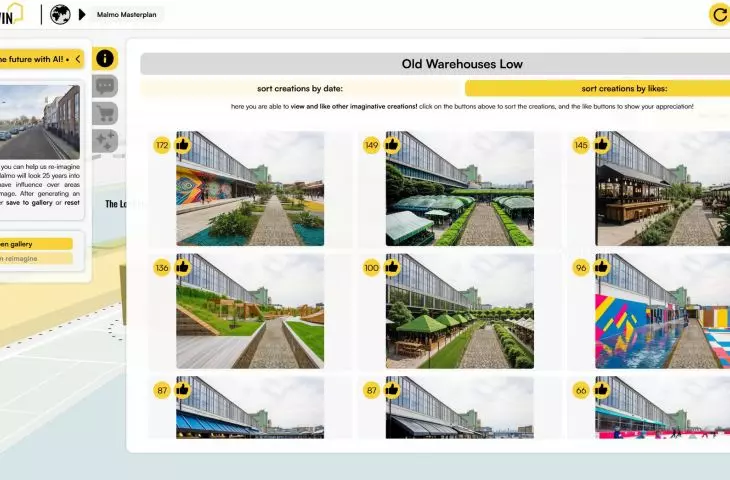
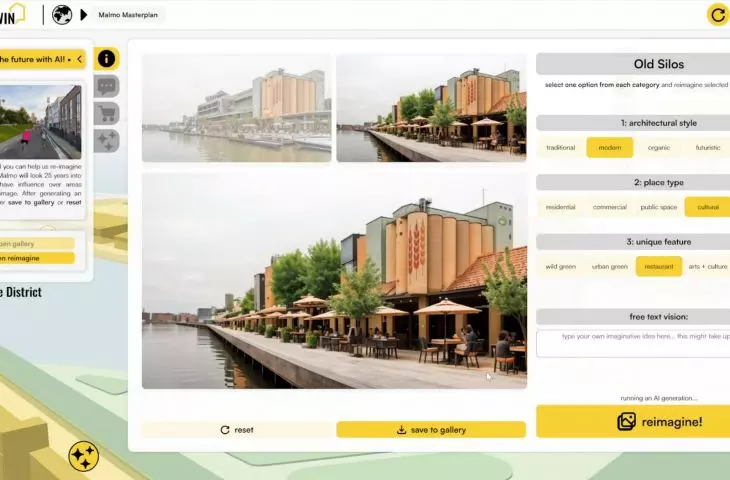
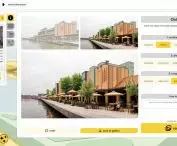
Jacek Baczkowski: AI can also be used in the form of co-creation tools, allowing residents to give their opinions on projects in a visual way. Generative AI makes it possible to translate simple formulations about their expectations into visual information, thus participating in co-creation on the basis of visions generated by artificial intelligence.
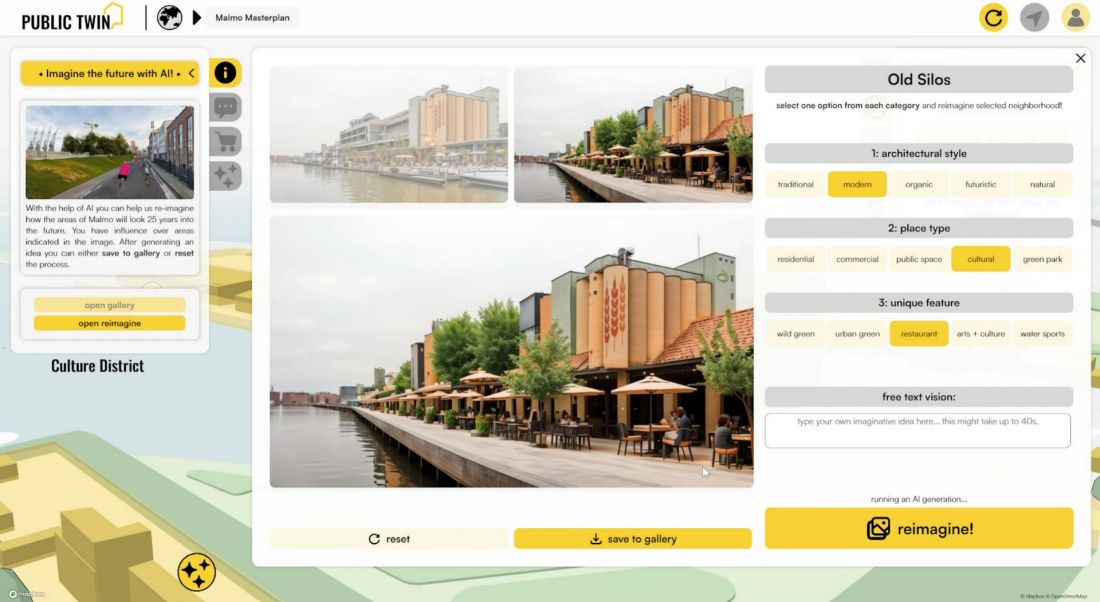
Public Twin platform
© mat. provided courtesy of the interviewees
Przemek Ciępka: You studied at Delft University of Technology. Are you two architects?
Jacek Baczkowski and Michal Kasperski: By education, yes, but not by qualification.
Przemek Ciępka: Why did you take this path?
Michal Kasperski: Jacek gravitated very strongly toward software engineering and a more programmatic approach to architecture already during his studies. We were also heavily influenced by a short faculty in entrepreneurship, which later turned into a year-long studio and further participation in the business incubator at the university. We noticed that equipping architecture students with the basic knowledge and tools of entrepreneurship strongly changes the point of view of what role a designer plays in the process, and what he or she can contribute to it.
Jacek Baczkowski: I think one of the key values for us was a sense of agency. We wanted to create an environment for ourselves that would allow us to have a real impact on reality as soon as possible.
Michal Kasperski: We started collaborating with people we wanted to work for at some point, these collaborations enabled us to define our product. Along the way, of course, there were a lot of twists and turns and experiments that we had already abandoned. Nevertheless, we found it very engaging and attractive. I think architecture is increasingly open to different kinds of perspectives that are not strictly architectural.
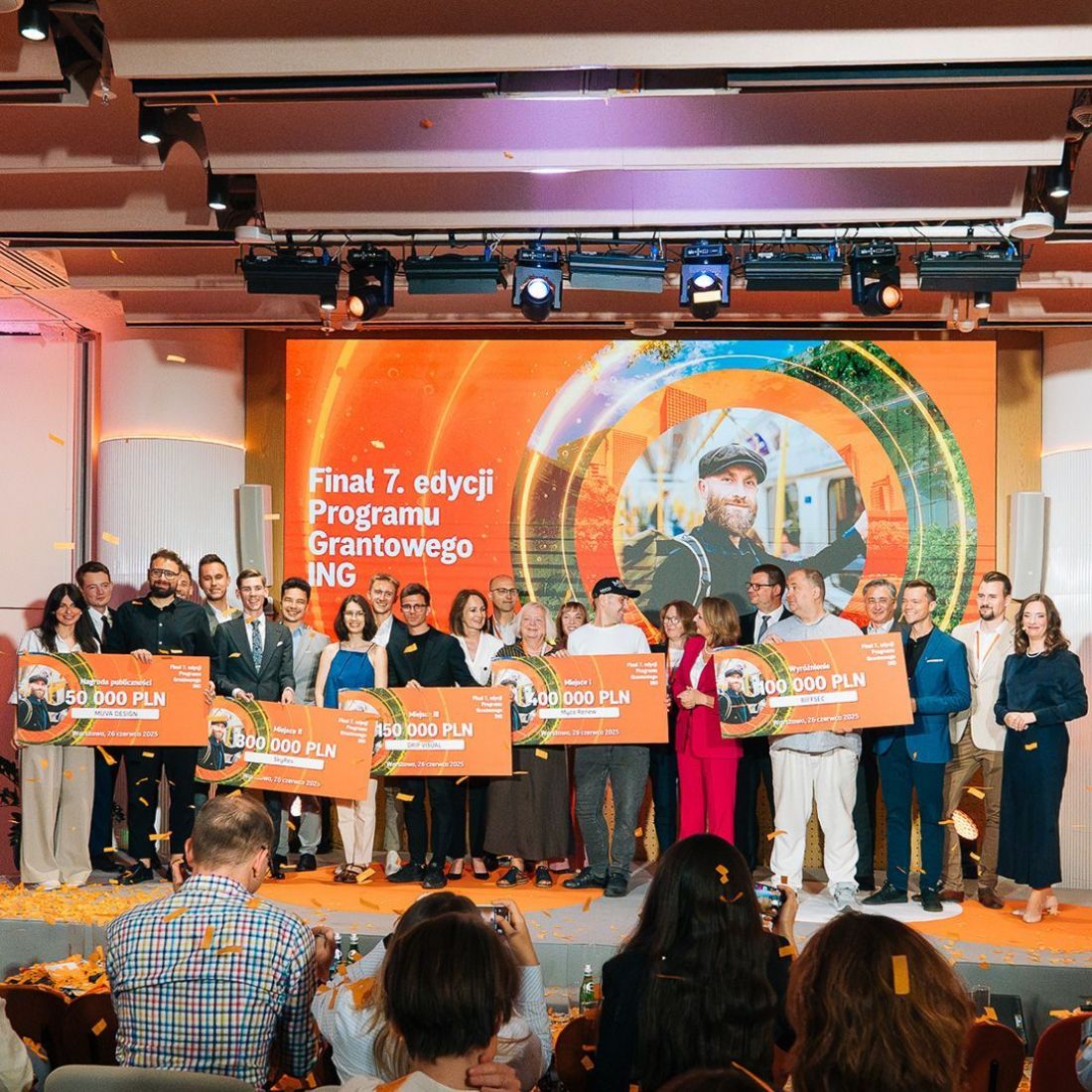
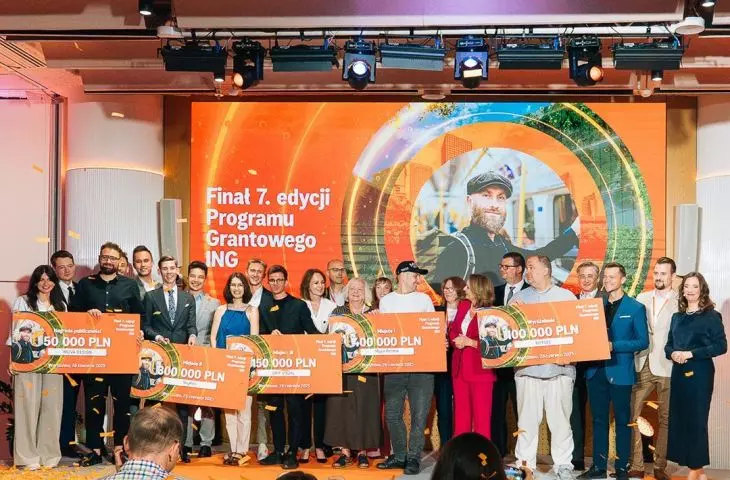
Pulic Twin finalist in the 7th edition of the ING grant program
© mat. provided courtesy of the interviewees
Przemek Ciępka: I have the impression that most people studying architecture see themselves as designers, building designers, working at the drawing board or in various programs. You, despite your directional education, have found a completely different idea for yourselves. Do you recommend such an alternative path?
Michal Kasperski: We highly recommend it! There is perhaps even more design here than in the studio, except that it is understood, for example, as user experience design or process design. It's a very creative field, and I have a feeling that many students could find themselves precisely in process design.
Jacek Baczkowski: It actually satisfies the same needs as architecture, but in a slightly different way. It combines both technology and sociology with a social mission, something very purposeful that actually has causality.
Michal Kasperski: The skills we learned from studying architecture transfer very well to other entrepreneurial activities. You just have to understand that opportunities can be created - not necessarily waiting for tenders or competitions, but also initiating different kinds of architectural processes in the place where you live.
Przemek Ciępka: Thank you for the interview!