





Political promises, a trace of which disappears shortly after the elections, idyllic visualizations of neighborhoods that, once built, become an urban jungle, slogans proclaiming "the happiest city in the world," whose residents face the reality of noise, lack of accessibility or shared spaces every day. Are these all illusions?
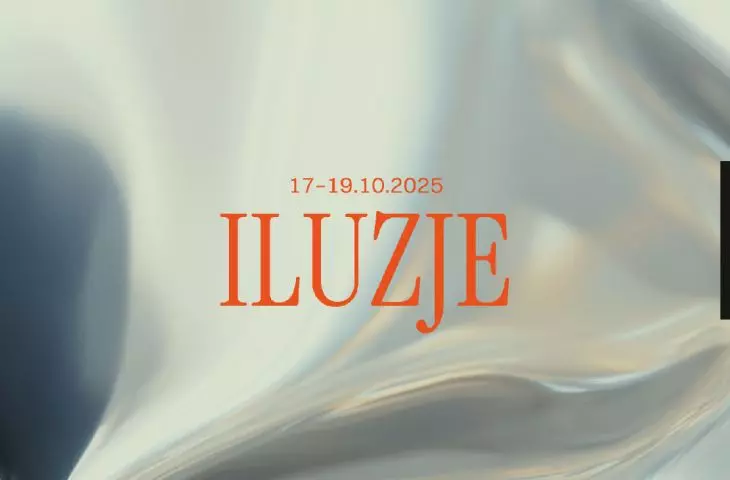
On October 17, A<FESTIVAL, an event dedicated to urban space, will begin in Katowice, this year under the theme "Illusions". We talk about illusions and legends, causality and sensuality, but also about the progam, who you'll be able to go for a bike ride with, who to walk with, and who to run with, with Lukasz Harat, the festival's director.
PS As part of the event, there will be a design marathon (different from all of them!), registration is open until September 28 - you can find the details in the interview!
Ola Kloc: Why "Illusions"?
Lukasz Harat: "Illusions" we chose because a city is never one-dimensional - it always consists of the tangible and rational, but also of the inexplicable. We are interested in this second layer: phenomena balancing on the border between rationality and magic. Places that attract people for no apparent reason, urban legends, tales of strange coincidences, the aura of streets or buildings that make us feel differently about them. These are elements that can't be captured in a development plan or an Excel table, yet they shape our daily experience of the city. We see it as a repetitive ritual, full of mysteries that don't need to be explained, but are worth accepting as a real part of urban reality.
At the same time, "illusions" refer to how contemporary cities try to sell themselves. Narratives about "the happiest city in the world," slogans about green transformation or visualizations of new neighborhoods promising comfort and harmony - all these build the illusion of a good and happy city. An image that looks good in promotional brochures, but rarely reflects the truth of everyday life: traffic jams, noise, conflicts of interest or lack of real community.
"Illusions" is also a look at our own profession and environment. Architecture and urban planning live by many illusions - that design can fix reality, that the architect has full agency, that buildings and plans change the world according to the authors' intentions. In practice, we are often confronted with politics, budgets, compromises and disappointments. We want to talk openly about this about the illusions of the architectural and urban planning profession, which are sometimes as important as the projects themselves.
That's why we treat the title "illusions" as both a criticism and an invitation. On the one hand, we want to expose them and reveal how they manipulate space and our expectations. On the other - we want to tame and accept what is mysterious, unexplainable and esoteric in the city. For it is through these invisible layers, from urban myths to the illusions inherent in our own profession, that the city acquires character, imagination and depth. And since the system doesn't work, you have to look elsewhere. That's why we are here. That's why - A<FESTIVAL. Because illusions need to be named, disarmed and left behind. It's time to reclaim reality. Together.
A< FESTIVAL 2025
© organizers archive
Ola Kloc: What is an illusion in urban space - is it about political promises, idyllic visualizations or something more?
Lukasz Harat: There is no single answer.... and that's the point. Illusion in a city can mean something completely different to a politician, something different to an architect, and something else to a resident or resident. For some, it's political promises that dissolve right after the election. For others - idyllic visualizations of settlements that look like paradise on drawings, but in reality turn out to be a concrete jungle. Still others see the illusion in the very image of a happy city that never fully exists, because everyday life always adds its own cracks.
But illusion is also a sensory and esoteric experience - something that is difficult to name. The mysterious energies of places, the stories that circulate around the city, the sense that there are parallel worlds where space looks different. These illusions are as real as the walls and streets, because they affect how we perceive the city.
That's why we don't have and don't want to develop a single definition. We prefer to see illusion as a kaleidoscope of many views - political, social, professional, but also sensual and irrational. It is in this multiplicity of interpretations that the power and mystery of the city lies.
It can be said that urban illusions are like parallel worlds - some visible, others hidden, and all existing simultaneously.
Ola Kloc: The topic of the discussion with the participation of Łukasz Drozda, Bogna Świątkowska and Robert Konieczny - illusions of decisiveness (about the illusions and realities of shaping the city together) - saddens.
Lukasz Harat: This is one of the most painful questions about contemporary cities. On the one hand, there is a strong illusion that we, as residents, have a real influence on the shape of space - we are invited and invited to public consultations, we create participation maps, we submit applications to the civic budget. On the other hand, we still see that the final decisions are made somewhere else: in the offices of politicians, in the offices of developers, in hidden power arrangements that are not visible at first glance.
Ola Kloc: Do we really have no say in what the space around us looks like?
Lukasz Harat: Not really. We do have a voice, but it is often filtered, weakened, put into the logic of a system that allows us to feel heard, but does not necessarily change reality. It is in this sense that we speak of "illusions of decision-making." - This is a space where the line between real influence and symbolic gesture can sometimes be very thin.
We want to ask whether there is some invisible force: global trends, political alignments, or even an imagined "world government" that controls our cities over our heads. Or is there still in these small, local actions a real energy of change that cannot be easily controlled?
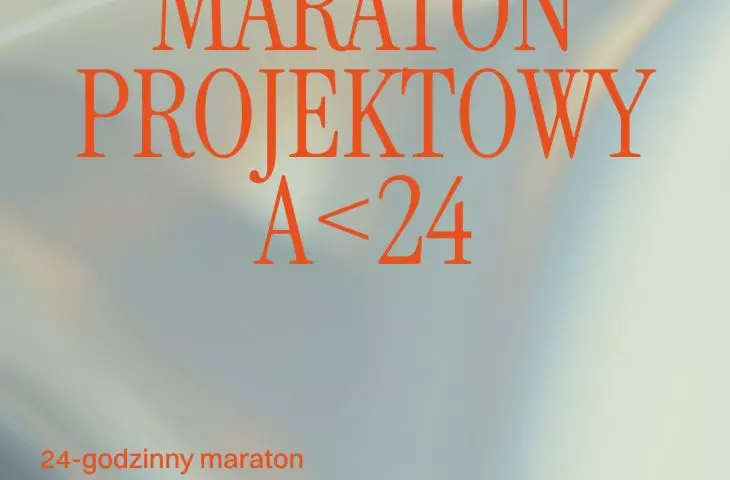
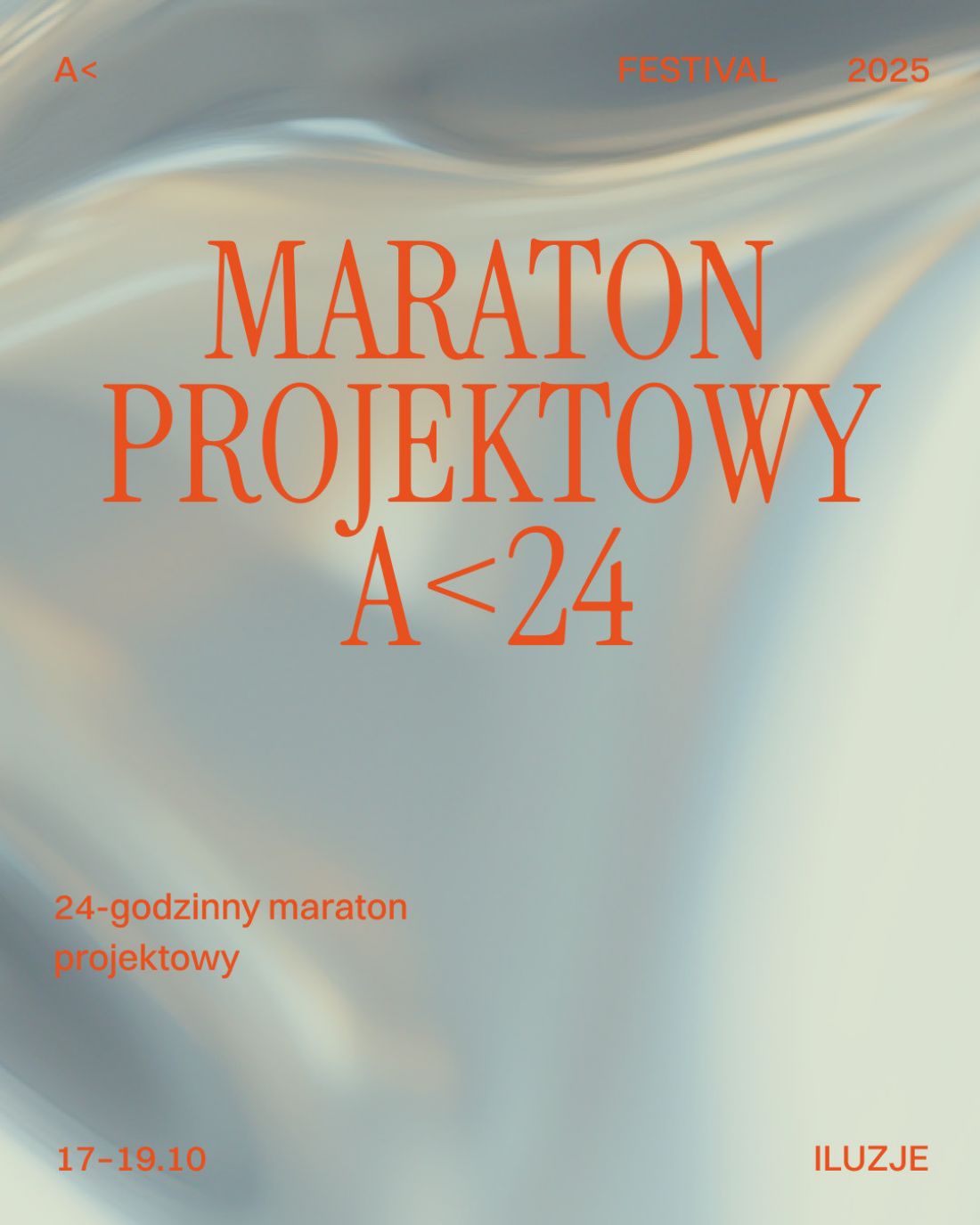
Ola Kloc: An important element of the festival is the design marathon, what will be its theme?
Lukasz Harat: This year, under the guidance of tutors - practitioners, researchers, designers and activists - participants will work on topics that touch both the daily practices of residents and broad visions of the future of cities.
This year, participants will examine, among other things:
- how the heart of Chorzow could beat - that is, how to redefine the city center so that it is not just a transit route between Katowice and Bytom, but a place to meet and live together;
- how the main street of Katowice pulses - a space that for years served as a communication sewer, and today there is a real chance to bring it back into urban circulation and give it a new identity;
- whether it's possible to design food infrastructure - treating local agriculture, food distribution and daily culinary practices in the Upper Silesian Metropolis as a fundamental element of city functioning;
- what really happens when cities start to go downhill - what emotions and strategies are born in post-mining realities, when mines disappear from the landscape and entire communities have to search for a new identity; the question of life in places that are losing their former function and fading on economic maps, while trying to reinvent themselves: how to make use of empty infrastructure, how to rebuild neighborhood ties, how to deal with heritage that is both a burden and an opportunity.
Each of these topics is an invitation to experiment - from the micro scale of streets and everyday practices, to macro visions of the future of entire cities. These are questions that require courage, because they transcend safe patterns and have no obvious answers. The marathon will thus become a space where illusion and reality, vision and practice, will meet in creative tension.
The participants will be introduced to the process by tutors and tutors: Tomasz Swietlik, Karolina Michalkowska, Ola Litorowicz, Marta Zwolinska, Edyta Sadowska, Archigrest, Pawel Paciorek, Blanka Byrwa, Michal Jurgielewicz, Wojtek Lesiak, Misia and Kuba Maciejewski and Natalia Wielebska.
© organizers archive
Ola Kloc: Taking care of the well-being of participants and attendees, you do not encourage work for 24 hours, but spread the marathon over three days. Is this the beginning of the end of the culture of sacrifice?
Lukasz Harat: This is a conscious choice. We no longer want to replicate the myth of the real marathon, where the only thing that counts is who lasts the longest and sleeps through the nights. We want participants to be able to work intensively, but also in harmony with their rhythms and with attention to each other. It's also part of a larger cultural shift - away from the narrative of necessary sacrifice, which was supposed to be proof of commitment and often ended in burnout.
Ola Kloc: Does the younger generation no longer want to take part in the professional race to the beaten track, and perhaps there will still be people who choose to stay awake at night?
Lukasz Harat: I think to a large extent yes - there is a growing awareness that innovation and good ideas are born not only on the run and under pressure, but also in a space for rest, recuperation and exchange. But at the same time, we know that there will still be some people who choose to sleep at night.... It is possible to work non-stop, if one feels such energy. The difference is that it is no longer the system that requires it, but the conscious choice of the participants.
A< FESTIVAL 2025
© organizers archive
Ola Kloc: The program also includes film screenings, musical events, walks and even a run-through with a famous architect - what sets this edition of the festival apart?
Lukasz Harat: What distinguishes this year's edition is the diversity of experiences. In addition to discussions and a design marathon, there will be film screenings, musical events, walks and performances that will allow you to look at the city from multiple perspectives - not just analyze it, but experience it with your whole body and senses.
Above all, however, there will be no tryhard. We're betting on looseness, laughter and playing with urban themes - all with a wink, but also with full immersion in energy, myths and hidden narratives. Instead of more "deadly serious" panels, you will be able to go on a bicycle tour with Robert Konieczny, run with Zbigniew Maćkow, hear Cosmoderna as a DJ, or walk with Przemo Łukasik through the cursed places in Bytom.
This will not be a festival for those looking for safe answers. The city itself will start whispering here, and sometimes even screaming.... the only question is whether we will dare to hear it.
Ola Kloc: Thank you for the interview.