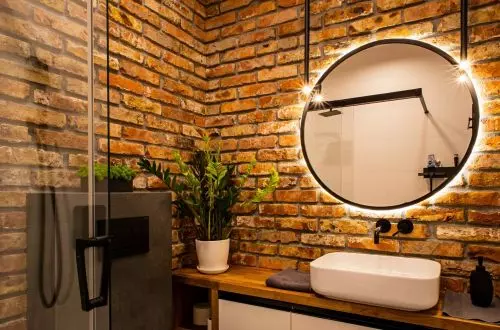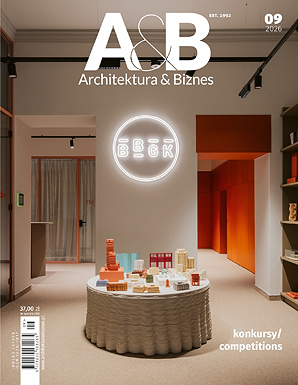





Buying second-hand clothes has become fashionable - will it be possible to transfer this trend to building materials as well? Enchant the perception of them as waste? Opt for architectural patchwork and a certain randomness instead of seemingly perfect, finite forms? We discuss the aesthetics of recycled materials in architecture with Prof. Bartosz Felski, author of surveys examining social acceptance of reuse in architecture - we encourage you to fill out both questionnaires!
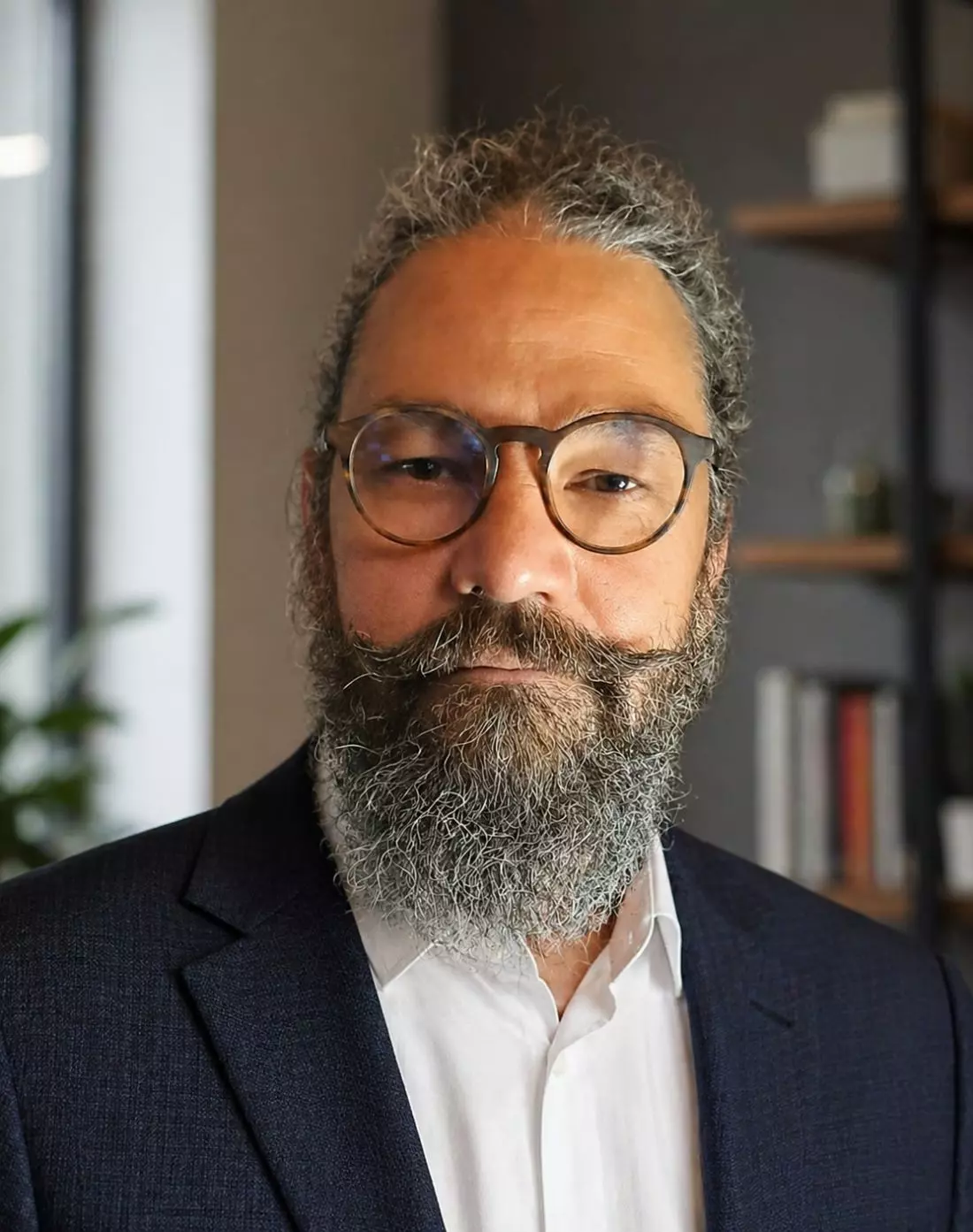
Prof. Bartosz FELSKI - graduate of Gdansk University of Technology. Architect and certified carbon footprint auditor, researcher of the impact of architecture on climate change. Graduate of the Climate Change: The Science and Global Impact program. Winner of an award for an innovative research paper at the 2005 Sustainable Building International Conference in Tokyo. Winner of an award at the 5th Interdisciplinary Academic Environmental Conference in 2020. His research focuses on circular, bioclimatic and climate-adaptive design, as well as the impact of architecture on climate change; he is a proponent of using architecture as a tool for climate change mitigation. He is an expert for the European Commission on behalf of the European Executive Agency for Climate, Infrastructure and Environment and an evaluator for Horizon Europe Programs on issues of sustainable and climate-adaptive architecture. He has been an expert on Climate Leadership, a UNEP/GRID-Warsaw program, for several years. One of the reviewers of the IPCC Intergovernmental Panel on Climate Change's Special Report on Cities and Climate Change. In 2025, he joined the 950 global ambassadors of Climate Interactive, an organization dedicated to predicting climate scenarios using digital tools from MIT. Since 2026, he has been an ambassador of the European Climate Pact initiated by the European Commission. As a didactician, he works on the topics of climate-adaptive architecture, closed-loop economy in architecture and sustainability policy, and teaches at SANS in this area. He is a supervisor of engineering and master's theses at the Faculty of Architecture. Privately, he is a lover of vernacular architecture and traditional building technologies.
Ola Kloc: What exactly is urban mining?
Bartosz Felski: Urban mining is simply resource extraction. It sounds like something new, but we've actually known it forever, just in a slightly different way. We have always mined resources that needed to be processed. The difference is that today it is simpler to extract them from anthropogenic resources, that is, from the transformed layer.
In 2020, there was an infamous bump, after which the earth's anthropogenic mass, that is, the mass of all transformed elements, surpassed the natural mass, that is, all biological components. This shows both the scale of the collapse in raw material transformation and a certain possibility for the future - since we see that anthropogenic resources are so abundant, we need to start using them skillfully.
Ola Kloc: How to do it skillfully, when the quality of what we produce is sometimes questionable?
Bartosz Felski: After the regime change in the 1990s, we felt for the first time that we didn't need to save money. It seemed to us that we were such a rich nation that now we could only consume. That was the moment we changed our optics.
I'm doing research on upcycling, which is a very specific type of recovery or closed-loop economy aimed at using architecture as a climate tool. Looking back , upcycling, or material reuse, has always existed. Looking at an old building, you can immediately see which element was inserted into it from another building. It was profitable to recycle buildings because the energy input needed to produce materials was high. Since the introduction of the steam engine, the energy input needed to build new structures has decreased significantly. We have also begun to build for shorter and shorter periods of time - while the technical death of structures used to happen much faster (a building burned down or collapsed sooner than we wanted to change it), now we dismantle a building faster than the technological materials it was made of lose their usefulness. So it would be good to start reclaiming these materials, but unfortunately they are constructed in such a way that it is relatively difficult to extract them in order to recycle them, for example. However, this doesn't mean that we can't reuse them! We can do it in another model - upcycling or downcycling. The problem, however, is the technological regime, the lack of appropriate regulations, but also a social blockade - for some reason we are not reluctant to buy used clothes or cars, but old doors or old bricks are somehow synonymous with poverty. We need to change this attitude.
OlaKloc: However, old building materials or objects can be full of surprises, and they are not available in construction stores, so it is easier to choose new products.
Bartosz Felski: This is a slightly different kind of design. When designing with new materials, we measure ourselves against price and quality, because often after a few years of warranty, things are already starting to happen. It's also a mass-produced material - whatever we buy, we are sure that somewhere there will be exactly the same apartment, with the same materials. On the other hand, we have design with suspense, a job like for a detective. You have to be able to diagnose existing structures and materials, which, after all, are not certified, so we don't really know how they work, what they were painted with, whether they are safe. However, it is a substance with an incredible energy deck, emotional, with its own identity.
I sometimes do an exercise with students that involves rebuilding some public building from resource materials, from the local context, for example, from the demolition of old barns. This shows that architecture can become a carrier of a certain identity, we can see the planks of our great-grandfather used in another building, which now serves a different function for us. These planks will no longer be a structural element, that is, we are talking about upcycling, they now serve as another - new functional cycle.
Ola Kloc: However, these materials need to be searched for, their suitability for reuse needs to be checked. How do you bring them to market in a systemic way?
Bartosz Felski: You have to be aware that this is a very specific material. It's like looking for nickel ore: you have to know where to look and what to do with it afterwards. And be aware that this is a finite resource - we can produce everything, but we can only recover a part, so we should approach these materials with a certain respect. We happened to face shortages of materials in several investments, for example, out of five thousand handmade tiles we managed to recover four thousand - some fell apart, others had holes - technical death caught up with moral death.
Ola Kloc: Moral death?
Bartosz Felski: Moral death occurs when we simply don't need the building anymore; the building won't stand any longer, so we want to recover particular materials and elements. Technical death also means that not everything can be recovered, some elements start to fall apart in our hands.
When we started working on upcycling, we didn't take into account the social aspects and the "appendage" syndrome. When we were looking for the missing tiles, it turned out that all we had to do was talk to the villagers - someone once picked someone up, hid it just in case, maybe it will come in handy someday. This story shows that these are unpredictable processes, eliminated from architecture for years.
I am an expert for the European Commission of the Executive Agency for Climate, Infrastructure and Environment, where we evaluate Horizon Europe projects. These scientific initiatives are already talking a lot about programming certain characteristics for materials for future recovery and how to localize them. I am also wholeheartedly in favor of a whole new scientific and design trend: HBIM, or Heritage BIM, which is about finding and forecasting how these existing materials can be incorporated into a BIM system in the future, so that they don't disappear from us. Because today these are lost materials, for example, a brick recovered from a 19th century building only needs to be slurped with lime mortar, modern bricks are joined with cement mortar, they can't be recovered. So we need to start thinking about how we will recover these elements in the future. Lendager is introducing a rather innovative way of cutting out these elements in order to use them again. You can see this in the Resource Rows building, for example.
With students I try to implement recycling maps - we map the city in terms of where the resources are. This information can come in handy when any neighborhood needs redevelopment, so we can design a new building using materials that are on site.
However, there is a lack of regulations that would allow this. Geels's theory is that this type of activity happens at three levels. The broadest of these is the human level, called the landscape - people need to know that something needs to be done. Then there is the level of the technological regime - the tools and regulations that allow it, and finally there are niches, start-ups that show how something can be done based on these regulations. In our country, this second level is missing.
OlaKloc: I understand that we need appropriate regulations, but what specifically? How would it be possible to realistically use these materials from now on?
Bartosz Felski: A bit guerrilla speaking, you need to be able to use the holes in the system. For example: material that doesn't go beyond the property boundary doesn't become waste. Admittedly, we are not allowed to build with waste, but with recycled materials we already do.
Of course, this sounds simple in theory, but in practice we have logistical challenges: we have to store these reclaimed materials somewhere, and after all, there will be a construction site in the place left by the demolished building.
This gateway could be opened by regulations that take waste status off the material already on site. An example would be the Scandinavian systems, which say straightforwardly: if we can't introduce it voluntarily, let's do it by force - we don't allow the removal of construction waste above some cubic meters from a building plot.
OlaKloc: And then what?
Bartosz Felski: And then we have a whole new optics - the investor knows that a building that will not be recycled is a lost resource for him, because he will not do anything with it. So this is a clear message to designers: let's not build that way, let's build right away so that this building can be recycled in the future, or maintained in a circular way. Let's not create buildings that will have chemical connections that are not so easy to get rid of, let's create bolted buildings that we don't tear down, but decompose or deconstruct.
This also shows that building materials will become a very big problem if they don't have a diagnosed scenario for the future. Since we don't know what to do in the future with this concrete or reinforced concrete, it's better not to use it.
OlaKloc: You talk about it as if it's very simple, like that regulation about not disposing of construction waste outside the boundaries of the plot. Why doesn't it work in our country?
Bartosz Felski: On the one hand, we have a certain amount of backstory, we build practically on the property boundary, so I think these regulations should cover the existing structure a little more broadly. On the other hand, this is a bit of a salvage measure - we leave materials on the property, but we also need to have a process for certifying them, a technology that would allow them to be processed on the site. On the third hand, there are also situations where it is not always possible to salvage these materials.
We also have local laws, municipalities could introduce recycling resolutions: for example, let all public buildings or buildings in the center have second-hand elements built in. Maybe then there would have to be something along the lines of municipal PSZOKs for reusable materials. This is how Aarhus in Denmark, for example, works - a city that has tiles on its facades, buildings, even skyscrapers, are created from mailboxes. And it's not at all some stigmatizing emergency development built by people in crisis of homelessness - a new, somewhat patchwork quality of architecture is simply being built there.
OlaKloc: Are we ready for this?
Bartosz Felski: This is another issue I'm trying to verify in my research - whether it would be possible to remove the stigma of waste in our thinking. It may turn out that in addition to the technological problem itself, which is solvable, we also have a human, emotional or aesthetic problem, which is difficult to quantify. The surveys I conduct help to calibrate the mechanism for studying how aesthetics affect recycling architecture, upcycling, or reusing or downcycling.
The Danish examples show that recycled construction is cleaning up after our previous investment. This makes everyone want to help, mapping the location of these materials. Properly "infected" residents are able to change their optics.
OlaKloc: So we need to change the narrative.
Bartosz Felski: I think we do. People have to start wanting to.
OlaKloc: You're exploring this on the interior, though, which I think is easier to accept, we're talking about its climate, its style then. In terms of architecture, it's more of a confession, as exemplified by the reaction to the winning design for the Museum of Architecture in Wroclaw.
Bartosz Felski: I'm glad you said I'm surveying it on the interior - it means you managed to get rid of the waste status! The two buildings shown in the surveys are built entirely of "garbage". This was done so as not to emanate a patchwork aesthetic, to show that it is possible to build a building from historical materials, recycled, which will continue to be simply ours, familiar, embedded in the context. I am exploring this on historic buildings, because they are, in my opinion, the future of architecture in terms of carbon neutrality.
As for the Museum of Architecture - in my opinion, it's a mega cool project and I'm really unabashedly rooting for it! And indeed, some residents are against it, saying that why build something from old elements, they go to see, for example, the Wawel Castle, which is, after all, so patchwork that it can't get any more so - if one wanted to consider it in terms of layers of historical and aesthetic accretions, it would turn out that we came out with historical disco polo.
OlaKloc: What is your research supposed to contribute to?
Bartosz Felski: This is a pilot project that will help familiarize ma people with patchwork architecture. It is intended to help think about how to quantify the mechanism of selection of design decisions.
I'm creating CARMA (Circular Adaptive Reuse For a Mitigation Based Architecture), a proprietary tool exploring how circular architecture can be used as a tool for climate change mitigation - how to build to zero emissions in architecture. One factor is a dynamically changing climate. An architecture that is stable must adapt to new scenarios, new frameworks for functioning. In the model we live in, this matching will involve emissions, because a derivative of any construction is emissions related to production, to the disposal of old materials and so on. So if we were to learn to build circularly, using what we already have, we would be able to adapt to new climate scenarios, by minimizing emissions from the construction phase and the manufacture of materials.
In the future, perhaps with this change in optics, we can extend this to building cities in a slightly different way, and reuse will allow us to reduce emissions. For this to work, however, we need to know whether people in general will accept such architecture, and there is no way to quantify this other than simply talking to people and asking them if they like it, hence these surveys - to understand the decision-making method.
OlaKloc: And do we actually have a choice at all? Questions of taste can be secondary when it turns out that we have no other choice.
Bartosz Felski: We both realize that we're riding in a car that gets to a closed barrier and that a train is about to come. We know we have to brake, but the optics of many people are different, they don't see that barrier yet, they wonder if why brake, or maybe it doesn't exist at all? 99 percent of scientists realize that we have a crisis, but this rhetoric does not pass through to the public. Maybe, therefore, we need to approach the subject a little differently, turn to the people, start talking to them. We need to feel a sense of agency as a community to start helping science "clean up" some of the climate messes.
OlaKloc: Building from what we already have?
Bartosz Felski: We are happy to decorate interiors with a painting from grandma, we appreciate that we can eat at the same table as great-grandma, so why can't we open the same door? I know that modern architecture must be uncluttered, have a rhythm, a clear layout and so on, but over time unpredictable threads appear in it, superstructures, alterations, the building grows over with some random growths and becomes patchwork. So maybe we should change the approach of architects a bit - so far we have been designing in such a model that everything can be bought, at most certain elements have to wait a while. And what happens when resources are so finite that the old brick can't be produced? Maybe it's a good idea to start designing with scarcity in mind - to assume right away that maybe not everything will be as perfect as we'd like, and that patch in the wall will have to be bricked up with another brick? Approach architecture not as a finished project, but as a process of defining the space around you. She doesn't always have to be ready right away, maybe over time, if an element appears, we'll add it later; maybe not every element has to be perfect and matched? Of course, it can't be done with the exterior structure, we can't wait with windows until they come on the market in two years, but maybe a patchwork will work - we'll add to four windows a fifth slightly different one. I know I'm balancing on the border between patchwork and kitsch, but this is a yet-to-be-recognized space in architecture - maybe we don't have to design for the materials that are there, maybe we should start thinking about certain deficiencies and how to program them?
Ola Kloc: Thank you for the interview.