





Center for Innovation, Entrepreneurship
and Active Citizenship at the school
named after. Frederick Gunn in Washington, DC,
design: Sasaki
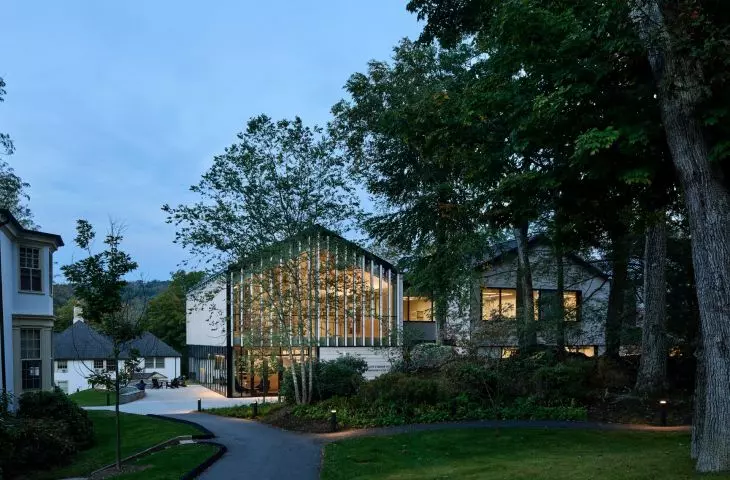
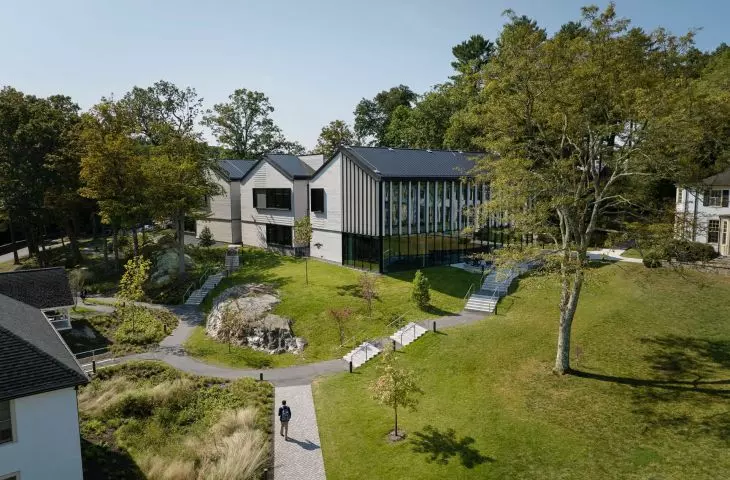
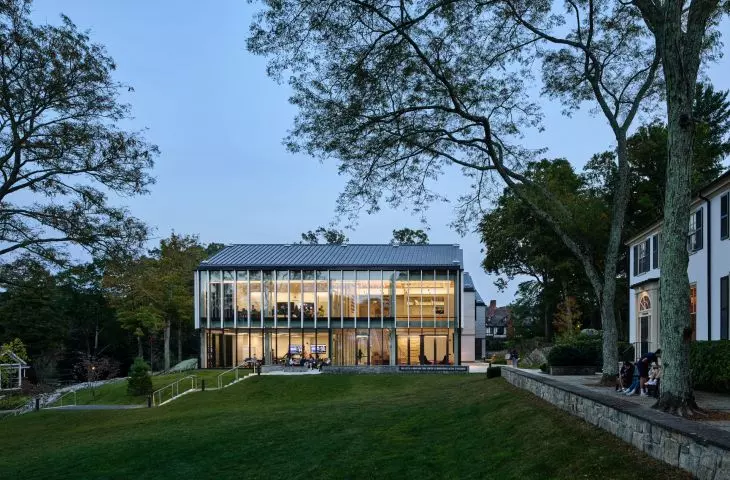
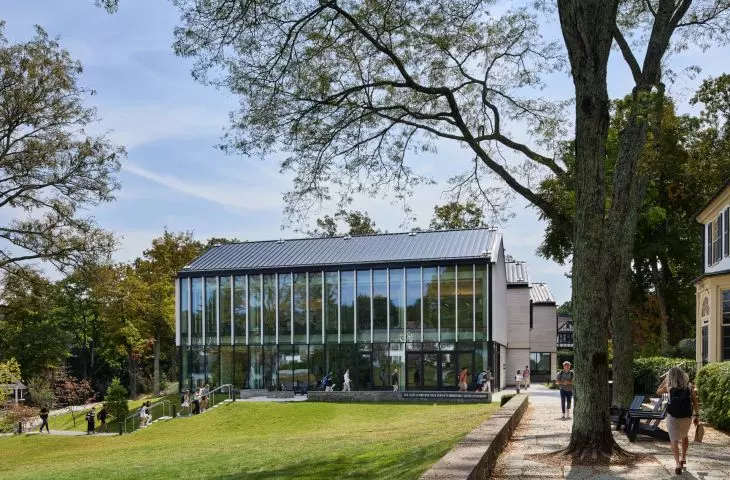
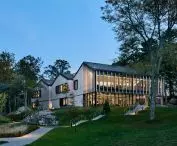
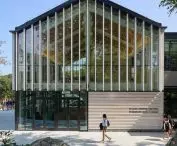
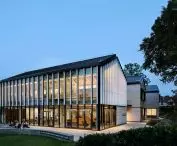
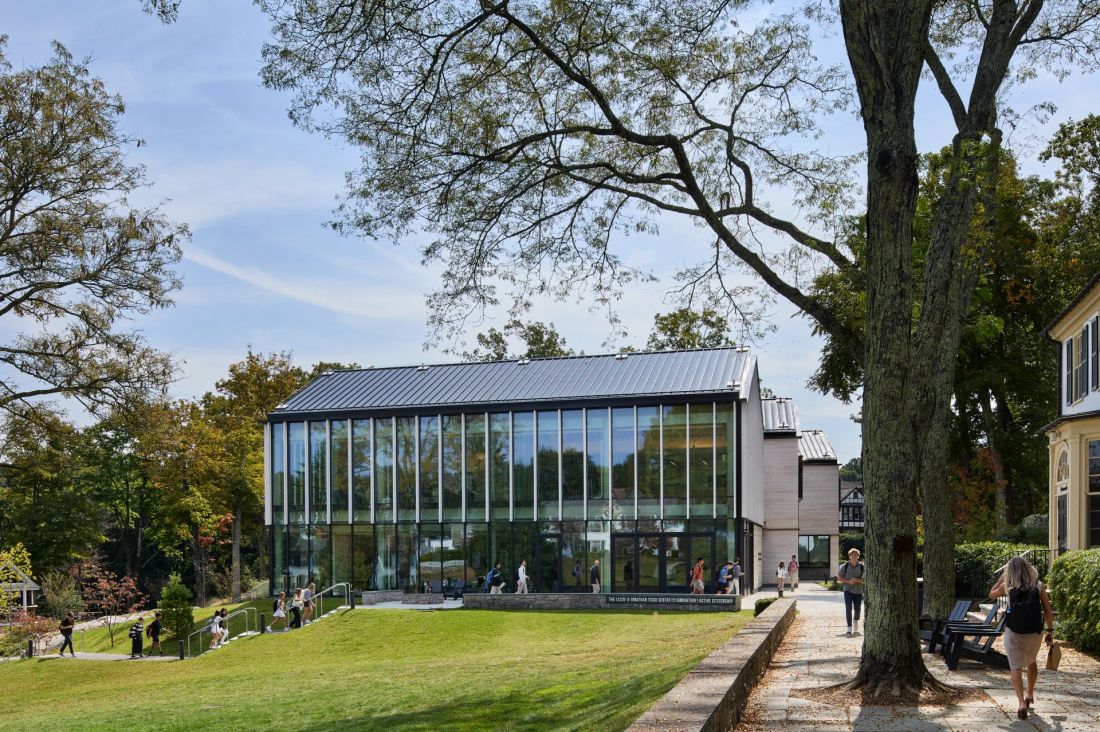
The Center for Innovation, Entrepreneurship and Active Citizenship - designed by Sasaki - opened in 2024 in the heart of the Frederick Gunn School campus in Washington, DC. The complex houses biology, chemistry and physics laboratories, computer labs and multipurpose rooms. The new building replaced an outdated Brutalist-style science center, and its open, transparent form was planned to blend harmoniously into the historic campus while creating a new axis of academic life.
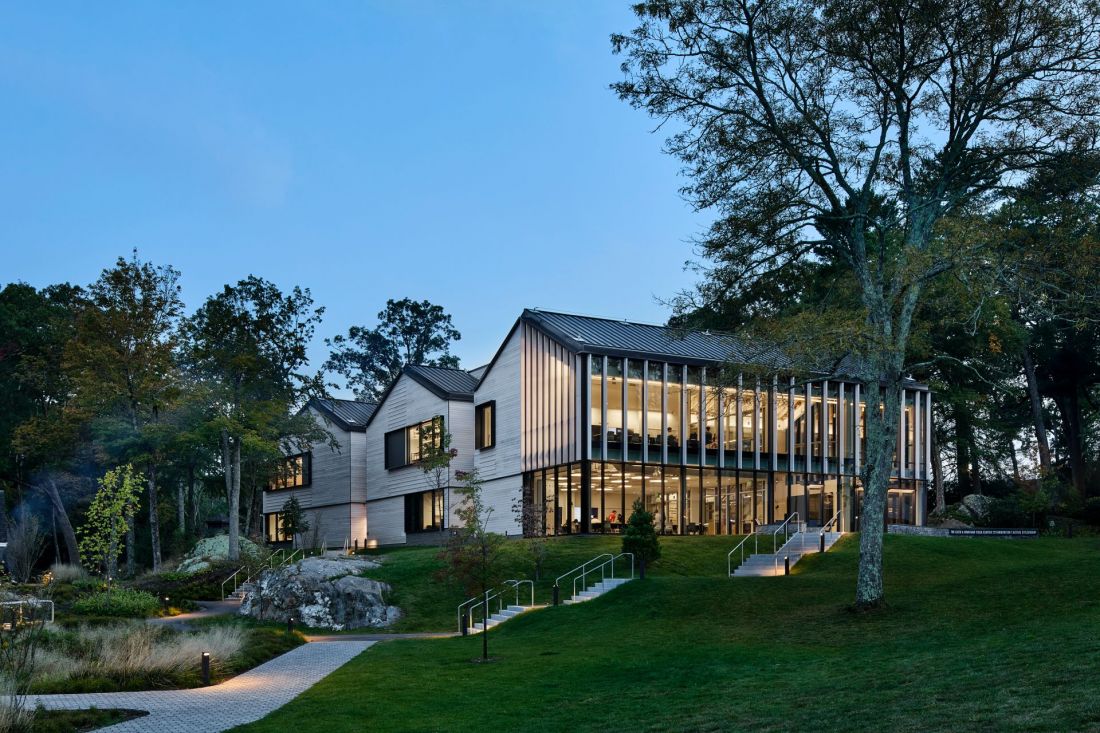
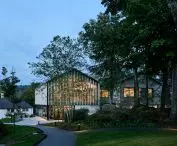
The Center for Innovation and Active Citizenship at the Frederick Gunn School in Washington, D.C. - the facility consists of three interconnected buildings whose volumes resemble a classical barn
photo by Jeremy Bittermann
A legacy and vision that has endured for 175 years
Frederick William Gunn, the school's founder, was a remarkably articulate figure. In the mid-19th century - at a time when such views required courage - he was active as an abolitionist, an advocate of educational reform and a proponent of education in contact with nature. He focused on science, which educates the mind, but also builds character and a sense of responsibility for the surrounding world. A school named after him was founded in 1850, and the new center is a contemporary development of Gunn's ideas - a place that not only serves to acquire knowledge, but also teaches action and cooperation.
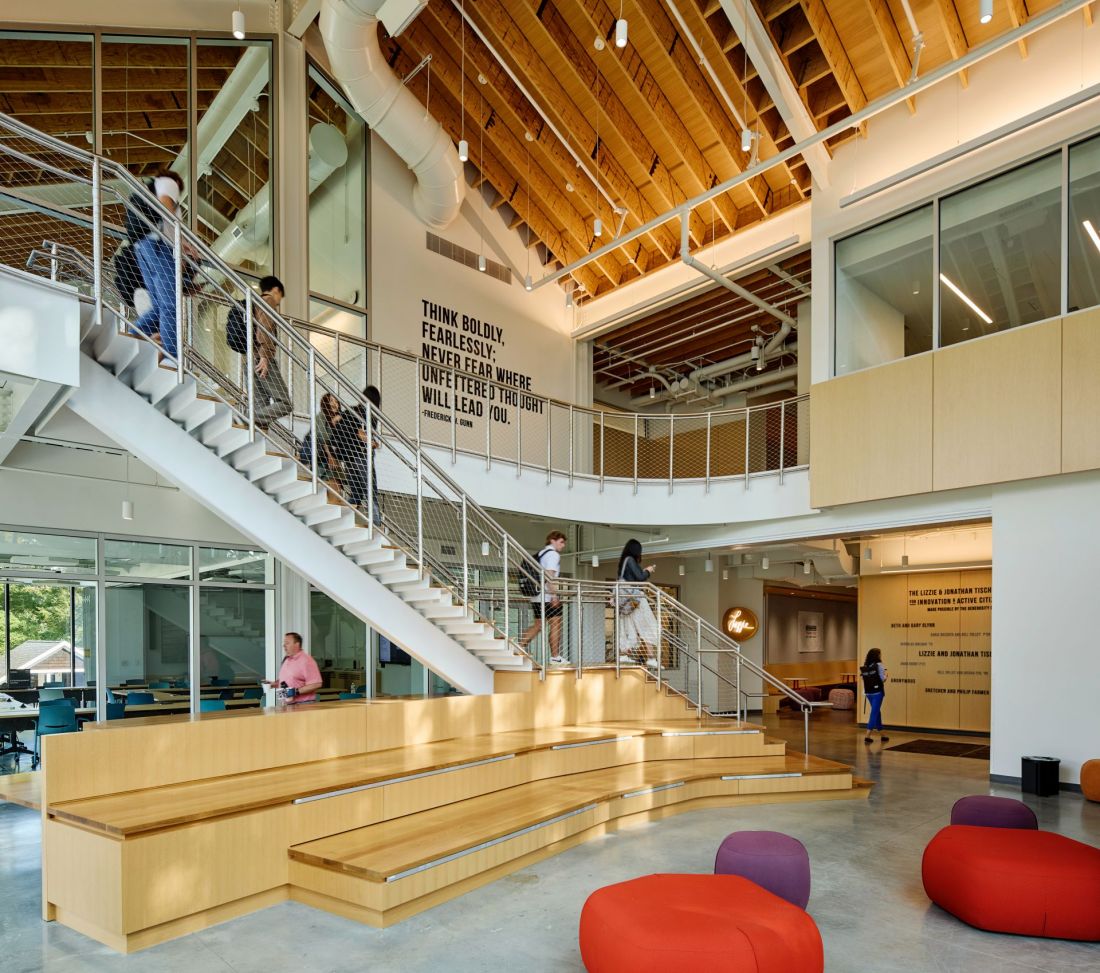
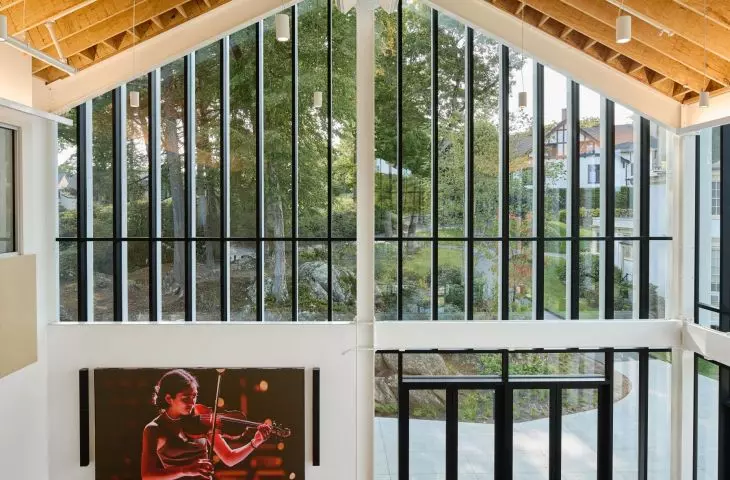
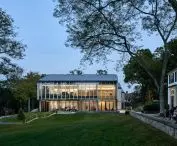
The Center for Innovation and Active Citizenship at the Frederick Gunn School in Washington, D.C. - local conditions and landscape became a natural reference point for the interior
photo by Jeremy Bittermann
architecture in dialogue with the campus
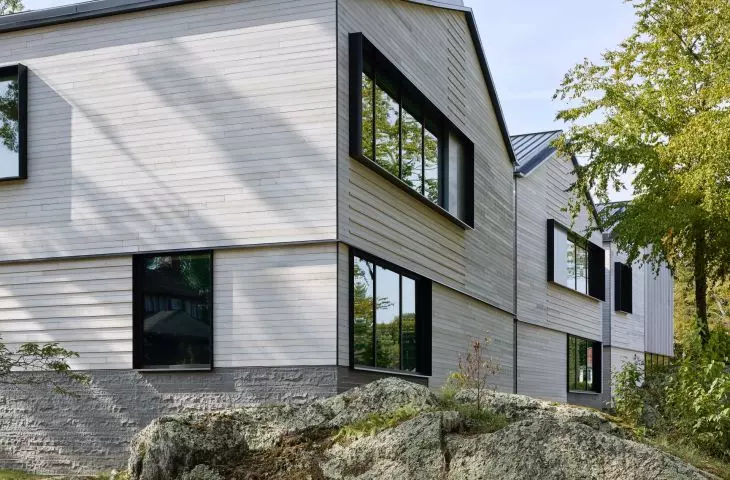
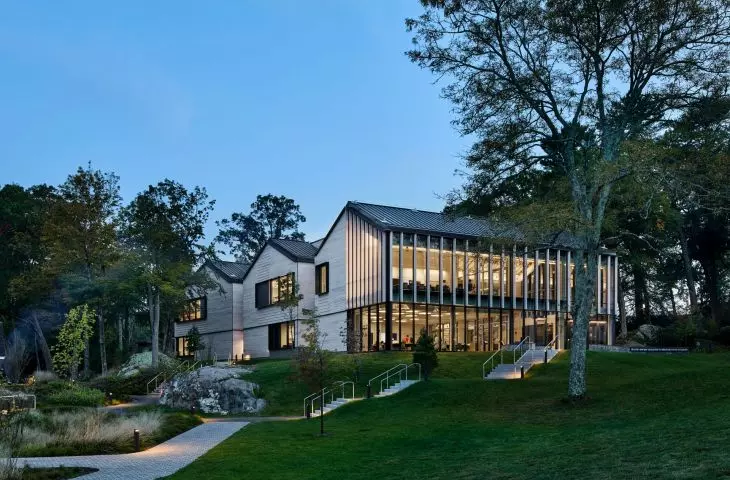
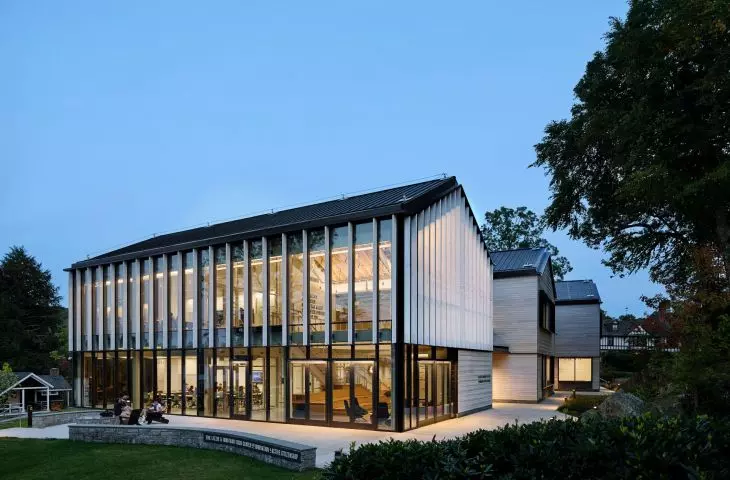
The center was built on the site of a previous Brutalist-style science center. That building, although it had served its purpose for decades, no longer met the requirements of modern didactics. Designers from the Sasaki studio created a completely new concept - three interconnected blocks with a form reminiscent of traditional barns with gabled roofs. Such a layout made it possible to clearly separate functions into separate zones and at the same time reduce the visual scale of the building, so that it blended harmoniously into its surroundings. Each building differs in size.
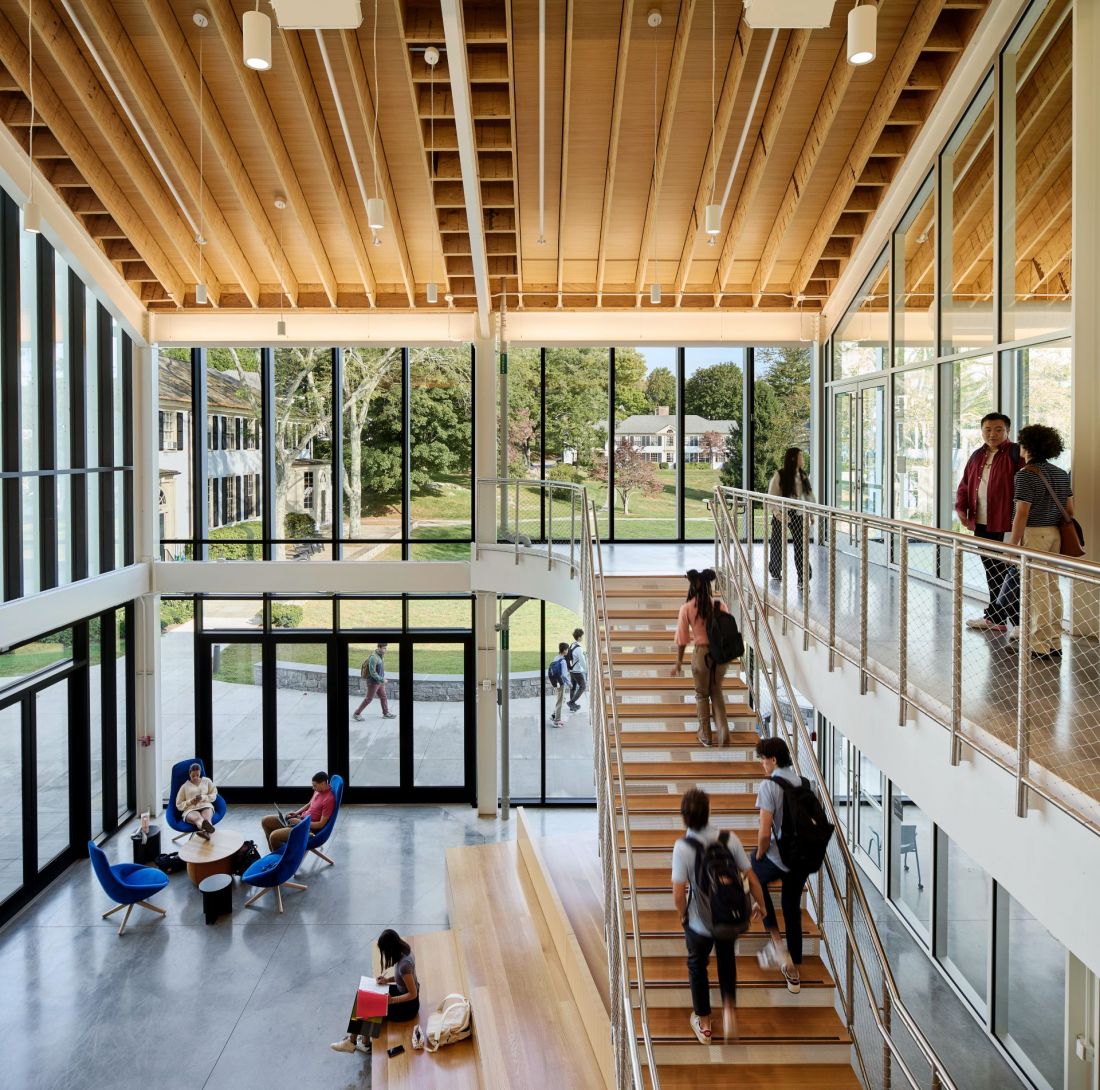
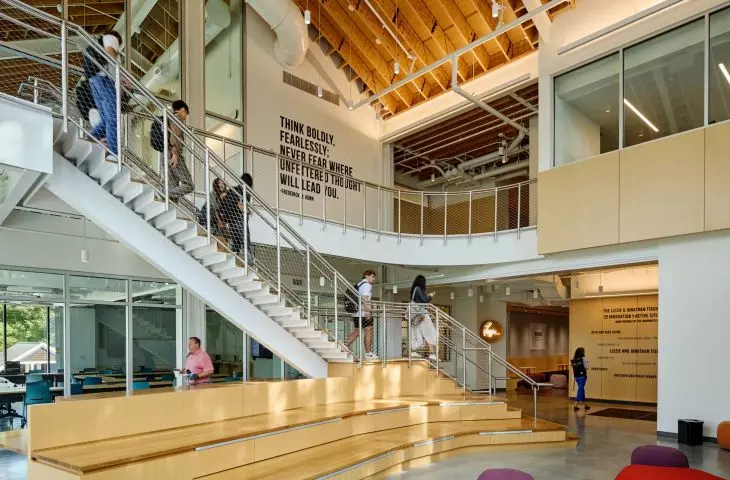
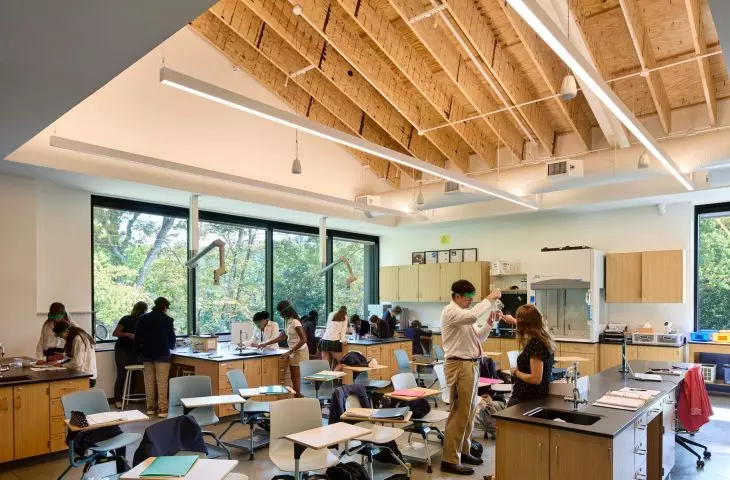
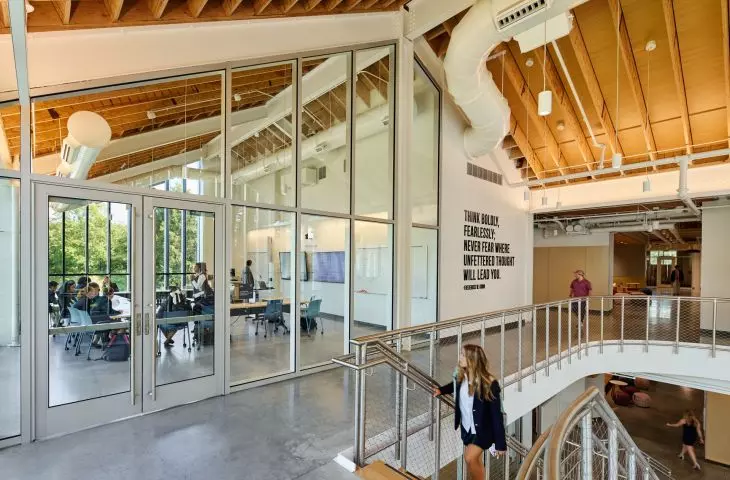
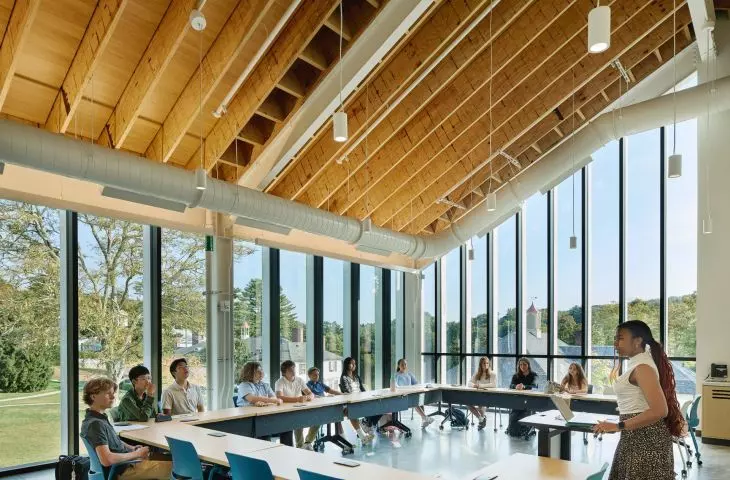
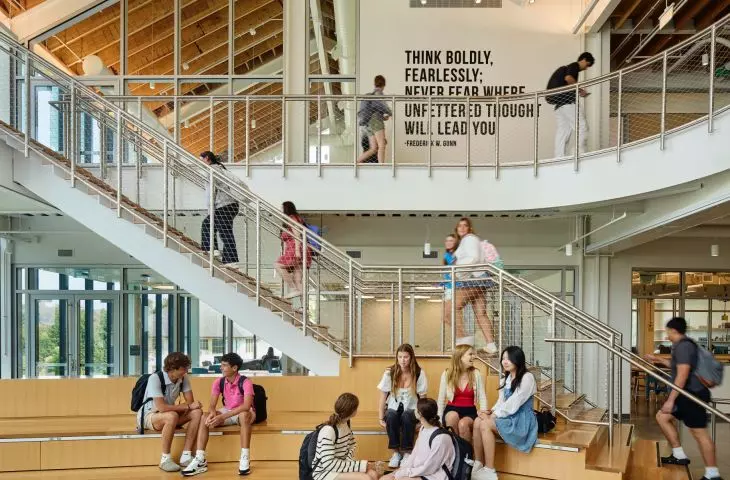
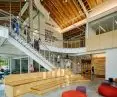
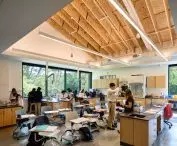
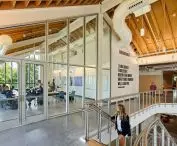
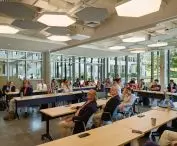
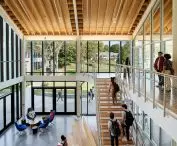
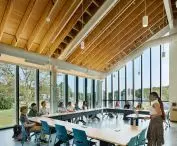
The Center for Innovation and Active Citizenship at the Frederick Gunn School in Washington, DC - inside are laboratories for physics, biology and chemistry, as well as spaces that can be arranged as needed
photo by Jeremy Bittermann
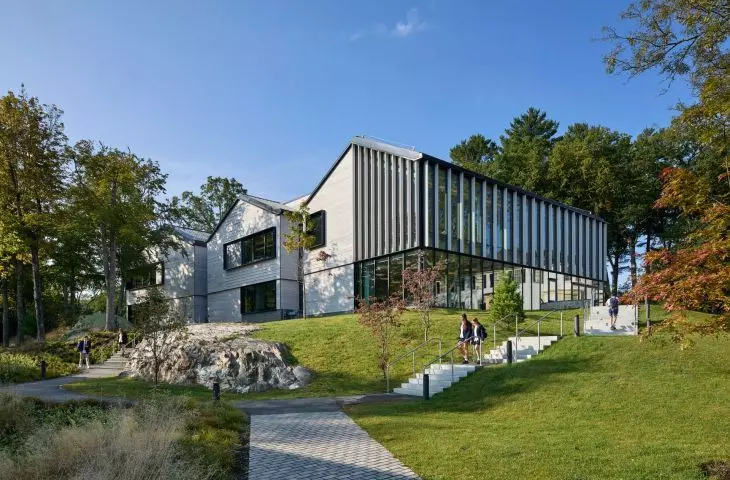
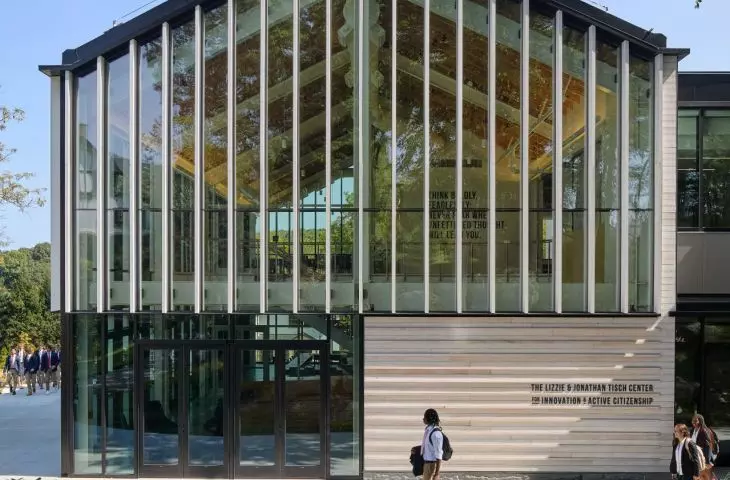
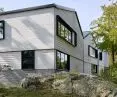
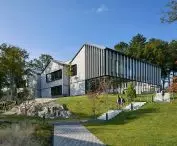
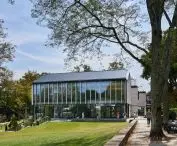
Local conditions and landscape became a natural reference point. The first floor was clad in materials with rough textures and natural tones, reminiscent of the rocky outcrops of the surrounding hills. The upper floors are adorned with wooden finishes, whose colors and textures are reminiscent of the surrounding forest, adding warmth and organicity. The façade of one of the buildings combines large glazed areas with vertical white panels to create contrast and provide natural light to the interiors.
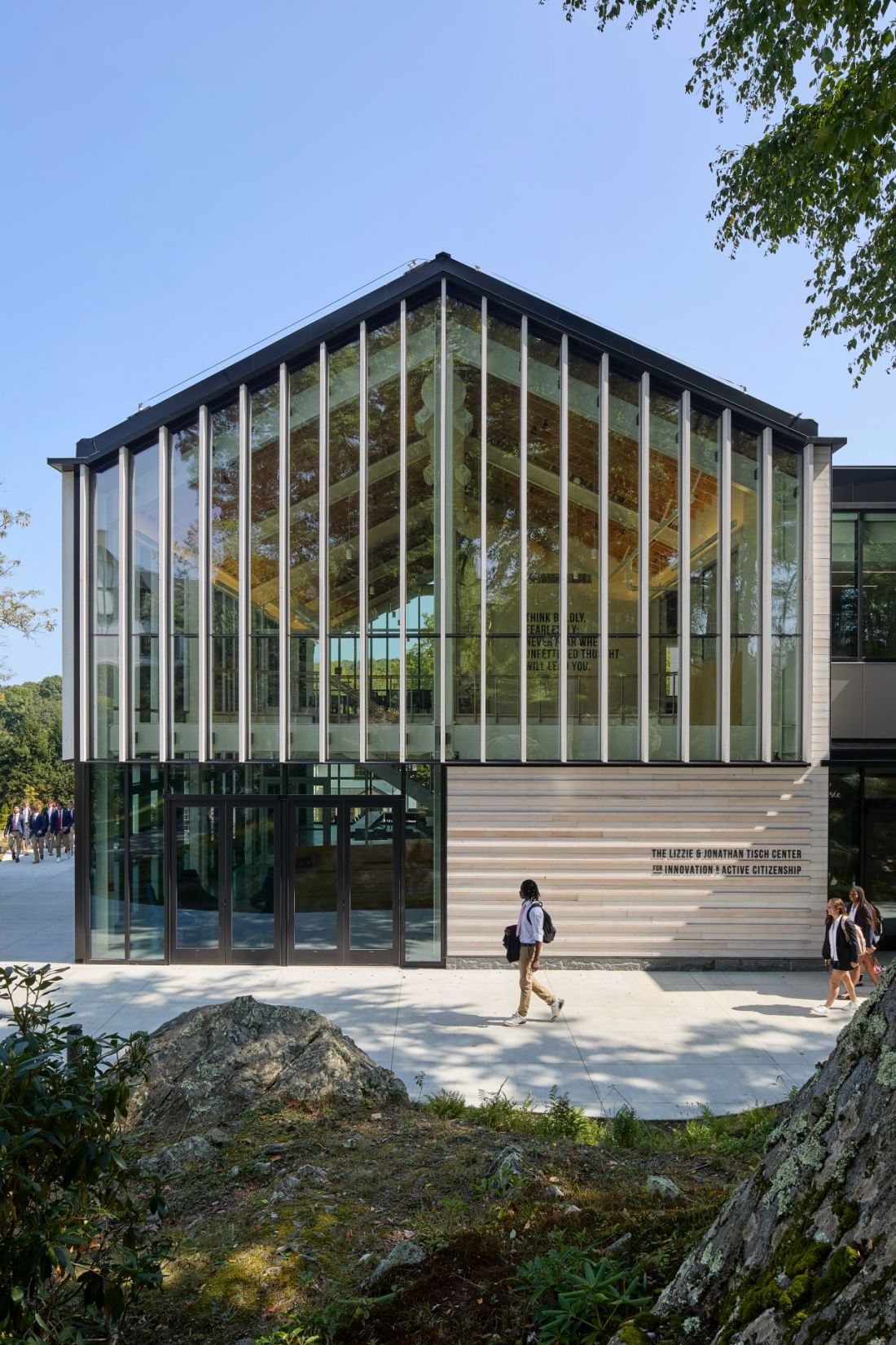
The Center for Innovation and Active Citizenship at the Frederick Gunn School in Washington, D.C. - the facade of one building combines large, glazed surfaces with vertical, white panels
photo by Jeremy Bittermann
space designed for work and interaction
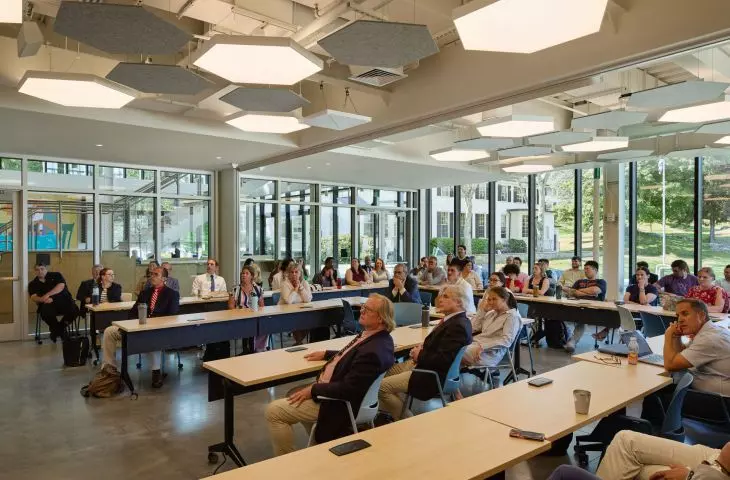
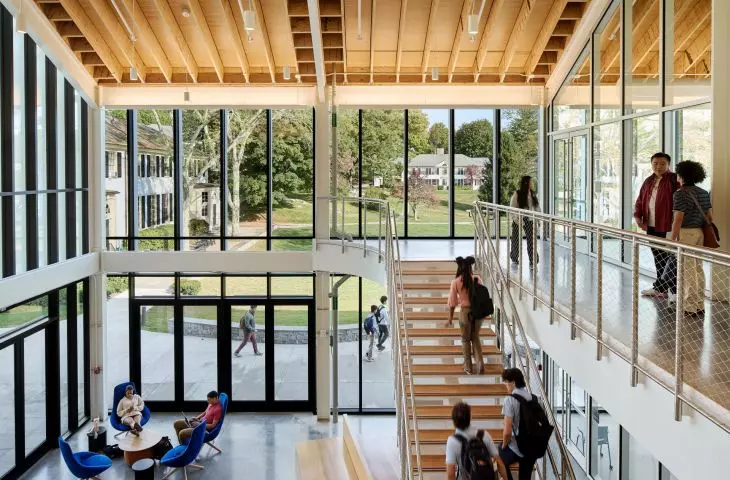
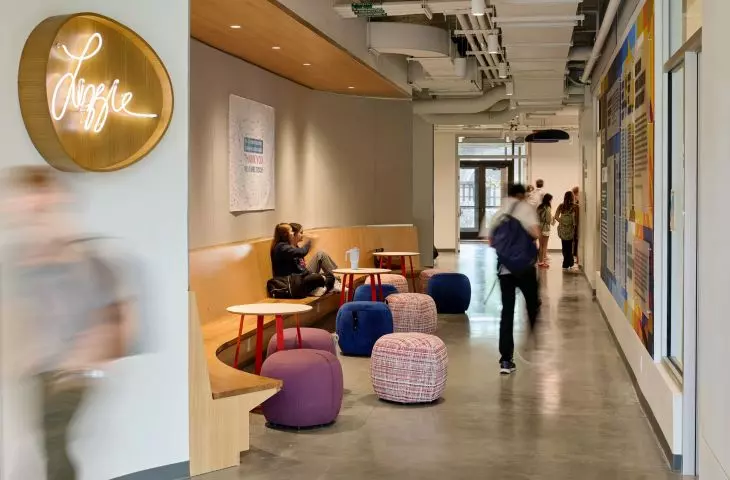
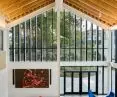
The building's functional program includes specialized labs for physics, biology and chemistry, as well as spaces that can be arranged as needed. In the Entrepreneurship Center, students develop business and social projects, while the Center for Fair Democracy hosts workshops, debates and classes on social issues. The biology lab, surrounded by glass, opens up to the treetops, allowing students to work in direct contact with nature. The multipurpose spaces can be quickly transformed - from intimate seminars to larger meetings that integrate the entire school community.
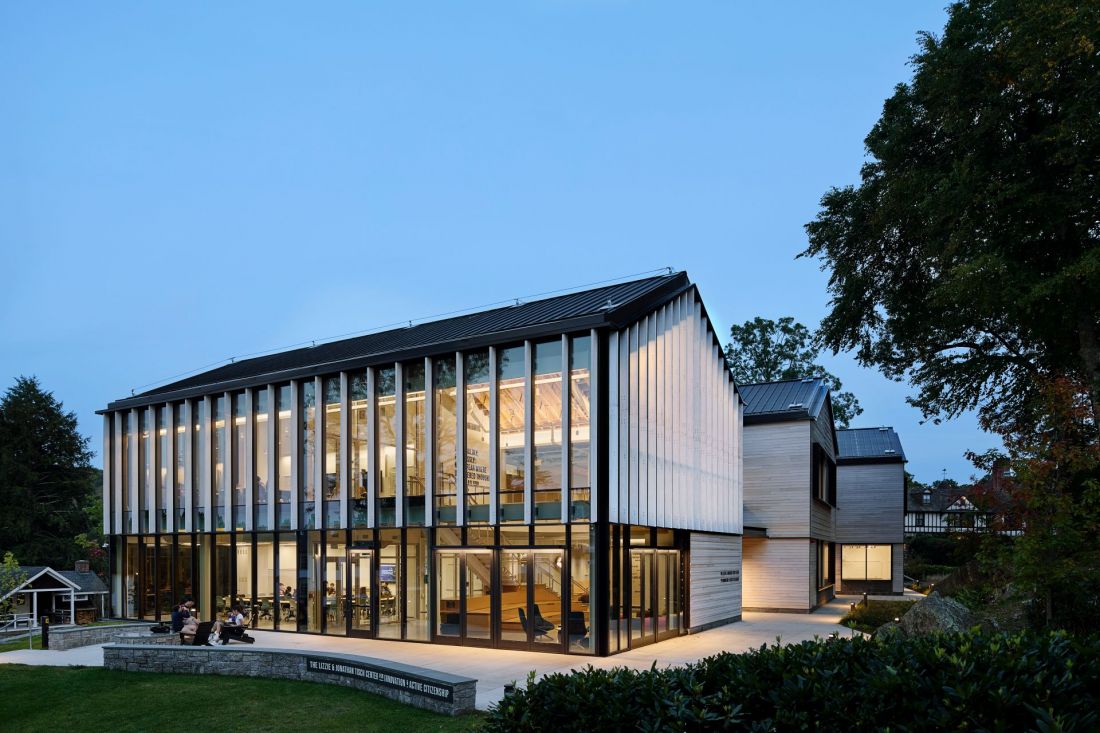
The Center for Innovation and Active Citizenship at the Frederick Gunn School in Washington, D.C.
photo by Jeremy Bittermann
new connections in the campus structure
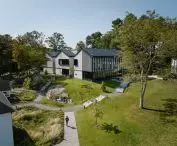
The project also included careful planning of the building's surroundings. New pedestrian routes were created to connect two key spaces on campus - the Glade and the Quad - which cleaned up the traffic pattern and made the area more accessible. The foundations were designed to preserve the natural rock formations that are a distinctive feature of the local landscape.
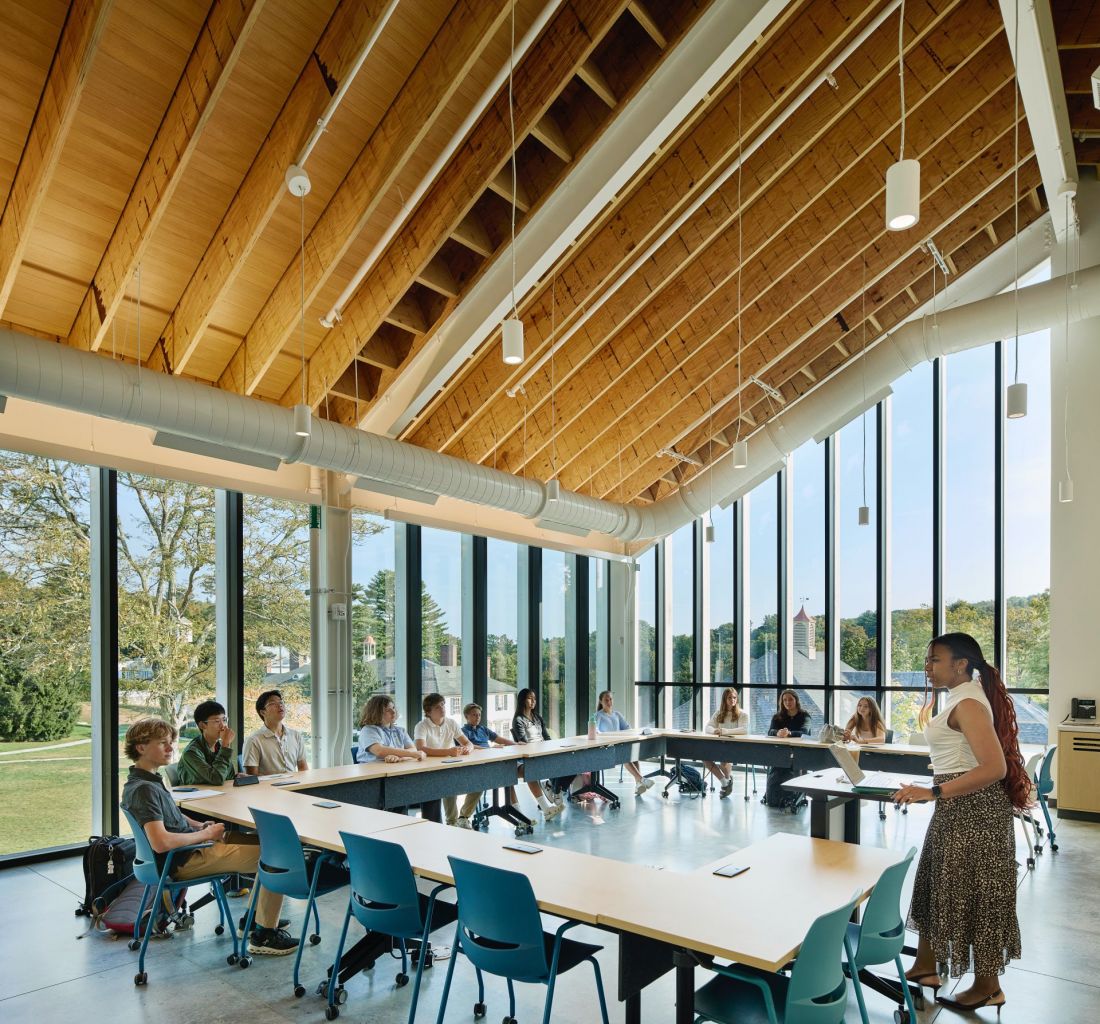
Center for Innovation and Active Citizenship at the Frederick Gunn School in Washington, D.C.
photo by Jeremy Bittermann
energy efficiency and environmental concerns
One of the pillars of the project was concern for minimal environmental impact. Photovoltaic panels were installed on the roof to provide renewable energy. A geothermal borehole system covers much of the heating and cooling needs. Thanks to the airtight, energy-efficient building envelope, the center is approaching a near-zero energy consumption standard.
The Center for Innovation and Active Citizenship at the Frederick Gunn School in Washington, D.C. - photovoltaic panels have been installed on the roof of the building
photo by Jeremy Bittermann
a place that connects
The building has become more than a collection of classrooms and laboratories - it is a place for meetings, discussions and collaboration. With an open formula and architecture that encourages the exchange of ideas, the center supports interdisciplinary projects and initiatives that grow beyond traditional subjects.
Compiled by Anastazja Gibas
Illustrations provided courtesy of Sasaki Studio.