
Local governments have until August 31, 2026, to adopt their General Municipal Plans. Will Kraków meet the deadline? According to the lovekrakow.pl website, on June 24, 2026, Stanisław Kracik, acting mayor of Kraków, sent a letter to the Central Anti-Corruption Bureau (CBA) requesting that the CBA oversee the procedure for drafting the General Plan. Marek Kaszyński discusses the reasons behind this decision, the opinion of the Municipal Urban Planning and Architecture Commission on the draft General Plan for Kraków, and when the city’s residents will be able to review the General Plan with Marek Kaszyński, Chairman of the Municipal Urban Planning and Architecture Commission in Kraków and Chairman of the Małopolska Regional Council of the Chamber of Architects of the Republic of Poland, Małgorzata Tomczak.
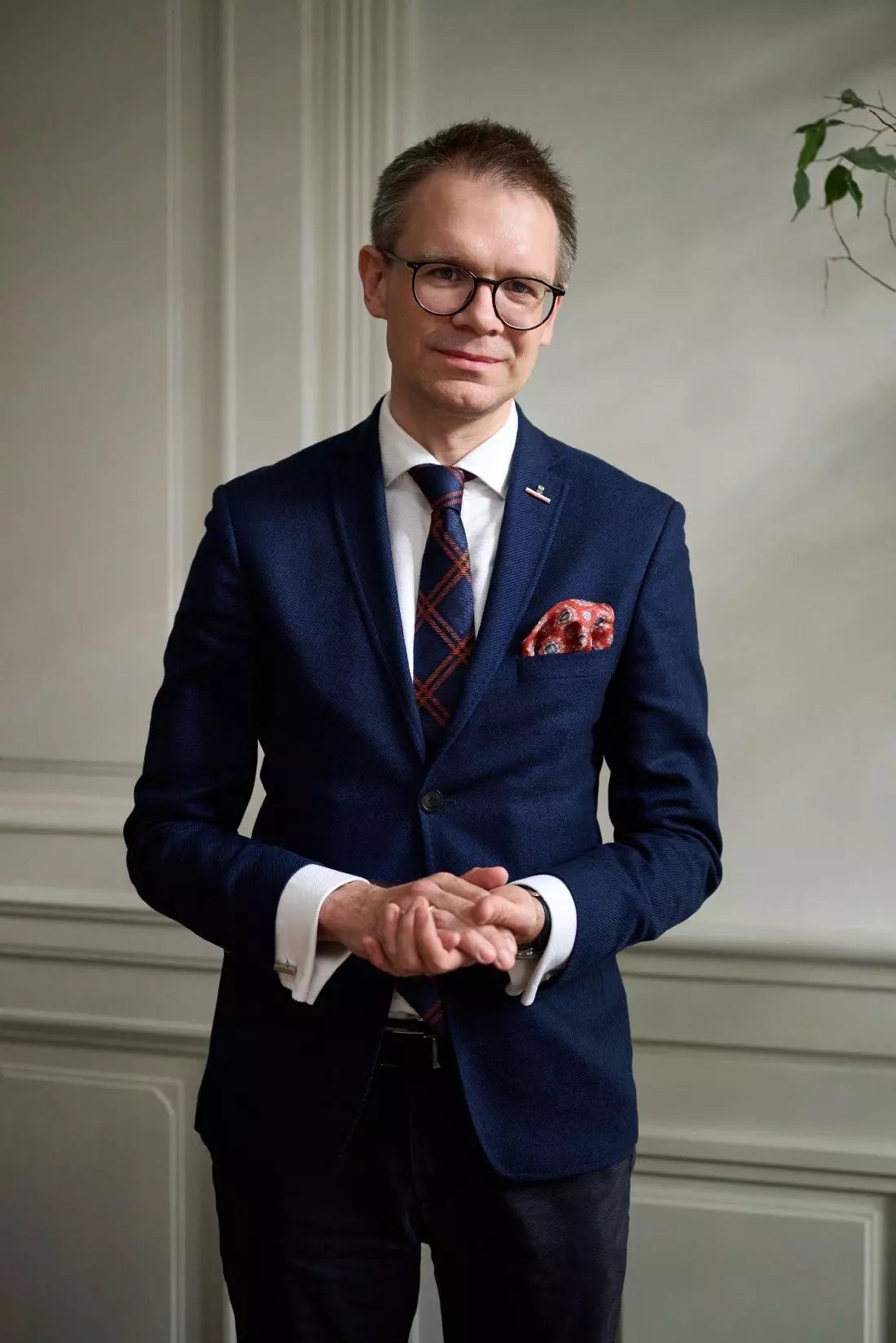
Marek KASZYŃSKI — architect, member of IARP and SARP. Since 2023, Chairman of the Małopolska Regional Council of the Chamber of Architects of the Republic of Poland; since 2024, Chairman of the Municipal Urban Planning and Architecture Commission in Kraków. Since 2016, he has served as the SARP Central Board’s representative for statutory and regulatory matters. From2012 to 2019, he was Treasurer of the Kraków Chapter of SARP, and from2019 to 2023, he served as President of the Kraków Chapter of SARP. Since 2016, he has run his own architectural practice, Marek Kaszyński Studio Architektoniczne. He has served as a judge and competition secretary, as well as Commissioner of the International Architecture Biennale in Kraków in 2015, 2017, and 2019, and as an organizer in 2021 and 2023. Since 2013, he has been the initiator and curator of the “Meeting with a Master” series at the Kraków Branch of SARP. He is the author of academic and popular science publications in the field of architecture. He was awarded the Bronze Cross of Merit (2023), the “Honoris Gratia” Medal of the City of Kraków (2023), the IARP Silver Medal (2022), the SARP Bronze Medal (2015), and the SARP Gold Medal (2017).
Małgorzata Tomczak: At the most recent extraordinary meeting of the Municipal Urban Planning and Architecture Commission—convened by Stanisław Kracik, the City of Kraków’s commissioner—you had the opportunity to review the draft General Plan for Kraków. Who presented it, how did the discussion unfold, and what comments did the members of the MKUA have?
Marek Kaszyński: For many months now, the Municipal Urban Planning and Architecture Commission has been calling for the opportunity to review both the draft Kraków City Development Strategy and the draft General Plan, as these two documents must be considered together. After all, the General Plan constitutes the graphic implementation of the Strategy, particularly the functional-spatial model portion of it. To date, a number of individual thematic, technical or isolated points, but we have never had the opportunity to review either the entirety of the documents or even a scope broad enough to assess the authors’ vision for the City’s development in the coming decades. I am very pleased that Mayor Stanisław Kracik, recognizing the importance of the issue, decided to convene an extraordinary meeting on this matter. Unfortunately, once again, the designer did not present the General Plan to the Committee.
Małgorzata Tomczak: What opinion did the MKUA issue after reviewing the General Plan draft?
Marek Kaszyński: The meeting did not result in a resolution regarding the General Plan because the document was not presented.
Małgorzata Tomczak: After that meeting, you decided to write a letter to Commissioner Stanisław Kracik regarding cooperation with the author of the General Plan. What does it say?
Marek Kaszyński: Yes, we decided on this format because we felt that the recurring situation, in which the Commission does not receive documents for analysis, required a formal response. We brought to the Mayor’s attention that in order for the tasks assigned to the Municipal Commission for Urban Planning—which include issuing opinions on the General Plan and the Strategy regarding issues of spatial planning and architecture—can be properly carried out, urgent organizational and structural changes must be made. I hope that these changes will result in the presentation of a realistic timeline for work on both documents, the correct order in which they are reviewed, and, above all, will ensure transparency in the document-drafting process and enable the Commission to fulfill a genuine advisory role.
Małgorzata Tomczak: We know that the Central Anti-Corruption Bureau (CBA) is conducting an investigation into the General Plan in Kraków. Stanisław Kracik has also requested that the authorities oversee the General Plan. The investigation stems from alleged significant changes introduced within a short period of time—and, importantly, immediately after the referendum on the recall of Mayor Aleksander Miszalski. Do we know what these changes are and which areas they affected?
Marek Kaszyński: I don’t know, because the matter has not been presented to us. Unfortunately, everything you’re asking about is a result of the lack of transparency in the process of drafting the General Plan. If subsequent versions of the documents had been presented during the process, accompanied by information on the changes made and the rationale behind them, it would have been possible to debate their validity. Since the Commission did not have access to the complete draft at any stage of the work, we do not know what changes were made, which areas were affected, or what the reasons were for introducing them.
To be honest, I am surprised by the way these planning documents—which are of the utmost importance to the City— have been handled, because our experience as a Committee in collaborating with the City of Kraków’s Planning Department on local zoning plans or integrated investment plans has been entirely different. We have managed to establish a process in which drafts are presented to us at a very early stage, when there is a real opportunity to make directional adjustments — we refer to these meetings as “preMKUA” sessions. In this way, we serve as an advisory body not only to the Department but also to the Kraków City Council’s Planning Committee at an early stage, and ultimately, during the statutory review phase, we are able to track changes and verify how the Committee’s recommendations have been incorporated into the documents. Unfortunately, this best practice—developed in collaboration with the Planning Department and the City Council’s Planning Committee for the General Plan—is not working.
Małgorzata Tomczak: For several months now, we’ve been observing a discussion in Kraków regarding discrepancies between the Municipal Development Strategy and the General Plan. Why do you think it hasn’t been possible to substantively align these two documents?
Marek Kaszyński: These documents should have been developed together from the very beginning, rather than being pieced together or made consistent as part of the procedural phase. As I said , the General Plan is merely a graphical representation of the provisions of the Strategy. It is the Strategy that will contain information on the city’s demographic assumptions, how the balance between heritage and modernity will be struck, and the vision for culture, education, transportation, the environment, and all other aspects shaping residents’ quality of life. Next, these elements—which stem from the fundamental strategic assumptions—must be translated into a graphic language, designating residential, commercial, transportation, and green spaces within the General Plan.
Małgorzata Tomczak: When will Kraków residents have the opportunity to review the General Plan? The legislature has required municipalities to adopt the General Plan by the end of August of this year. In Kraków, this deadline seems unattainable. Do we know why?
Marek Kaszyński: I think the delay is the result of a combination of many factors — ranging from statutory shortcomings, to the number of substantive issues in Poland’s second-largest city, to organizational efficiency, and the political context. Kraków is already very well covered by local zoning plans, so fortunately, missing the deadline for adopting the General Plan will not paralyze the city’s investment activities. In my view, Kraków would suffer far greater losses if a poor Strategy and General Plan were adopted than it would from a delay.
In this context, I believe that discussing the quality of the process is far more important than discussing deadlines. Only transparency, the opportunity to present arguments, and genuine dialogue between the authors of the documents and advisory bodies—including the Commission—will provide a chance for success and for developing solutions that will serve Kraków for decades to come.
Małgorzata Tomczak: Thank you for the interview!