





Lift House,
designed by Ulf Mejergren (UMA studio)
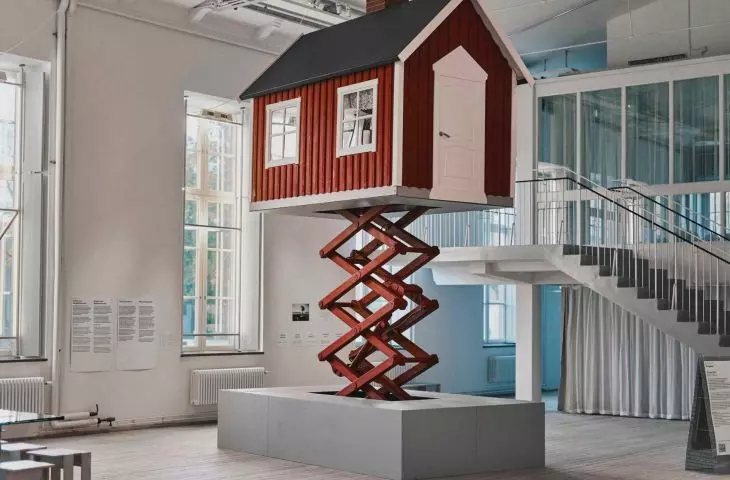
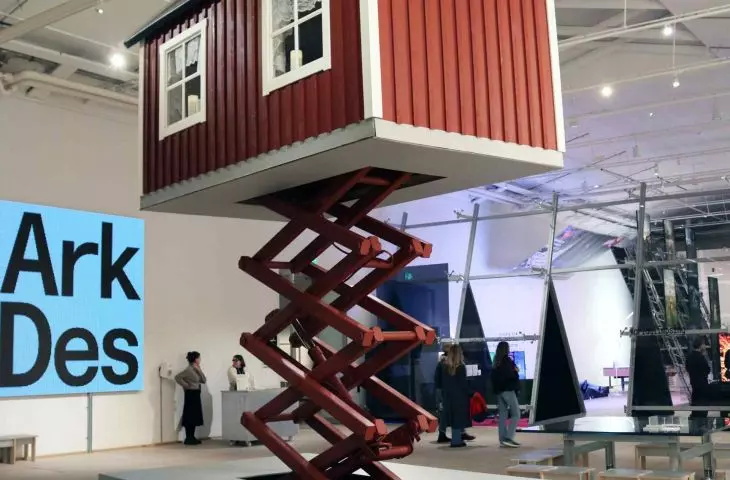
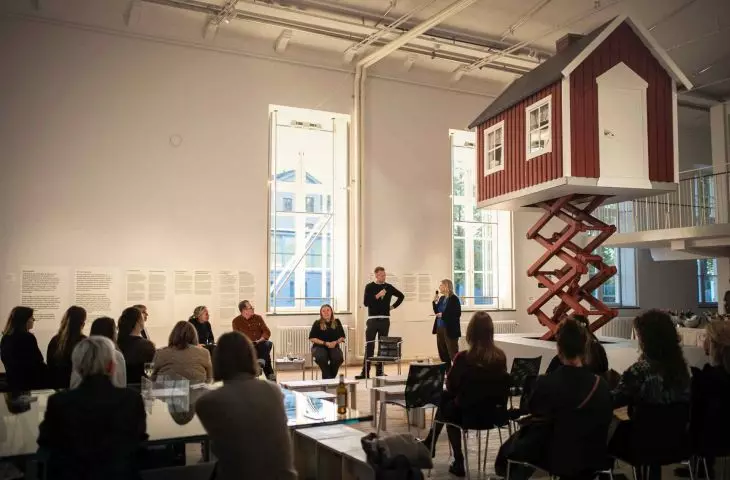
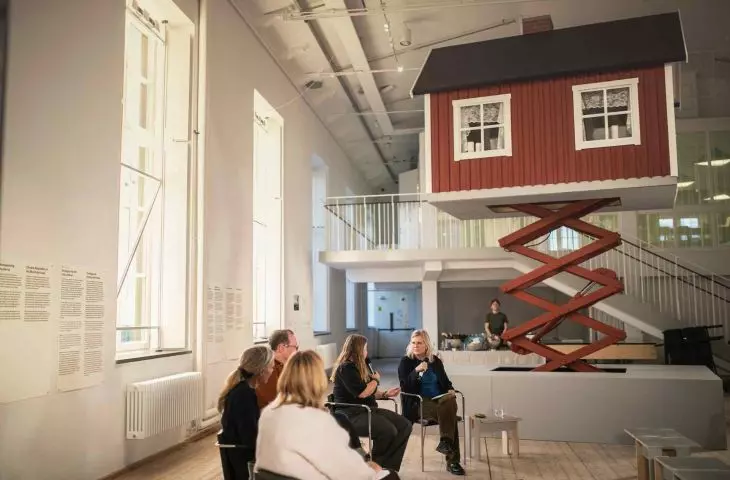
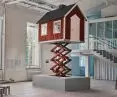
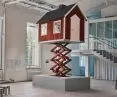
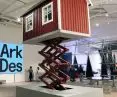
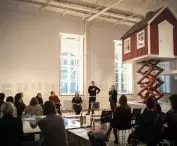
Sometimes all it takes is one move to turn an ordinary house into a symbol. In an era of torrential downpours, sudden windstorms and shifting climate boundaries, the Lift House by Ulf Mejergren, founder of the UMA studio, shows that architecture can not only protect, but also respond. This small house, set on a scissor lift, can lift itself - literally. When the earth fails, he rises above it, offering temporary shelter and peace. The project was created at the invitation of ArkDes - the Swedish Center for Architecture and Design - as part of the "Beredd" ("Ready")exhibition on how buildings and cities can respond to climate uncertainty.
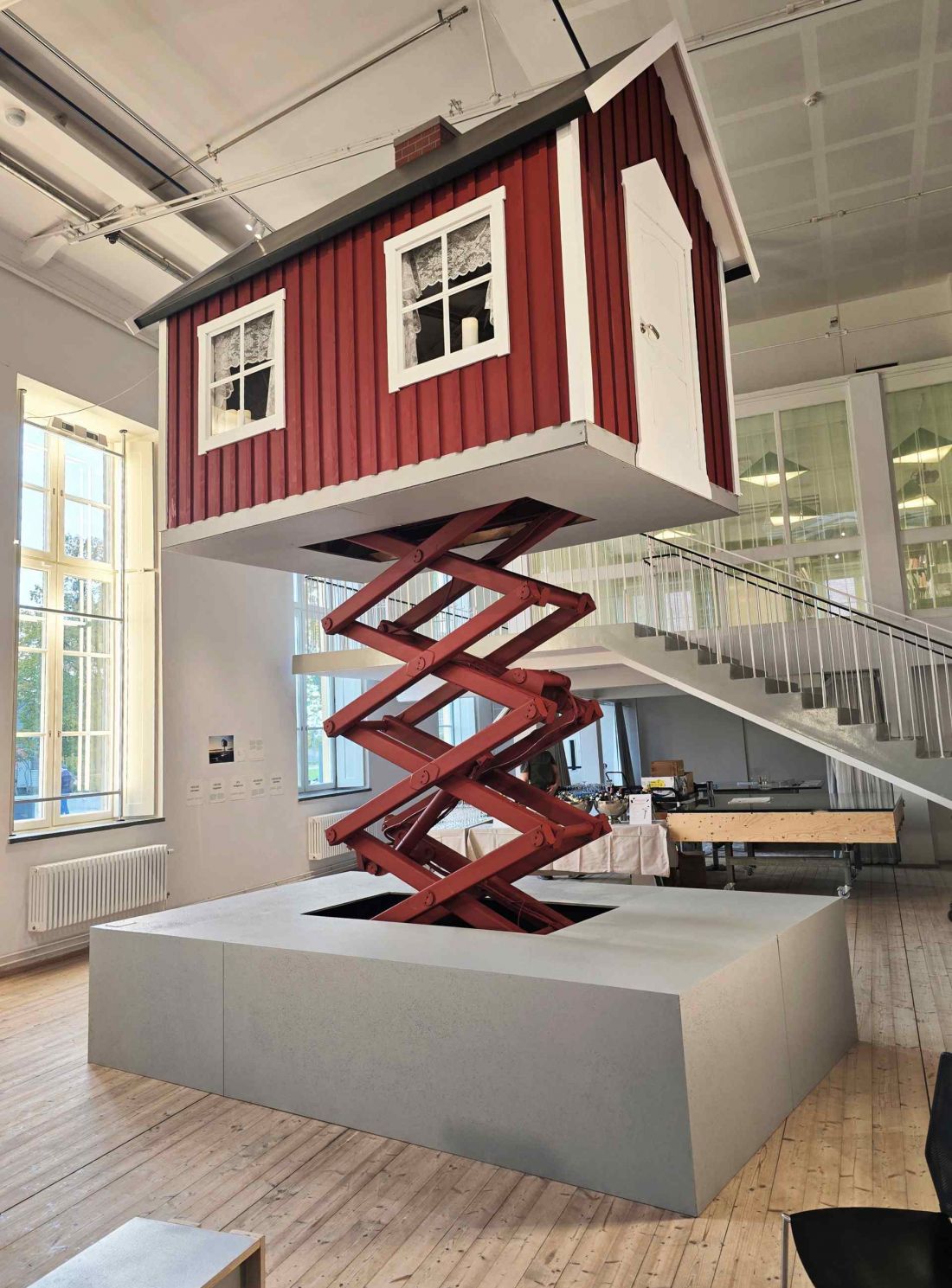
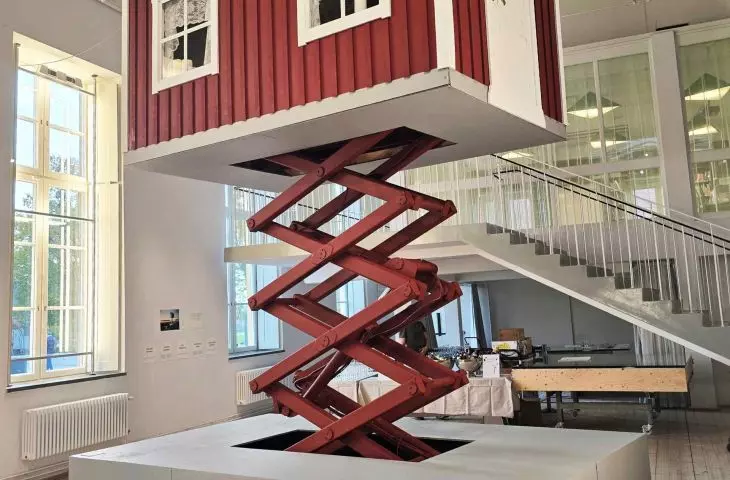
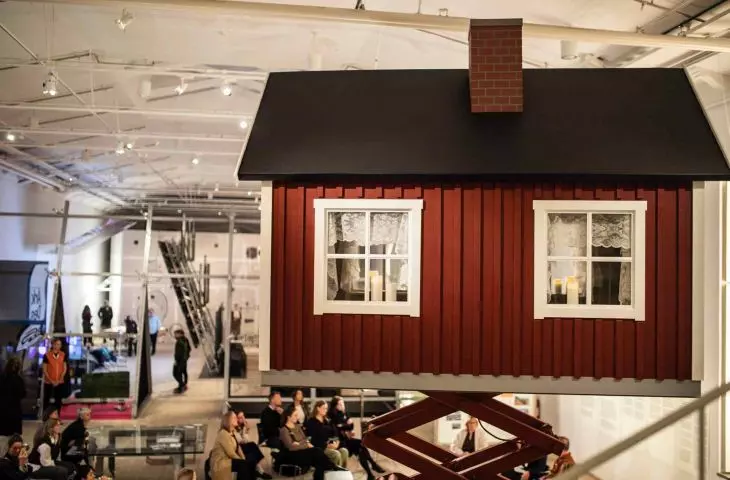
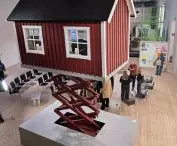
Lift House - a real scissor lift was used for the project, which was to be decommissioned at ArkDes
Photo: Oskar Omne, Sima Korenivski © UMA
House in motion
The Lift House idea grows out of research at Linköping University, where Professor Sofie Storbjörk and her team identify three strategies for responding to climate change: defense, attack or retreat. Mejergren proposes a fourth - temporary retreat. Not an escape, but a gesture of flexibility. In his interpretation, the house becomes an organism that can adapt, temporarily lift, and then return to its place again. A real scissor lift that was about to be decommissioned at ArkDes was used for the project. What was supposed to go to scrap became a vehicle for the idea of a new beginning. There is something symbolic in this decision - like the museum itself, renovated with respect for the principle of reuse (as much as 80 percent of the materials are recycled), Lift House shows that the future can grow out of the past.
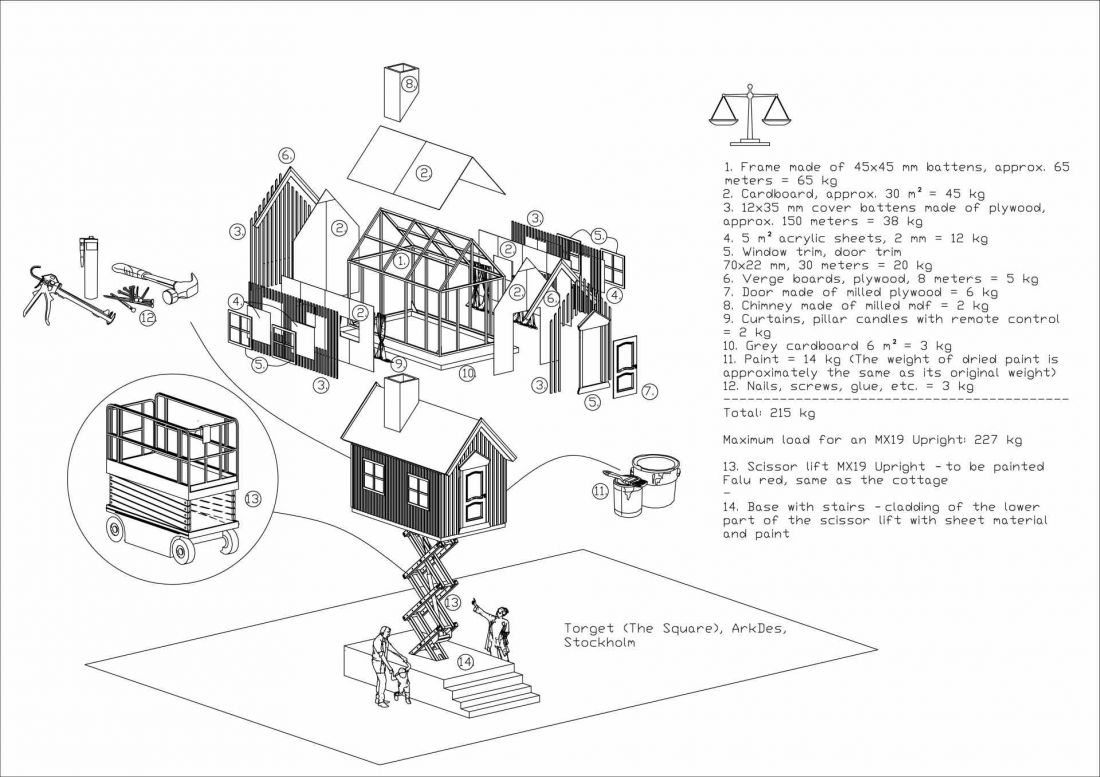
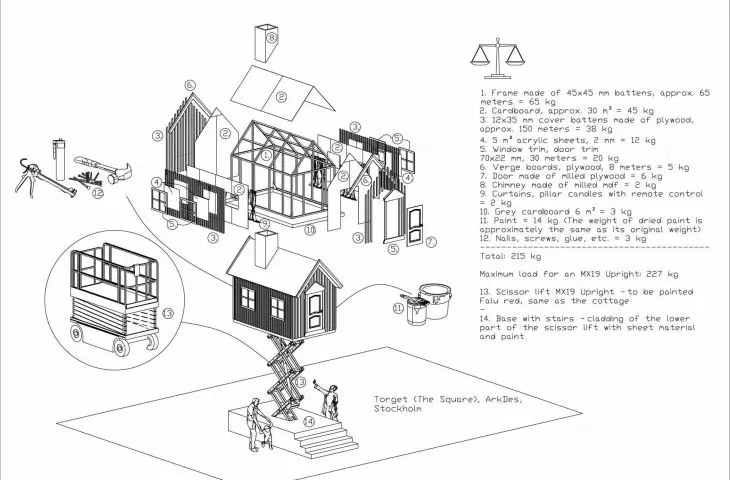
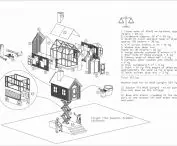
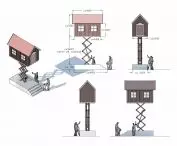
Lift House - a diagram of the house
© UMA
A lump that balances between the familiar
and the unfamiliar
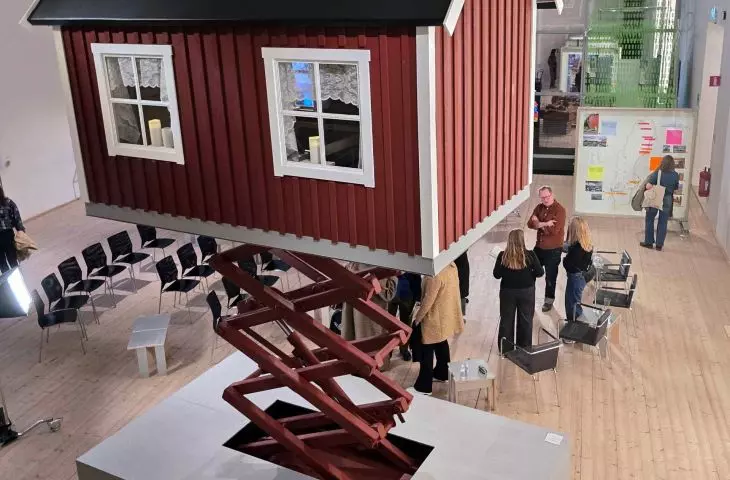
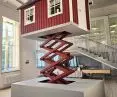
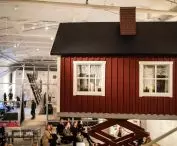
At first glance, Lift House looks familiar. A small house with a wooden facade, a gabled roof and a chimney could stand anywhere - in the Swedish countryside, in a child's drawing, in the memory of a former home. Yet something is wrong here: this house is not standing, but floating above the ground. Perched on a red metal elevator structure, it looks as if it is suspended between a dream and reality.
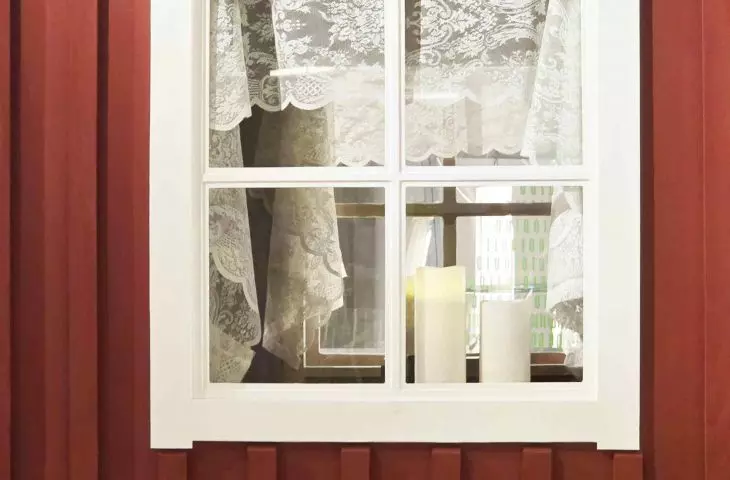
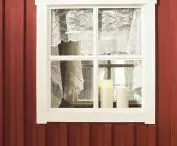
The red - a classic Swedish shade of Falu Rödfärg - gives the structure character. It's a color that has signified durability and safety for centuries, today it becomes a sign of readiness and movement. It is this perversity that makes the design so evocative: a house known for its sense of stability suddenly learns to fly. Because of the lifting capacity limitation of 227 kilograms, every element had to be designed with surgical precision. The chimney was created from lightweight MDF, cut using CNC technology. Even the curtains in the windows - lacy, ethereal - were chosen with weight in mind. Every detail has its justification here. The result is a structure that not only floats physically, but also metaphorically - between technology and poetry.
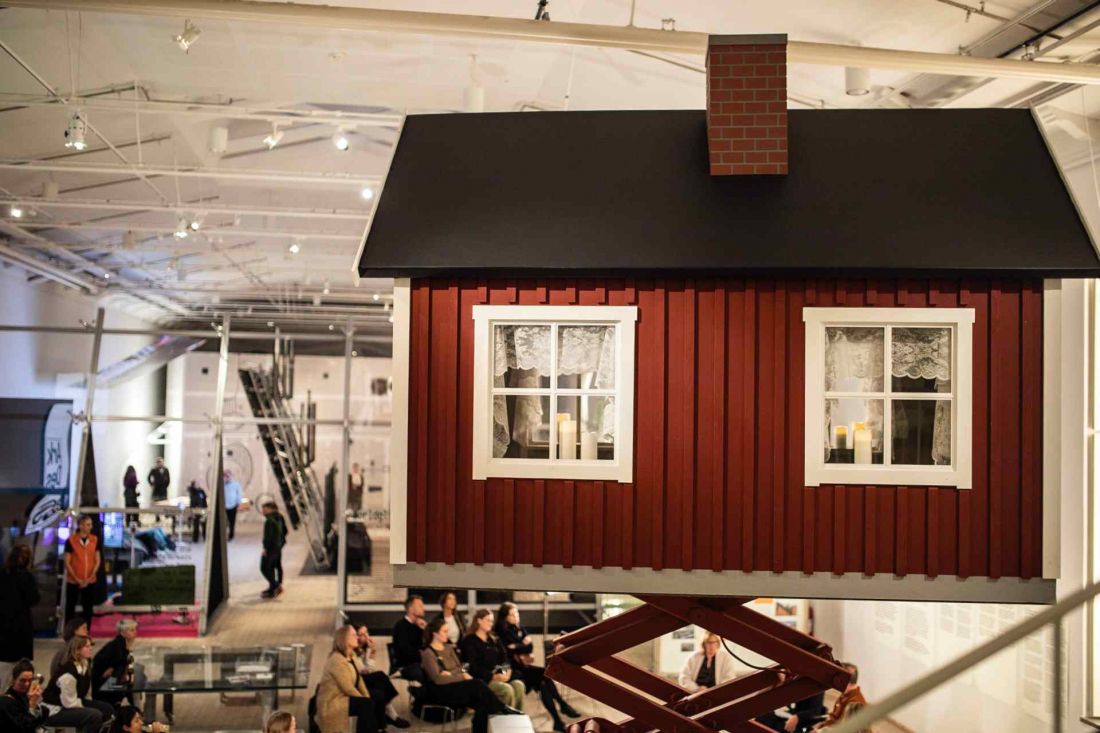
Lift House
Photo by Oskar Omne, Sima Korenivski © UMA
A technique that tells a story
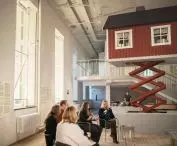
Mejergren does not hide the mechanism. The lift is not the background, but the main character. Usually it operates lamps, stages, warehouses - here it carries the idea of home. This gesture makes the technology part of the emotional narrative. The up-and-down movement takes on a new meaning: it's not just lifting structures, but an attempt to regain balance in a world where fewer and fewer things can be called fixed. Lift House is a story about fragility and flexibility at the same time. About a house that does not fight reality, but accepts it and learns to function in it. Instead of monumental forms and heavy structures - lightness and readiness for change.
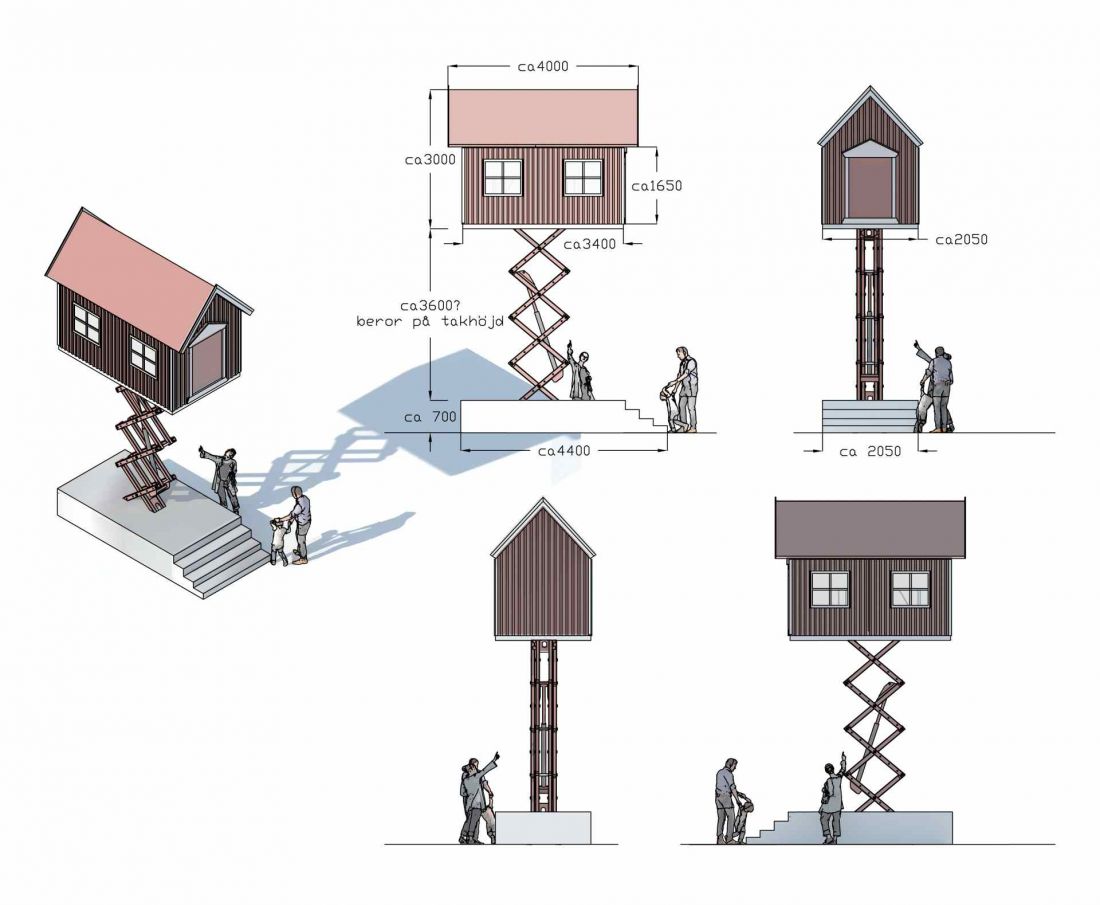
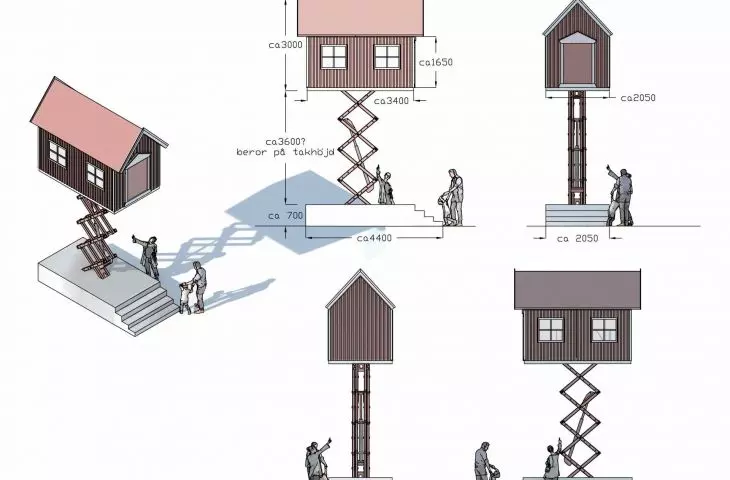
Lift House - drawing of a house
© UMA
Architecture of readiness
The exhibition at ArkDes asks how contemporary cities can adapt to new climate challenges. Mejergren's project answers not with a declaration, but with an image. It shows that perhaps the future lies not in building ever more durable structures, but in creating ones that can respond. Lift House is not a utopia. It does not attempt to replace the house as we know it. Rather, it is an experiment, a metaphor, a thought gesture. In a world where rain can paralyze a metropolis and winds topple entire cities, it is the ability to momentarily retreat that can be a new form of courage.
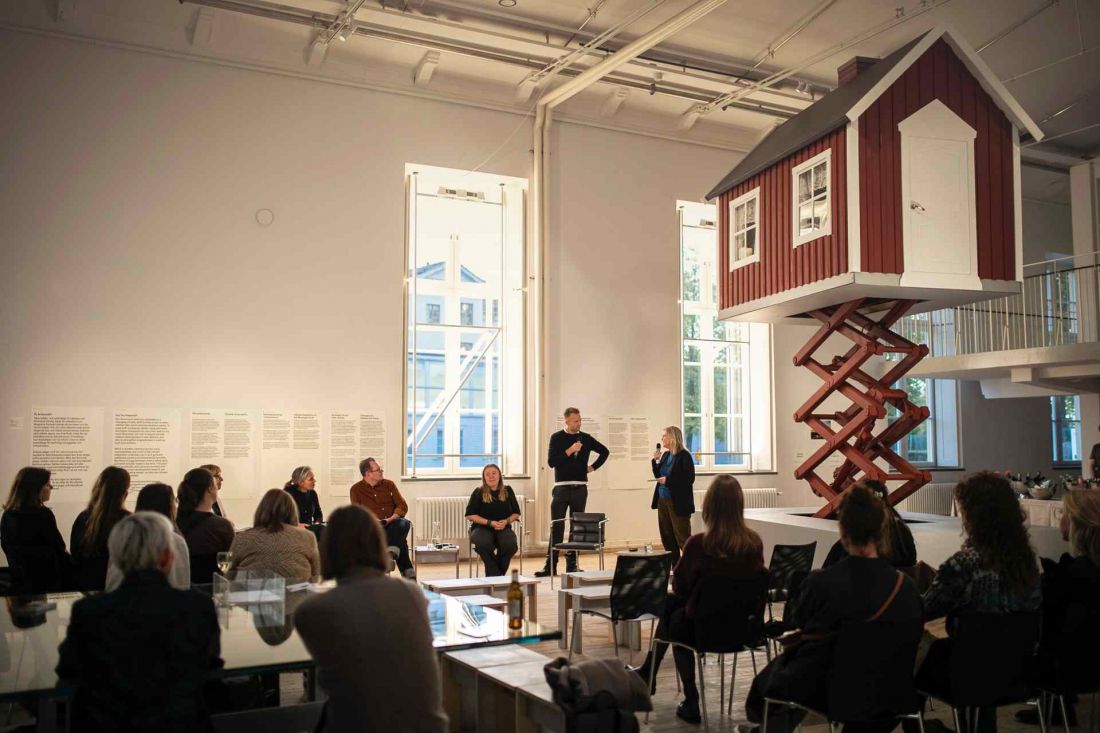
Lift House is a reminder that habitation today is more than a roof over one's head
Photo by Oskar Omne, Sima Korenivski © UMA
A new definition of shelter
Lift House is not a house where you live. It is a house that reminds us that inhabitation today is more than a roof over one's head. It is the ability to respond, to adapt, to be on the move. Ulf Mejergren has created an object that combines simplicity and metaphor, practice and reflection. At a time when certainty of place is no longer guaranteed, Lift House poses the question: perhaps the true home is not the one that stands firm, but the one that can lift itself?
Elaborated: {tag:AutorAiB}
Illustrations provided courtesy of the studio.