





Chorzow is facing gigantic changes in the coming years. By necessity, not only its market square will be transformed, but also the entire downtown area. What is the difference between the duties of an urban planner and a city architect, what does urban prototyping look like in practice, and will the Chorzow flyover be demolished? Przemek Ciępka talks with Michal Lorbiecki, Urban Planner of the City of Chorzow, about the transformation of Chorzow 's Downtown, the accessible city and the cost of road infrastrutcture.
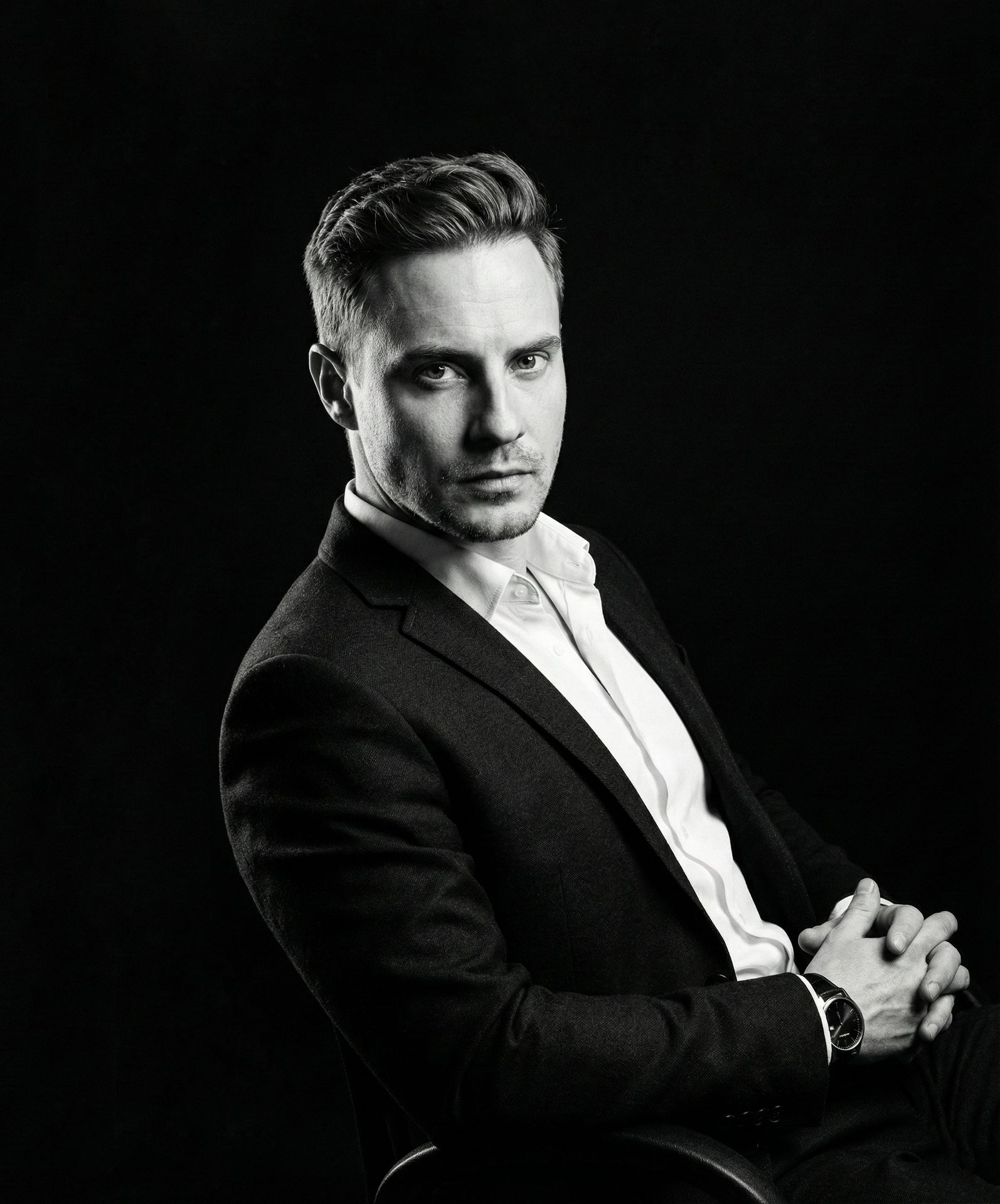
MichalLORBIECKI - urban planner, PhD in economics and finance, expert on sustainable development, urban planning and ESG. Certified change manager. Urban Planner of the City - Plenipotentiary of the Mayor and Director of the Department of Spatial Planning and Construction at the Chorzow City Hall. Deputy Chairman of the Chorzow Downtown Transformation Team. Vice Chairman of the Real Estate Committee of the National Chamber of Commerce. Served as a plenipotentiary of the Mayor of Tychy and was the author of the project and coordinator of the strategic development of the new city center. Co-author of key city documents, including the City Development Strategy and Mobility Policy. Previously associated with, among others, the Institute of Territorial Development in Wroclaw and the Konior Studio architectural office. Since 2018, member of the Program Council of the Spatial Economy major at the University of Economics in Katowice. In 2015-2021, member of the board of the Silesian branch of the Society of Polish Urban Planners. Member of municipal urban planning and architectural commissions in Lędziny (chairman) and Dąbrowa Górnicza (vice-chairman). Recipient of numerous awards, including nominations for the Leader of Smart Development 2024 award and POP Science of the Silesian Science Festival. In 2014, he was among the top 5% of graduates of the University of Economics in Katowice. Co-founder and lecturer of the postgraduate course "Real Estate Investment Management" at the Business School of Warsaw University of Technology. Committed to creating sustainable, resilient and well-designed cities and investments. Actively popularizes knowledge about urbanism, space and mobility - also outside institutions, on social media as @urbanomist.
Przemek Ciępka: At the beginning of October this year you became the Urban Planner of the City of Chorzow. What does this position entail? How does his role differ from that of a city architect in other localities?
Michal Lorbiecki: As Urban Planner of the City of Chorzow, I have a dual role. I won a competition to become the director of the city's Department of Spatial Planning and Construction - formally, he is in charge of urban planning, architectural and construction administration. At the same time, I was appointed to the position of City Planner of Chorzow, which is a manifestation of innovation in thinking about the development of urban space. Some cities have an office of the city architect, which usually has an opinion-making role.
My role, as a plenipotentiary of the mayor, is to advise, to guide the development of this city so that it is not limited to the minimum set by law, but to create this policy wisely. I am also in charge of coordinating representatives of all industries involved in urban planning. We involve various departments and units of the City Hall in this process, so that it proceeds in the most multifaceted, interdisciplinary way possible. Even before I was formally employed at the Office, Szymon Michalek, Mayor of the City, established a Team for the Transformation of Downtown Chorzow. In this group are representatives of various units and departments of the Office, the Municipal Board of Streets and Bridges, there are representatives of the Upper Silesia-Zagłębi Metropolis or the Municipal Urban Planning and Architectural Commission. The work of the entire team is coordinated by the Deputy Mayor of Chorzow, i.e. the City Planner of Chorzow.
Przemek Ciępka: What issues does the Chorzow Downtown Transformation Team deal with?
Michal Lorbiecki: When discussing the transformation of Chorzow's downtown, it is necessary to separate the subject of the flyover from other problems. We can't close ourselves only to this issue, because its development is hampered by a large amount of paperwork. We don't want to wait - as part of the team we meet every Monday, working in different formulas, sometimes in the form of discussions, other times in the field or at workshops or lectures. Leading the work of this team, I try to adapt our methods to the needs of its members - not everyone is comfortable at a discussion table, some prefer to work in the privacy of their own offices.
We started by mapping our resources, problems and possibilities for solving them. We also determined what our team's deliverables should be. Among them was the development of a Master Plan for the transformation of the Downtown. This will be a strategic tool that, like a map, will show us the paths we should take in changing downtown Chorzow. We plan for it not to be a finished document, but rather a set of guidelines that we will update on an ongoing basis, adding more content. At first, it may be a few pages of a very general nature, containing a vision for the transformation of the downtown and the strategic goals we want to achieve in the meantime. We have already set these out.
We are also planning to launch an Urban Lab, or Urban Lab, where we will be able to meet with residents, representatives of NGOs or other stakeholders, such as the student community and even children. This will be a place to exchange information, where we will learn about the needs of residents, and they will be able to learn something about our activities and plans for the transformation of Downtown Chorzow.
Przemek Ciępka: How do you plan to make sure that residents actually benefit from Urban Lab's presence in Chorzow?
Michal Lorbiecki: As long as we don't have a premises prepared for our activities, we will want to make our presence felt in the digital world - there will be social media profiles and an appropriate tab on the office's website, where we will make all the most important information available. This will help us build Urban Lab's identity even before it physically appears in the city.
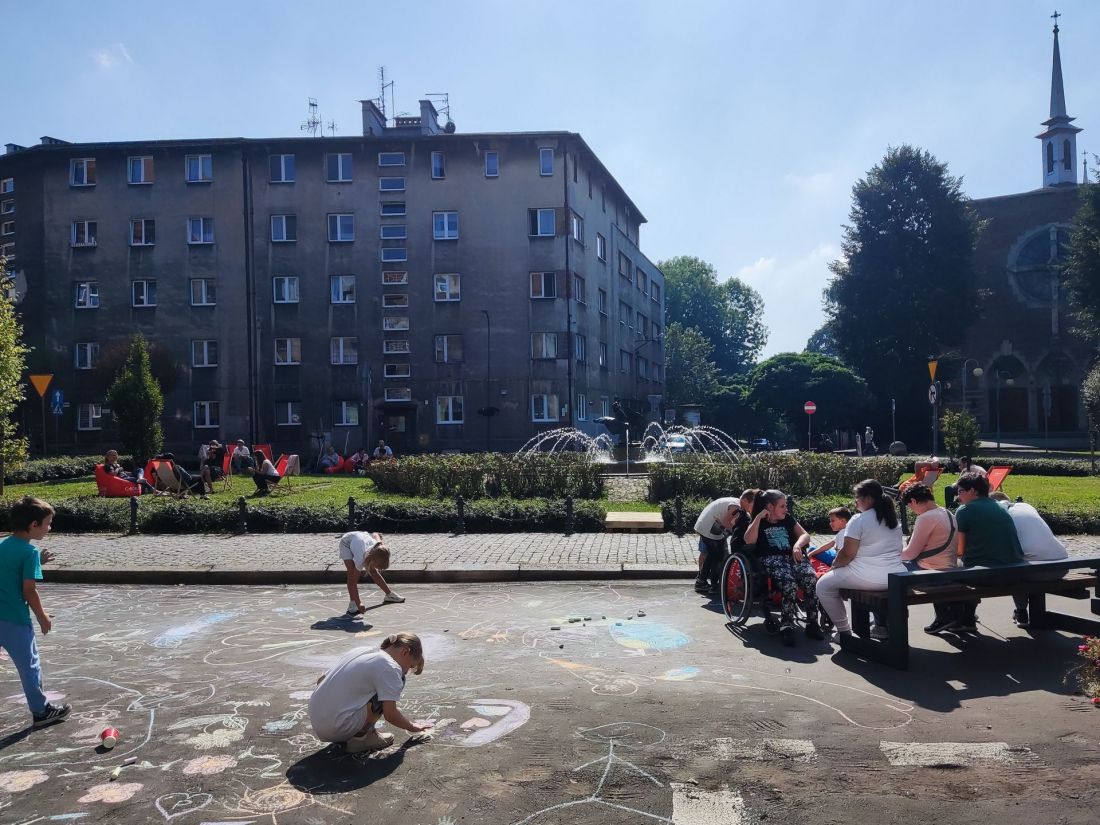
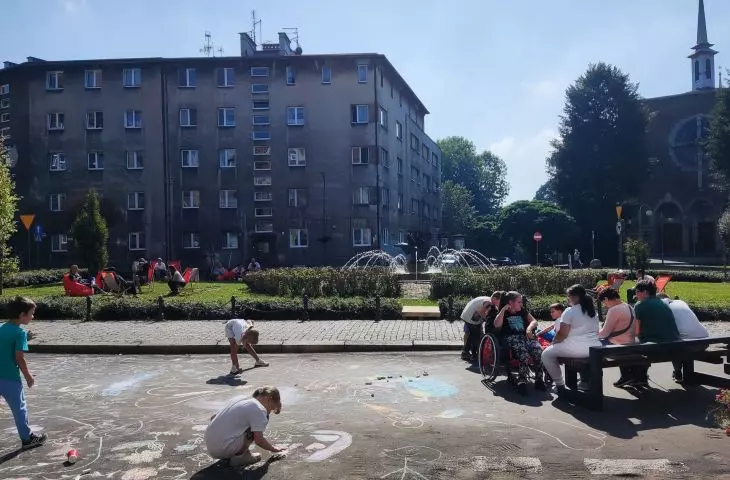
Change of traffic organization in Matejki Square in Chorzow
photo courtesy of the interviewee
Przemek Ciępka: As the Chorzow Downtown Transformation Team, have you already taken any actions whose tangible effects can be seen?
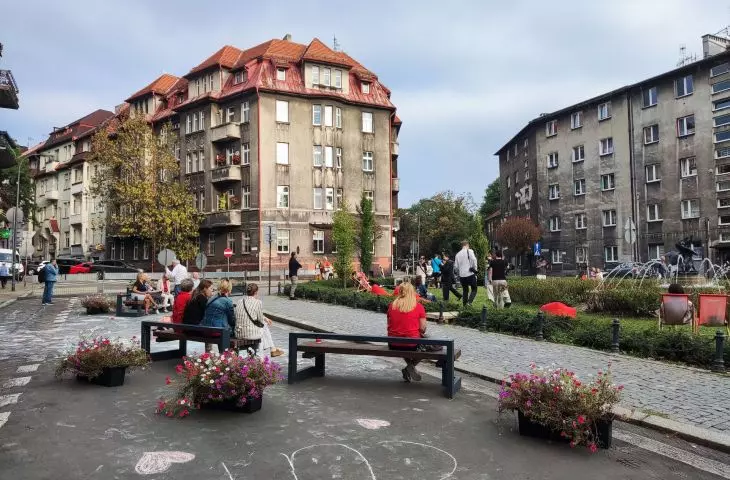
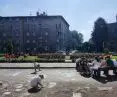
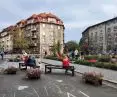
Michal Lorbiecki: One of the first activities of the team was an intervention in Matejki Square in Chorzow. The square is basically a square in name only, as it currently serves as a traffic circle, serving mainly traffic. At the same time, it is an important place for the residents of Chorzow, with a distinctive fountain depicting a boy with a swan standing in its center. The sculpture, designed by Theodor Kaldi, is an icon of this city . We based our action on the formula of urban prototyping - we changed the organization of traffic, limiting it to the south side of the traffic circle, which allowed us to reserve the northern part of the square entirely for pedestrians. In the freed space we set up deck chairs, benches and some greenery. Residents were an important part of the process, because urban prototyping is also a form of public participation, through which we learn about their opinions and needs, but also help break down certain stereotypes. Such actions are also important from the point of view of experience and learning about our capabilities - well, because how can we deal with Chorzow's market and flyover, if we can't transform a small square?
Przemek Ciępka: What kind of response from the city's residents has this initiative met with?
Michal Lorbiecki: We need to move away from the belief that we treat comments on Facebook or other social media platforms as a reflection of residents' opinions. Often there are all sorts of fake accounts or online bots behind unflattering comments. We must not get attached to these narratives, but realistically go out to the people. When we published information on the Internet about the planned event at Matejki Square in Chorzow, we were met with a very negative response. However, when we saw the residents of Chorzow already on site, it turned out that everyone was delighted with our idea and how Matejki Square functions in this shape.
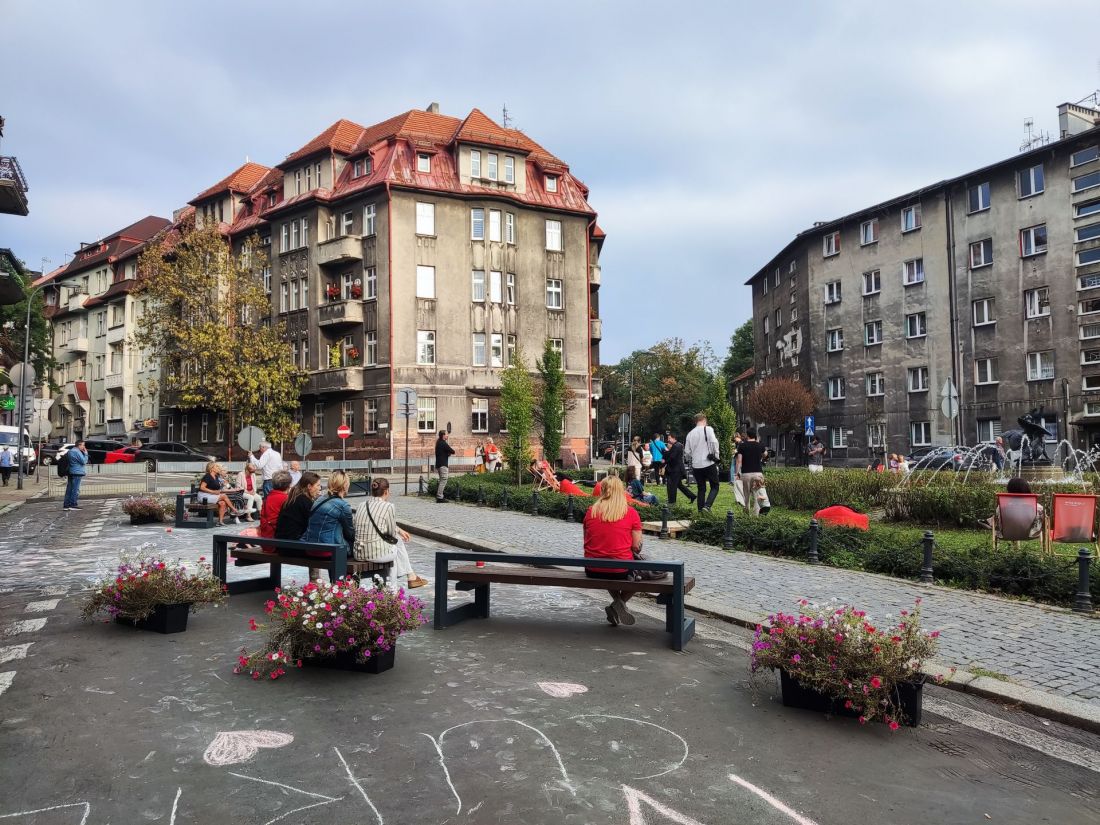
Change in traffic organization at Matejki Square in Chorzow
photo courtesy of the interviewee
Przemek Ciępka: What conclusions can be drawn from the action you carried out in Matejki Square?
Michal Lorbiecki: In recent decades, the prevailing tendency has been to pour asphalt without thinking, without calculating real costs and lost benefits. The design of road systems often exceeded the prescribed dimensions of roadways, which in many cities are oversized. This, of course, generates additional expenses - in addition to the construction itself, the costs of maintaining such roads, which, after all, need to be cleaned, resurfaced and repaired, are increasing. Every meter of excess asphalt means millions of zlotys thrown down the drain. On top of that, there are the benefits that residents lose due to the seizure of this space by cars - in place of the excess asphalt there could be a green space, a bike path or simply a wider sidewalk.
Przemek Ciępka: Will the transformation of Downtown also include Wolności Street? In Chorzow, it is reportedly said that "Wolka" is dying.
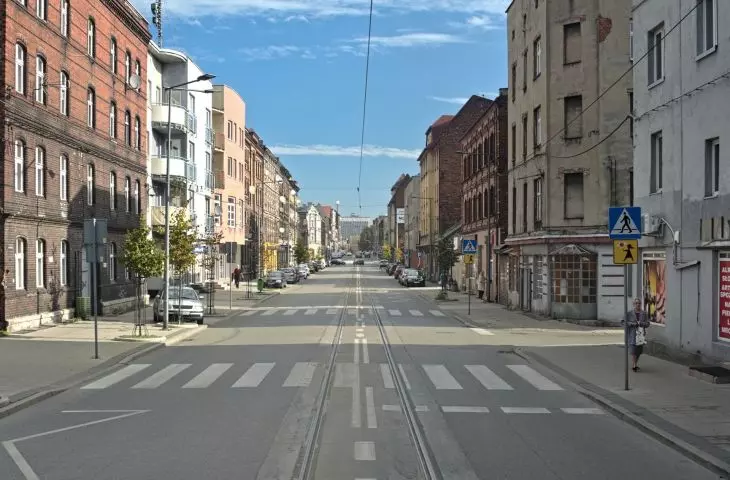
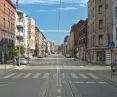
Michal Lorbiecki: We need to dispel the myth that says that Wolności Street has died. Even before I started working at the Office, I used to regularly appear at this place to observe it at different times. It's a typical city street that is really used by a lot of people. Especially after September 1, this place is full of people even at noon. The myth I mentioned stems from the notion that a street full of life must have a "party" function, with lots of eating establishments, clubs and discos. On Liberty Street, instead, in the first floors you will find a wide variety of service establishments, including gastronomy, but also stores; on the upper floors, on the other hand, there are apartments. This place serves a wide range of functions.
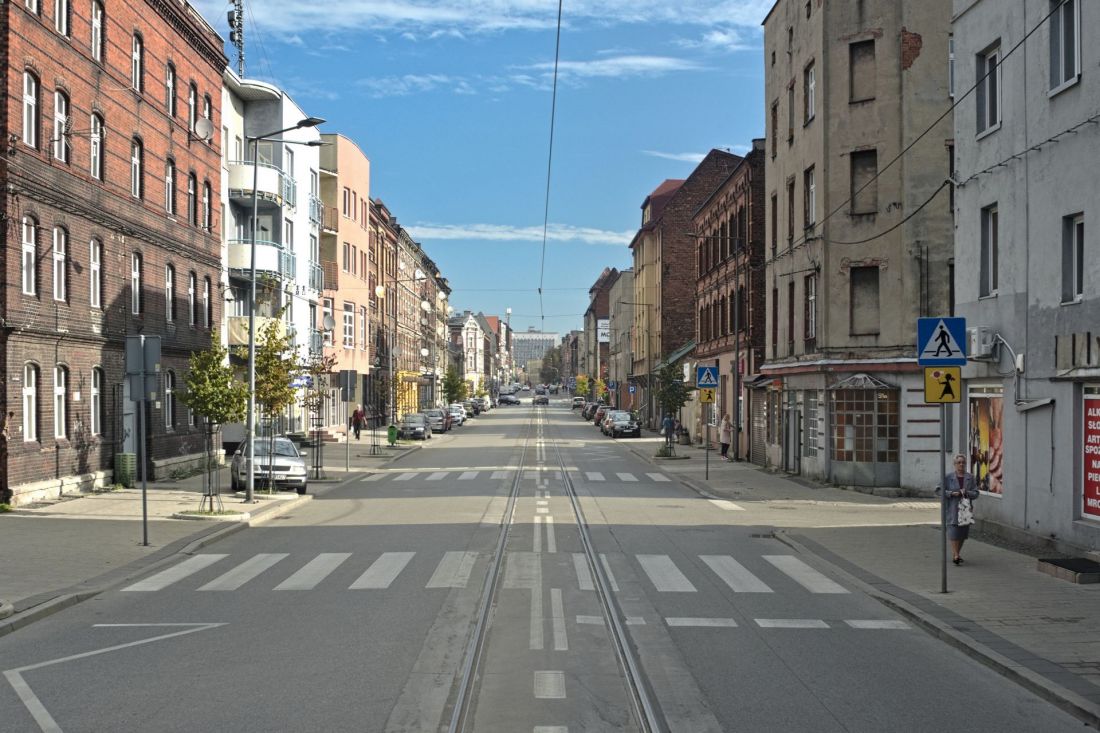
The southern section of Wolności Street in Chorzów in 2019
Photo: Adrian Tync © CC BY-SA 4.0 | Wikimedia Commons
Of course, it could definitely use an overhaul there, as the last time Wolności Street was rebuilt was decades ago. It definitely lacks greenery - even though it has been introduced in the form of pots, it could be given the patch of "concrete" in light of today's climate consciousness. This definitely needs to be changed. It's hard to say whether it will be trees right away, or whether we will decide to unseal the concrete pavement to begin with. Maybe there will be low greenery or evergreen or climbing plants, which do well in winter and which we don't have to water every day when it's hot. However, such changes cannot be carried out in a haphazard manner, we want to green Liberty Street in a comprehensive way, so that it has "arms and legs". We don't want to be accused of throwing money down the drain.
We have chosen Liberty Street as an "arch-example" of what needs to be changed in our city to make it green. We need to develop a standard for greening streets - of course, if we were to look for problems standing in the way of planting trees in the Downtown, we would probably find dozens of them. There are, for example, networks or streetcar infrastructure. On the other hand, such projects are successful in other places, and we should benefit from the experience and knowledge of other cities, even if it will cost a little more.
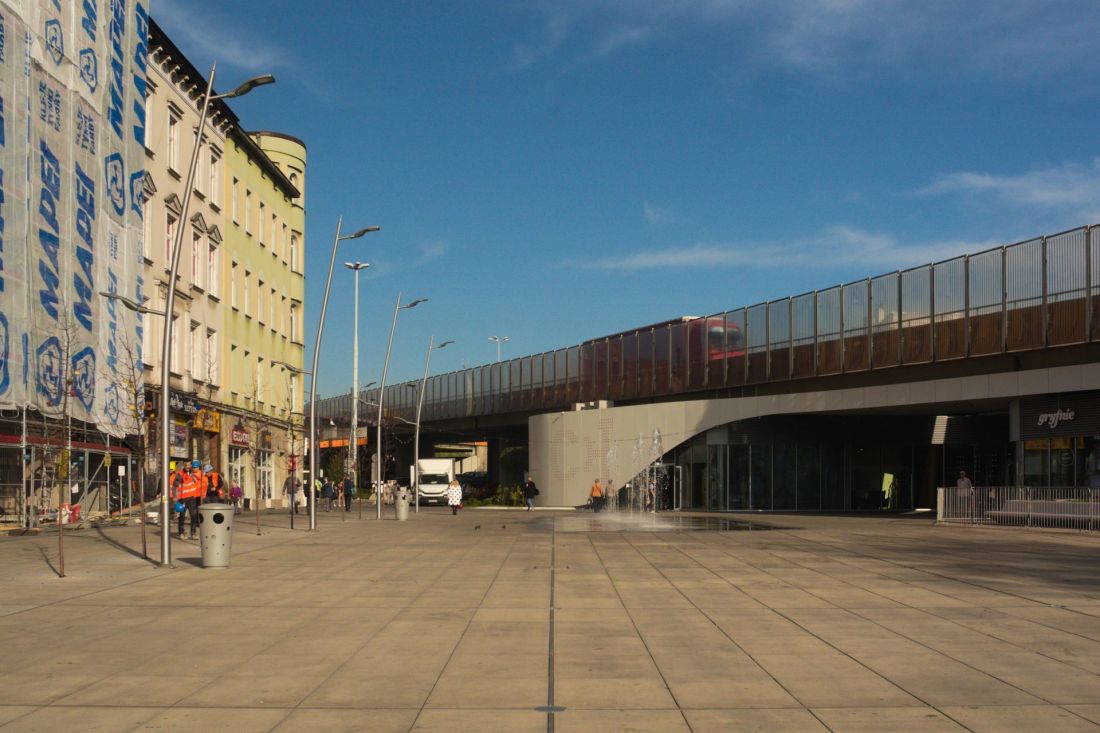
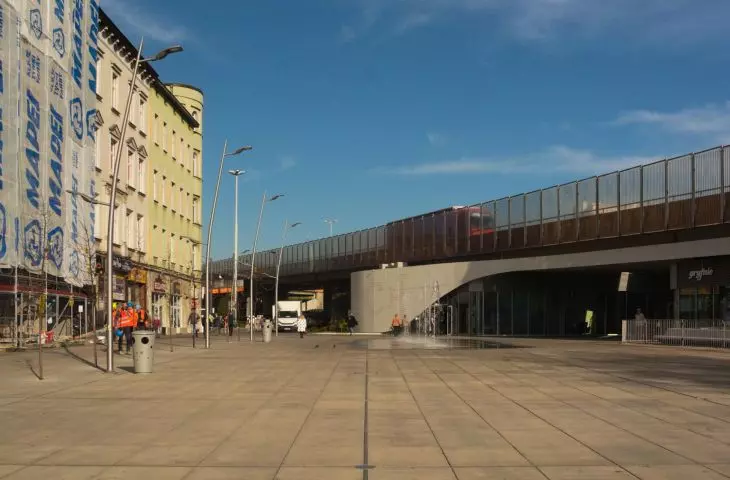
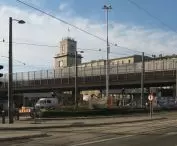
The flyover on the market square in Chorzow
Photo: Adrian Tync © CC BY-SA 4.0 | Wikimedia Commons
Przemek Ciępka: The most pressing problem in Chorzow is the issue of the flyover over the market. Will it be demolished?
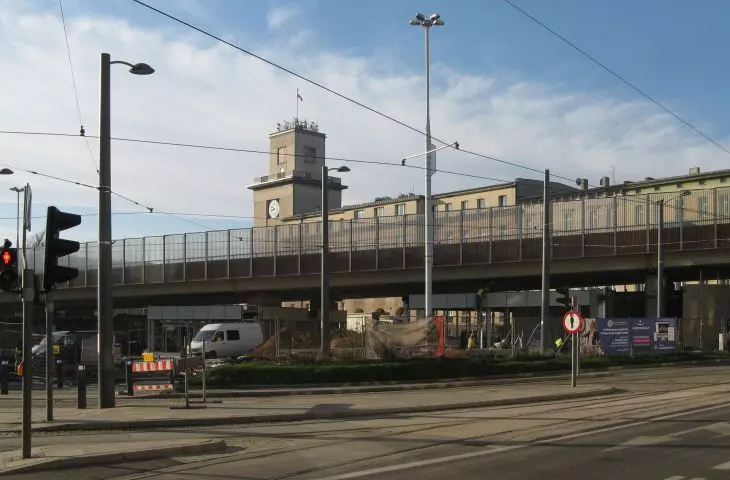
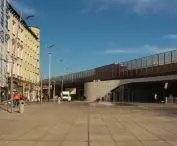
Michal Lorbiecki: It is known that the flyover will not be. I think it is safe to say that, because in its current technical state it is unfit for use. Of course, we have to supplement the current technical expertise with studies that will clarify whether it is possible to renovate or possibly support the flyover so that its use can be carried out in accordance with the law, due to the order of the Chief Inspector of Construction Supervision. Based on the earlier technical expertise, we know that this is impossible due to the corrosion processes that have taken place in its structure. Even if renovation or shoring turns out to be feasible, in the long run this facility will not be usable.
Przemek Ciępka: What will happen next?
Michal Lorbiecki: The flyover is not needed by Chorzow for anything - it is only needed by those who want to pass through Chorzow. Many of the people driving over the flyover don't even realize that part of it is standing in Chorzow's market square. Therefore, sooner or later it will have to disappear, and no one in their right mind will rebuild it in its original shape. Consequently, the traffic system in Chorzow will need to be transformed. There will certainly be a need to build a viaduct over the railroad line - we will then have to consider the questions of its functions, integration with church transportation or inclusion of pedestrian and bicycle traffic there. Of course, when planning the construction of the viaduct, we need to base it on modern knowledge of sustainable mobility.
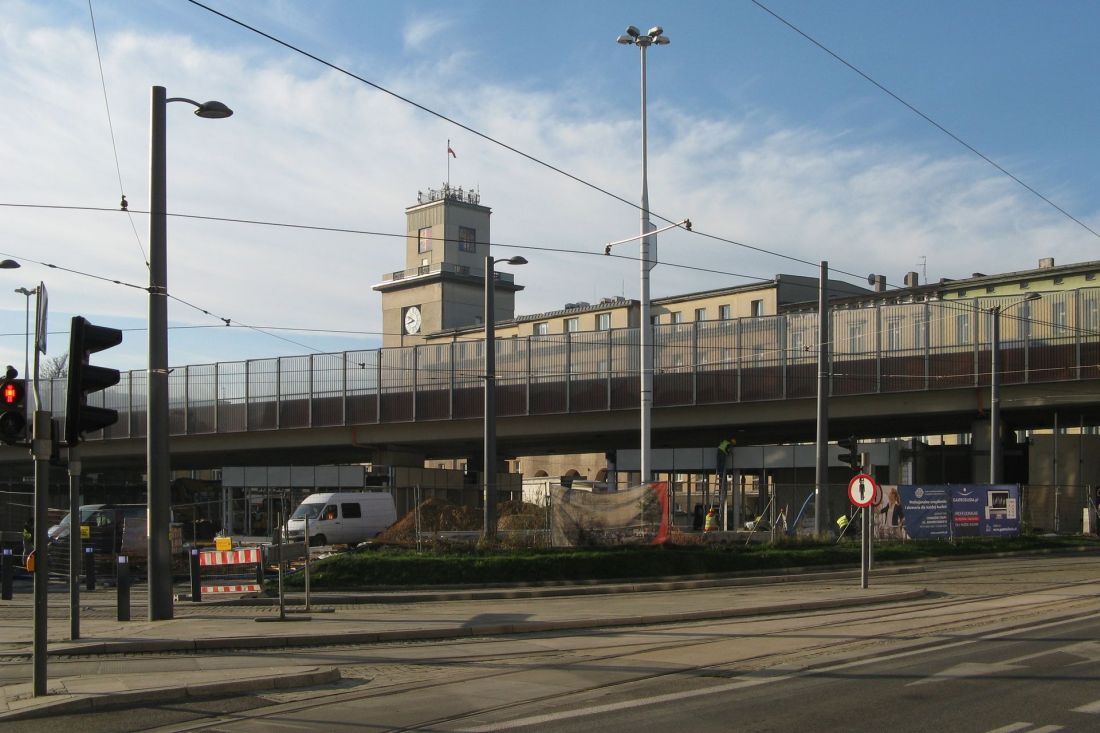
The flyover on the Chorzow market square
Photo: Adrian Tync © CC BY-SA 4.0 | Wikimedia Commons
Przemek Ciępka: How will Chorzow's market square change when the space that the flyover occupies today is freed up?
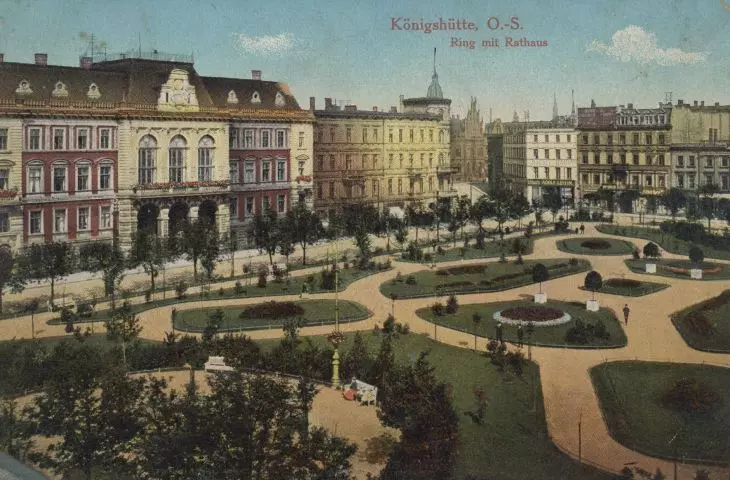
Michal Lorbiecki: First of all, it cannot be a concrete square. It's not a matter of predilection - this is a necessity in the reality of today's cities. It's not just a matter of legal issues, like the Municipal Climate Change Adaptation Plan, there is also a growing awareness among residents that there must be more and more greenery in cities. This is especially important in cities with a compact spatial structure, with downtown buildings located along the frontages, of which Chorzow is one.
It is also worth noting that the demolition of the flyover will recover a lot of lost benefits also outside the market itself. A lot of tenements were demolished on Katowicka Street just to free up space for the flyover and the national road. Changing the traffic layout will recover a considerable amount of investment land, where spaces for work, recreation and, above all, housing will appear.
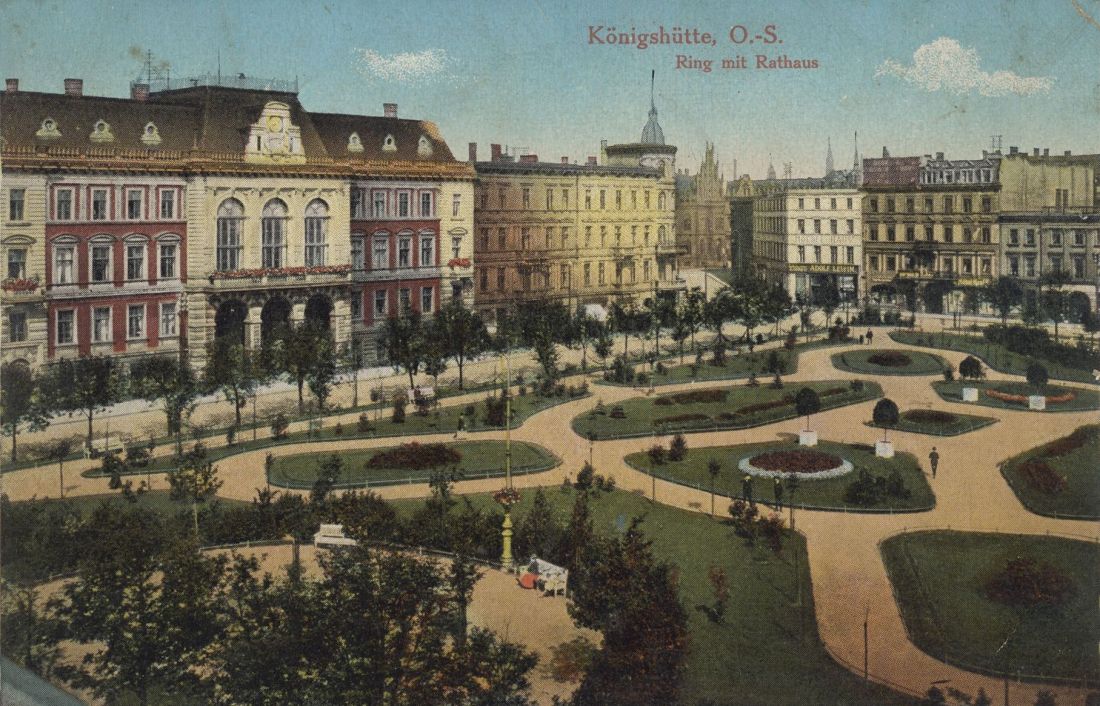
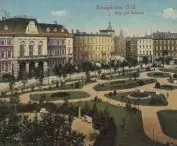
The former market square in Chorzow, then Königshütte
A postcard from the second half of the 19th century, © public domain
Przemek Ciępka: Does Chorzow have a developed housing policy?
Michal Lorbiecki: At this point we don't have an established housing policy - it takes time, investment and human resources, which the city does not currently have. This does not mean that we do not deal with housing issues. We have taken on the municipal housing stock, which accounts for 20% of all housing units in Chorzow. This is twice the share than the average in cities. The city cannot cope with maintaining such a large resource, it would take more than a century to completely renovate it. Unfortunately, for reasons of financial hygiene, there is a need to sell some of these units. Fortunately, there are so many of them that the possibility of providing housing for those most in need is under control. Nevertheless, the condition of these apartments is still a big problem. We are a European city, and we still have buildings where toilets are located in stairwells. It's terrible that in the public discussion there is so much emphasis on building wider and wider roads and bigger and bigger parking lots, consuming huge amounts of money from the city budget, while we are unable to provide housing that meets basic needs.
Of course, the housing policy does not end with the municipal resource - recently in Chorzow, for example, the Social Housing Initiative building was handed over, which is an example of an alternative way to expand the city's housing stock. On top of that, there are private investments. From an urban planning perspective, it is very important that the development taking place in the Downtown is as intensive as possible. We can't afford to flaunt space, we must manage it rationally, taking advantage of the proximity and multifunctionality that characterize this city. We would also like new developments to fit in as well as possible with the existing urban fabric, including the historical one.
Przemek Ciępka: What would you like to leave Chorzow like at the end of your duties?
Michal Lorbiecki: This is a difficult question, because although I have been City Planner for a short time, I strongly identify with Chorzow, and I don't want to think about the end of my work on the development of this city. I hope that I will be able to contribute to making this development as sustainable as possible - so that the next investments are not only "new", but also smart. So that in Chorzow not only commercial, residential or service buildings are built, but also public buildings that put people first. I often say that children are the best urban planners in the world. Of course, we think about them in the context of the future of our nation, after all, one day they will live in our cities. But it is important to remember that they already live in them today. That's why we should think not only about "strong and healthy men," but also about those weaker people - children, people exposed to stimuli, the elderly or those with various disabilities.
Imagining the average citizen, a user of urban space, we often see a man driving a car, who first of all expects his vehicle to be safe. If we step into the shoes of a little girl, boy, teenager or woman, the problems one has to face living in the city turn out to be quite different. Chorzow is a strongly European city, based on compact buildings and principles of traditional urban planning. We must remember not to divide the city into fragments with specific functions or intended for certain groups of people. If we stop thinking of streets as roads for motorists, everything will change.
Przemek Ciępka: Thank you for the interview!