




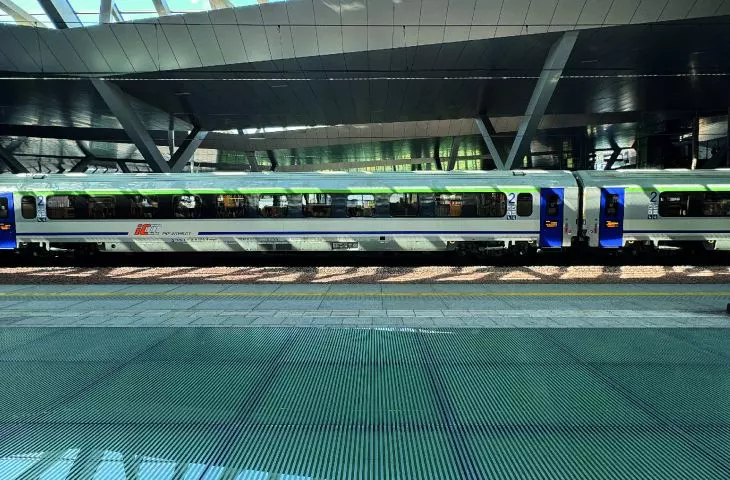




From building a sandbox to realizing train stations! The story of Oliwia Dec-Wolszczak, co-founder of Warsaw-based design studio DWAA Architekci, is a tale of determination, self-confidence and clearly set goals. Ola Kloc talks to Oliwia Dec-Wolszczak about the courage, risks and challenges faced by young architects.

Oliwia DEC-WOLSZCZAK - architect, engineer, co-owner of DWAA Architekci studio. Graduate of the Faculty of Architecture at the Warsaw University of Technology. Member of the Mazovian Chamber of Architects and the Warsaw Branch of SARP. Chief architect and author of the architecture project of the Warszawa Zachodnia station.
Ola Kloc: I came across in social media a photo of a letter you wrote to your father, in which you tell how you built a sandbox....
Oliwia Dec-Wolszczak: A sandbox and a bench!
Ola Kloc: Have you always known what you want to do in life?
Oliwia Dec-Wolszczak: Since I was a few years old, I was interested in the possibility of creating, even then I didn't know how it could be interpreted. My father is a bridge engineer, so construction - through conversation or consultation - was present in the house from my teenage years. As a child, I loved to build - outside with boards and sand, and at home - with Legos, which I had and still have tons of. I learned drawing at school, and in high school I traveled from Rzeszow to Warsaw every week for two years to take drawing courses to get into the Warsaw University of Technology. You could say it was determination? But it's what shaped me and continues to shape me.
Ola Kloc: Things moved quite quickly - you graduated in 2014, and just a year later you opened the DWAA studio together with Marcin Wolszczak.
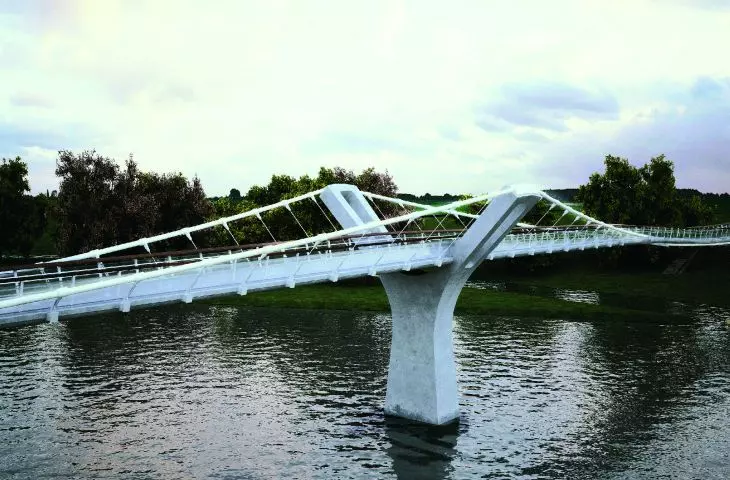
Oliwia Dec-Wolszczak: Yes. I finished my engineering degree in 2011, and my master's degree in 2014. During my studies, I worked, gained experience. After hours and on weekends I did competitions - with more or less success. My first success was winning a competition for the design of a pedestrian and bicycle footbridge in Nemirov. Unfortunately, it was not implemented, because there was a lack of funds, which is a pity, because it was a very interesting project with an unusual construction for Polish objects. I felt the wind in my sails. More than twelve years ago I also met my husband, with whom we began to compete together in competitions, still working in various architectural offices at the time, and in 2015 we said that we were setting up our own studio.
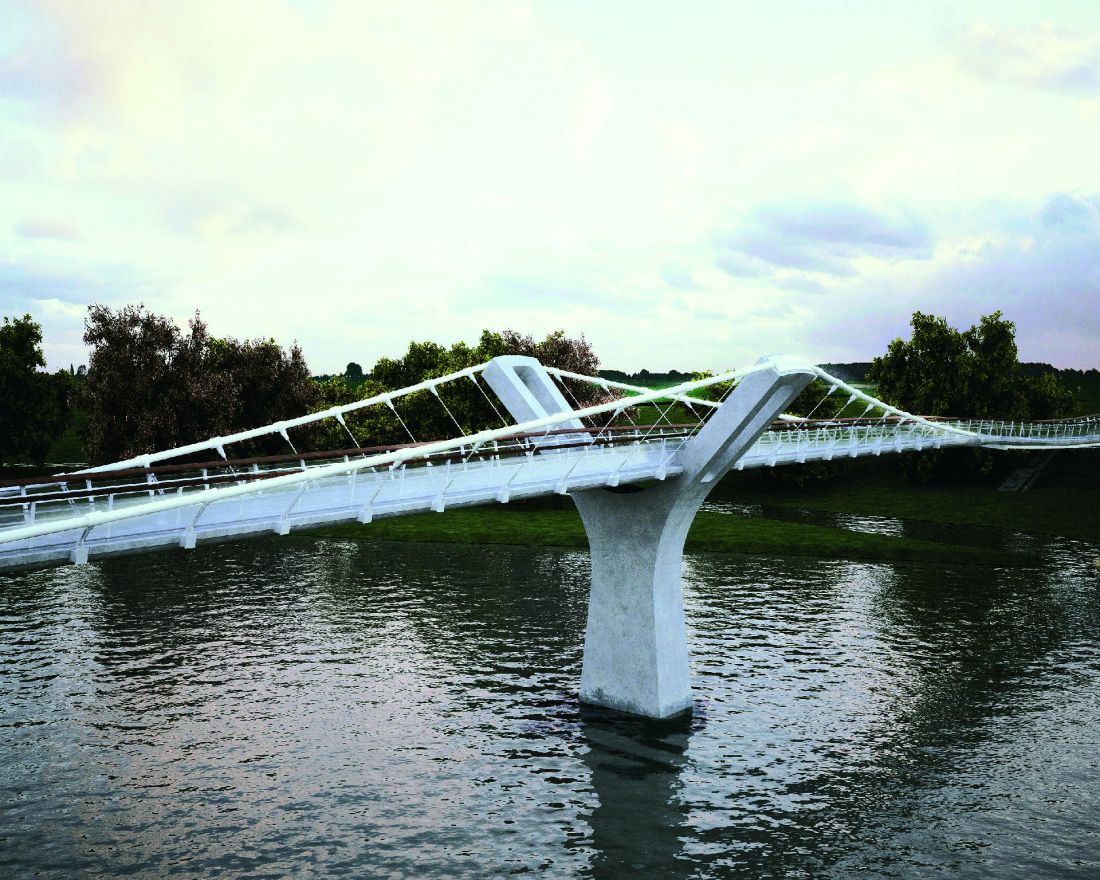
The winning design of a pedestrian and bicycle bridge over the Bug River in Niemirow
vis. from the resources of DWAA Architekci
Ola Kloc: It's quite a brave decision. Did you feel that after your studies and apprenticeships you were fully ready to pursue this profession? Both technically, as an architect, but also in terms of business, as an entrepreneur?
Oliwia Dec-Wolszczak: It was a very brave decision, looking back on it, there is always something that can be done better, more efficiently, but it is the best decision I could have made and I would make it again without hesitation. We were young at the time - I was about twenty-six years old, I knew that there was a lot of competition in the market, that there were many well-known companies in Poland. On the other hand, however, we knew that combining our passion, persistence, regularity and the fact that we knew what we wanted to do and were good at it, despite our relatively small seniority and experience, we wanted to give it a try. We decided that this was the best time, we were a few years out of college, we had a few years of experience gained in other design studios, so we decided to take off with something that we had been passionate about for a long time.
Ola Kloc: And start right away with gigantic, big-budget public projects? Most young architects start with single-family houses.
Oliwia Dec-Wolszczak: My experience in the architectural profession began with construction offices, the first topic on my internship while I was still an engineering student was the design of the piling of the National Stadium in Warsaw, and then in another studio - the reinforced concrete structure of this stadium. At that time I wanted to see what this design entailed, to look at architecture from the other side.
I knew from the beginning that I wasn't interested in designing only "ordinary" buildings, although we also have such projects to our credit, we still do them and we started with them. At the same time we were doing larger projects and assumptions related to infrastructure, we took part in architectural and urban planning competitions, for example for interchanges, pedestrian bridges, and thanks to this we also gained experience, because for each competition we prepared substantively - in addition to having some vision and creating an architectural concept, we also prepared technically. When the first opportunities for very large infrastructural assignments appeared, we were ready to take them on.
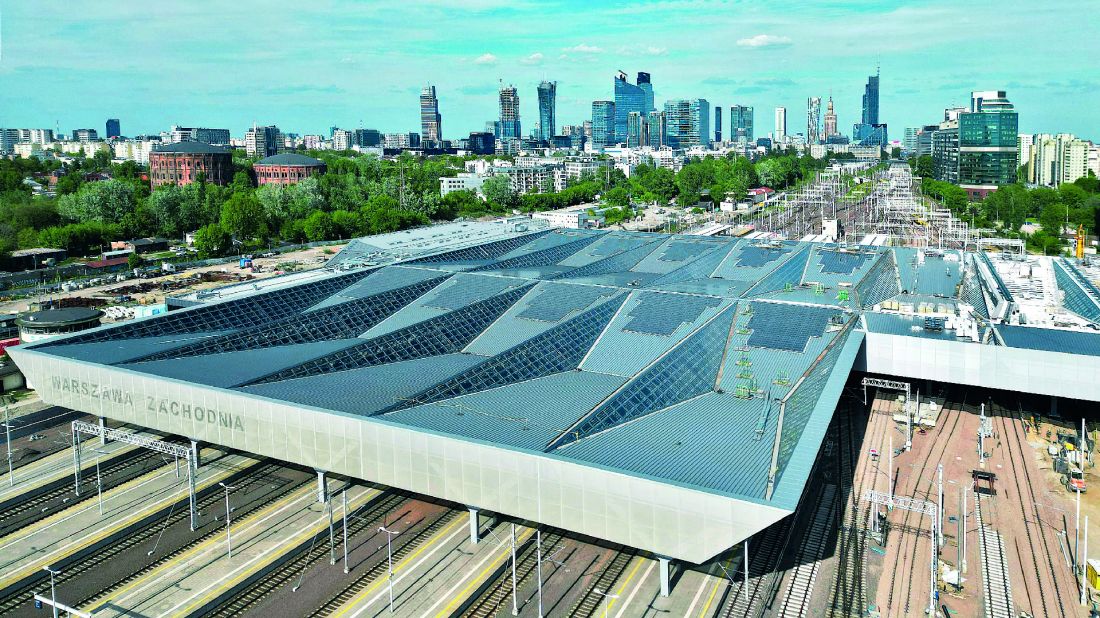
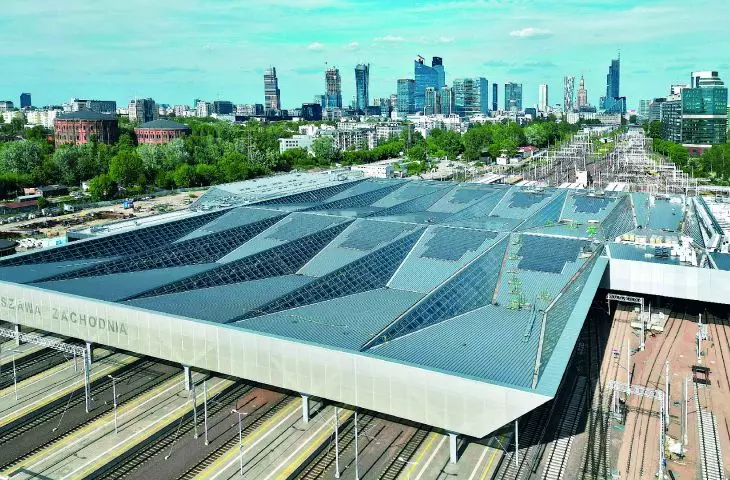
DWAA Architekci studio team has been working on the design of the new Warszawa Zachodnia station since 2017
Photo: Mikolaj Dec
OlaKloc: What were the beginnings of running your own office like ? What challenges did youface ?
Oliwia Dec-Wolszczak: Financial ones. This is what everyone faces. We didn't fall into taking a loan, credit or external financing. This is very popular now. If we had reached out for such help, perhaps it would have been a little easier for us. And then when we won a competition or got money for some assignment, all the money went to the office - for equipment, for renting space, for fees, and then for salaries for employees. For several years there were no vacations, no pleasure, but it was our conscious decision. It's that determination I mentioned at the beginning.
Ola Kloc: How did you develop the business model?
Oliwia Dec-Wolszczak: Our business model worked out as we went along. We didn't know anything about entrepreneurship, about running a company, about marketing. We only knew that we wanted to design and we were good at it. Everything came with time. Now we would probably think about a marketing strategy, creating a business plan, back then it was going for broke. Learning from our mistakes, we came to what we have now.
Ola Kloc: So what does your studio's business look like now ? Acquiring clients, accounting for investments.
Oliwia Dec-Wolszczak: We get clients mainly from recommendations and referrals, because we already have a fairly extensive network of contacts and references. Clients also come to us on their own. As for settlements: when we get an inquiry or approach a client ourselves, we prepare an offer and then work out a contract, which protects us very strongly. We try to stipulate in the contracts that settlements should be made after the developed stages, so that we don't end up with a situation where the remuneration comes only after several years of design. We are very careful about this staging and liquidity.
OlaKloc: How did you acquire orders before?
Oliwia Dec-Wolszczak: We actively searched for clients on the Internet, mostly they were smaller clients. Thanks to the fact that we participated in competitions and through my experiences working in construction offices I learned about the world of engineering and infrastructure, I have an established network of contacts in this industry. Thanks to whisper marketing, we were approached by companies involved in infrastructure and railroads.
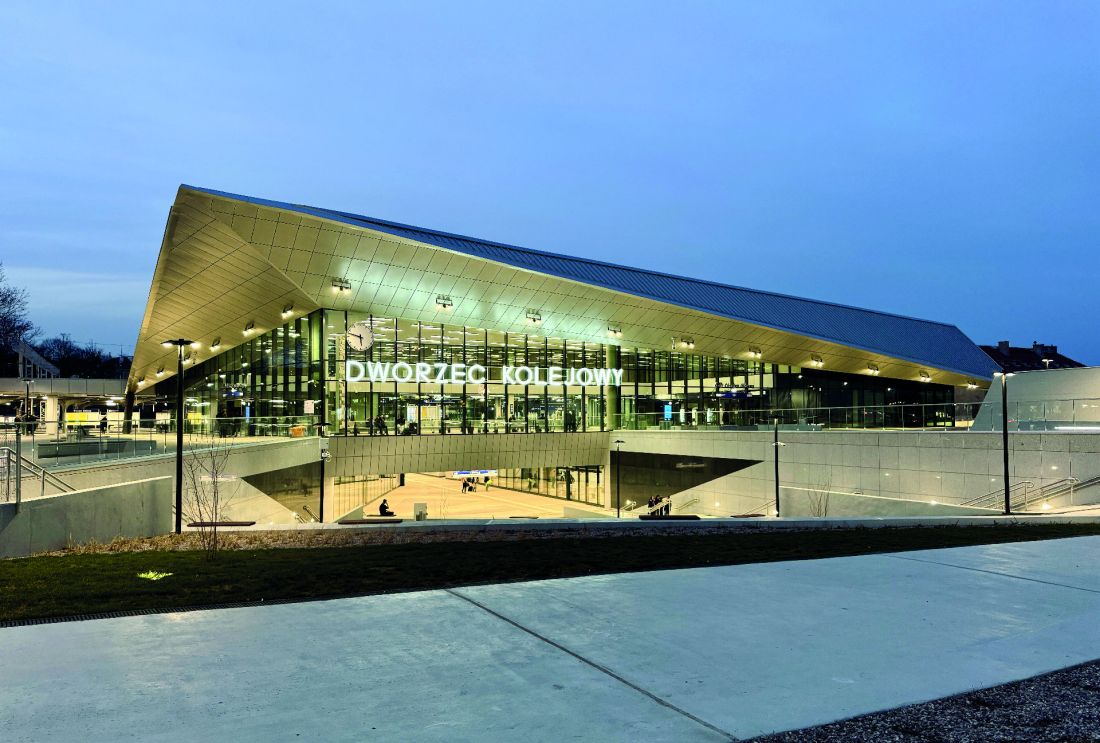
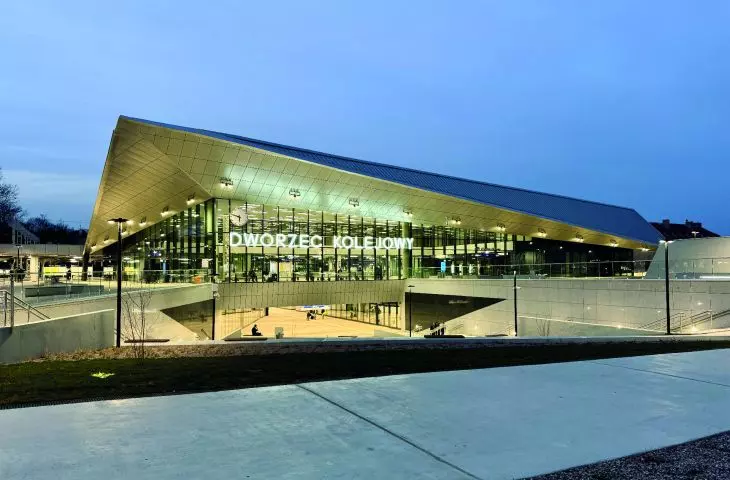
The new building of Olsztyn Główny Station designed by DWAA Architects is a building with a dynamic body
Photo: Marcin Wolszczak
OlaKloc: Have you faced any mistrust from investors because of your age?
Oliwia Dec-Wolszczak: We had such a situation. One of the Ordering Parties expressed concerns about age.
Ola Kloc: How did you react?
Oliwia Dec-Wolszczak: We sought trust and with our professional approach and commitment we proved that just because we look young doesn't mean that we don't have the right experience and workbench. We succeeded! We proved our worth, gained trust, and the Client thanked us for our professionalism and high quality of the project.
Ola Kloc: Self-confidence is also important here - do your studies prepare you for such situations?
Oliwia Dec-Wolszczak: Our studies did not teach us how to set up a studio, how to get clients, orders, how to price projects - we had a big problem with that too. We knew how to price a house or an interior, but how to price a larger-scale public project with all the risks?
At university we are taught design - I have the impression that it's not practical, but theoretical, and that's for residential, office buildings or public utilities. We learned everything in infrastructure topics on our own - we read regulations, verified them, did a strong research of stations and transport-related facilities in Poland and abroad. We browsed the Internet, if we found plans of foreign stations, we studied them - what is well designed and what is bad. We traveled around Europe to study and experience these stations on our own, we were their users, we analyzed every nook and cranny, how a passenger moves through them if he has time, and how if he doesn't have that time. On our own, we did research on both functional, material and design solutions. This is also how we gained experience, studies did not prepare us for this.
Young people after graduation have concerns: firstly, setting up a studio involves a certain risk, they don't know if they will find clients, orders, and secondly, how to learn all those design things that studies don't prepare for. Then there is the legislature, which imposes more and more new or higher taxes.
Ola Kloc: What advice would you give to young architects who want to start their own studio?
Oliwia Dec-Wolszczak: Ask older colleagues - this is the easiest solution. That's also why we have U40 conventions, to help a little and learn from each other. The last edition in Warsaw, which I co-organized, was focused on the architect's business. We invited great specialists in project valuations, in law, in setting up companies, in marketing. And this is what young people can do now. In addition to studying, gaining experience in design in college, they should also train in business and do their own research in the field of architecture. If someone is interested in a particular niche in architecture, as we are in transportation, infrastructure, then just watch projects, experience them live, analyze them.
Now we have Pinterest, Instagram, masses of online and paper magazines. It's also good to enter competitions and try to attract customers, which is unfortunately the hardest thing, but it gets easier with time. Today it is very much about marketing, personal brand, how you approach the subject and the customer. You have to try, take risks, don't give up and sooner or later something will succeed.
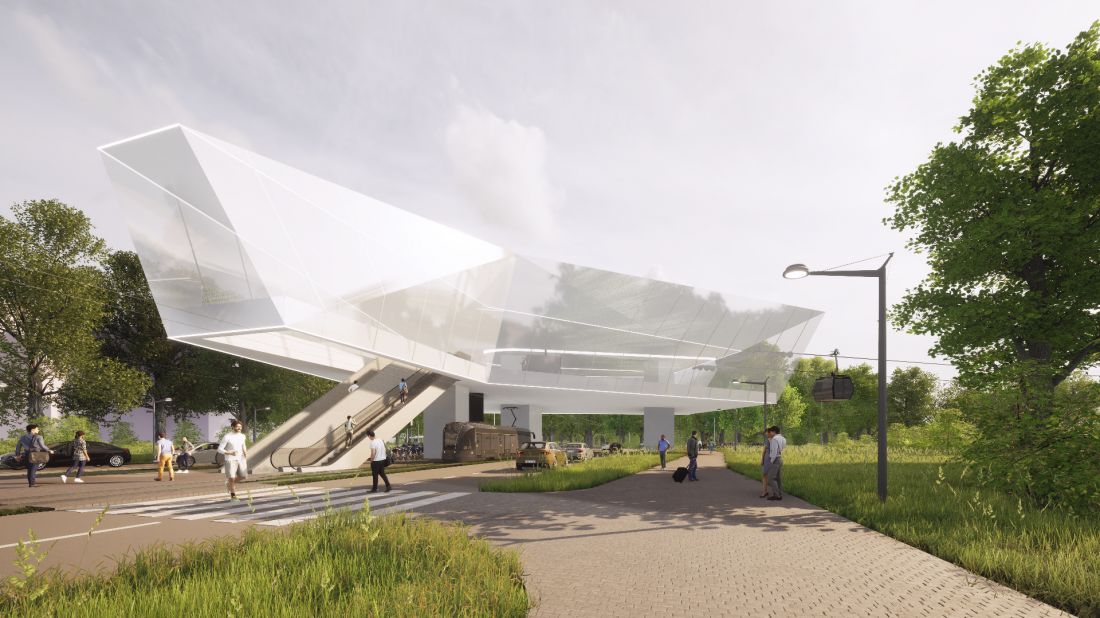
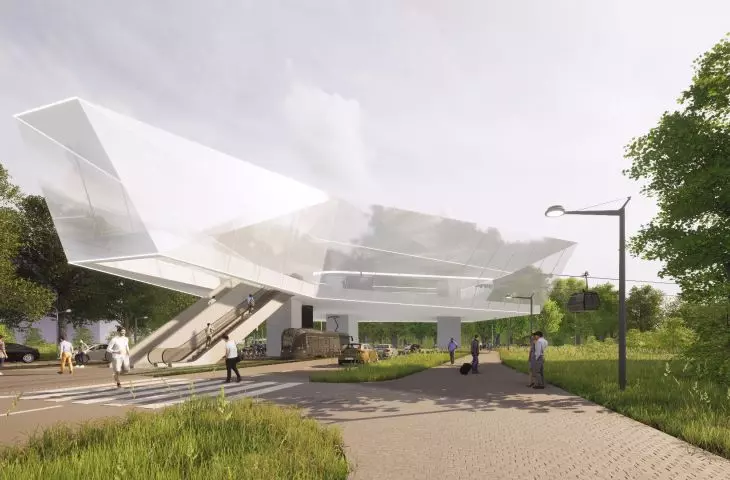
Competition cable car project recognized in the Czech Republic with an honorable mention
visa. DWAA Architects
Ola Kloc: How is the studio functioning after these ten years ? How many people does it employ? Do you accept students for internships? If so - under what conditions?
Oliwia Dec-Wolszczak: We try to have a team of up to ten people, because this is the group in which we function best. Of course, we accept students for internships, depending on the type of cooperation, these are paid or mandatory, two-week internships. When we accept students or young people, we immediately "throw" them into current topics to gain experience. And we continue to enter competitions! A few years ago we took part in an architectural competition for a cable car in Prague, Czech Republic, and won an honorable mention! It's worth mentioning that only five studios in the world made it to the second stage, so we measured ourselves against studios such as Snøhetta and Grimshaw.
Ola Kloc: Thank you for the interview!
interviewed by: Ola Kloc
more: A&B 10/2025 - U40 - the business of a young architect,
download free e-publications of A&B