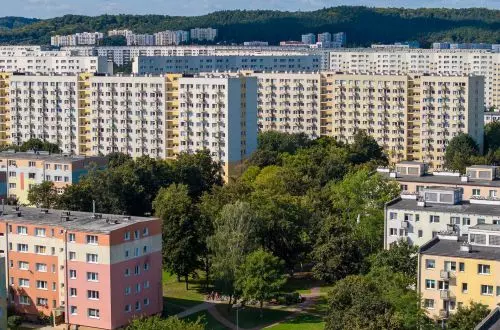






In the Young City - a district that was intended to be a showcase of Gdansk, with apartments, offices, retail, public spaces and cultural institutions - more and more investors are giving up building office buildings or retail to erect another residential building. As many as 500 apartments will be built under the developer's lex mode in the vicinity of the historic BHP hall, right next to the European Solidarity Center.
Presented back in 2020, the project envisioned more features. Developer Euro Styl announced the construction of about 1,100 apartments and commercial units on the Young City site in Gdansk. But the plans also included about 37,000 sq. m. of office space (this part was to be realized by Torus), although previous assumptions included the construction of a shopping mall at the site.
This area is so specific that it requires mixed functions: residential, office and service. In addition, it is one of the best in the city and deserves to be one of Gdansk's showpieces
- said in an interview with "Wyborcza" Slawomir Gajewski, then president of Torus.
To date, Euro Styl has completed six residential buildings with first floor services, and more are under construction. The former shipbuilding hall 89A has also been revitalized, with a foodhall and hotel located in the so-called Montownia. In contrast, plans to build office buildings have stalled, as the Covid-19 pandemic and the growth of remote work have hampered demand for office construction.
The docks: housing, a school and a park
Instead, it's more profitable to build housing, so despite earlier announcements about jobs, more developers are changing plans. As a result, instead of a mixed-use development with office spaces, the Young City is increasingly turning into a mainly residential neighborhood. Also, Doki V, a company set up by Euro Styl and Torus, obtained lex developer approval from the City Council in late November last year to change its function to residential and commercial where the office buildings were to stand.
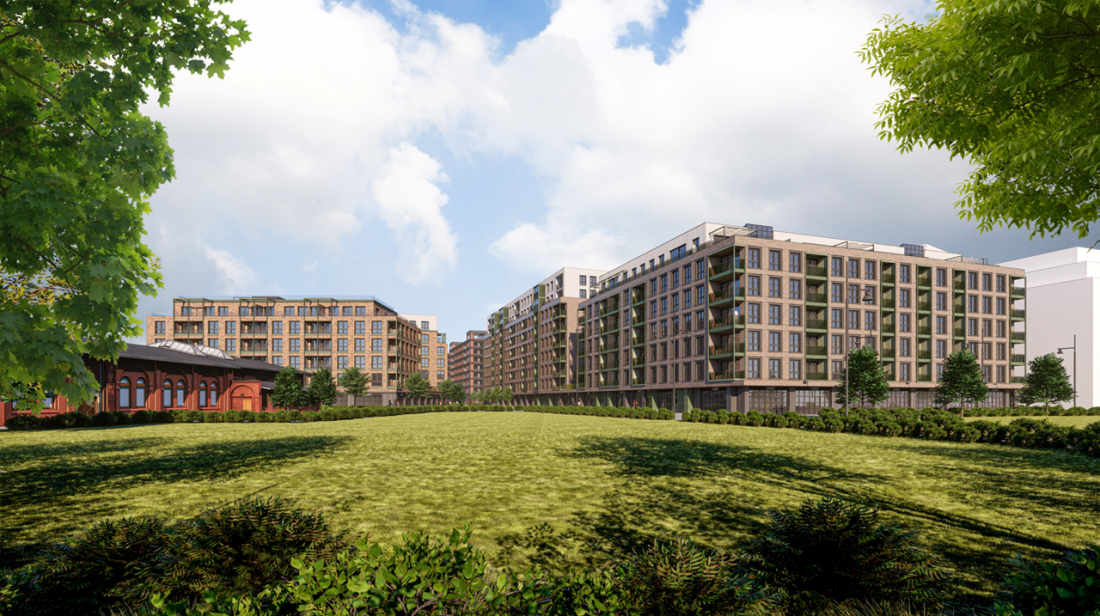
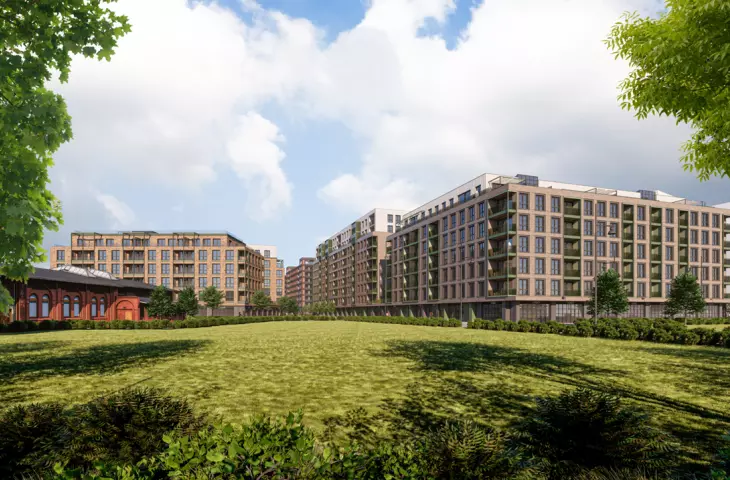
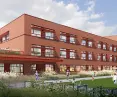
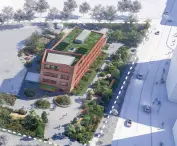
Doki V concept
© mat Euro Styl
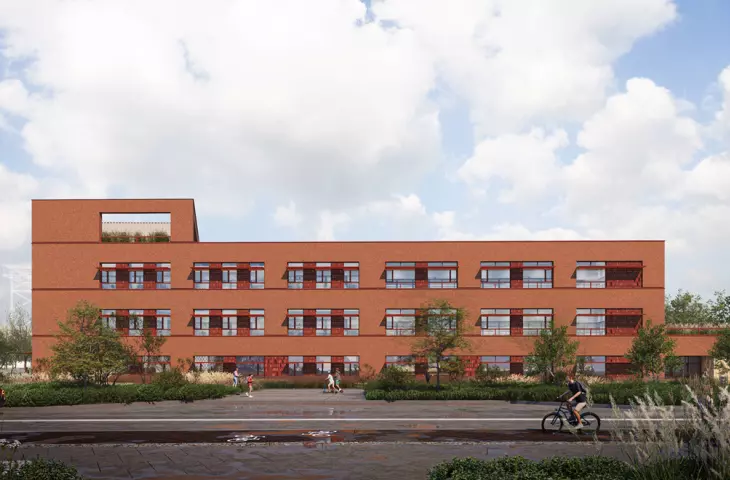
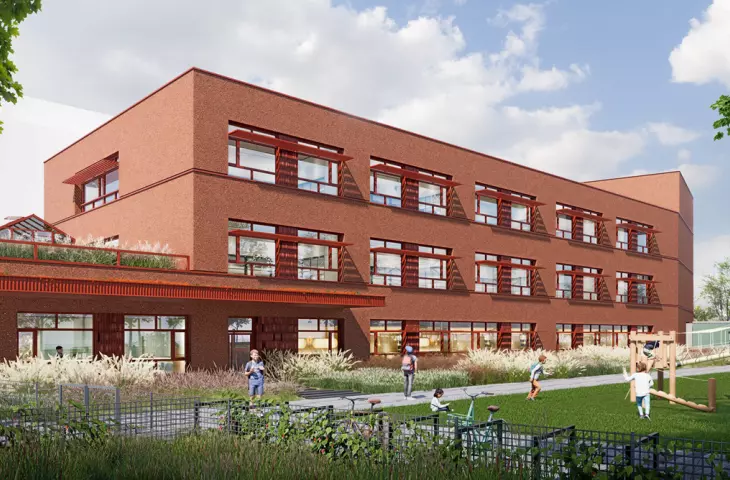
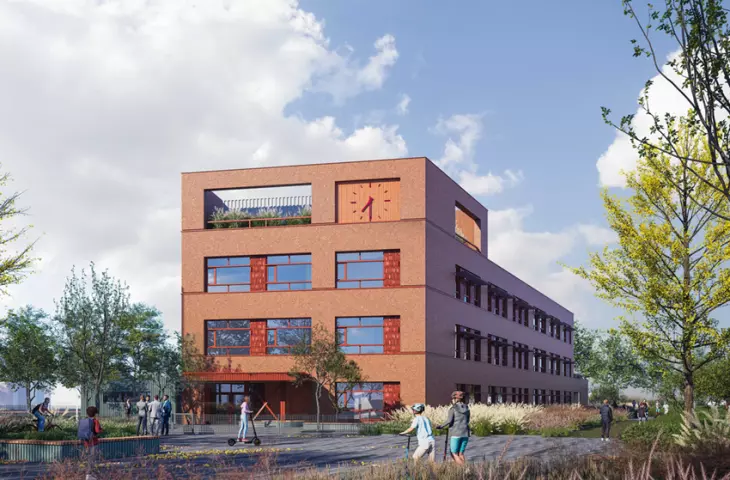
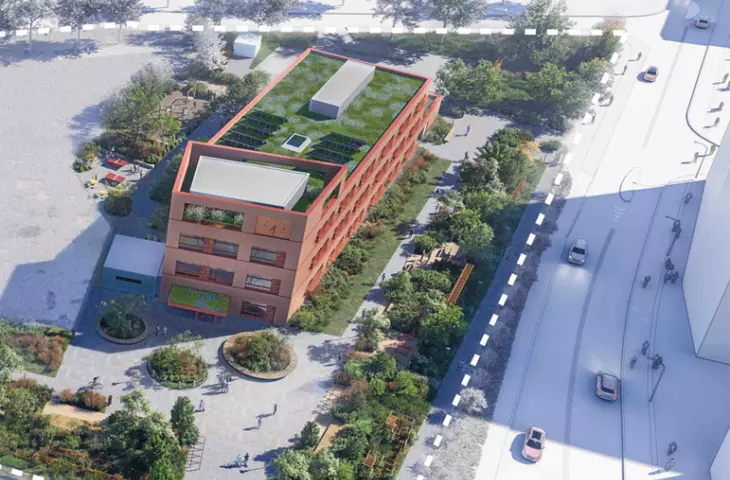
What in return? The developer's lex procedure obliges investors to realize the public purposes agreed upon with the municipality in the vicinity of the development. The company will build a building for a new elementary school and create a linear park along Rybaki Górne Street. The former goal will be realized jointly with YIT, which is also reaching out to the lex developer.
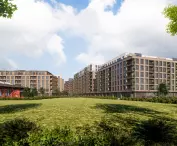
Two buildings will be constructed, ranging from six to eight stories, each with an underground garage and bicycle infrastructure. A total of 505 to 565 apartments are planned . There will be commercial units on the first floors, and the public space around the new development will be complemented by a new central square. The buildings will have a varied, cascading height, descending toward the historic BHP Hall.
This is another developer that decides to take such a step. Among others, Inopa and Cavatina, which originally planned to develop large office complexes - and are now preparing residential and commercial projects - have withdrawn from building office buildings in favor of residential developments. A similar direction has been taken by YIT, which has already built residential developments in the Young City. But there are more changes in function: the post shipyard area has lost an important cultural institution. Although many had pinned their hopes on the construction of a building for the new Baltic Opera House in Gdansk on the site of the former Imperial Shipyard, in the end the local government's choice fell on the site of the Zebra Ludowe Square.
Urban planner: the risk of tourism and gentrification
In an interview with A&B, Łukasz Pancewicz of the Department of Urban and Regional Planning at the Gdansk University of Technology, co-owner of the A2P2 studio, stresses that for investors, apartments are a safer business, because they quickly find buyers.
It's different with offices. This market has become much riskier, as demand for office space is falling. This is influenced by both the economic situation and the change in working styles - more and more people are working remotely, plus the development of artificial intelligence, which may result in reduced demand for remote business service centers.
- Pancewicz says.
The urban planner notes that in the change of function to residential - cities also have a vested interest.
Thanks to urban planning agreements provided by the so-called developer lex, or any day now ZPI, local governments can quickly acquire public infrastructure financed and built by developers, says Pancewicz in an interview with A&B. - These are all real benefits, but it's also worth thinking long-term.
The problem is that in the Young City, it's getting harder and harder to find apartments that are accessible to the average resident. It's being built mainly for people with "fatter wallets" or with an eye toward renting.
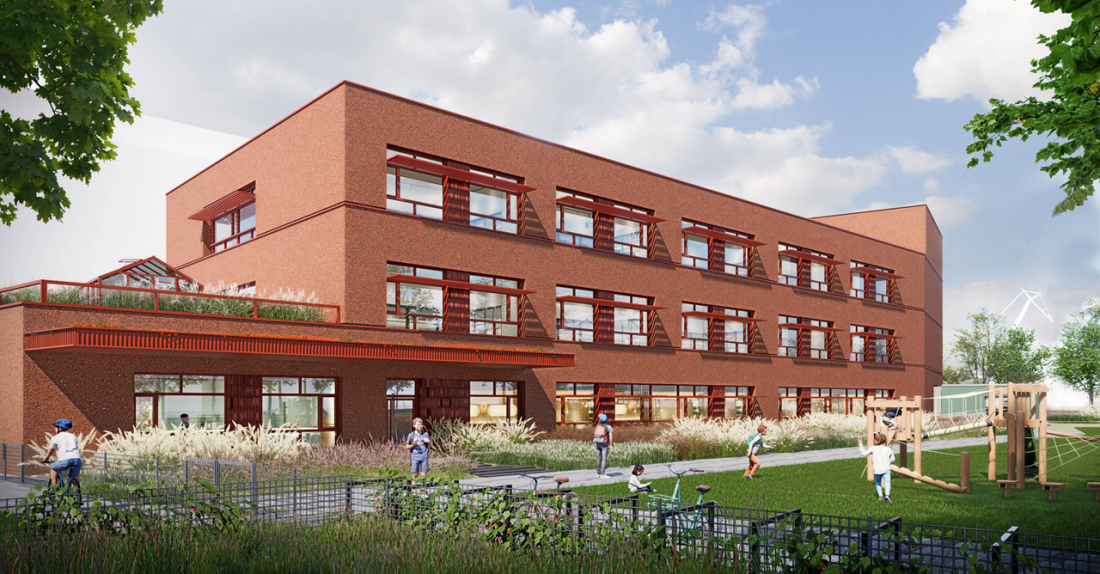
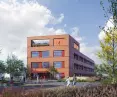
The school is one of the public purpose developments
© mat. Euro Styl
As a result, the post-shipyard area can easily become a neighborhood plagued by tourism and gentrification. Meanwhile, even small-scale, non-intrusive production in such a place provides economic security and creates natural social differentiation
- Pancewicz adds.