






In January of this year, the Ministry of Finance and Economy submitted the first version of a draft law to transfer to cooperatives the land developed by the blocks of flats they administer. The new law is expected to be adopted by the government as early as May 2026. What does this mean for Polish cooperatives and their residents? And will new blocks of flats sprout up on large-panel housing estates?
More than 100,000 Polish apartments are in buildings standing on unregulated land. Their residents and housing cooperatives have been demanding for years that the government provide an efficient solution to this problem. This situation is an unwanted relic of the previous system, gifting citizens with apartments without any real right to ownership, and of the transformation, which incompletely carried out the enfranchisement of inhabited buildings without legally binding them to the land on which they stand. Another, much more cherished remnant of the communist era is the development of the modernist neighborhoods within which the buildings are located, their green spaces, playgrounds and the vast spaces between the blocks. Both "relics" may soon become a song of the past with hard-to-predict consequences.
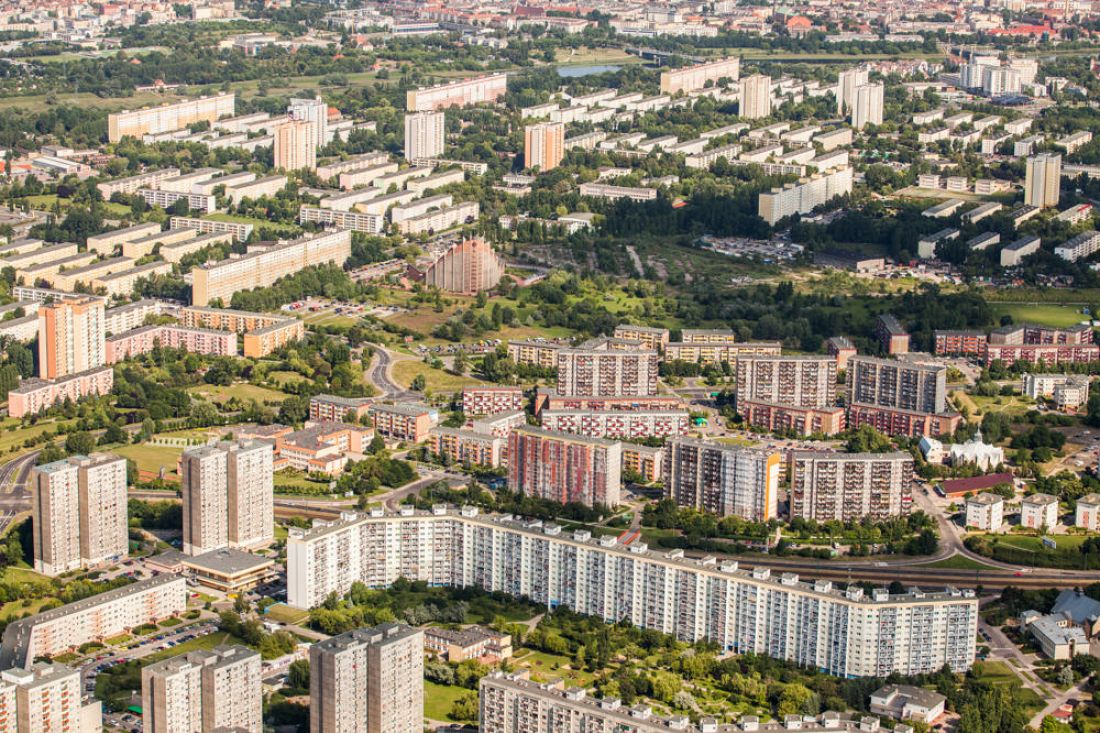
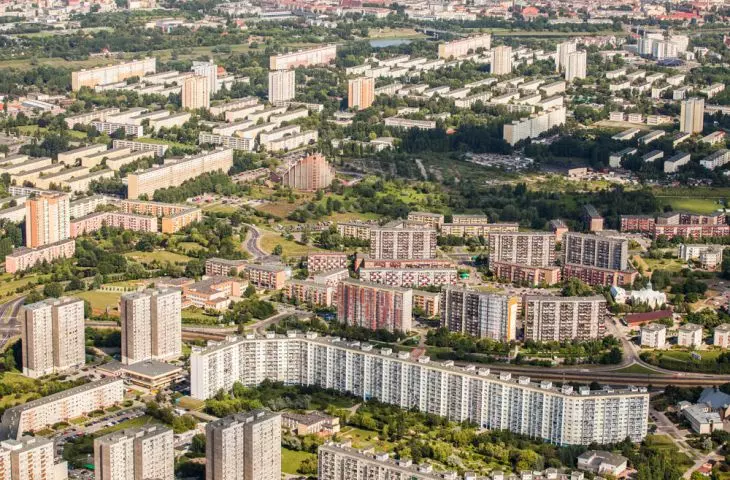
Housing cooperatives will be able to take over the land on which the buildings they administer stand - housing estates in Żegrz and Rataje in Poznań
Photo: Sahiba © CC-BY SA 3.0 | Wikimedia Commons
two birds with one stone
According to the draft of the new law proposed by the Ministry of Finance and Economy, cooperatives operating on unregulated land will be able to request the free establishment of the right to perpetual usufruct of the land on which the cooperative's buildings and the infrastructure necessary for their proper use are located. The relevant decision will be issued within 12 months by the starost, if the plot belongs to the State Treasury, or by the mayor, city president, county board or provincial board in the case of land currently held by local governments. By regulating the status of cooperative land, their residents will be able to pay lower rents, establish land registries and take out mortgages .
From the point of view of urban planning, the most important change concerns "backyards" between blocks of flats. This is because the new law stipulates that housing cooperatives will also be able to take over the areas between their buildings. However, there is a catch - in exchange for the land, housing cooperatives will be obliged to erect social rental housing facilities on it. The construction of social housing on the cooperatives' land is to be financed by subsidies, including EU subsidies, as well as loans and the cooperatives' and their members' own funds, and the previous owner of the land (the Treasury or local government) can set a construction deadline, which will be no shorter than five years. If the cooperative does not build new housing within 8 years, it will lose the land.
The new law from the Ministry of Finance and Economy thus proposes solutions to two problems - not only the long-standing unregulated ownership of the land on which the blocks of housing cooperatives stand, but also the shortage of cheap, affordable housing in Poland. While the benefits of the coming changes seem obvious, not everyone is happy with them - especially those who have rightly loved the layouts of the large-panel housing estates, full of greenery and open spaces.
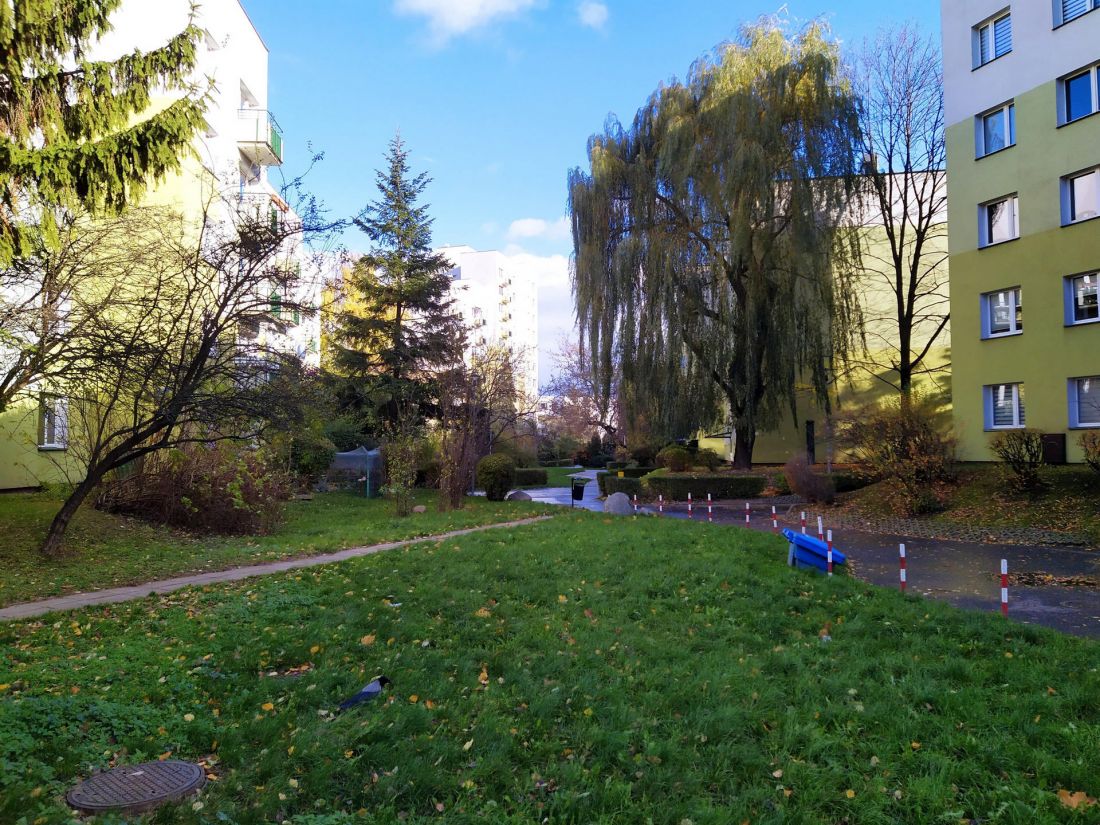
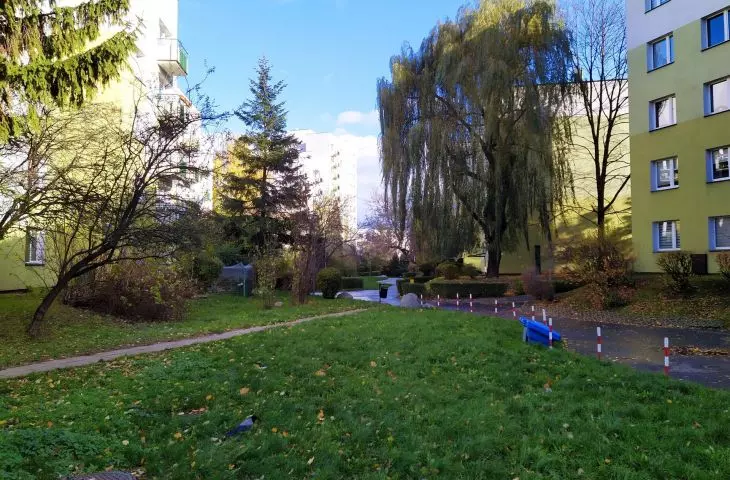
In the areas between blocks of flats, housing cooperatives will be obliged to erect social rental housing facilities - Backyard on Symphony Street in Warsaw
Photo: Botev © CC BY-SA 4.0 | Wikimedia Commons
The dawn of the pathos cooperative?
Rented or commercial, new blocks on cooperative housing estates should not drastically lower the standard of spaces used by existing residents.The densification of the urban fabric is one of the most important postulates of today's urban planning, but even it, or perhaps above all it, should be well thought out - construction on already developed housing estates is an operation "on a living organism," requiring precision and anticipation of long-term effects on the community. Not all investors show such thinking, and even in the areas of the more "enterprising" cooperatives we can find examples of "pat-development" today.
warsaw window-to-window meetings
This is the way people talk about the activities being carried out by Warsaw's "Old Town" housing cooperative, which is trying to use its areas in Wola in the most "efficient" way possible. Ogrodowa 49 became notorious in 2021, when residents of a nearby 1960s block of flats alerted the media, reporting on the construction plans of the cooperative administering their building. As Wyborcza reported at the time, the Old Town Housing Cooperative intended to erect a new four-story residential building on the green square behind the existing block, right in front of the residents' windows. Last year, the cooperative realized its intentions, interestingly enough - in full compliance with the building law and in accordance with the 2014 local plan. At its narrowest point, the two buildings are separated by only 6.9 meters, and the windows of the tenants of the 1960s block look out onto the long blind wall of the new building.
These are not the only plans of the enterprising cooperative - two years ago there was information about plans to erect a 10-story high-rise building on a patch of greenery under the modernist blocks between Twarda, Żelazna and Sienna streets, and at the end of April last year work began on the construction of a new apartment building between blocks on Wolska 15 and 17.Both investments are being carried out despite numerous protests by residents of the surrounding buildings, managed by the "Starowka" housing cooperative.
The "Old Town" housing cooperative is no exception. The situation is similar for residents of blocks of flats at 201 and 203 Czerniakowska Street in Warsaw, where the Building and Housing Cooperative "Torwar" plans to build a new 6-story building with anunderground garage, and in Krakow in 2018 residents stopped plans to build 4 new blocks on the green areas of Osiedle Oświecenia.
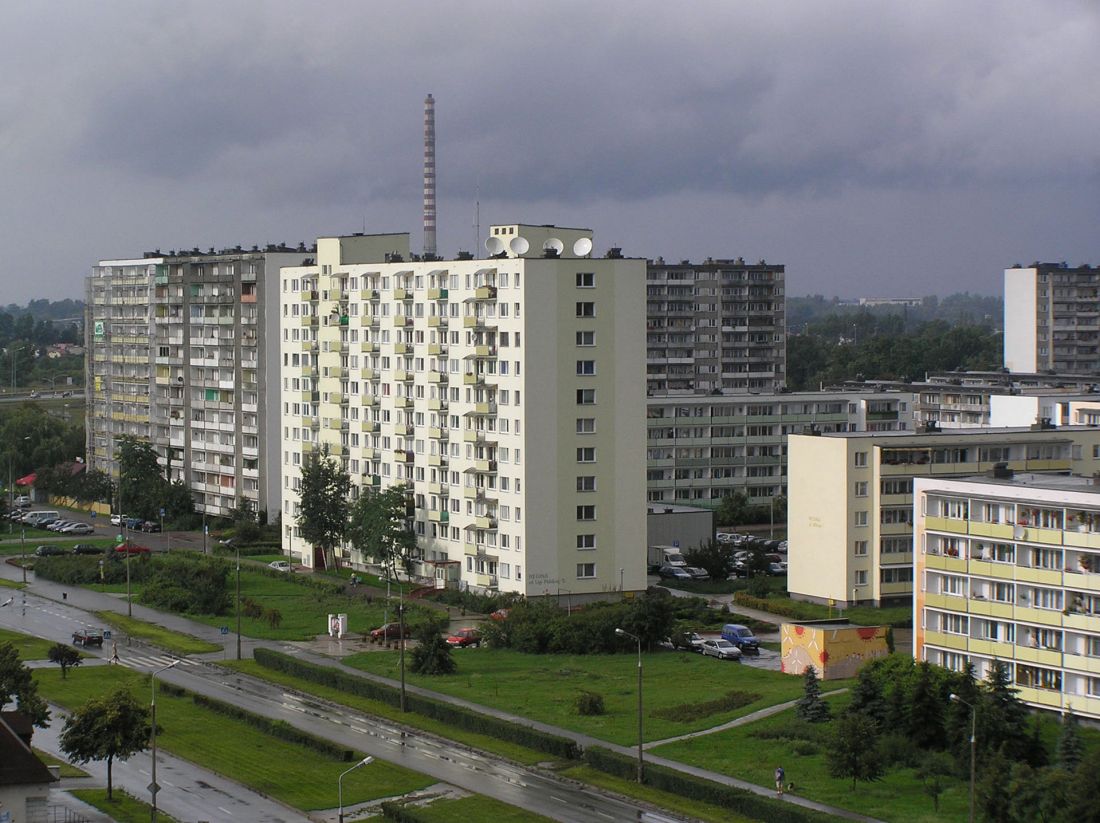
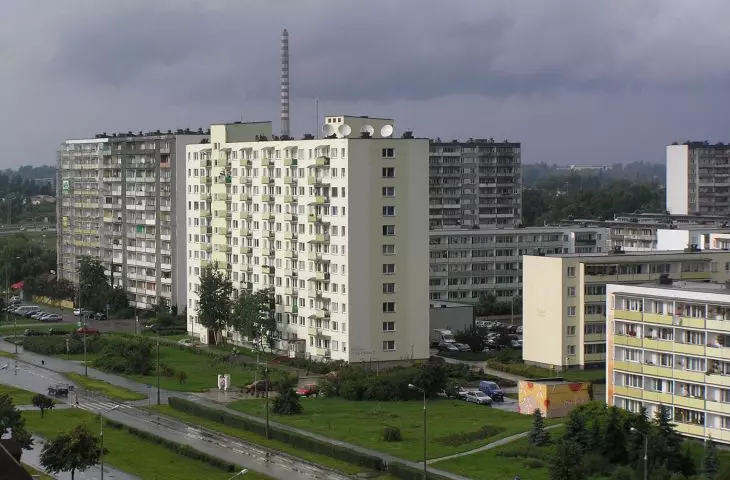
Is the densification of large-panel estates possible? - Skarpa estate in Toruń
Photo: Pko © CC BY-SA 4.0 | Wikimedia Commons
only sensible urban planning will save us
If the law proposed by the Ministry of Finance and Economy comes into force, will there be any "safety brake" for potentially unwise construction activities on modernist housing estates? You don't have to look far for the answer to this question, as it is the same as in the case of many other ills of Polish urban planning - we need a good planning law.
In a situation where housing cooperatives will gain access to significant amounts of undeveloped land, properly prepared Local Development Plans will become even more important. An important role will be played by properly prepared General Plans, which municipalities will most likely have to enact by August 31, 2026. An important mechanism, determining the shape of the general plan, is the absorption balance, determining the maximum and minimum area of undeveloped land in residential zones, ensuring a balance between the need for urban densification and access to public spaces.
It seems that the new law allowing the transfer to cooperatives of land developed with blocks of flats administered by them will succeed in killing two birds with one stone. However, it should not be forgotten that it is only thoughtful urban planning that will ensure that no one gets sick of them.