




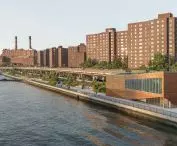

East River Park,
designed by Bjarke Ingels Group: BIG
A new symbol of urban transformation has appeared on the map of New York City - East River Park, which, as part of the East Side Coastal Resiliency (ESCR) project, has combined safety with recreation, technology with nature, and architecture with everyday life. Behind his vision is the Bjarke Ingels Group: BIG studio, working with Mathews Nielsen Landscape Architects (MNLA), ONE Architecture & Urbanism, AKRF and residents of the Lower East Side. Together, they created a space that not only protects Manhattan from floods, but brings people back in touch with the river - the same river that has shaped the rhythm of the city for centuries.
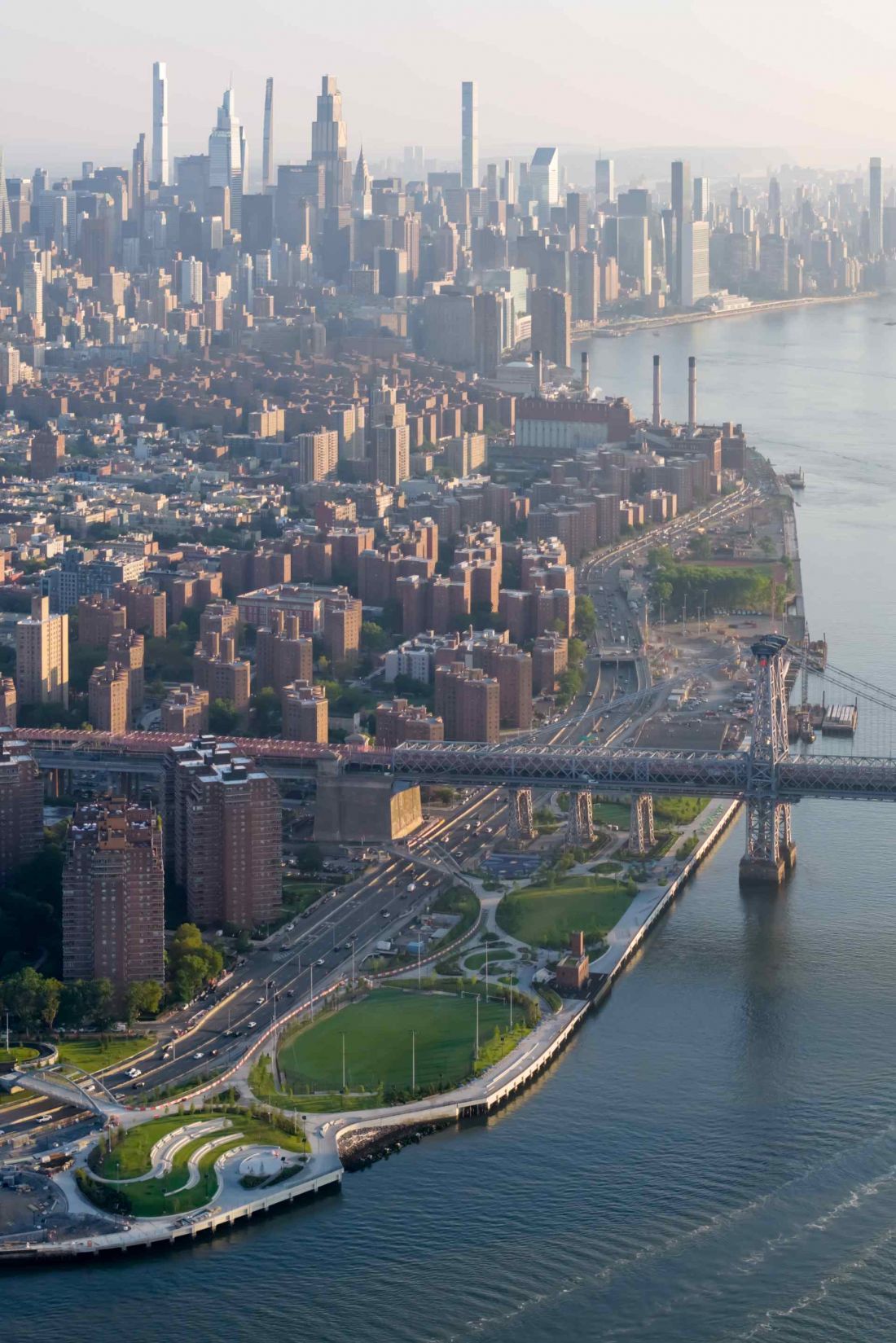
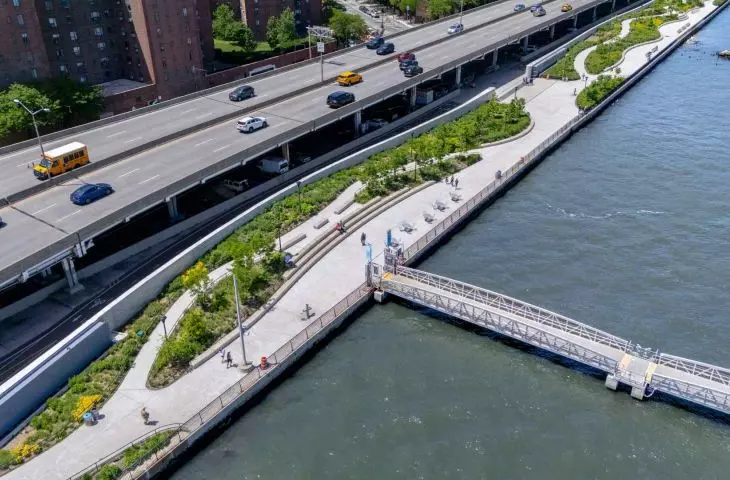
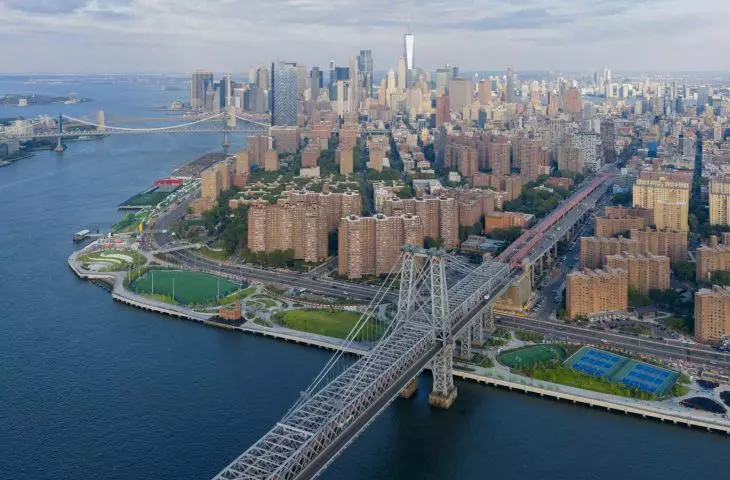
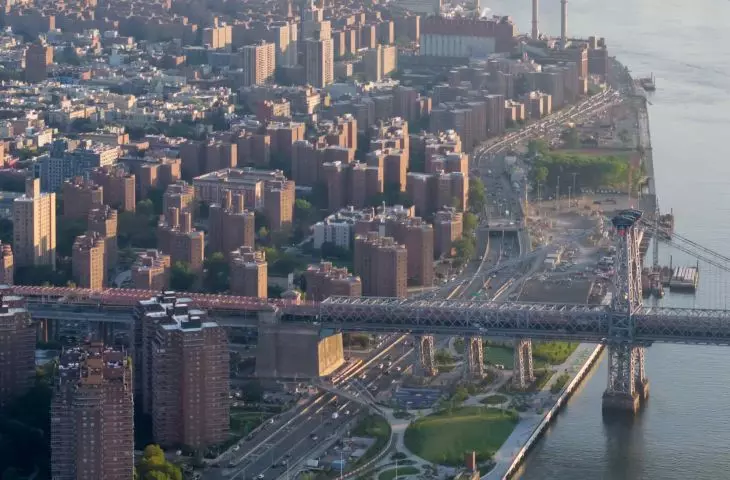
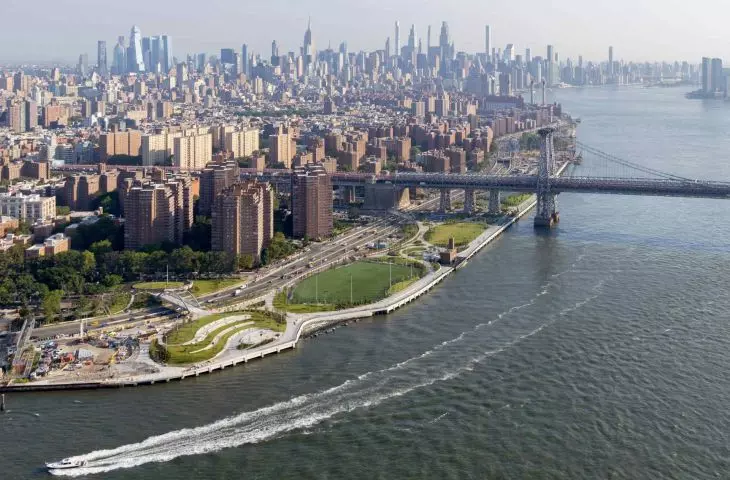
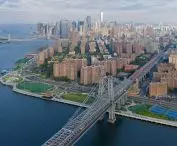
East River Park - a bird's eye view
Photo by Iwan Baan © Bjarke Ingels Group: BIG
From barrier to shared space
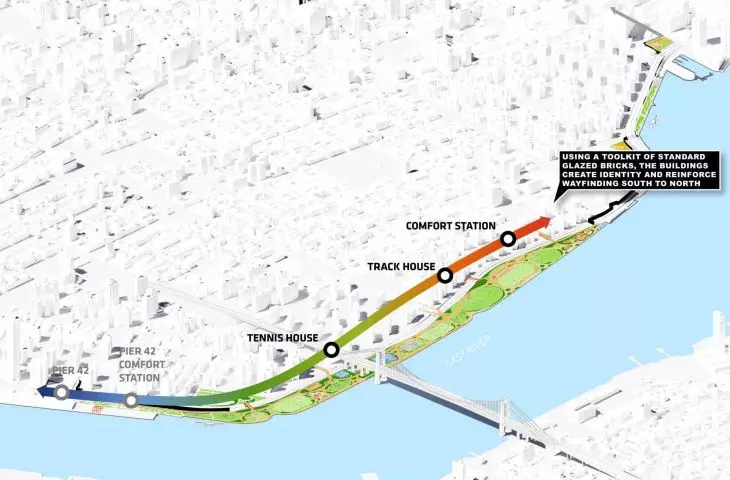
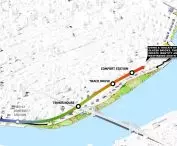
This is a project that is difficult to classify. It is neither just infrastructure nor a simple park. The East Side Coastal Resiliency is a $1.45 billion undertaking that stretches for more than three kilometers along Manhattan's eastern shore. Designed after Hurricane Sandy, it is intended to protect more than 110,000 New Yorkers from the effects of future disasters.
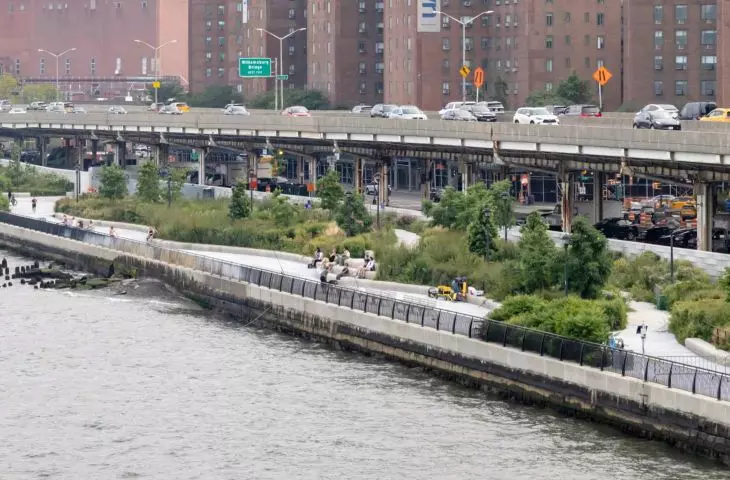
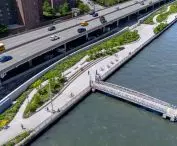
Located in a FEMA flood zone, the project combines levees, walls, sliding gates and raised park areas into one integrated system of protection. But in this case, the engineering didn't lock itself into concrete forms. It has become part of the city - the greenery, paths and terraces seamlessly form a landscape that does not deter, but invites.
The opening of East River Park is the first physical manifestation of a decade of work and vision - an archipelago of parks forming an undulating, raised landscape, or "parkipelago." Instead of separating the city from the waterfront, we designed a space that invites people in, combining flood protection with the everyday experience of living by the river.
- Says Bjarke Ingels,
founder and creative director of BIG
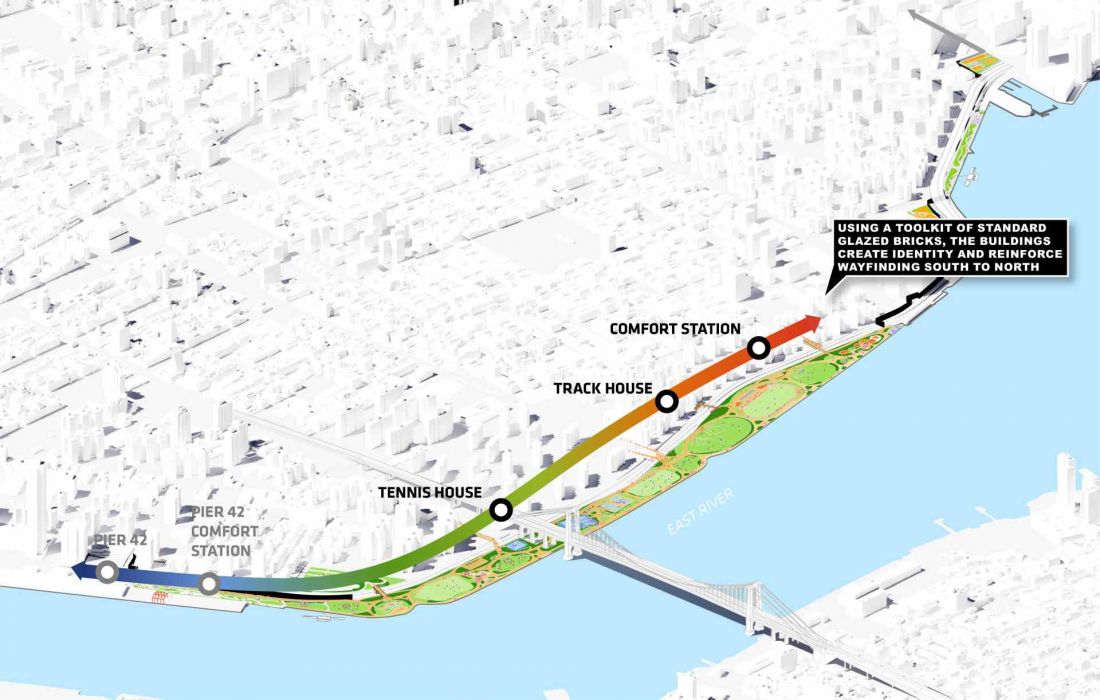
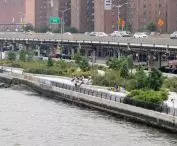
East River Park - the project combines embankments, walls, sliding gates and raised park areas into one integrated protection system
© Bjarke Ingels Group: BIG
"Parkipelag" - a landscape that lives
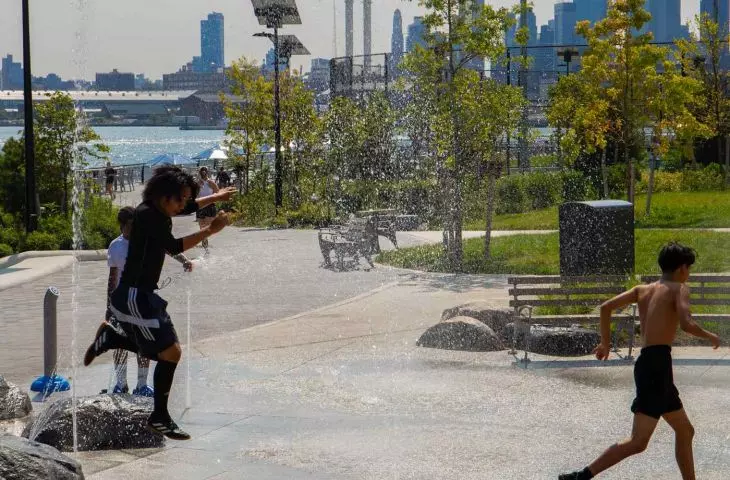
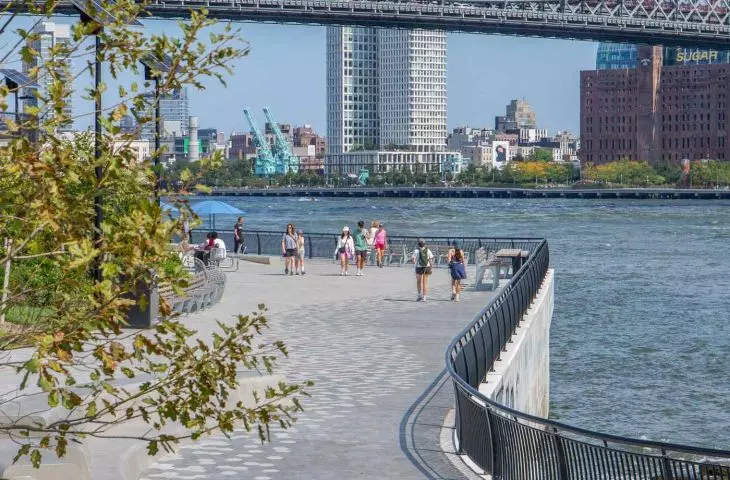
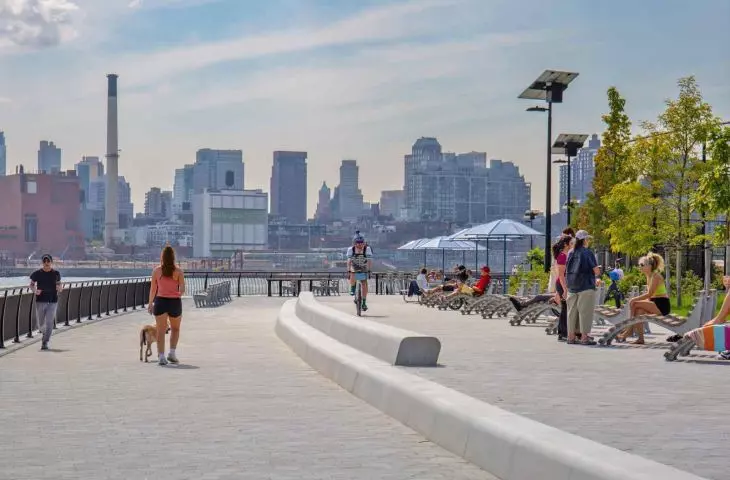
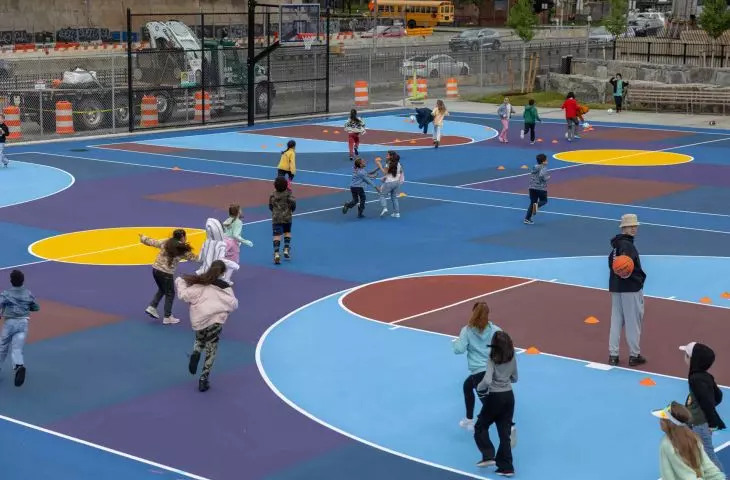
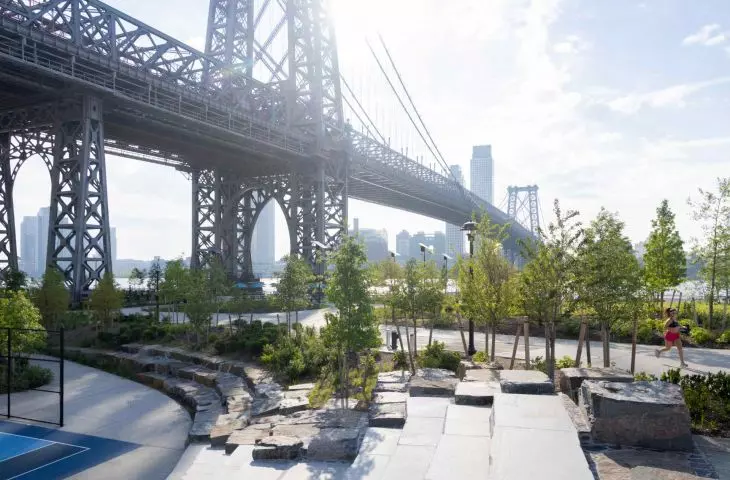
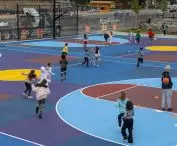
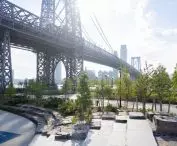
The central theme of the project was the idea of a "parkipelag" - a series of interconnected raised green spaces along the East River. Each has its own character and serves different needs: from family picnics to sports, from strolling to quietly observing the river. Raising the ground by 2.5-2.7 meters protects the city from flooding, and at the same time opens up new perspectives. Among the plantings - 600 trees and more than 21,000 shrubs, grasses and perennials - are playgrounds , recreational lawns, water zones and walking paths that naturally blend into the waterfront. The Delancey Street and Corlears Hook Park bridges create new connections between the city and the river - ones that previously existed only in the plans of urban planners.
Our coastal preservation projects are creating more and better recreational opportunities while protecting open space - this time with a new amphitheater, tennis courts and the Corlears Hook bridge. The East Side Coastal Resiliency Project is creating safer, greener and friendlier communities for New Yorkers.
- Says Eduardo del Valle,
acting commissioner of NYCDDC.
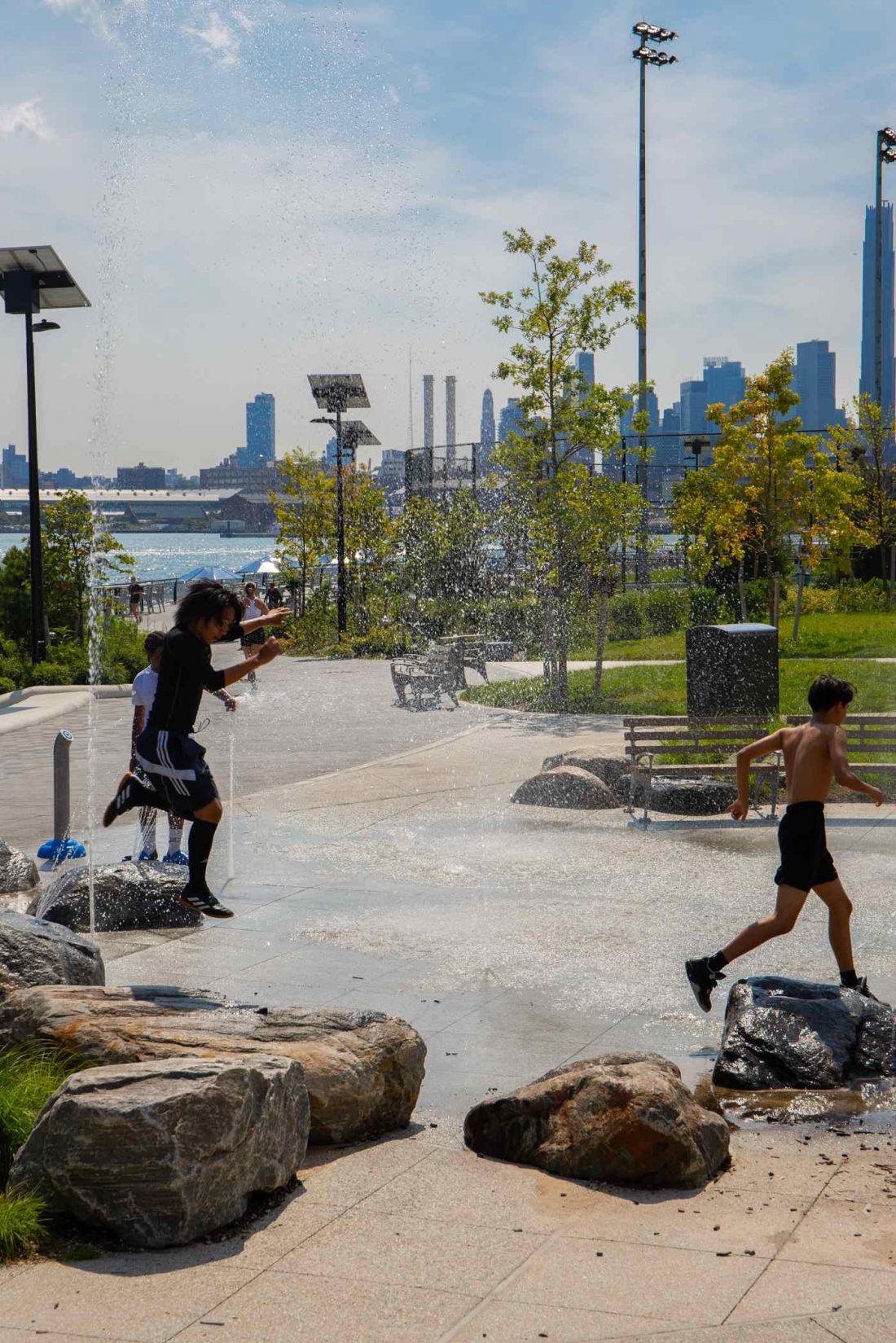
East River Park - among the plantings - 600 trees and more than 21,000 shrubs, grasses and perennials - included playing fields, recreational lawns, water zones and walking paths
Photo: DDC/Matthew Lapiska © Bjarke Ingels Group: BIG
The projection and rhythm of the space
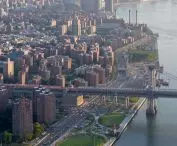
The project is an example of architecture that does not so much "stand" as "flow" - along the river, between the city and the water. Its plan is subordinated to the natural topography, taking advantage of height differences and gentle slopes. The park is formed by terraces, ramps and pedestrian routes that seamlessly connect to the urban street grid.
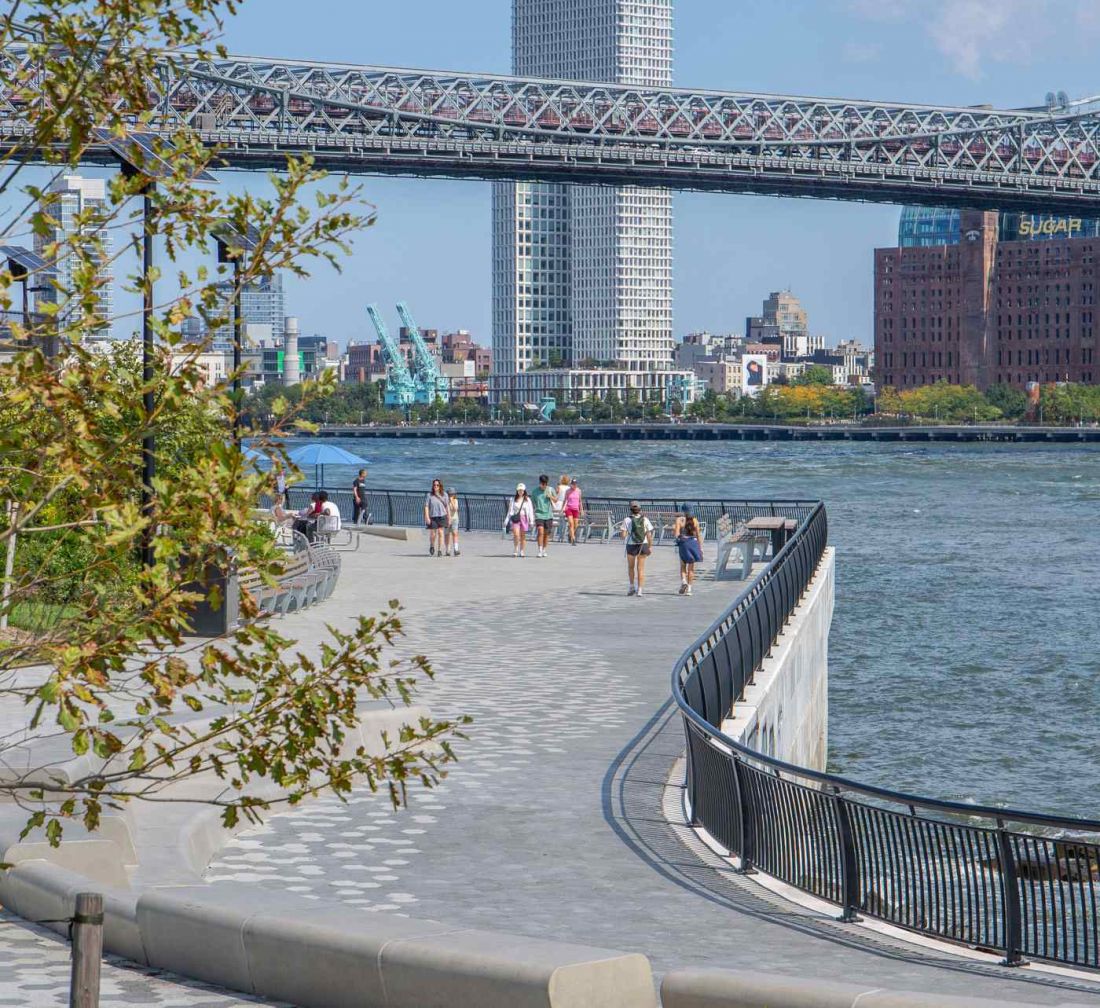
The project is an example of architecture that does not so much "stand" as "flow" - Along the river, between the city and the water
Photo: DDC/Matthew Lapiska © Bjarke Ingels Group: BIG
This fluidity can also be seen in the massing. The east bank has gained a line composed of gentle elevations and depressions, whose form alludes to the movement of the waves. New buildings, such as the Solar One Environmental Education Center, have been integrated into the landscape to become a natural extension of it. Wooden facades, steel details and large glazing create a calm dialogue between the architecture and the surroundings.
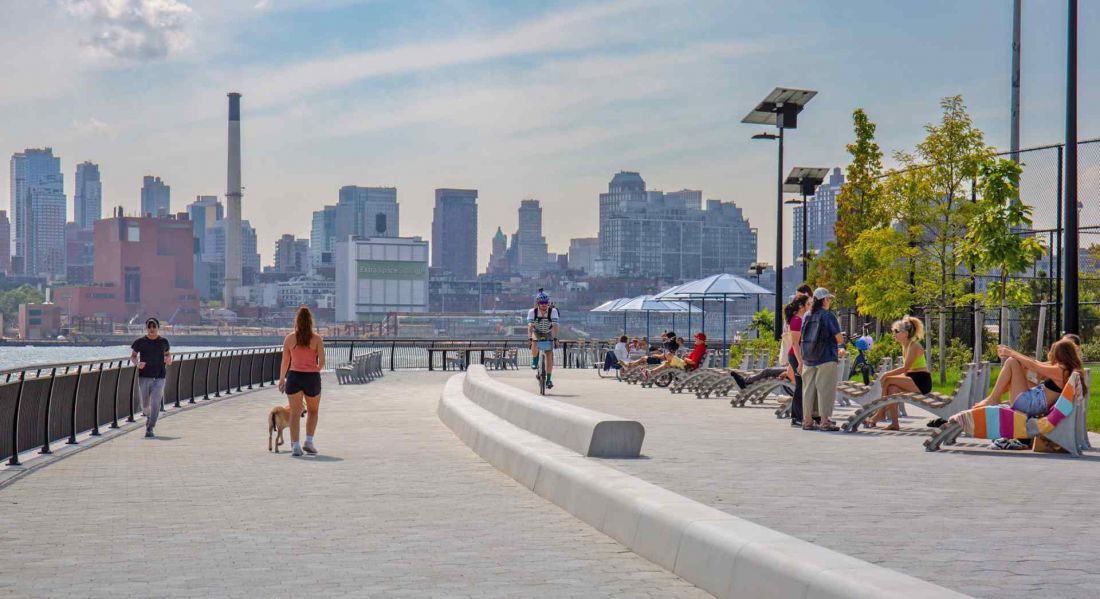
East River Park
Photo: DDC/Matthew Lapiska © Bjarke Ingels Group: BIG
Solar One - the energy of the future
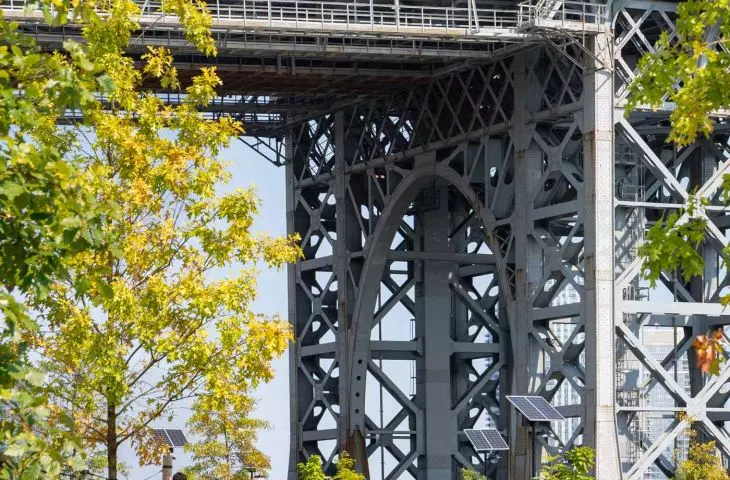
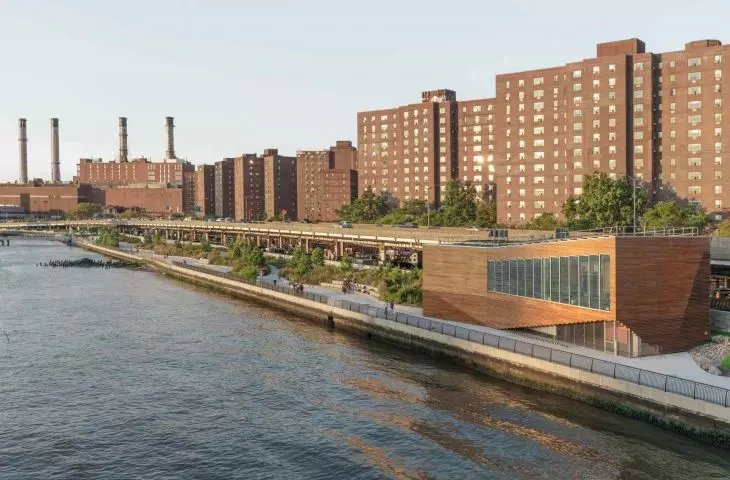
At the north end of the park, on East 23rd Street, the Solar One building has been constructed - the first building in New York to feature a photovoltaic system with energy storage. Designed by BIG, it is a place where environmental education becomes an experience and architecture becomes a teacher. The 596-square-meter building rose 5.8 meters above sea level, reducing the use of concrete and using recycled steel and FSC-certified wood. The lower parts were shielded with openwork grilles so that water can flow freely in case of floods. The teaching rooms have views of the East River and Brooklyn, and a 21 kW solar installation allows the facility to function even during power outages. It's a space that combines technology with nature - a laboratory that is itself part of an experiment. Solar One is not just a building; it is a symbol of urban resilience and responsibility.
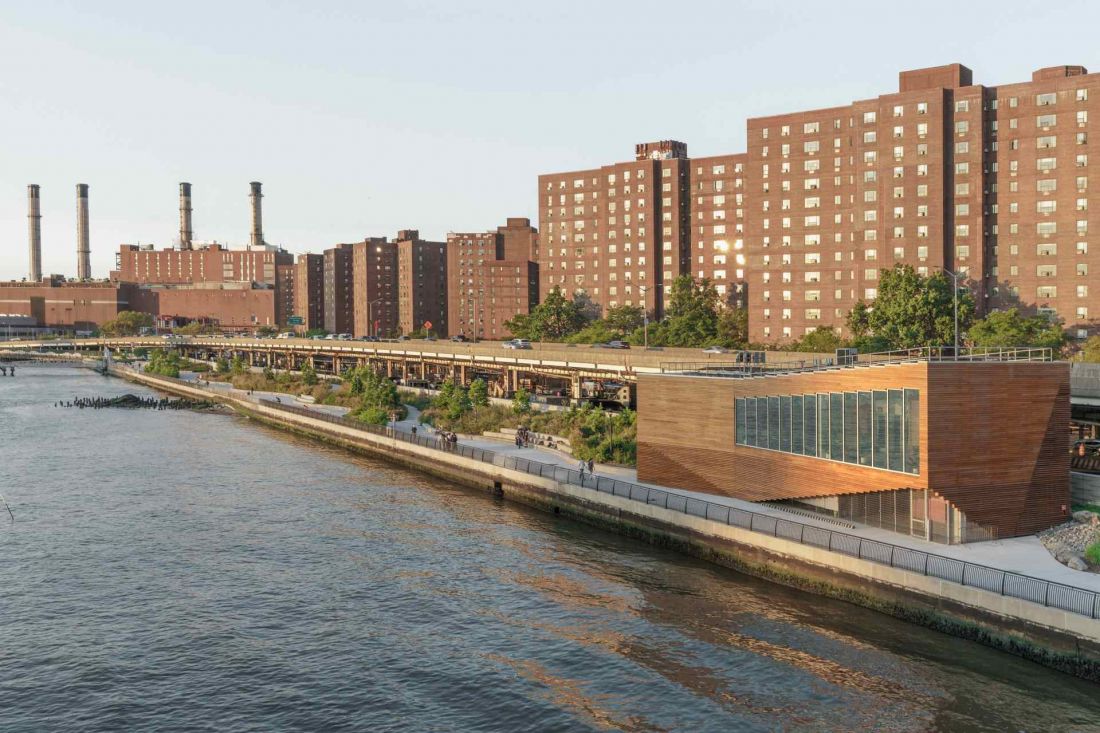
Solar One
Photo: BIG/Foad Sarsangi © Bjarke Ingels Group: BIG
Science, landscape, everyday life
The Solar One center is also an extension of the park - its terraces and gardens become part of the educational landscape. It's where STEM classes for students, environmental workshops and community gatherings take place. The facility is seeking LEED Silver certification, and its presence is changing the way residents view the waterfront - not as a city boundary, but an extension of the city. A 400-meter flood wall with gates and embankments runs right next to it, protecting the surrounding neighborhoods. But even this technical element fits into the rhythm of the space - instead of creating a barrier, it is a natural part of it.
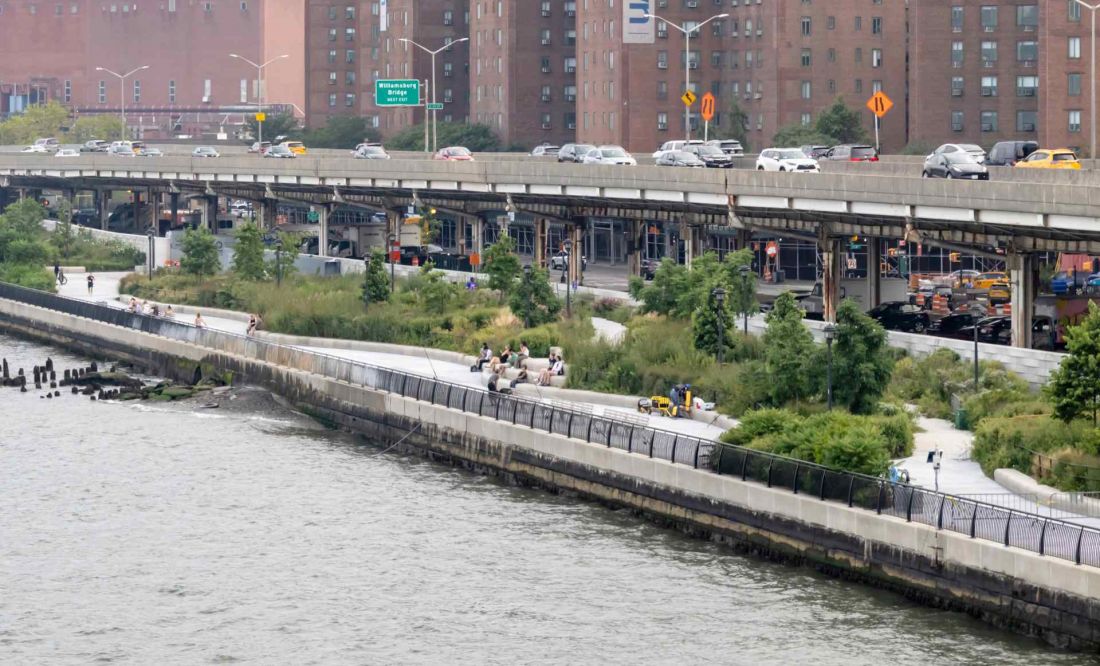
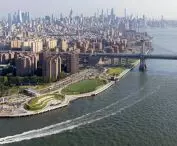
East River Park
Photo by Iwan Baan © Bjarke Ingels Group: BIG
Manhattan that doesn't give up
This project is just the beginning. To the south, work is underway on the North/West Battery Park City Resiliency Project, which will close Lower Manhattan's preservation system. Together, they will create a continuous green waterfront resilient to the effects of climate change - the urban promenade of the future. East River Park shows that modern infrastructure can be a place of life, not just defense. That greenery and steel can work together, and that architecture - instead of separating - can connect.