











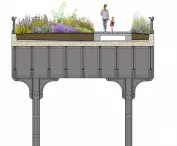

High Line in New York,
designed by James Corner Field Operations,
Diller Scofidio + Renfro (DS+R), Piet Oudolf
The High Line, an urban park created on a disused railroad overpass running through Manhattan's west side, is an example of architecture that does not so much create new space as carefully listen to the voice of the old. The realization by James Corner Field Operations, Diller Scofidio + Renfro (DS+R) and landscape architect Piet Oudolf is not just a landscape project - it's an interpretive gesture that transforms dead infrastructure into the living fabric of the city. And all this in a place that has gone unnoticed for years - suspended ten meters above the ground, between the history and the future of New York.
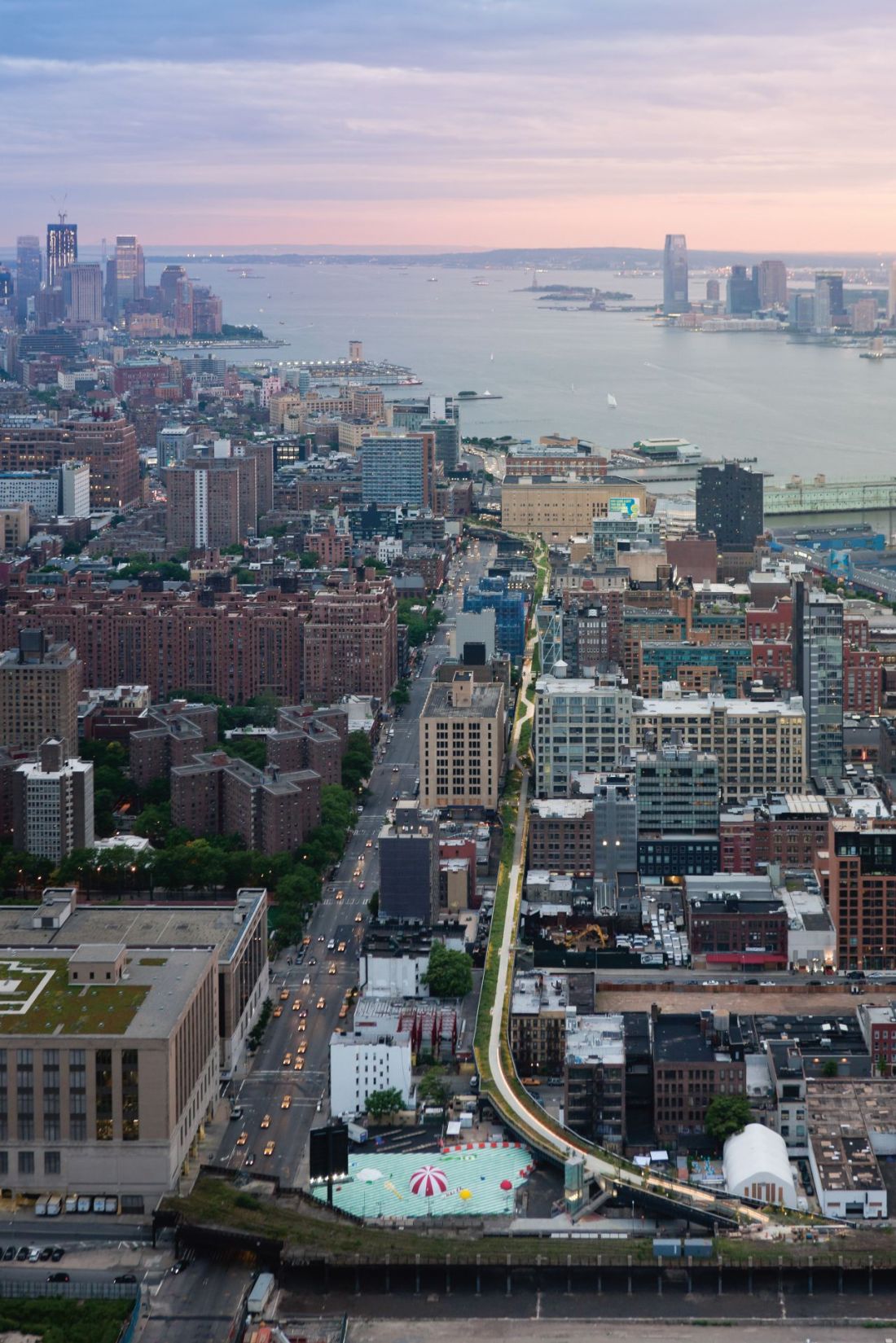
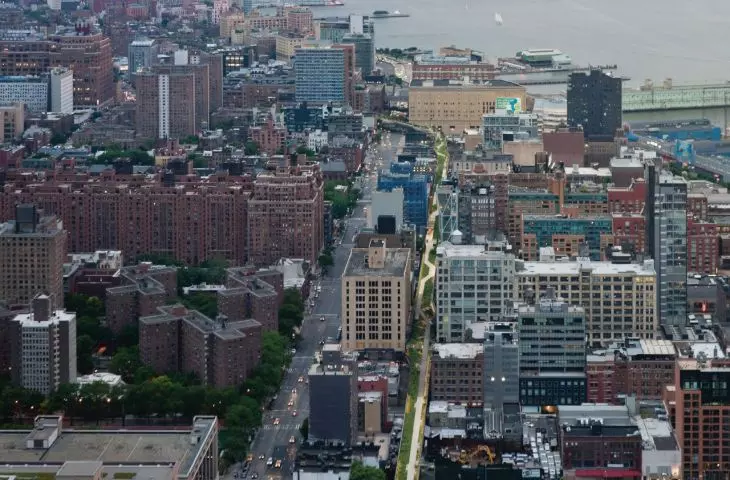
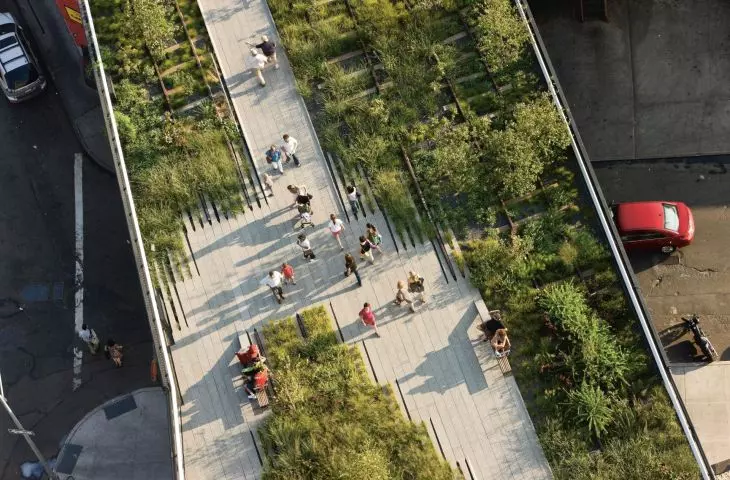
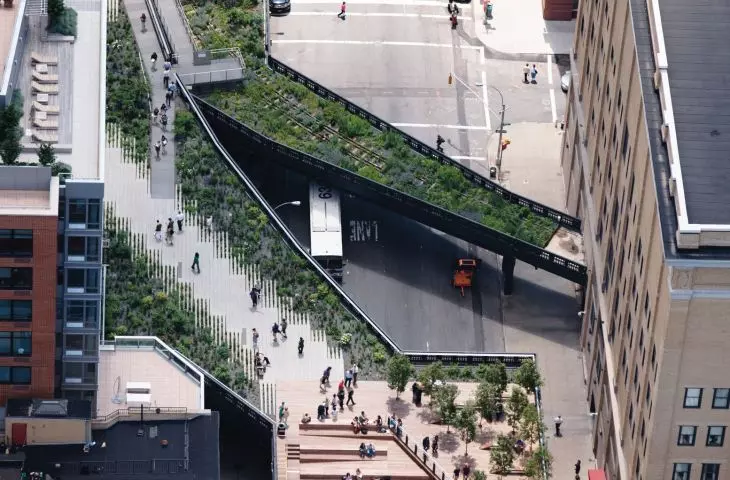
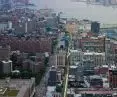
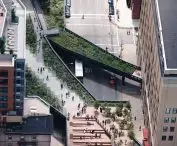
The High Line in New York - a bird's eye view
photo by Ivan Baan © Diller Scofidio + Renfro (DS+R)
From the Avenue of Death to the park above the city
The story of the High Line begins in the mid-19th century - an era when Manhattan, a booming port and industrial center, needed efficient transportation channels. In 1847, a railroad was laid on the western edge of the island, allowing goods from the northern states to be delivered directly to downtown. Initially, trains ran at street level, which - in view of the dense pedestrian traffic - soon proved deadly. 10th Street acquired the grim name "Avenue of Death," and the problem grew with each passing year.
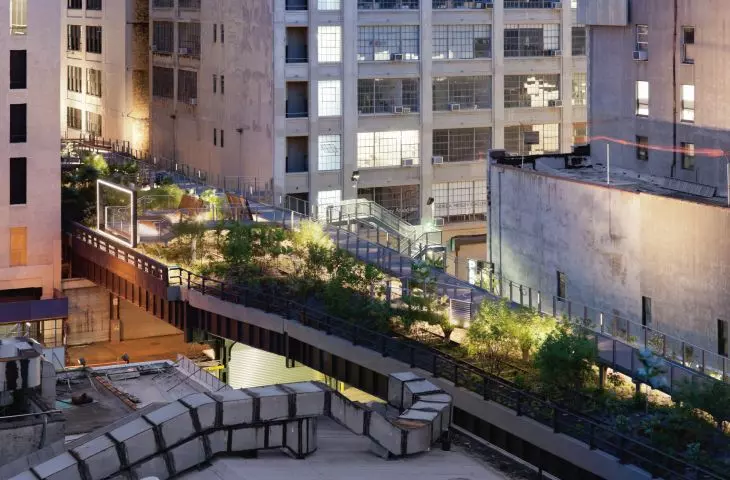
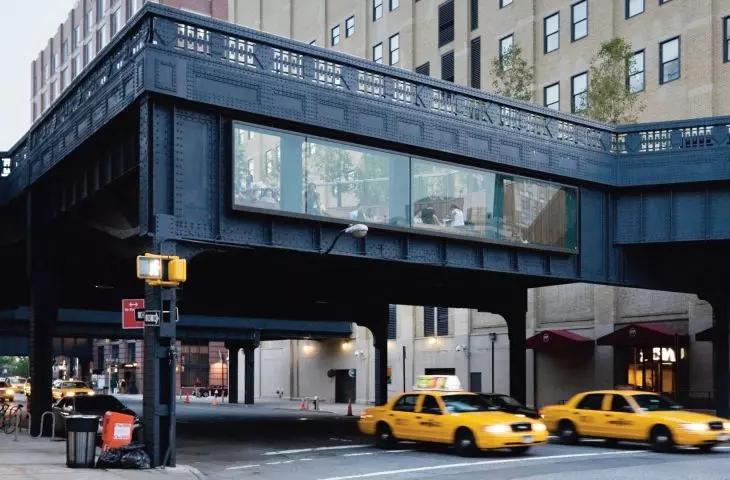
In 1929, a decision was made to build a flyover: a 13-mile-long structure running above ground level, running through the interiors of warehouses and factory halls, so trains could enter the buildings directly. The line was an engineering masterpiece of its time, but it was not immune to economic changes. After World War II, its importance began to diminish - freight transport was taken over by trucks, and the rail route fell into disuse. The last train crossed the overpass in 1980. Soon after, the site began to overgrow with wild vegetation, and the ruin of industrial modernity became a forgotten fringe of the city.
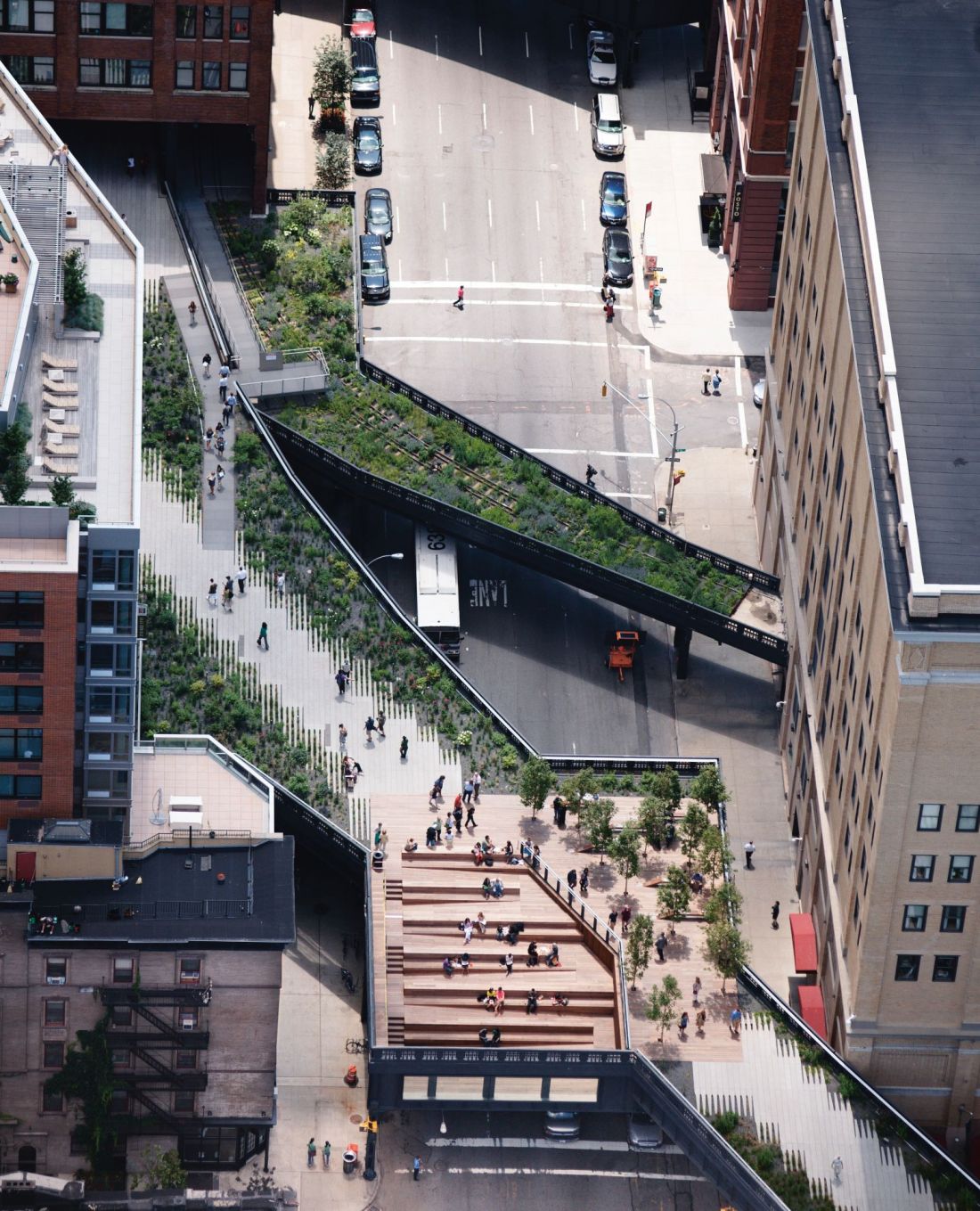
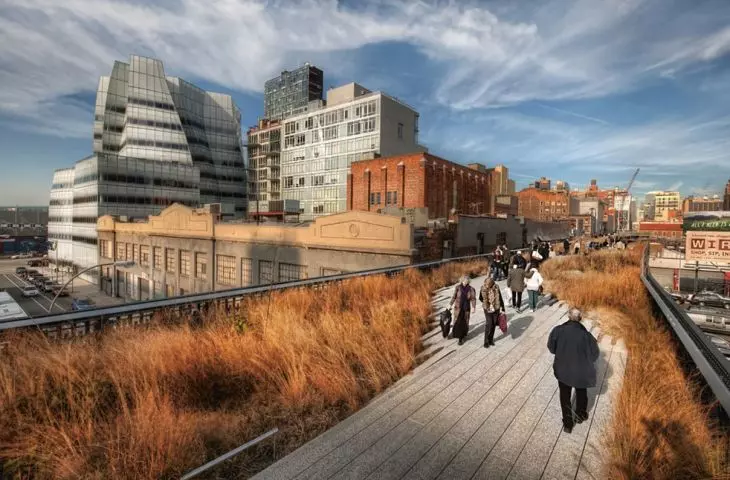
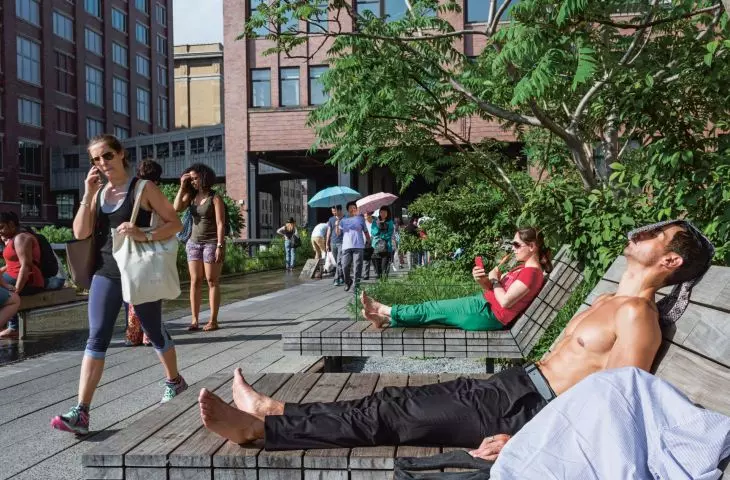
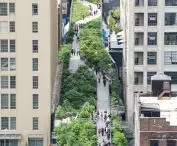
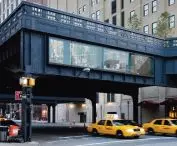
New York's High Line is an urban park created on a disused railroad overpass running through western Manhattan
photo by cameron Davidson © Diller Scofidio + Renfro (DS+R)
the park that grew out of oblivion
In the 1980s, plans were made to demolish the flyover - even sections of it were torn down. It wasn't until 1999 that two Manhattan residents, Joshua David and Robert Hammond, formed an organization called Friends of the High Line, advocating the transformation of the abandoned structure into a public space. On the surface, it was a crazy idea: a neglected, technical ruin, stretching over the Meatpacking District, was to become a park? And yet - the idea won the support of residents, architects and, eventually, city authorities.
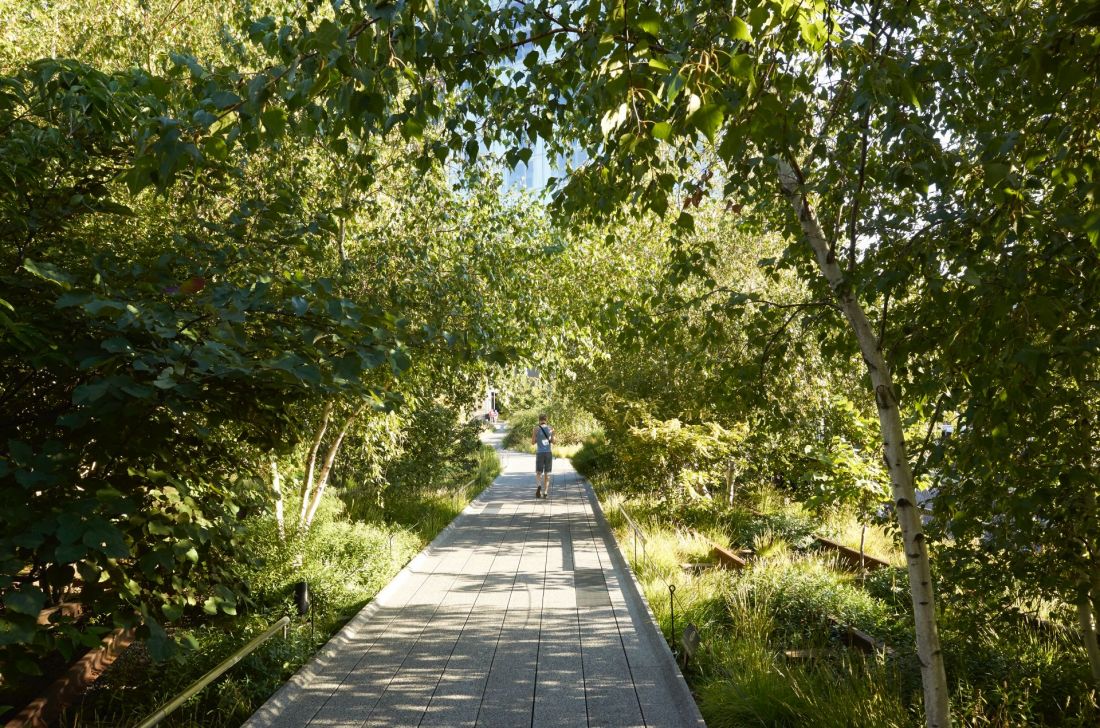
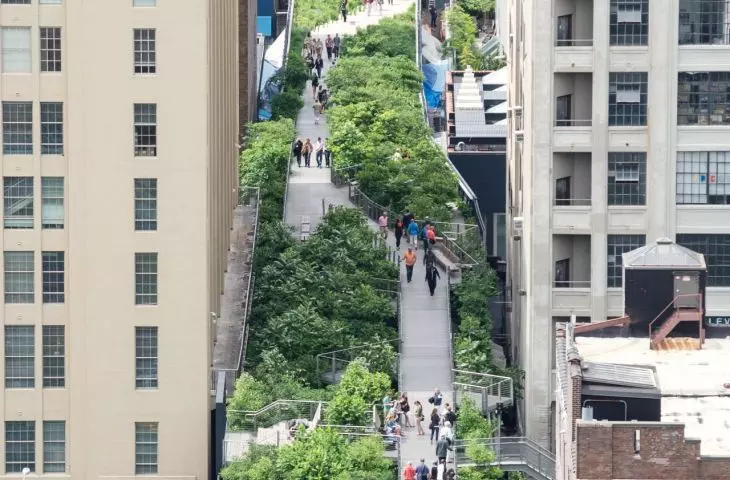
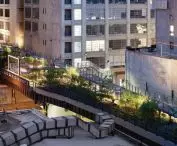
The High Line in New York - where the rails once ran, flowerbeds and varied paths have appeared
Photo: Julien Lanoo © Diller Scofidio + Renfro (DS+R)
An international urban planning competition was held. The winning design - by the aforementioned team - not only did not try to erase the flyover's past, but decided to make it the foundation of the entire concept. The goal was not a decorative metamorphosis, but to create a new, authentic place that preserves the memory of the space, processes it and passes it on.
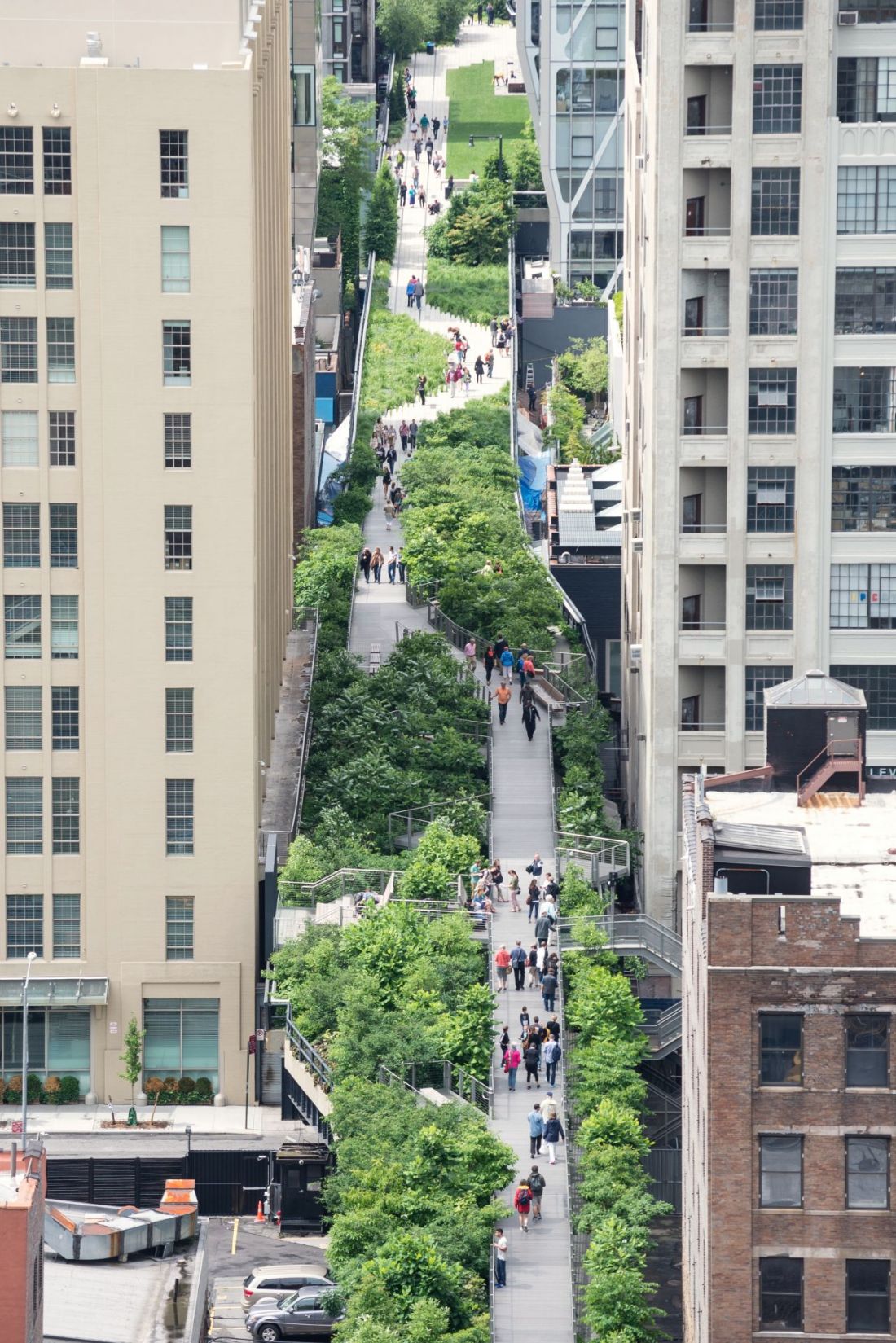
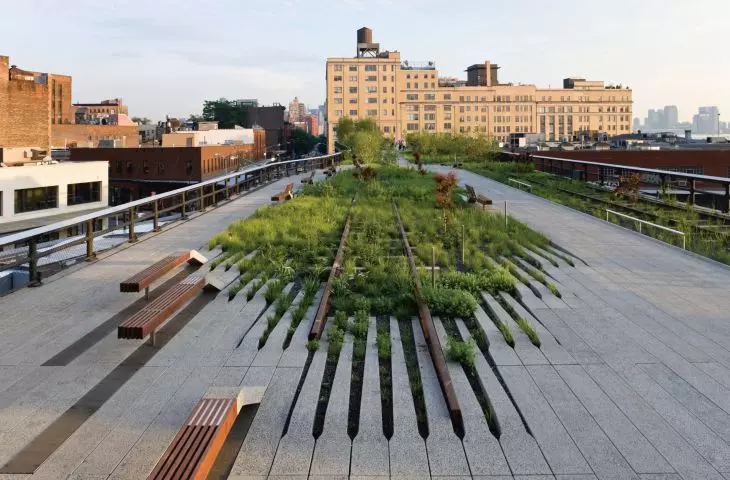
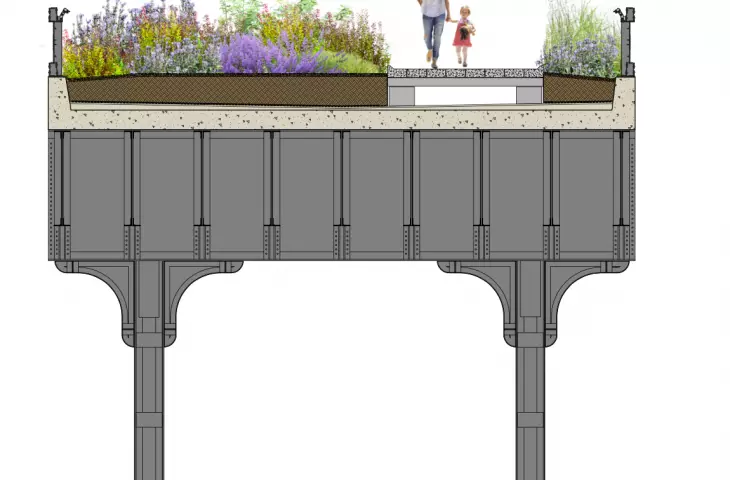
The High Line in New York - prefabricated concrete slabs, with open gaps, allow vegetation to break through the surface
photo by Timothy Schenck © Diller Scofidio + Renfro (DS+R)
landscape between the tracks
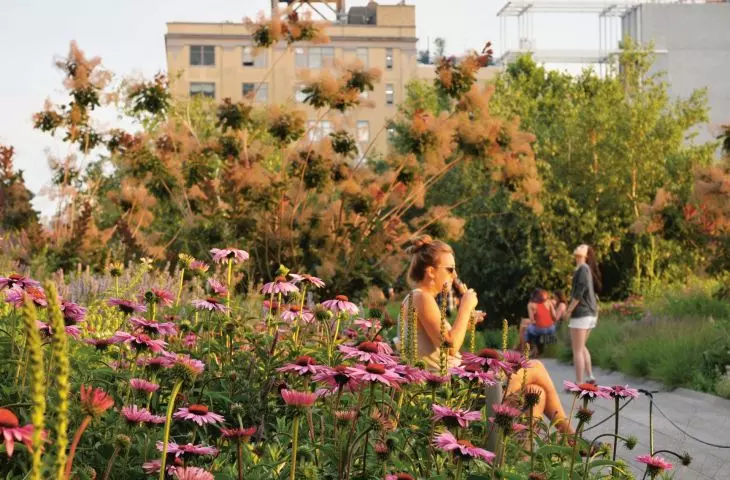
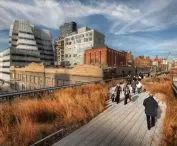
The High Line project is landscape architecture understood as a precise but non-imposing activity. The language of the park is textures, materials, landscaping, plant rhythms and traces of former tracks. Prefabricated concrete slabs, with open gaps, allow vegetation to break through the surface, as if nature were reclaiming the city on its own. Where rails once ran, flowerbeds and paths of varying texture have appeared. Benches resemble former railroad turnouts, and the line of tracks becomes the compositional axis for the entire establishment.
Microhabitats - dry and wet, sunny and shady, sheltered and exposed to the wind - havebeen arranged along the park, which together recreate the biodiversity that spontaneously appeared here during the years of neglect. Importantly, the space does not impose uniform routes - visitors can move freely, sometimes even intuitively. The High Line doesn't lead by the hand - it lets you explore.
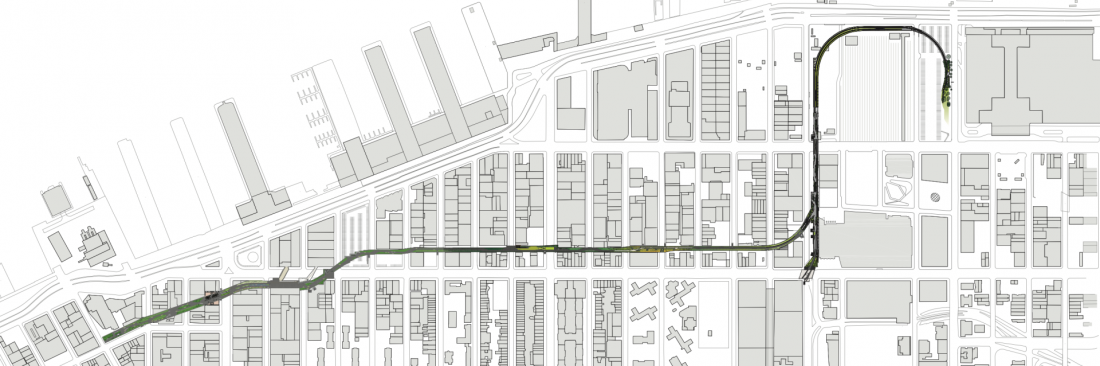
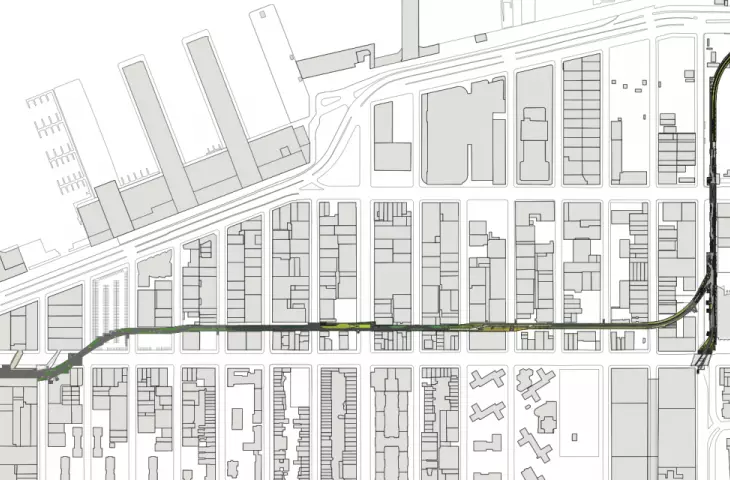
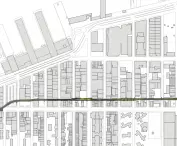
The High Line in New York - park route plan
© Diller Scofidio + Renfro (DS+R)
the city that learned to look up
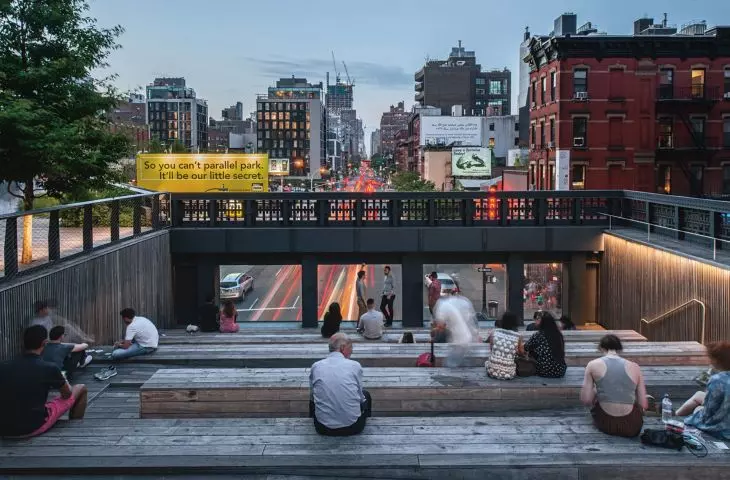
Redevelopment began in 2006. Three years later, the first section of the new park opened, with subsequent sections being opened successively until 2019. The city invested $115 million in the project , but the results quickly exceeded expectations: The High Line generated more than $5 billion in investment and attracted 12,000 jobs. It has become a tourist attraction, a walking space and an arena for city events. In 2024, it was visited by eight million people.
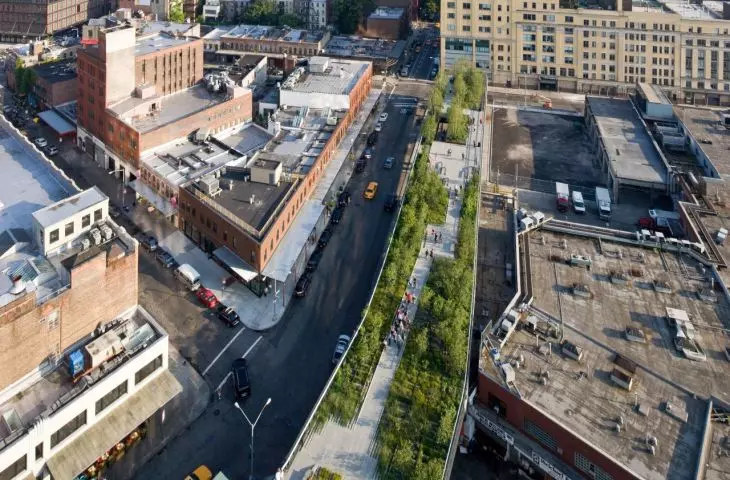
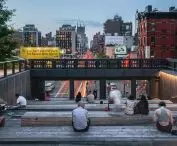
Thanks to the project , the neighborhood, once mired in post-industrial lethargy, has become one of the most desirable parts of the city. The High Line has also regained life in its neighboring buildings - many of them have been transformed into apartment buildings and galleries, while some have become workplaces for creatives, start-ups and cultural institutions. The High Line acted as a catalyst - it triggered processes that had long remained dormant.
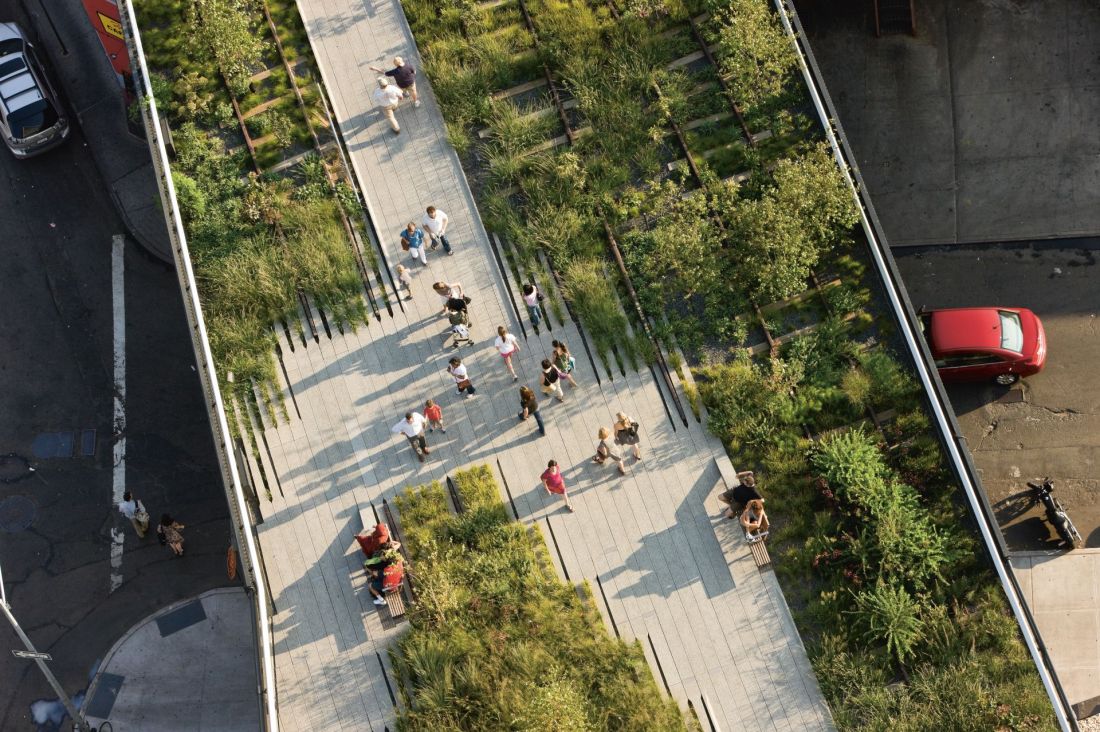
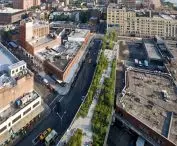
High Line in New York
Photo by Ivan Baan © Diller Scofidio + Renfro (DS+R)
more than a park
The High Line is not just a New York case - it's a global benchmark. Cities such as Paris (with Promenade Plantée), Seoul (with Seoullo 7017), Chicago and Sydney have followed in its footsteps. Each of them, inspired by the Manhattan project, is trying to find its own language for transforming disused infrastructure into a living common space. Importantly, the High Line also raises questions about the price of such transformation: gentrification, displacement of former residents, and the boundaries between accessibility and commercialization.
Elaborated: Anastazja Gibas
Illustrations courtesy of studio Diller Scofidio + Renfro (DS+R).