







#IconsofPolishArchitecture
Dancing in the basement, bathroom in the room, Dutch queen, elevator, heating, marbles and alabaster - sanatorium "Patria" in Krynica-Zdrój was an icon of luxury, a modernist pearl of one of the most popular spas in Poland. What determined its creation?
Sanatorium "Patria" was created on the initiative of Jan Kiepura - a Polish tenor of international fame. For the location of his investment the singer chose Krynica-Zdrój - a pearl among spas, the most fashionable in the interwar period, which he visited regularly. "Patria", meaning homeland, was to be Kiepura's tribute to the country he missed during his long business trips, singing in opera houses in Vienna, Milan, Paris or even Buenos Aires and Rio de Janeiro.
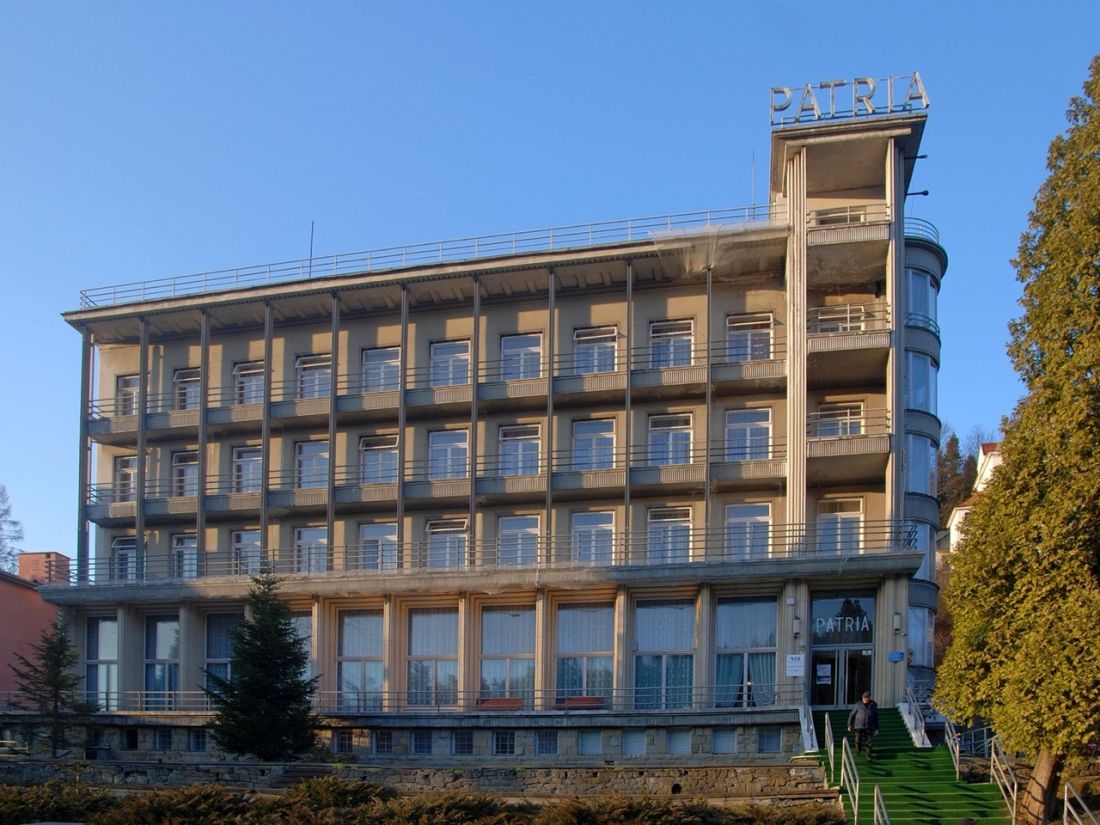
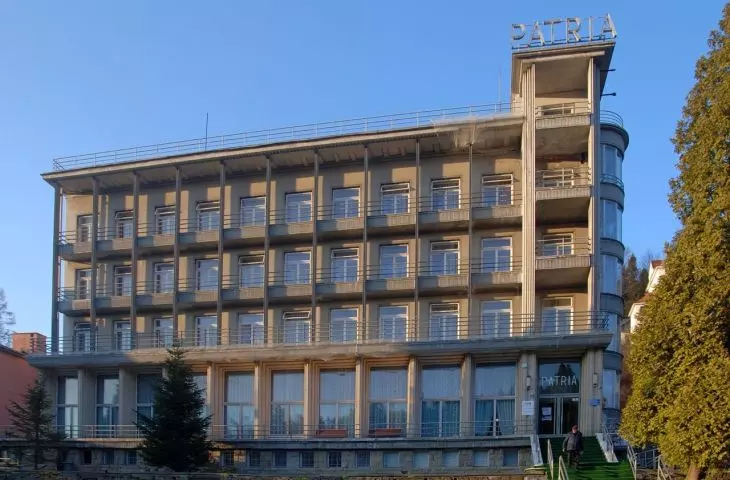
Patria sanatorium, 2018.
Photo: Henryk Bielamowicz © CC BY SA 4.0 EN | Wikimedia Commons
In 1932, Kiepura commissioned the design of the sanatorium from Bohdan Pniewski - architect, professor at the Warsaw University of Technology, and author of the 1928 Ołdakowski Villa in Warsaw. In addition, Pniewski had already won prestigious competitions, such as the building of the Polish Embassy in Sofia and the Temple of Divine Providence, and he also designed the pavilion of the Boguslaw Herse Fashion House at the General National Exhibition in Poznan.
"mouth is silent, soul is singing".
"Patria" was built in the eastern part of the city, at the northern foot of Park Hill. The beginning of the 20th century was a period of thriving development in Krynica. In 1909 Rudolf Zuber, a geologist from Lviv, discovered a new source of healing water - one of the strongest alkaline sorrels in Europe. Already in 1928 there were 164 pensions, hotels and private villas in Krynica . It was at this time that momentous brick blocks of new pensions began to be built among the small wooden villas.
Building a hotel in Krynica. 200 rooms with a theater room, a restaurant, bathrooms and telephones in the rooms, carpets, two elevators, in a word, luxury. It is expected to cost $160,000 - my money and some loan. I'm doing it for the old ones, well, and a good and secure investment of money
- wrote Kiepura in the letter, according to the Sączopedia website.
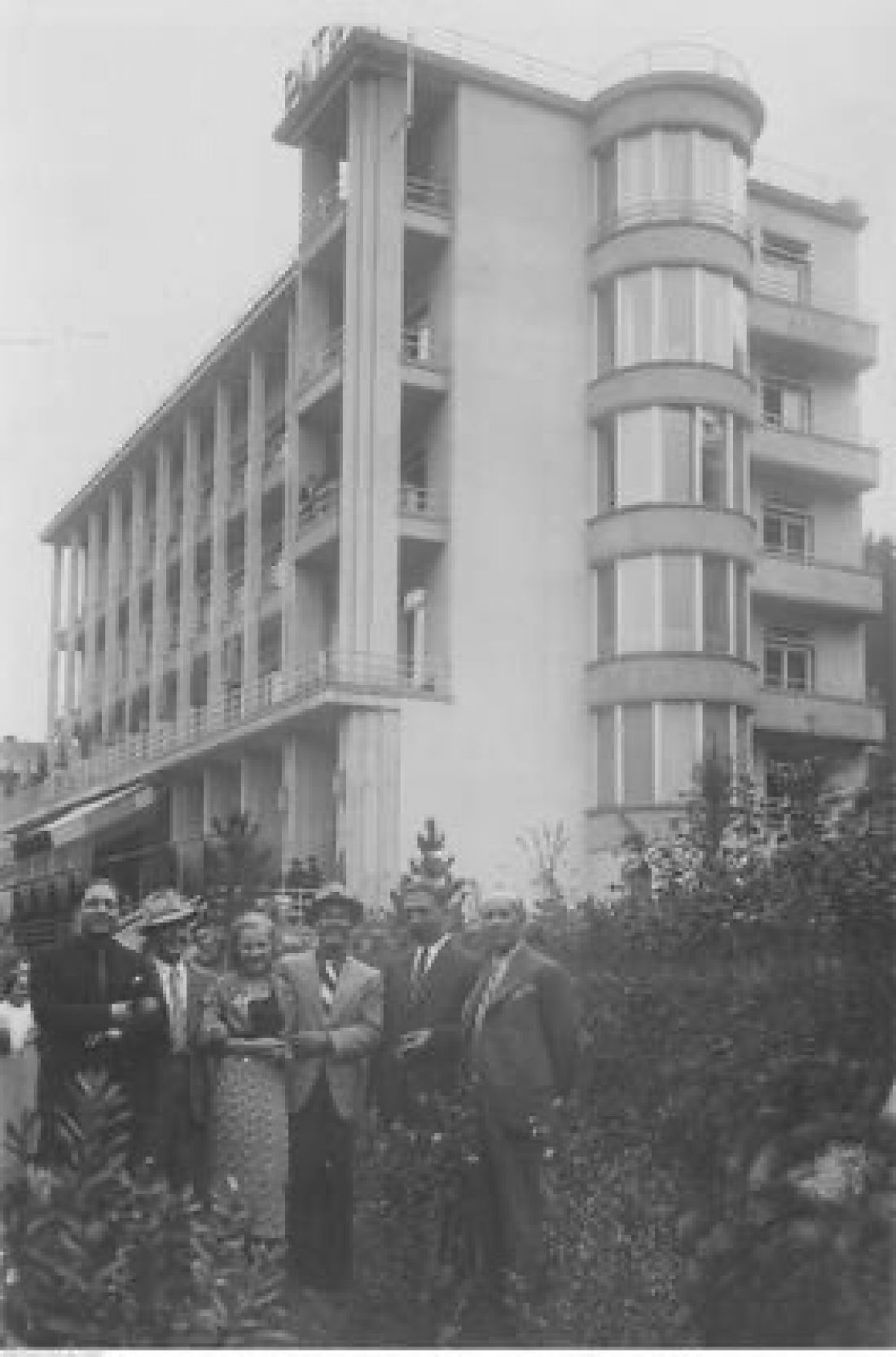
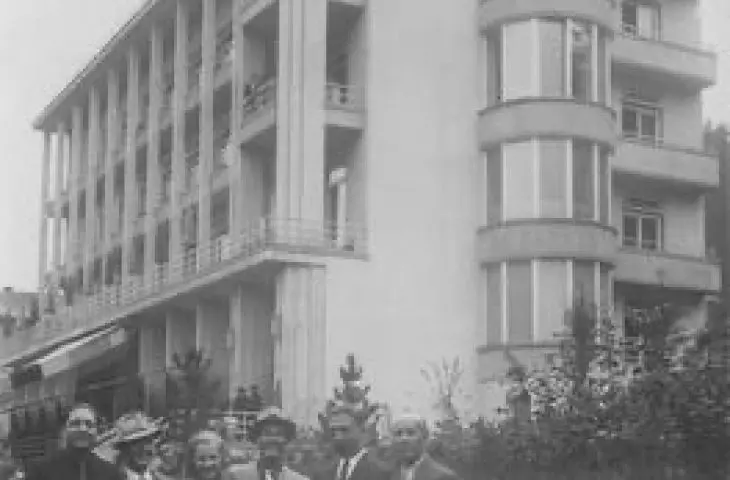
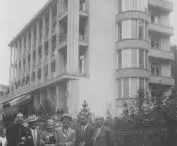
From left: conductor Sabino, singer Wladyslaw Kiepura, singer and actress Marta Eggerth, Jan Kiepura, Hamburg Opera impresario Strohm, singer Stefan Belina-Skupniewski.
Photo: Atelier of Artistic Photography Z. Garzynski, Krynica | Koncern Ilustrowany Kurier Codzienny - Illustration Archive | State Archives.
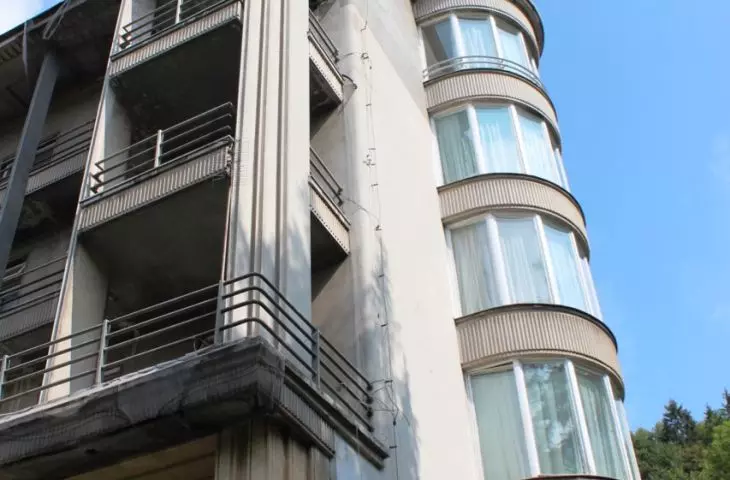
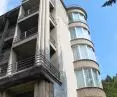
Bohdan Pniewski designed the impressive building in modernist style, in line with the trends already prevailing at the time. Its four floors float on thin reinforced concrete pillars. The first floor is elevated by a mezzanine and invites with tall windows. The other three floors are flanked by balconies, and the flat roof serves as a terrace. From above the revolving main door rises the building's dominant feature, separated by pillars, rising above the roofline. A rounded bay window protrudes from the eastern façade - it houses the window recesses of the apartments on each floor. The whole building is crowned by a neon sign "PATRIA".
Construction of the sanatorium began in 1932, took only two years and cost $160,000 - the cost was covered by Kiepura's income from numerous concerts. Opened in 1935, "Patria" was the singer's only home in Poland, so he visited quite regularly. When he arrived, crowds of fans would gather under the terraces of the sanatorium. According to their request, so the melody of songs such as "Brunetki, blondynki" and "Usta milczą, dusza śpiewa" spread around the area.
apartments not only for the elite
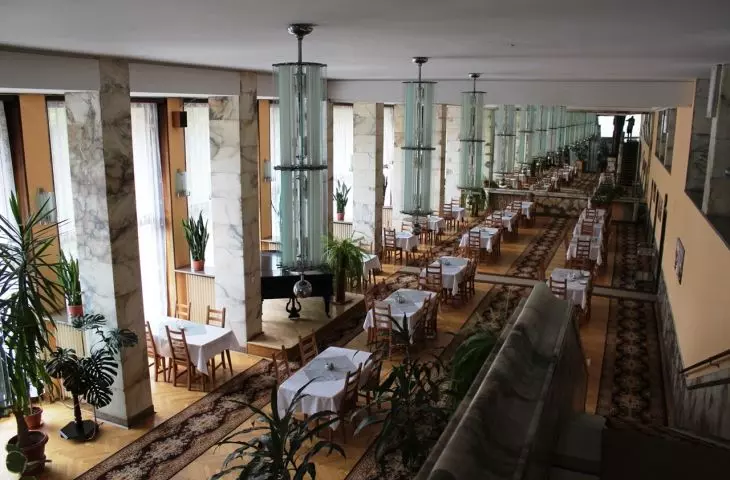
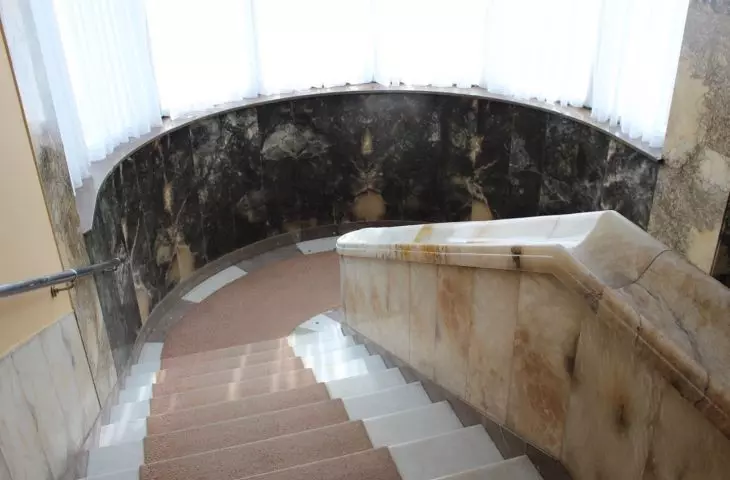
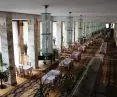
Music also filled the interior of the building, which served as a meeting place for artists and politicians, and hosted miss elections. It was dominated by wooden parquet floors, harmonizing with marble columns and alabaster accessories, supplied by the company L. Tyrowicze from Lviv. There was also fashionable chrome steel. The opulence of the investor was highlighted by an elevator, which was still a rarity in the 1930s, and central heating.
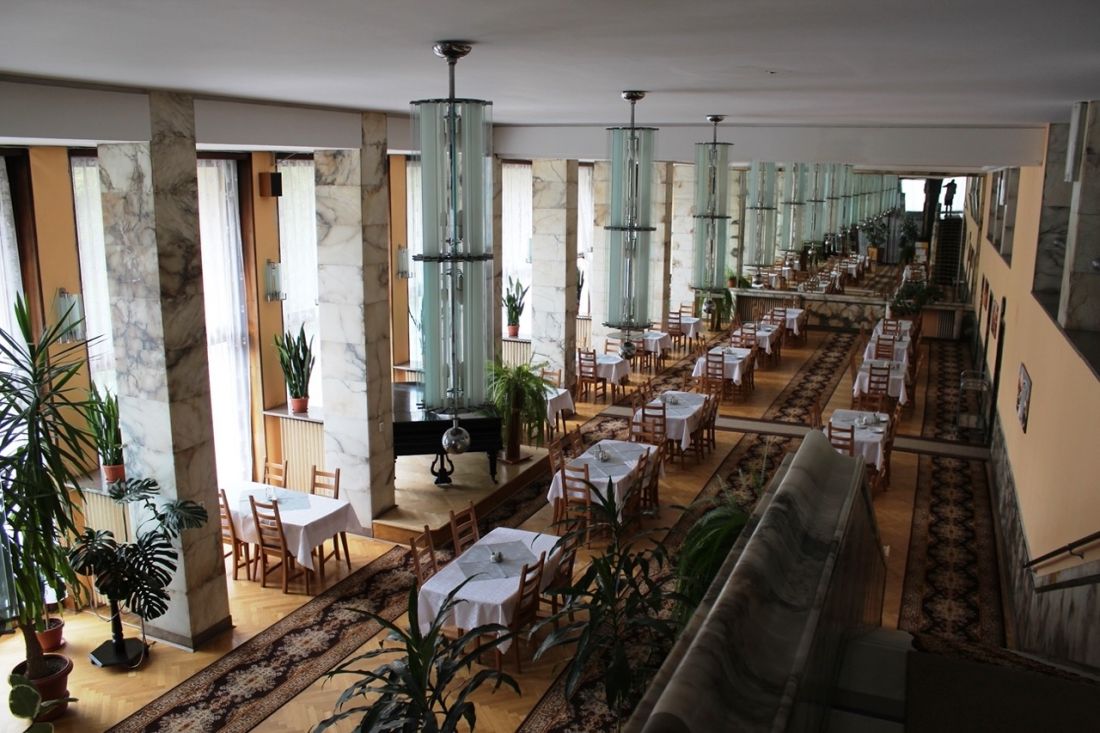
The dining room, 2016.
Photo: Rafał M. Socha © CC BY SA 4.0 PL | Wikimedia Commons
Although the lavishly finished sanatorium hosted famous artists - for example, Eugeniusz Bodo, a popular interwar actor, slept there - less affluent people also had the opportunity to enjoy its charms. In addition to spacious, sunny suites, Patria also offered smaller rooms without bathrooms at much lower prices.
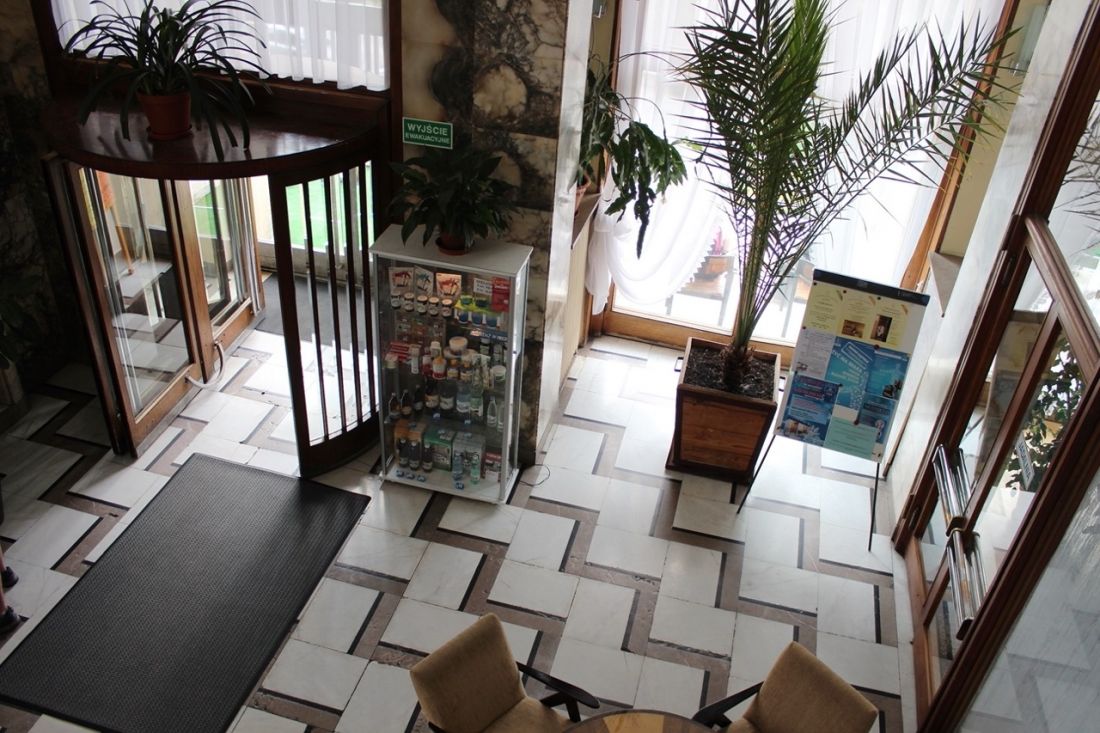
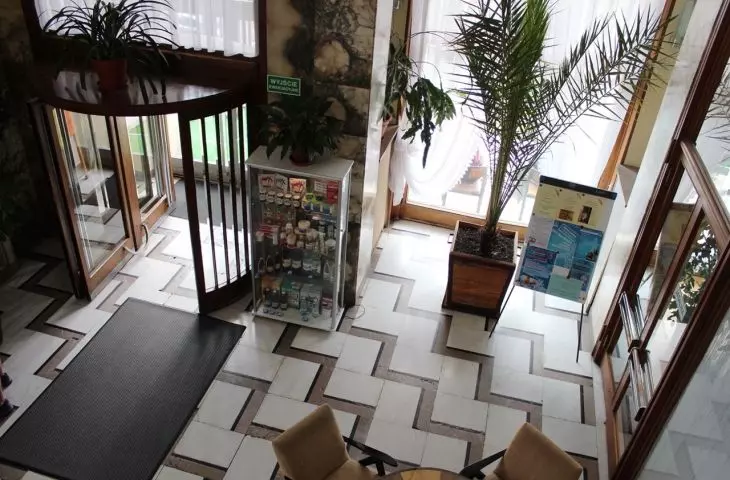
front door
Photo: Rafał M. Socha © CC BY SA 4.0 PL | Wikimedia Commons
A bridge room was available on the mezzanine floor of the first floor, and in the basement there was a bar with a dansing room and an oven where bread was supposedly baked for guests.
We had a specialist here, namely a stove maker, who stated unequivocally that bread was never baked here. Jan Kiepura was a great marketer and he told all the customers who were in the building that the bread came from this oven
- told Gazeta Krakowska Krystyna Zywczak, manager of the Patria sanatorium in Krynica
Patria hosted not only Polish visitors on its doorstep. In 1937 it was visited by a Dutch princely couple - Princess Juliana, later Queen of the Netherlands, although she checked in under a fictitious name, was quickly recognized and greeted with a bouquet of flowers. The duchess was treated for infertility in a sanatorium - successfully, as she lived to have four children.
pearl not renovated
The sanatorium's activities were interrupted by the outbreak of World War II. At that time, the Patria building was taken over by the German army. Sources indicate two different functions that the building took on - sanatorium for officers or Hitlerjugend headquarters. After the war, however, the building did not return to the hands of the original owner, but was taken over by the state, and so from then on it operated as a state sanatorium for the masses. Compensation for the nationalized facility Kiepura received in 1965 - was helped by his dual citizenship and an agreement between Poland and the United States concerning citizens who left their property in Poland.
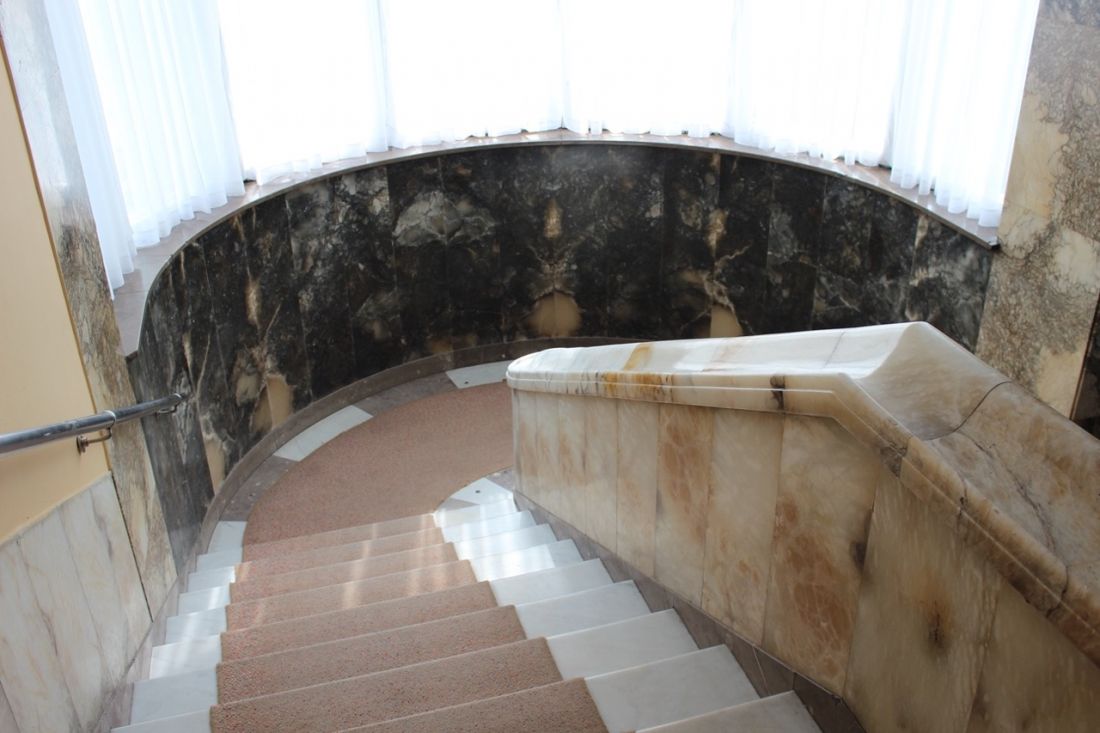
staircase
Photo: Rafał M. Socha © CC BY SA 4.0 PL | Wikimedia Commons
Since 1996, the "Patria" sanatorium has been part of the Krynica-Zegiestow Spa, the same company that owns the Old and New Spa House, the Old and New Mineral Baths, as well as the Jan Pump Room and the Main Pump Room in Krynica-Zdroj.
In 2013, the Patria building is entered into the Małopolska Register of Historic Monuments. Apart from minor renovation work, it has not undergone any major reconstruction to date, and a comprehensive renovation could cost up to tens of millions of zlotys. In 2018, the company Uzdrowisko Krynica-Zegiestow obtained a grant of 250 thousand zlotys from the Ministry of Culture, which was to be used for the renovation of the building's facade, but....
A tender procedure was conducted, but due to a lack of bids the contractor was not selected. Since the grant of 250 thousand zlotys had a specific deadline for settlement, there was no way to meet it after a new tender procedure
- informed Danuta Lelito acting president of the Board of Directors of the Krynica-Zegiestow Health Resort in 2022.
Patria sanatorium in 2024.
Google Maps
Nevertheless, as late as 2021 Patria was still receiving patients. At that time, the price of a two-person suite was between 110 and 140 zlotys (depending on the period of the year). For a stay in a smaller room, one person had to pay between 45 and 65 zlotys. In 2022, people from Ukraine, fleeing the war, took up residence in Patria.
Treatment activities will be resumed when the situation currently faced by people from Ukraine changes, for example, when the war ends
- reported Justyna Stefaniak of the Krynica-Zegiestow Health Resort in 2024.
Currently, the sanatorium is still excluded from hotel and sanatorium use.