







Irish Memorial Park in Montreal,
design: Lemay
An establishment is being built in Montreal that redefines contemporary thinking about memorial spaces in a remarkably conscious way. The Montreal Irish Memorial Park, designed by the Lemay studio in collaboration with the Montreal Irish Monument Park Foundation, transforms the historic Black Rock site into a multi-layered structure that combines landscape architecture, historical narrative and social functions. It's a project that not only restores meaning to a site with unique symbolic weight, but also demonstrates how design can become a tool for community building and dialogue.
Irish Memorial Park in Montreal
©Lemay
Black Rock - a place that demanded a new narrative
The history of this section of Montreal dates back to the mid-19th century. In 1859, during the construction of the Victoria Bridge, Black Rock - a boulder marking the site of a mass grave of some 6,000 Irish immigrants - was discovered here. They died in 1847, fleeing the Great Famine and its consequences. This is one of the earliest and most poignant testimonies of migration forced by humanitarian disaster. For decades, the site functioned on the margins of urban consciousness. Lemay's project does not literally reconstruct the past or lock it into a single meaning. Instead, it proposes an open space - one that allows for both individual reflection and community reliving of history.
The Irish Memorial Park in Montreal
©Lemay
Memorial architecture - between landscape and symbol
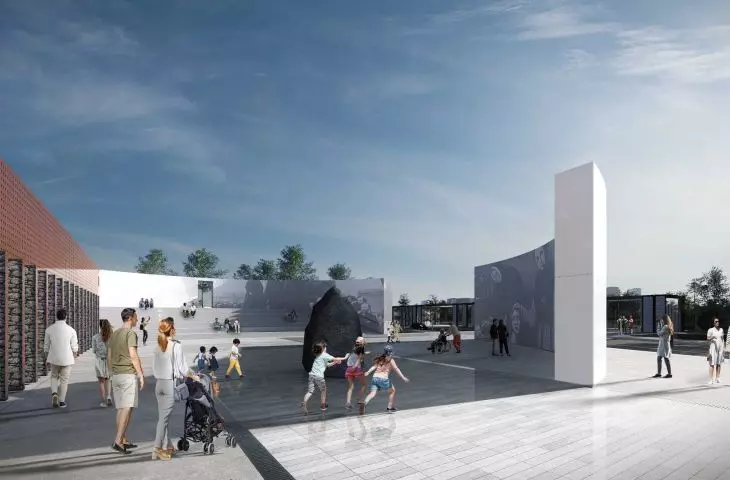
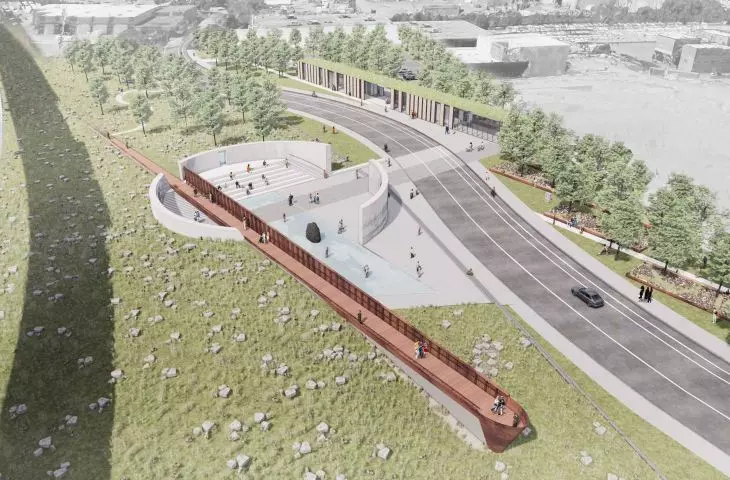
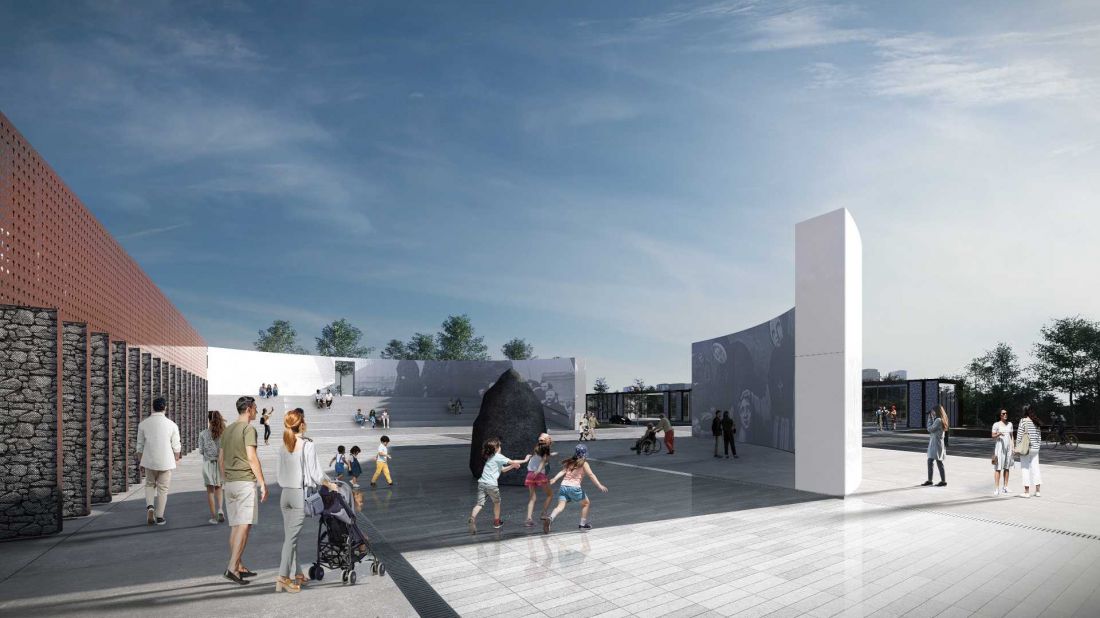
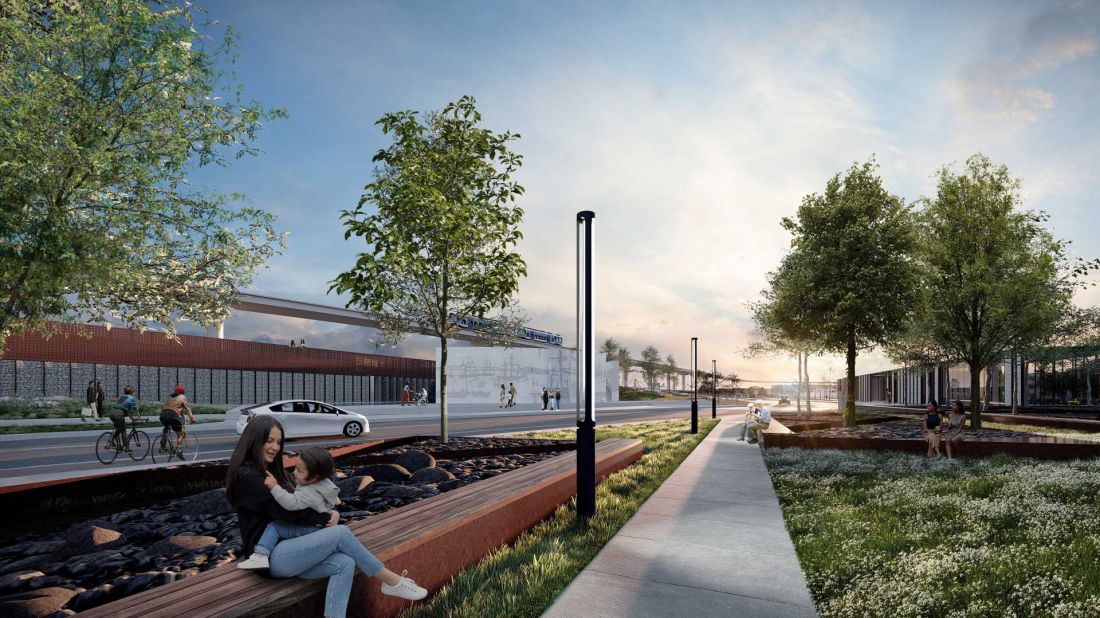
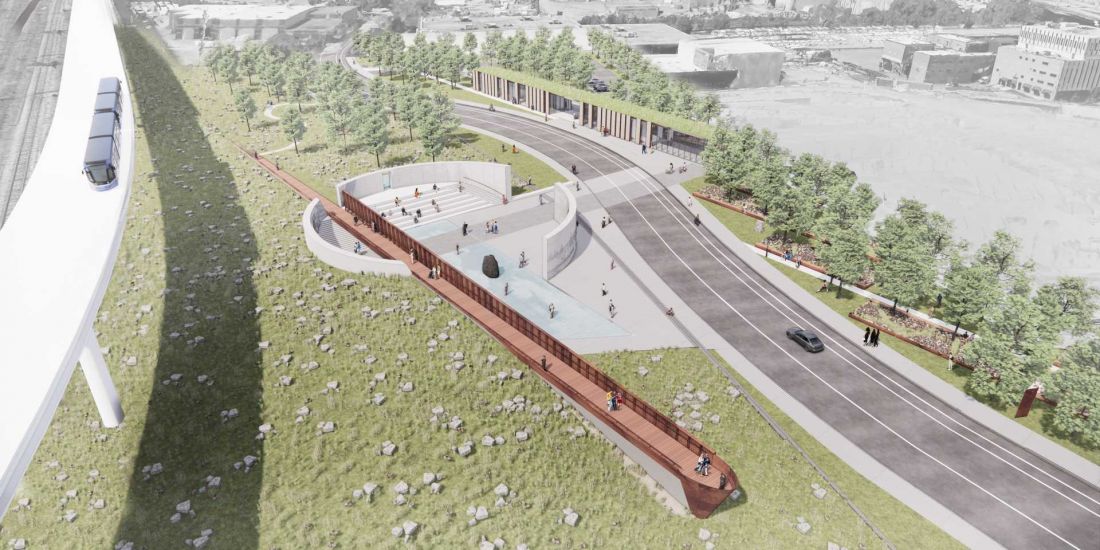
The most important element of the composition is the terraced agora, with Black Rock as its focal point. It is framed by a water mirror - a calm sheet reflecting the sky. This simple yet ambiguous treatment introduces a symbolic tension between the earth and the space above it. The water evokes the experience of a transatlantic voyage, becoming a vehicle for the memory of a journey that ended tragically for many. Light also plays an important role, changing throughout the day and seasons. Thanks to it, the space is not static - it is subject to constant transformation, which reinforces its reflective character.
Irish Memorial Park in Montreal
©Lemay
A wall of remembrance and a gesture towards the Atlantic
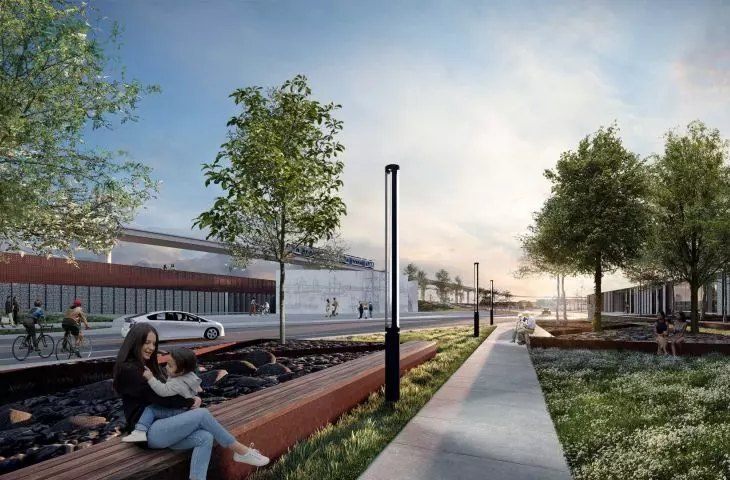
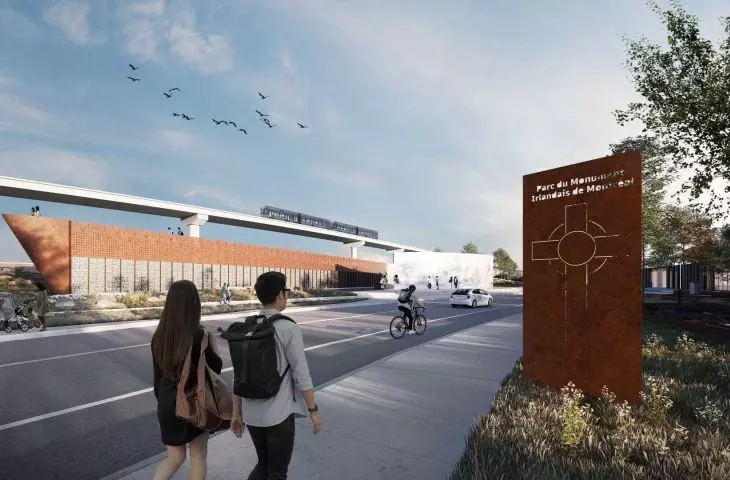
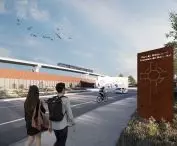
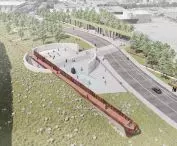
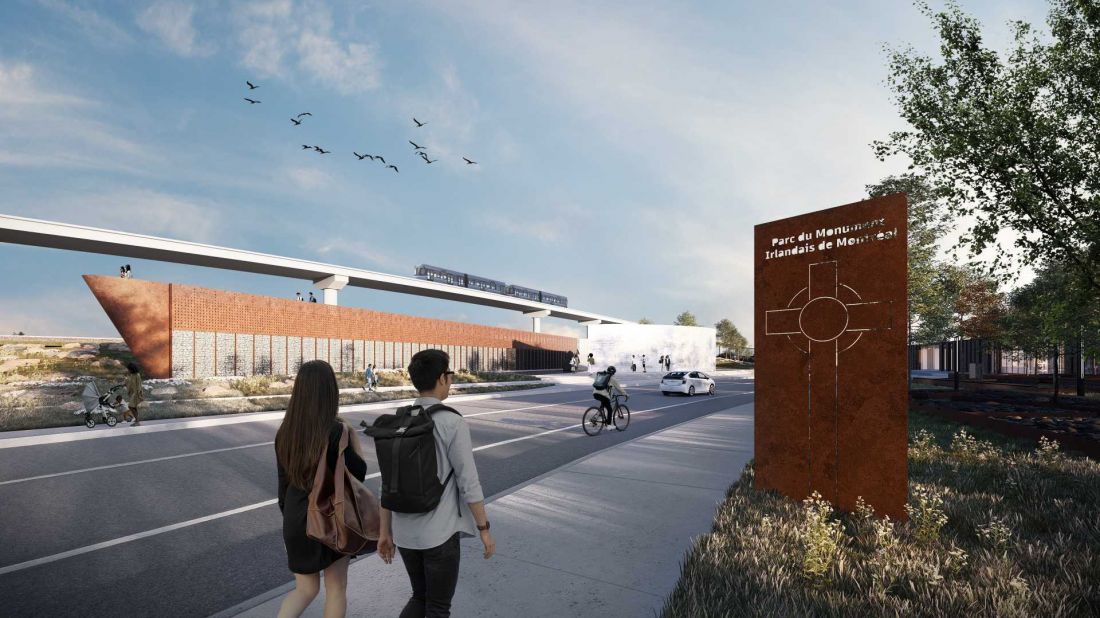
A strong accent of the entire establishment is the memorial wall made of corten steel. Its surface is filled with 6,000 Celtic crosses - each of which refers to a specific, albeit anonymous, story. The material was chosen not by accident: corten, subject to natural patination, allows the structure to age with the site, reinforcing the message about the passage of time. The form of the wall was stretched along the site, bringing to mind the hull of a ship. This compositional direction leads to a bow-shaped belvedere, opening up a view of the St. Lawrence River. It's an unambiguous gesture - symbolically directing the space toward Ireland and the Atlantic, a migration route that permanently changed the city's history.
Projection, plan and form - composition as narrative
The park's spatial layout is based on sequentially guiding the user through successive layers of experience. The plan is defined by clear compositional axes and a system of paths that organize movement and direct attention to key elements of the establishment. The terracing of the area allows for a gradual discovery of the space - from open, green fragments, through more intimate zones of reflection, to the central agora. The linear memorial wall is one of the main axes of the composition, tying the whole together and leading toward the vantage point. In turn, the relationship between horizontal and vertical elements has been balanced in such a way that the architecture does not dominate the landscape, but contributes to its narrative. The whole functions as a coherent system, in which every element - from material to detail - has its justification.
Irish Memorial Park in Montreal
©Lemay
"Fragments of Ireland" - landscape as a carrier of memory
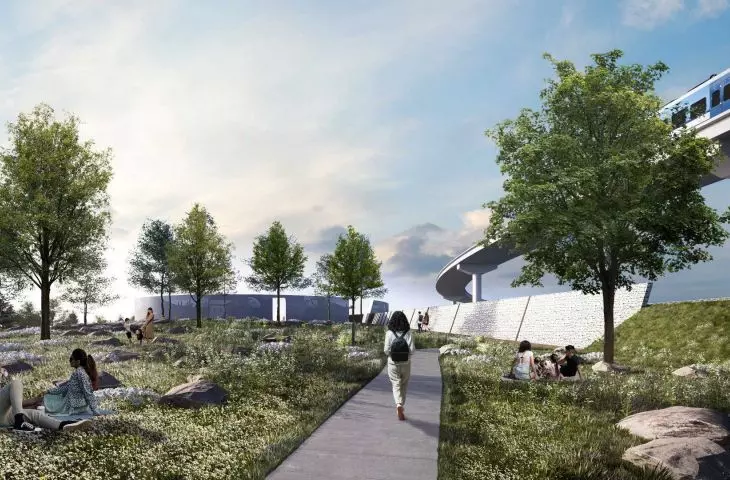
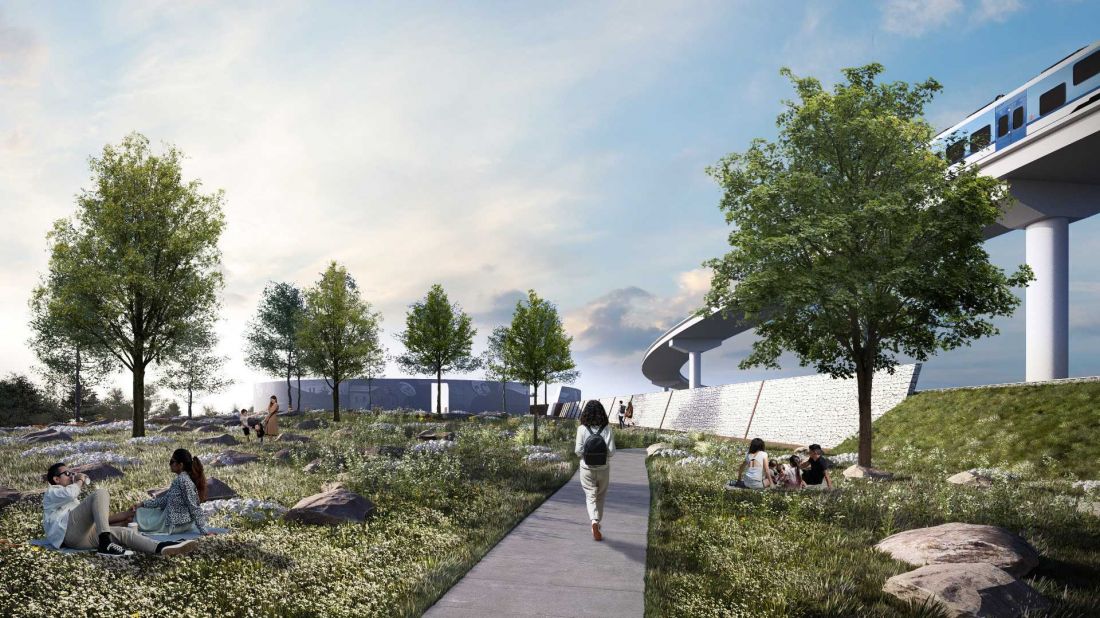
The surroundings of the main elements were designed as a composition inspired by the Irish landscape. The expansive green spaces were complemented by stone markers that evoke the memory of the fever barracks - places where thousands of people died of typhoid fever. An important aspect of the design is the deliberate choice of materials. Limestone from Quebec reinforces the local context while building a dialogue between place and migration history. This subtle blending of two orders - geographic and cultural - gives the site additional depth.
The Irish Memorial Park in Montreal
©Lemay
An educational pavilion and a new role for public space
An integral part of the project is the museum pavilion, which serves as an educational center. It is a space where history is organized and told in a way that is accessible to a contemporary audience. The program of exhibitions and educational activities focuses on the legacy of Irish migration and its impact on the development of Montreal. At the same time, the project restores the Black Rock site to the city. With its visibility from the REM commuter rail line and the Victoria Bridge, the park becomes an important landmark - a place that combines the function of a symbolic gateway with the everyday experience of public space.
Sustainability as an integral part of the project
In Montreal Irish Monument Park, environmental issues are not an add-on, but the foundation of the concept. Permeable paving and the use of native plant species reduce rainwater runoff and support the local ecosystem. Reduction of paved surfaces counteracts the urban heat island effect, and diverse vegetation improves the microclimate. The choice of materials - corten steel, local stone, sustainably sourced wood - meets both the requirements of sustainability and reduced environmental impact. The design is also based on passive strategies that minimize interference with the existing context.
Architecture as a tool for memory and community
The park's inclusion in the Great Famine Way international trail reinforces its global significance. Montreal Irish Monument Park functions not only as a local memorial, but also as part of a broader network that tells the story of the migration experience. Lemay's project demonstrates that contemporary landscape architecture can operate with history in a responsible and multidimensional way. Instead of imposing an interpretation, it creates a space where memory remains alive - present in the landscape, materiality and user experience.