





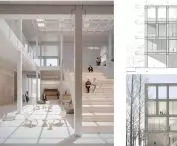

#Education in Architecture in Poland_Faculties of Architecture.
We need to prepare graduates to operate in a world we don't yet know. We don't know what it will look like in a few years. The climate catastrophe and technological advances are completely changing the way architects work," says Prof. Jakub Szczepański, dean of the Faculty of Architecture at the Gdansk University of Technology.
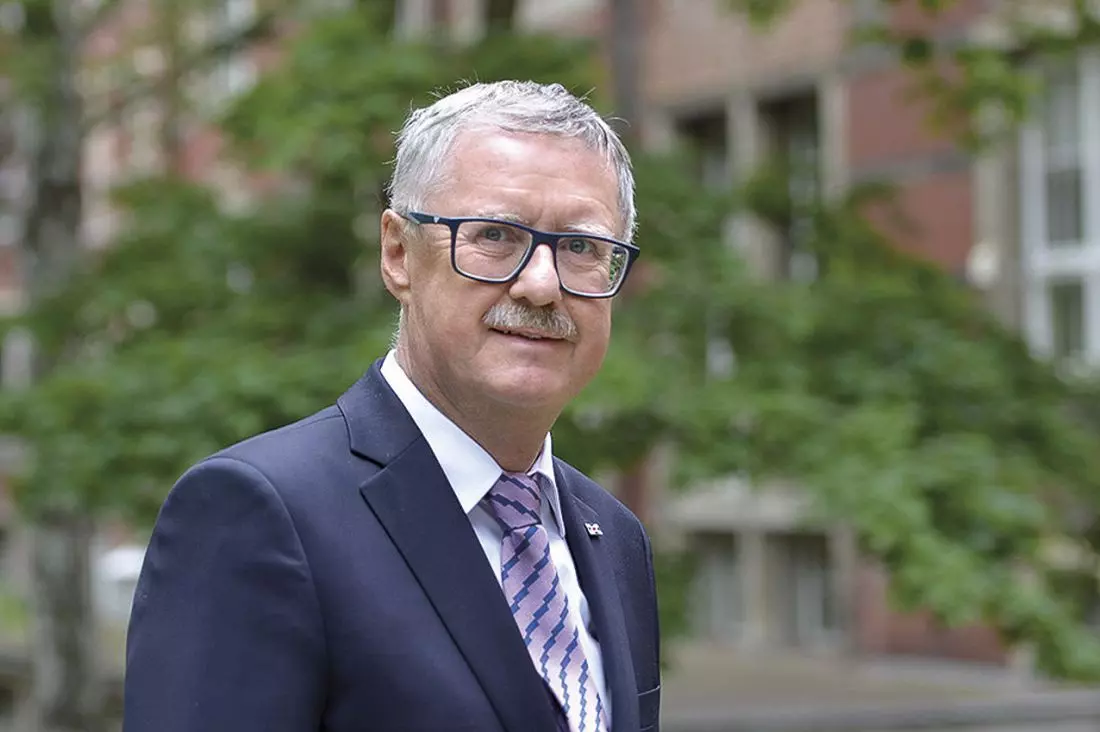
Jakub SZCZEPAŃSKI - Dean of the Faculty of Architecture at the Gdansk University of Technology, specialist in the history and conservation of architecture and the transformation of modern cities. Graduate of Gdansk University of Technology (1988), he received the title of professor in 2021. Author of numerous publications and lectures abroad, member of the Committee on Architecture and Urban Planning of the Polish Academy of Sciences and international scientific organizations. Winner of many awards, including those of the President of the City of Gdansk and the Marshal of the Pomeranian Voivodeship for scientific and cultural activities.
Ewa Karendys: Do young architects entering the job market today have it harder than their older colleagues?
Prof. Jakub Szczepański:They have it harder. Mainly because of the lack of price regulation for architectural projects. Such regulations used to exist in many European countries, although today, unfortunately, some of them are disappearing. Still, west of the Oder, architectural design costs about 10 percent of the value of an investment, while in Poland it costs only 2. A Polish architect thus earns five times less than his colleague in Western Europe. This is the fundamental problem of entering the job market.
Ewa Karendys: Does this discourage candidates from studying architecture? Is it fair to say that there are fewer candidates today than there used to be?
Prof. Jakub Szczepanski: Indeed, there are somewhat fewer candidates, but I think this is more due to demographic factors. We are not seeing a significant crisis in our department, although demographic forecasts are not optimistic. We still see interest from very good high school graduates, as can be seen from the candidates' matriculation results. Some of the best are submitting documents for architecture - the average results are much higher than at many other faculties.
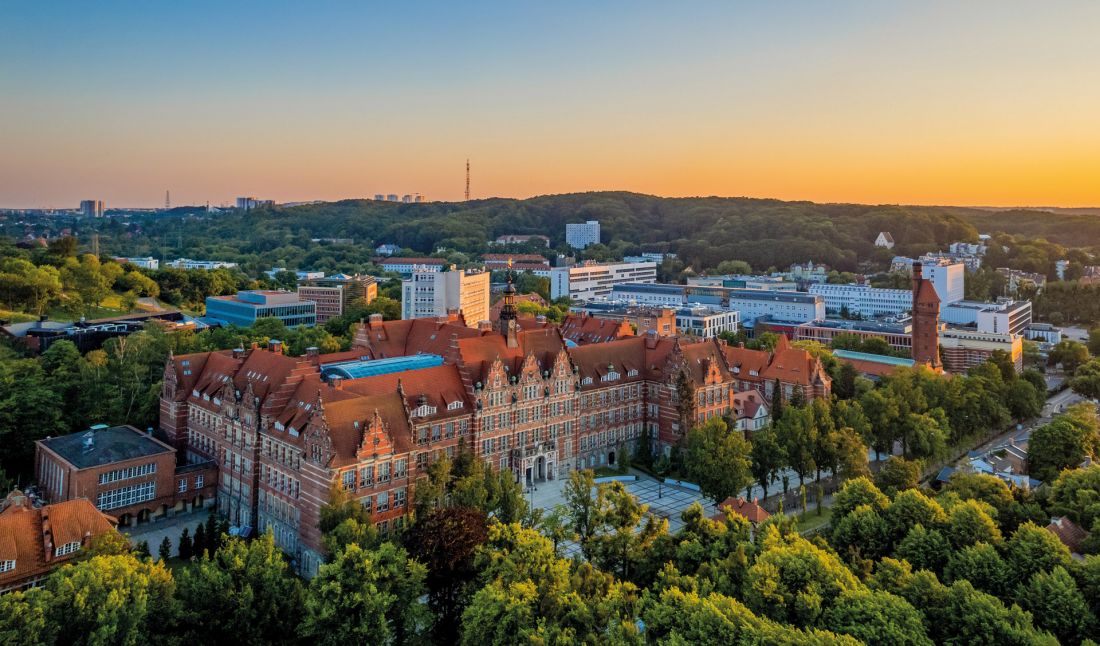
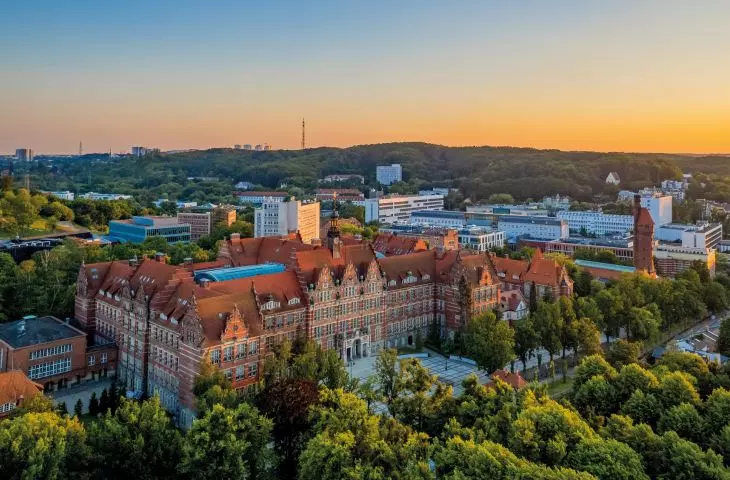
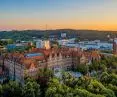
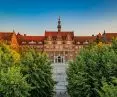
The Faculty of Architecture at the Gdansk University of Technology is located in the Main Building - it has, as one of two in Poland, an A+ accreditation under the systemic evaluation of the quality of scientific activity
Photo: Krzysztof Mystkowski / Gdansk University of Technology
Ewa Karendys: The university reports that 90 percent of graduates of the Faculty of Architecture at Gdansk University of Technology are economically active, and 65 percent start working either during their studies or immediately after graduation. Do graduates really have no problems finding work?
Prof. Jakub Szczepanski: Yes, this is up-to-date data. It is worth adding that the research is conducted not only by universities, but also by the "Perspektywy" foundation, which analyzes the fate of graduates. And they show that the earnings of our graduates - compared to other universities - are relatively high.
Ewa Karendys: In 2022, the Faculty of Architecture at the Gdansk University of Technology, as part of the systemic evaluation of the quality of scientific activity, received the A+ category, which is the highest possible. What is the merit of this?
Prof. Jakub Szczepański: It is the result of twelve years of work by more than a hundred people - our academic staff. First by Dean Prof. Antoni Taraszkiewicz, then by Prof. Lucyna Nyka. This classification applies only to scientific activity - we are evaluated in various categories, as part of the evaluation of scientific activity. It is difficult to point to a single success factor, although the awarding of the A+ category four years ago was somewhat of a surprise and a great honor for us.
Ewa Karendys: What is the department's strongest point? The staff, the competitions, the practitioners, or perhaps the scientific activities?
Prof. Jakub Szczepanski: We realized that architecture is a scientific discipline - which was not always obvious. There are still those who think it is just a practice, a craft. We see that architecture is something more. And we have the results of this in the form of books, publications. But also winning grants for large research projects; we are currently implementing more than a dozen of them. These projects are financed by both Polish and foreign funds.
Ewa Karendys: How do you understand the role of Architecture Faculties today? Should universities educate artists, engineers, or is it better to emphasize social and environmental responsibility?
Prof. Jakub Szczepanski: Everything matters, although today the issue of the climate crisis is coming to the fore and should be paramount in education. Even more important, however, is the change in the profession itself that is taking place before our eyes. We need to prepare graduates to operate in a world we do not yet know. We don't know what it will look like in a few years. Climate catastrophe and technological advances are completely changing the way architects work. The profession, which for hundreds of years consisted of translating ideas into paper, looks completely different today. This is the biggest challenge.
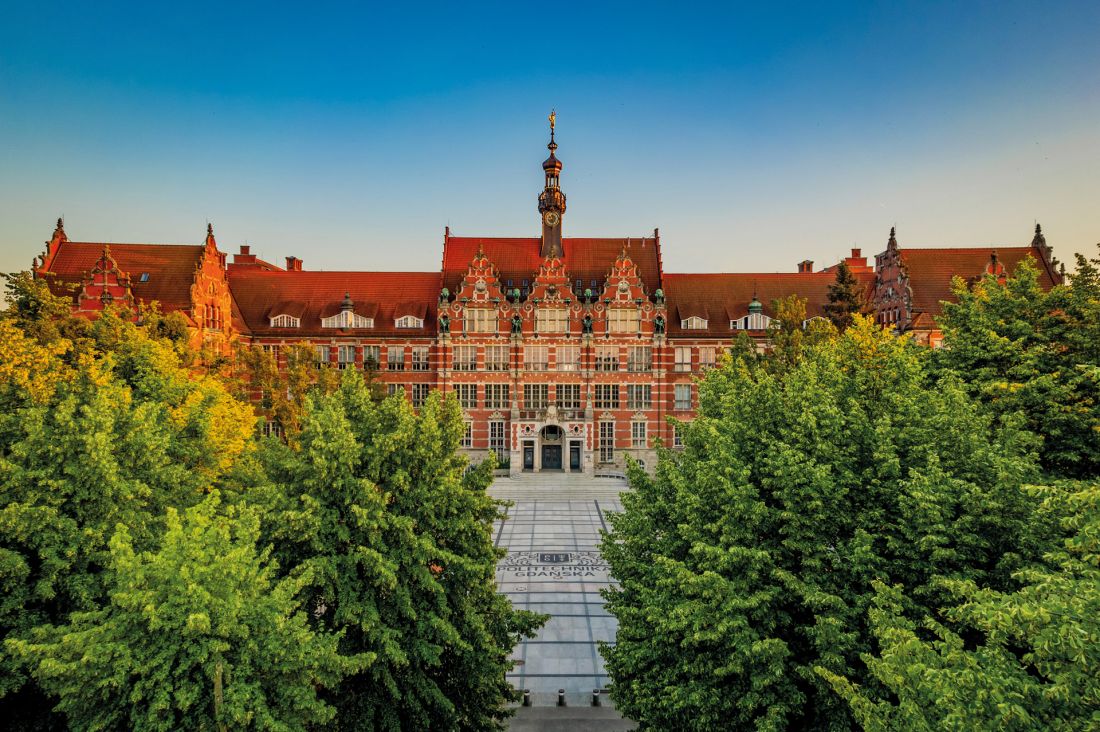
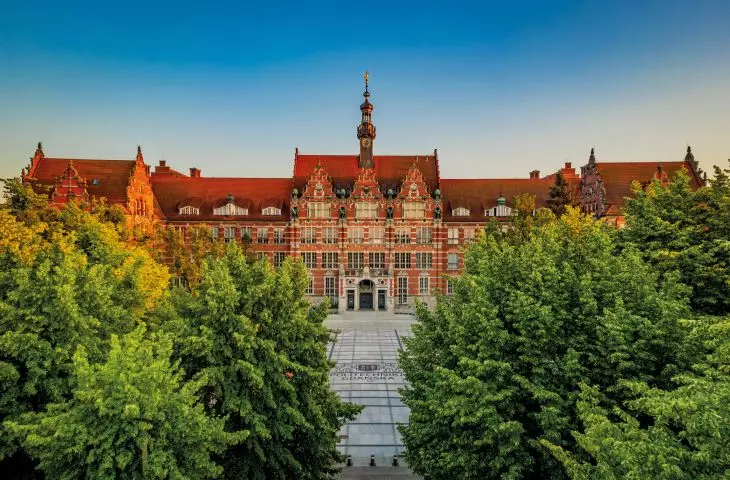
The Main Building was built between 1900 and 1904, designed by Hermann Eggert, Albert Carsten and Georg Thurr
Photo: Krzysztof Mystkowski / Gdansk University of Technology
Ewa Karendys: What are the key competencies of young architects and urban planners? Creativity, use of new tools, technical skills?
Prof. Jakub Szczepański: The most important thing is that they should be able to learn. Most of the knowledge and skills that students acquire today may be outdated in a few years - because technologies, problems and the whole world are changing. So we need to teach them not only the profession, but also that the end of their studies does not mean the end of learning. In the short term, it's worth reinforcing competencies related to modern design technologies.
Ewa Karendys: What about student participation in competitions?
Prof. Jakub Szczepanski: This is also very important - and beneficial for all parties. There are really a lot of competitions that are organized, which bring great results, not necessarily in the form of realization of specific projects, but, for example, analysis of problems or testing of different approaches. Students face a real problem, because the tasks are not abstract, they deal with real needs. They learn cooperation, also that not every competition is won. And this is a very valuable lesson in this profession.
Ewa Karendys: During their studies, do trainees have sufficient contact with the realities of offices, offices, investors?
Prof. Jakub Szczepanski: Between their engineering studies and their master's studies, students undergo a one-year internship. In addition, many of our employees are heads of architectural offices, so the practice permeates directly into didactics. Of course, it' s not easy to hire a prominent architect at a public university - we can't offer the kind of salary the market does, but we have many practitioners who devote their time to teaching.
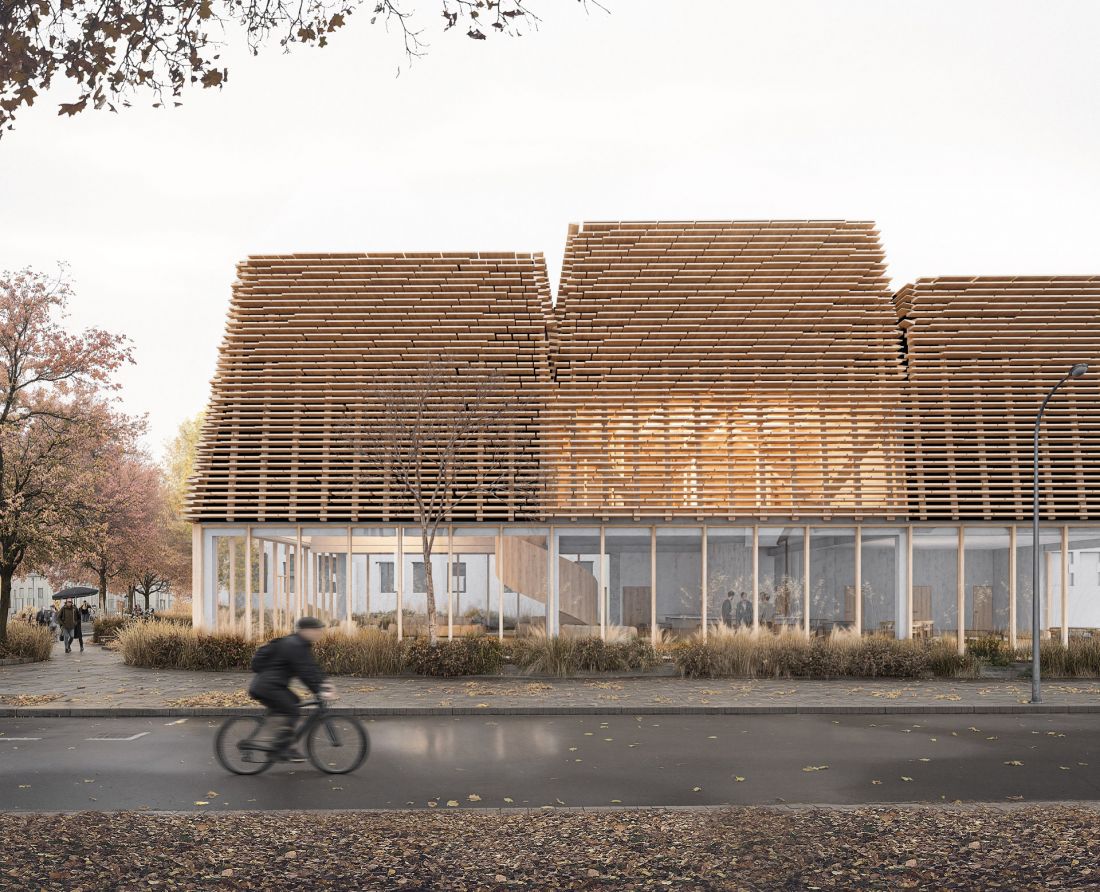
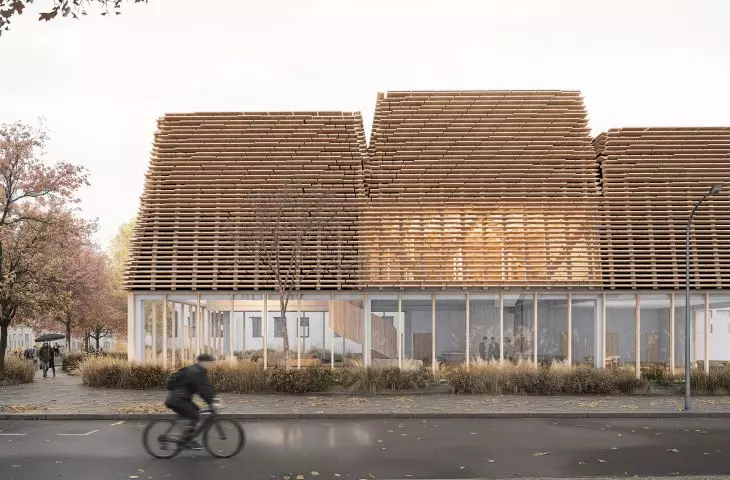
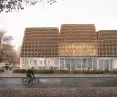
Mateusz Płudowski's work from the PG Department of Architecture won the Inspireli Awards 2025 in the Interior Design category - the winning project - "CareWork" - was created as an engineering thesis and is a response to the increasing commercialization of urban space in Sopot
© Mateusz Płudowski
Ewa Karendys: Let's talk about the teaching model: systemic pros and cons. Many practitioners accuse architecture faculties of not teaching students how to run their own architecture business, how to make money from architecture.
Prof. Jakub Szczepanski: You can see a contradiction here in what we want to achieve by educating future architects. Do we want to educate someone who will be an excellent craftsman and businessman? Or a visionary who will be able to transform the world?
Ewa Karendys: Ideally both, if only we could reconcile them.
Prof. Jakub Szczepanski: I agree. In practice, what we need most today are craftsmen who will perform repetitive tasks. However, responding to the challenges of our time, we are trying to make changes, including by strengthening digital competencies.
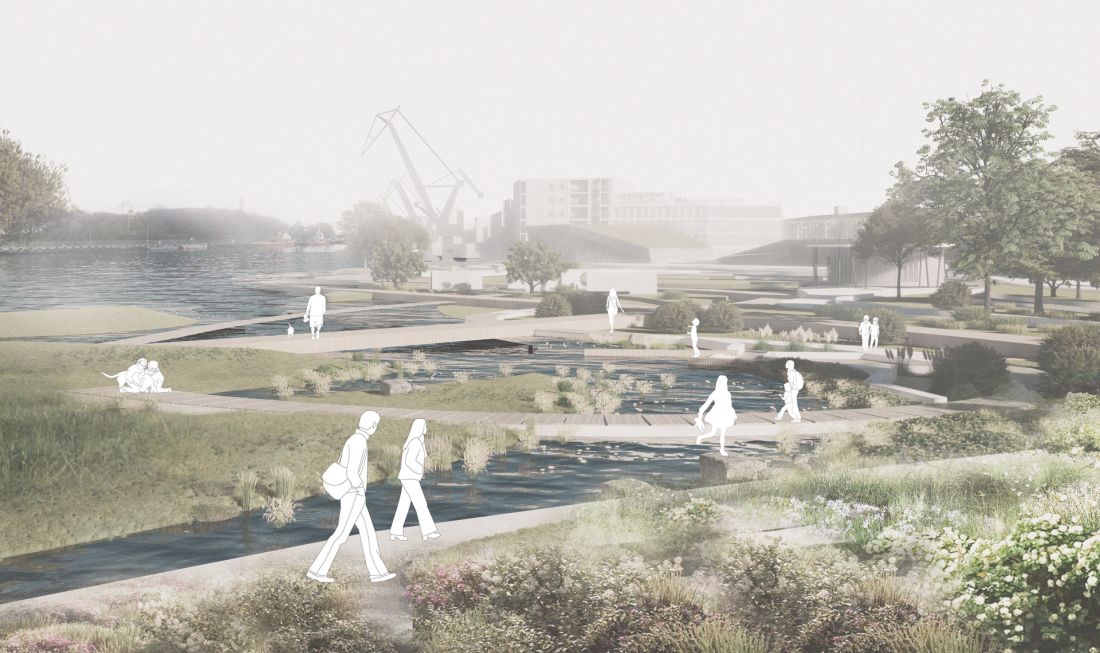
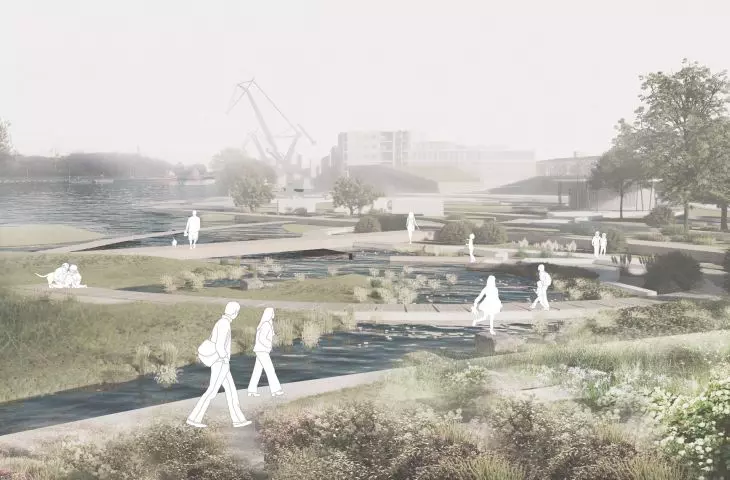
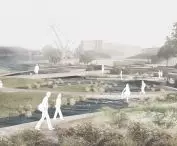
PG Architecture graduate Marta Hrycyna won the TUP main branch award (2024 edition) - for her thesis "Residual spaces as catalysts for urban resilience. A new waterfront for the New Port district in Gdansk" ©
© Marta Hrycyna
Ewa Karendys: Artificial intelligence in design?
Prof. Jakub Szczepański: For example. But I'm also thinking of algorithms that support design, technologies that facilitate documentation, scaling, as well as drones or photogrammetry. These are tools that make an architect's work faster and easier, but they require specialized skills.
Ewa Karendys: What else would be worth changing systemically to better educate architects?
Prof. Jakub Szczepański: Certainly - and this applies to all education - we are dealing with too much fragmentation. Even in elementary school, knowledge is shredded into many separate subjects that do not connect with each other. At universities, we still have remnants of this system: we teach different subjects separately, although we should strive to merge them. The idea is that the student should understand that a decision made at the architectural detail design stage has an impact on planning at the city scale. An important task in the whole model of education is to integrate subjects so that they interact with each other.
Ewa Karendys: I'll ask perversely: is there any point in studying architecture and urban planning today, if design can be taken over by artificial intelligence?
Prof. Jakub Szczepański: All the more reason! After all, someone has to transform the world around us, and artificial intelligence will not solve most problems. They are too complex, often requiring intuition rather than an algorithm. Besides, if we stopped designing and handed it over to machines, after a few years there would be designs that are painfully optimized and similar to each other. Artificial intelligence learns from what already exists, there is no creative factor. A machine will not replace a human being, although it can relieve him in tedious, technical activities. In an optimistic scenario, one can imagine that an architect will present his ideas, and the role of AI will be to translate this vision into construction language.
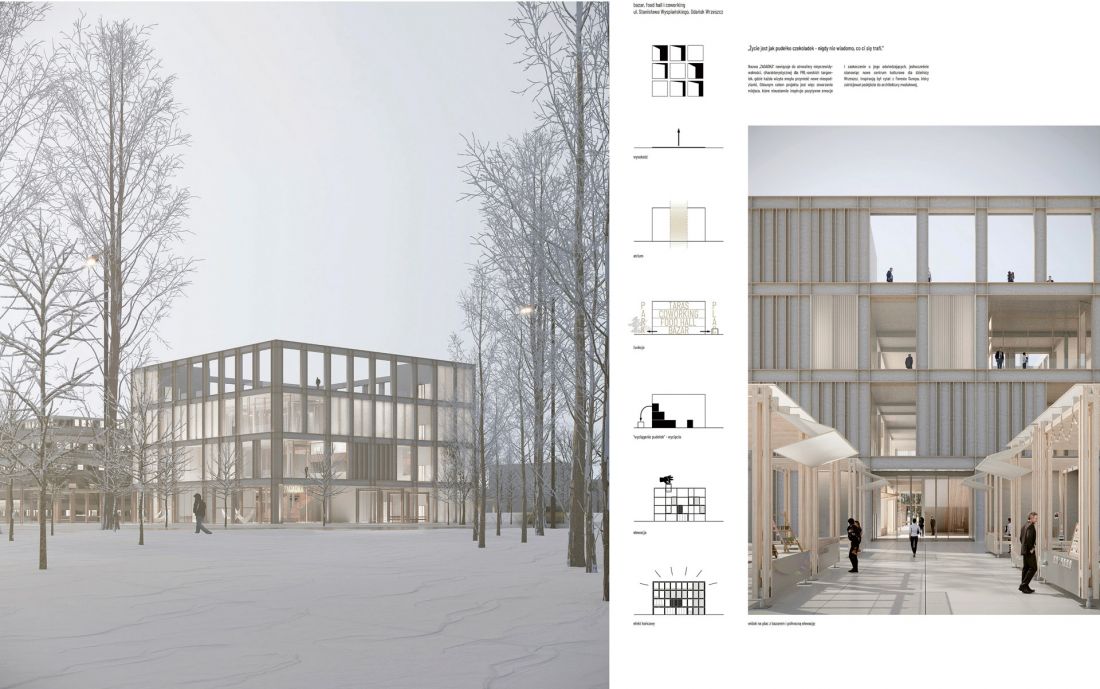
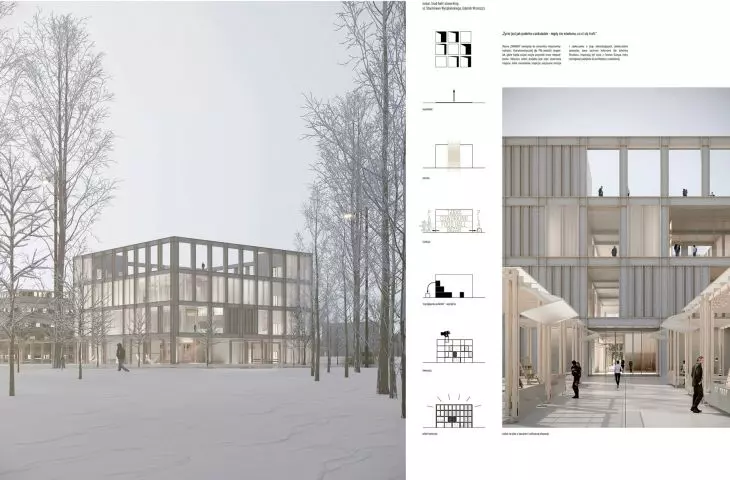
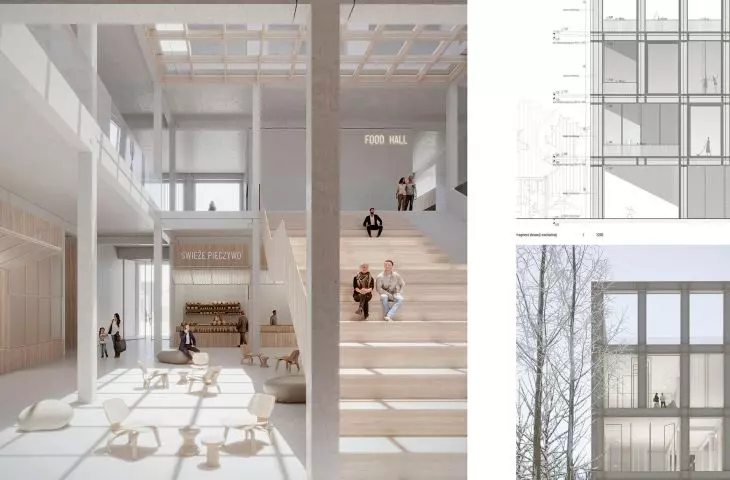
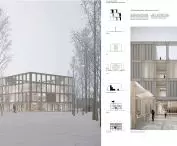
"Riddle. Bazaar, food hall and coworking, Wyspiańskiego Street, Gdansk Wrzeszcz". - Aleksandra Ciżek's engineering diploma completed in the Department of Residential Architecture and Public Utility in 2024 - the work in the competition for the best engineering diploma thesis received an honorable mention and a PZFD award.
© Aleksandra Ciżek
Ewa Karendys: Thank you for the interview.
Interviewed by {tag:AuthorA&B}
Read more: A&B 2/2026 - Education,
download free e-publications of A&B