




The TEORIA 2026 competition, organized by the Stefan Kuryłowicz Foundation, once again demonstrates that architecture can be discussed in much broader terms than just buildings and their form. In the 12th edition of the program, the jury awarded works that draw on literature, history, anthropology, and neuroscience to examine the relationship between humans and space. The Grand Prize was awarded to Jakub Krzysztofik for his short story “The Invisible City,” while honorable mentions went to Dr. Joanna Majczyk and Julia Roch.
© organizers’ archive 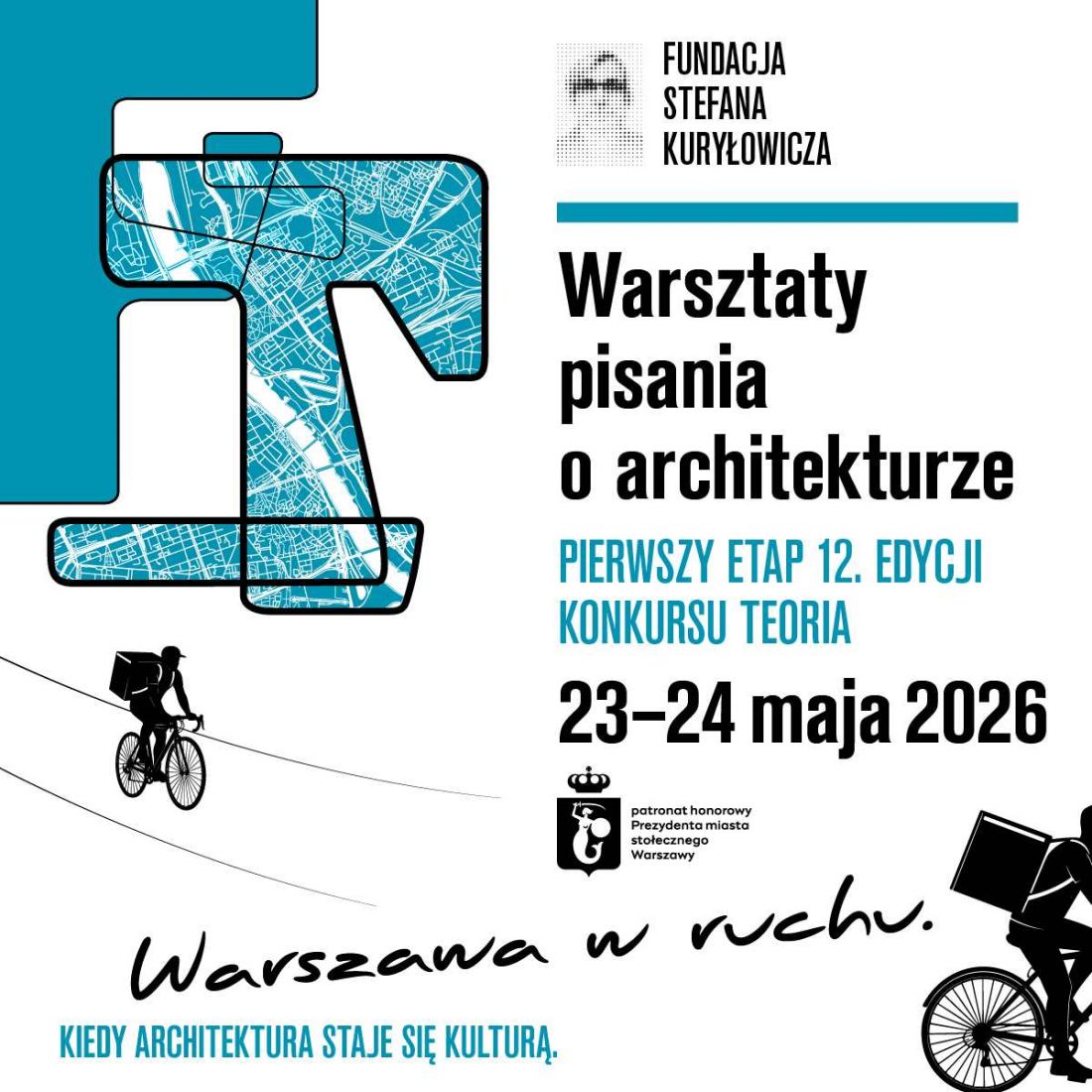
Architecture Beyond the Boundaries of the Discipline
For twelve editions now, the TEORIA competition has provided a platform for young architects who wish to develop their own ways of thinking about and writing about space. However, its goal is not limited to the critical analysis of architecture. The Stefan Kuryłowicz Foundation’s program encourages the exploration of broader social, cultural, and humanistic contexts of design.
This year’s edition shows a particularly clear departure from traditional descriptions of the city. The award-winning works explore the city through literary fiction, archival materials on pre-war couriers, and the sensory experiences of people with hidden disabilities.
The entries were evaluated by a jury consisting of architect Ewa P. Porębska (chair), Bogna Świątkowska, Prof. Marta A. Urbańska, architect Marcin Szczelina, writer Grzegorz Piątek, and journalist Piotr Sarzyński.
Grand Prize for “The Invisible City”
Jakub Krzysztofik received the highest honor for his short story “The Invisible City.” This year’s verdict is particularly notable because, for the first time in the history of the TEORIA Contest, the Grand Prize was awarded to a work of fiction.
The short story presents a dystopian vision of the future, which is not, however, a fantasy detached from reality. The jury noted the way in which the author uses literary fiction to illustrate the possible consequences of decisions made today.
The jury’s statement also emphasized that the quality of architecture is revealed not only in its spectacular form, but above all in its relationship to people, the environment, and the landscape. The text thus serves as a warning against a city that overlooks the needs of those performing invisible, everyday work.
Pre-war couriers and contemporary Warsaw
Dr. Joanna Majczyk received a First-Class Award for her study “Free as the Birds of the Sky: Warsaw’s Bicycle Couriers.”
The author drew on archival materials concerning pre-war Warsaw, uncovering the nearly forgotten world of bicycle couriers. Old advertisements and press releases allowed her to reconstruct a fragment of everyday urban life that, surprisingly, began to resemble the contemporary experiences of people working as couriers.
The jury praised the excellent documentation, the narrative style, and the rich visual content. The juxtaposition of a historical courier figure with his contemporary counterpart proved particularly interesting.
The project demonstrates that an archive can be more than just a source of knowledge about the past. It can also serve as a tool for better understanding the contemporary city and its residents.
A City Experienced with the Whole Body
Julia Roch received a Second-Place Honorable Mention for her reportage “City of Sensations,” dedicated to the sensory perception of urban space.
The author examines the city from the perspective of hidden disability and explores experiences that often fall outside the mainstream discourse on architecture. It is not solely about what we see, but also about what we hear, feel, and perceive through our bodies.
Roch draws on knowledge from the field of neuroscience to show that the rhythm of the street, the texture of the pavement, light, and temperature all influence the way people interpret space.
The jury highlighted the work’s interpretive maturity and its somatic approach to architecture. “The City of Sensations” reminds us that designing space should take into account the full spectrum of human experience, including that which remains invisible at first glance.
“The City Through the Eyes of a Courier”
This year’s edition of the TEORIA Competition was built around the theme “The City Through the Eyes of a Courier.” The starting point was to view space from the perspective of someone who experiences the city in constant motion.
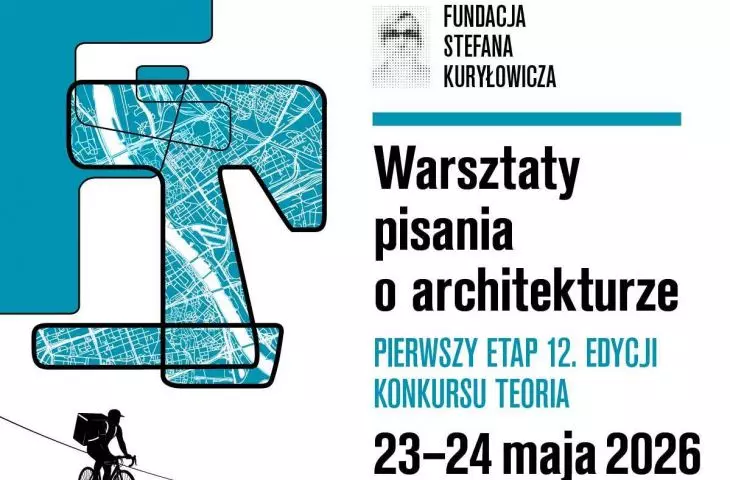
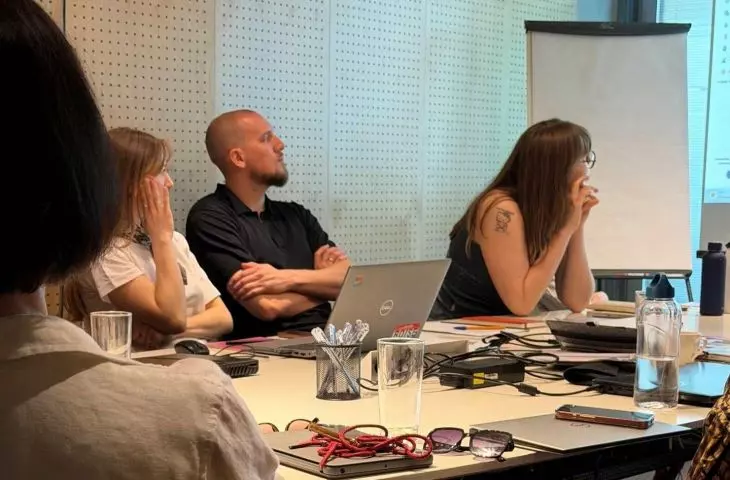
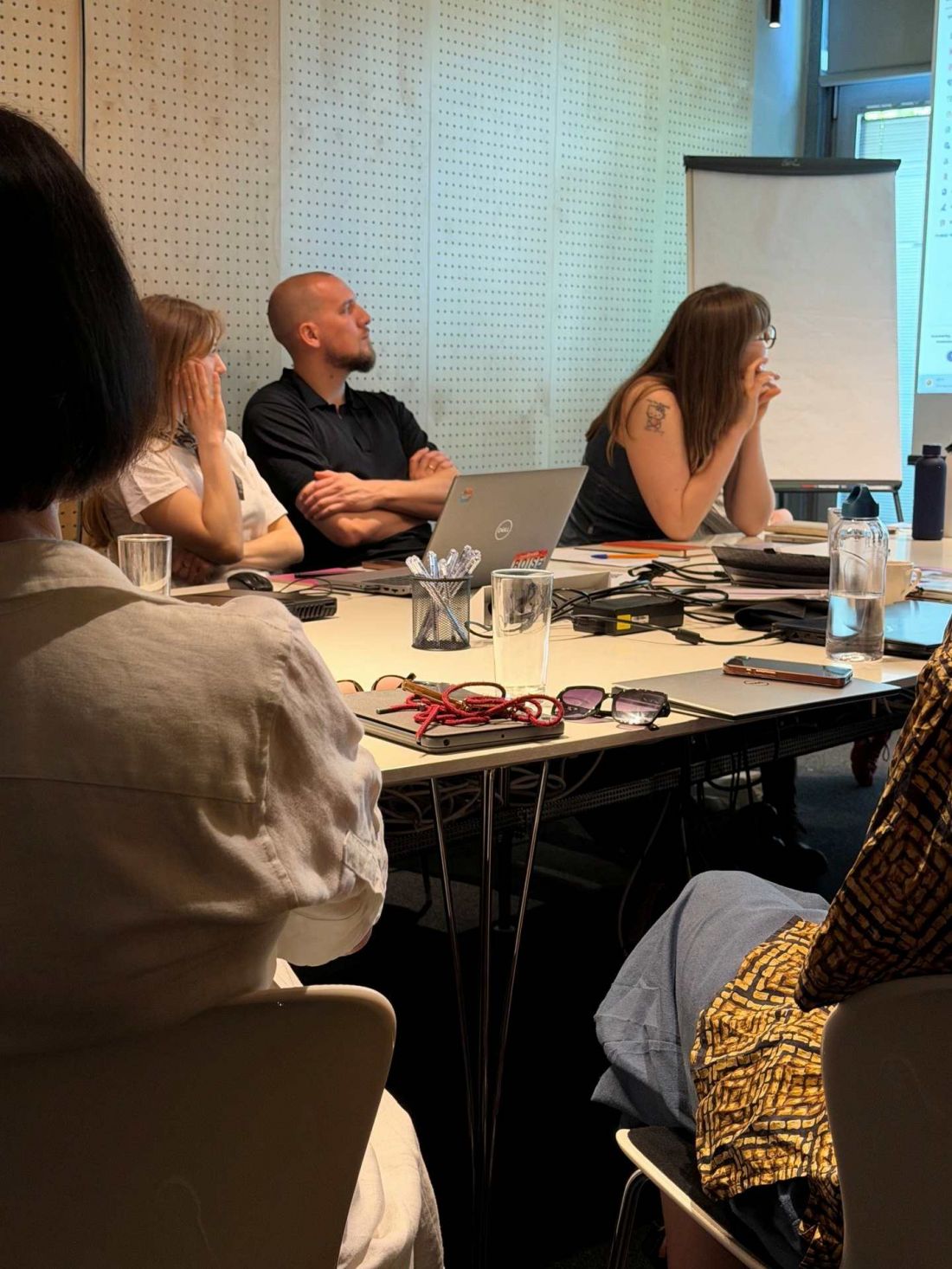
An important element of the program was the two-day “Workshop on Writing About Architecture,” which took place on May 23 and 24 at the Stefan Kuryłowicz Foundation and the Kuryłowicz + Architekci studio in Saska Kępa. Twelve participants, selected by a jury from among the submitted applications and portfolios, took part in the workshops.
The workshops began with a walk through Saska Kępa. Participants examined, among other things, the modernist works of Bohdan Lachert, Józef Szanajca, Helena and Szymon Syrkus, and Marian Lalewicz. This time, however, the focus was not solely on analyzing the form and history of the buildings. Above all, Saska Kępa became a living part of the city—a place of work, movement, memory, and everyday interactions.
© organizers’ archive
architecture seen from various perspectives
A key part of the program was a meeting with courier Robert Cwojdziński, who spoke about Warsaw from the perspective of his own work and the routes he travels every day.
Participants also explored the language used to describe architecture. Grzegorz Piątek spoke about his journey from architecture to writing, Dr. Renata Hryciuk explored the topic of Warsaw’s food landscapes from a cultural anthropology perspective, and architect Monika Komorowska discussed the city as seen through the eyes of its users.
The session led by Ewa P. Porębska focused on the responsibilities of language, addressing issues of affirmation, exclusion, and critical thinking in describing architecture. Zygmunt Borawski and Igor Łysiuk, meanwhile, focused on narrative perspectives and the question of whether contemporary architecture needs new ways of telling stories about space.
People at the Center of Stories About the City
This year’s results show just how diverse contemporary writing on architecture can be. Literature allows us to anticipate the consequences of current decisions, archives uncover the city’s forgotten stories, and neuroscience helps us understand how space affects the body and emotions.
The common thread, however, remains people and their relationship with the city—not only as users of buildings, but also as individuals who work, move about, remember, feel, and interpret the space around them.
The award-winning essays thus demonstrate that reflection on architecture need not be confined to a single discipline. It can draw on literature, history, anthropology, or neuroscience, opening up new ways of understanding how architecture influences the everyday experience of the city.
Jakub Krzysztofik’s winning entry, after editorial preparation and translation into English, will be published as the 12th volume in the Foundation’s “Architecture of Culture – Culture of Architecture” series. The Grand Prize winner will also receive 3,500 PLN net.
The 12th edition of the TEORIA Competition is held under the Honorary Patronage of the Mayor of Warsaw.
For more information: https://fundacja-sk.pl/