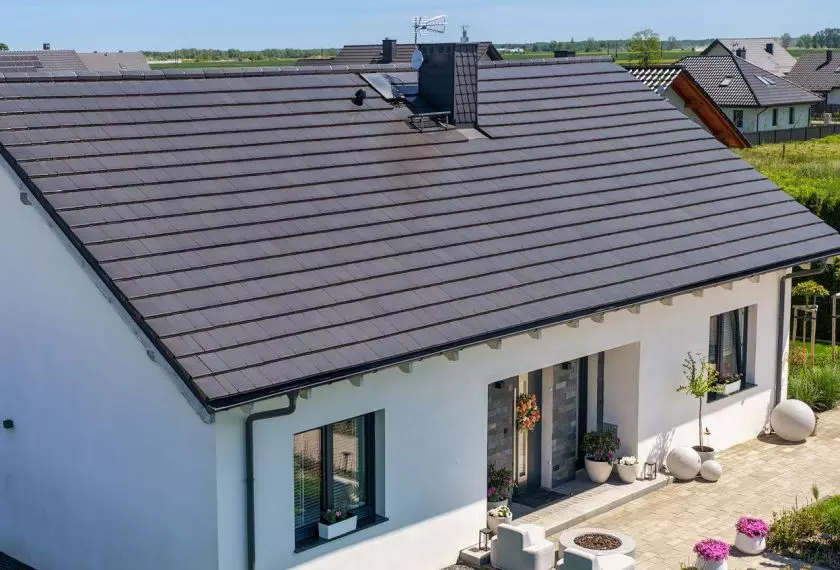



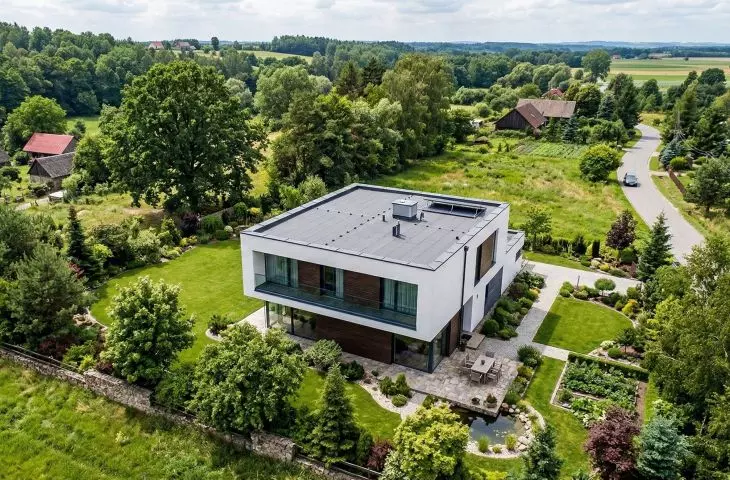
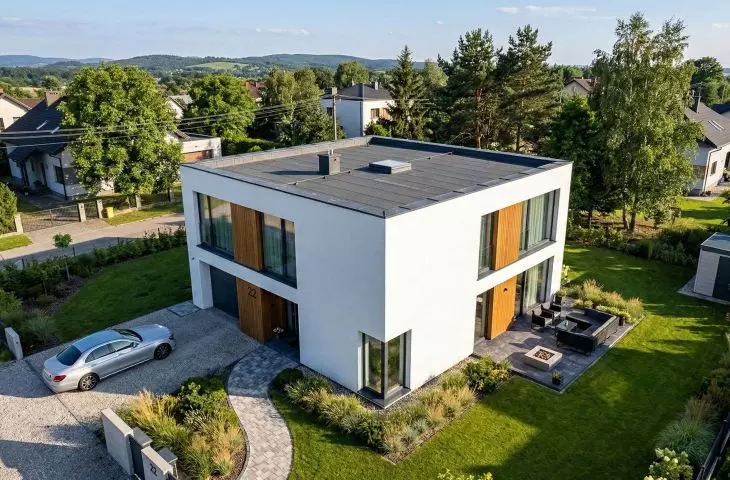
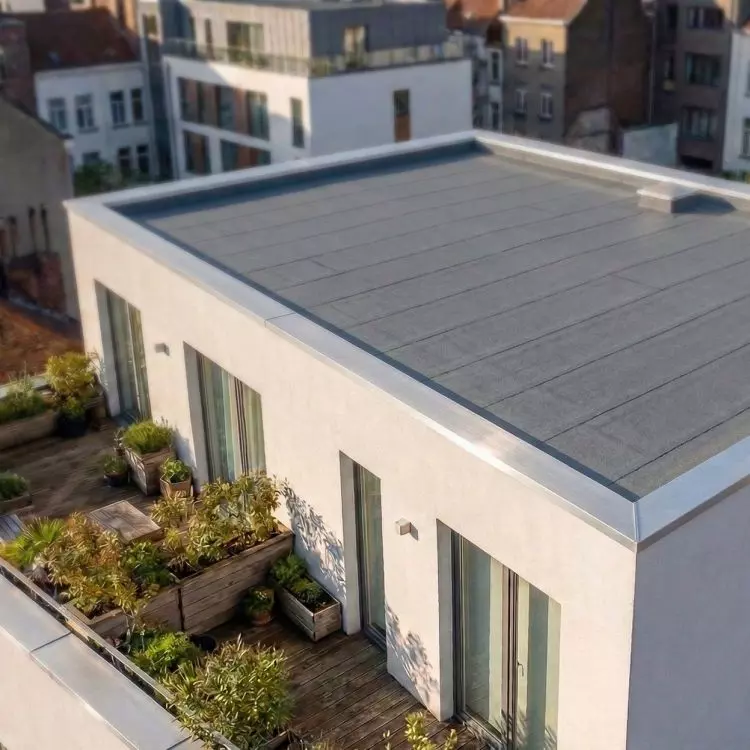
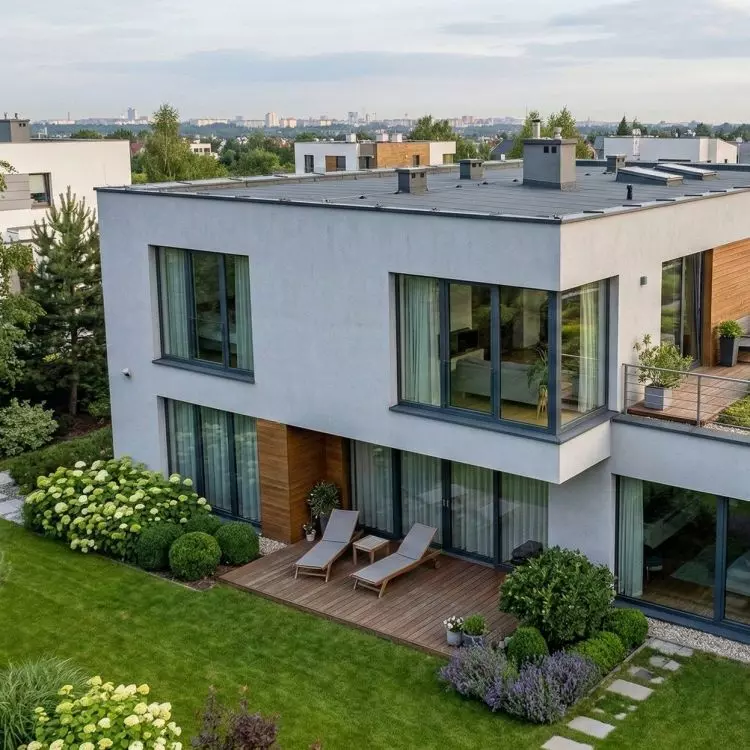
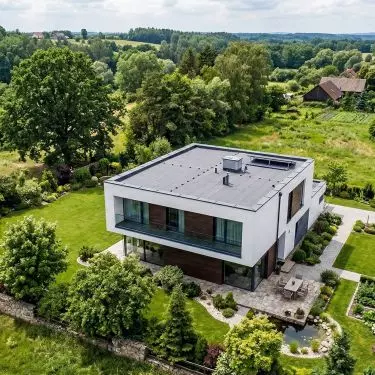
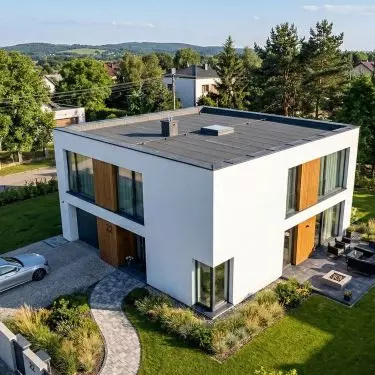

During the communist era, a house with a flat roof resembled a gray, dreary "cube" that leaked in the spring and heated up like a metal can in the summer. This stereotype still exists among many investors. Meanwhile, the reality looks quite different. A modern flat roof is not a relic of communist architecture - it is a conscious aesthetic, economic and technical decision that is changing the face of Polish suburbs.
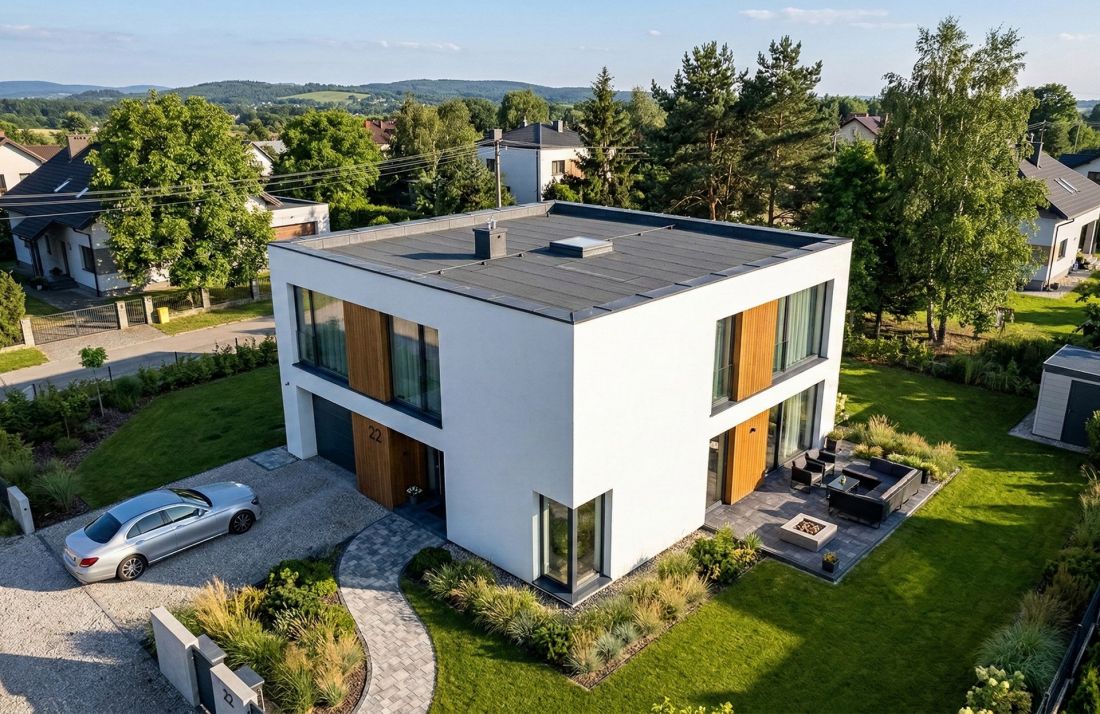
A flat roof is the ideal solution for those who want to make full use of the entire usable area of the house
©Swisspor
No more tile as the only right choice
For years, Polish residential architecture was dominated by the gable roof. This was partly due to tradition, partly due to the provisions of local zoning plans, and partly due to a simple assumption: this is how all the neighbors built. However, the changes can be seen with the naked eye - it is enough to drive through any new housing estate near Warsaw, Cracow or Wroclaw to see that cubic blocks with a flat roof are no longer just an exotic curiosity. They are now immensely popular among investors.
Market data confirm this observation. The segment of bituminous roofing - that is, asphalt membranes used almost exclusively on flat roofs - occupies a permanent second position in the Polish roofing market. According to the Spectis research company's report "Roofing and roofing market in Poland 2024-2029," the total revenue of roofing manufacturers amounted to PLN 24 billion in 2022, and the bituminous roofing segment has significantly increased its market share, gaining popularity primarily in single-family housing. In short: roofing felt and Styrofoam on a flat roof are increasingly being laid in Poland not only in warehouse halls, but also on the houses of suburban housing estates.
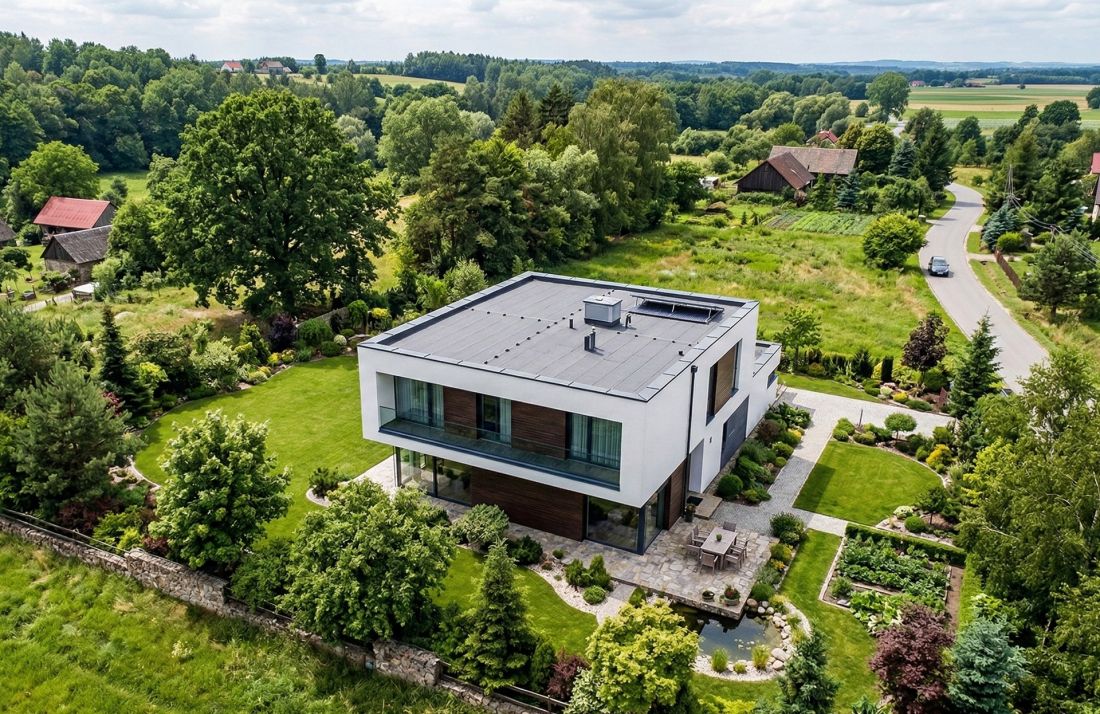
Flat roof in a single-family house - myth or future of Polish construction?
©Swisspor
Fifth facade. Not just a slogan
Architects have been talking about the flat roof as the "fifth façade" of a building for years. This term may sound like a marketing slogan, but after a moment's reflection it turns out to be very accurate. In the age of satellite imagery, drones and houses situated on hills - what can be seen from above becomes an element of a building's image as important as the front facade.
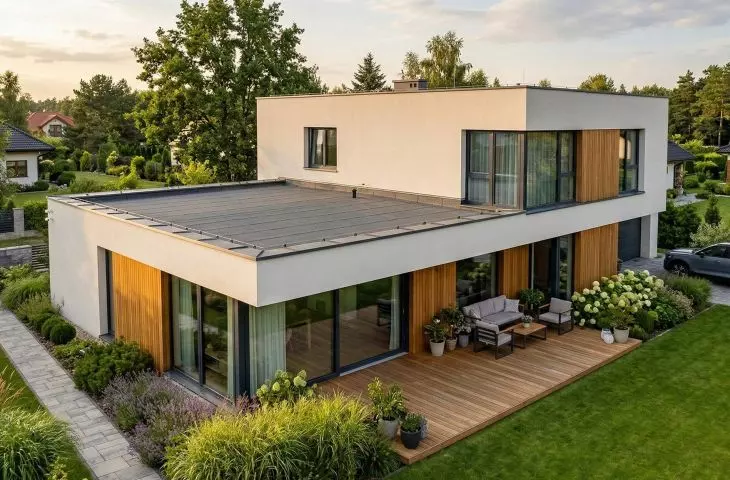
However, aesthetics are not the most important thing here. A flat roof is an ideal solution for those who want to make full use of the entire usable area of the house - the lack of bevels makes it easier to develop rooms on each floor. In a house with a pitched roof, the attic bedroom often turns into a maze of angles, where furnishings become a geometric puzzle. In a house with a flat roof, a room is simply a room - full height, with vertical walls below the ceiling.
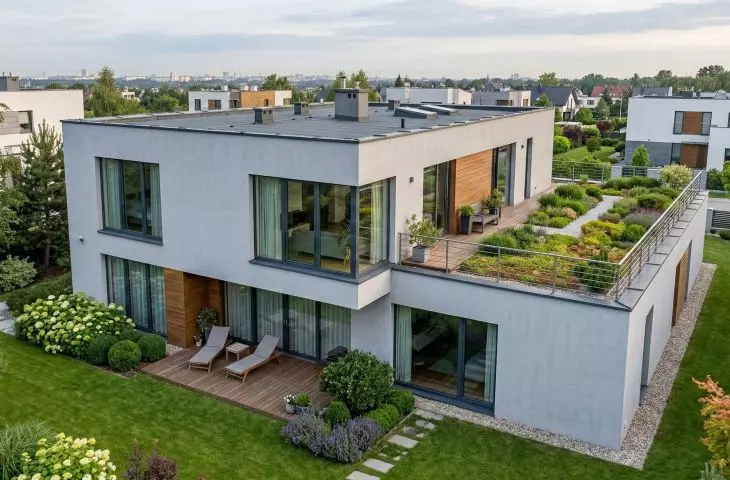
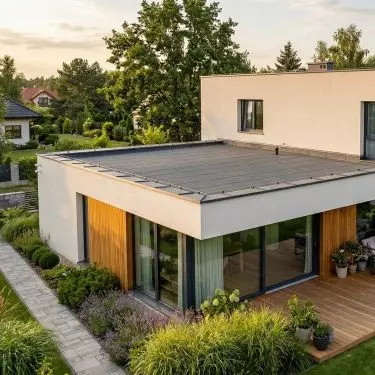
The surface of a flat roof gives much more than the top of the building - it is an additional, versatile space with enormous potential. The most popular solution is a striking terrace, which becomes a summer living room and relaxation area. Another increasingly popular option is a green roof - a private oasis that perfectly improves the microclimate. A flat surface is also an optimal place to install photovoltaic panels or discreetly hide heat pump units - solutions that are becoming standard in new energy-efficient construction.
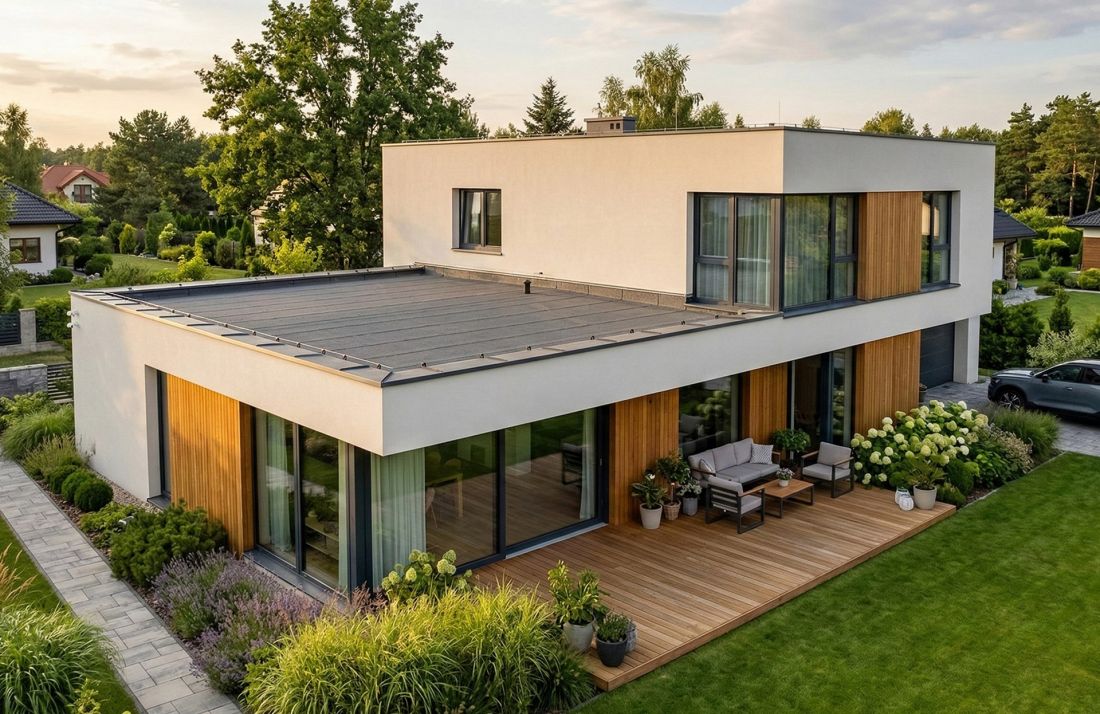
The flat roof in the Polish single-family home has become a mature, technically proven and growing alternative to tradition
©Swisspor
However, won't the Polish winter damage a flat roof?
This is the question asked by almost everyone who is seriously considering installing this type of roof. And it is an absolutely legitimate question. Poland is not Morocco. We have frosts, heavy snowfall, snowmelt and rapid temperature changes that test every building material all year round.
The answer is that it will not destroy - provided the roof is properly designed and made of the right materials. This is where the clue of the whole matter lies, and at the same time the reason why the bad experience with communist-era roofs cannot influence the decisions of modern investors. Those roofs leaked because they were designed badly and built even worse, with materials that were unlikely to stand up to years of use.
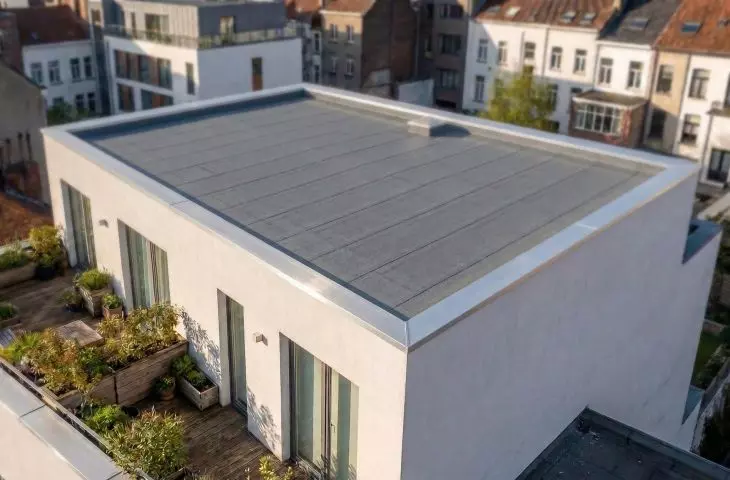
A flat roof is usually a massive reinforced concrete element with high thermal inertia, which makes the temperature in the house more stable than in pitched roof structures. What's more, a flat roof is extremely resistant to wind - such a roof won't be torn off even by a strong gale, which could damage sloping slopes. However, it requires precise execution and a proven waterproofing system.
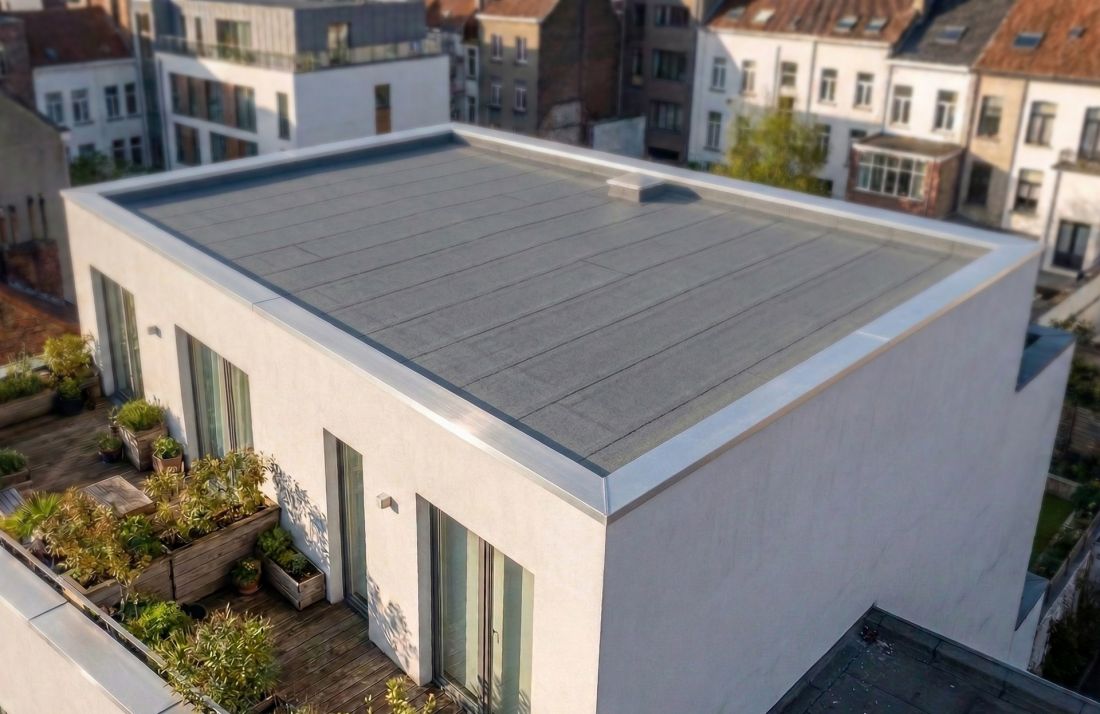
dd 2021, Poland's stricter Technical Conditions for the insulation of buildings are in force
©Swisspor
A system instead of a random set of materials
A key concept in the context of flat roofs is the system approach. It means that the individual layers of the roof - vapor barrier, thermal insulation, waterproofing - are not selected at random from different manufacturers, but constitute a well-thought-out whole in which each element works together with the others.
Exactly this philosophy is implemented by swisspor Polska in its swissporBIKUTOP System solution. It's a complete flat roofing offering in which the manufacturer supplies all the key components: the thermal insulation layer, the waterproofing layer and the connecting elements - primers and adhesives. One entity, one responsibility, one consistent system.
swisspor Polska (currently based in Olkusz) has been present on the Polish market since 1999. It has 9 plants producing swisspor branded products in Chrzanow, Janow Podlaski, Miedzyrzecz, Pelplin and 3 tile factories in Olkusz, Chojnice and Vistula, and on a European scale it operates as part of a group with 29 factories in 7 countries employing more than 2,000 people. Experience gained on the roofs of Switzerland and Austria - markets where durability of materials is a requirement, not a distinguishing feature - is the foundation of Polish system solutions.
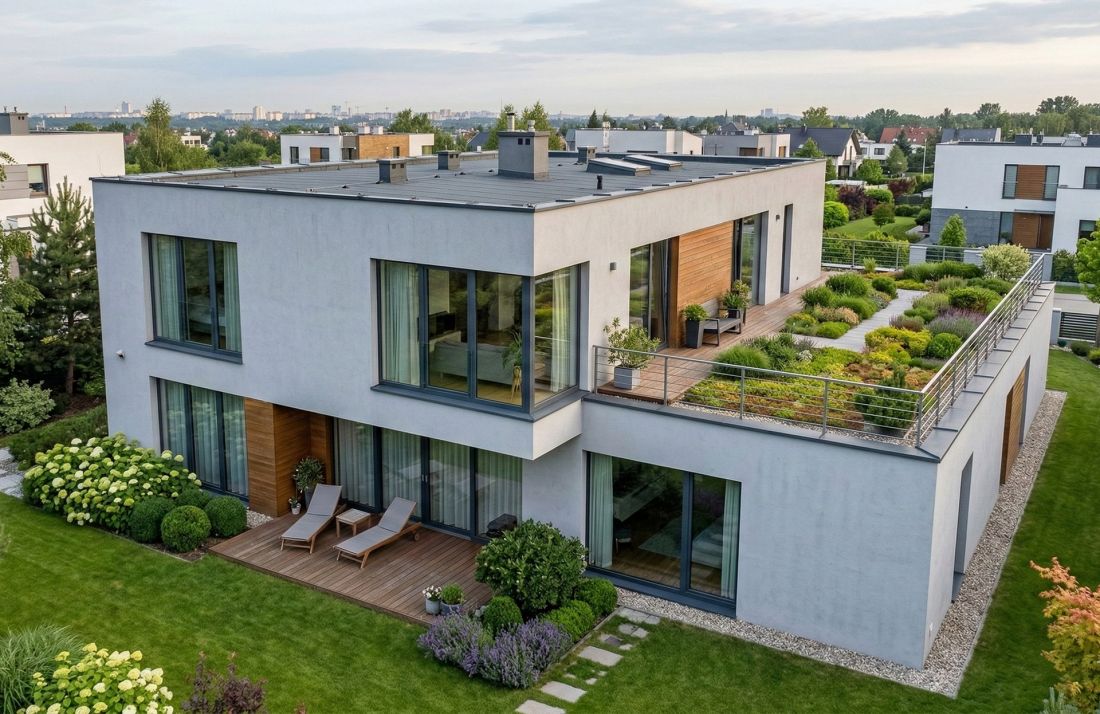
The surface of a flat roof is much more than the finial of a building - it is an additional, versatile space with enormous potential
©Swisspor
What exactly is hidden under the name swissporBIKUTOP System?
- Waterproofing - the heart of every flat roof. The hot-welded membranes used in the swissporBIKUTOP System are modified with SBS elastomer (styrene-butadiene-styrene), which gives them high flexibility even at low temperatures - down to -20°C. In the Polish climate, where night frosts combined with the midday sun can stretch and compress any building material in a day, this property has an invaluable value.
- Thermal insulation - a very commonly used thermal insulation in unventilated roofs is swissporEPS 100 roof/floor panels - a universal insulation material with a declared thermal conductivity coefficient of λ = 0.036 W/(m-K) and a permissible imposed load of 3000 kg/m². Such a high load ensures that the insulation will not deform under the weight of the operated terrace or the base layer of a green roof.
- Styropap - swissporBITERM are layered insulation boards with a core of polystyrene foam in a lining of thermally welded asphalt paper. They are installed on various types of substrates: concrete, wood, trapezoidal sheet metal, as well as on existing roofing.
- Roof wedges - when the slope is insufficient for efficient drainage, swisspor supplies custom-made lightweight polystyrene wedges with a precisely profiled angle taken directly from the design. An elegant solution to a difficult execution problem - without costly and heavy concrete screeds.
- Primers and adhesives - the system closes with swissporPRIMER preparations - fast-drying
primers under asphalt membranes with high adhesion and deep
penetration of the substrate, ready for use immediately after opening.
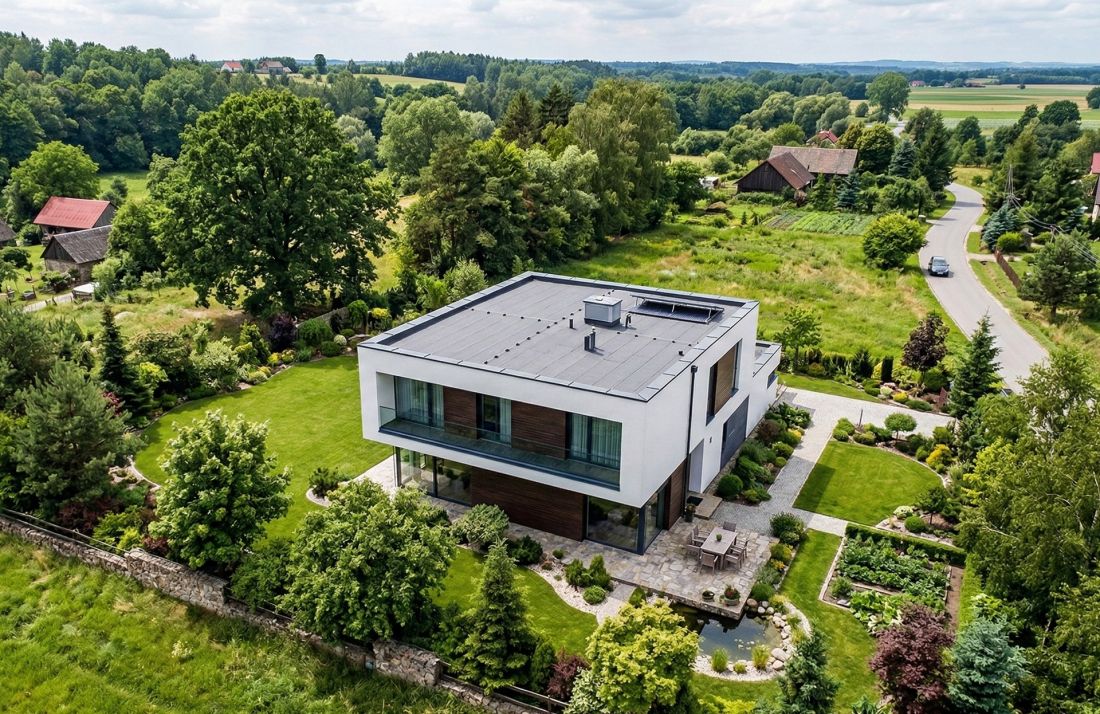
The roof is extremely resistant to wind - such a roof will not be torn off even by a strong gale, which could damage the slanted slopes
©Swisspor
Energy standards: time works in favor of the flat roof
As of 2021, Poland has stricter Technical Conditions for the insulation of buildings. The next revision is planned for 2028, when the requirements will increase even further - Poland is approaching the near-zero-energy house standard (nZEB) required by the EU EPBD. A flat roof is a key element of energy-efficient construction: its smaller surface area compared to a sloping roof naturally reduces heat loss, and its simple, compact geometry facilitates the execution of a perfectly tight and continuous layer of thermal insulation, effectively minimizing the risk of thermal bridges.
By selecting the right thickness of insulation with the swissporBIKUTOP system already at the construction stage, the investor can meet the 2028 requirements in advance and avoid costly upgrades in the future.
Myth debunked, future built
The plebiscite by whiteMAD - the most popular Polish site about architecture and design - for the most beautiful single-family homes in Poland in the 2025 edition has collected the ten projects most popular with readers in the past year. Among them, the editors list minimalist blocks with flat roofs as one of the dominant trends. Readers voted for cubic forms with wood, concrete and glazing - a clear signal that the aesthetic preferences of Poles have long since become independent of the opinions of architects.
The flat roof in the Polish single-family house has ceased to be a myth. It has become a mature, technically proven and growing alternative to tradition. On one condition: that it is made wisely - with materials selected in a well-thought-out system that will be airtight and warm not for a season, but for decades.
Any investor who reaches for the swissporBIKUTOP System can count on such a guarantee. Because a good flat roof is not a matter of luck or fashion. It's a matter of knowledge, precision and the right materials - the kind that swisspor Polska has been perfecting for a quarter of a century.
For more information, visit the company's Swisspor Polska page on the A&B portal.