




Modernization of Soldier Field stadium in Chicago,
designed by Edward Peck Design
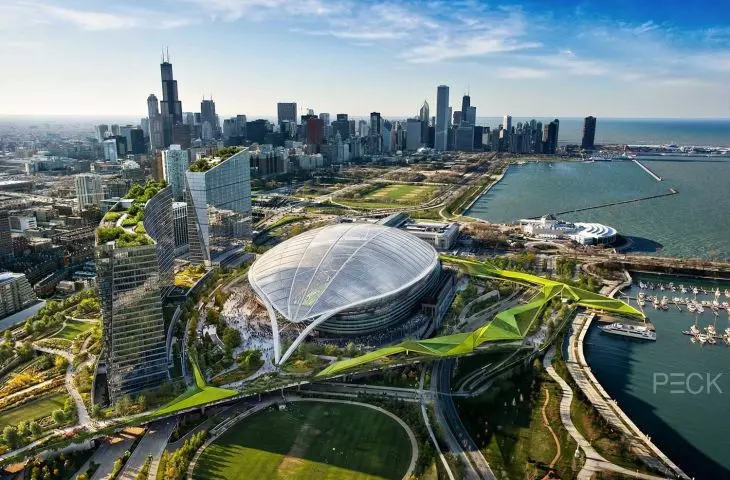
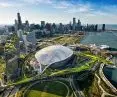
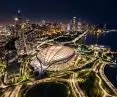
The conceptual redevelopment of Soldier Field in Chicago, developed by the Edward Peck Design studio, is a proposal that goes beyond standard stadium modernization. The project involves transforming the historic facility into a year-round event center and creating a new, mixed-use neighborhood on the lakefront. It's a coherent vision in which sports architecture becomes part of a broader urban layout. How to combine the memory of the site with the demands of the present day, while giving it a new function? The answer proposed by the designers shows the direction of change seen today in the world's largest cities.
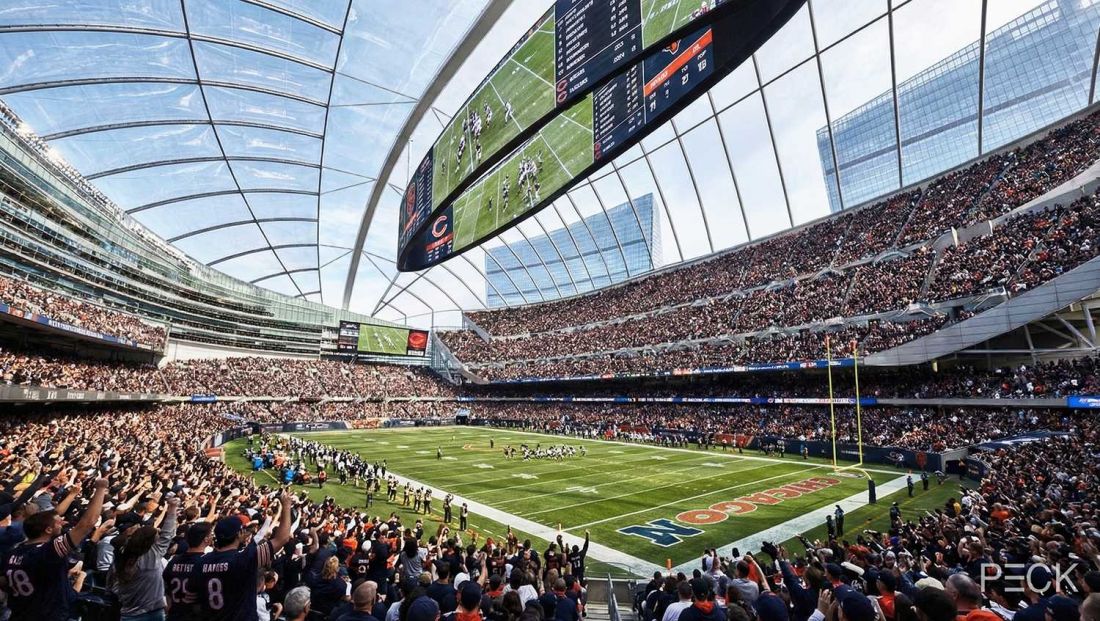
A design for the modernization of Soldier Field stadium in Chicago
© Edward Peck Design
A stadium that lives in the off-season
The starting point for the entire concept is to move away from thinking of the stadium as a facility used only on game days. The design calls for Soldier Field to function year-round - as a space for sporting events, concerts, trade shows, conventions and community gatherings. This approach is part of a growing trend in which large sports venues are no longer isolated structures and are beginning to serve as active parts of the city. Instead of empty spaces in the off-season, an intensely used environment is emerging, capable of attracting residents and visitors regardless of the game calendar.
bigger stadium, new standards
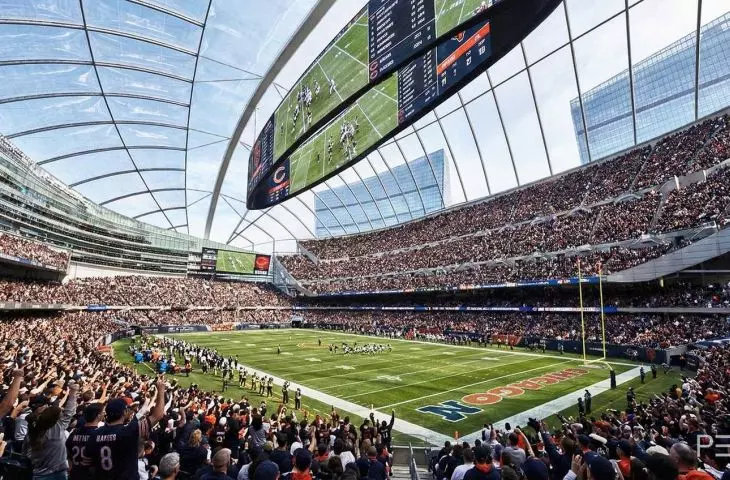
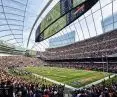
One of the key elements of the project is to expand the stadium and make it suitable for major sporting events, including the Super Bowl. The plan is to increase capacity to 72,000 seats - by adding 1,800 VIP box seats and 8,700 general admission seats. Behind these numbers, however, is more than sheer scale. Equally important is the improvement in the quality of the spectator space: the modernization of the backstage area, better organization of traffic, and bringing the facility up to modern standards for handling large events. The stadium is expected not only to accommodate more people, but also to provide them with a more orderly and comfortable experience.
ETFE roof - lightweight construction, big change
One of the most striking elements of the concept is the use of an ETFE roof - a lightweight, translucent material that allows the stadium to be covered without introducing a heavy structure. This solution changes the way the facility functions. Thanks to the roofing, it becomes possible to hold events regardless of the weather, which in practice means year-round use of the stadium. At the same time, the roof organizes the architectural composition, tying the existing structure into a more homogeneous whole and giving it a new, legible character.
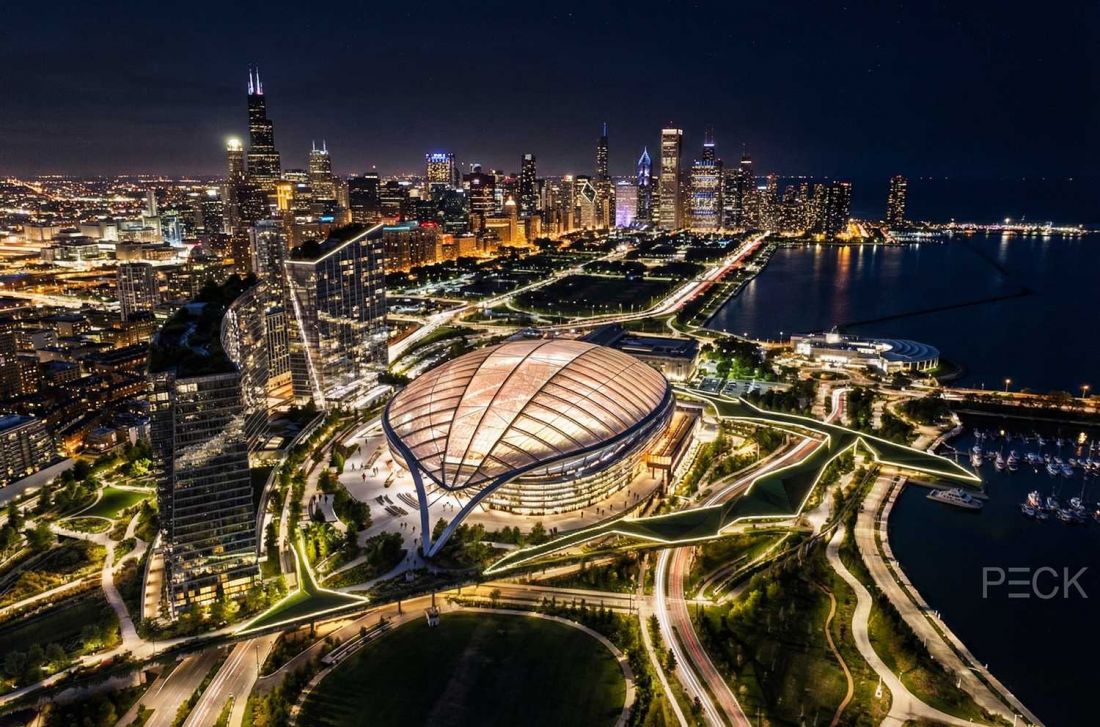
Design for the modernization of Soldier Field stadium in Chicago
© Edward Peck Design
new lakeside neighborhood
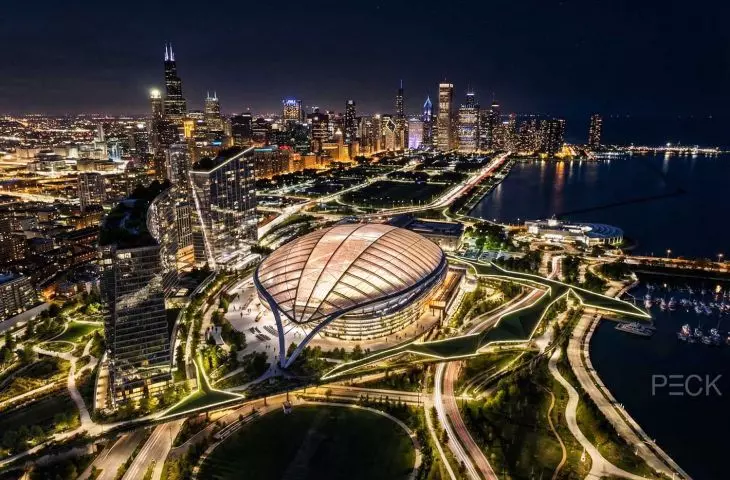
The most far-reaching change, however, is not the stadium itself, but what is being built around it. The project involves the construction of a new entertainment district on a platform raised above Lake Shore Drive and the rail lines. This solution allows for the creation of an entirely new urban space, which will include public plazas, retail and dining establishments, hotels and residential development. Rooftop terraces and viewing spaces, visually linked to the stadium, also play an important role. It is therefore not just a supplement to the sports function, but a full-fledged part of the city - designed to operate independently of the events taking place at the stadium.
better accessibility and new connections
Improved transportation is also an important part of the concept . The project envisages strengthening links to public transportation and introducing an additional means of transport in the form of a fast water cab. This gives the entire area better connections to other parts of Chicago, including downtown and the waterfront areas. Proximity to places such as the convention center and the museum district further enhances the potential of the site.
Preserving the structure as a conscious decision
The project's approach to the existing structure is also important. Instead of demolishing it, adaptation and expansion have been proposed, making use of the already existing structure and limiting the scale of environmental interference. Such a solution is part of an increasingly common strategy in which modernization replaces construction from scratch - not only for economic reasons, but also for environmental ones.
This proposal shows how Soldier Field can be transformed into a modern facility of global significance, while preserving its historic heritage
- said Edward Peck,
managing director of Edward Peck Design.
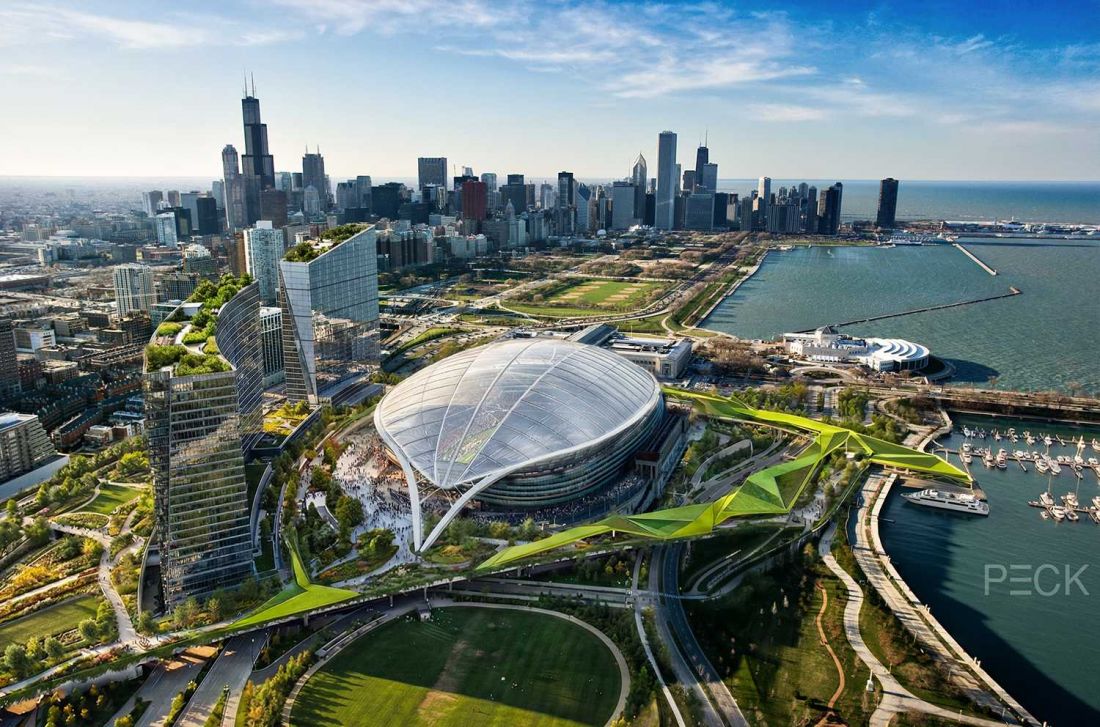
The Soldier Field stadium modernization project in Chicago
© Edward Peck Design
stadium as a piece of the city
Edward PECK DESIGN's project clearly demonstrates that modern stadiums are no longer separate structures and are beginning to function as part of a larger whole. In this case, the starting point is not just the modernization of the building, but the creation of a new fragment of the city - intense, diverse and accessible all year round. In this perspective, Soldier Field acquires a new role. Not as a place for events that take place from time to time, but as an everyday space - embedded in the rhythm of the city and its residents.
Elaborated: Anastazja Gibas
Illustrations provided courtesy of Edward Peck Design studio.