





Are micromobility terminals an essential ingredient in the recipe for a city without traffic exclusion? Zuzanna Ryś and Krystian Brynda of Wydział Architektury Politechniki Warszawskiej designed a modular hub and won second place in the national competition "HUB-it! HUB-it!" organized by the New Mobility Congress.
The task of the participants in the "HUB-it! HUB-it!" was to create a concept for a terminal station for micromobility vehicles to serve as a transportation element in the so-called "last mile." The designs should pay attention not only to the functionality of the micro-terminal, but also to its concern for the environment and fitting into the urban context.
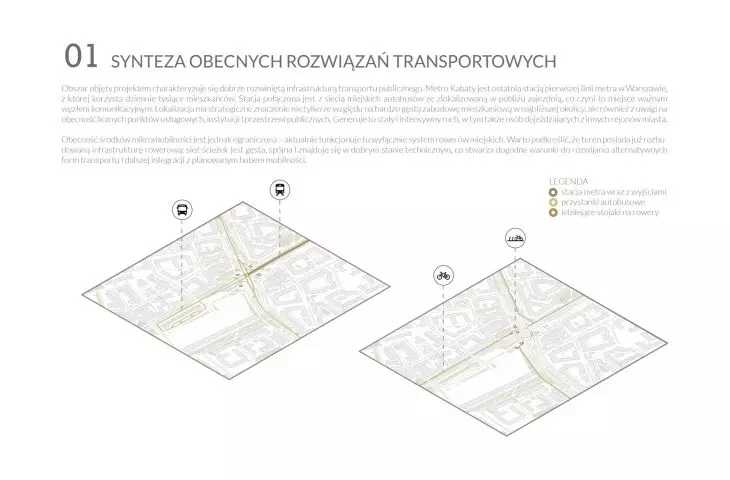
A synthesis of current transportation solutions
proj.: Zuzanna Ryś, Krystian Brynda
a city within reach
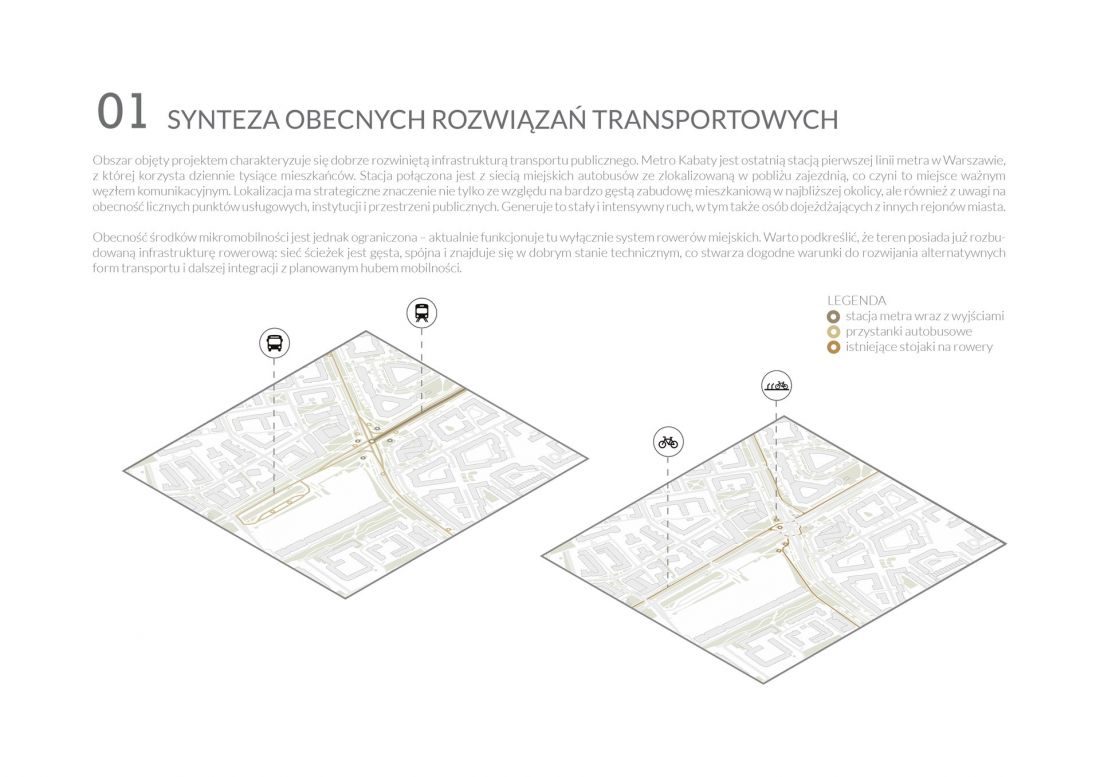
Zuzanna Ryś and Krystian Brynda synthesized the current transportation solutions in the study area. The terminal they designed was located near Kabaty metro station - the last stop of Warsaw's first metro line.
The Kabaty station already functions as an important transportation hub - it is connected to the bus depot. As a result, thousands of passengers have the entire transportation network at their disposal at this location.
The location is strategically important not only because of the very dense residential development in the immediate area, but also because of the presence of numerous service points, institutions and public spaces. This generates constant and intense traffic, including commuters from other areas of the city
- explain the authors.
In addition to the subway and bus network, the area also has urban bicycles and extensive bicycle infrastructure. The dense and consistent network of bicycle paths is another incentive to develop a mobility hub right here.
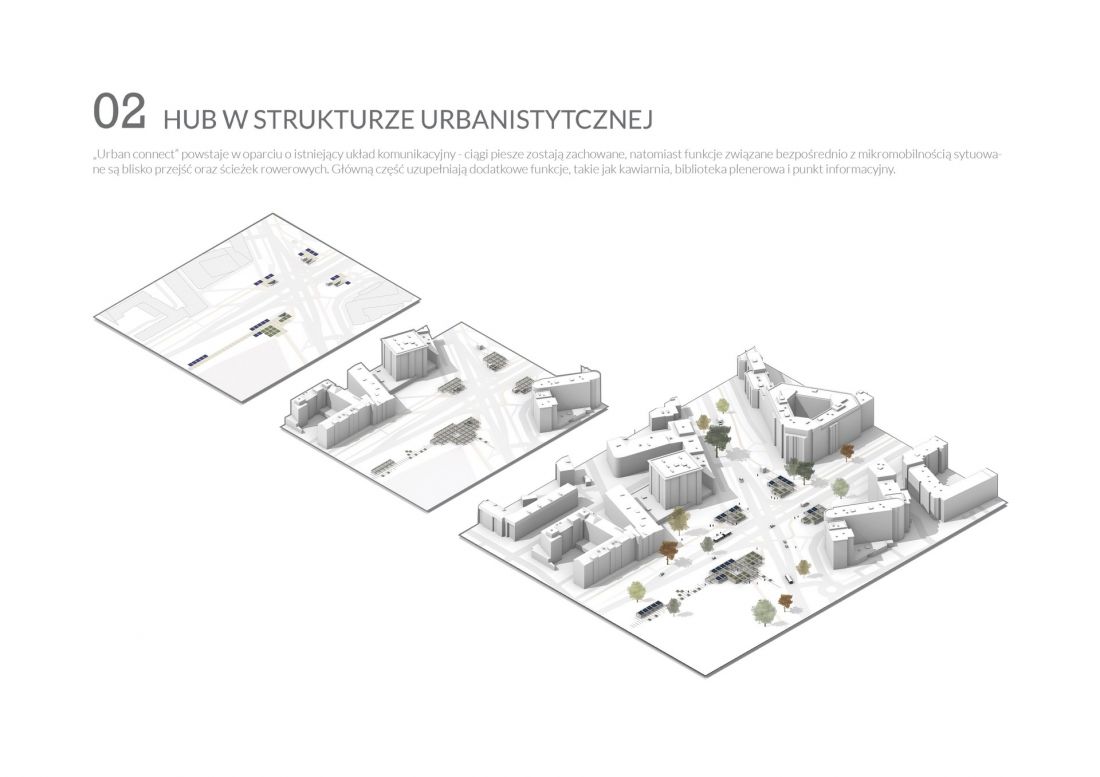
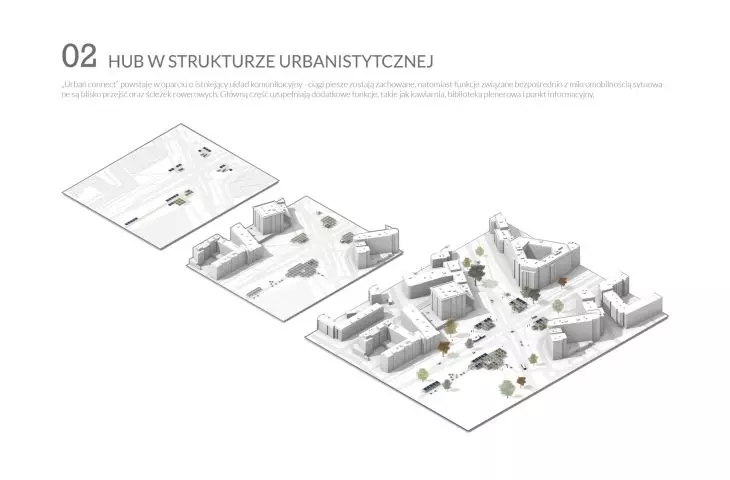
hub in urban structure
design: Zuzanna Ryś, Krystian Brynda
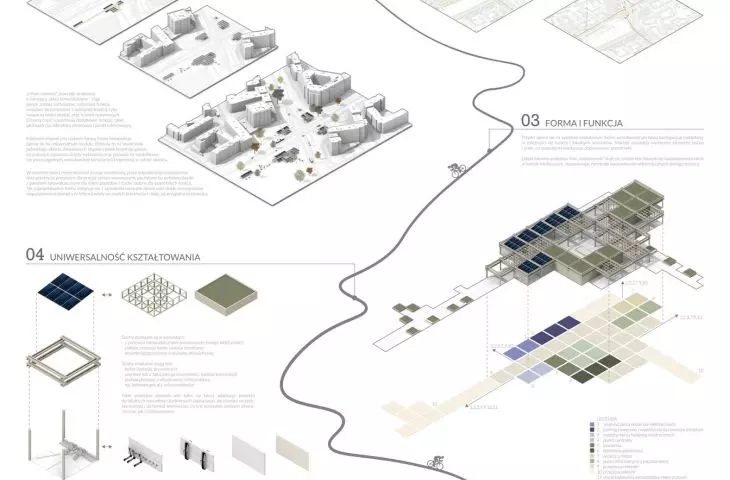
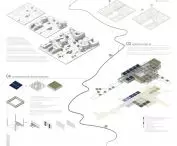
The authors envisaged preserving the pedestrian routes in their current state. They located micromobility points close to street crossings and bicycle paths.
universal stop
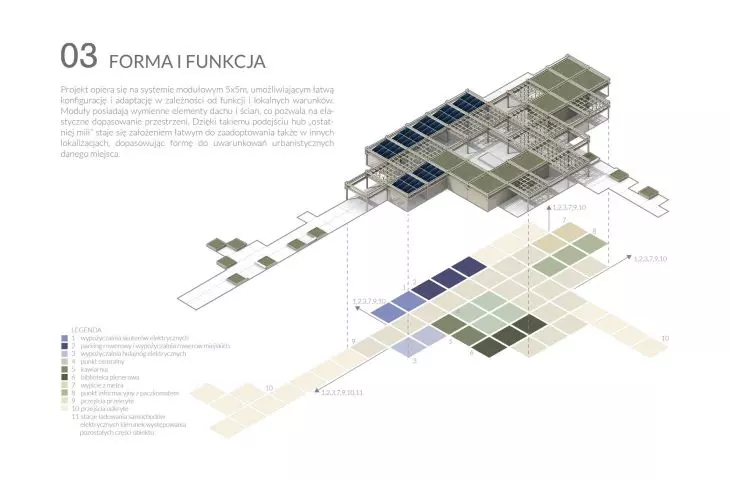
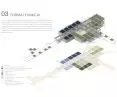
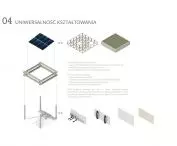
The terminal proposed by the students is based on a modular system. Modules measuring 5x5 meters allow the facility to be adapted to local functions and conditions. Interchangeable roof and wall elements are also conducive to this.
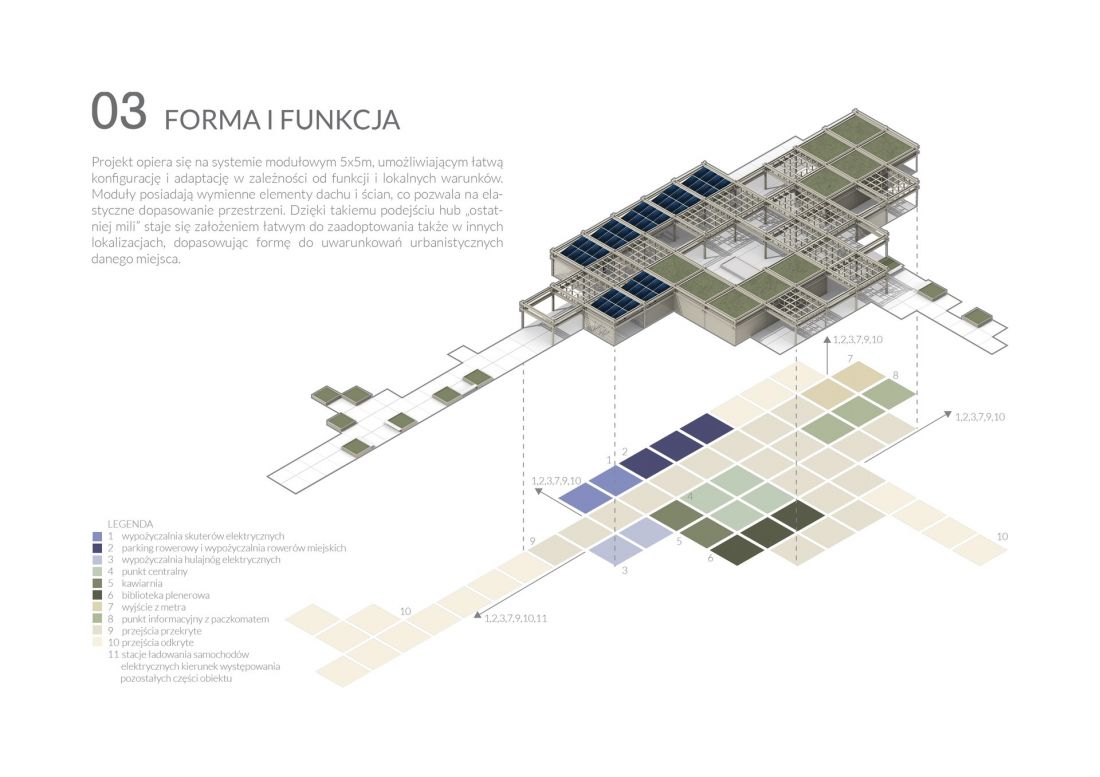
form and function
proj.: Zuzanna Ryś, Krystian Brynda
Thanks to this approach, the "last mile" hub becomes an assumption easy to adapt also in other locations, adjusting the form to the urban conditions of a given place
- the authors add.
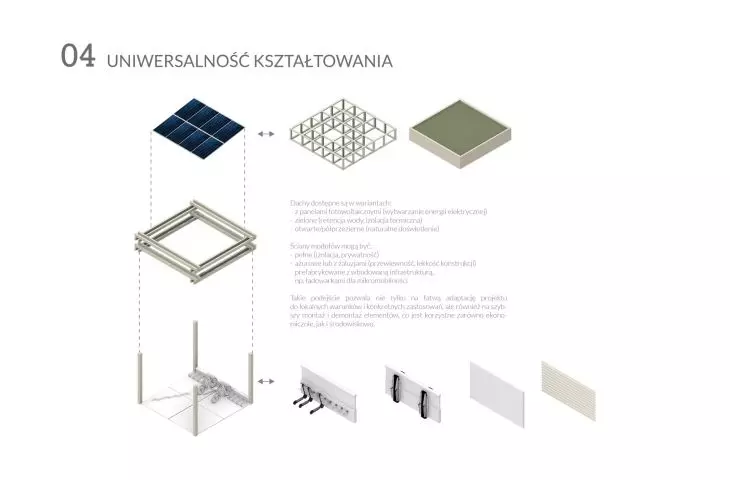
Roofs with photovoltaic panels, which additionally generate electricity, are envisaged; green roofs, which according to them are water retention and thermal insulation; as well as open or translucent roofs - letting in more natural light.
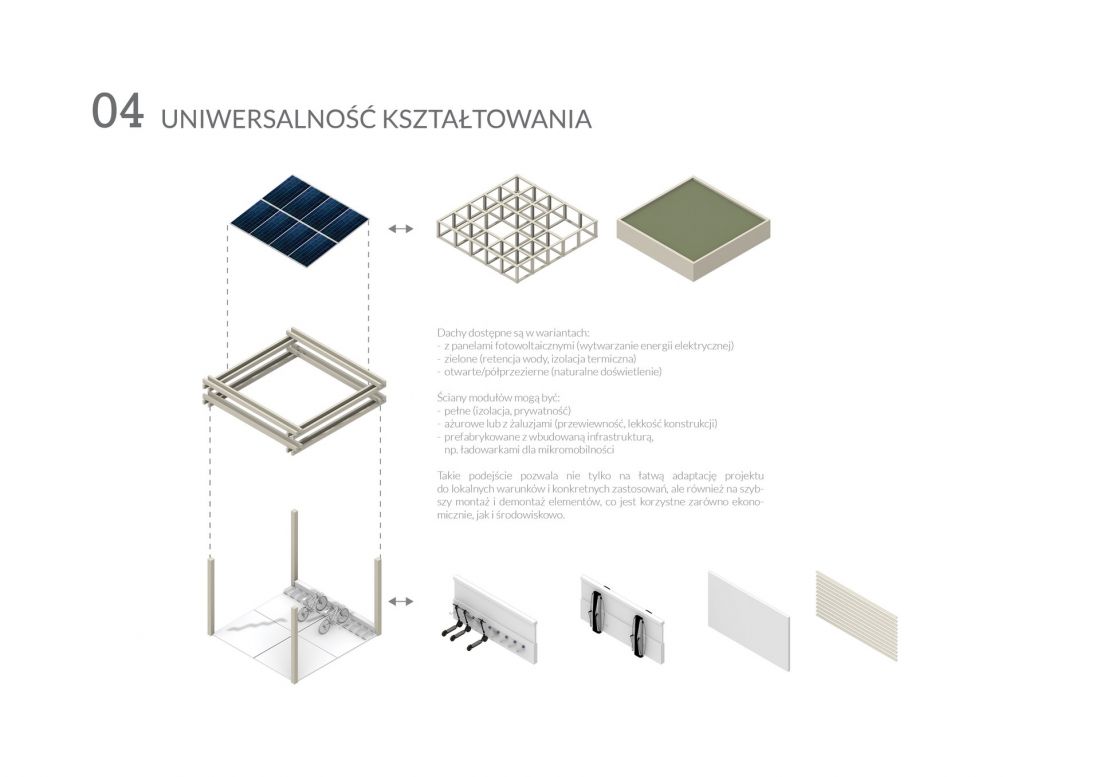
versatility of design
proj.: Zuzanna Ryś, Krystian Brynda
The available variants of building walls provide insulation and privacy - solid walls, and airiness and lightness of construction - openwork walls or with louvers. In addition, the designs feature prefabricated walls with built-in infrastructure such as charging stations for vehicles.
This approach allows not only easy adaptation of the design to local conditions and specific applications, but also faster assembly and disassembly of elements, which is both economically and environmentally beneficial
- continue the authors.
The designed facilities serve not only terminal functions. Individual ones also serve as a cafe, an open-air library or an information desk.
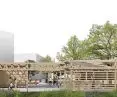
"Urban connect" is an example of architecture that sustainably combines functionality, accessibility and integration with the environment.