






#mies2026
In the heart of the Imperial Baths in Karlovy Vary - a monumental UNESCO-listed spa complex - aspace has been created that completely changes the way we think about adapting historic buildings. The project by Petr Hájek ARCHITEKTI was not about reconstructing historic interiors or creating another classical concert hall. The architects placed inside the 19th-century atrium an autonomous structure that acts like a precise mechanism: a space capable of changing acoustics, layout and function depending on the type of event. This is where concerts, film screenings, theatrical performances and festival events are held today. The effect is far from nostalgic stylization - rather, the new intervention acts as a contemporary cultural infrastructure embedded in historic architecture.
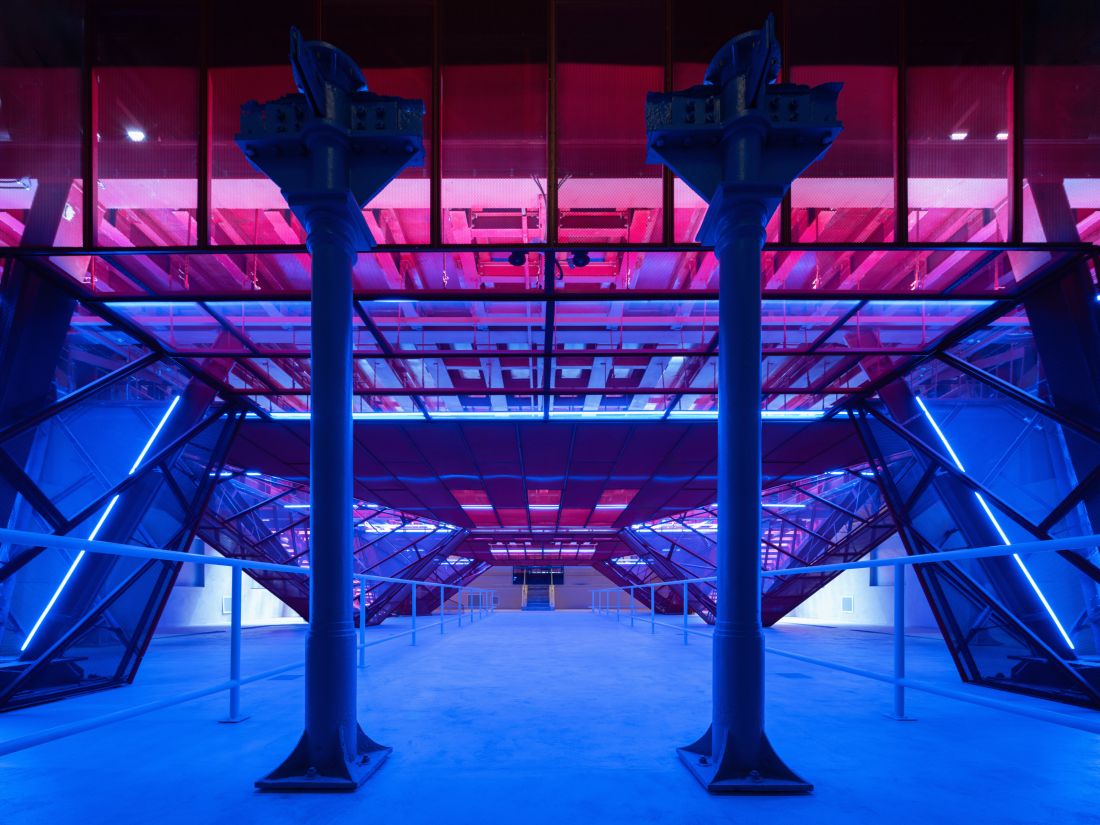
The Imperial Baths in Karlovy Vary with a new cultural hall
© Petr Polák
The Imperial Baths in Karlovy Vary have regained a new function
The Imperial Baths were completed in 1895 to a design by Ferdinand Fellner and Hermann Helmer - architects responsible for many theaters and representative public buildings in Central Europe. For years, the building remained one of the symbols of Karlovy Vary's spa character. Over time, however, its role began to fade, and the monumental complex required a new functional program. When the renovation of the building began, the future purpose of the facility had not yet been specified. The historic structure was being renovated, but without a clear vision for its future use. It was not until a concept prepared by the Petr Hájek ARCHITEKTI studio that the entire establishment was given a new direction. The architects proposed that the former spa facility once again become a public space - a place for culture, meetings and city events. In this way, the Imperial Baths regained its importance not as a museum relic, but as an active part of the modern city.
The Imperial Baths in Karlovy Vary with a new cultural hall
© Petr Hájek ARCHITEKTI
Concert hall, cinema and theater in one place
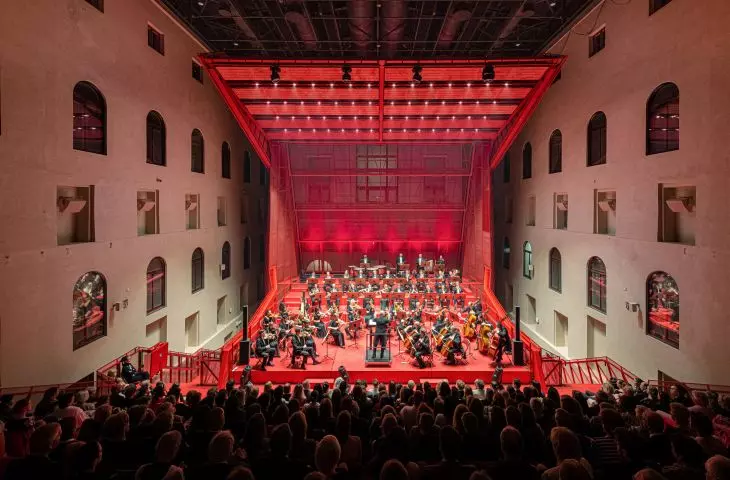
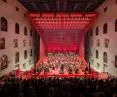
The initial plan was to create a concert hall for six hundred people. However, analyses showed that such a large intrusion would disturb the proportions of the historic building and put undue strain on its historic structure. In the end, the architects decided on a more precise solution - a multipurpose hall for three hundred spectators. Today, the new space serves multiple roles simultaneously.It is the home of the Karlovy Vary Philharmonic, the cinema of the Karlovy Vary International Film Festival, as well as a venue for theater, dance, congress and exhibition events. It was therefore crucial to create an interior that would not be subordinated to one function, but would remain flexible and capable of rapid transformation.
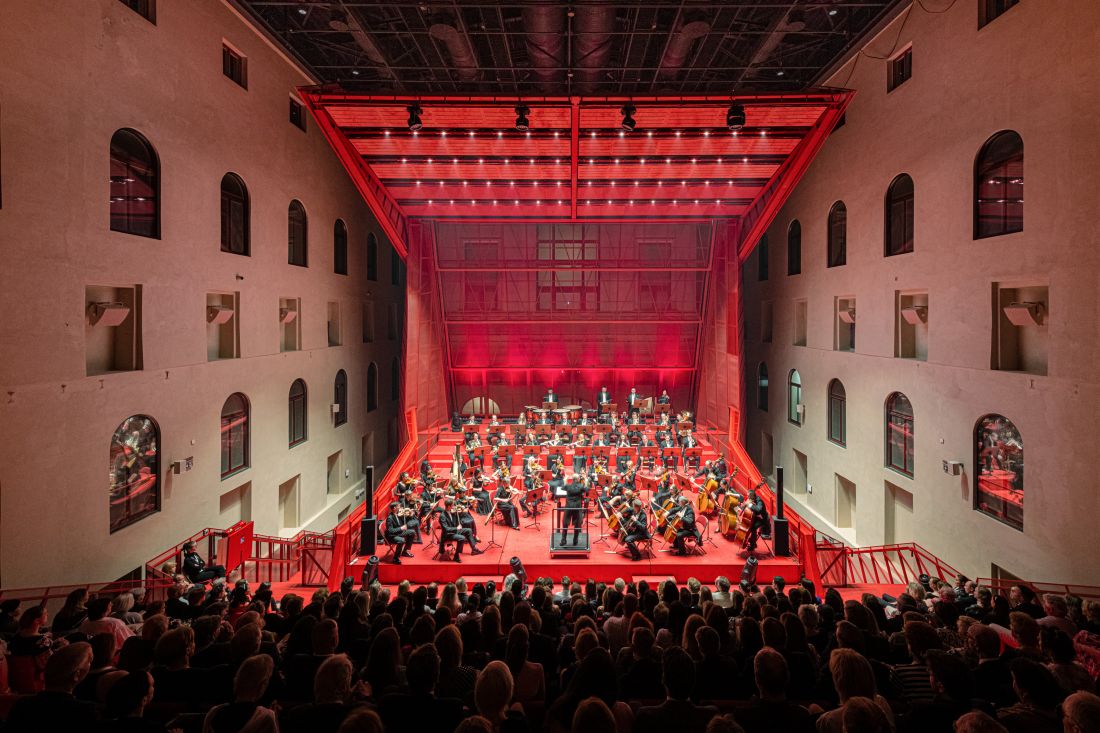
The Imperial Baths in Karlovy Vary with a new cultural hall
© Benedikt Markel
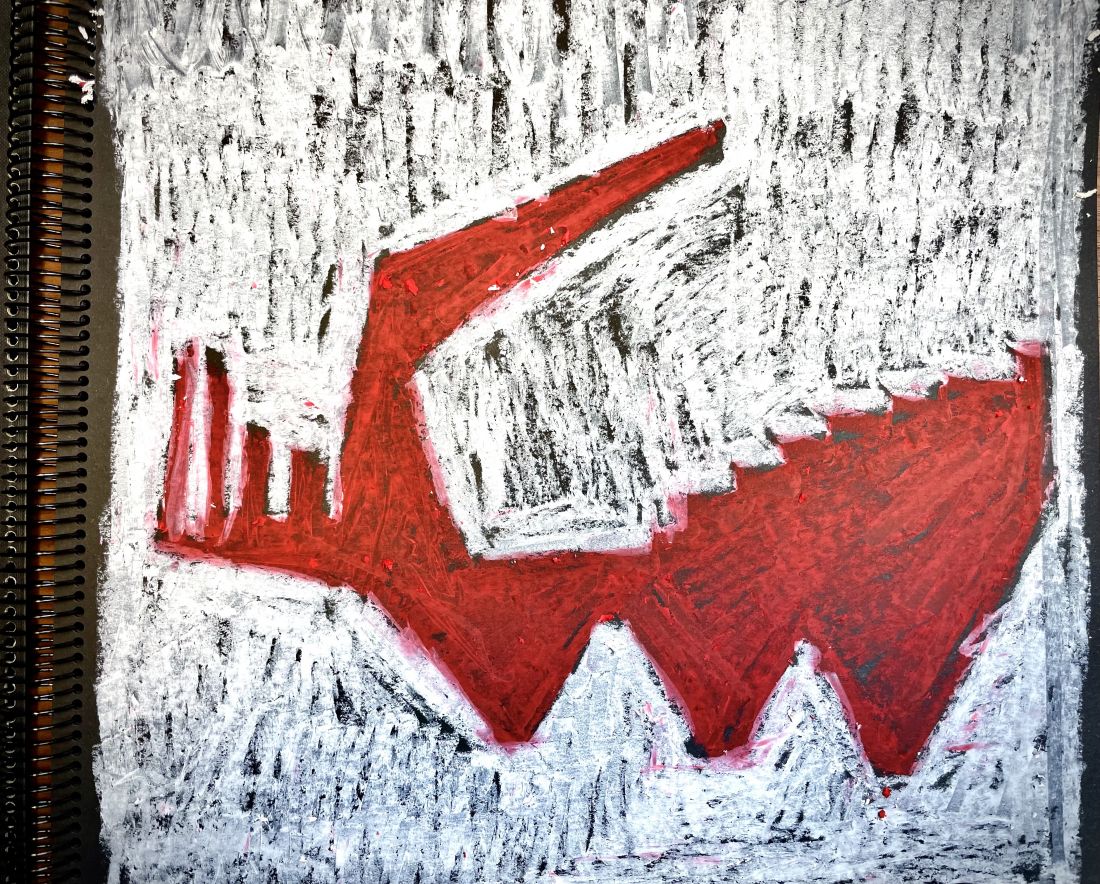
Architecture inside the monument. "Robot" suspended in the historic atrium
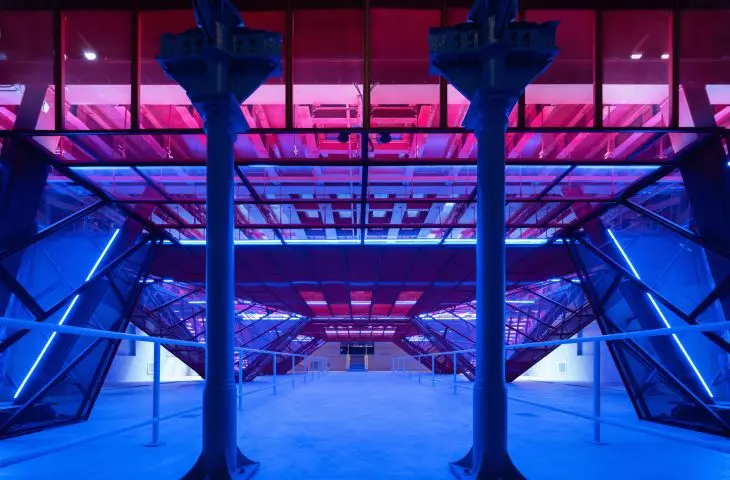
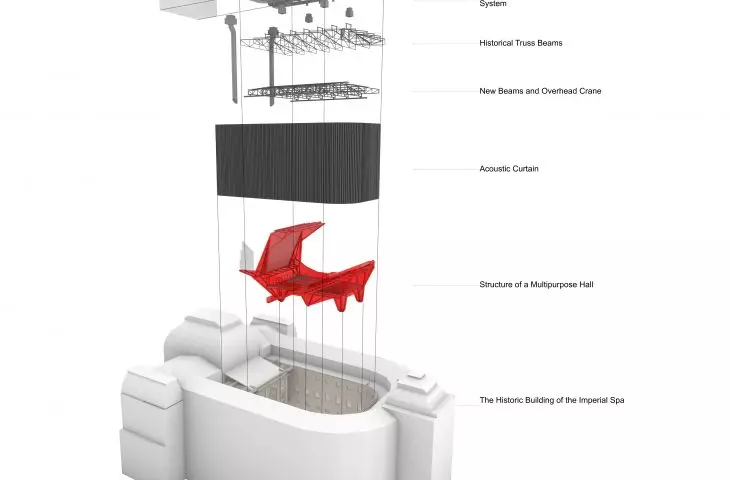
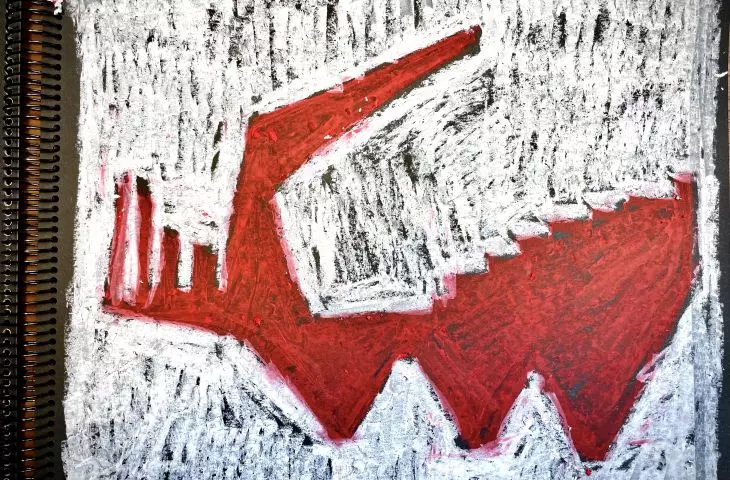
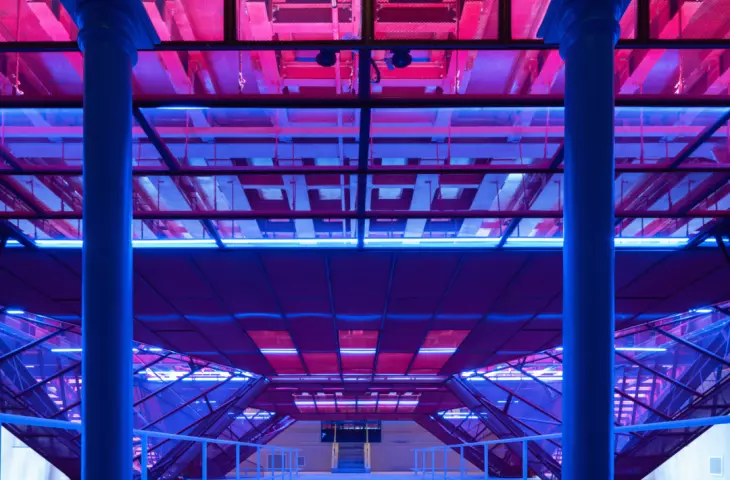
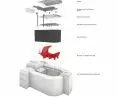
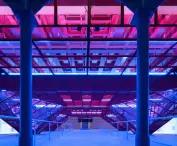
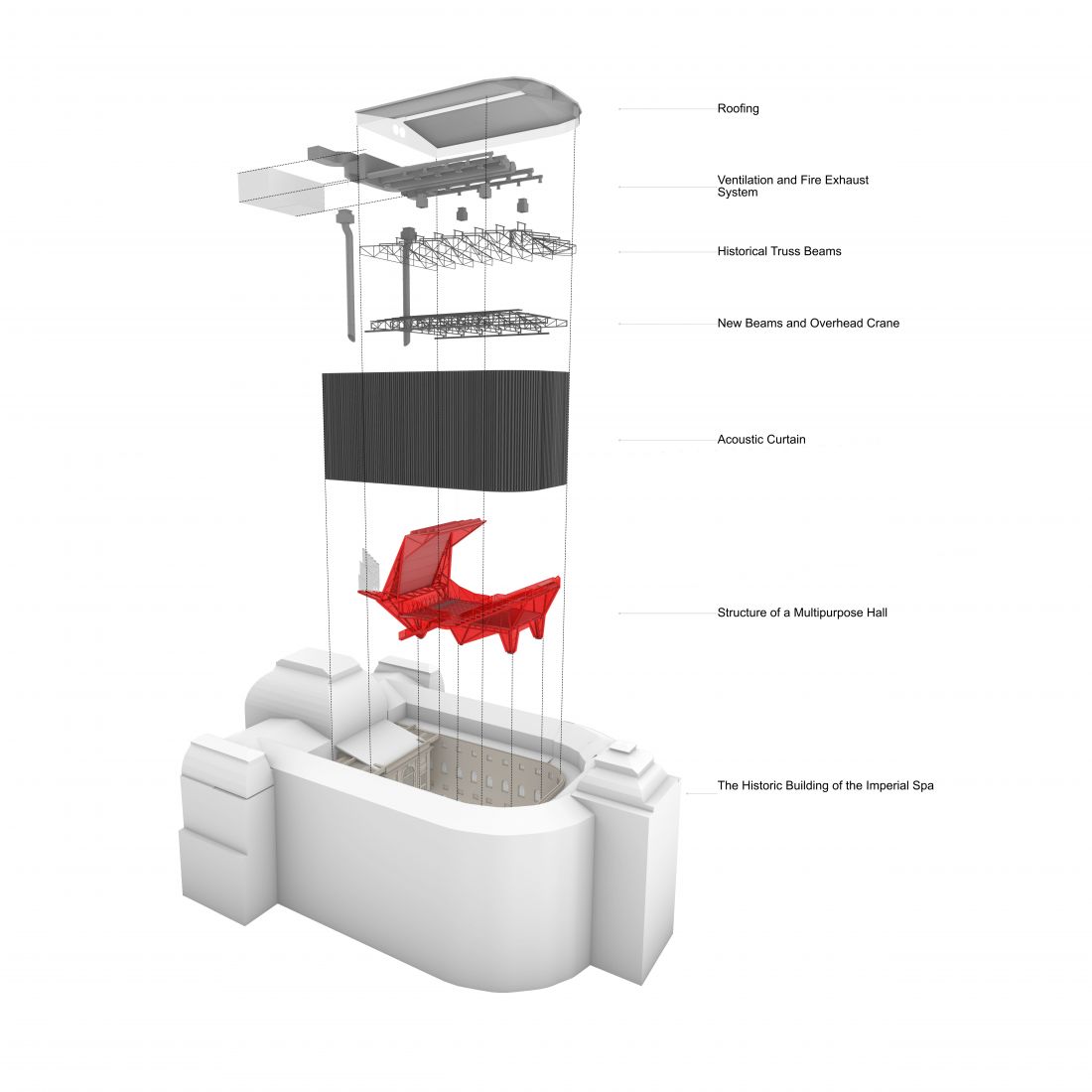
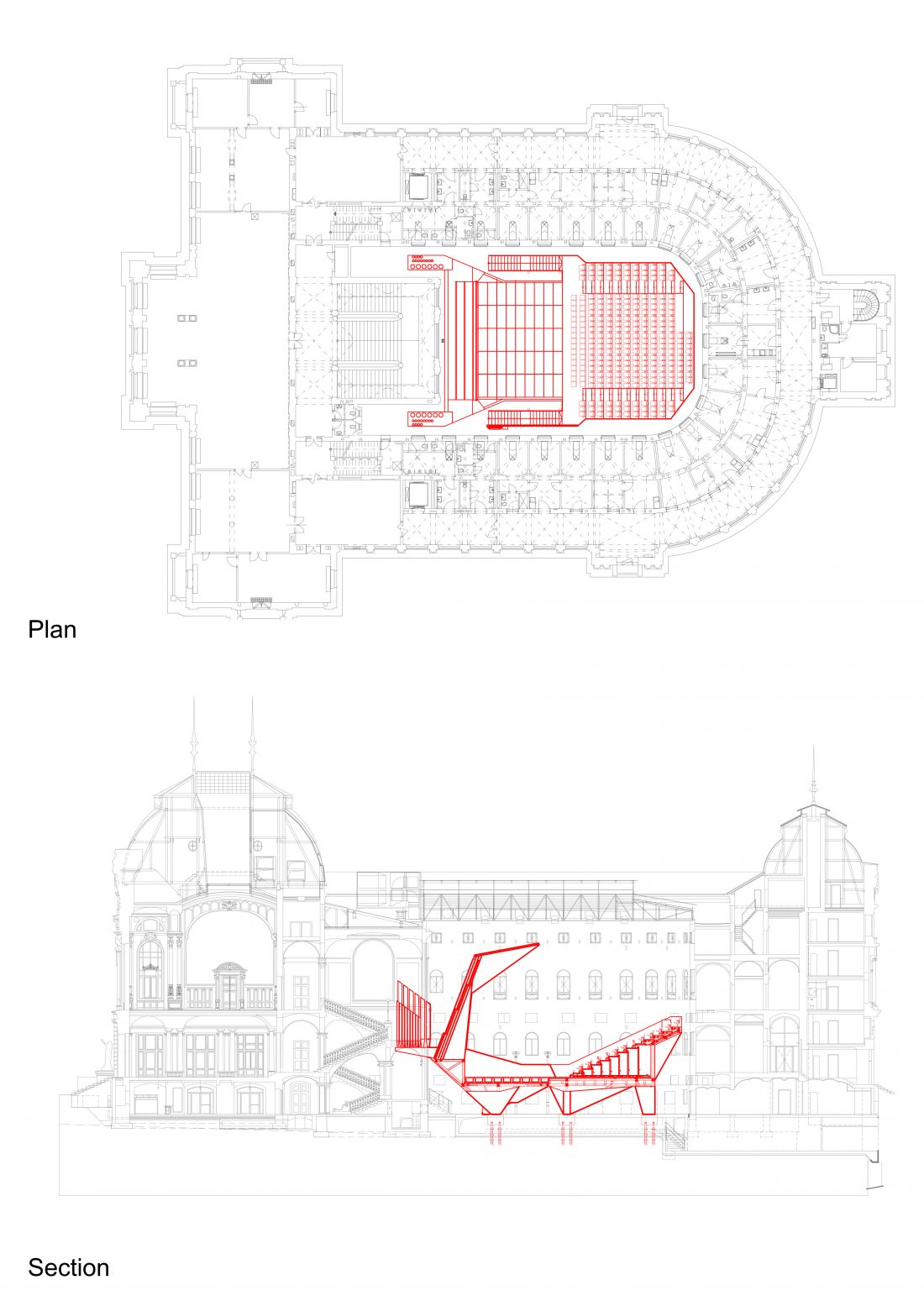
The most distinctive element of the project is the design of the new hall itself. The architects describe it as an autonomous "robot" or "transformer" placed inside the historic atrium. The structure is supported by six slender steel supports that only make point-to-point contact with the historic structure of the building. This ensures that the new intervention remains independent of the historic walls and does not directly interfere with the original architectural fabric. In practice, this means that the contemporary hall functions like a separate object inscribed in the existing space. Equally unusual was the process of assembling the structure itself. The individual elements were introduced into the interior through a hole in the roof - like a ship enclosed in a glass bottle. The operation required great precision and close cooperation between architects, constructors and stage technology specialists.
The Imperial Baths in Karlovy Vary with its new culture hall
© Petr Hájek ARCHITEKTI
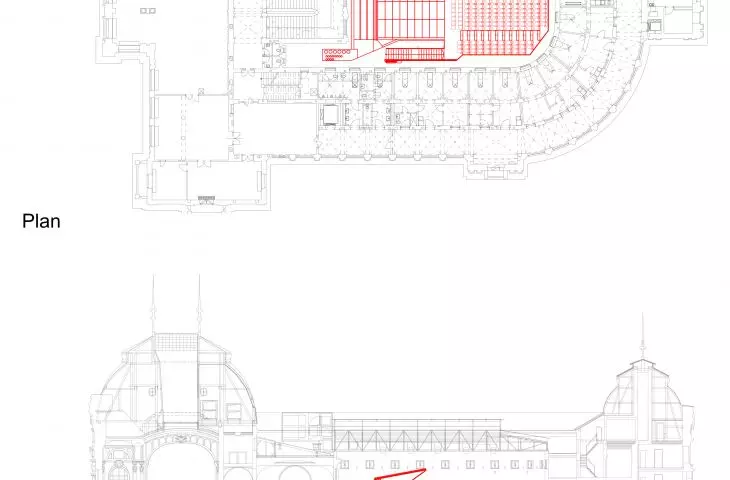
Plan, solid and form. Contemporary construction in a historic space
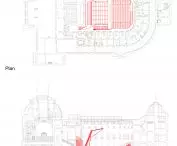
The project is based on a clear separation of two architectural layers - the historic structure of the Imperial Baths and the contemporary intervention placed inside it. The architects did not try to mimic the historic aesthetics or blend the new hall into the old architecture. Instead, they created an autonomous object that retains its own structural and formal logic. The new body was raised above the floor level and supported on six slender supports, reinforcing the impression of lightness and temporality. The legibility of the original spatial layout of the former baths has been preserved, and the central atrium remains the most important interior of the entire complex.
The form of the hall is economical and subordinated to function. Steel is responsible for structural precision and the possibility of large spans, while wood shapes the acoustic and material character of the interior. As a result, the new architecture resembles a mechanism embedded in a historic building - clearly contemporary, but remaining in a controlled relationship with its 19th-century surroundings.
The Imperial Baths in Karlovy Vary with a new cultural hall
© Petr Hájek ARCHITEKTI
Variable acoustics and moving elements. The hall works like a mechanism
One of the most important aspects of the project is the ability to continuously transform the interior. The hall was equipped with a variable acoustics system based on moving platforms, rotating panels and acoustic curtains. Thanks to this, the space can be adapted to various events - from symphonic concerts to film screenings or theatrical performances. The system makes it possible to achieve a reverberation time of 1.1 seconds for speech, 1.9 seconds for an orchestra and 3 seconds for organ music. Installation of a new organ is also planned for the next stage. The architects are also paying attention to issues of sustainability and the technological life cycle of the building. All movable elements are designed for long life and recyclability. Even the crane used during the installation of the structure has been converted into a mobile stage bridge.
Adapting a monument without reconstructing the past
The project in Karlovy Vary shows how the approach to revitalizing historic architecture is changing today. Modern adaptation is less and less about recreating the old appearance of buildings. Much more often it is about giving them new functions and reintegrating them into city life. In the case of the Imperial Baths, the architecture was not reduced to the role of showy scenery. What was created was a space that acts like a modern cultural infrastructure - flexible, technically advanced and subordinate to its users. That's why the realization of the Petr Hájek ARCHITEKTI studio goes beyond the standard modernization of a monument. The new auditorium does not compete with the historic architecture, but rather sets it in motion anew - restoring the former complex to a significance that could not be achieved through preservation alone.