





Ola Kloc talks about the lessons learned from the New Żerniki housing development project, attempts to create a "complete housing development," and global challenges that may completely remodel our idea of living in the city with Zbigniew Maćkow, founder of the architecture office Maćków Pracownia Projektowa.
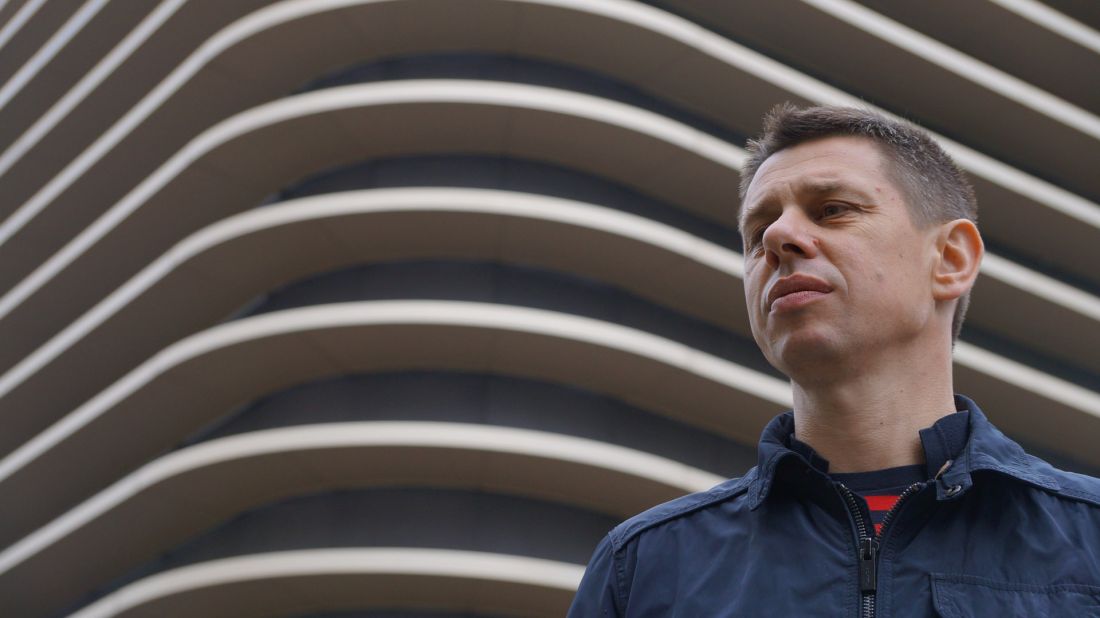
Zbigniew MAĆKÓW - a graduate of the Faculty of Architecture at Wroclaw University of Technology (1996) and Kingston University (1994). Founder of the Wroclaw office Maćków Pracownia Projektowa (1995). Winner of the SARP 2020 Honorary Award, SARP Wroclaw Branch Honorary Award, SARP Year Award, "Beautiful Wroclaw" Grand Prix and more than fifty awards in architectural competitions, among others. Chairman of the DSOIA Council (2010-2018). Co-initiator and participant in the project of the New Żerniki housing estate in Wroclaw, curator of architecture during the ECC Wrocław 2016. Founder of the think tank Gęsto (future of habitation) and the startup "diffeRent" (apartment as a service).
Ola Kloc: The first residents moved into Nowe Żerniki in 2017. Almost nine years have passed - can we already draw conclusions from this experiment? What has succeeded in this model process, and what hasn't quite?
Zbigniew Maciekow:From the beginning, we wanted to arrange the process in such a way that it had the best chance of achieving the highest quality. It wasn't about the best product or the best final solutions, because that can be achieved much faster, simpler and cheaper in terms of energy expenditure and the number of people involved - a good architectural competition with well-described assumptions would probably lead to better and maybe even faster solutions. However, we wanted a model process.
Ola Kloc: How did it proceed?
Zbigniew Maciekow:The idea was born in our heads during discussions in a narrow circle in 2009. At that time, we were just after the crash of the economic notion we had all shared just two years earlier: that here was our country, Europe and the World entering a stage of endless growth. However, we had forgotten that the economy and its related processes are a bit more complicated, that they are subject to business cycles, that there are also unfavorable phenomena that can stop, slow down or even reverse this process. Well, and 2008 happened, the subprime lending crisis in the United States spilled over to the whole world. The development market applied the handbrake. We experienced it ourselves - we were in Warsaw for talks with an Irish developer, they lasted until 9 pm, we returned to Wroclaw in the morning, because the road conditions were terrible. Out of fatigue, we accidentally left our briefcase there. The next morning our secretary, looking for it, called that office, it turned out that the company had ceased to exist overnight.
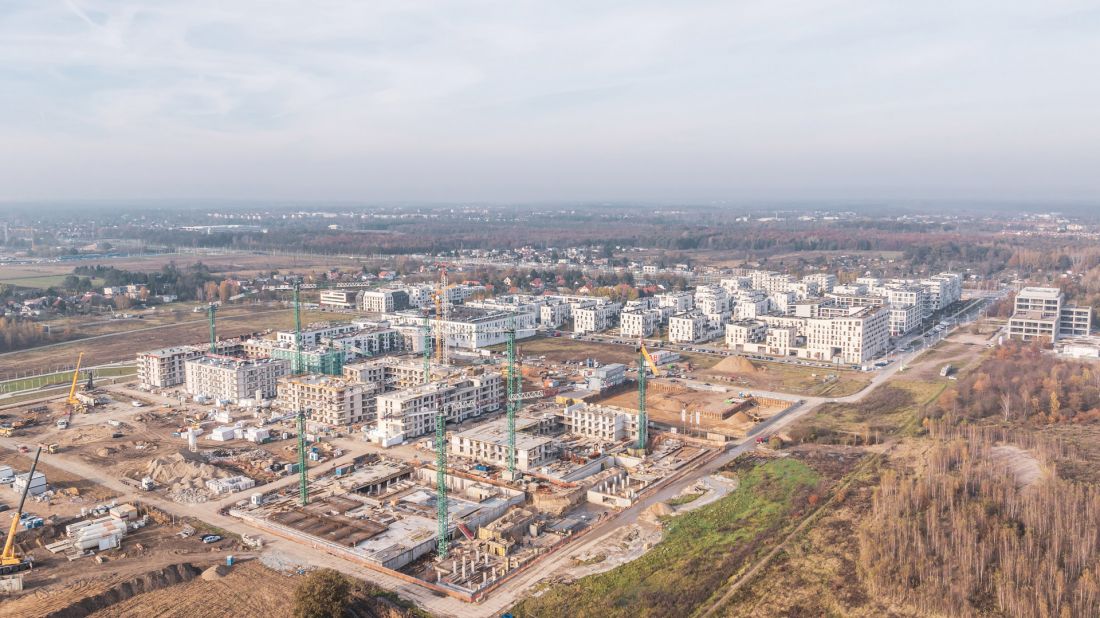
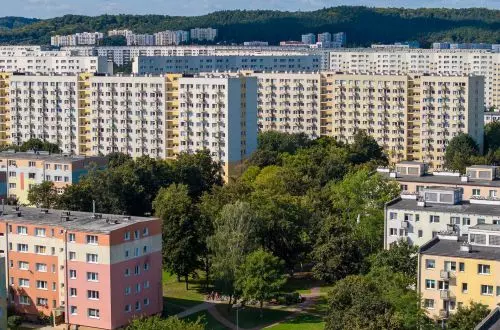
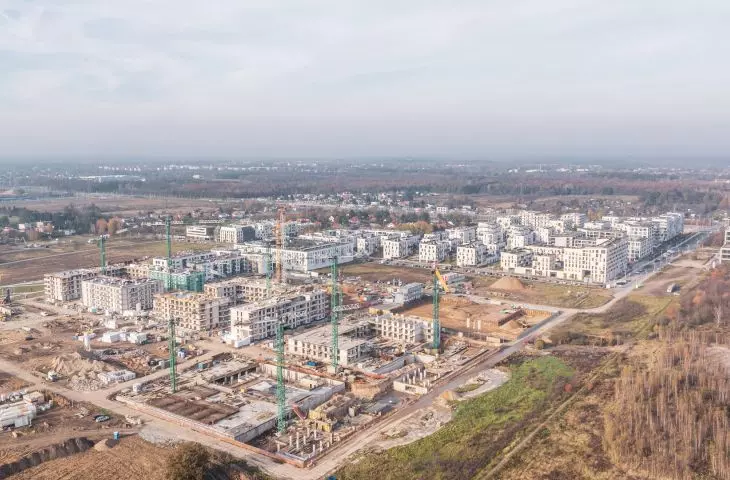
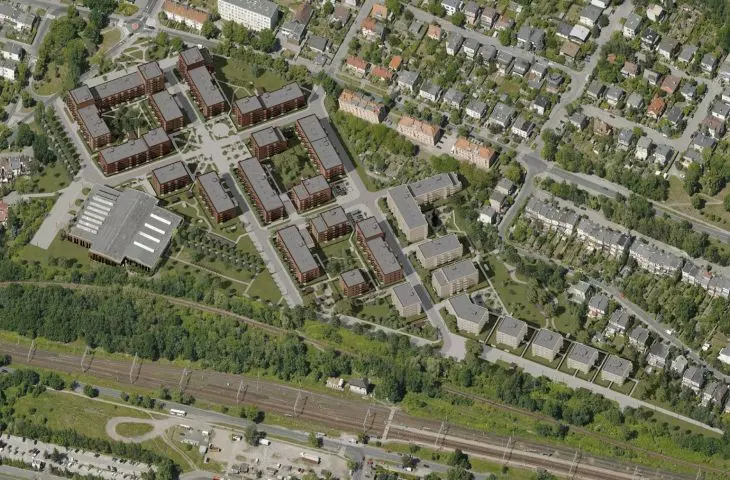
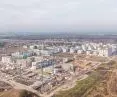
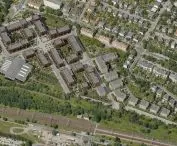
The New Żerniki estate in Wroclaw was a joint initiative of the City and the Lower Silesian District Chamber of Architects of the Republic of Poland, in cooperation with the Wroclaw branch of SARP - nearly forty architectural studios took part in this experimental process of creating the estate
photo: Maciej Lulko
Ola Kloc: Why is this context so important?
Zbigniew Maciekow:As if we didn't colorfully paint this picture for ourselves and spell reality, 98.5 percent of what is created in the housing substance, which is a component of the settlements we are discussing, is built by private capital. Immediately after this very sharp brake on the market, developers tried to continue their work and began to build an agenda, to create briefs that consisted of two-room apartments of 32 square meters, or studios that were 21 meters, which drastically undercut the standard of habitation, not to mention thethe standard of day-to-day functioning, balconies, exposure, green areas, density - all this was disrupted, exaggerated in favor of intensity and optimization of construction, in order to try to build and maintain businesses in these difficult times despite everything. And it was in this context that we began to organize this venture. I also have to honestly add that our agenda at the start was different, it pivoted in the course, and at some point, which we didn't realize, we changed it.
Ola Kloc: What was the starting point?
Zbigniew Maciekow:We wanted to try to design the neighborhood with the participation of the City as a facilitator of discussions about the quality of the space, in order not to build 90 percent one-bedroom apartments, because that was not the real social demand. When we started this process, everyone was designing for a magical goal: creditworthiness - the average family could get a mortgage for about 30 square meters. I said to my boredom at our first meetings that we were not taught to design under creditworthiness, that it was an economic concept, not based on real human needs. People live alone, in relationships, in small families, large families, large families, have dogs, cats, hobbies, and therefore have different surface, space and housing needs. To simplify: our agenda sought to break this trend, that was our starting point.
The city - and here a big nod to the city officials of the time, i.e. Mayor Rafal Dutkiewicz, Vice Mayor Adam Grehl and city architect Piotr Fokczynski - understood this need, and was open to a concerted attempt to change the established thinking, to break out of the trenches of this creditworthiness, this abstract notion that tied everyone's hands.
We wanted to start this process in a model way, that is, with a very conscious choice of the site for our assumptions: the site must not generate urban sprawl, it must build the city, not deconstruct it; it must have full urban infrastructure, both communication (streetcar and bus lines) and technical; it must be owned by the City, because in the Polish hierarchy of law it is the right of ownership that is highest - the one who decides who owns it. This also avoided a flaw inherent in many such projects, because when a piece of land is in private hands, the speculative gene appears, someone disagrees with the proposed solutions, rotten compromises begin. The last quantifier of the site selection concerned the non-generation of social conflicts. Luckily, the City had a site that met these criteria and chose it.
Ola Kloc: How did these assumptions change?
Zbigniew Maciekow:In 2012 the market began to change, larger apartments started to appear, creditworthiness was no longer an impassable limit. We saw that the real problem lay elsewhere - in building neighborhoods in such a way that they are sustainable in the long term, have a set of services nested on a pedestrian axis and not accessible by a chess-horse movement, so that residents have to use the car, that they have the right amount of greenery, social functions such as a senior citizen's home, school, kindergarten and so on. It occurred to us that these are much more important issues, and it's to them that we should shift the center of gravity, rather than the size of the apartments themselves. So our assumptions have changed, and in relation to those changed conclusions should be drawn.
Ola Kloc: Which ones?
Zbigniew Maciekow:The main conclusion is this: despite the fact that 98.5 percent of the market is created by private entities and commercial capital, the City, Municipality or Local Government, should not, as they have done so far - I'm not talking about Wroclaw, but the whole of Poland - abdicate their role as moderator of the process. Even if it doesn't participate in the project as a landowner, capital-wise or organizationally, the City has the tools to demand certain things, has the duty to uphold quality as a representative of the collective will of the residents.
The horizon of the developer is much shorter than the horizon of the needs of the residents or the City, and there is nothing wrong with that. We often use the mental shortcut that the developer is "the uncle of evil itself." No, he is a business law entity, and has certain obligations, primarily financial, to his shareholders or owners. Of course, like any entity, i.e. any of us or any company, it has certain social obligations, but these will not rank higher than the primary purpose of the entity's existence. This mental shortcut reduces the debate to an antagonistic muzzle of two sides: evil developers versus righteous and only right activists. This does not lead to any constructive solution.
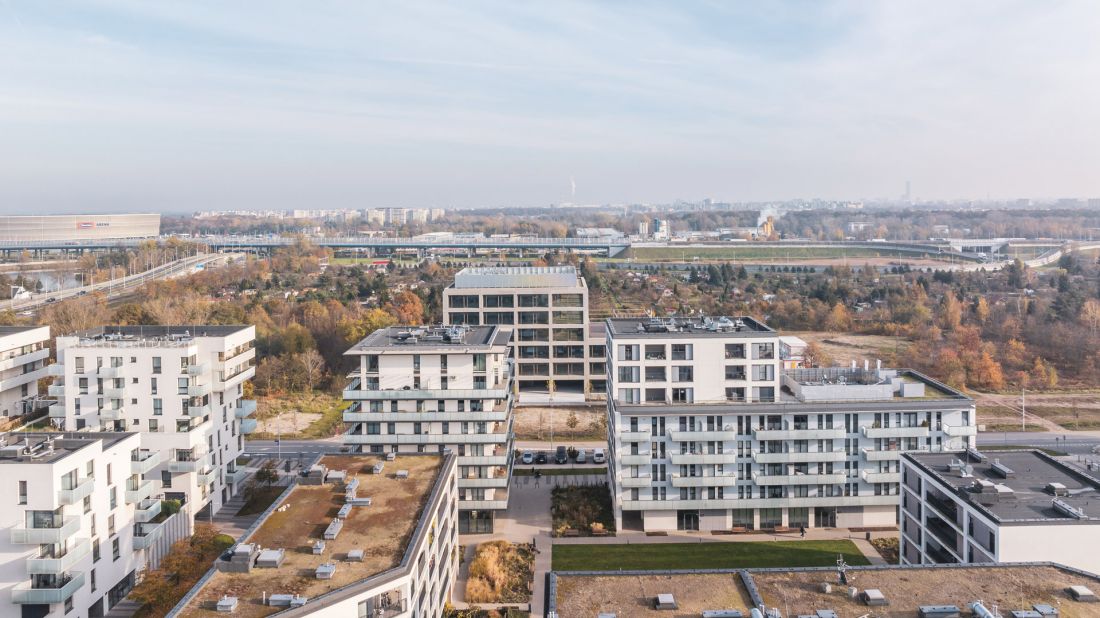
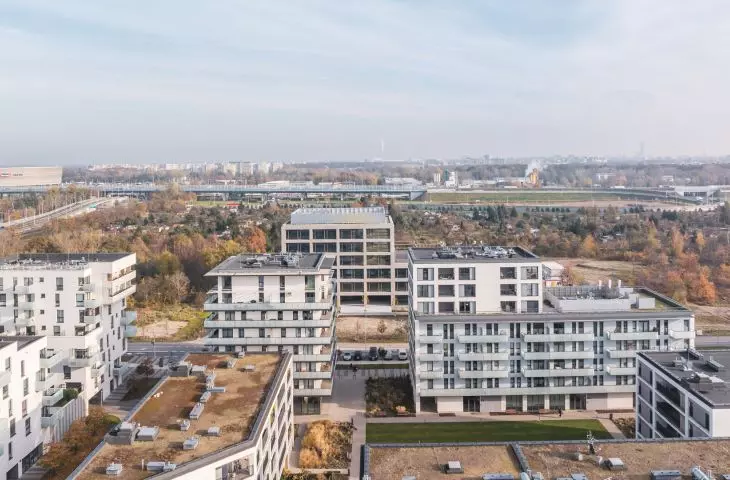
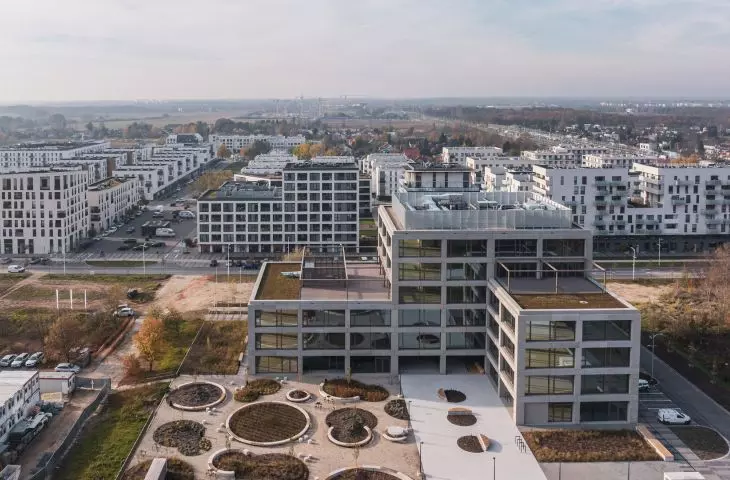
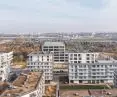
An office building was also built in Nowe Żerniki - WUWA Point designed by Maćków Pracownia Projektowa
photo: Maciej Lulko
Ola Kloc: When it comes to Nowe Żerniki - the developers have fulfilled their obligations to build apartments, the City has not necessarily fulfilled its obligations. The competition for the school was not announced until November 2025.
Zbigniew Maciekow:The project was developed under the aegis of the City, the authorities with full understanding, actively and willingly joined the process. Unfortunately, after the change of authorities, the optics - to which the managers are entitled - changed. The city decided that the stage of experimentation was over, which I deeply regret. This is a mistake that architectural history will one day judge. It really wasn't much of a stretch for the City to continue with this topic, but to learn lessons first and foremost for itself, its work and its organization. This process has shown that when the City is the facilitator and the quarterback, it can achieve much better results; the number of awards or the attentiveness devoted to this project shows that the quality of life there is significantly higher than in places that are built without mediation or oversight by the City.
Ola Kloc: What else did the exercise show?
Zbigniew Maciekow:For example, that the City can generate very serious revenues for the municipal coffers by acting like a land developer, i.e. by accumulating city resources, making certain purchases and consolidating sites, designing master plans of assumptions, developing these sites with technical infrastructure, designating fields for social infrastructure and only then selling them to private entities so that they can build, but already according to the rules of the game imposed by the City. This is what happened in New Żerniki, and it paid off economically - plots of land set aside at the beginning were sold at the asking price, sometimes there were not even any takers for them. Today, when this layout is developed and has its own quality, the plots are sold several or a dozen times more expensive, and yet this money goes into the city coffers! I can't understand why the City doesn't want to take advantage of this privilege. Copenhagen is built this way - the City buys land, even from private owners, designs large areas, develops them, and then sells them to the commercial market for many times more money, and earns money on this so that it can build senior citizens' homes, kindergartens or revitalize townhouses, build streets, parks and so on.
Another conclusion is that if the City develops the land with road infrastructure, all the networks, and designates fields for social infrastructure from the beginning, reserving space for a school, kindergarten, senior citizens' home, it ends up saving resources and keeping an eye on quality - these places are not built in a haphazard, chaotic way. It happens that first a housing development is built, and then we look for a place for a school, and suddenly it turns out that it has to be built on the outskirts, which means that two-thirds of the residents have to command their children by car, traffic jams form under the school, children don't walk, there is a problem with overweight. The problems are piling up, and one decision would be enough - to designate a place for the school in the central point of the neighborhood with assured pedestrian access, collision-free, without intersecting with the main car routes.
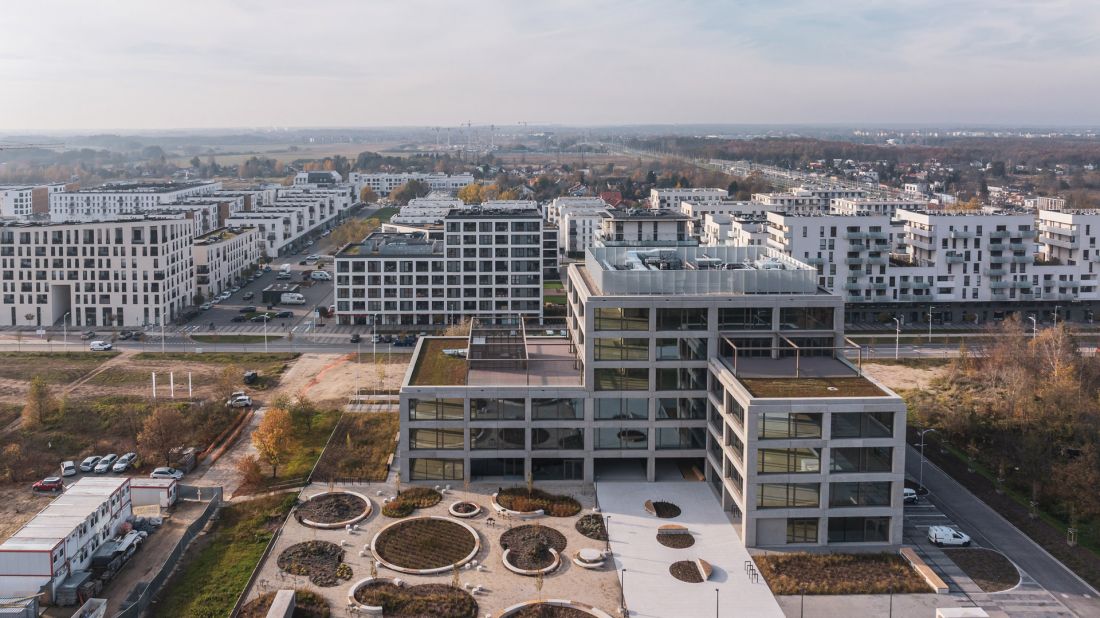
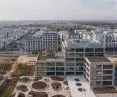
An office building was also constructed in Nowe Żerniki - WUWA Point designed by Maćków Pracownia Projektowa
Photo: Maciej Lulko
Ola Kloc: According to plans, the school in Nowe Żerniki is scheduled to open in September 2029.
Zbigniew Maciekow:If one has said A and designated a place, this school must then be built. In the City's justification, one must take into account something called the school unit in the old principles of urban planning - the number of children in an area that makes economic sense for a school. It used to be defined at about 5,000 residents, but we live in a time when fertility is scouring the bottom, we don't have generational replicability. This school unit today does not refer to 5 thousand residents, but probably 7. This is not easy to determine, it would be necessary to conduct a study in a specific place, because fertility rates are not the same everywhere. So the school can't be built on the first day of existence of the first of the estate's buildings, it should be built at a certain moment; I have the impression that in New Żerniki this happened a little too late, but better later than never.
Ola Kloc: The good news is that the project will be selected through a competition.
Zbigniew Maciekow:This is the fourth school in the last few years that will be built by the City. It should be appreciated that it will be built as part of a competition, admittedly not an SARP competition, but it is an architectural competition nonetheless. It will also be built on the site that was designated for it, so the neighborhood will largely complete itself.
Ola Kloc: This is not the only missing piece of this puzzle.
Zbigniew Maciekow:What's missing is the Local Activity Center, that is, the community center and the market, which were supposed to be nodal points on the main traffic axis, that is, Barska Avenue. Their absence also extremely destabilizes the entire layout. The commercial side fully met its obligations - not only were apartments created, it also fulfilled the condition of locating only services on the first floors along the main pedestrian traffic axis, the aforementioned Barskich Avenue. This was difficult, because services are not a very marketable commodity with developers, they usually sell at the end, for less money, so developers are most likely to stuff apartments with gardens in the first floors, which are then blenched by residents to a height of two meters with fences from Castorama. This is a bad phenomenon, services are then built on the outskirts, in resultant places. In New Żerniki we managed to enforce the location of services in the first floors, and this is another conclusion - if the City moderates and actively participates in the process, the project can be plotted in such a way that even private capital, which is free to decide what it will do, will place services in the first floors.
We wanted the service layout in New Żerniki to work a bit like a shopping center, which has so-called anchors at the ends that draw traffic. Such anchors, in our conception, were to be the Local Activity Center and the local market, with heavy pedestrian traffic in between. The commercial part has been realized, and perhaps the richest set of services in Wroclaw's housing estates has been created - at a distance of 300 meters there are several restaurants, two grocery stores, a grocery store, a drugstore, an insurance office, a travel agency, everything needed in a weekly service plan. What is missing, however, are those nodal points that lay with the City. Competitions have been held, they have been decided [the competition for the design of the Local Activity Center in 2013 was won by CH+ Architects, and for the design of the market in 2014 by Sirojć and Nursery Architectural Office - note. ed.], there were even construction projects, building permits, but unfortunately nothing more happened, which I regret, because this would have allowed us to see how the layout of the complete settlement works, and draw conclusions. And now we can only speculate.
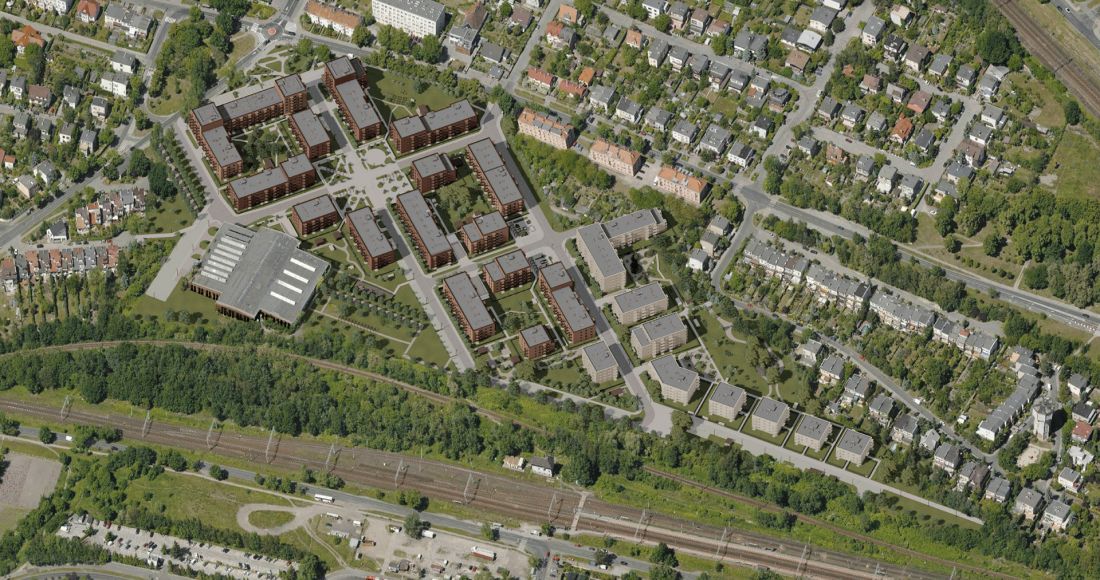
The housing development on Hermanowska Street in Wroclaw is to be built as part of the Housing for Development Sector Fund co-managed by PFR Real Estate
Ola Kloc: With the modern demographic changes you mentioned, do we still need housing estates "as before"?
Zbigniew Maciekow:This is a question for which the answer must be sought not in urban planning, but in real politics with a capital "P." The assumptions we make for designing, for building housing and cities, will no longer be adequate with such a dramatic demographic situation. And housing problems will be among the least we will have if we don't reverse this trend. The real disaster will come in the economy, social security and health care. It will get to the point where two young people will have to support four or five people who are in retirement from their earned income. This is not feasible! These people will flee to places where the burden will be less, and our cities will begin to turn into open-air museums. Pension and health benefits will be at such a low level that they will lead to a radical decline in standards, to collapse.
This should be the overriding concern of the government today, and while by all analyses this problem cannot be solved in a simple, zero-sum way, it can be significantly mitigated through various migration policies. Of course, the effects will only come after twenty years.
Ola Kloc: It's also difficult to decide to start a family when you can't afford housing....
Zbigniew Maciek:This is true, and I think this is the most important problem today. If we are talking about housing and the quality of habitation, then the discussion about whether to build sustainably, whether to build with recycled materials, whether there should be a lot of greenery or a fifteen-minute city, should come down to the background. These are important topics, I'm not disavowing them, but our primary goal should be to bring housing to a position of accessibility. They have departed from every average young person, they are making themselves unavailable in two fields - purchase and rental. This is an important issue for civilization, because the problem of inaccessibility generates others - demographics, emigration, social discontent, budget strain - the list goes on.
Attempts to solve this problem involve sticking a Band-Aid on a massive wound - i.e., 0 percent credit, 2 percent credit, premises for land. This is putting out a fire with gasoline, ideas that can be implemented quickly and have a short-lived effect, enough for the next election campaign, but which do not solve the problem, but actually exacerbate it - after the expiration of the 2 percent credit, apartments became significantly more expensive.
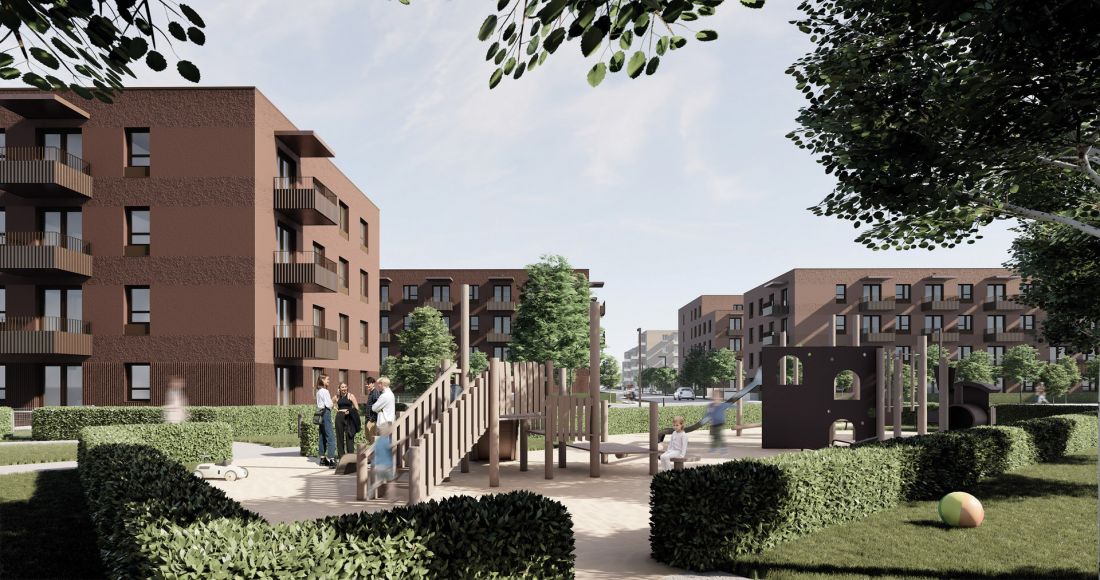
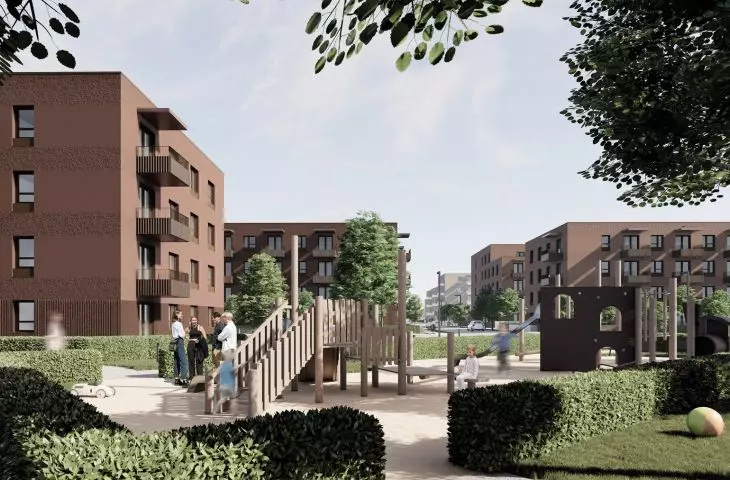
The apartments in the development on Hermanowska Street in Wroclaw's Kuźniki are to be intended for institutional rental
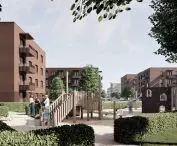
Ola Kloc: On a nearly nine-hectare site in Wroclaw's Kuźniki district, on Hermanowska Street, a development by the PFR Real Estate company is to be built - 18 residential buildings, with roughly 820 apartments for institutional rental. This is to be, as you said, "an opportunity to create a complete estate." What is a "complete estate"?
Zbigniew Maciekow:To put it in a nutshell: a complete settlement is New Żerniki. Before the idea of the fifteen-minute city was so neatly formulated, we drew from this long-standing process the conclusion that a good place to live is a settlement where a weekly service program can be implemented without transit needs - a place that has stores, local food service, social services, a school, a kindergarten, a nursery, a senior citizen's home, green space.
For many years we functioned under the modernist model of the city, in which areas were divided functionally - here we live, here we work, here we study, here is recreation, and between these islands were beautifully drawn in the visions of modernists ribbons of highways with fast nice cars. Only that this idea, as quickly as it was born in the minds of the creators, ceased to have a raison d'être - the ribbons turned into congested ring roads, the cars were no longer so beautiful, and the time spent on trips and transit caused the quality of life to drop dramatically - sitting for three hours a day in traffic jams is not a nice life. Hence, this "complete place of residence" as a rule does not generate transit, there is no need for it. Of course, there will always be some trans-local services, it is impossible to make a university in every neighborhood, but there is no longer a need to go to the hairdresser's or to classes at the community center to another part of the city or for coffee in the Market.
These conclusions developed and implemented in New Żerniki are the basis for how we design New Kuźniki. It will be a neighborhood with a complete service program, the first floors in the public tracts will be equipped with services with good access, but also within walking distance. We hope that a local center providing a full functional program will be created in the old steam locomotive depot, which will become a social integrator and identity marker of the neighborhood, because it is important for people to identify themselves with the place where they live. There will also be an above-average ratio of greenery and open, biologically active area to the built-up area, as well as a very low intensity - the developer understands these assumptions and consciously, despite the possibilities provided by the local plan, agrees to lower the intensity in order to make people live better.
Ola Kloc: The existing Kuźnik development is not high.
Zbigniew Maciekow:Stare Kuźniki is a sensational urban design. We went a step further - we have a lower intensity and in parts even lower buildings than the existing ones. In some places we go down to two stories, which is a very intimate scale, although the plan allowed for more. We wanted to achieve a high quality of habitation - this is also one of the lessons that New Żerniki has brought. I often go there, for the residents I am rather anonymous, I get into conversations with them in a cafe, while walking the dog, and although there are complaints that something was promised, was not realized, that there is no school, children need to be driven, I have not encountered a voice that says that it is bad to live here, on the contrary.
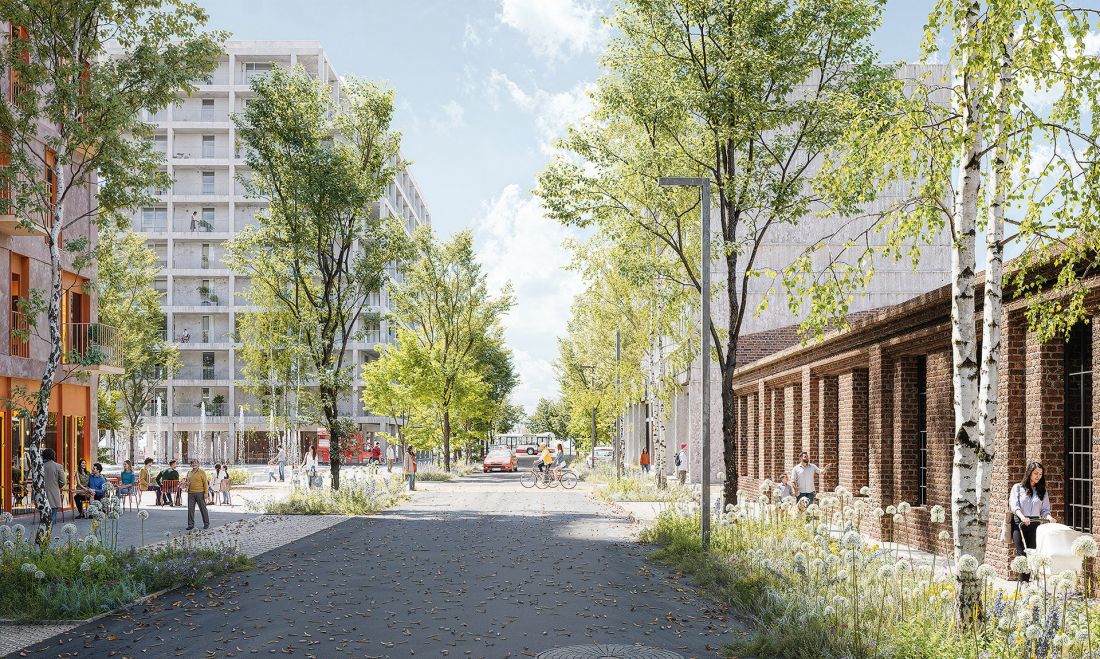
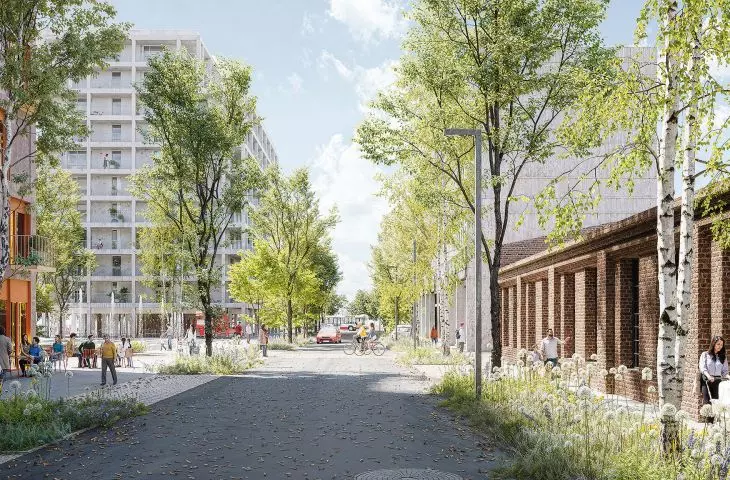
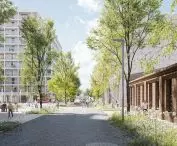
Concept of development of the area of the former FAT plant in Wroclaw
Ola Kloc: Another sizable housing development (for about 1,530 apartments) is to be built on the site of the former Factory of Automatic Lathes (FAT). This time in lex developer mode. During public consultations, residents raised quite critical comments on the idea and objections to the amount of green and recreational spaces, the need to improve road infrastructure, the insufficient number of services, including educational facilities, clinics, places supporting culture and social integration. They pointed to the risk of short-term rentals and the disappearance of local ties, and assessed the project itself as "over-scaled."
Zbigniew Maciekow:Residents have largely reacted negatively, so one has to ask why. I have a feeling that at the core is the moderating role of the City. We're dealing with a large area - we're talking about the post-FAT area, but this could just as well apply to other post-industrial parts of the city, like Archimedes or Pafawag. From the decisions I read in the draft master plan, I conclude that the City has adopted the thesis that under the processes of reglobalization, geopolitical tensions, the disruption of supply chains, what happened during theduring and after the pandemic and as part of the war, much of the industry will return to Europe, return to Poland and return to the urban centers. Since this will be the case, we need to preserve the reserves of land that were already earmarked for industry so that we will be ready to return and welcome investors. My thesis is very similar, with one difference - it seems that there is no going back and industry will return to Europe, and I hope it will return to Poland, it will return in a better formula, more eco-friendly, more sustainable, the very fact that it will return will already be a sustainable step, because we won't be hauling those things we need by ship halfway around the world or by truck from the other end of Europe. However, I don't believe that industry will return to the city centers - in the municipalities around Wroclaw, well-organized industrial zones have been created, well-equipped in terms of infrastructure and communications.
I dare say this is a poorly formulated thesis - it is a sure bet with the future that we may lose. Going back to the demographic problem, tax revenues make cities balance their budgets somehow, however, they incur more and more debts and liabilities, but just look at the draft budget of any city - Wroclaw too....
Ola Kloc: The budget is expected to be record-breaking this year!
Zbigniew Maciekow:Record-breaking, but not sustainable. There's a bump coming, we're going down an even keel, so who's going to pay off these liabilities? Because it won't come out of PITs, and if there are no PITs, there won't be CITs either, because companies without people won't generate revenue and won't pay taxes. And if there are no CITs and no residents, there will be a very large reorganization of property taxes - companies will start demolishing buildings so they don't have to pay taxes on them. Only cities that are compact and reasonably cheap to maintain will have a much greater handicap in the demographic race for new residents, for a good quality of life.
Ola Kloc: A city that is cheap to maintain?
Zbigniew Maciekow:A city cheap to maintain is one that makes rational use of what it already has. Going back to the FAT, on Grabiszynska Street we have several streetcar lines, but only one side adds to the burden of this transportation, the other does not, which means - to exaggerate the picture - the streetcars go one way empty. Another example - we are building in Wroclaw the second major public transport line after the war, namely the TAT [Bus and Tram Route - editor's note] to Nowy Dwór. A 386-million investment, financed by the European Union, super infrastructure, a 160-meter overpass, transportation wonders this city hasn't seen since the days when the Germans were here, and what? Instead of housing it with apartments, we leave industrial reserves, I mean the areas after Archimedes and Pafawag. So there are neither people nor industry there. In my opinion, industry will not return there, and the investment movement will move to places without infrastructure - in a while, where there is infrastructure we won't have housing and it will be underdeveloped, and where we have housing we will have to build infrastructure. This is not how you create a rationally economically balanced urban body. This is not building a cheap city, because these needs and this infrastructure will have to be financed.
Going back to the FAT, it seems to be in the interest of all residents who pay taxes, not just residents of Grabiszynska Street, to build new housing assumptions on existing infrastructure. In this case, under lex developer, which may not be the best solution for such intentions, the initiative is on the side of a private entity that is trying to pursue its ambitious business goals. Perhaps the scale or intensity of the development is not one that would make the City happy, but if the City withdraws from the discussion, leaving it to the developer and residents, it will be difficult to reach a reasonable compromise. What is needed is a moderator who will say: "development yes, but on our terms, public expenditures must be matched, a new school must be built," and so on. And there is an opportunity for this - private entities want to contribute to the costs, only they need to be allowed to do so, sit down at the table and discuss it. So, going back to the first question - the lessons learned from New Żerniki show that the City's role as a facilitator is much better, not as an observer from the heights, who says with folded hands: "get along".
Ola Kloc: Thank you for the interview.
Ola Kloc
more: A&B 1/2026 - Estates,
download free e-publications of A&B