








From the series “Bathrooms and Fixtures — Trends for 2026”
A modern bathroom is a space where the line between pure function and interior architecture blurs. Balneo brand details —such as concealed faucets or a monolithic sink with a linear drain—are no longer merely standard fixtures but have become key elements in shaping the proportions, geometry, and mood of the design.
The contemporary bathroom is increasingly designed as an integral part of the architecture of the entire house or apartment. Its final expression is determined not only by the functional layout and the choice of basic finishes, but also by the details—their form, proportions, and the way they fit into the whole. In a space where function and aesthetics intersect so closely, every element must meet the user’s specific needs while simultaneously contributing to the visual harmony. What matters is not the number of decorative accents, but the conscious selection of those solutions that truly make a difference.
© Balneo
Washbasin Faucet—A Detail That Defines the Interior’s Character
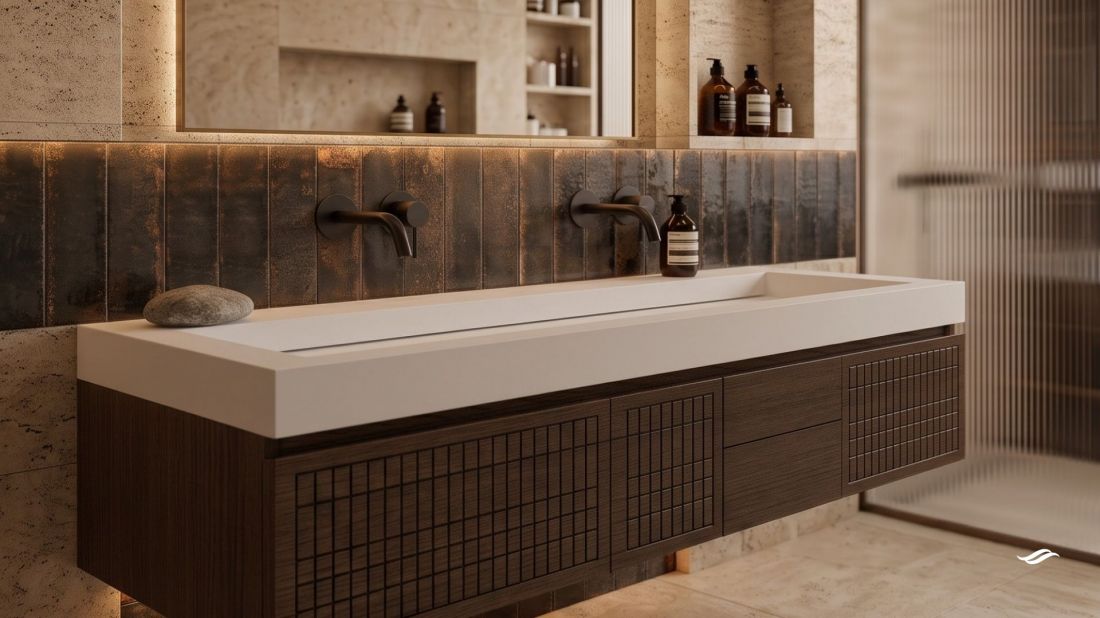
For years, plumbing fixtures were viewed primarily as utilitarian elements. Today, the bathroom faucet increasingly serves as the main design accent. This is particularly evident in the case of in-wall systems. Concealing the plumbing components—a task made easier for architects by the optimized, minimal installation depth—helps reduce visual clutter and keeps the most important elements in the foreground: proportion, material, and light.
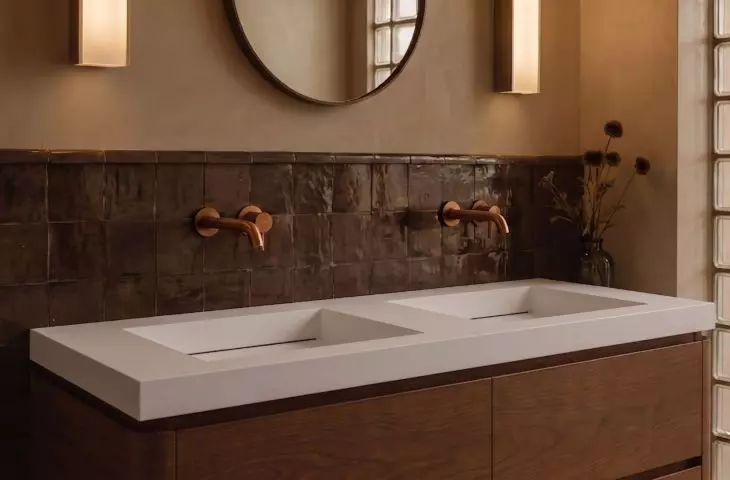
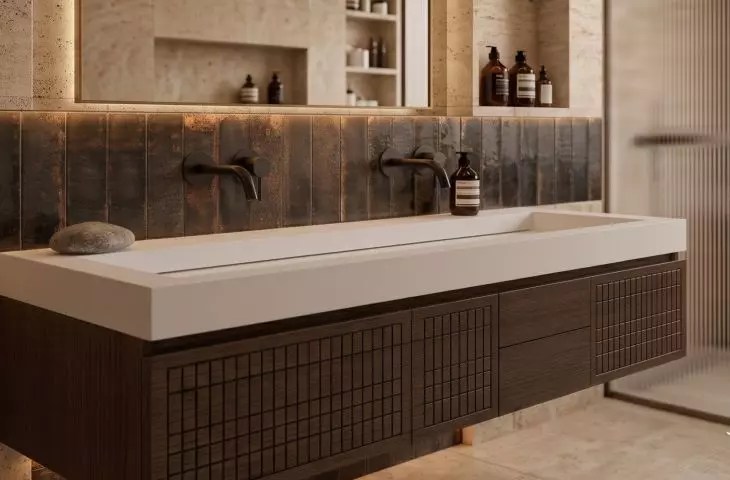
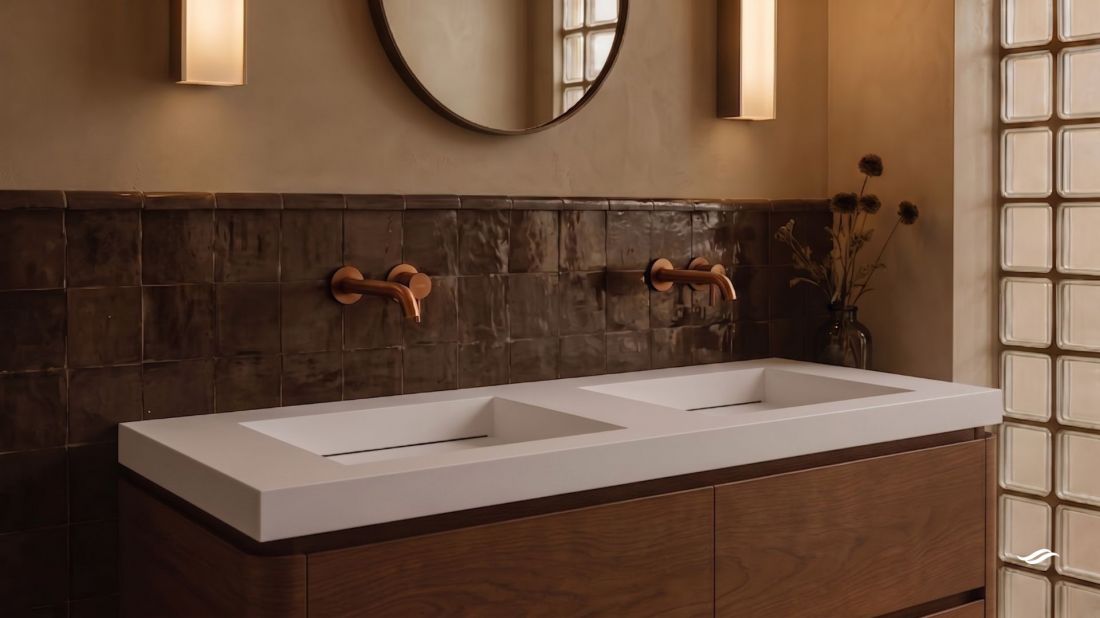
A good example of this approach is the Balneo sink faucet from the Cascade collection (model 3 Copper). Its slender form and concealed installation help maintain the visual lightness of the sink area. Meanwhile, the copper finish adds a more distinctive, warm accent to the minimalist interior, proving that the faucet is no longer a random piece of hardware but rather part of a carefully curated palette of materials.
© Balneo
Color as a Full-Fledged Element of the Composition
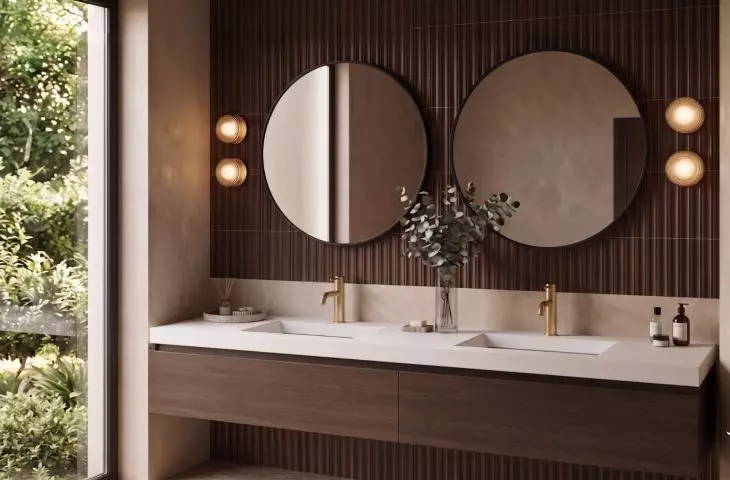
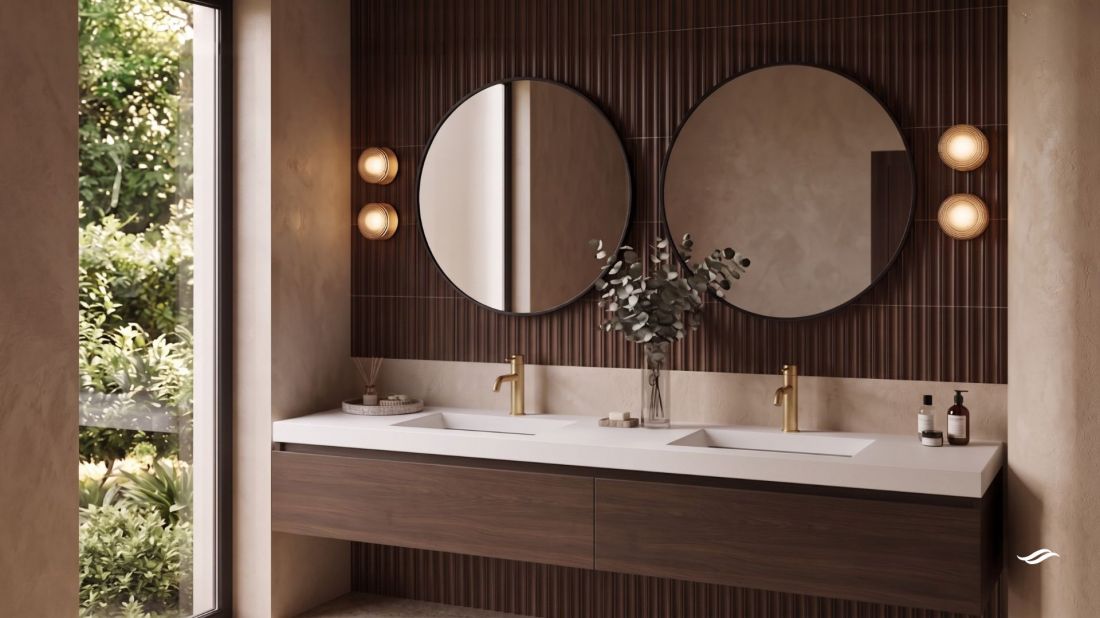
In modern bathrooms, the trend is moving away from treating fixtures as neutral accessories. A black, brushed, gold, or copper faucet serves a similar function to a light fixture or a detail made of natural stone. Copper helps warm up austere spaces and harmonizes perfectly with wood, stone, or surfaces in shades of off-white. More neutral finishes, on the other hand, emphasize the raw character of architectural concrete or large-format sintered tiles. The key is not simply choosing a trendy color, but ensuring the coherence of all elements. It is this coherence that transforms the bathroom into a thoughtfully designed space, rather than a collection of random products from a catalog.
© Balneo
Solid Surface Sink—When Material Becomes Form
If the faucet defines the character of a detail, the sink serves as the architectural foundation of the wet zone. Solid Surface offers exceptional design possibilities here. From a technical standpoint, this material is valued by architects for its ability to create seamless joints, its high level of hygiene, and the ease with which it can be renovated if necessary. From an aesthetic perspective, it allows one to move away from the traditional view of the sink as a standalone element.
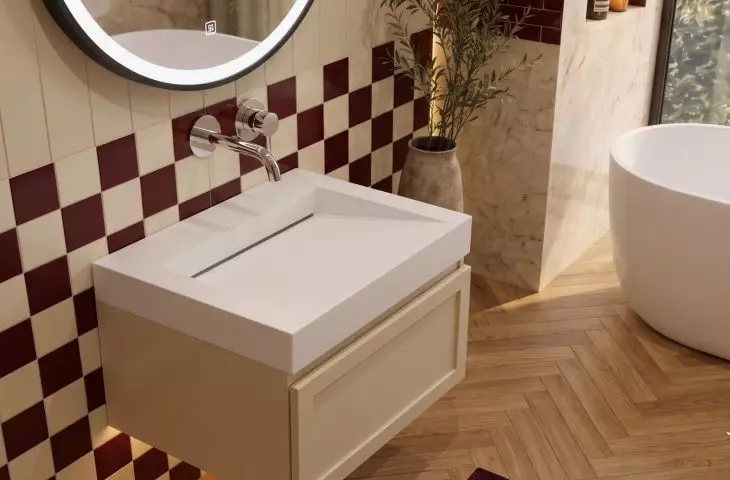
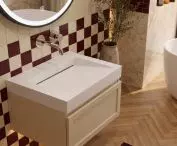
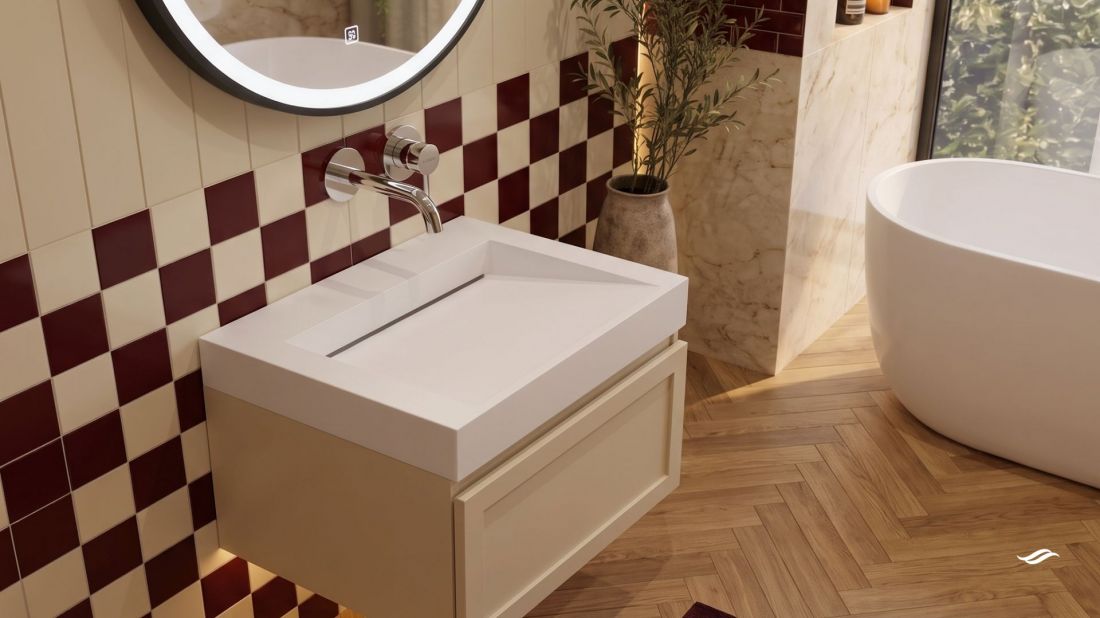
The homogeneous structure of Solid Surface lends itself to creating monolithic forms that are integrated with the countertop and fully aligned with the interior’s geometry. The VELORIA Solid Surface Coco White (80 cm) sink from Balneo embodies this philosophy. Its design is based on a seamless fusion of the countertop and basin into a cohesive whole. The matte, satin-white finish leaves room for other textures in the bathroom while emphasizing the product’s radically minimalist character.
© Balneo
A feature that doesn’t need to be on display
Designing with an awareness of the material allows for an individualized approach to the sink area. In the case of the Veloria model, a key design choice is the omission of the classic, visible stopper. The linear drain has been discreetly integrated into the basin’s form.
It is precisely in such solutions that the contemporary shift in design philosophy is most evident. The best detail isn’t always the one that immediately catches the eye; sometimes its purpose is to remain almost invisible. A sink with a hidden linear drain preserves the sculptural purity of form. Function still plays a key role, but it does not dominate the aesthetics.
From Detail to Timeless Space
The more thoughtfully designed a bathroom is, the less susceptible it is to seasonal trends. The sink faucet adds the finishing touch to the interior. The sink defines its geometry, while the innovative material and the way the drain is concealed determine the visual purity of the surfaces. Good design isn’t about every element screaming for attention, but about all of them working together perfectly.
For architects and designers: Full technical specifications, as well as 3D models of Balneo products to facilitate precise project preparation and visualization, are available on the manufacturer’s website: balneo.pl
For more information, visit the BALNEO company page on the PdA portal.