



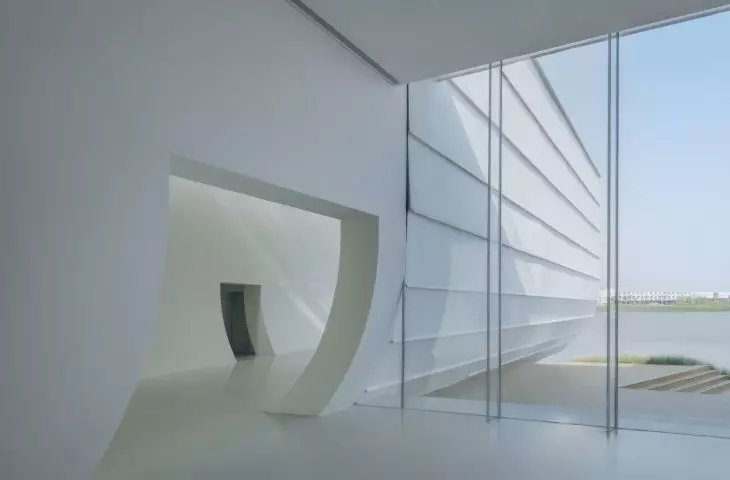
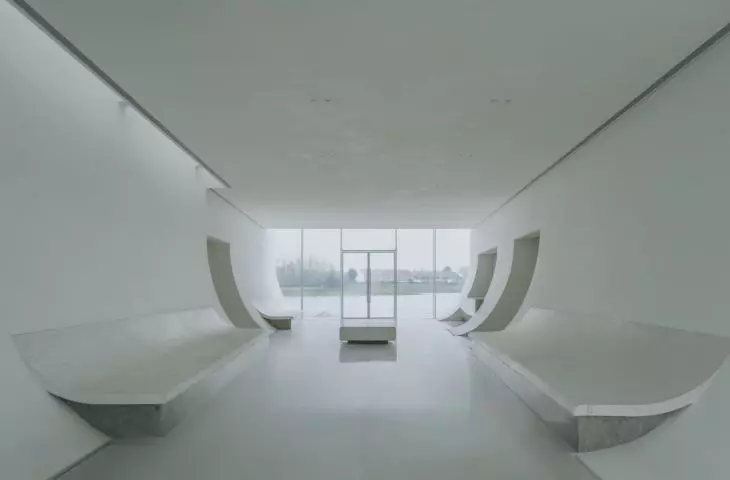
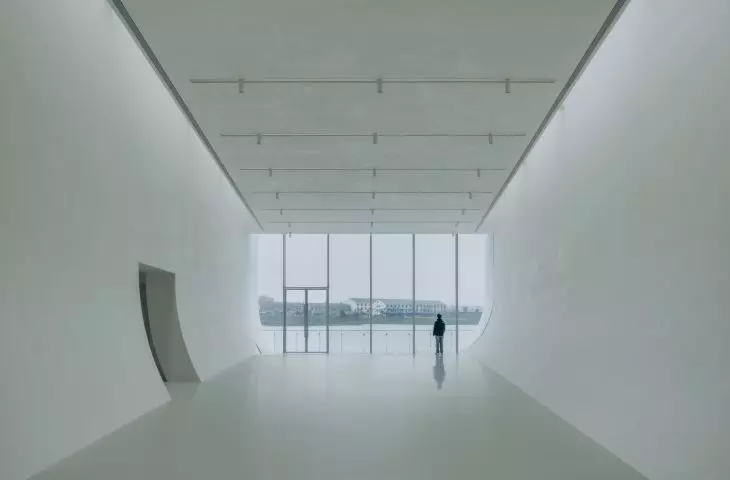
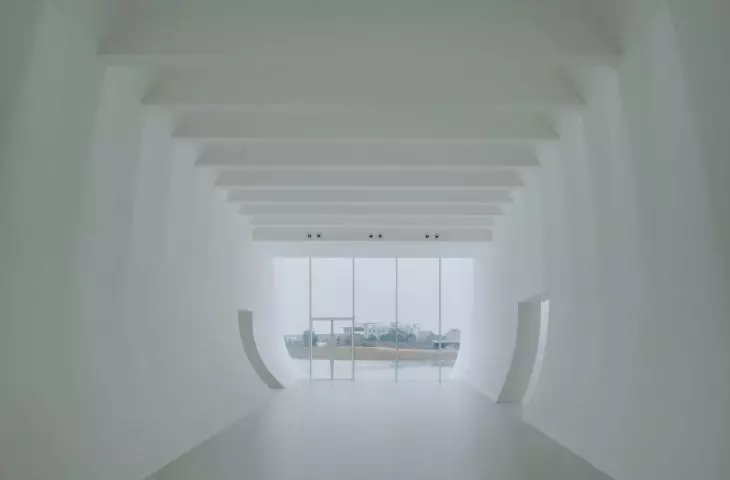

Chenhu Wetland Art Center,
design: Trace Architecture Office (TAO)
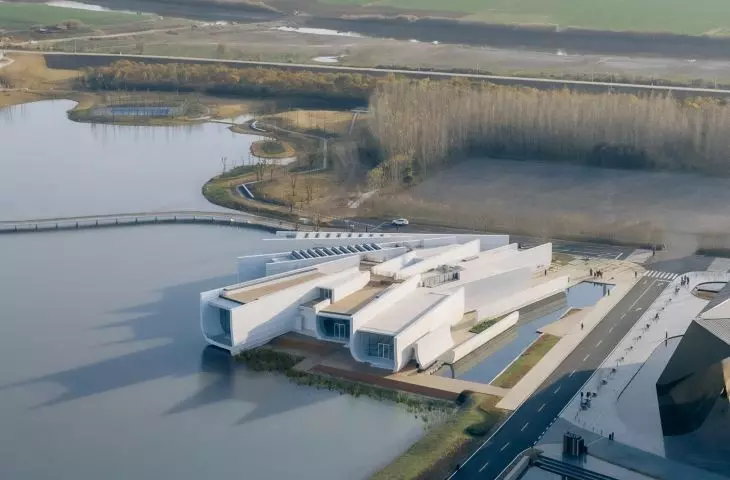
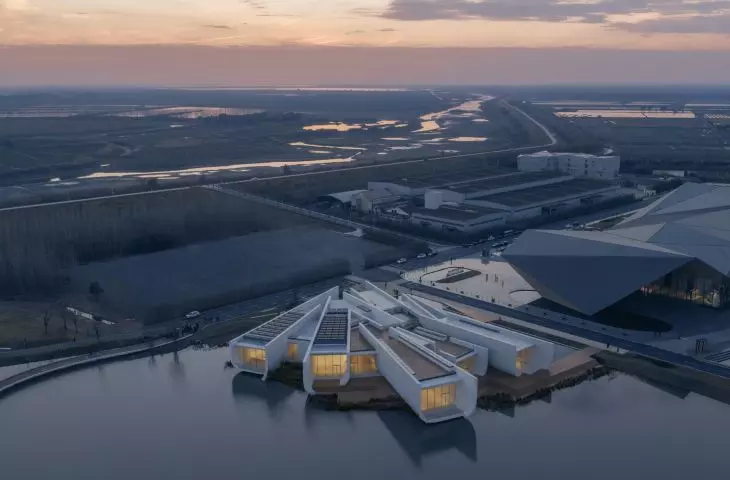
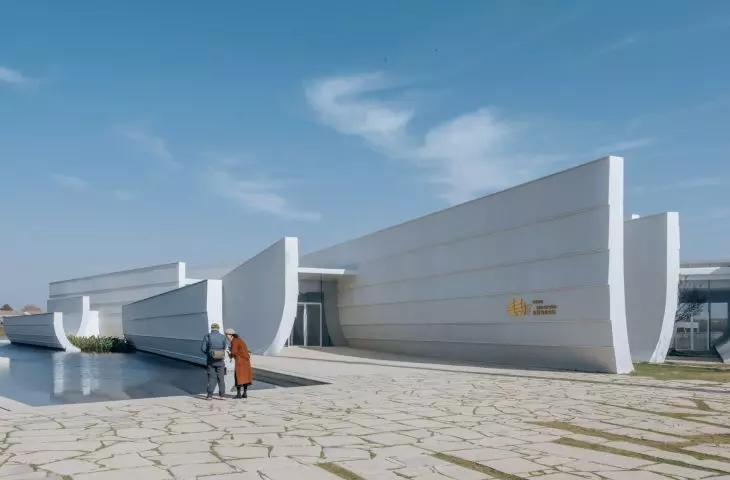
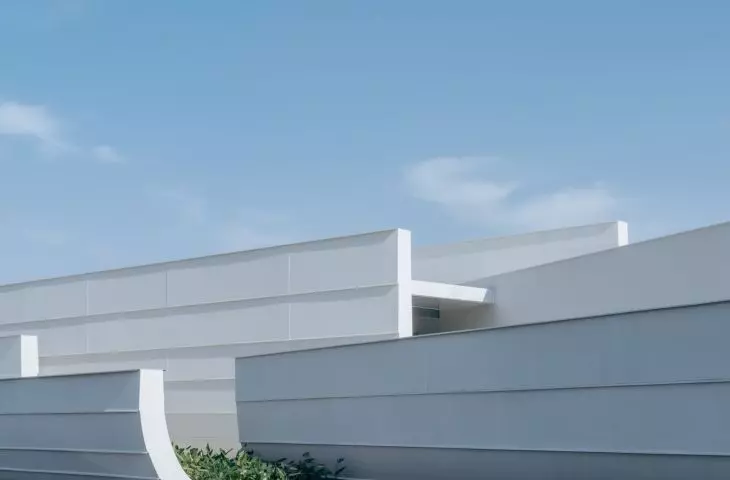
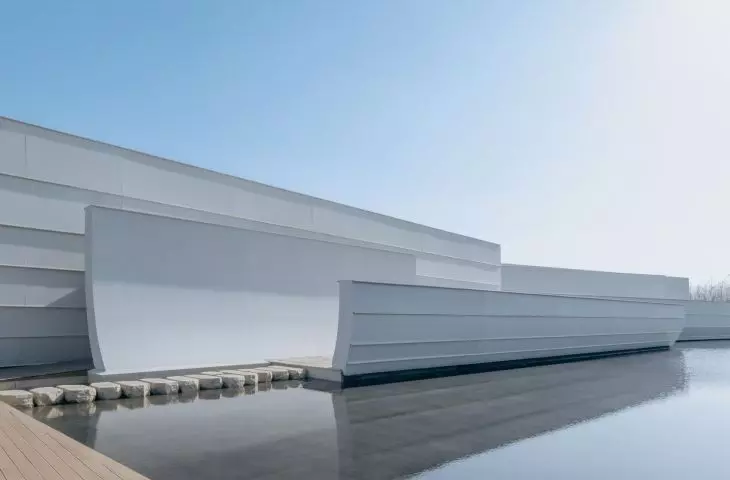
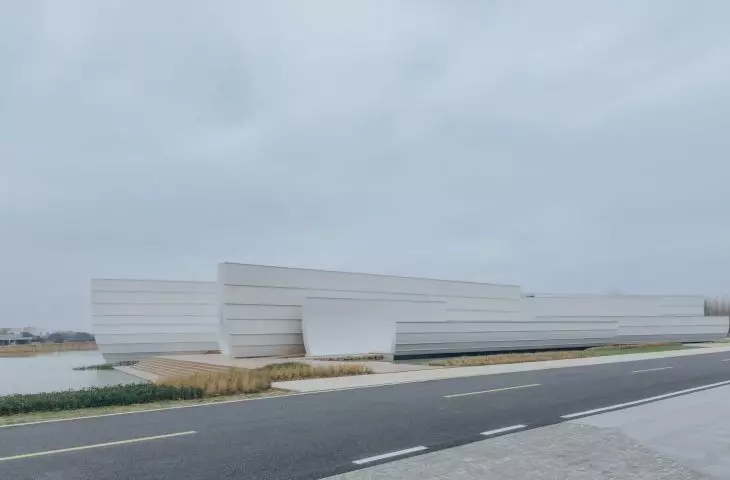
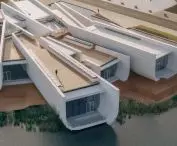
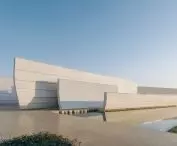
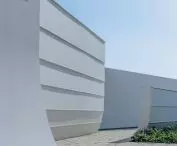
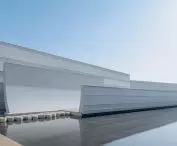
On the edge of the wetlands in Wuhan, an art center has been built whose white walls appear as if they were shaped by water. The Chenhu Wetland Art Center, designed by Trace Architecture Office (TAO) under the direction of Hua Li, does not form a single compact structure. Instead , the architects designed a layout of curved walls that guide visitors through the exhibition spaces, frame views of the wetlands, and in some places almost touch the water’s surface.
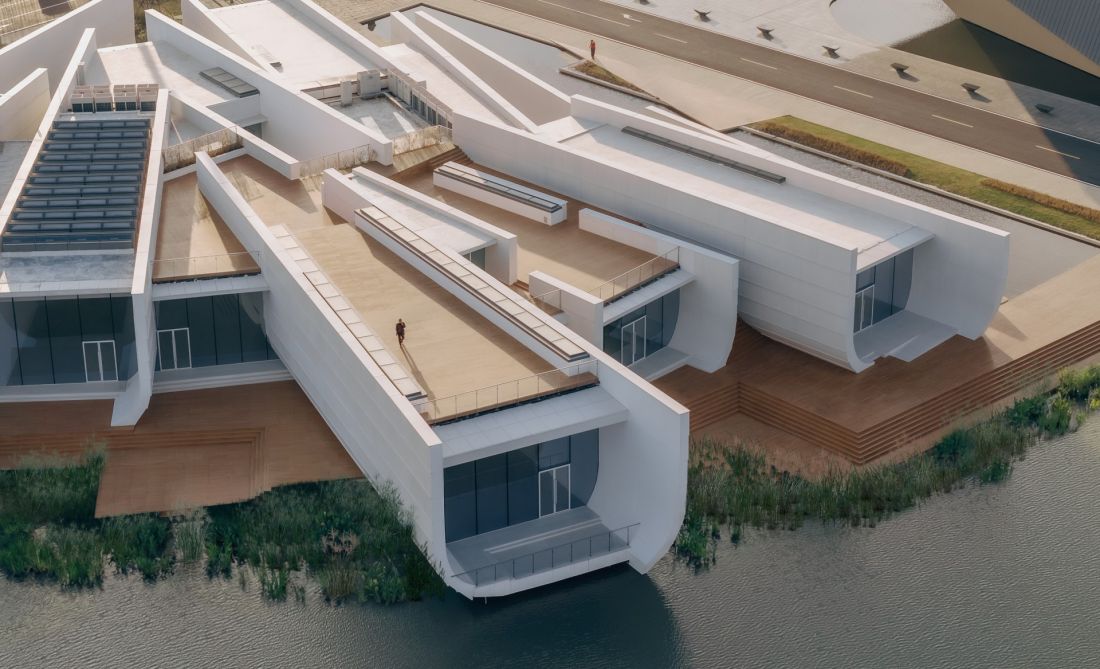
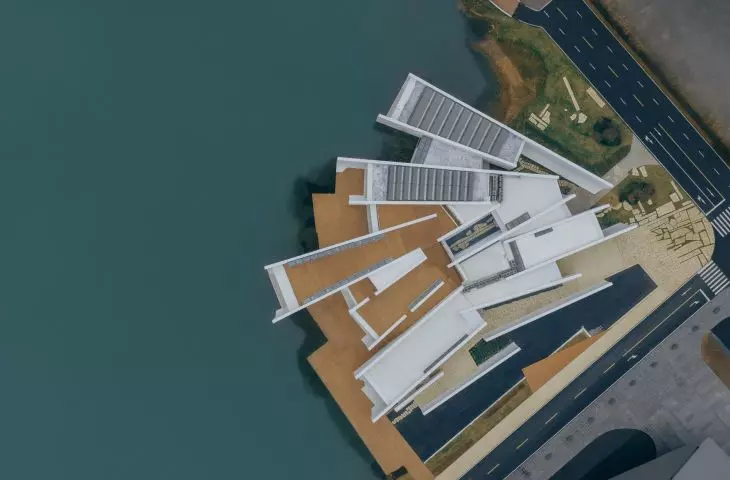
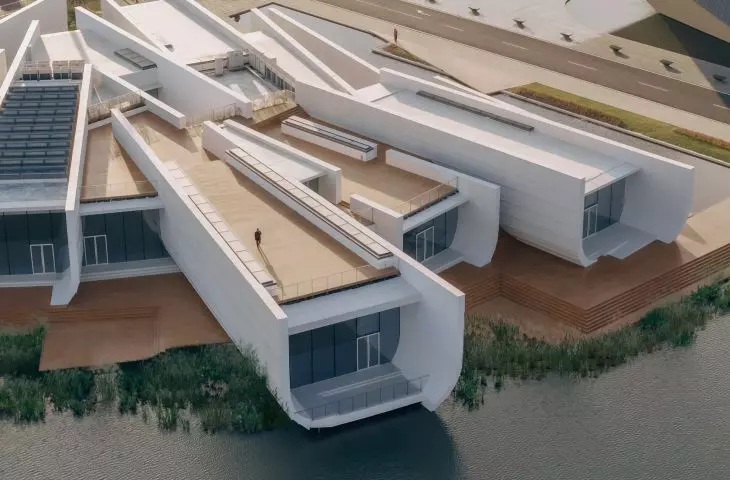
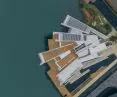
The layout of the white walls, which radiate in various directions and open the building up to the water, is best seen from above—©Yumeng Zhu
Architecture Shaped by Water
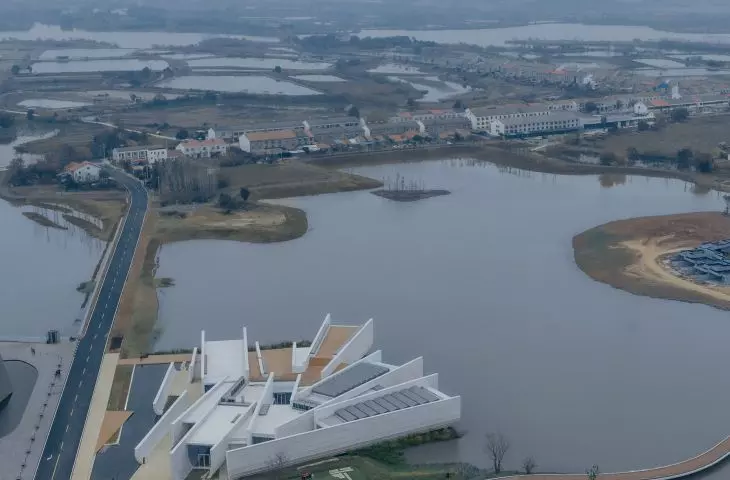
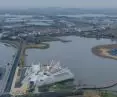
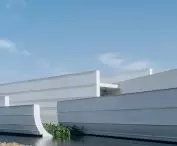
Wuhan is a city deeply connected to water. Rivers and canals crisscross it, and numerous lakes have shaped both its landscape and urban structure for centuries. The Chenhu Wetland Art Center was built away from dense urban development, in Caidian, on a site surrounded by the Tonghu Provincial Wetland Park. The site is located at the interface between land and water, where the natural shoreline meets a fork in the roads. The terrain is nearly flat, characterized by gentle shores, floodplains, and an open landscape. The architects did not treat this setting merely as a view from the windows. Water became one of the main starting points for the entire concept. The most distinctive feature of the building is its white walls, whose lower sections curve gently. In some places, they reach almost to the water’s surface; in others, they deviate from the vertical and transition into rounded surfaces. As a result , the architecture appears as if it were subject to the same forces as the surrounding landscape—shaped by the water rather than simply positioned on its shore.
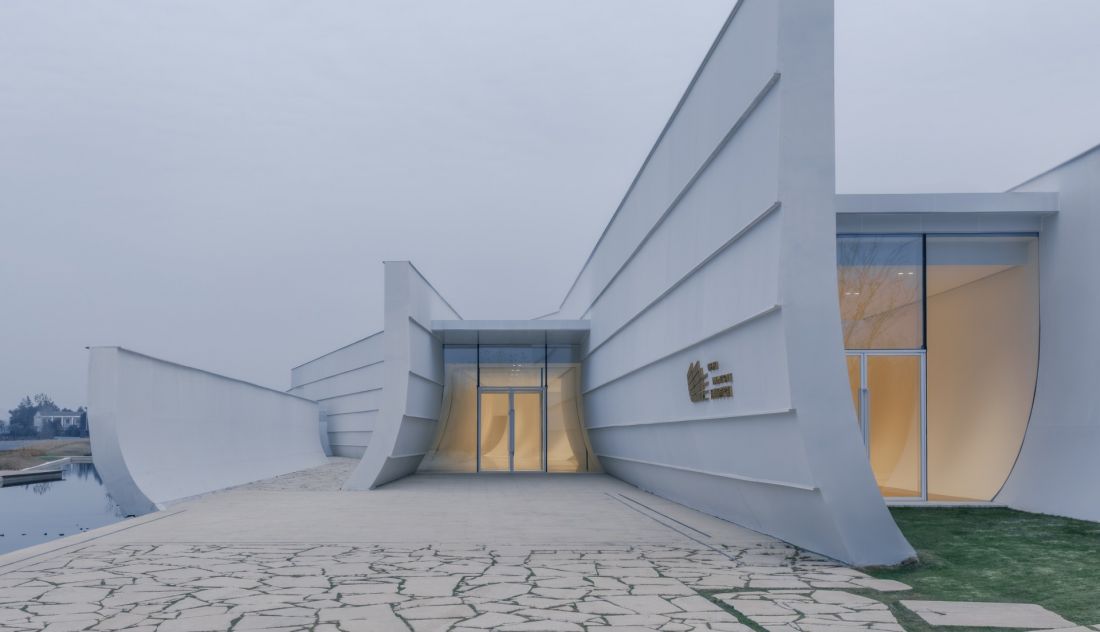
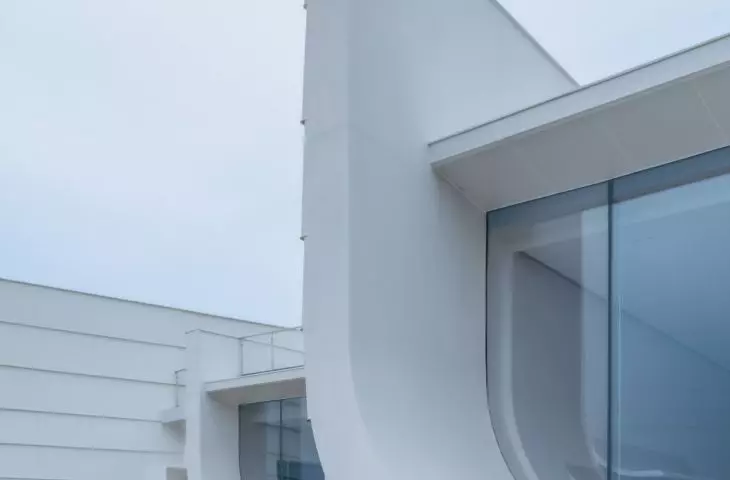
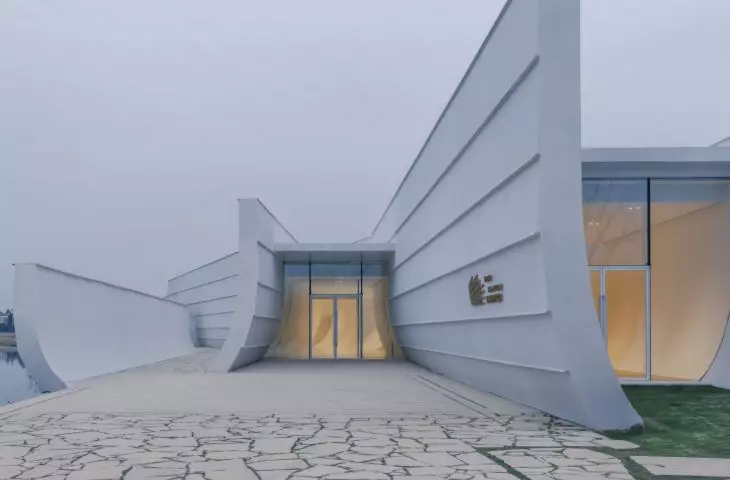
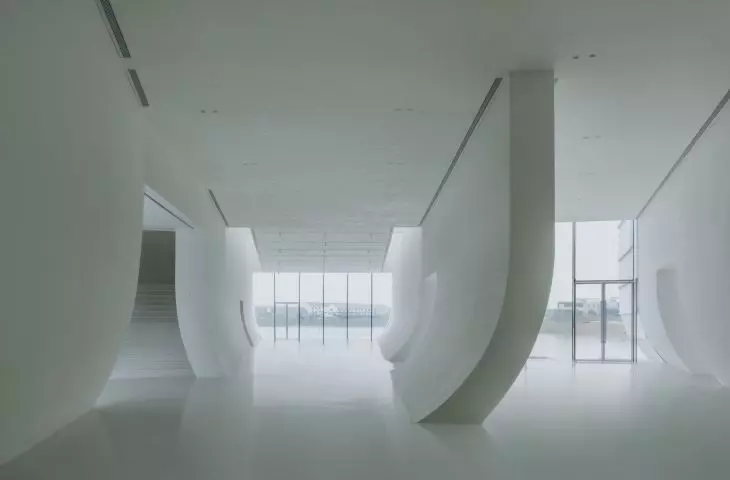
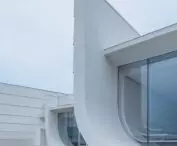
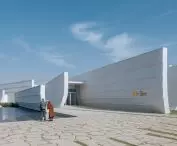
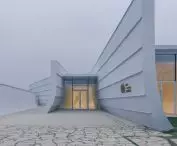
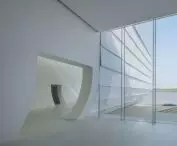
At the entrance, the curved walls lead toward the glass-enclosed interiors and emphasize the building’s distinctive geometry — ©Yumeng Zhu
a building that begins with a wall
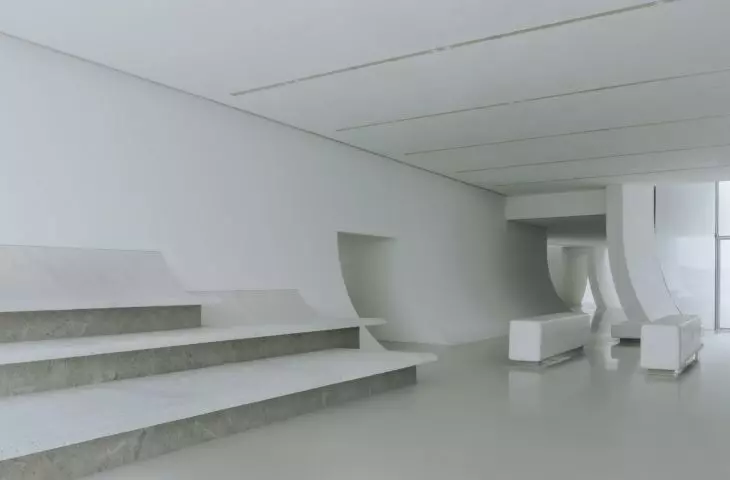
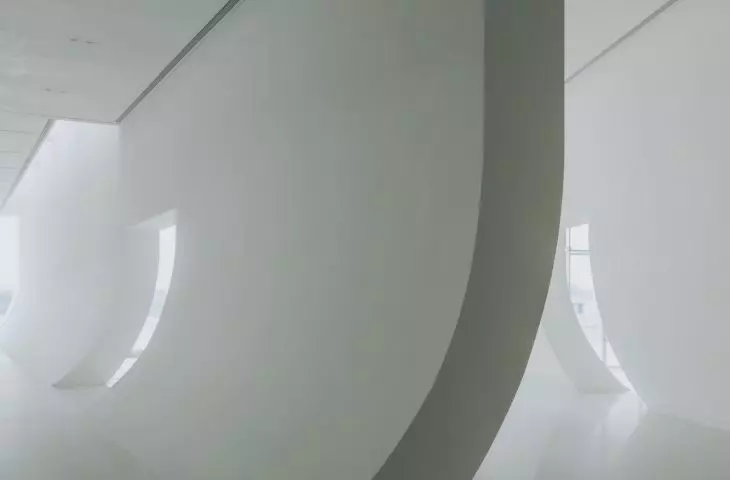
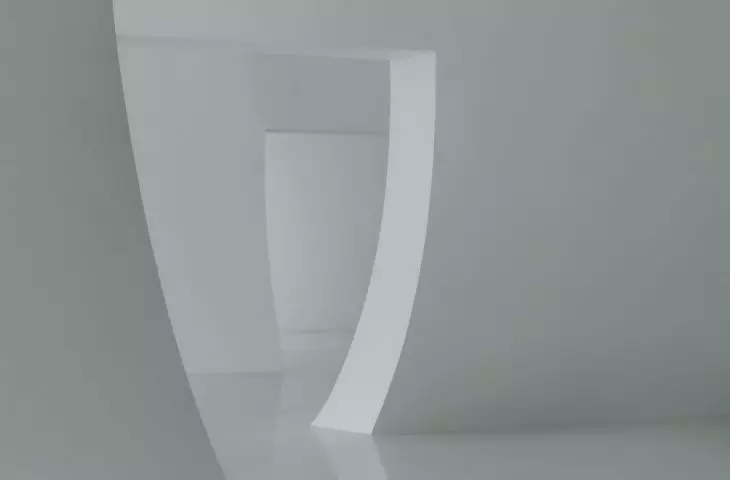
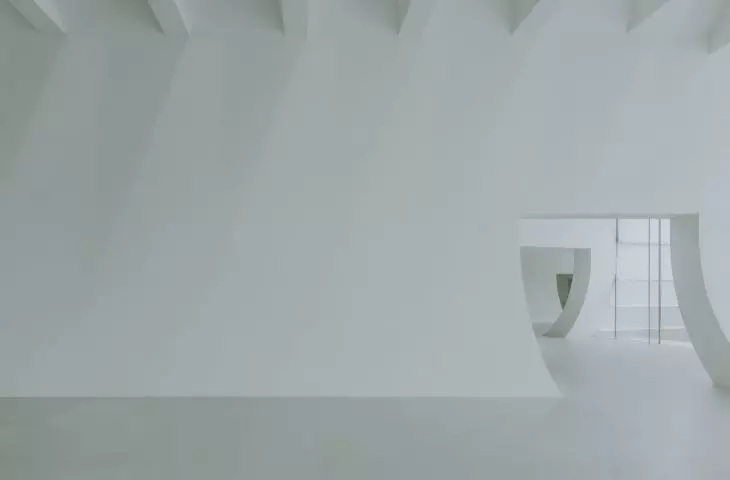
The motif of the wall has appeared in TAO’s architecture before. In the 2017 Wall Museum project, the firm explored whether a single element could serve as the foundation for the building’s entire structure. At the Chenhu Wetland Art Center, this way of thinking has been further developed, but this time it is directly linked to the nature of the wetlands. Instead of a compact structure, an arrangement of freely spaced walls was created, with successive spaces forming between them. Viewed from above, they resemble a fan of irregular bands facing the water. The individual sections are clearly separated from one another, yet they form a single spatial arrangement. This solution also changes the way the roof is perceived. It does not form a single dominant plane. The walls intersect it and rise above its level, and skylights have been placed between them to bring natural light into the interior. As a result , it is difficult to clearly identify where a wall ends and the roof or floor begins.
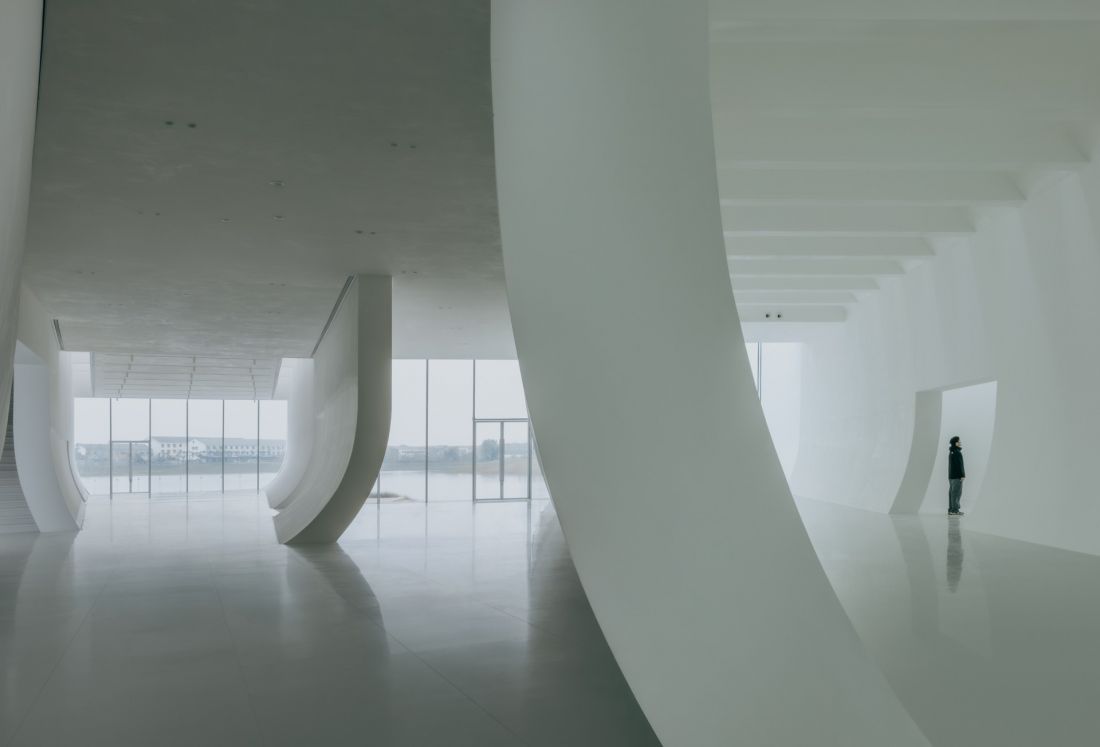
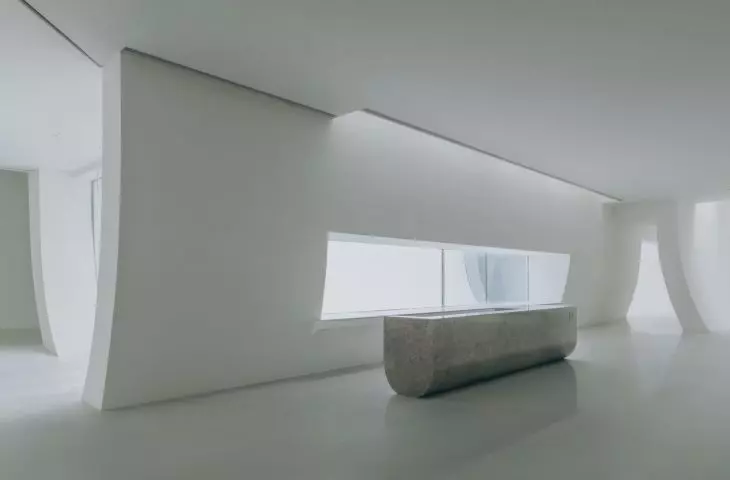
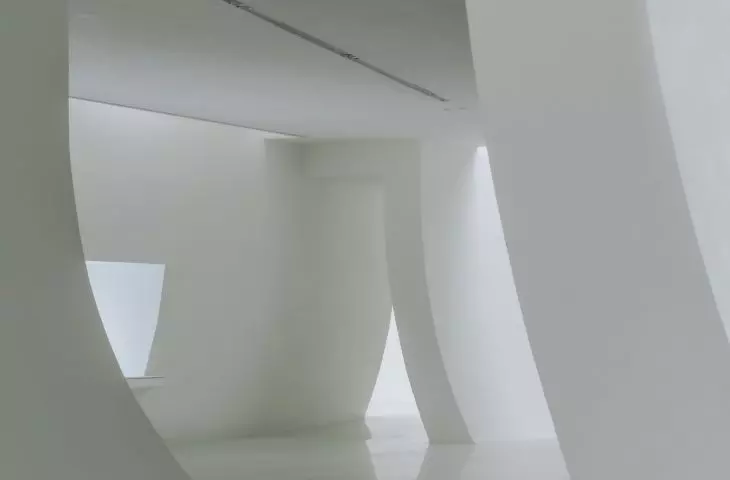
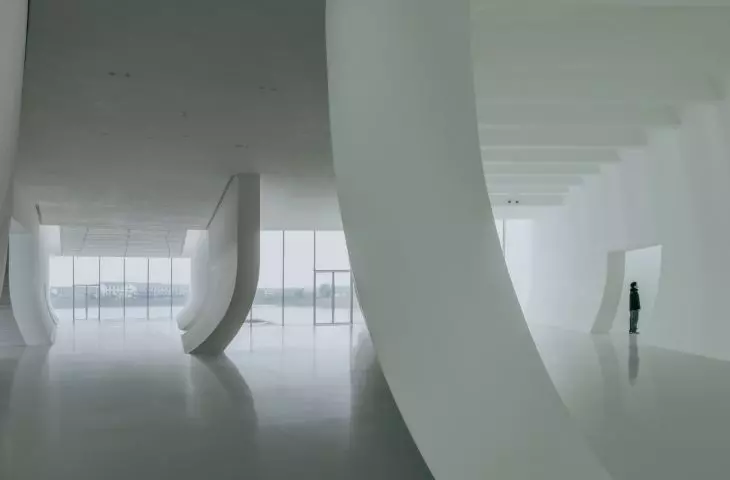
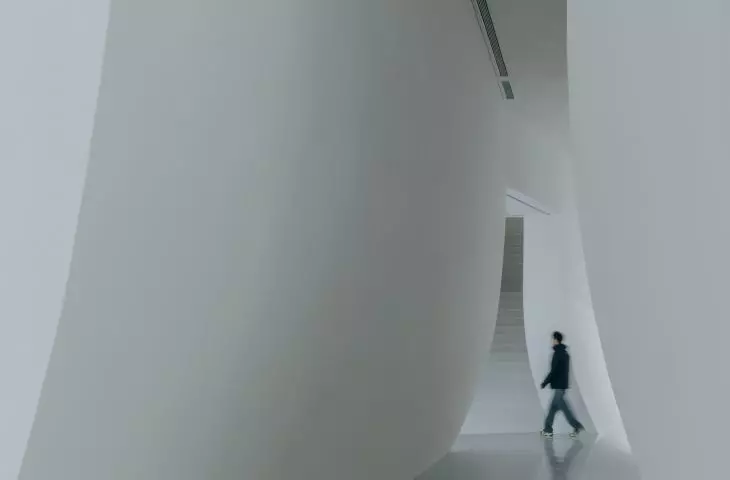
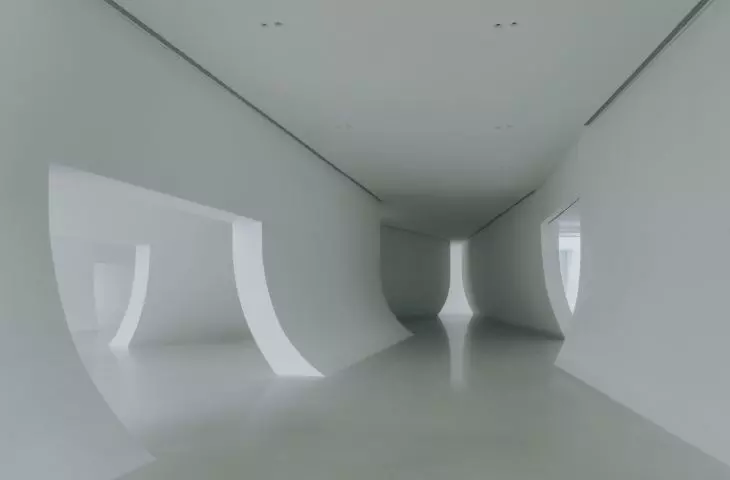
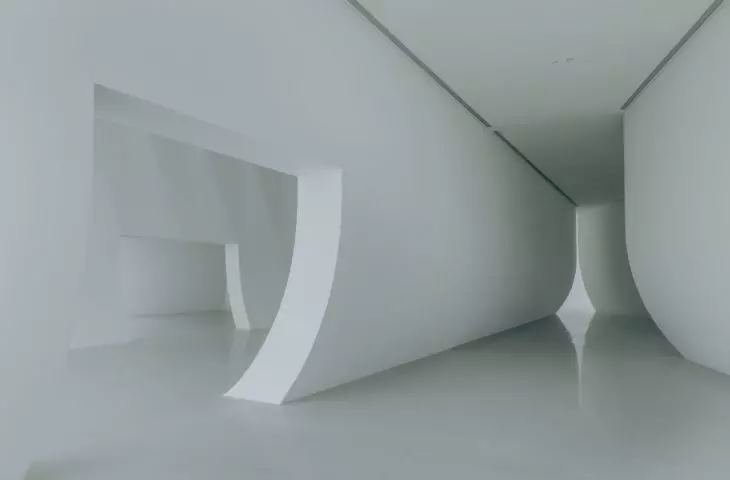
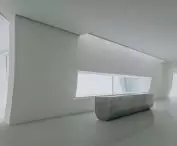
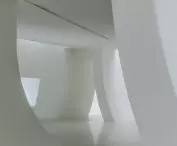
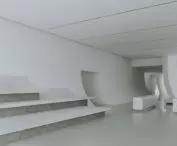
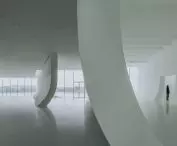
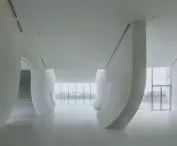
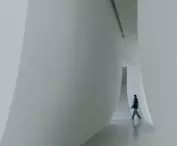
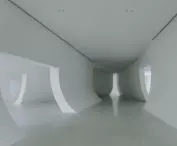
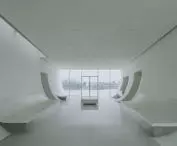
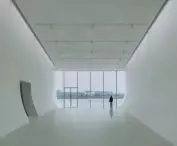
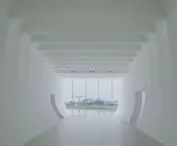
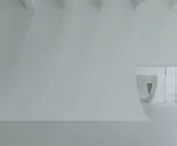
Inside, white, curved walls divide the exhibition space and direct the gaze toward the glass walls and the surrounding landscape — ©Yumeng Zhu
exhibitions without a single designated route
The unconventional geometry extends beyond the building’s exterior. The dispersion of the walls made it possible to move away from the classic, linear sequence of rooms, in which visitors move from one room to the next according to a predetermined order. Here, the route splits, bends, and rejoins. At times, the walls enclose the space; at others, they open it up toward the water. Between successive sections of the exhibition, views of the wetlands appear, allowing the landscape to regularly enter visitors’ field of vision. It is precisely this relationship between the interior and the surroundings that becomes one of the most important elements of the design. The architecture does not attempt to completely isolate the art from the place where it is displayed. On the contrary—light, water, and changing views are present as visitors move through the building almost as strongly as the walls themselves.
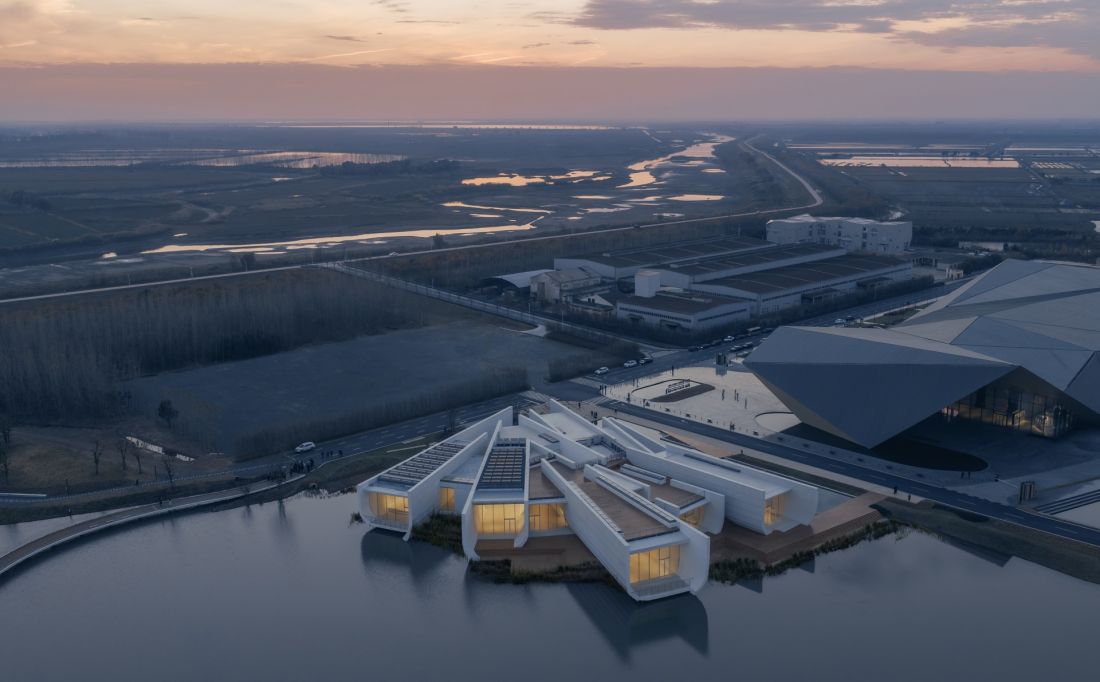
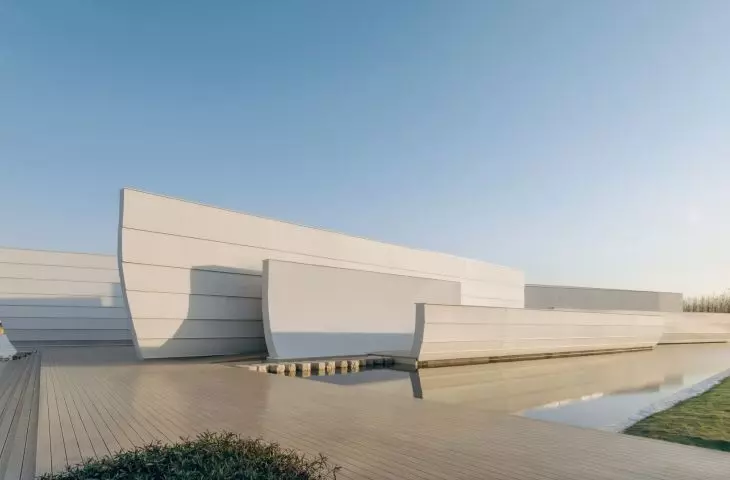
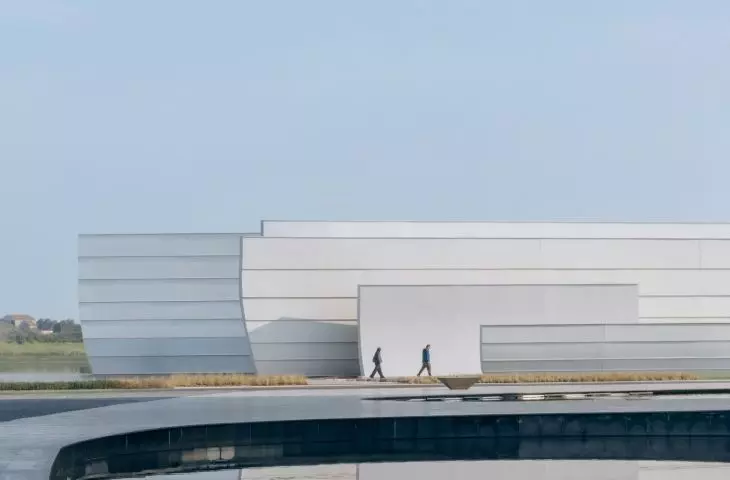
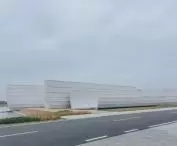
The Chenhu Wetland Art Center was built at the junction of land and water, in the open wetland landscape on the outskirts of Wuhan — ©Yumeng Zhu
The facade changes with the light and humidity
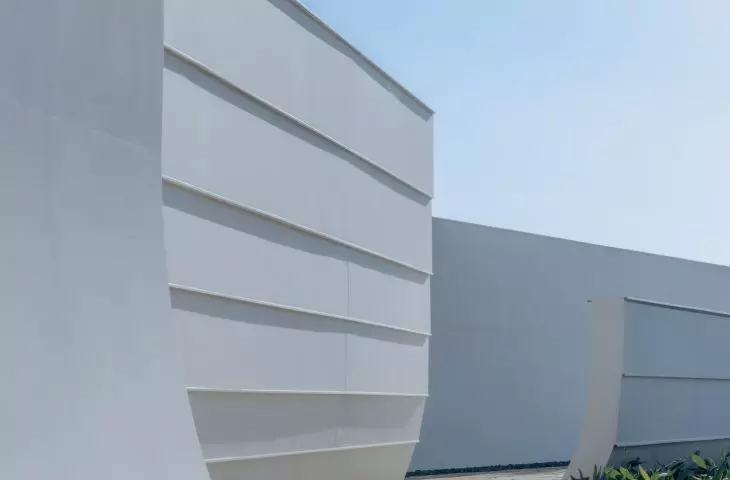
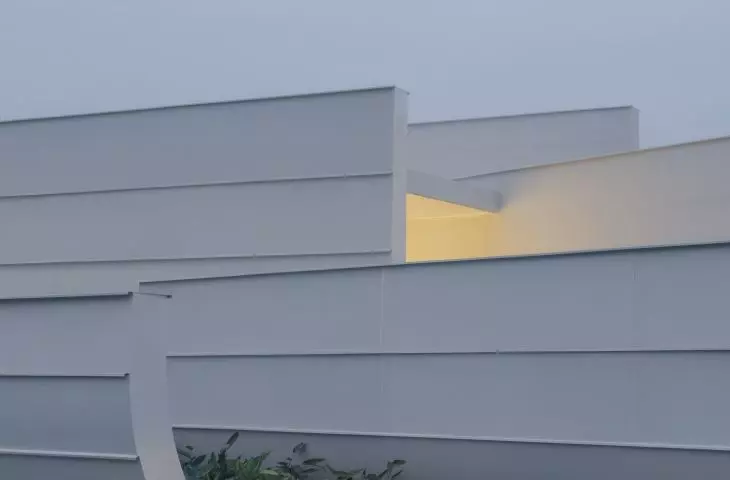
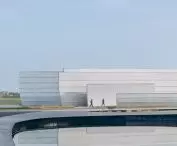
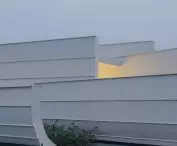
The architects also emphasized the connection to the aquatic landscape through the facade material. The exterior walls are clad with GRC panels containing shell aggregate. Their fine-grained surface is not entirely uniform— delicate reflections appear on it when exposed to sunlight and moisture. This effect is further enhanced by the building’s geometry. Because the walls are set at different angles and are curved in places, their surfaces can be in full light, shadow, or partial shade at the same time. The white facade, therefore, does not create a static backdrop but changes with the weather and the time of day. The Chenhu Wetland Art Center does not attempt to compete with the vast landscape in terms of scale. Its architecture is based on the recurring motif of the wall —sometimes straight, sometimes curved, sometimes touching the water. As a result, the boundary between the building, the exhibition, and the wetlands becomes much less obvious.