




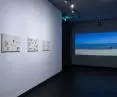
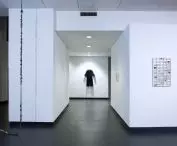

Can collecting become the language of art? Magdalena Tryba, a graduate of the Intermedia Department of the Jan Matejko Academy of Fine Arts in Cracow, shows in her thesis that collecting objects, traces and experiences can be not only a personal gesture, but also a conscious artistic practice. The master's thesis, entitled "{a magpie pen, sea glass, key, ..., ∞} that is, what and how one collects," completed under the supervision of Dr. Krzysztof Maniak, is a multidimensional story about the relationship between man and object, memory and the process of collecting. The project was presented in 2026 at the Gallery of the Academy of Fine Arts in Cracow.
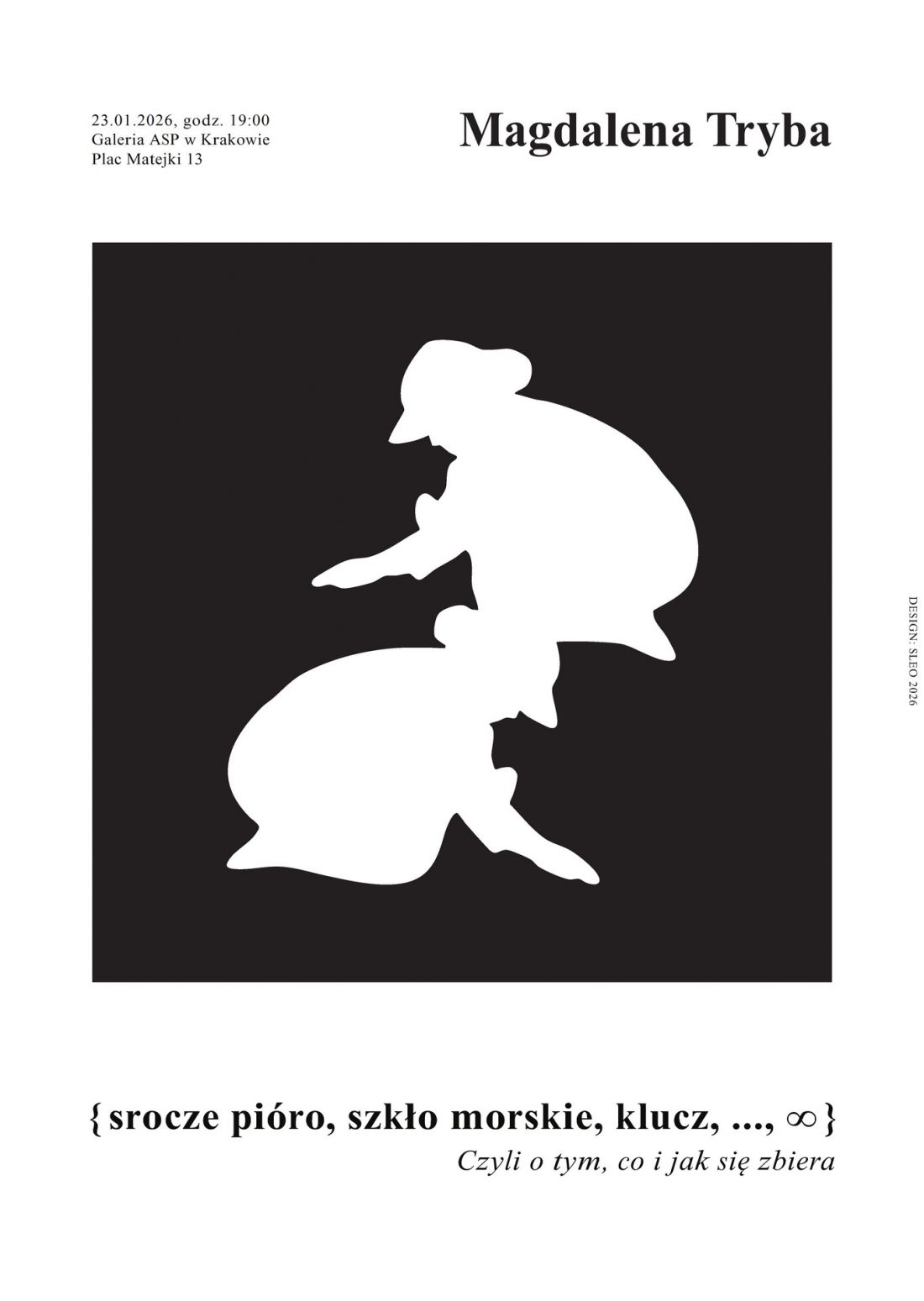
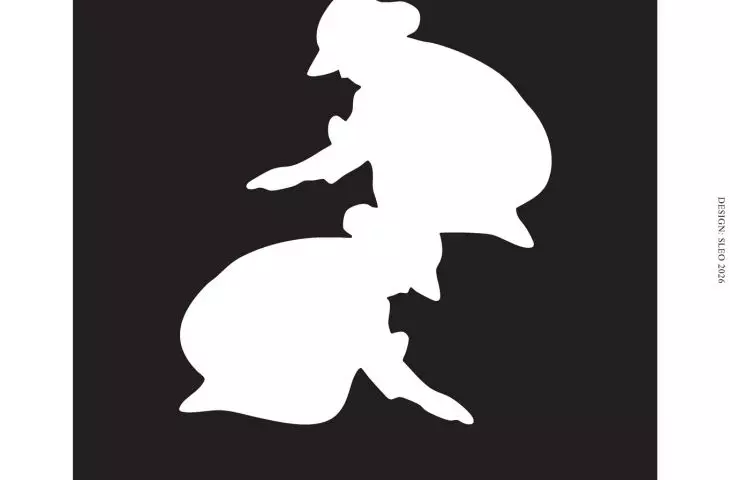
poster
© Magdalena Tryba
collection as an infinite process
The very title of the work reveals the author's way of thinking. Magdalena Tryba uses mathematical symbols - braces, a polygon and an infinity sign - to describe the collection as an open-ended collection, constantly evolving and impossible to finally close.
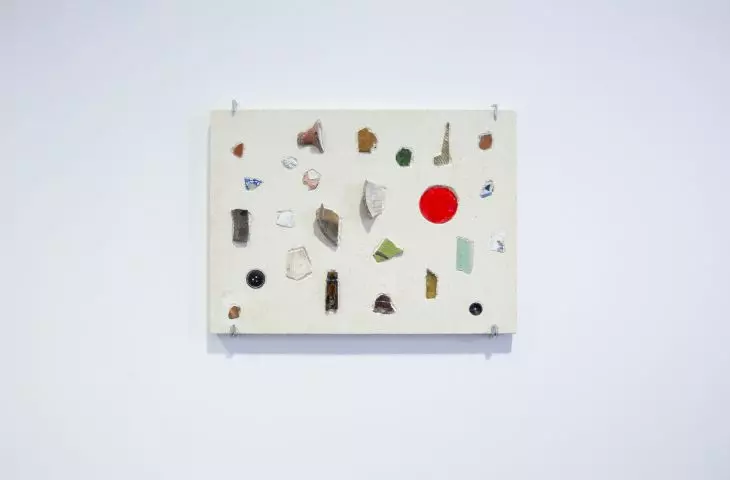
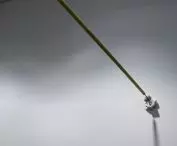
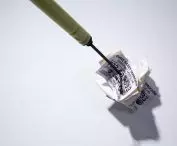
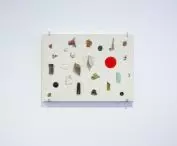
A magpie pen, sea glass or key are not just found objects here. Each category becomes a symbol of a particular kind of experience. The magpie feather refers to the impulse of collecting itself, the sea glass to the processes between nature and human activity, while the key symbolizes crossing boundaries and discovering new meanings.
© Magdalena Tryba
As the author emphasizes, collecting is for her an attempt to bring things out of the chaos of everyday life - to notice, name and momentarily stop their existence.
From childhood need to conscious practice
Magdalena Tryba's practice has been developing consistently for many years. Her earlier bachelor's degree already dealt with collecting and collecting found objects. The current realization is an expansion of these interests and an attempt to translate years of experience into a more narrative artistic language.
Working with Magdalena was a very interesting experience and took place in partnership - the process of preparing the master's diploma took more than two years. Importantly, Magdalena's earlier diploma was also defended at the Intermedia Department and, like now, it was about collecting. Thus, we are dealing with a very consistent and conscious artistic practice, the genesis of which dates back to her childhood years," stresses the thesis supervisor, Dr. Krzysztof Maniak.
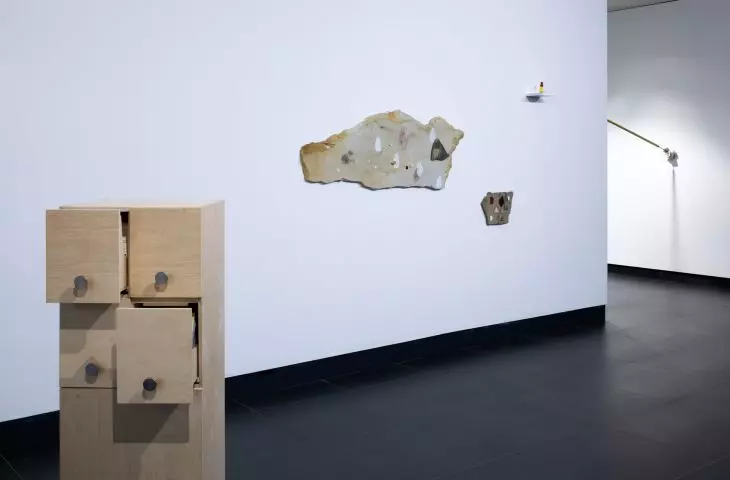
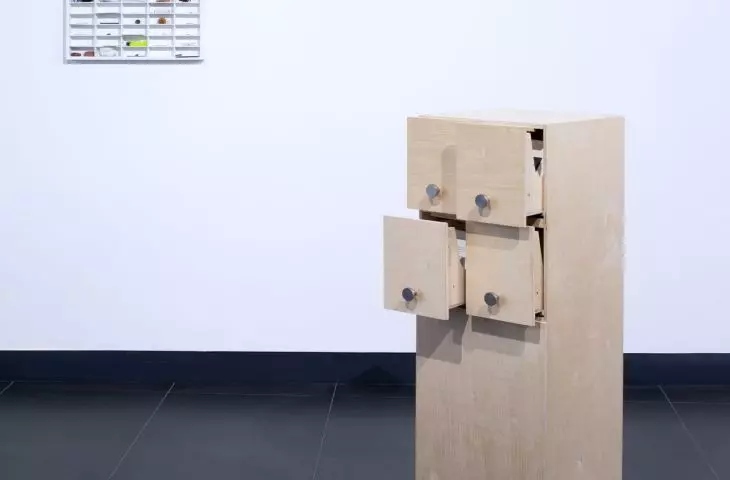
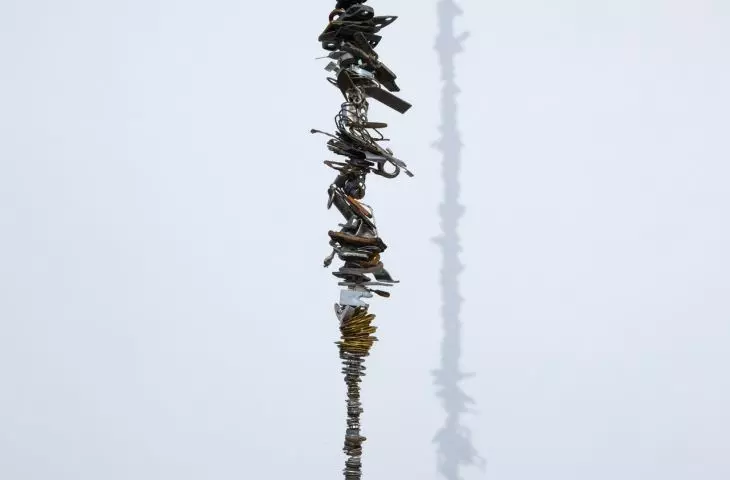
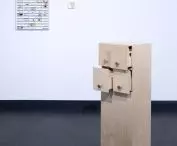
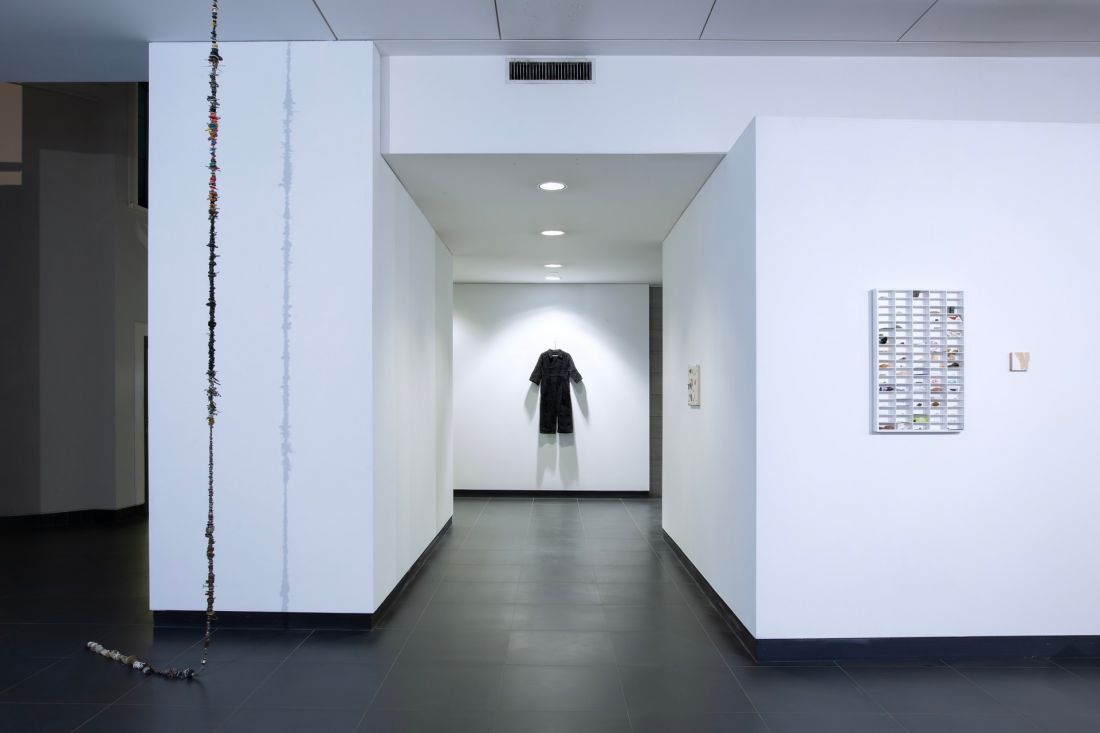
The current presentation was a summary of a several-year process, but above all a transformation of Magdalena's previous experience into a new, more narrative language and form of display of objects collected over the years. Surprising object-exhibits appeared, such as a piece of furniture referring to a library closet or a composition created from more than three thousand "things with a hole," she adds.
© Magdalena Tryba
It is the consistency and organic development of her own practice that makes the project not just a one-time exhibition, but part of a long-term process of exploring the relationship between object, memory and experience.
exhibition as a narrative space
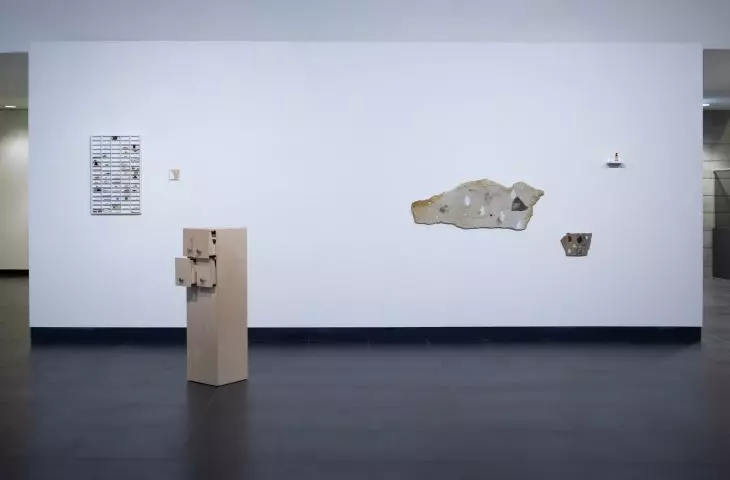
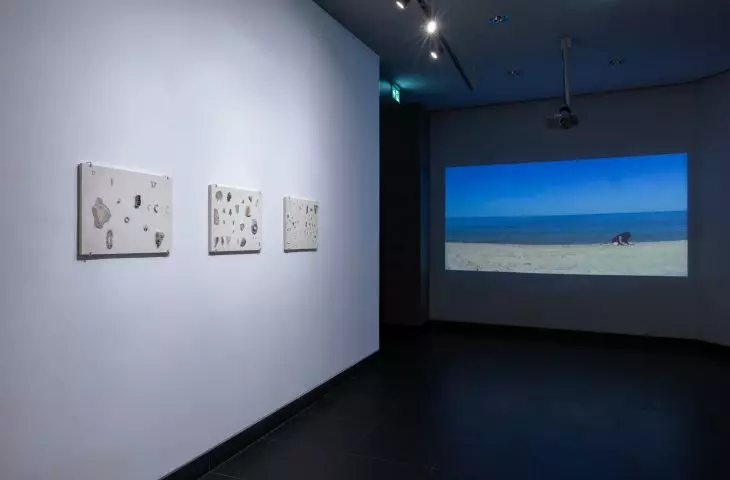
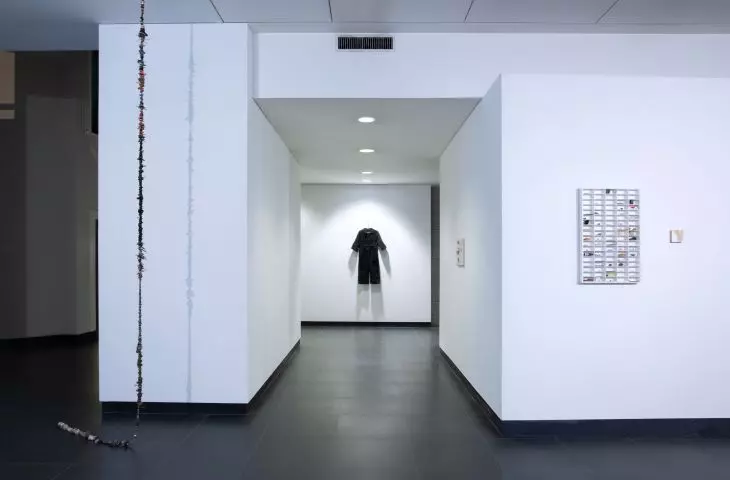
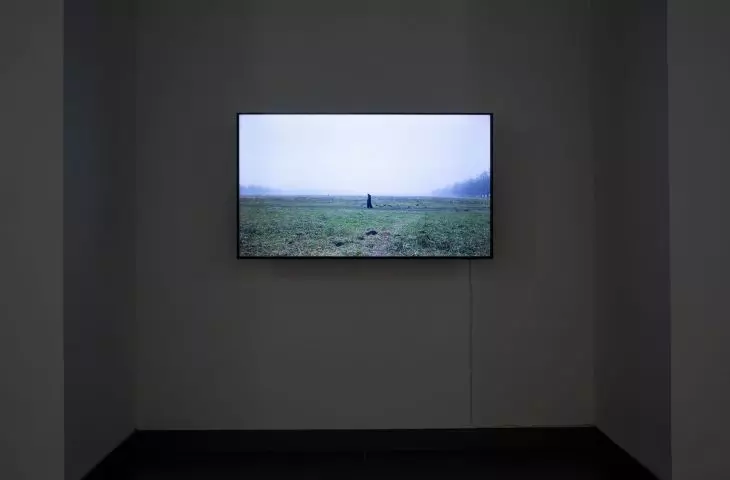
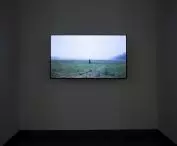
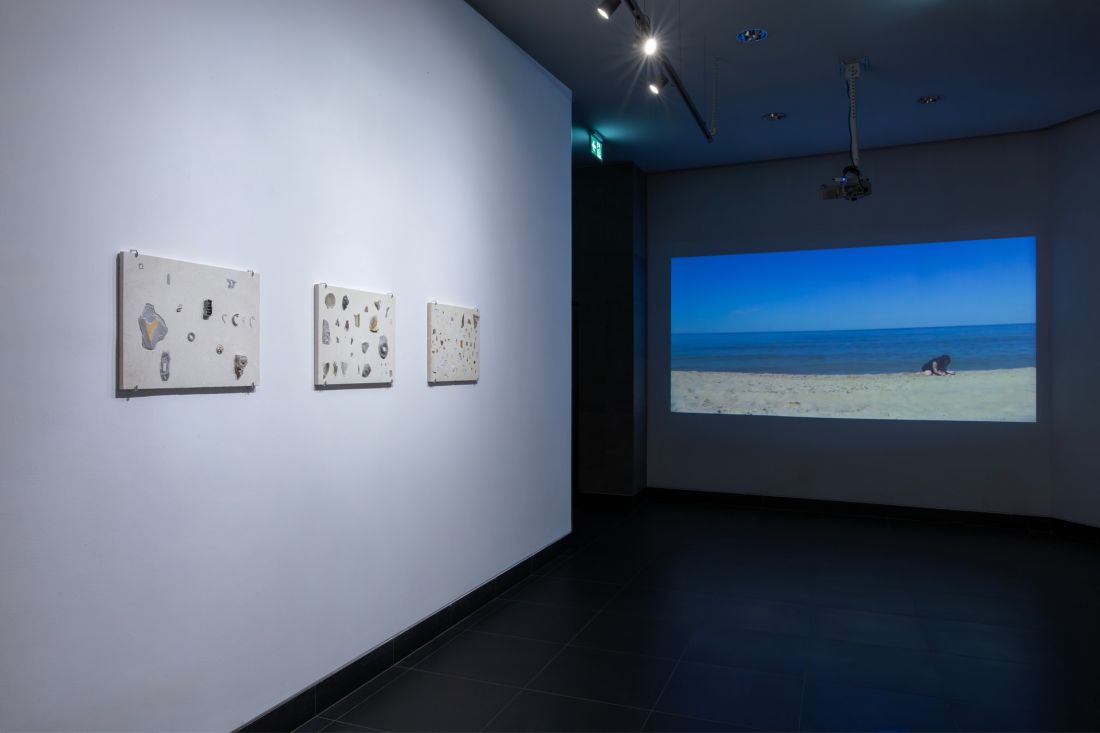
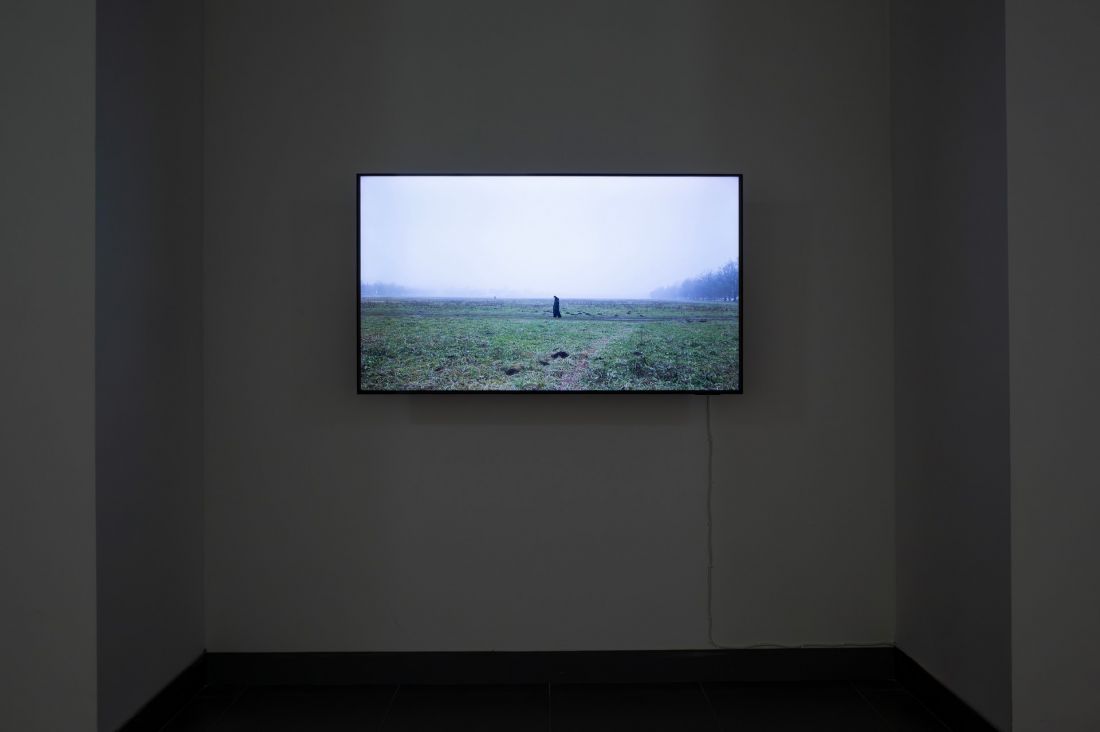
The presentation of the diploma took the form of an elaborate installation combining objects, performative actions, documentation and textual elements. The exhibition became a kind of archive of experiences and collections built up over the years.
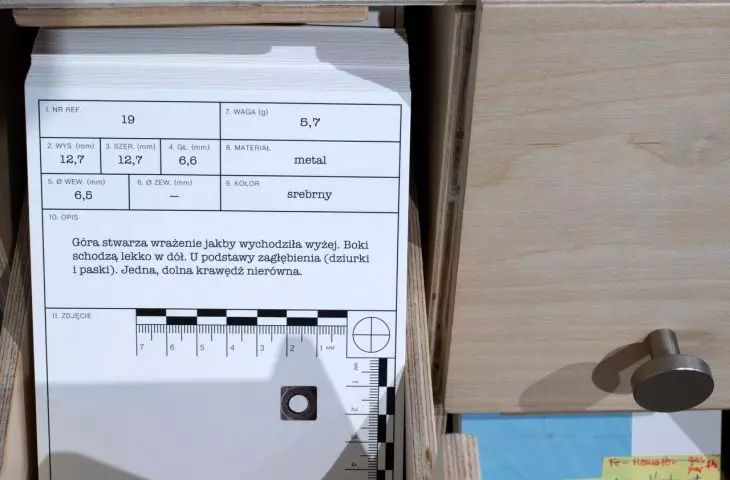
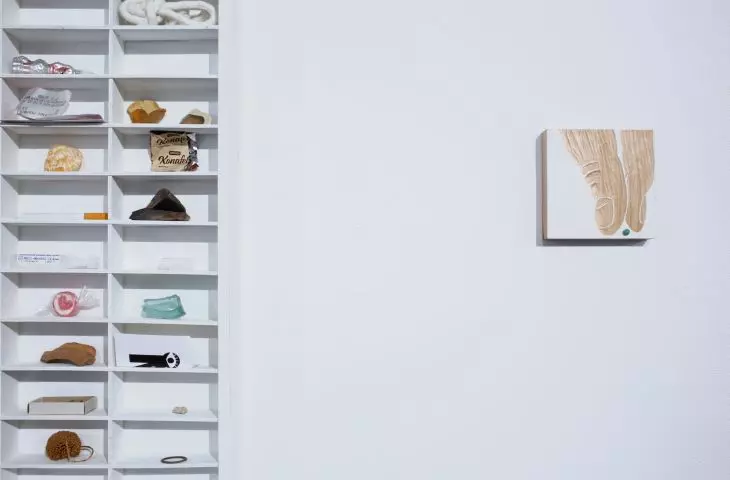
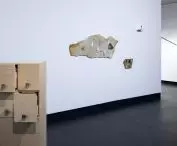
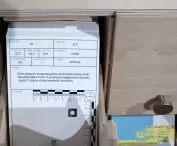
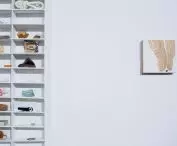
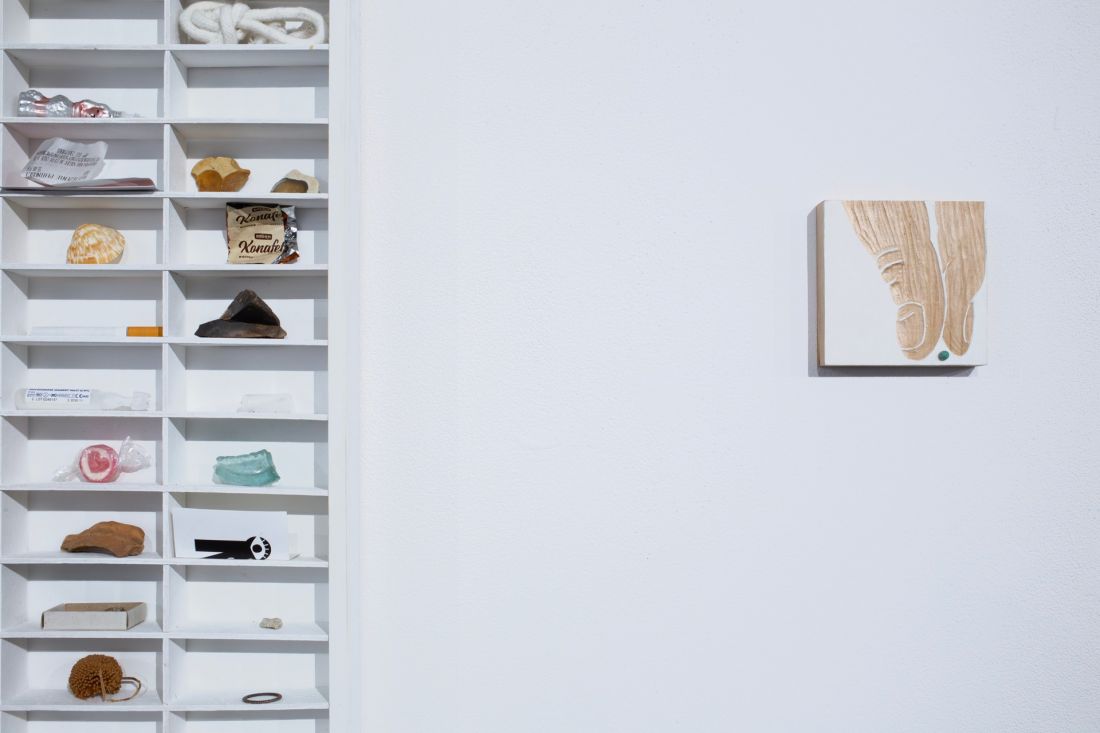
One of the central elements of the exhibition was an object resembling a librarian's closet, in which fragments of written work, notes, collages and literary records related to the collection process were placed.
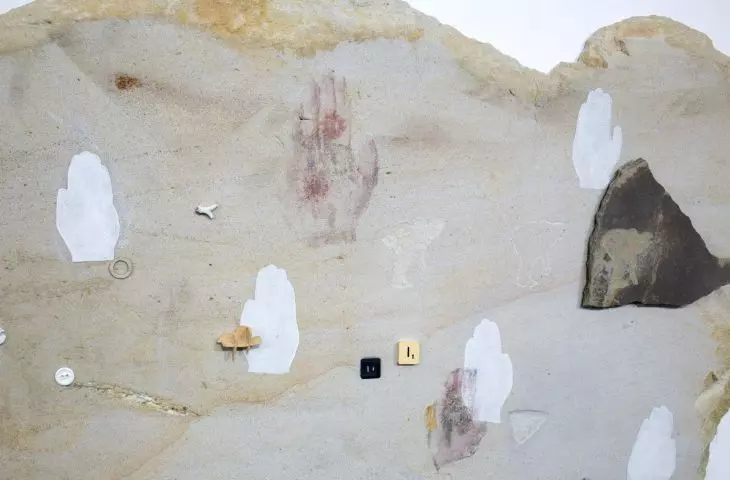
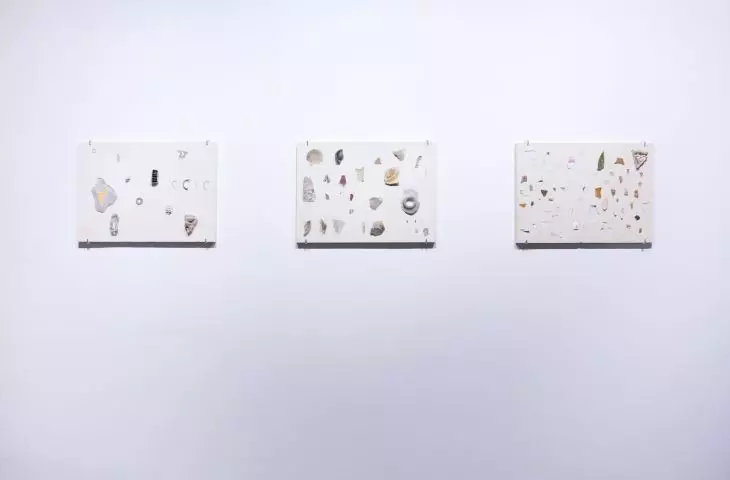
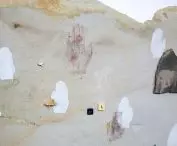
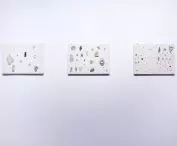
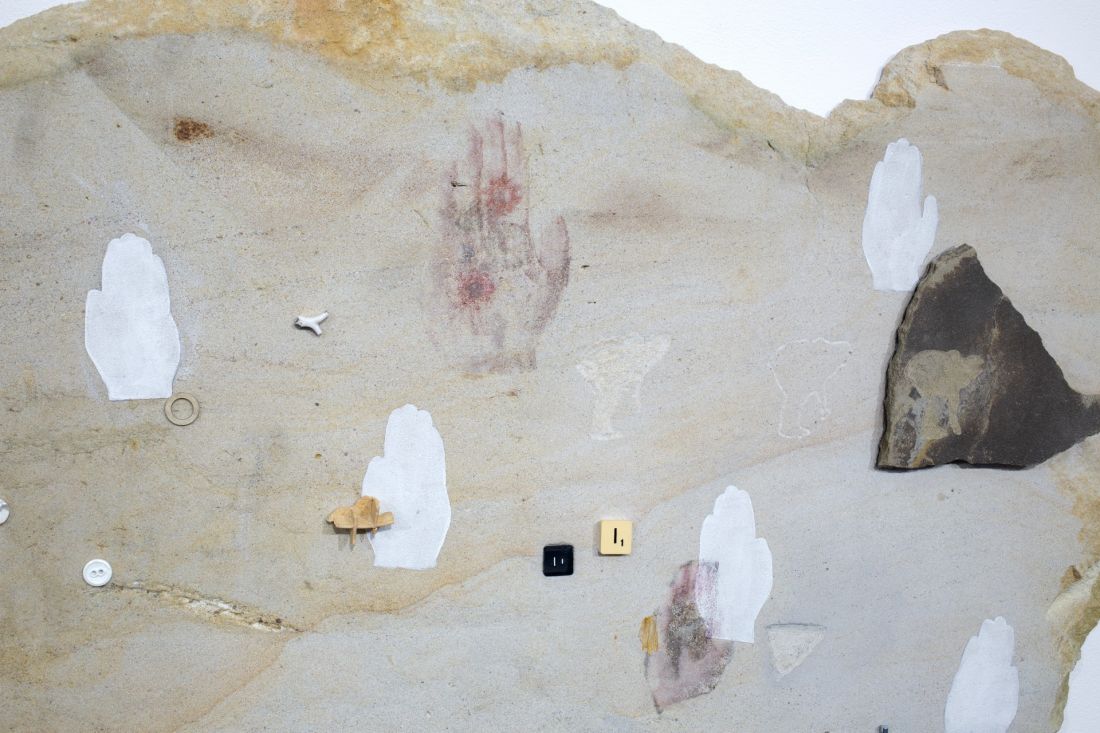
Stone slabs presenting collections of things found in specific places also played an important role. They constituted a trace of the author's performative actions - a record of time, space and the act of searching itself.
© Magdalena Tryba
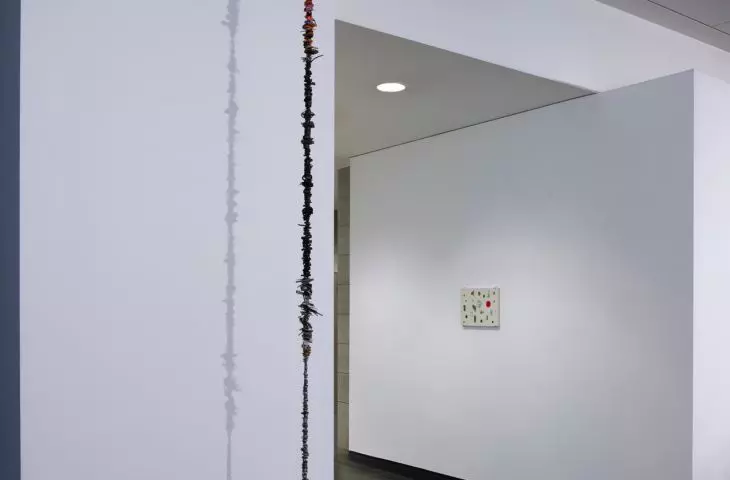
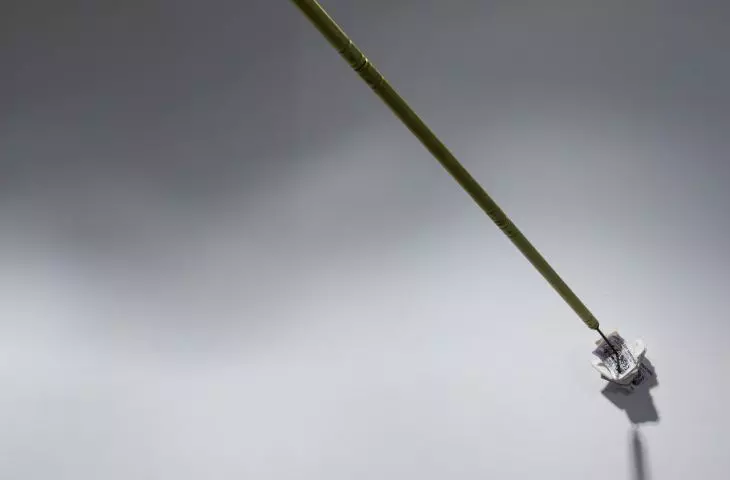
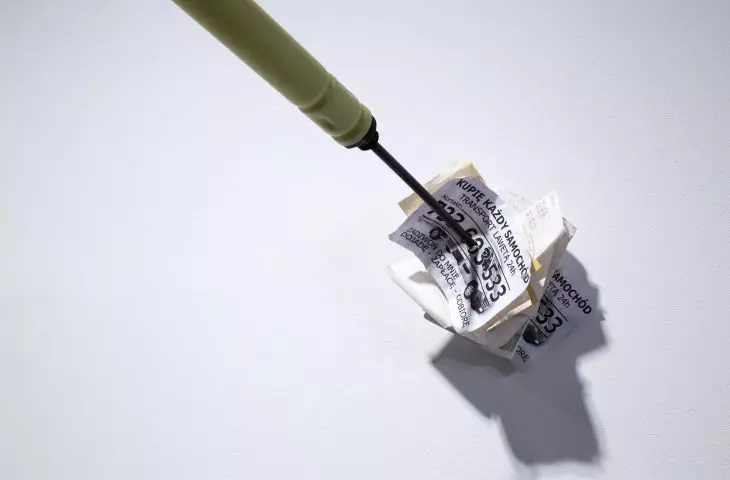
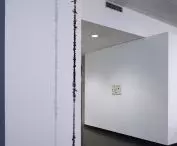
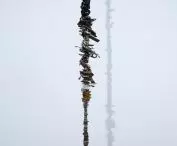
Particularly impressive was also a monumental composition suspended from the ceiling to the floor, created from more than three thousand "things with a hole". The object turned everyday, often unnoticeable objects into a material story about the obsession with cataloging and the need to organize the world.
collecting as a way of understanding reality
The review of the work emphasizes that Magdalena Tryba shifts the emphasis from the objects themselves to the performative nature of the collecting process. It is not the collection that is most important here, but the very act of extracting things from reality and giving them new meanings.
The author inscribes her practice in the long tradition of artists and collectors trying to organize the chaos of the world by creating their own systems, archives and collections.
In the project "{pen, sea glass, key, ..., ∞}", however, the archive does not serve to enclose reality in an ordered structure. On the contrary - it remains an open process that can develop indefinitely.
© Magdalena Tryba
archive of everyday life
Magdalena Tryba's work shows that even the most ordinary objects can become carriers of memory, emotions and meanings. Found things cease to perform their original functions and begin to function as elements of a larger story about a person's relationship with the world.
The project does not attempt to define a single truth about collecting. Rather, it encourages a more attentive look at reality and seeing value in what usually goes unnoticed.
© Magdalena Tryba
In this sense, Magdalena Tryba's practice becomes not only an artistic archive of objects, but also an archive of everyday experiences, gestures and ways of being in the world.