





from the series "Modern office buildings - trends, technologies 2025"
Modern commercial architecture is placing increasingly high demands on designers and investors. Buildings are to be not only aesthetically pleasing and functional, but also flexible, durable and prepared for ever-increasing technological needs. One of the key elements that meet these expectations are raised floors, especially systems based on gypsum boards, such as those offered by TIM-EX.
Although raised floors made of particle-resin boards have been on the market for years, more and more professionals - architects, investors and property managers alike - are choosing gypsum solutions. The reason is simple: they offer parameters and properties that meet the standards of modern office buildings, data centers, hotels, laboratories and even premium spaces.
Below are the most important advantages of gypsum raised floors, which are worth considering when planning an investment.
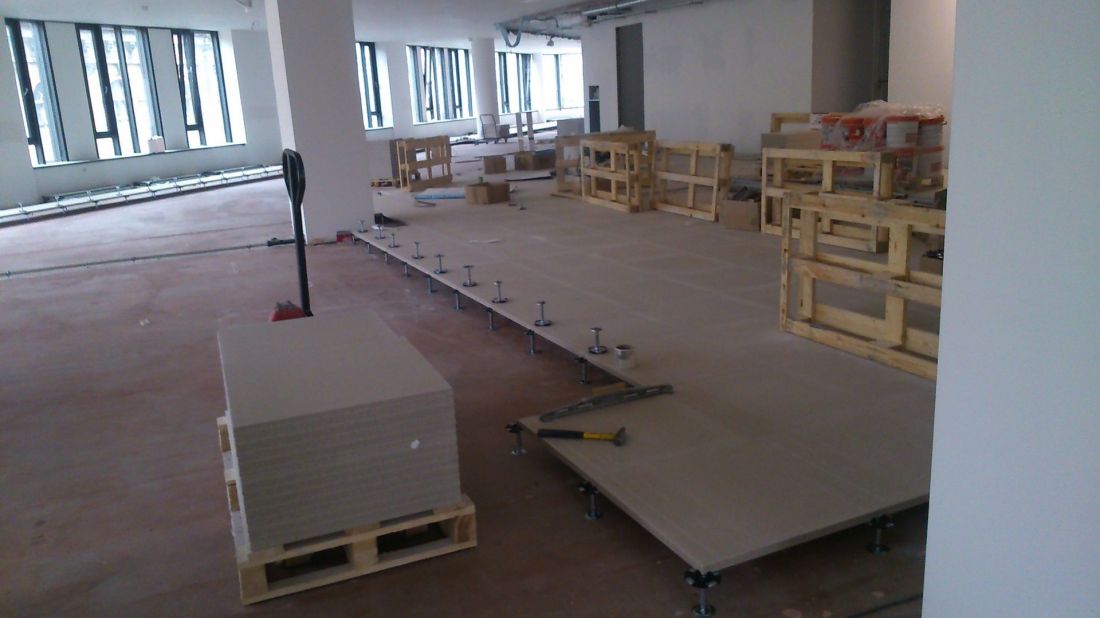
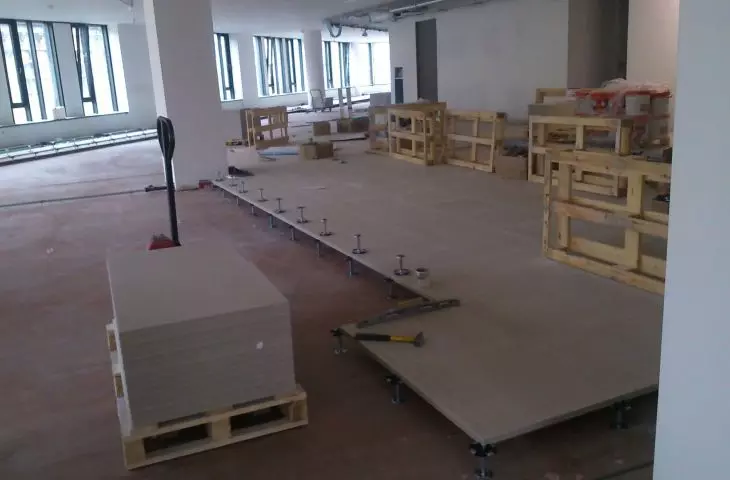
Gypsum floor during installation
© TIM-EX
Higher structural stability and rigidity in TIM-EX systems
Gypsum boards are heavier and denser than particle-resin boards, which translates into:
-
better vibration dampening,
-
greater stability of the entire surface,
-
less deflection under load,
-
higher user comfort, especially in open spaces and premium offices.
For architects, this means more freedom in interior design without worrying about keying or "soft" floor operation. For businesses - higher durability and fewer complaints after the building is put into use.
Significantly better material class and fire resistance
One of the most important parameters in commercial buildings is fire safety. Gypsum boards naturally contain chemically bound water molecules, so they:
-
are non-combustible,
-
have significantly higher fire resistance,
-
limit the spread of fire and smoke in the event of a fire,
-
do not emit smoke and toxic gases.
Particle-resin board floors, even if impregnated, remain a combustible material, which requires additional protection and therefore costs.
Moisture resistance and stability under varying conditions
Gypsum raised floors:
-
do not deform when humidity fluctuates,
-
do not swell like wood-based boards,
-
show long-term dimensional stability,
-
can be used even in rooms with higher humidity (technical, server rooms, archives).
This is especially important in buildings equipped with intensive HVAC systems, where humidity and temperature are often subject to dynamic changes.
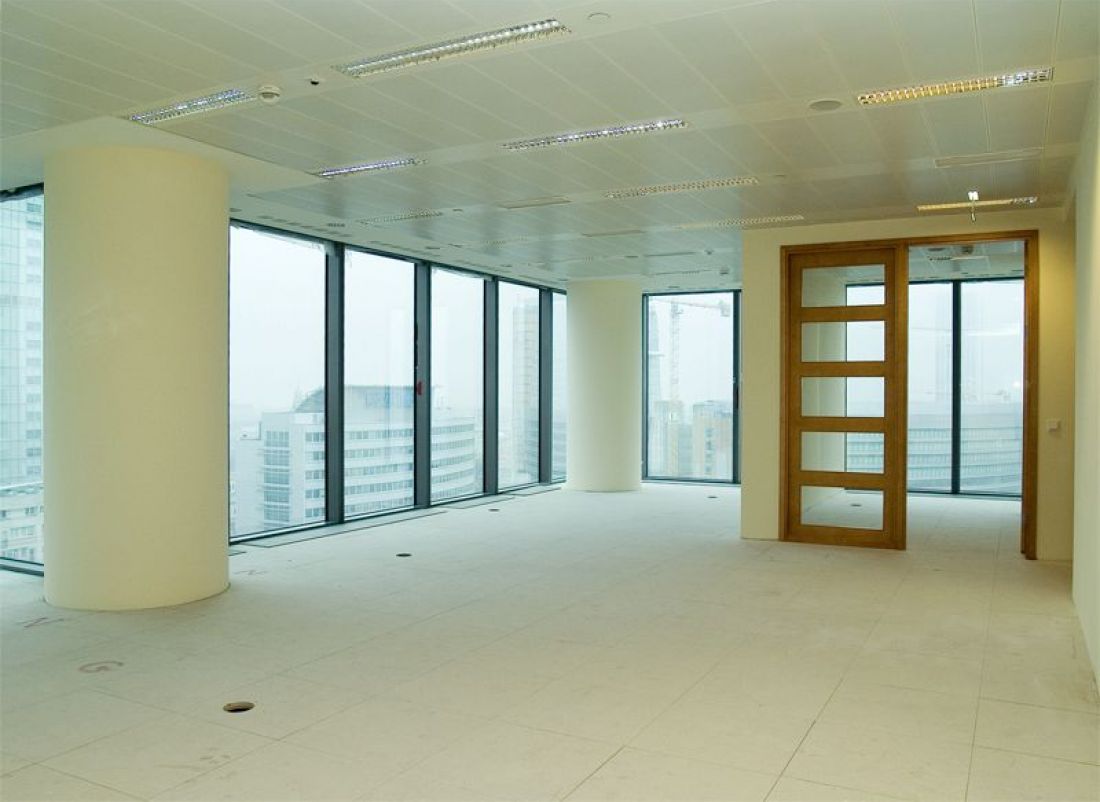
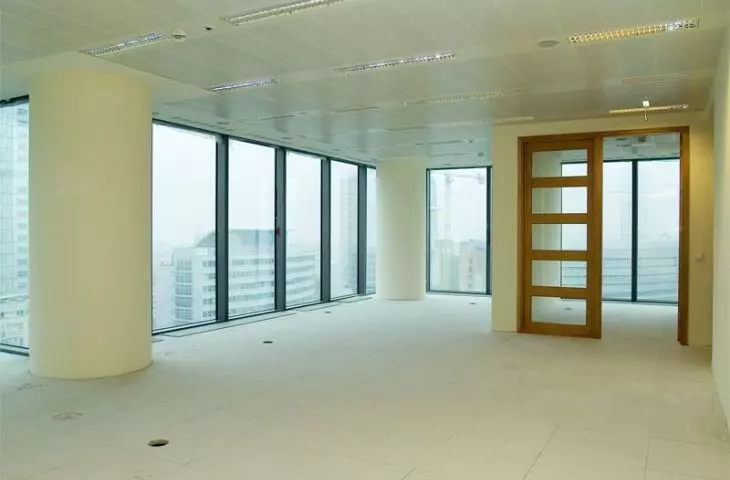
Gypsum flooring installed
© TIM-EX
More mass = better acoustics
Gypsum boards, thanks to their mass and density, provide:
-
much better air noise attenuation,
-
greater acoustic comfort,
-
a more prestigious, "solid" perception of the space.
For architects designing Class A offices and high-end spaces, this is a huge advantage. For investors and tenants - a real improvement in work efficiency and user comfort.
Durability and long life of the system
Gypsum boards are characterized by:
-
greater resistance to temperature and humidity fluctuations,
-
less wear and tear in the long term,
-
better mechanical stability,
-
low susceptibility to spot damage.
In practice, this means less frequent maintenance, fewer failures and lower operating costs.
Ecology and safety of use
Gypsum is a natural, non-flammable and non-toxic material. Unlike particle-resin board, it does not contain formaldehyde or synthetic resins, so:
-
does not emit volatile organic substances (VOCs),
-
is significantly more health-friendly,
-
meets the environmental standards required for BREEAM, LEED or WELL certification.
For investors, this also means an easier path to building certification.
Higher resistance to heavy loads
Gypsum boards perform well in spaces with heavy use, such as:
-
office spaces with a high density of workstations,
-
data centers and server rooms,
-
call centers,
-
technical rooms,
-
shopping malls and front-of-house areas in hotels.
Their durability parameters are difficult to achieve for particle-resin board-based systems.
Ideal base for modern floor coverings
Gypsum raised panels create a surface:
-
very stable,
-
even,
-
of high smoothness,
which makes them ideal as a substrate for:
-
carpeted office floors,
-
LVT panels,
-
ceramic tiles,
-
stone,
-
resins.
This is an additional design and technological advantage.
No elements prone to forming zinc whiskers
Gypsum raised floors are manufactured:
-
from a gypsum-fiber core,
-
without zinc coatings.
In practice, this means that gypsum panel elements do not provide an environment conducive to the formation of zinc whiskers, unlike traditional particle-resin panels with aluminum foil or zinc-coated steel sheet. Zinc whiskers (zinc whiskers) are micro-developments of metal formed on zinc-coated surfaces. In server rooms, data centers, laboratories and other facilities, they can pose a serious threat to electronic equipment (short circuit, damage to modules, failures difficult to diagnose).
Summary: why choose gypsum raised floors?
For architects:
-
greater design freedom,
-
easier compliance with fire and acoustic standards,
-
a system that is dimensionally stable and predictable in use.
For businesses and investors:
-
higher durability and lower operating costs,
-
improved user comfort and safety,
-
higher property value, and easier environmental certification.
More and more developments are already using this standard - and for good reason. Gypsum raised floors meet the real needs of modern buildings and are a long-term, future-proof investment.
Looking for specific solutions, or need a quote? Visit: www.timex.com.pl
For more information, visit the company's TIM-EX page on the PdA portal.