



Now that the record-breaking heat wave in Polish history has finally subsided, it’s worth taking a step back to analyze how our homes fared during this extreme test. On the days when the record for the highest temperature ever recorded was broken (40.6°C in Kołuda Wielka), and at night the mercury wouldn’t drop below 20 degrees, most people sought relief in air conditioning or by tightly covering their windows. According to industry experts, the key in such situations is to create a thermal barrier that will serve as the first line of defense. Instead of fighting the heat that has already penetrated the building and accumulated around the clock, we must focus on prevention, a key element of which is a properly designed and insulated roof.
Comfort Starts Before Air Conditioning
In conversations with investors, the topic of heat often starts with air conditioning—as experts from Ruukki Polska, a manufacturer of steel roofing, acknowledge.
Meanwhile, during a heat wave lasting several days, heat gradually builds up in the building’s structural elements—the roof, walls, and ceilings. Each subsequent day may therefore begin with an even higher temperature. That is why, before considering active cooling, it is worth thinking about how to limit the amount of heat that enters the interior in the first place.
From a technical standpoint, the interaction of all building envelope components is crucial. The roof is one of the key elements of this system, but its performance must be considered in conjunction with insulation, glazing, ventilation, and the final installation. Poor performance or construction errors can affect the functioning of the entire system, and only the proper interaction of these solutions allows for effectively limiting overheating in the summer and heat loss in the winter,” notes Mariusz Ciecierski, CEE Portfolio Manager at Ruukki Polska.
Not every roof stores heat in the same way
Every roofing material heats up more in the sun than the surrounding air—that’s physics, and you can’t get around it. The difference, however, lies in how much heat a given material stores and how quickly it releases it once the sun goes down. Heavier roofing materials, such as ceramic or concrete tiles, have a higher heat capacity, so they can store more energy during the day and release it gradually after sunset. Lightweight, thin-walled steel roofing behaves differently—due to its low mass, it stores less heat and adjusts its temperature more quickly to ambient conditions. This is particularly important on hot nights, when it matters not only how much the roof has heated up during the day, but also how quickly it begins to cool down.
Roof color matters—but not in the way you think
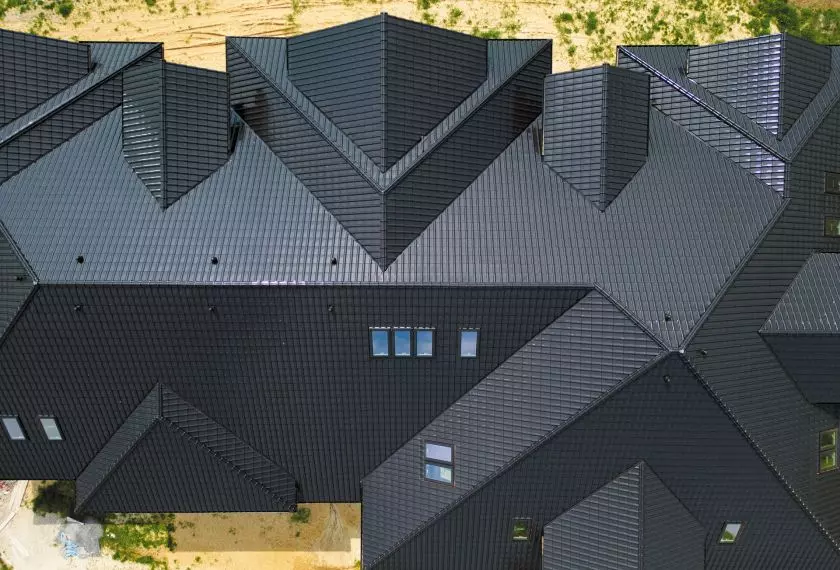
Intuition suggests that a dark roof means a hot attic, while a light-colored roof keeps things cool. That’s only part of the truth. Dark roofing materials do indeed absorb more solar radiation and reach higher surface temperatures than light-colored ones. But the roof’s surface temperature isn’t the same as the temperature beneath it. What matters far more is how the entire roofing system functions—that is, the insulation, ventilation, roof slope geometry, and quality of construction.
If you look at a roof solely through the lens of color, it’s easy to jump to oversimplified conclusions. Yes, dark surfaces absorb more solar radiation, but the temperature in the attic depends primarily on how the entire roof structure functions. Good insulation, proper ventilation, and careful construction can limit heat gain more effectively than simply choosing a lighter shade,” emphasizes Mariusz Ciecierski.
Air that acts as free air conditioning
There are still a few layers between the roof covering and the attic bedroom that are easy to overlook. Thermal insulation and proper roof ventilation are key. The mechanism is simple—air flows in under the roofing near the eaves, heats up, and escapes at the ridge, carrying some of the heat with it. This is a natural, free cooling system, provided nothing interferes with it. However, this mechanism works only if the entire system is installed correctly. A blocked air inlet, a disrupted ventilation gap, or insulation errors can significantly reduce its effectiveness. In practice, the quality of workmanship may be more important than the choice of roofing material itself—a well-designed and properly installed roof is more effective than a more expensive material used in a poorly constructed system.
Steel “expands and contracts,” and this is normal
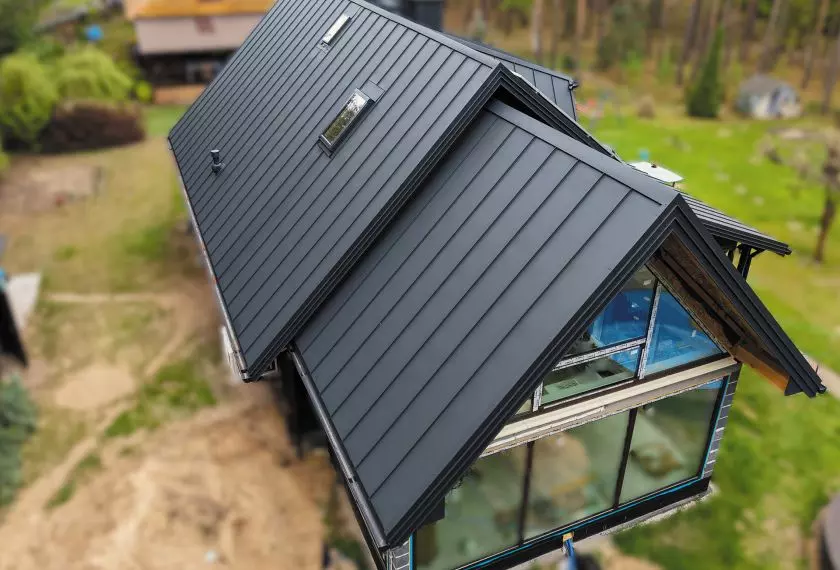
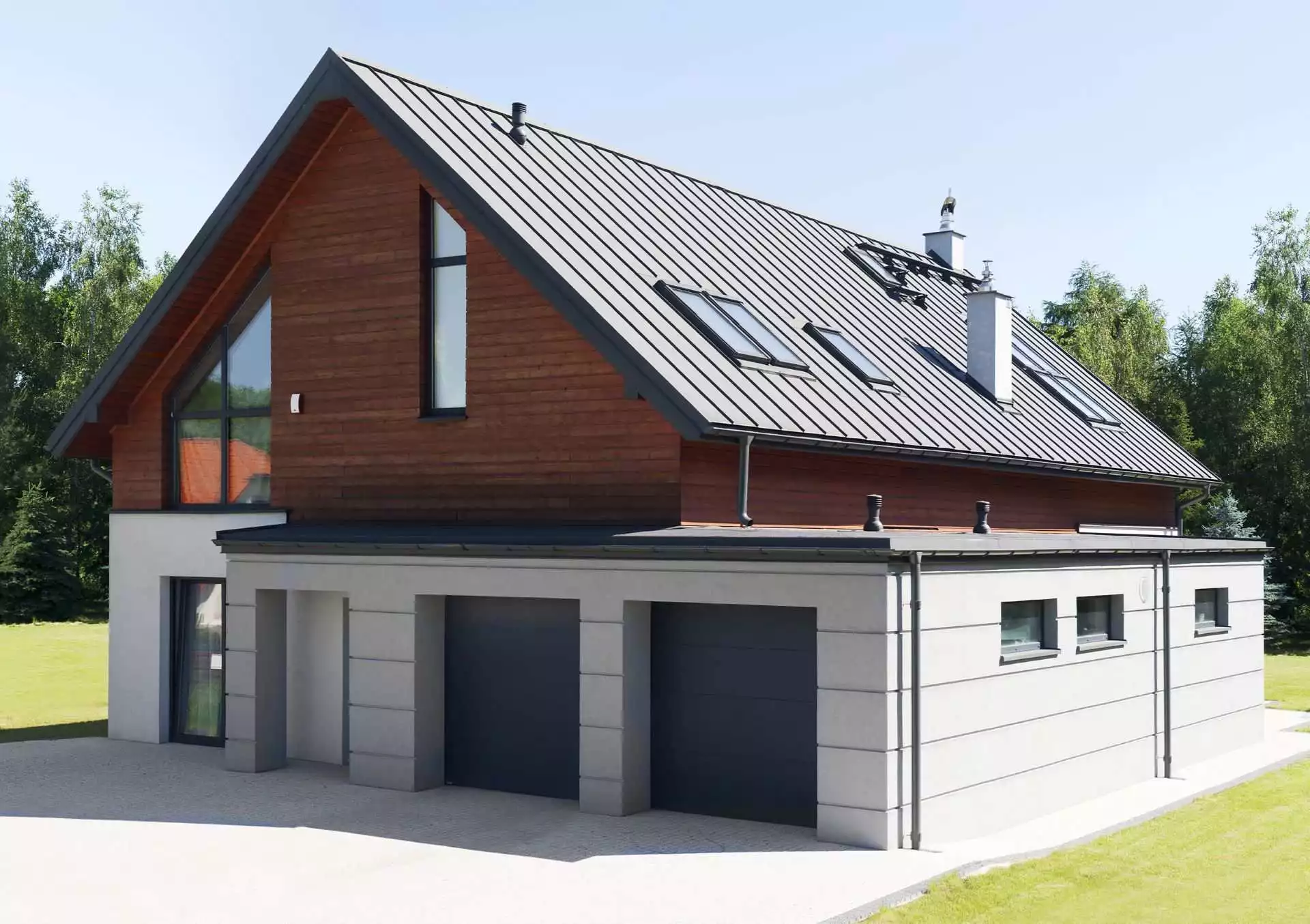
Metal roofing has its own unique characteristics that are worth knowing. Steel expands when heated and contracts again as the temperature drops—just like components of bridges, railroad tracks, or building facades. This is a natural phenomenon that is already taken into account during the design phase of roofing systems. Therefore, for standing-seam panels, solutions are used that allow the material to freely compensate for dimensional changes. The key, then, is not to stop the steel’s movement, but to design and construct the roof so that this movement occurs in a controlled and safe manner.
The natural movement of thin-walled roofing panels may sometimes be accompanied by so-called “oil canning,” which is a slight visual waviness of the surface. This phenomenon is purely aesthetic and does not in itself affect the roof’s watertightness, load-bearing capacity, or durability. It may be more visible on long panels, large roof surfaces, dark colors, and in intense sunlight. It’s also worth remembering that every roofing material has its own installation requirements,” adds an expert from Ruukki Polska.
In the case of steel, it is particularly important to allow for its natural movement. This is yet another example showing that the durability and appearance of a roof depend not only on the type of roofing material, but also on proper design, substrate preparation, and professional installation.
When a Roof Becomes a Power Plant
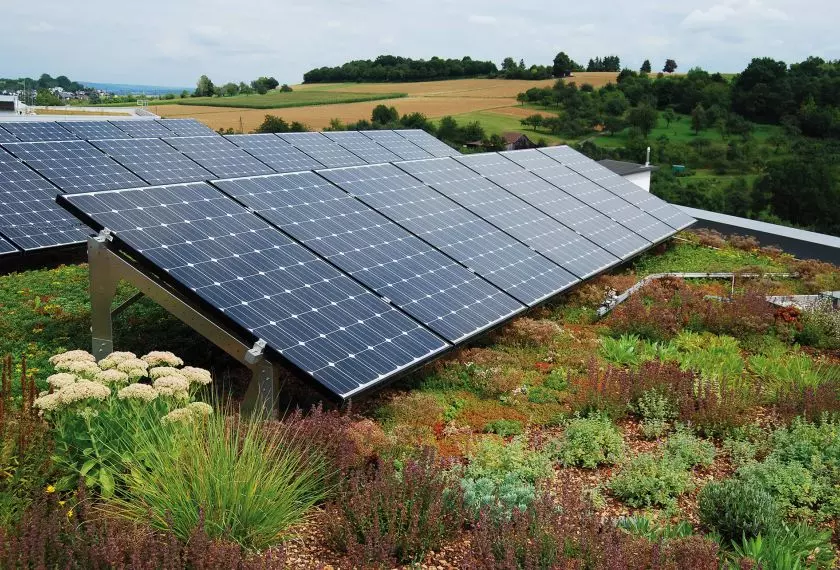
Hot weather also has its positive side—intense sunlight means high energy production from photovoltaics. Thus, the roof is increasingly ceasing to be merely a passive shelter over the house and is becoming part of its energy infrastructure. In the case of standing-seam roofs, photovoltaic modules can be mounted directly to the seam without drilling additional holes in the roof surface, which minimizes interference with the roofing material. However, it is important to remember that a PV installation adds extra weight and requires new mounting points, so it is best to factor this in during the roof design phase. It is also advisable to assess the condition and expected lifespan of the roofing material in advance to avoid the costly removal of the system in the event of a future renovation.
The Roof as a System, Not a Single Product
The conclusion is essentially this: there is no “magical” material that, on its own, will guarantee a cool interior in the summer. What matters is the interaction of the entire system—the structure, insulation, ventilation, quality of the roofing, and the care taken during installation. A modern roof must be designed and constructed with the understanding that, in the future, it may need to accommodate a photovoltaic system, solar panels, or other technical equipment—every additional element attached to the roof affects the functioning of the entire system. Before reaching for the air conditioning remote, it’s worth looking up. What happens above our heads determines our comfort more than you might think.
For more information, visit the RUUKKI POLSKA Sp. z o.o. website on the A@B portal