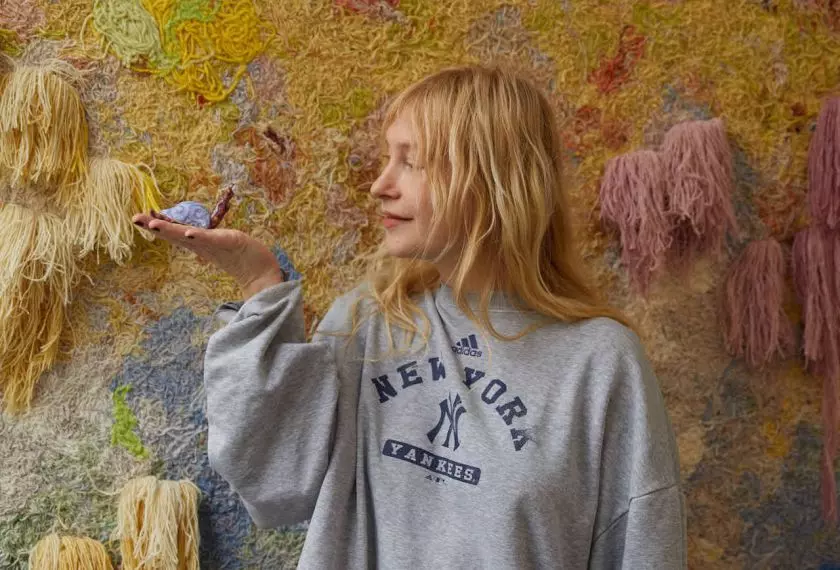


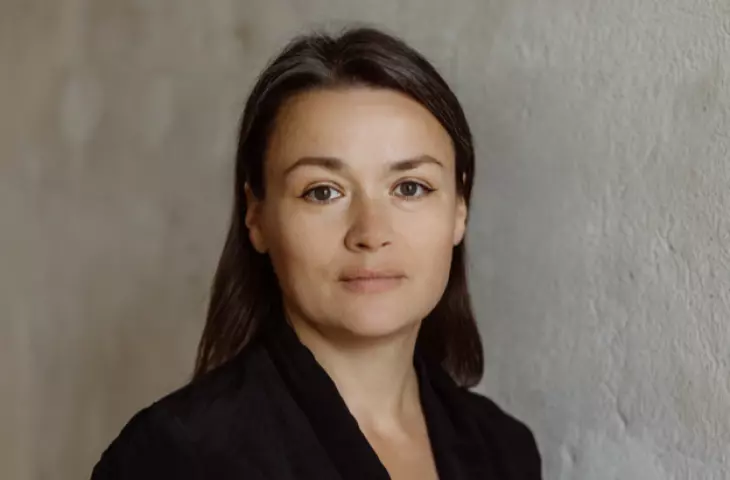
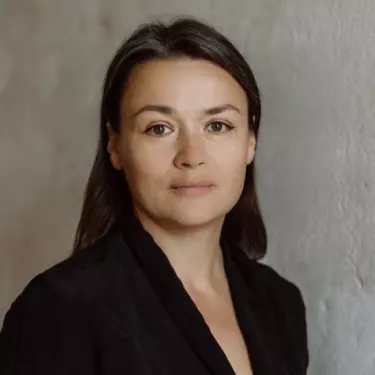
A new series of talks reveals the behind-the-scenes of every designer's most personal space - their own home. Interior architects, who create for others on a daily basis, this time open the doors to their apartments and homes, showing how they really live, what inspires them and what everyday life is like in the space they designed. In the first episode, Natalia Horak, founder of the design studio Koza Nostra Studio,who is also a stage designer by training and profession, presents her interiors and experiences.
Natalia Horak's apartment
Photo: Migdał Studio
1 What does the interior look like where you live?
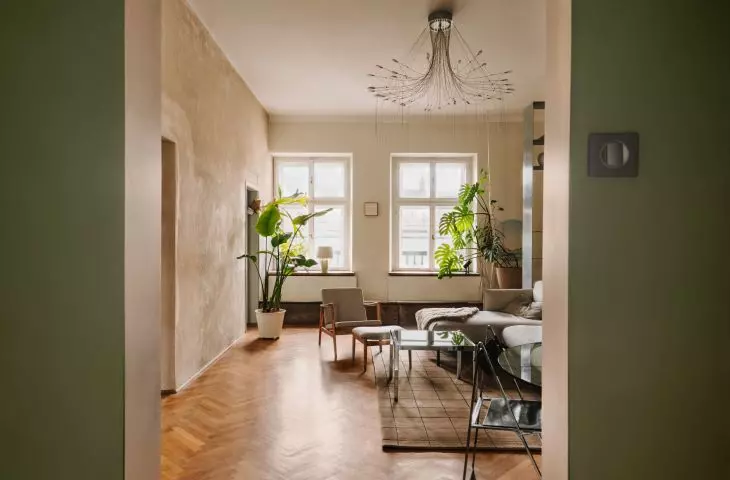
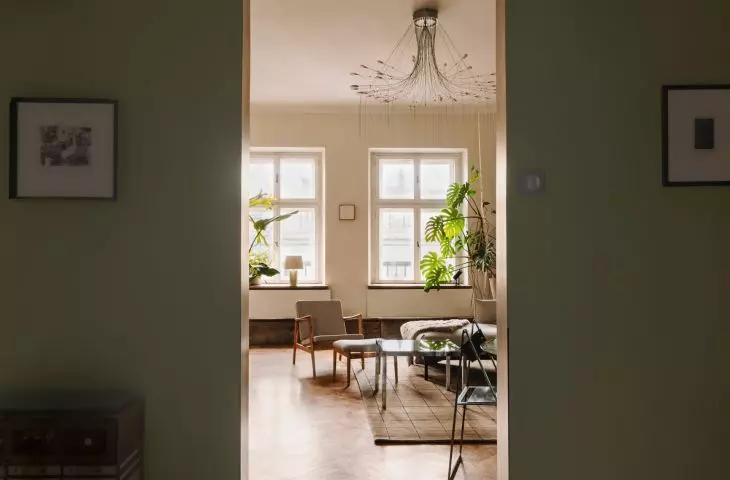
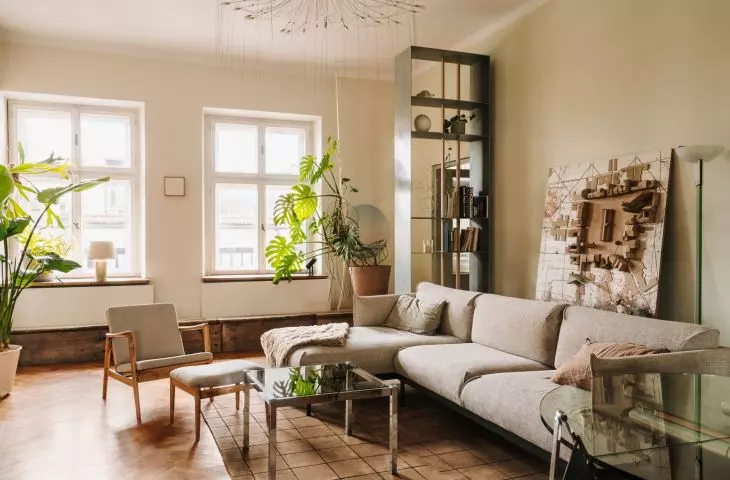
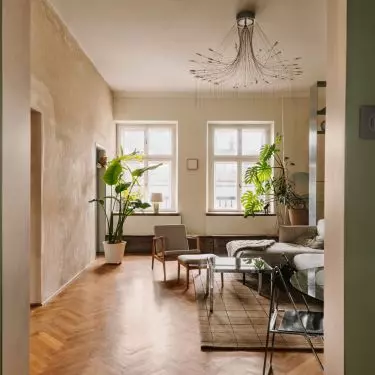
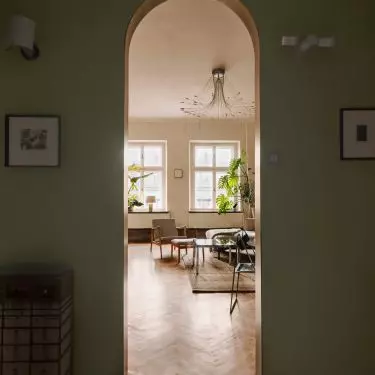
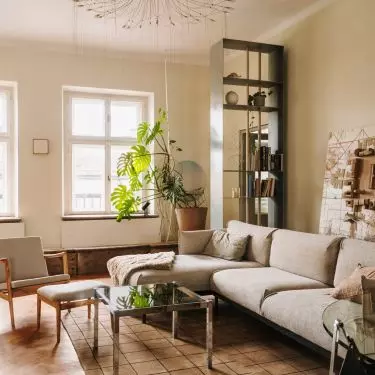
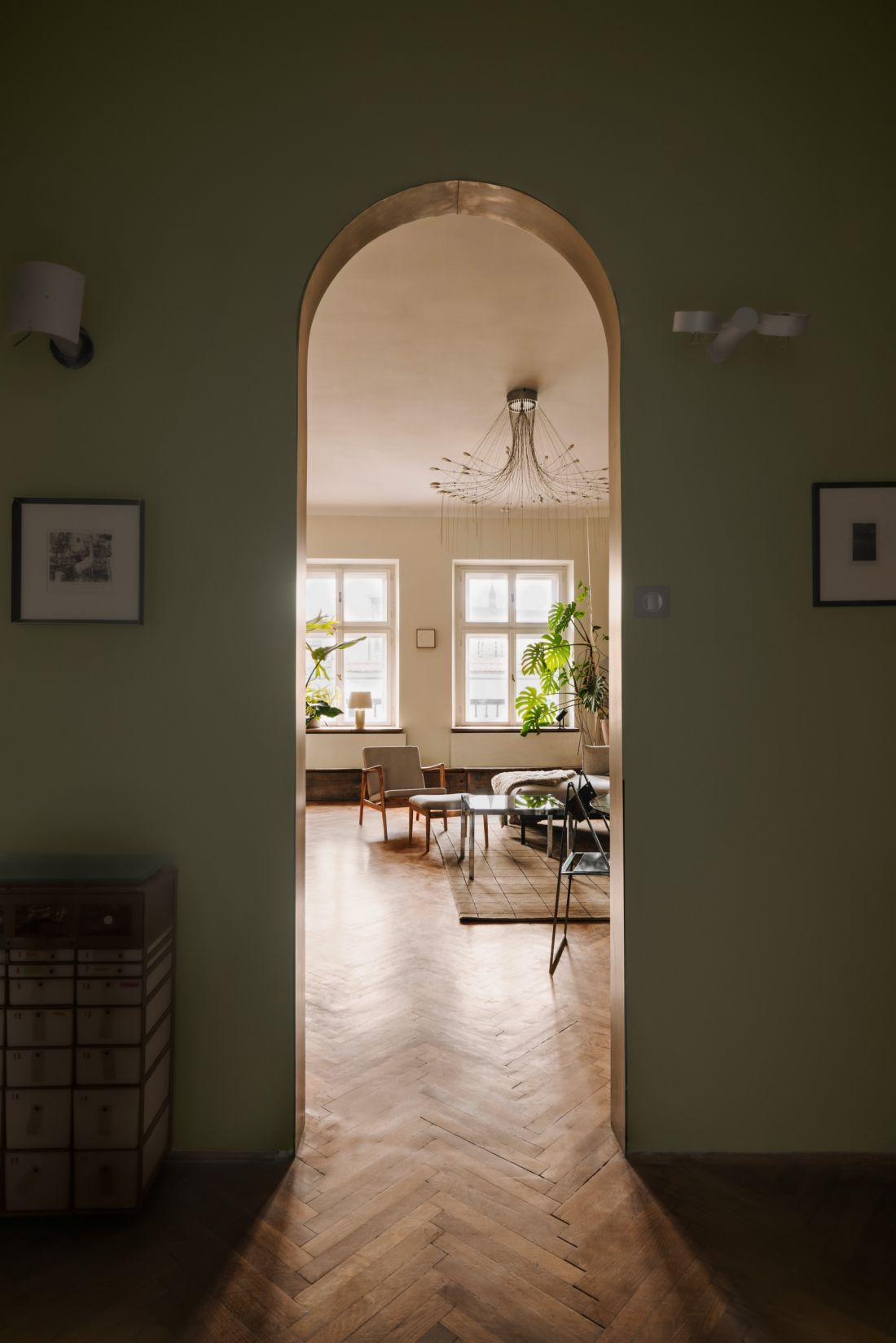
My apartment is located in an old tenement in the heart of Krakow. It is characterized by high ceilings (3.6 m), historic window frames (box windows) and oak parquet floors. This is a place where the basement walls remember the Middle Ages. There are no right angles here, each wall has its own distinctive texture. Such added value is worth highlighting. The raw wall in the living room shows its historic sand texture.
I started living in it more than 15 years ago, it represents the sum of my experiences, where my love of design of the 80s and 90s, inspiration from nature and a fair amount of artifacts collected on film sets are mixed. As a production designer and set designer, I have such an internal imperative to keep revamping something. I suspect this is as interesting as it is disruptive to my loved ones.
Natalia Horak's apartment
Photo: Almond Studio
2 What were the main assumptions and inspirations when creating it? Where did the concept come from and what determined the final shape of the space?
I found a trip to Iceland very inspiring, where traversing the interior (the central part of Iceland) on foot felt like home. Here the landscape is a bit like on another planet; open space, a narrowed color palette, a somewhat depressing but monumental aura. A very soothing combination.
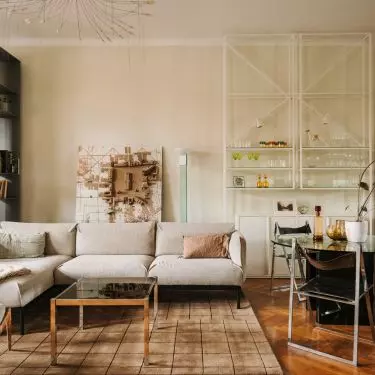
On a subconscious level, I think a lot of the significance is that I'm a child of the 80s/90s. A certain graphic simplicity, the juxtaposition of almost black with almost white, steel, aluminum, a lot of wood and, of course, design icons.
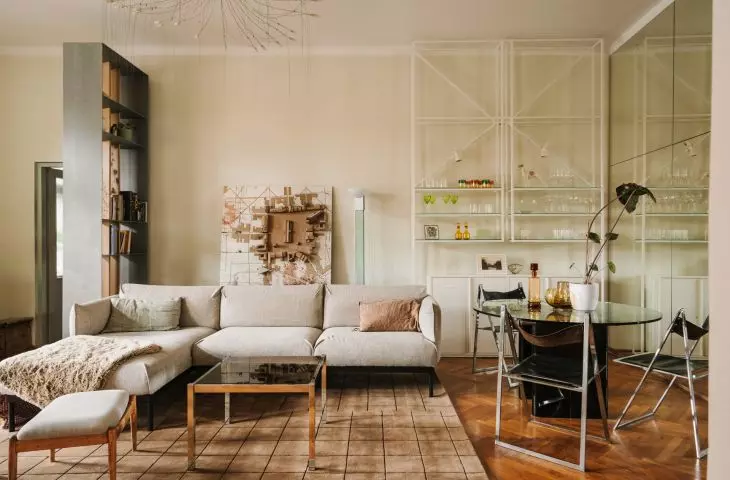
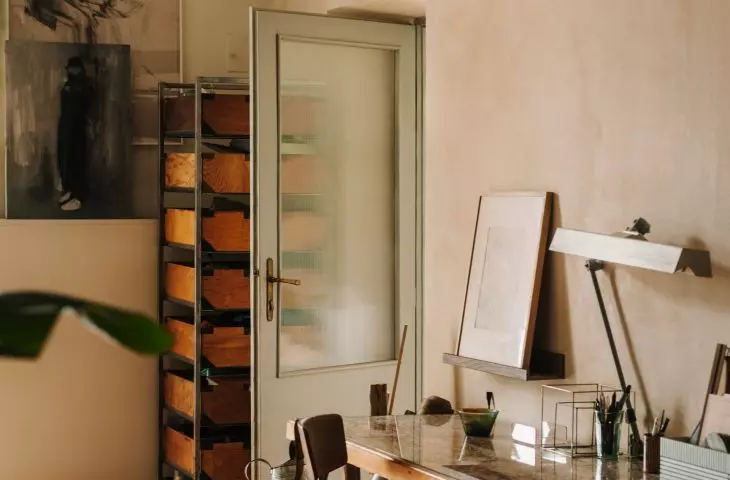
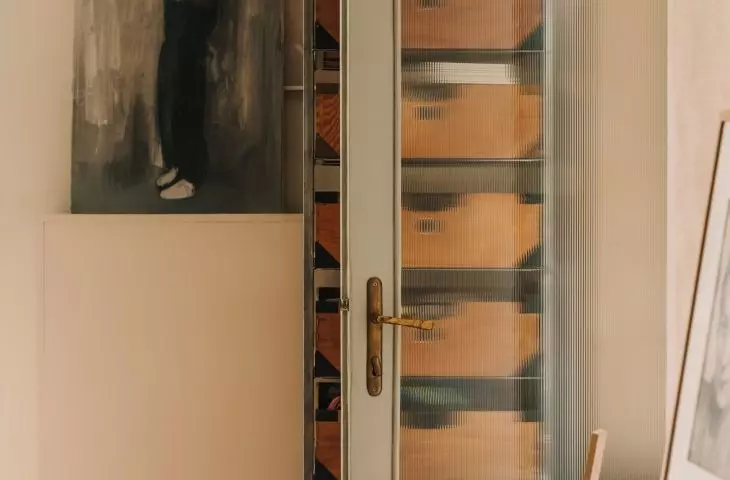
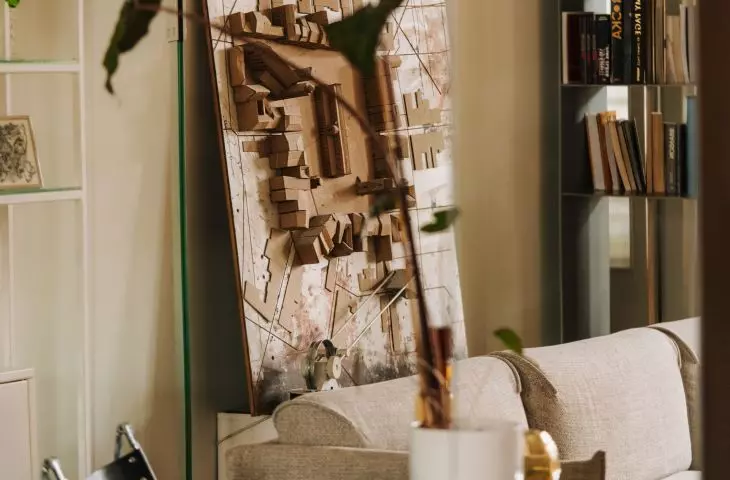
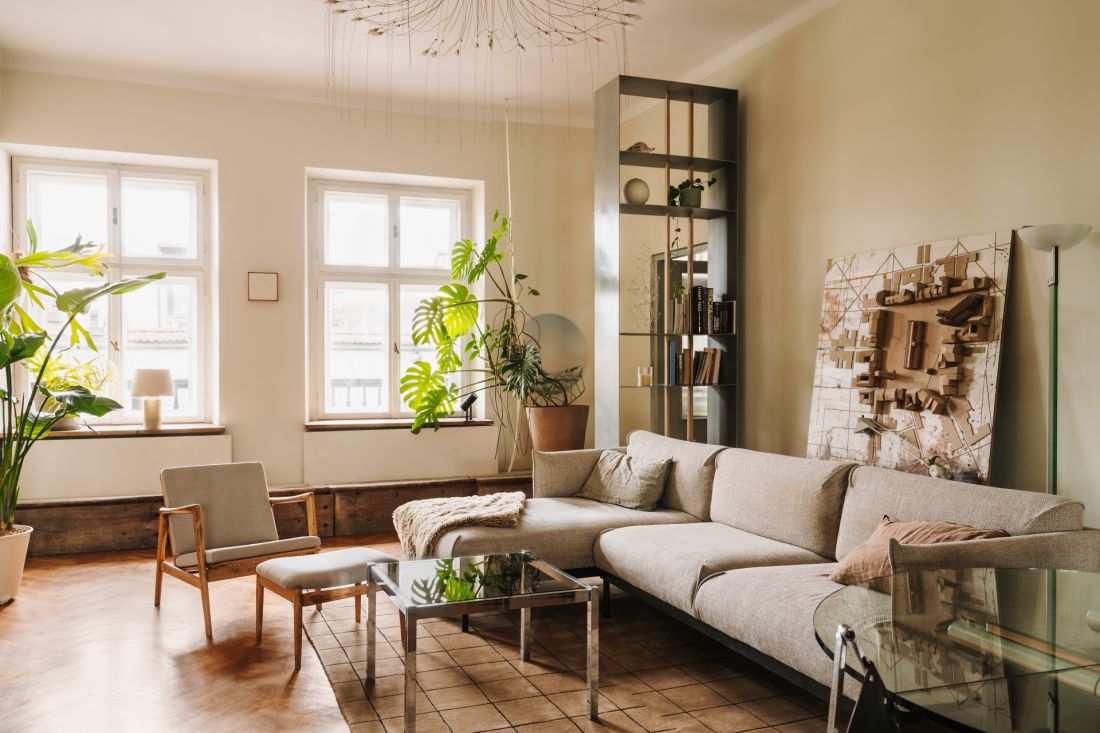
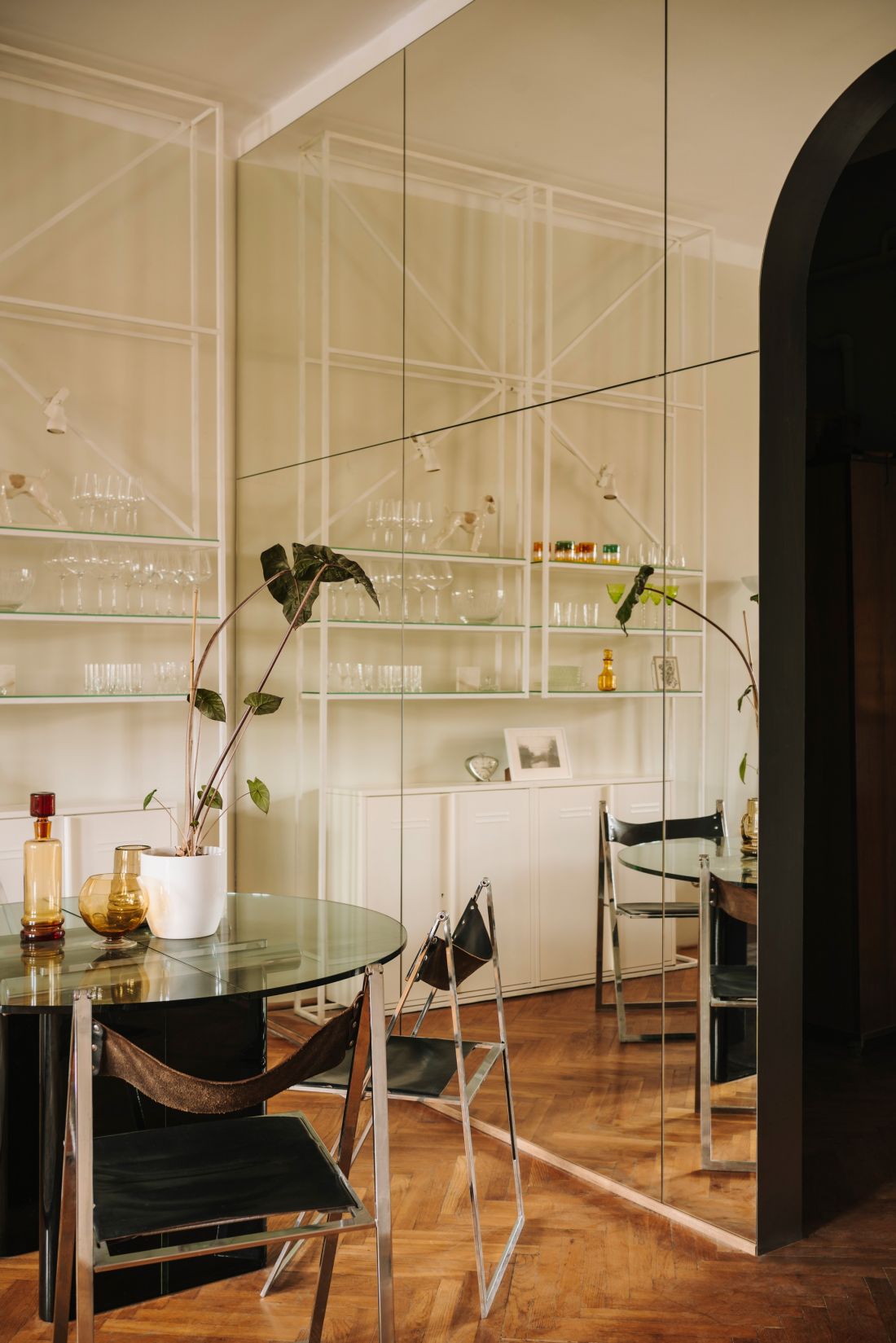
My love of plants and so-called collecting also contributed to the final shape. I have some not-so-obvious furniture, like a white narrow openwork bookcase taken in after an exhibition at the Museum of the People's Republic of Poland, or 2 large aluminum bookcases, after Mango teleshopping. The latter was carried to the 2nd floor by a whole team of firemen. I also have a map of Krakow, which played as a key prop in the film , "On the bank it will work", on which I worked as a production designer.
Natalia Horak's apartment
Photo: Almond Studio
3. which elements of the interior are of particular importance - aesthetic or functional? What builds the character of the space, and what affects everyday comfort?
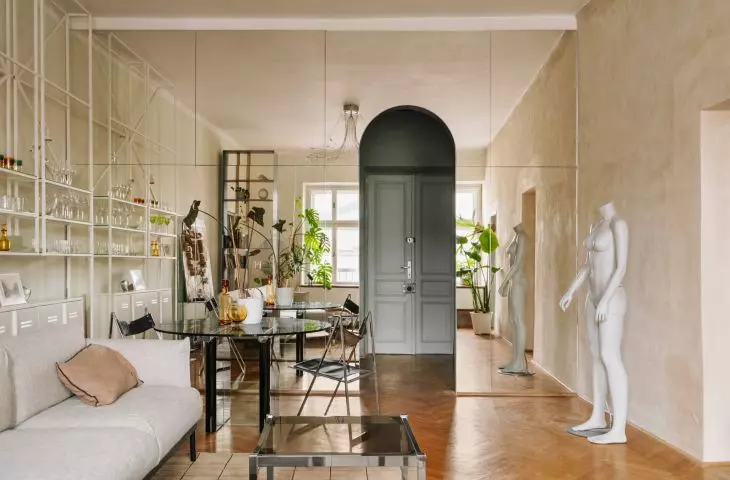
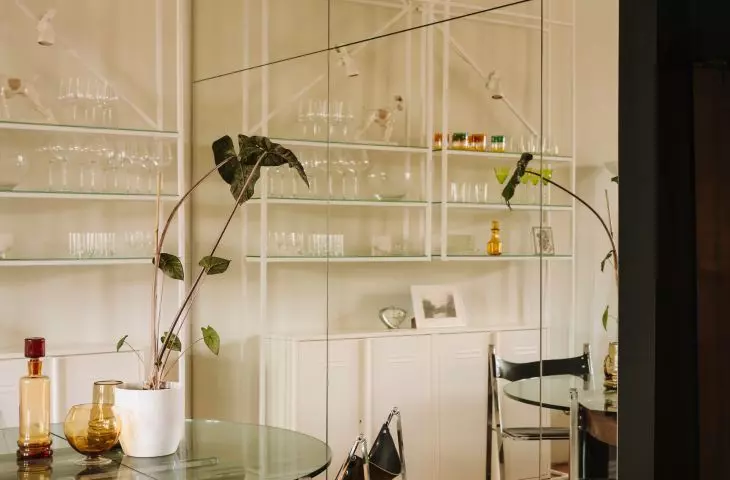
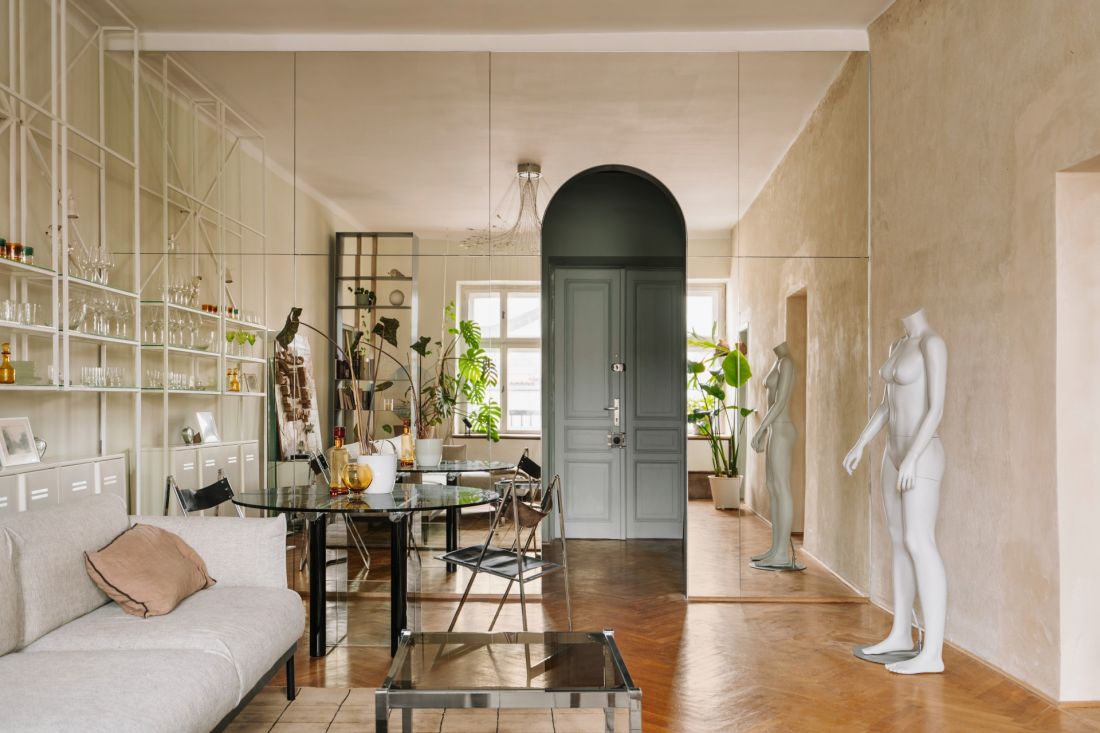
The element that very much determines the look of this interior is the entire wall of mirrors. For some it builds comfort for others rather discomfort but it undoubtedly builds the character of the space.
I spent a lot of time coming up with a solution that would make this wall no longer dead and the most tempting seemed to be to cover it with a mirror. A rather radical solution, I would not propose it to any client. But one's own space encourages experimentation; if you shouldn't do something, that's what you should do!
The combination of considerable height, this mirrored wall and the amphitheater layout gives the space a somewhat theatrical feel. On top of that, the handling of natural light, reflected light and that from multiple lamps, creates a multidimensional space.
Natalia Horak's apartment
Photo: Almond Studio
4. did the interior consciously use solutions beyond the current trends?
Trends are great when you start from 0. The space is completely neutral and you have to invent its character, so to speak. Here, nothing was neutral, and all the design fun was in combining opposites and balancing tensions . Old - new, raw - pleasant, real - created. The result is a space that is not obvious, full of tension but at the same time harmonious and soothing. Full of strange objects and finds.
Natalia Horak's apartment
Photo: Almond Studio
5 How does this interior change over time? Do new elements appear, other functions appear, the layout changes?
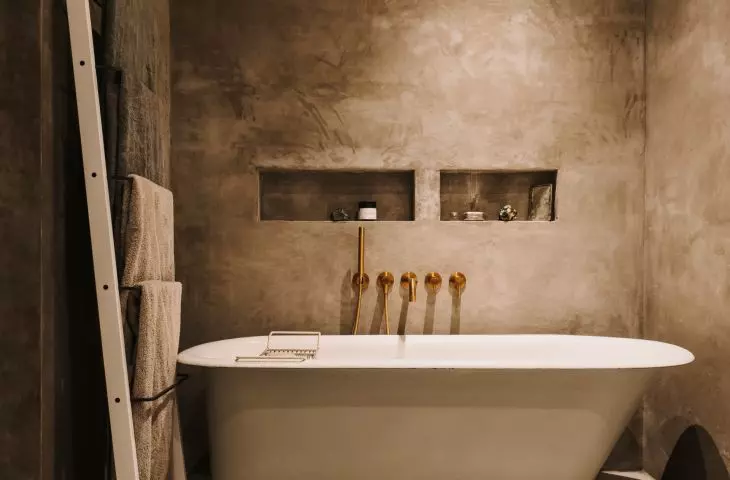
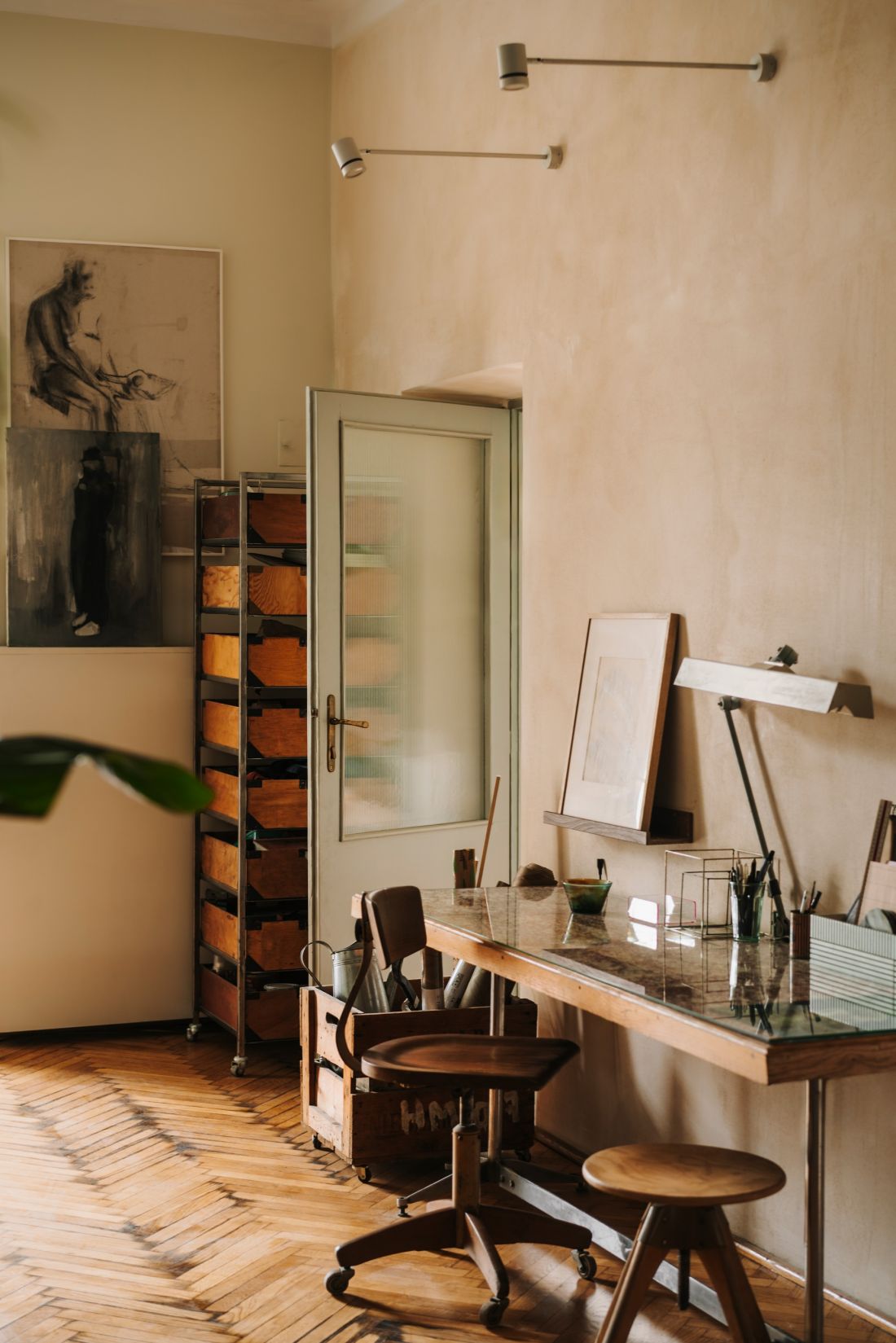
This apartment matured with me. Right after college, when I moved in, I bought a spread ceiling lamp with the first money I earned. Back then I did a lot of things with my own hands, like the bench under the windows made from the beaten-up old stone stairs. I also repainted an old cast-iron bathtub that came from the attic. I also came up with a brand new and certainly experimental finishing material, (based on basement sealing compound) that was supposed to imitate concrete.
The next stage was a time of working on TV and film projects, or what is known as collecting. I have already mentioned bookcases, and there was also so-called vintage furniture and lamps. At that time, I was a regular visitor to the Cracow antique market and watched vintage furniture auctions on the Internet.
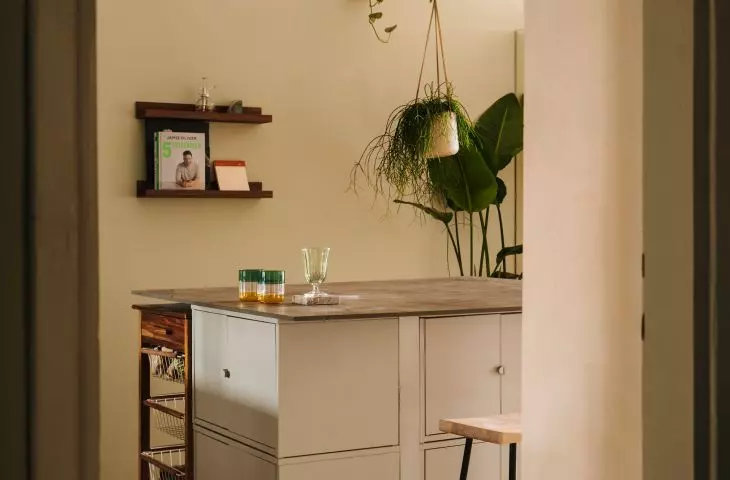
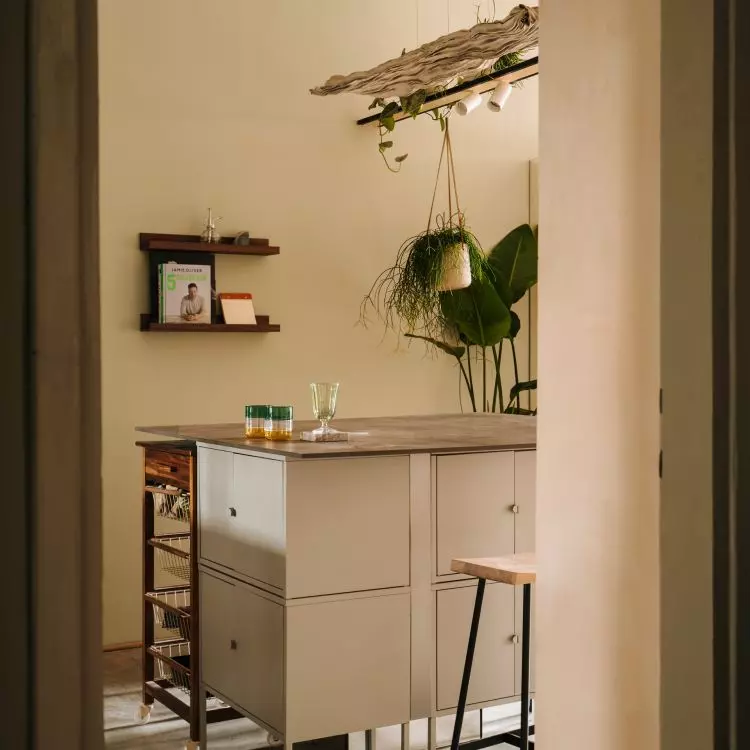
The most recent stage was when the so-called functional renovation took place. Rearranging the kitchen to accommodate a comfortable island, a new dining area, a capacious closet in the hallway.
My apartment is a very personal space. Not only because each object or piece of furniture is accompanied by a story, but also friends and relatives helped with each subsequent renovation. It had many roommates, where everyone contributed in some way.
Natalia Horak's apartment
Photo: Almond Studio
6 Is there anything without which this interior would not be "yours"? Favorite detail, material, color, object ...
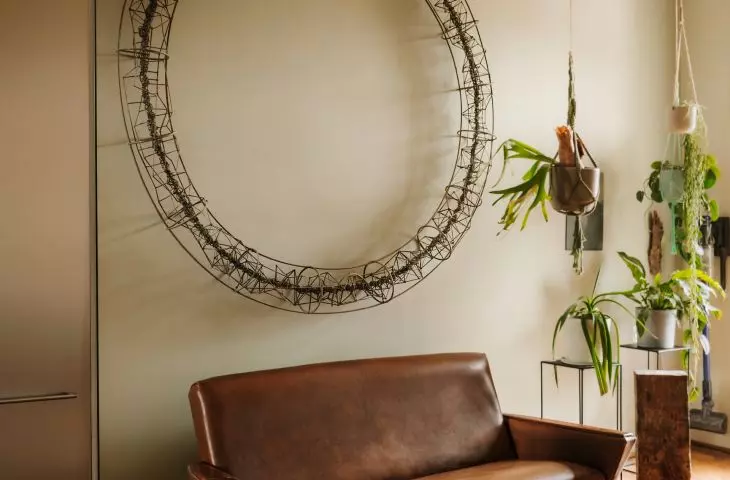
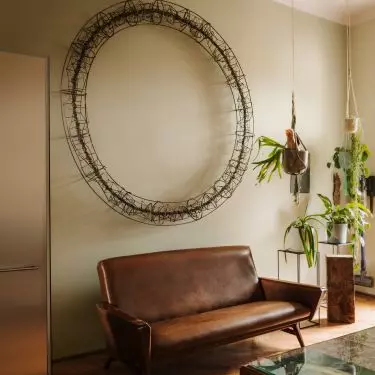
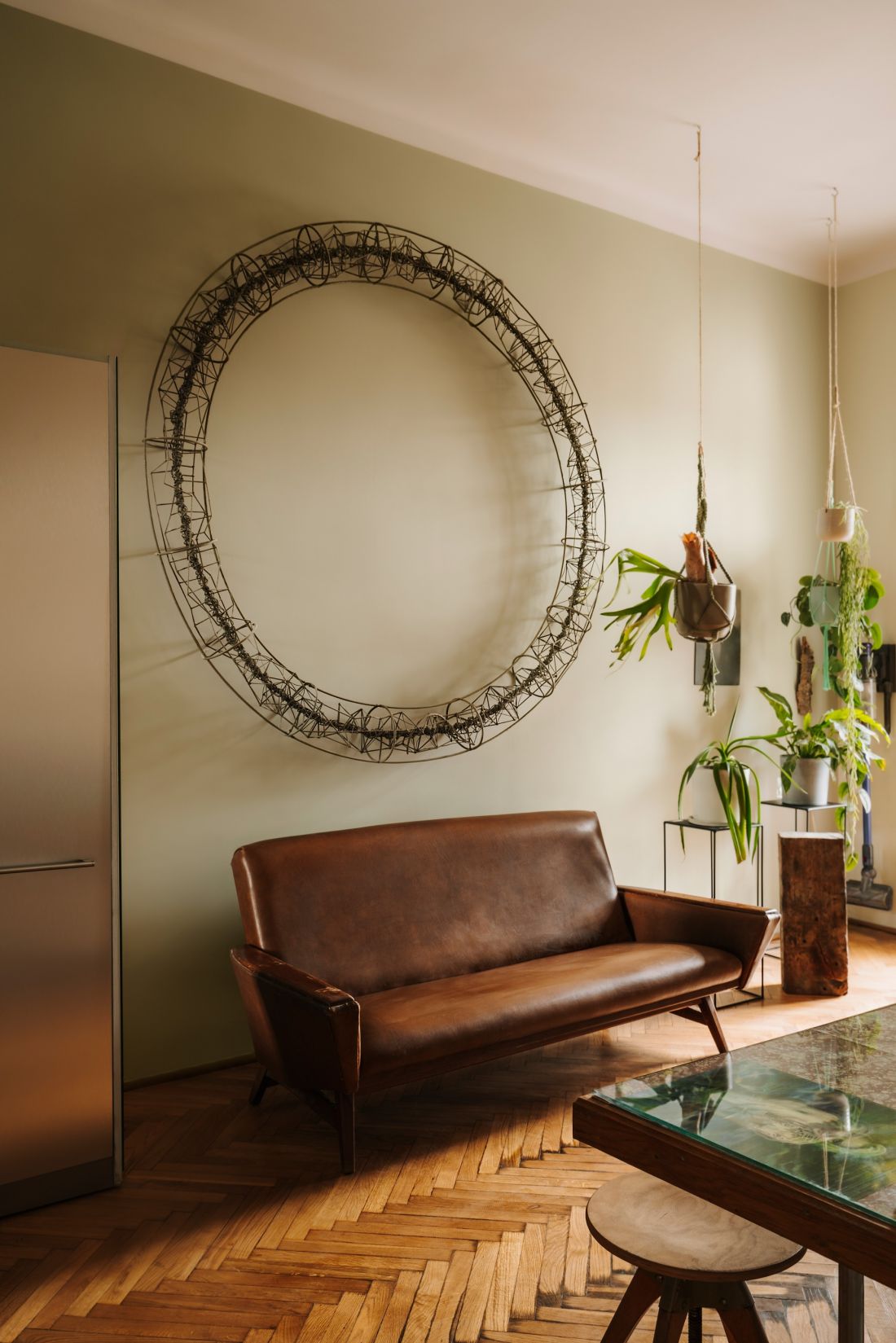
I have a few works by friendly artists, like a welded sculpture - wheel, from Kristof Krane or raw prints from Michal Tokarz. A few of my works from the period of my studies also lived to see an exhibition. From Croatia I brought back a wooden block that supported boats in the marina after many years in the sun, in the water itself it looks like a work of art.
7. What is the most important advice to give to a person who wants to create an interior close to himself - but is not a designer? Where to start, what to keep in mind and what to avoid?
When I worked in the theater, a prominent director, Maciej Wojtyszko, told me that his art is interesting insofar as it is a manifestation of the author's personality. This was firmly engraved in my memory. Therefore, I guess my advice is: Listen to yourself, bet on authenticity, don't be afraid to experiment.