

















From the series “Kitchen and Appliances — Trends for 2026”
Just a dozen or so years ago, a dishwasher was a symbol of luxury. Today, it’s hard to imagine a modern kitchen without one. Induction cooktops, tall cabinets, waste sorting systems, and lighting integrated into furniture have followed a similar path. Solutions that were initially viewed as innovations have, over time, become the standard simply because they made everyday life easier. This is exactly where Quooker stands today. It is no longer a technological curiosity or an accessory reserved for the most luxurious projects. It is increasingly becoming a conscious choice for architects and developers who expect more from a kitchen than just an attractive appearance. What matters is convenience, saving time, reducing the number of appliances , and the ability to design a space that will remain functional for many years to come.
The way we think about the water faucet itself is also changing. For decades, it was merely a place for washing produce and dishes. Today, it’s becoming one of the most important elements of the entire kitchen. It’s right here that we make coffee and tea, cook pasta, fill pots, rinse vegetables, and—increasingly—pour chilled drinking water. A natural consequence of this change is the desire to combine all these functions into a single solution.
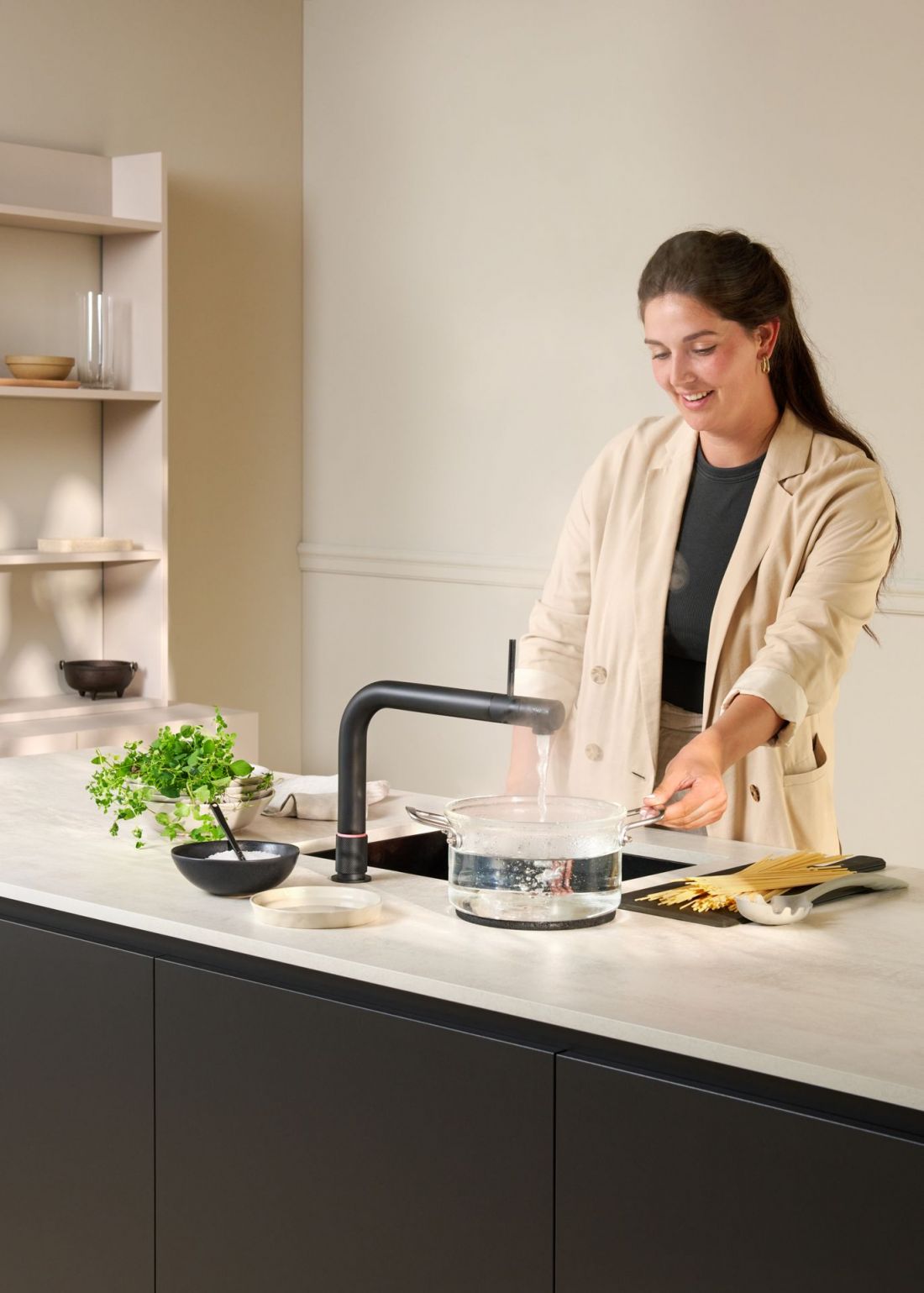
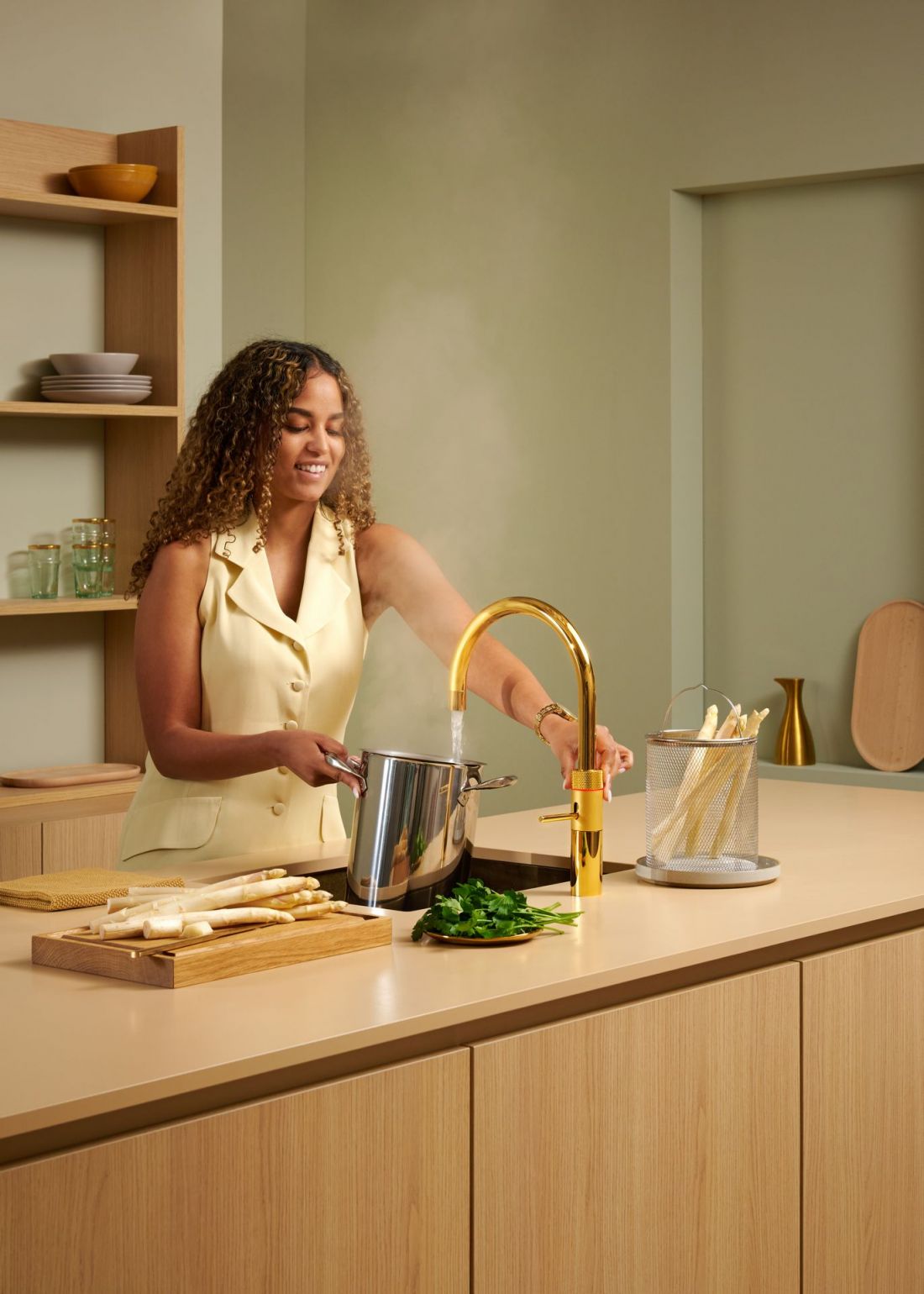
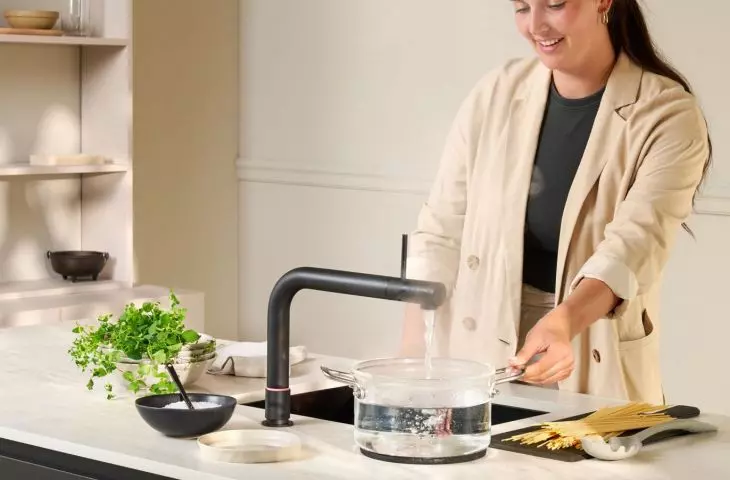
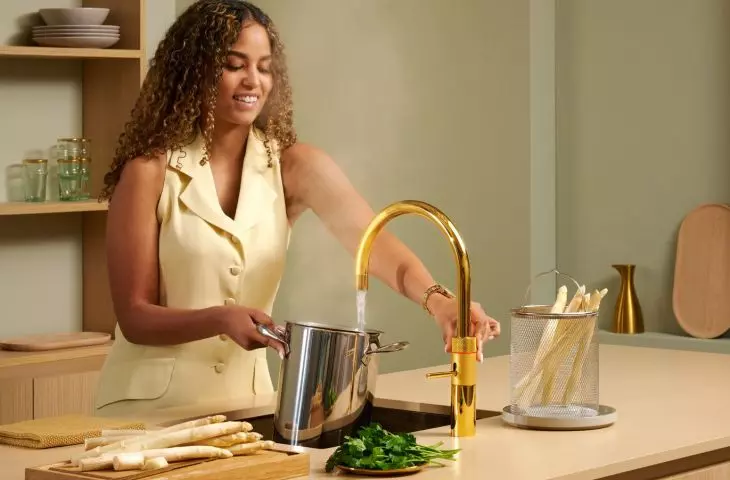
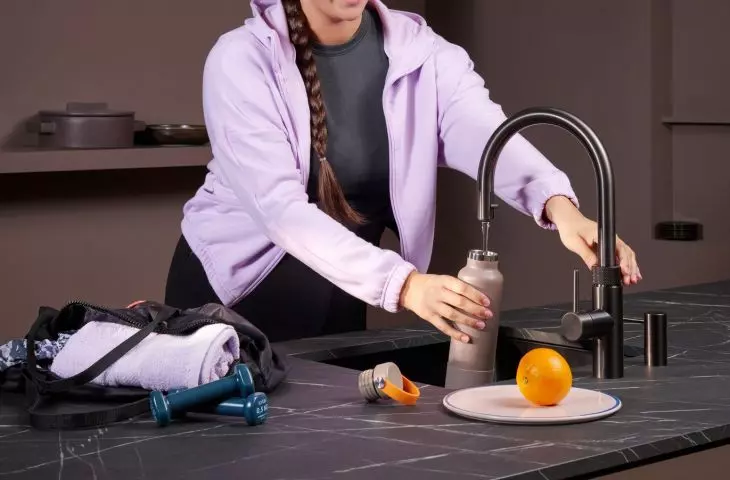
Quooker Front Black Beige and Quooker Gold Fusion Round faucets
© Quooker
Quooker—hot, cold, and chilled water, boiling water, and sparkling water from a single faucet
Quooker meets this need in a way that seemed futuristic just a few years ago. A single faucet provides cold and hot water, instant access to 100°C boiling water, and—with the CUBE module — chilled, filtered sparkling and still water as well. As a result, more appliances that we’ve long considered indispensable can be removed from the countertop.
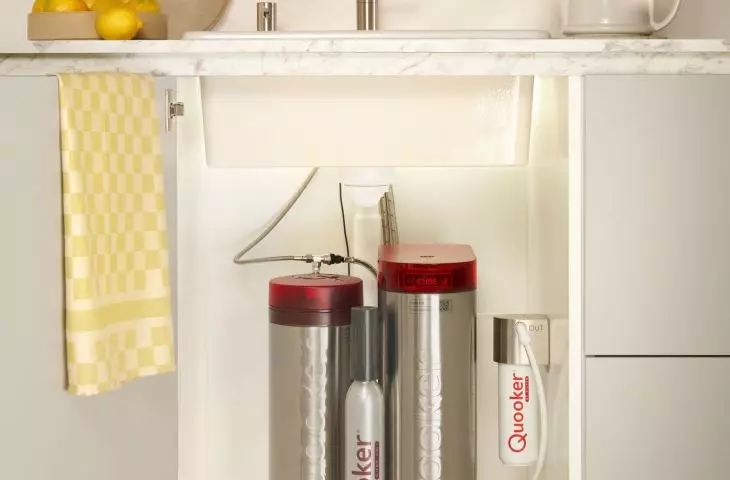
Reducing the number of appliances is one of the strongest trends in contemporary kitchen design. Today’s homeowners do not want appliances on display. They expect calm, uncluttered interiors where technology remains nearly invisible. That’s why architects are increasingly designing kitchens without a kettle on the countertop, a filter pitcher, or a carbonator. Their functions are taken over by a single, integrated system hidden under the sink.
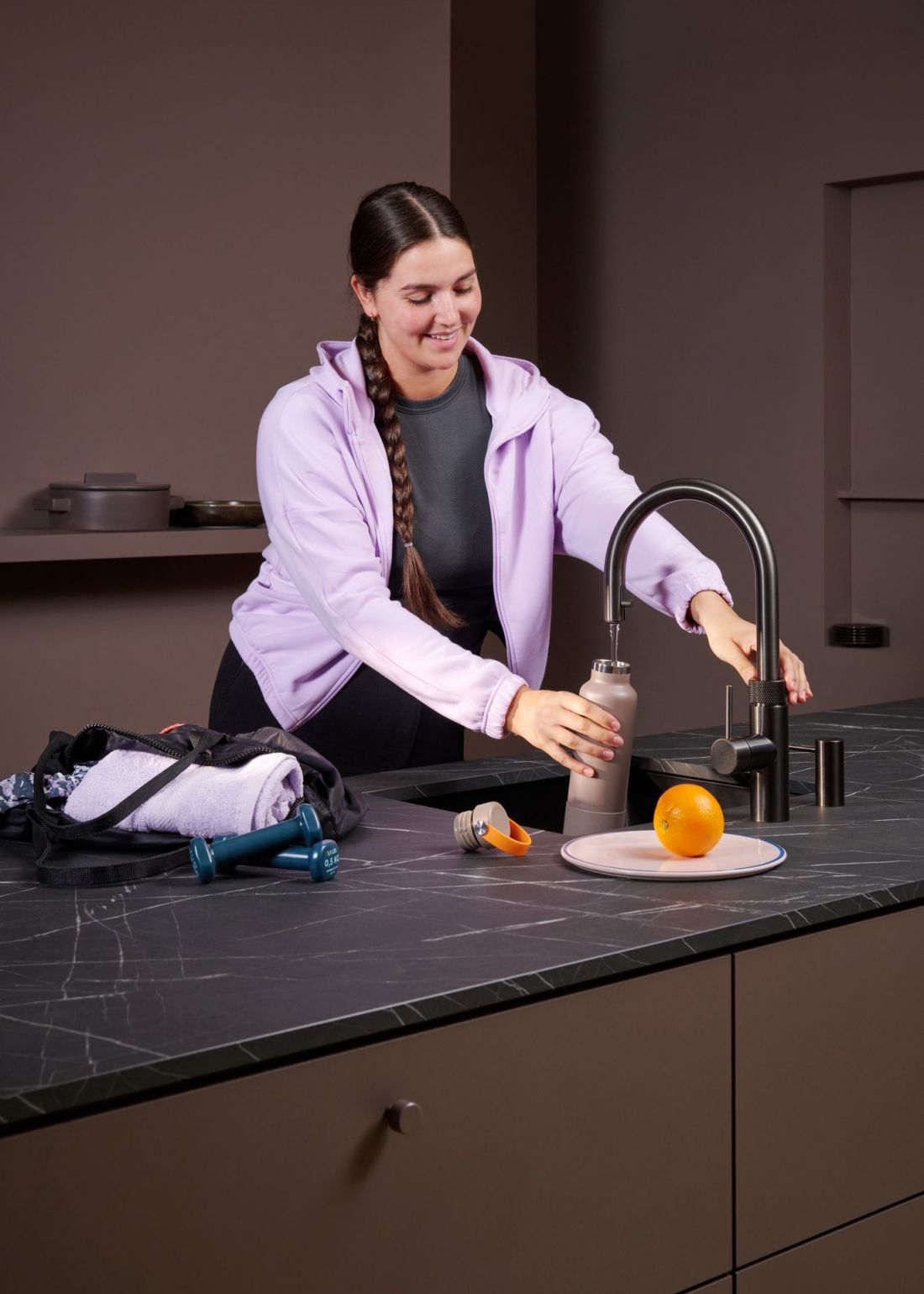
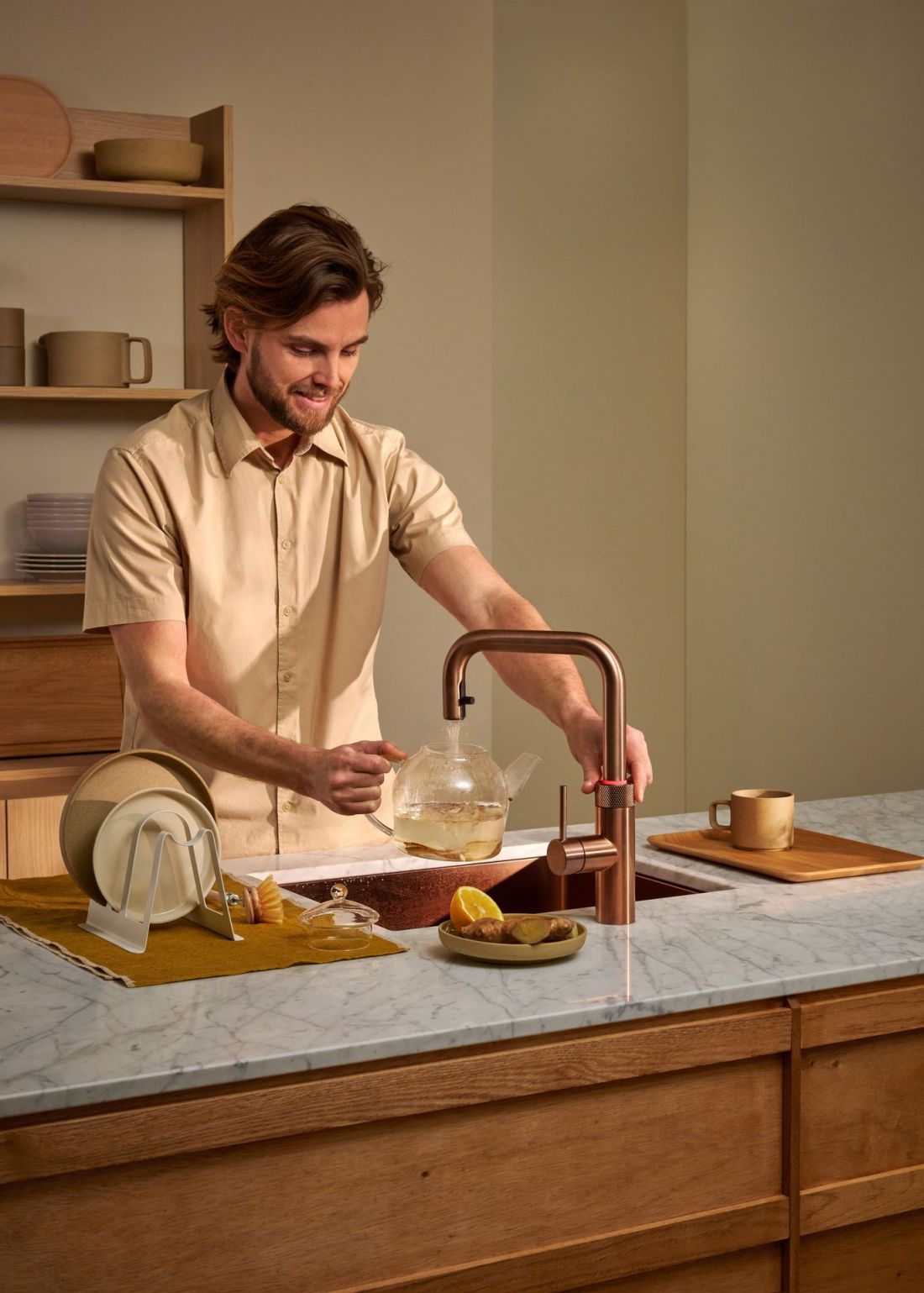
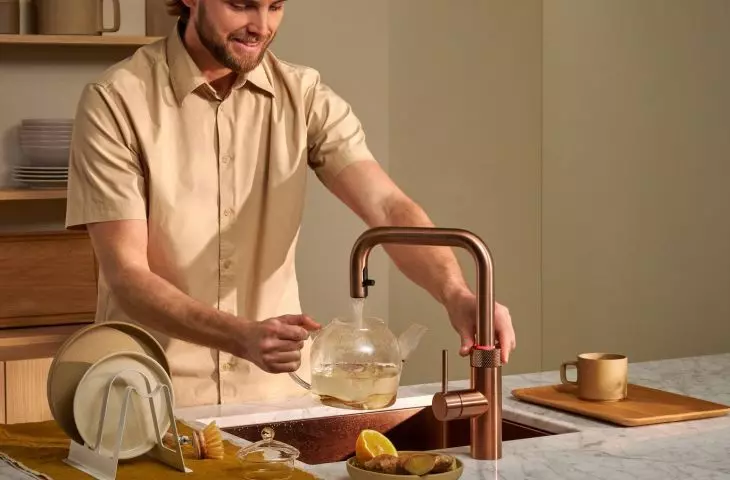
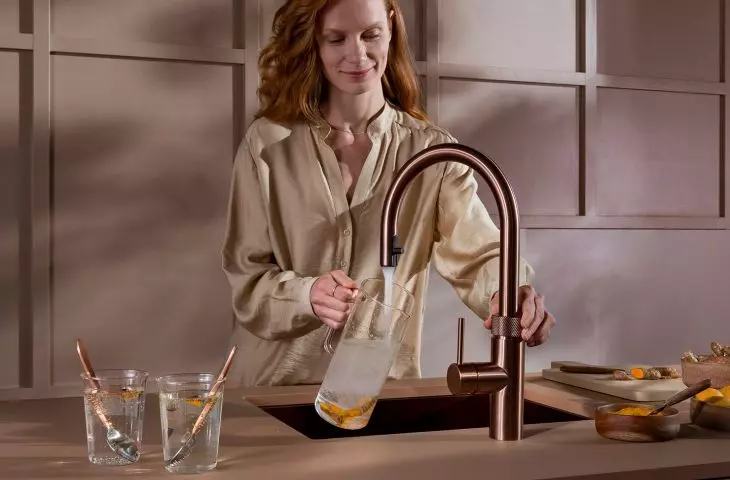
Quooker Flex Round Gunmetal and Quooker Flex Square Rose Copper faucets
© Quooker
Everyday Comfort in the Kitchen
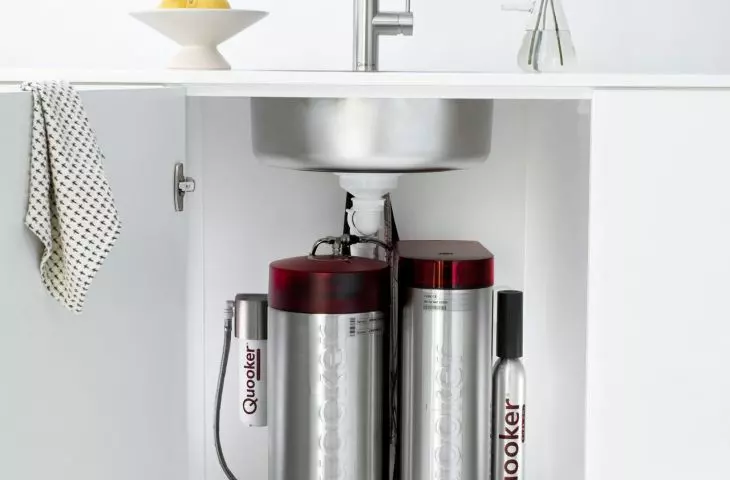
Minimalism no longer means sacrificing functionality. On the contrary—a modern kitchen is designed to offer more functionality with fewer visible elements. This approach fits perfectly with Quooker’s philosophy, where all the technology is concealed in a cabinet under the countertop, and the user interacts only with an elegant faucet that complements the interior design.
Users’ expectations are also changing. Just a few years ago, meetings with architects were dominated by questions about materials, colors, or types of countertops. Today, the conversation increasingly centers on everyday comfort. How quickly can you make tea? Will it take just a few seconds to fill a pot? Do you have to buy and store cases of water? How can you minimize the number of items left in plain sight?
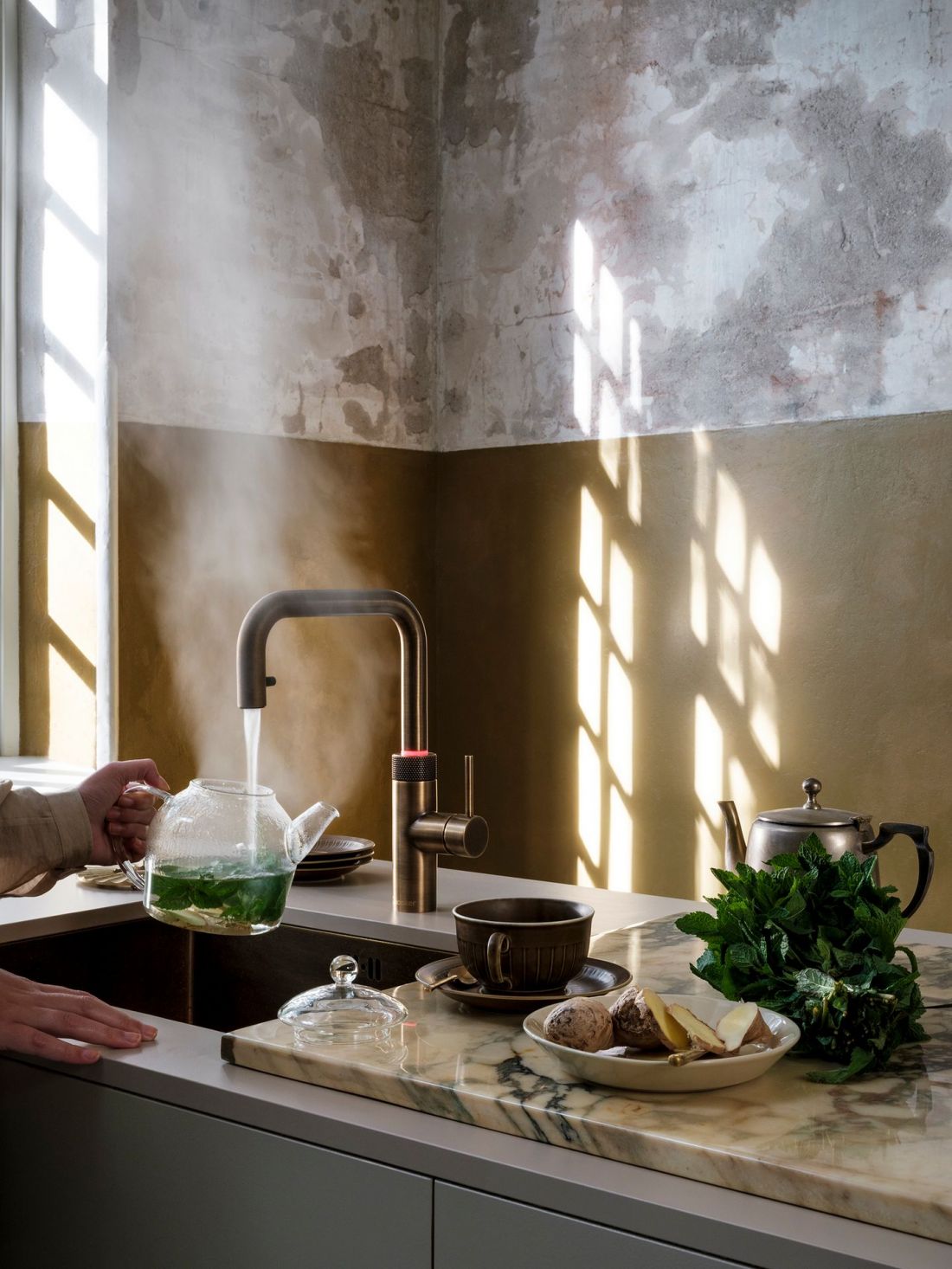
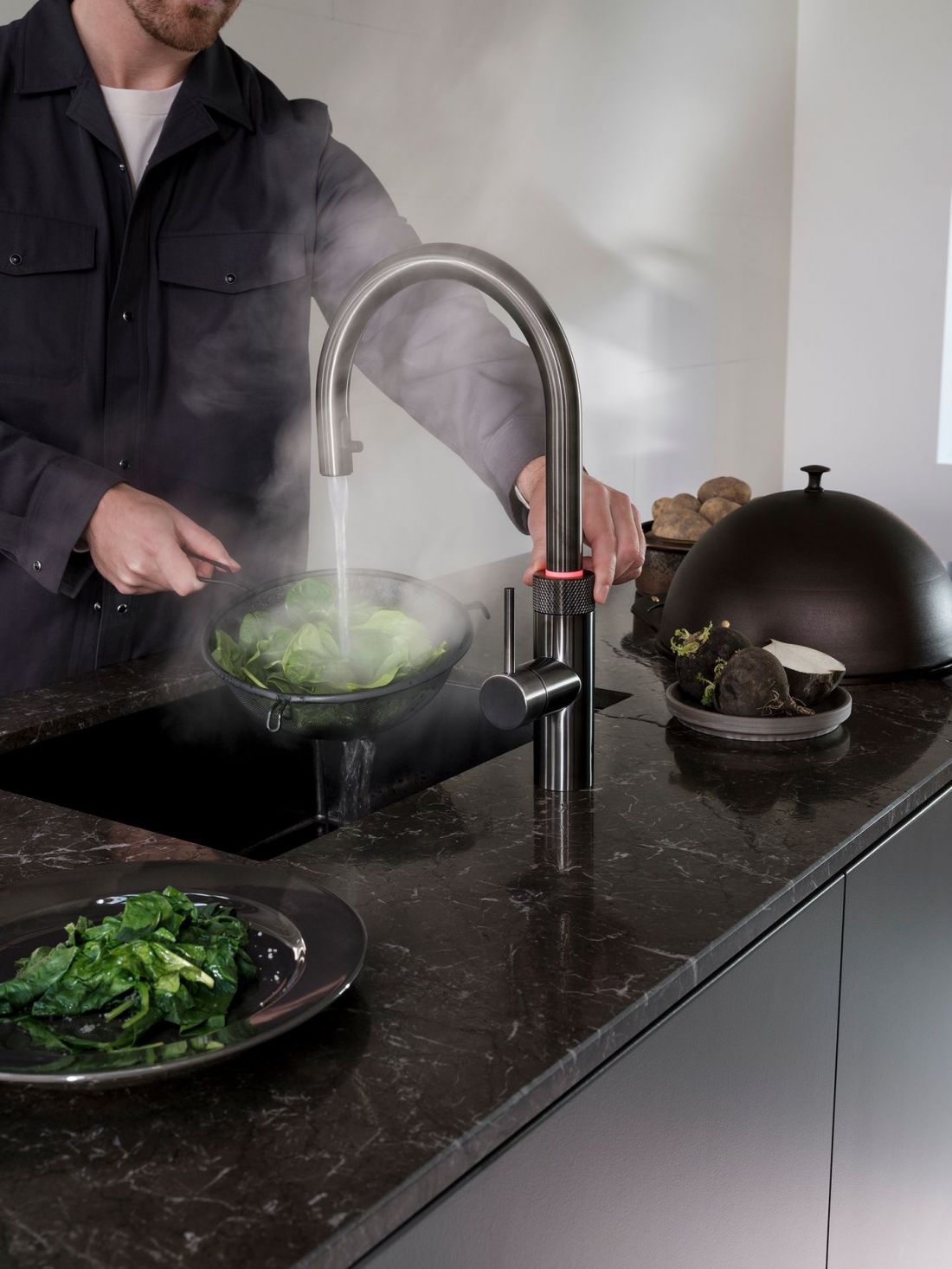
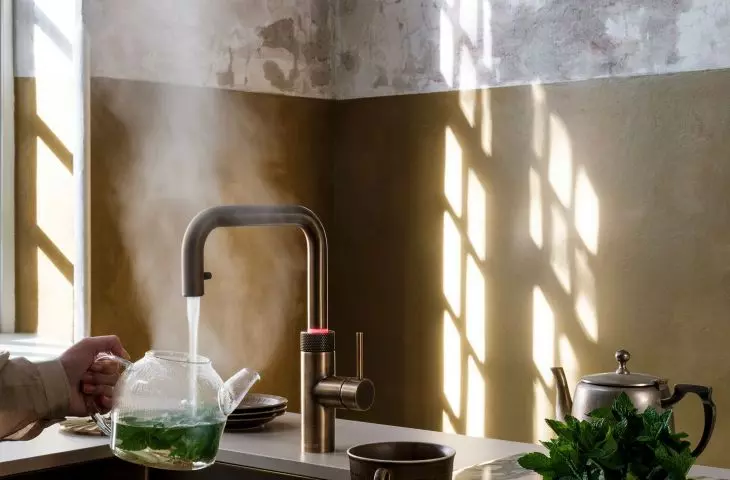
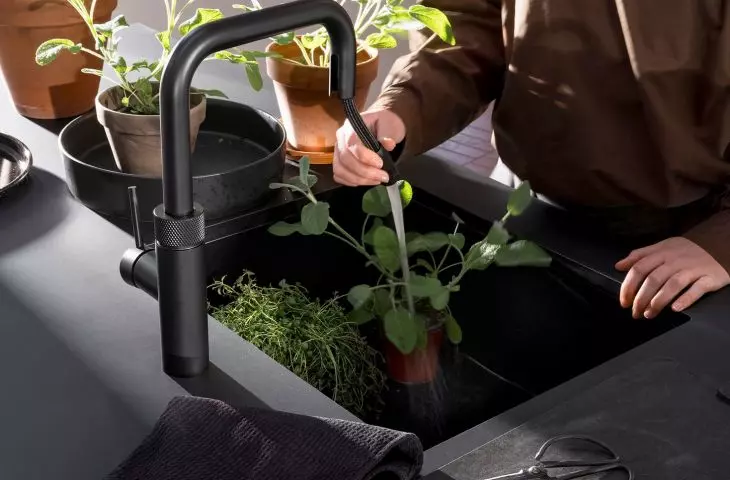
Quooker Fle Square Patinated Brass and Quooker Flex Round Gunmetal faucets
© Quooker
Kitchen logistics come first
This shows that kitchen design is increasingly focused on the user experience. A well-designed space not only looks aesthetically pleasing but, above all, eliminates unnecessary daily tasks. Instant access to boiling water eliminates the need to wait for water to boil, and the ability to pour chilled, filtered sparkling or still water directly from the faucet means that buying and carrying heavy cases of water is no longer a daily chore.
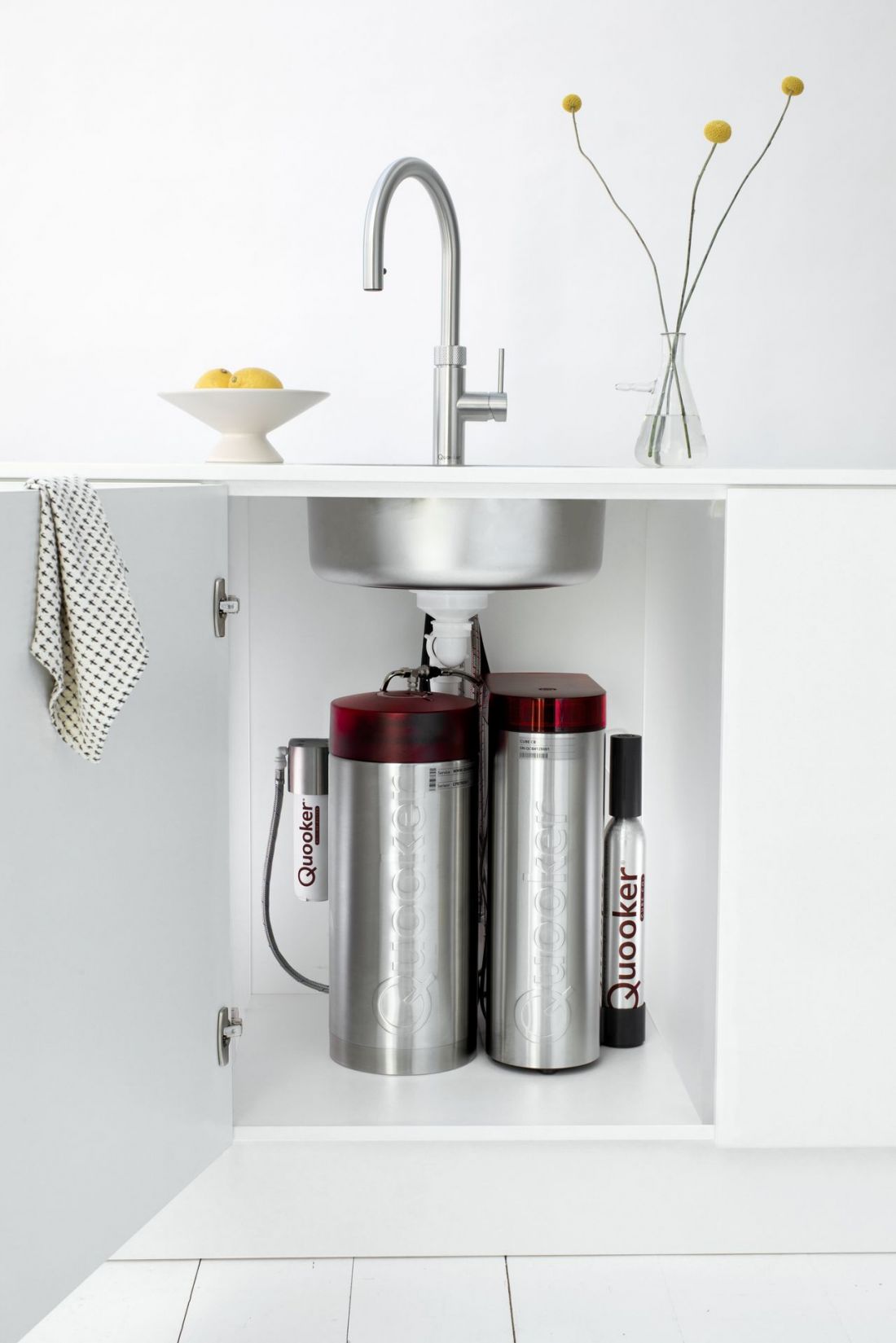
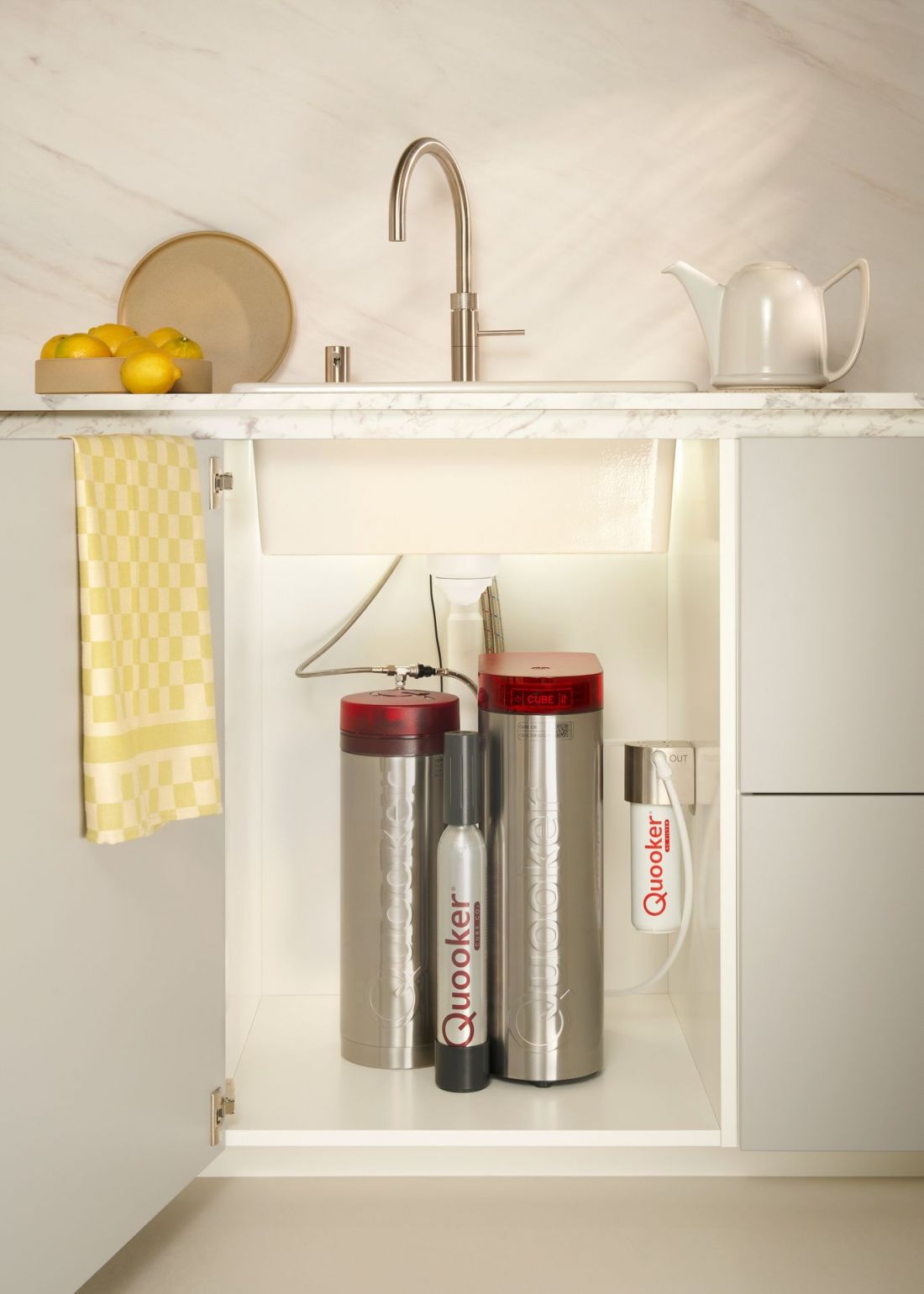
Quooker system with the Cube unit and filter
© Quooker
The latter takes on particular significance at a time when the deposit-refund system is playing an increasingly important role. More and more people are realizing that the problem isn’t just the plastic itself, but also the logistics involved in using it — storing empty bottles, transporting them to the store, or making regular trips to bottle return machines. The ability to enjoy high-quality filtered water straight from the tap makes it possible to completely change these daily habits.
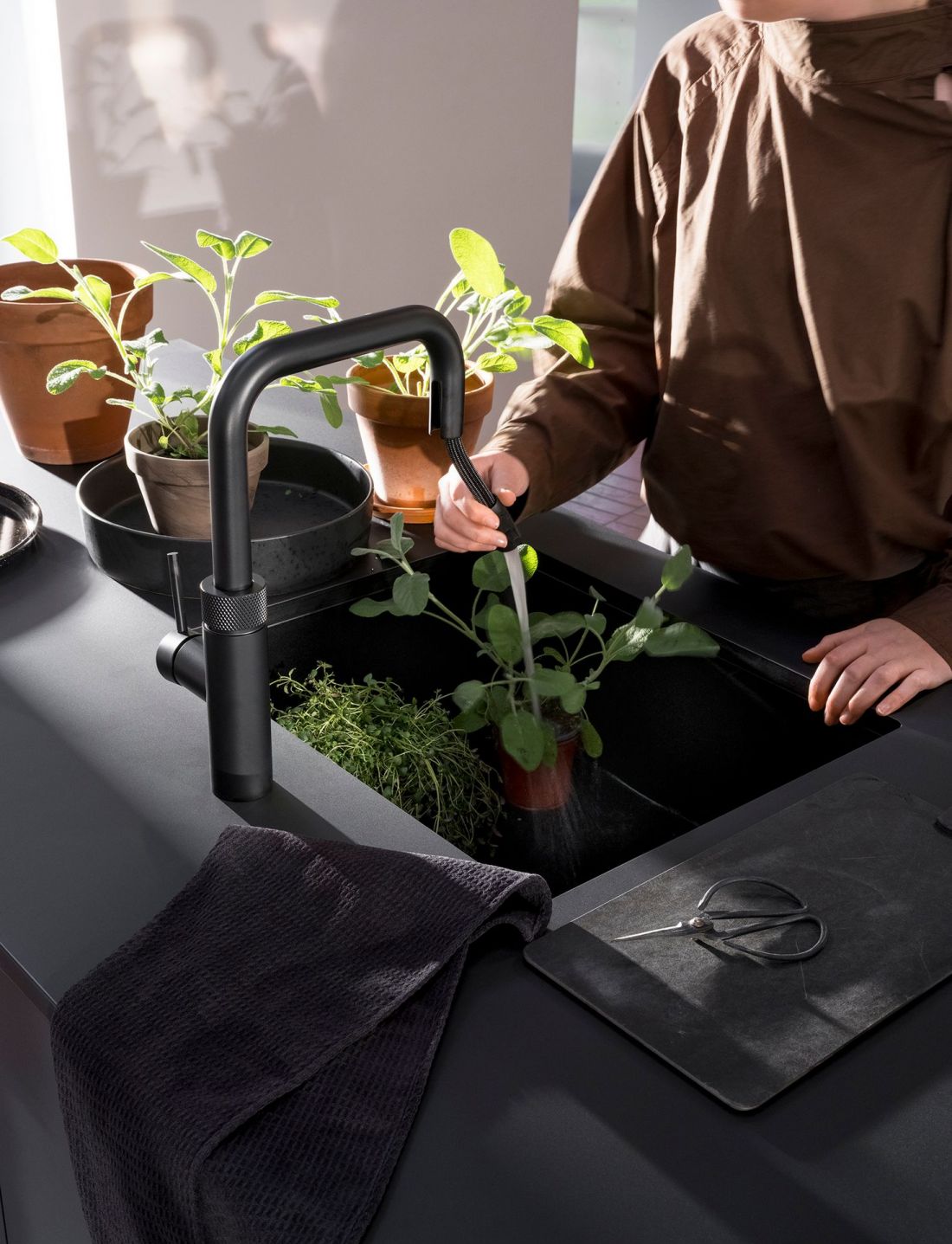
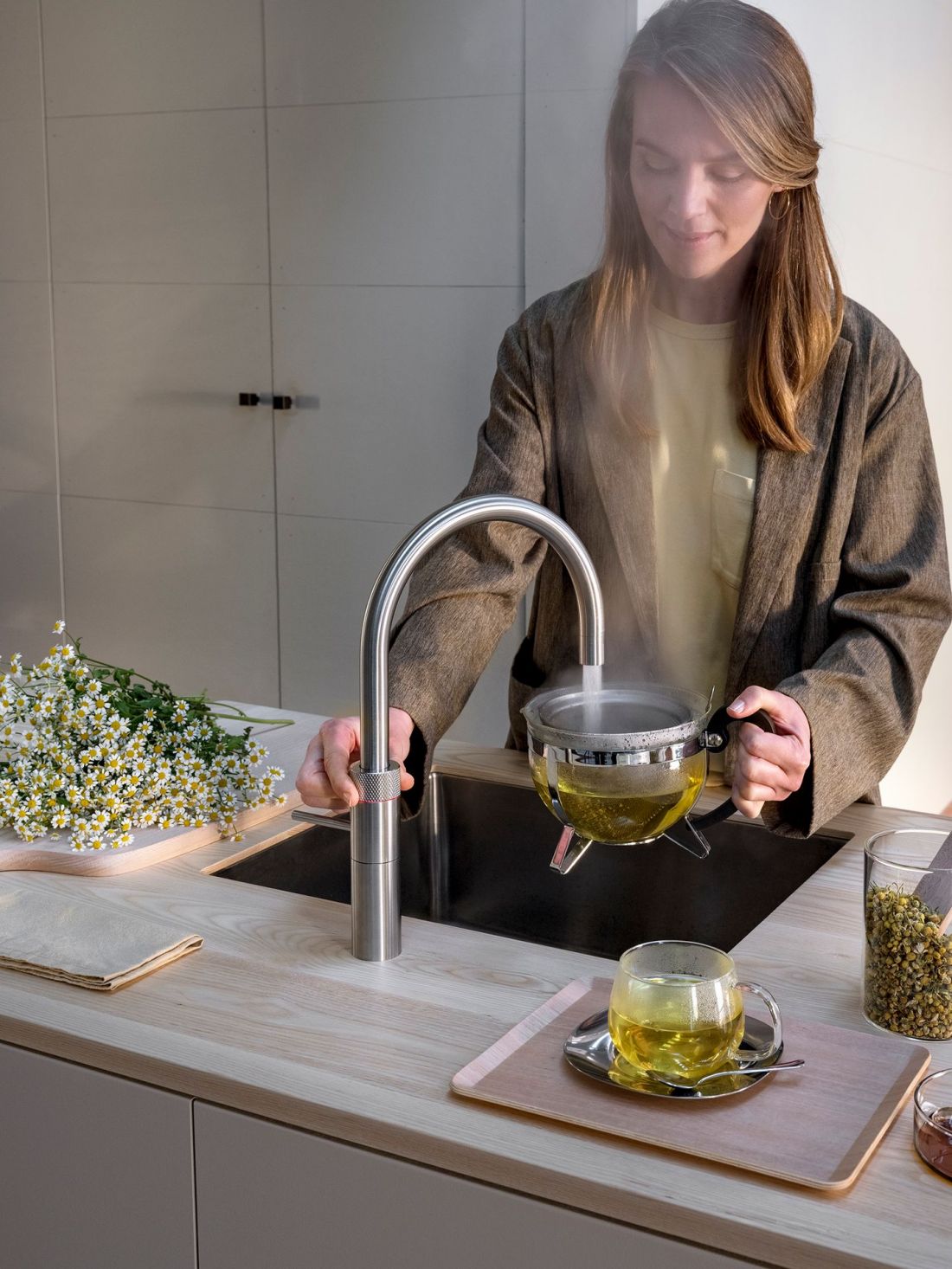
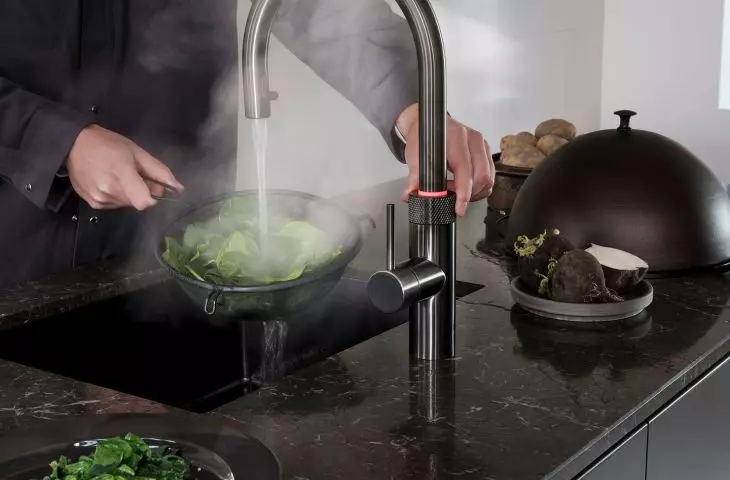
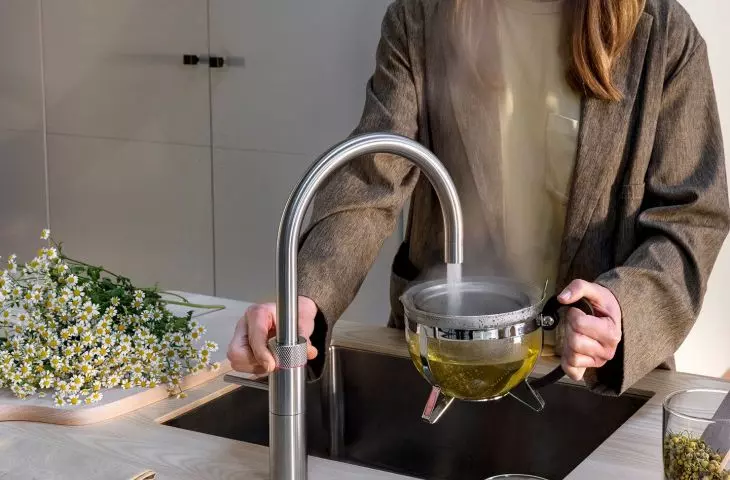
Quooker Flex Square Black and Quooker Flex Round Stainless Steel faucets
© Quooker
An uncluttered kitchen countertop with a Quooker
From an architect’s perspective, aesthetics remain equally important. The fewer appliances on the countertop, the easier it is to maintain the design’s cohesion. Clean lines, natural materials, and a serene composition are no longer merely the result of well-chosen cabinet fronts, but also of a conscious effort to limit the number of appliances visible in the kitchen. This is precisely why solutions that integrate multiple functions into a single system are increasingly being incorporated as early as the interior design concept phase.
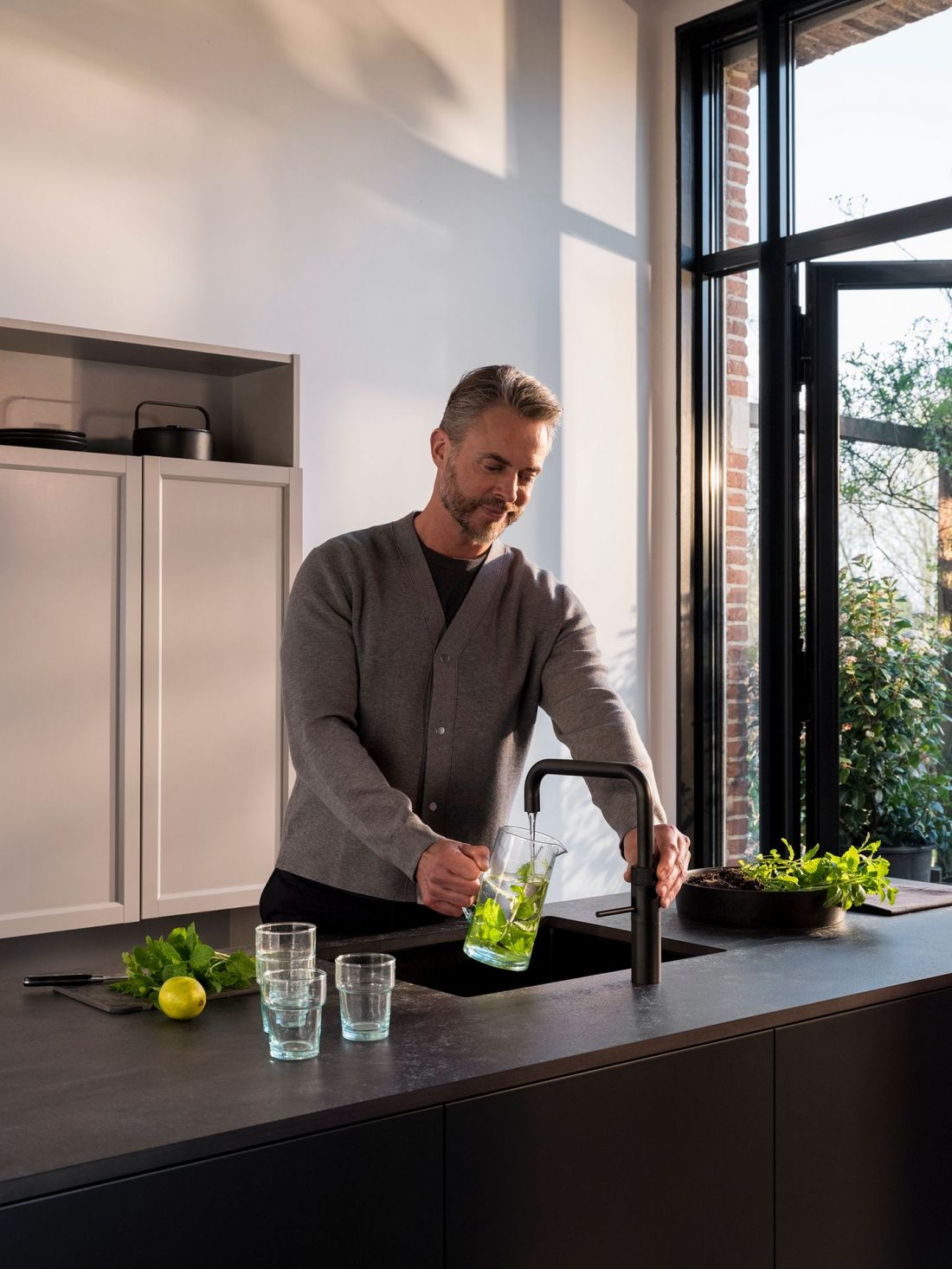
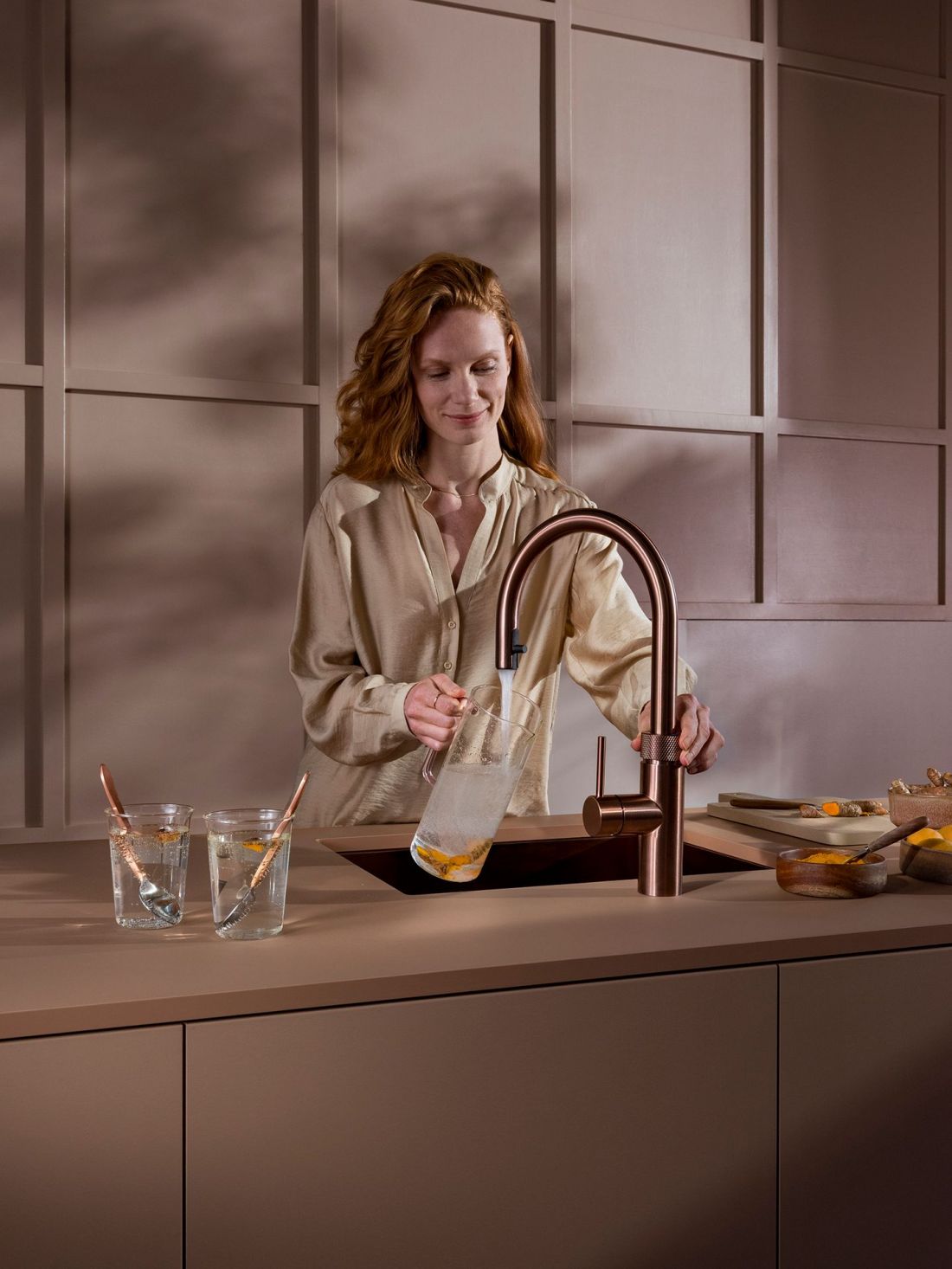
Quooker Fusion Square Black and Quooker Flex Round Rose Copper faucets
© Quooker
when the kettle is no longer needed
The history of kitchen appliances shows that the biggest changes happen almost imperceptibly. They first appear as technological novelties, then become a staple of premium kitchens, and eventually we start to wonder how we ever managed without them. That’s how it was with the dishwasher, the steam oven, and the induction cooktop. All signs point to Quooker following a similar path today. Increasingly, it is no longer seen as an alternative to the kettle, but as a solution that simply makes the kettle obsolete. That’s precisely why Quooker is increasingly setting a new standard for the modern kitchen—a place where technology remains almost invisible, and everyday tasks become simpler, faster, and more intuitive.
For more information, visit the Quooker Polska Sp. z o.o. company page on the PdA portal.