




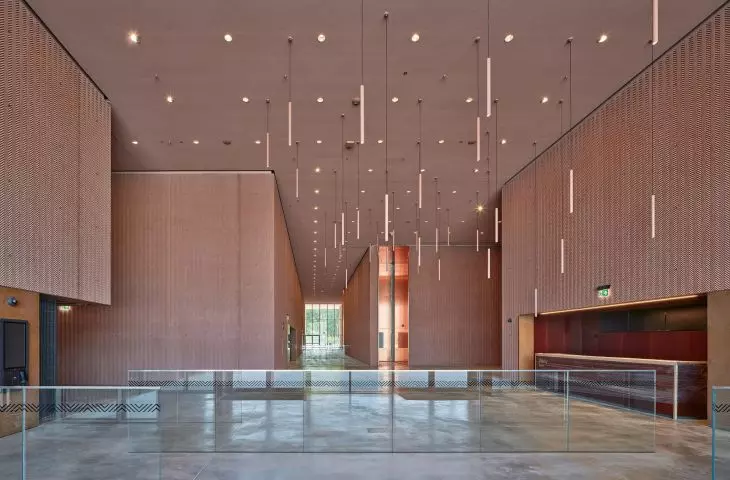




In 21st century architecture, building materials cease to be mere backdrops and also become protagonists of the story of place, history and identity. Architectural concrete, with its durability and unique aesthetic qualities, fits perfectly into this narrative. An example of this idea is the South Pavilion of the Polish Army Museum in Warsaw - an object where every inch of the surface tells a story about tradition, the military and contemporary engineering craftsmanship.
Architectural concrete is a material that combines aesthetic qualities with high durability. One of the key ingredients affecting its properties is aggregate. The choice of the right type and fraction has a significant impact on the final appearance, structure, strength and durability. Architectural concrete structural elements must maintain, in addition to mechanical parameters, an impeccable appearance for years.
One of the most spectacular examples of the use of architectural concrete is the MWP South Pavilion. The construction of this building posed a challenge due to the requirement to use colored concrete and a fluted texture to emphasize the military character of the building. To this end , dolomite and granite aggregates were used to achieve the desired aesthetic effect. The designers took care to blend the building into its surroundings by using materials that refer to the historic architecture of the Warsaw Citadel. The chevron patterns on the facade, achieved through the use of special dies, further emphasize the military character of the museum.
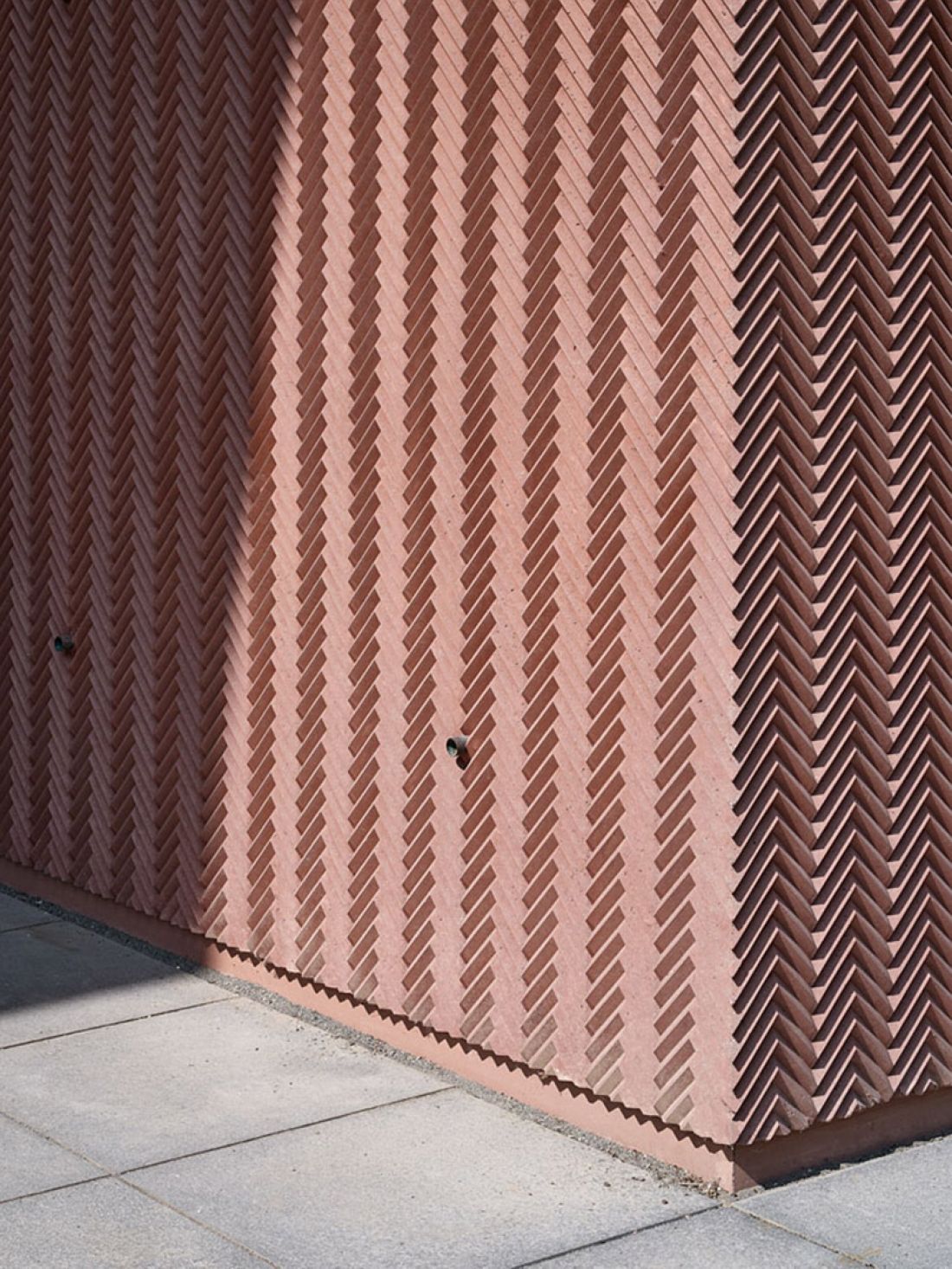
South Pavilion of the Polish Army Museum in Warsaw - facade detail.
© Holcim
The use of such unique solutions required a special approach to design, taking into account a number of factors - starting with the selection of appropriate aggregates, the arrangement of binders, checking the compatibility of admixtures with cement, and precisely determining the proportions of additives in concrete mixtures. The goal of all these procedures was to ensure the durability of the structure - both aesthetically and functionally.
These aspects determined the requirements for aggregates, supplied by Holcim, which had to be of high quality in order for the concrete to meet both strength and aesthetic parameters. The materials were used to design concrete mixtures in Holcim's laboratory, which were tested for workability and air content.
Prior to such a large and demanding investment, it was necessary to first make concrete slab displays in various formulation combinations. At this stage, the final selection of materials - both in terms of type and proportions in the formulations - was determined. The final stage of the transition to production scale was the construction of a reference object, the so-called "Mockup". Such an element gives the opportunity to check the material solutions: concrete mix, formwork, release agents, but also workmanship and further processes related to, for example, concrete care and its impact on the final visual effect.
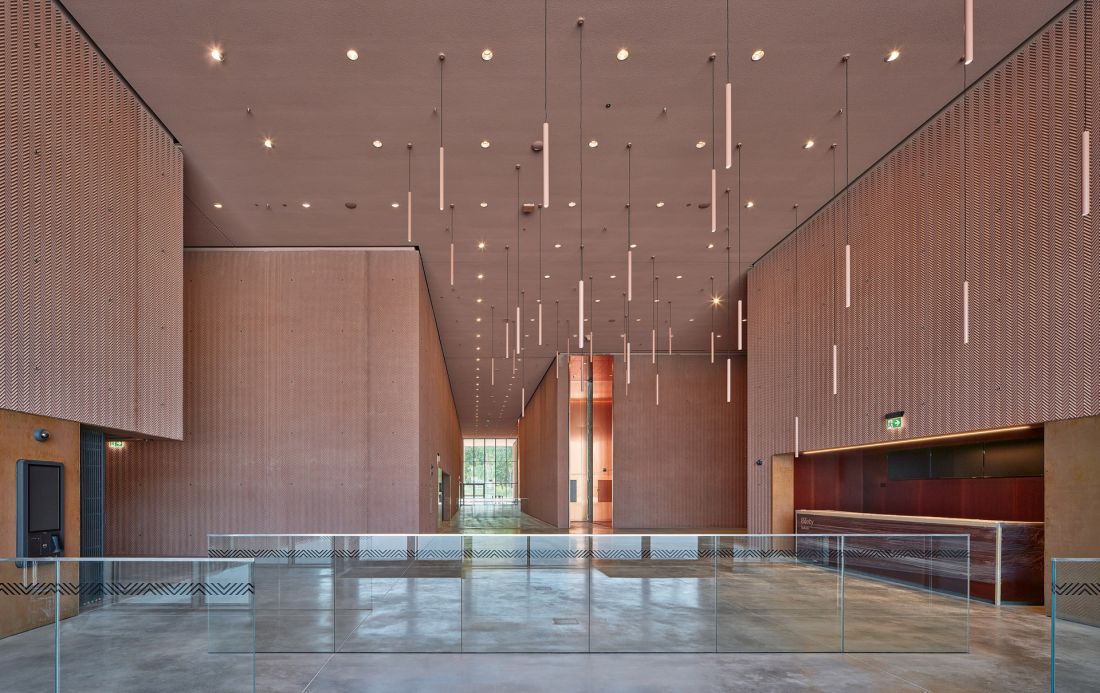
The South Pavilion of the Polish Army Museum in Warsaw - interior.
© Holcim
Each production of architectural concrete mix for the project, regardless of batch size, took place in the presence of quality department employees who ensured compliance with technical requirements and controlled all production stages to maintain the highest quality standards. Holcim's quality department employees carried out ongoing inspection of the produced mix both at the plant and at the construction site.
The MWP South Pavilion is a great example of the large-scale use of architectural concrete. The realization of the project proves that modern architectural concrete can be a material with a huge load of meaning - aesthetic, symbolic and structural. However, it requires not only the right design, but also strict quality control, understanding of the material and consistent cooperation at every stage of implementation. The result is not just a building object, but a lasting monument to architecture inscribed in history.
For more information, visit the company's HOLCIM Polska page on the PdA portal.