





Choosing a material for a facade is similar to the decision to buy functional clothing for extreme sports - it must combine aesthetics with protection and durability. Increasingly, architects and investors are looking for solutions that not only look good, but also age with class, are environmentally friendly and easy to maintain. Swisspearl's fiber-cement facade panels fit into these expectations, combining noble form with timeless application.
Functionality that will last
Architect Natalia Jachimczyk, owner of the "Inoutside" studio, stresses that the material chosen for a facade should be durable, noble, resistant to mechanical damage, resistant to weathering, high and low temperatures, UV radiation. I'm talking about both durability, texture and color. For me, a good material is one that I feel like touching. When designing, I think about how this building will look in 10, 20, 50 years, " says the architect.
According to her, the key for investors is to keep the facade in good aesthetic condition - self-cleaning, no damp patches, efflorescence, tarnish. Often in conversations with investors I observe a panicky fear of moss and lichen, this applies mainly to wood finishes, she adds.
Professor, architect Stanislaw Sipinski, co-owner of Ewa and Stanislaw Sipinski Architectural Studio, notes: It is important that the material ages well. It is important that it gives the possibility to wash the facade and in the pedestal zones it can be coated to remove graffiti.
The facade must work
Architects stress that the right façade material makes it easier to create buildings that fit in with their surroundings. In the case of buildings located in the existing urban fabric, my task is always to design a building that, through its form, including the façade and such elements as risalits, cornices and plinth parts, will lead an interesting dialogue with existing, including old, buildings in the vicinity, says Prof. Sipinski.
Natalia Jachimczyk adds: we are slowly leaving the most popular method of finishing the facade - the light-wet method, cost optimization, fortunately, more and more buildings are being designed with an exterior skin, for many investors the facade creates an image.
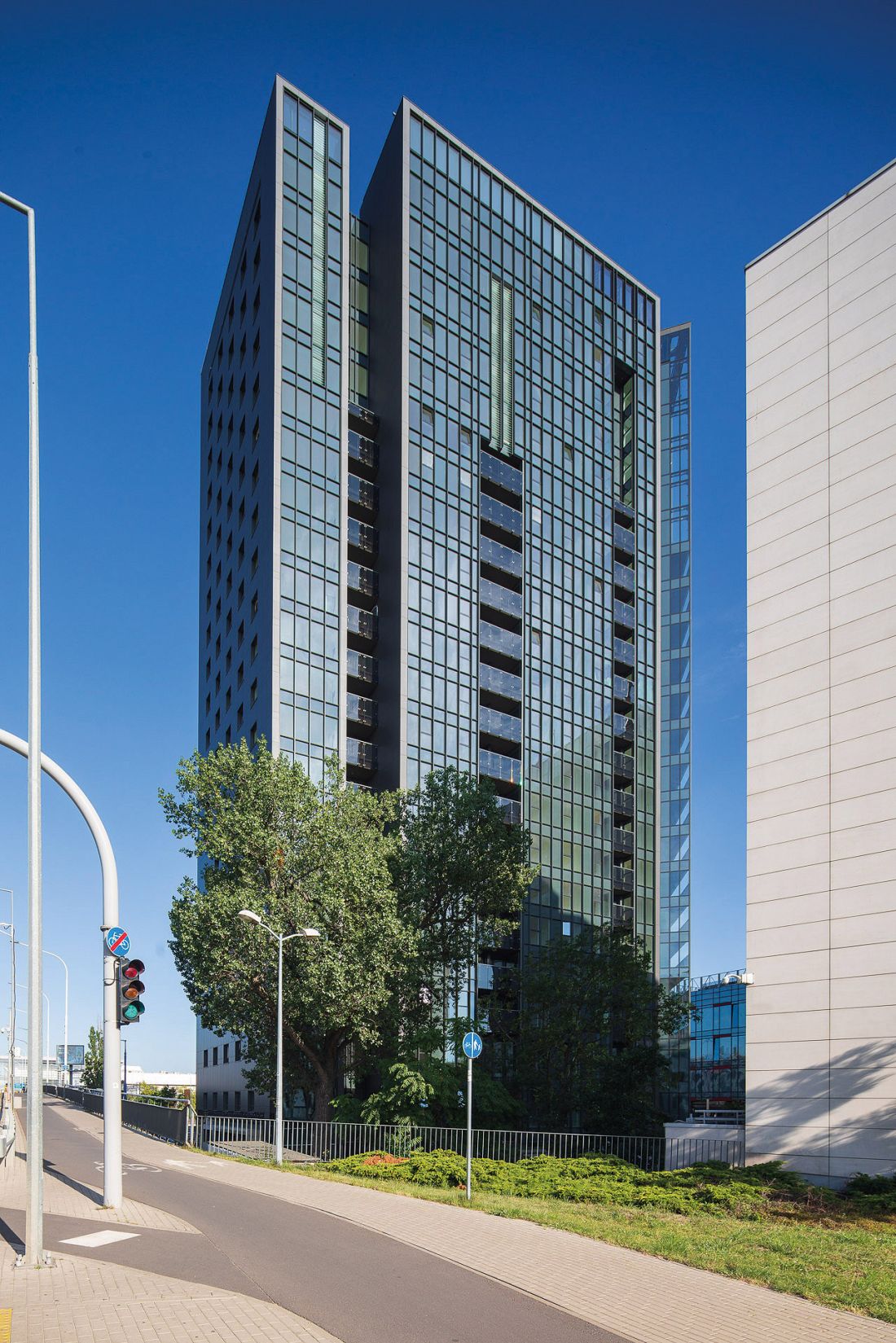
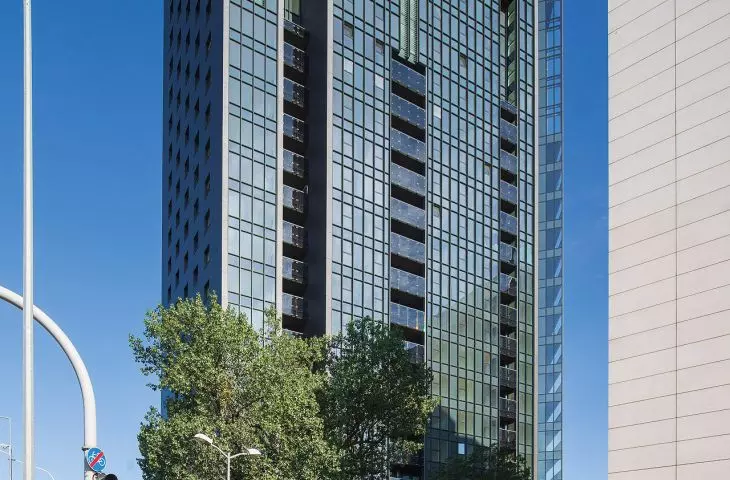
Office, retail and residential building in Poznan, Towarowa 39 - designed by Ewa and Stanislaw Sipinski Architectural Studio
photo: Przemyslaw Jasinski
Ecology inscribed in the design
The origin and life cycle of the material is of growing importance. This is a question I always hear from investors in the Anglo-Saxon and German markets, and for several years in Poland as well, " says Prof. Sipinski.
Jachimczyk has a similar observation: I would compare it to the search for healthy, valuable food. People want to be in a friendly, natural environment, among materials without unnecessary chemicals.
Swisspearl - a world leader in fiber-cement
The Sipinski studio designed a façade made of Swisspearl fiber-cement panels on the Towarowa 39 office, residential and retail building in Poznań. The building was awarded the European Property Awards in the Residential High Rise Architecture Poland category.
The important thing about Swisspearl materials is that they are homogeneous in mass, and this allows for much more flexible design. And, of course, the most important thing is quality. In this category, Swisspearl materials are world leaders," stresses Prof. Sipinski.
Swisspearl uses 100% renewable electricity in most of its plants, and water in its production processes is 84% reused. The panels are thin, strong, suitable for lightweight construction with a low carbon footprint. They are non-combustible, moisture-resistant, open to diffusion, and resistant to mold and rot. They can withstand water, wind, snow, UV radiation and temperature fluctuations.
Easy assembly and disassembly make them reusable or recyclable - just as reusability counts in mountain clothing, in architecture Swisspearl gives durability, aesthetics and a responsible approach to the environment.
For more information, visit the company's SWISSPEARL POLSKA page on the PdA portal.