

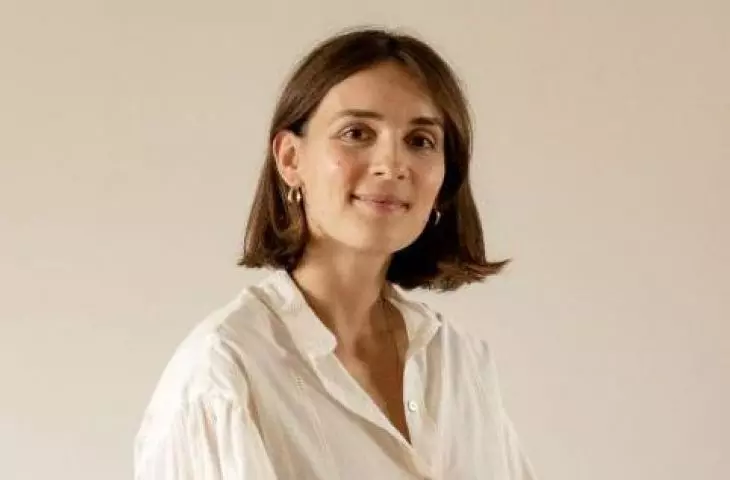
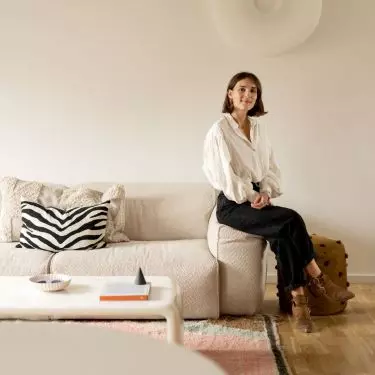
"How Those Who Design Everyday Live" is a series of short interviews with interior designers who open the doors to their apartments and houses, showing what everyday life looks like in the space they designed. In today's episode, Katarzyna Burak, a Bialystok-based interior designer, graduate of the Interior Design Department at Bialystok University of Technology and co-founder ofthe FUGA Architektura Wnętrz studio, shows her apartment.
Apartment of interior designer Katarzyna Burak
Photo: FUGA Interior Architecture
1 What does the interior look like where you live?
The apartment is located in the attic of a tenement house in Warsaw's Stary Mokowo district. When my partner and I first crossed its threshold we immediately knew that this would be our home. Maciek, who is normally reserved in showing emotion, in this case instantly communicated to the real estate agent that we were determined to buy, and then things moved quickly. The interior before the renovation was a kingdom of w ainscoting (it covered literally every wall and ceiling), the windows were haunted by bars, and the bathroom was dominated by bottle green and an elevated toilet seat.
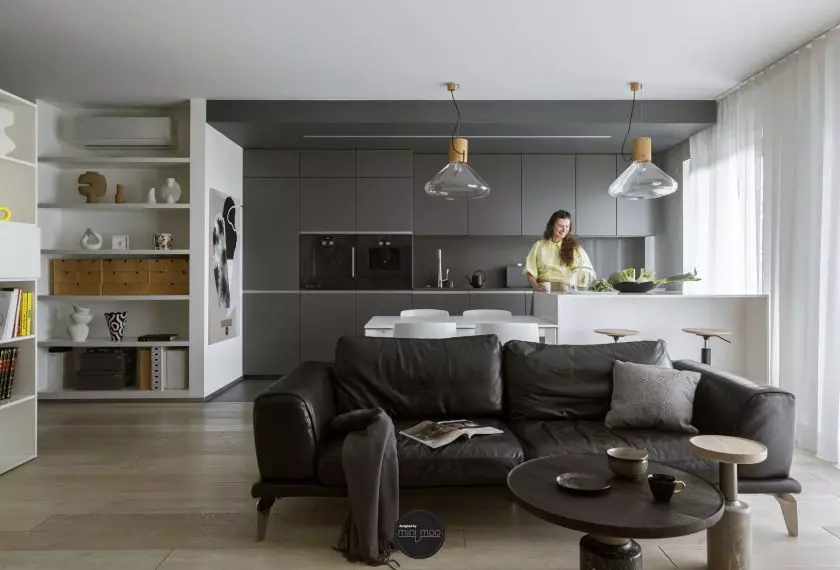
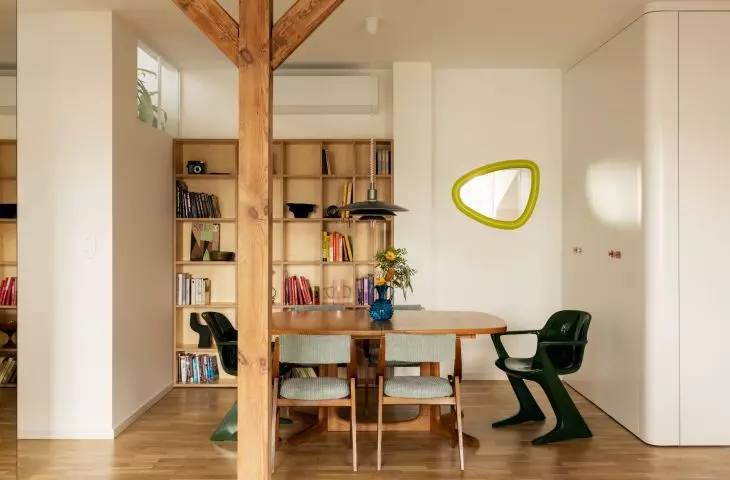
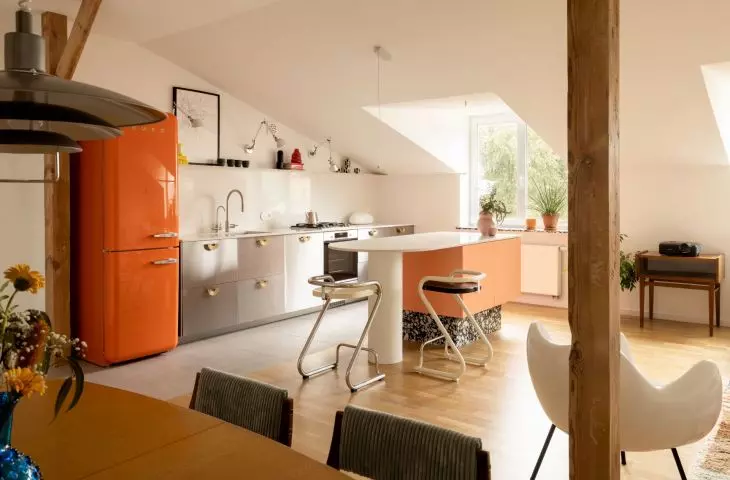
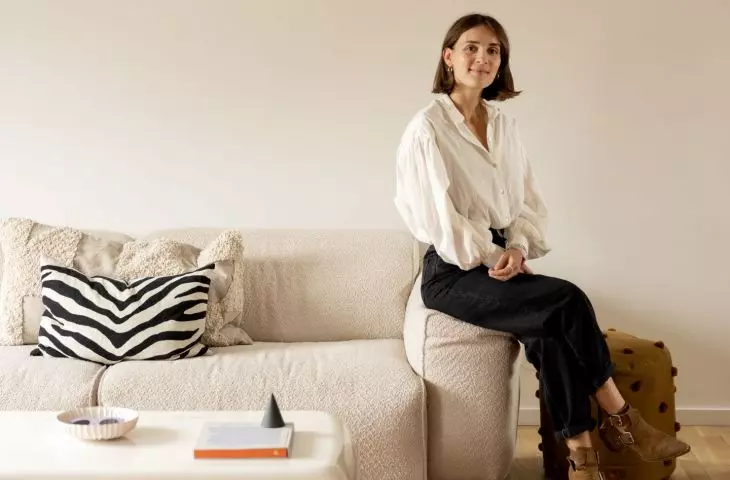
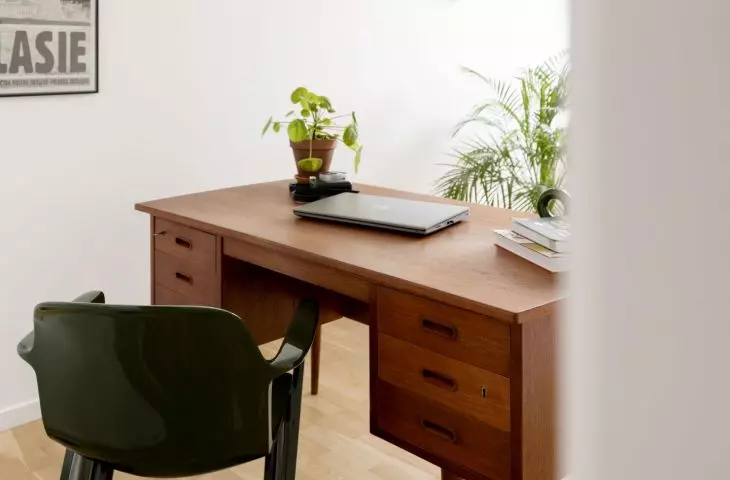
The approximately 115-square-meter apartment features a spacious living area with an open kitchen and dining area. A zen-like bedroom was created for relaxation. My fiancé's study, called a greenhouse, thanks to the use of two skylights under the ceiling, lets into the dining room plenty of sunlight coming in through a large skylight, and the plants set by the skylights create a jungle atmosphere. In addition, the apartment has a room for our daughter and a large dressing room and bathroom.
Apartment of interior designer Katarzyna Burak
Photo: FUGA Interior Architecture
2 What were the main assumptions and inspirations when creating it?
Where did the concept come from and what determined the final shape of the space?
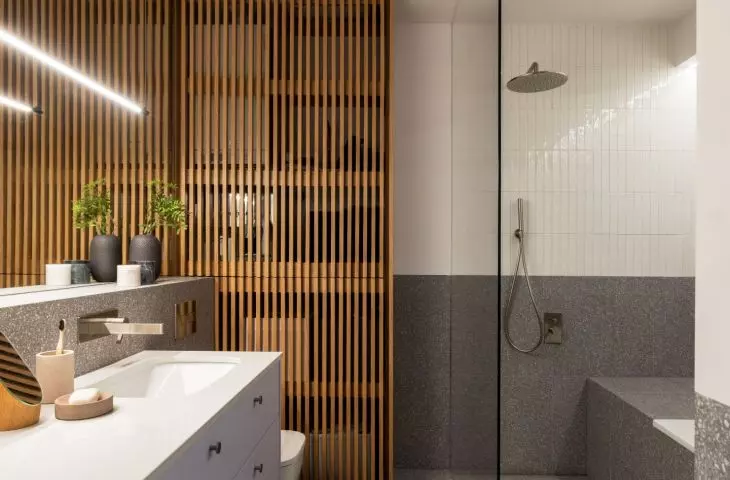
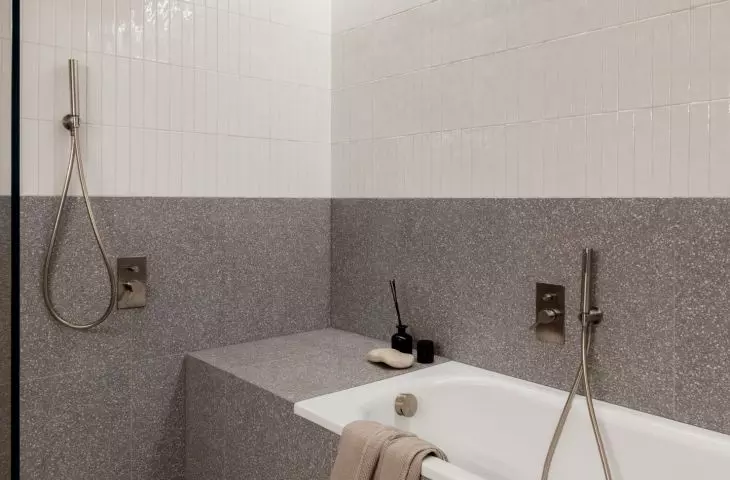
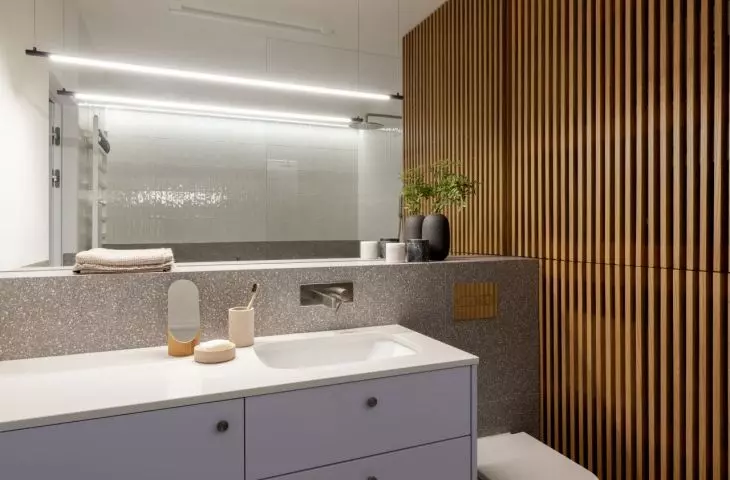
I knew that I wanted an interior that would be colorful, cheerful, filled with vintage items that have sentimental value to us and design classics that would age beautifully. Although the tenement in which the apartment is located dates back to the post-war period, the attic itself was only adapted for use in the early 1990s, which is also the time of my childhood. I decided to combine these facts using the style of those years as inspiration for the design. For example, the tile pattern in the bathroom is deceptively reminiscent of the terrazzo used for the staircase and window sills in my family home more than 30 years ago.
The only element we have kept in this apartment is the solid wood parquet flooring from the Hajnów plant famous for its long tradition of producing wood floors. We highly value natural materials and are very respectful of ecology so it was clear that the parquet floor would stay. In addition to it and the wooden structural pillars, the apartment was literally razed to the ground. At the climax of the demolition work, there was not a single partition wall in the apartment.
The apartment of interior designer Katarzyna Burak
Photo: FUGA Interior Architecture
3 Which elements of the interior are of particular importance - aesthetic or functional?
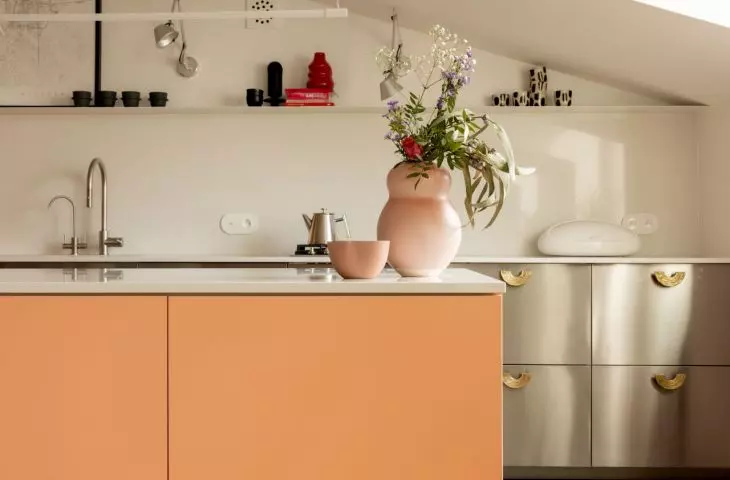
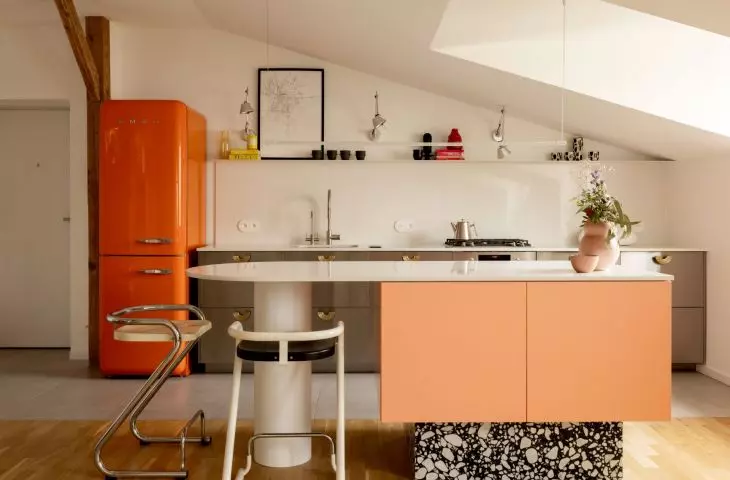
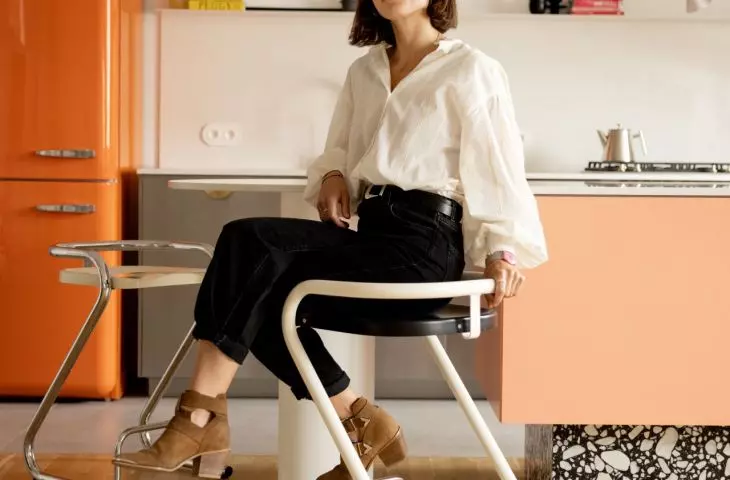
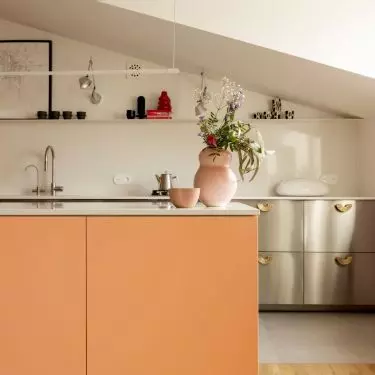
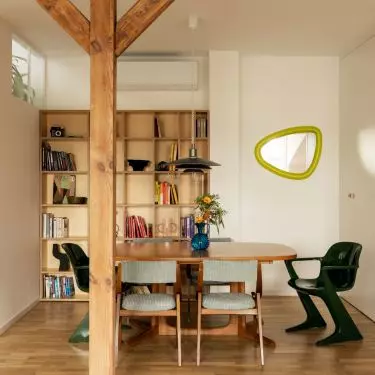
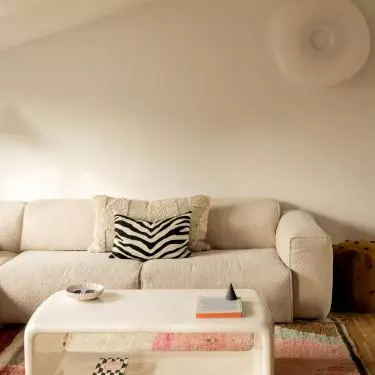
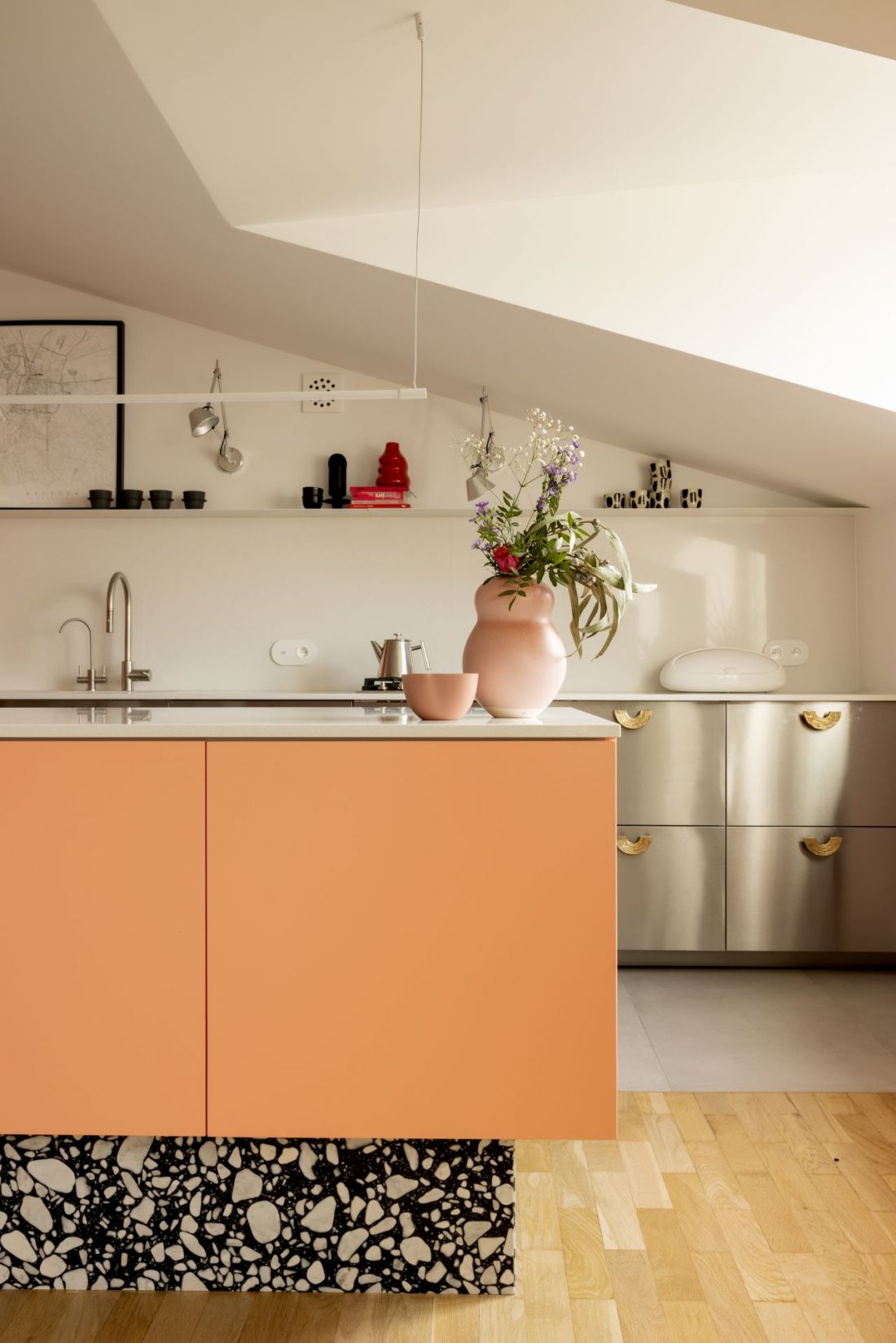
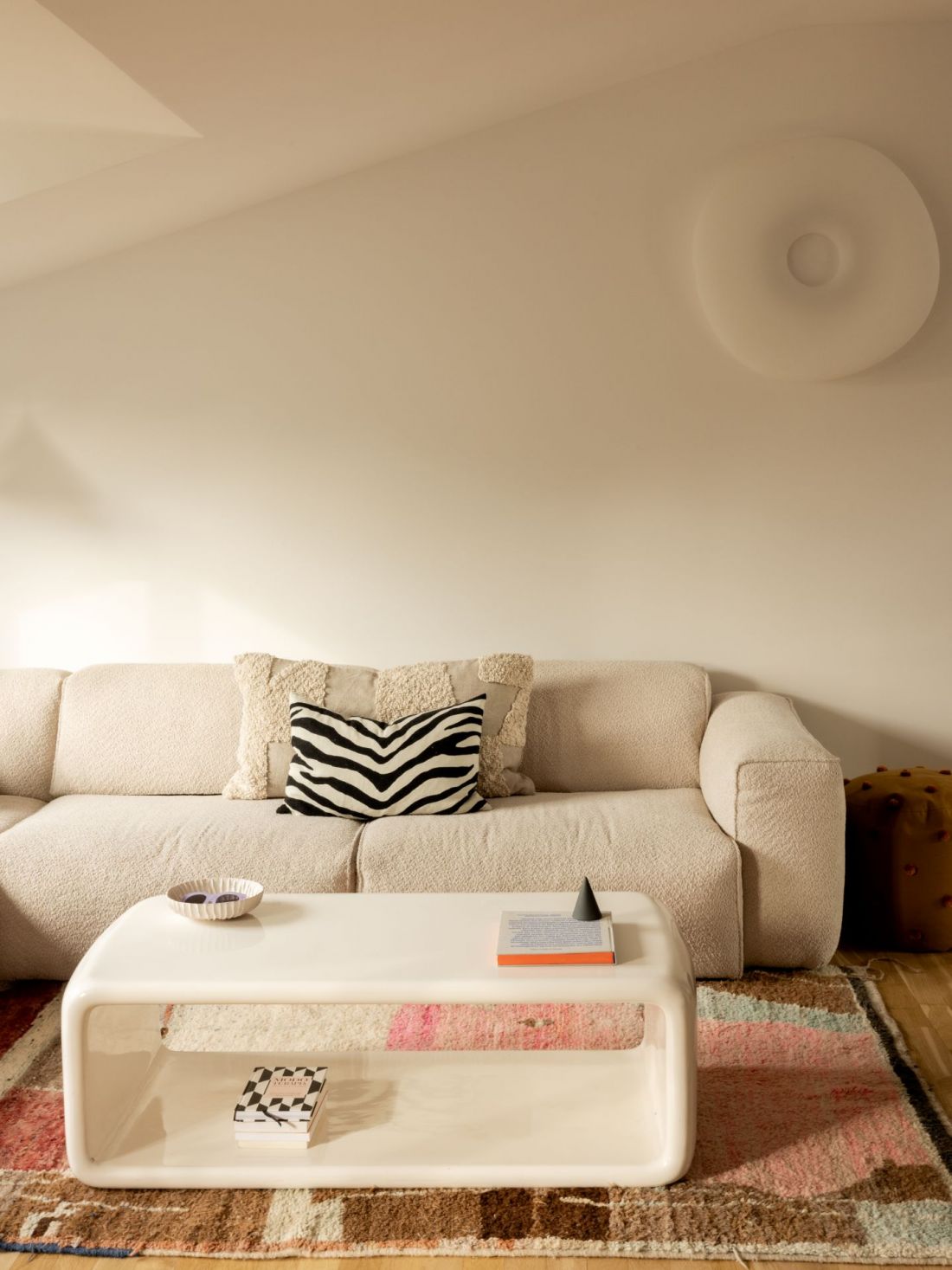
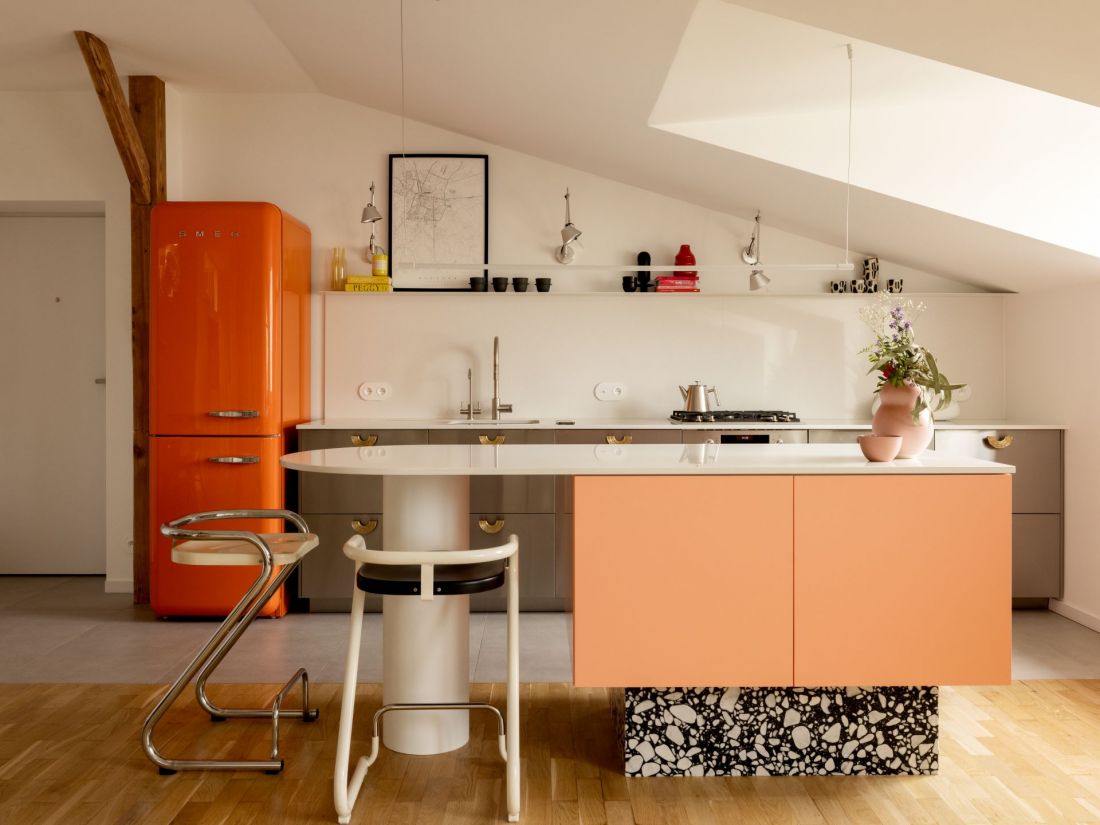
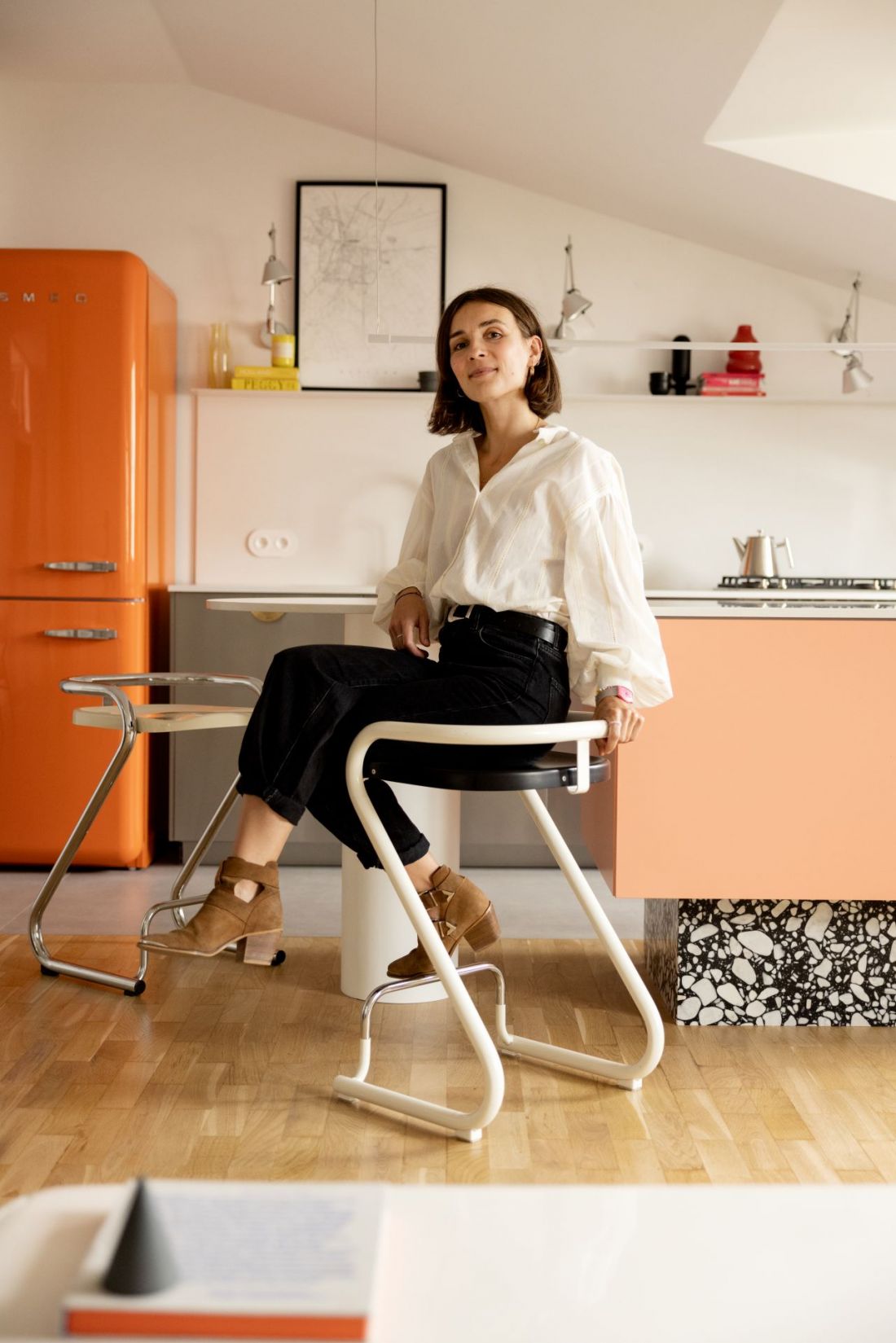
The heart of the house is definitely the open more than 40-square-meter living area. It invites you in as soon as you cross the threshold of the apartment. We like to invite guests and when the family visits, so we opted for a mix and match of cooking, eating and relaxation zone on a large sofa with a pull-out projector. All functions side by side. My favorite part of the house is the kitchen island, around which social life revolves. I like literally everything about it: the shape - reminiscent of a steamboat sailing into the distance, the pink non-obvious color, the marble stone leg I fell in love with at first sight, but most of all its multi-functionality! It's perfect for working, preparing meals, but also for meetings over coffee or a glass of wine. It has very roomy cabinets - on the kitchen side, 6 drawers that hold tableware, cutlery and dry supplies, and on the living room side, a bar with a selection of liquor and glassware. This is the element of our home where a lot of people are always hanging around.
The apartment of interior designer Katarzyna Burak
Photo: FUGA Interior Architecture
4. have you consciously used solutions beyond the current trends?
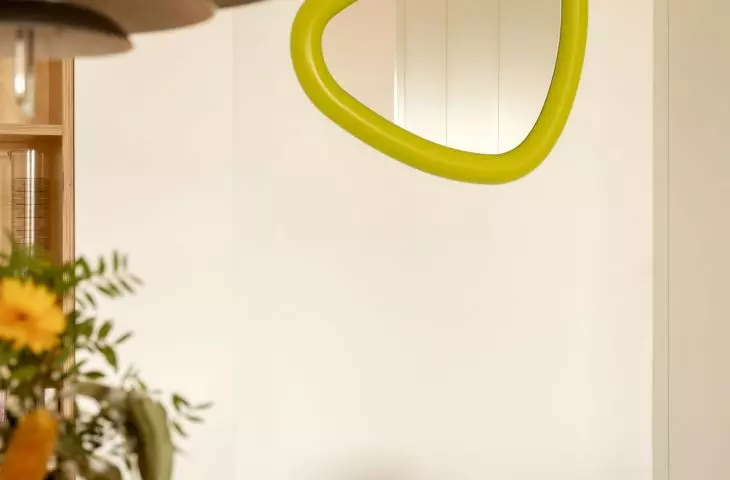
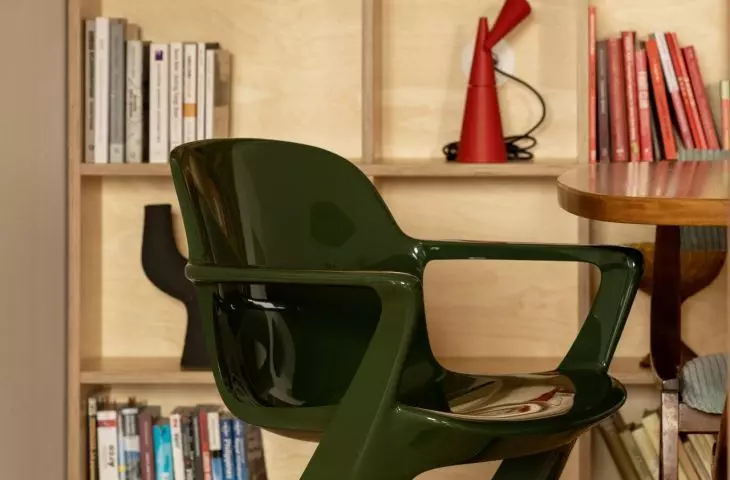
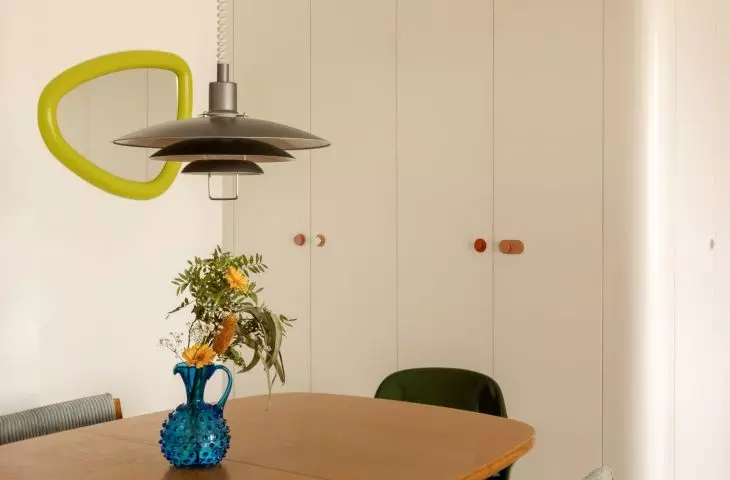
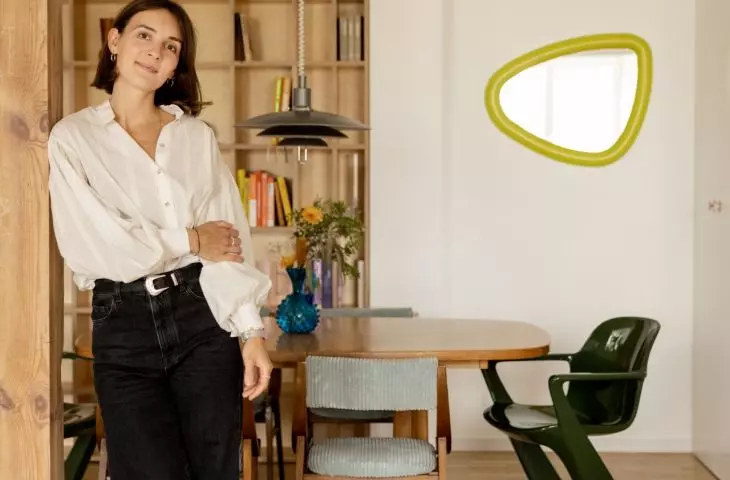
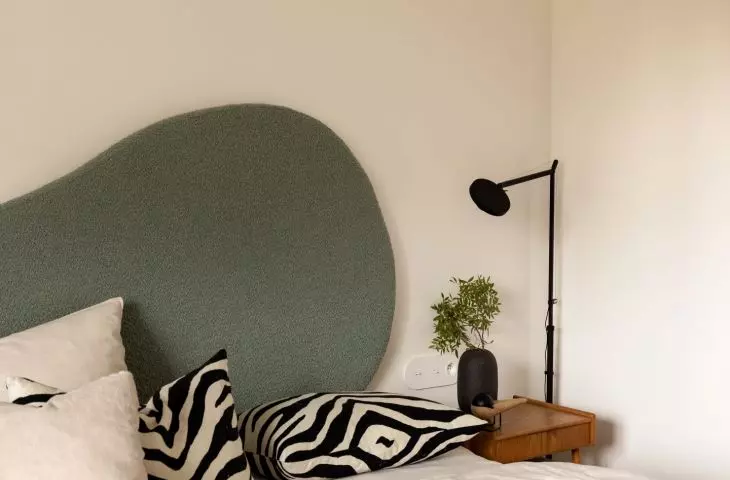
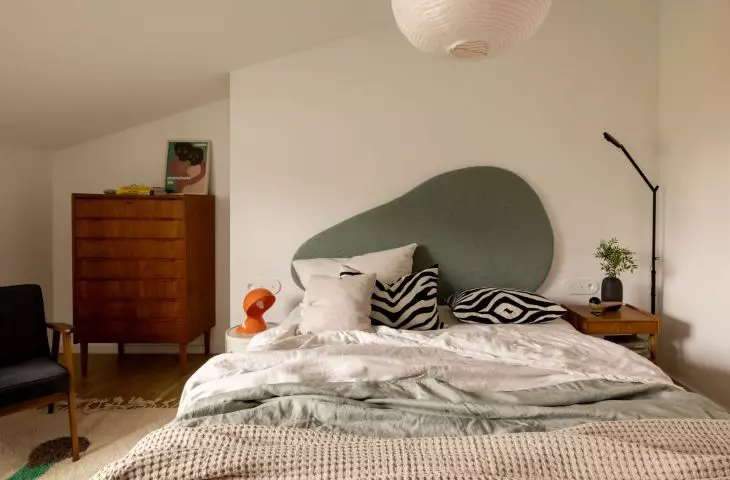
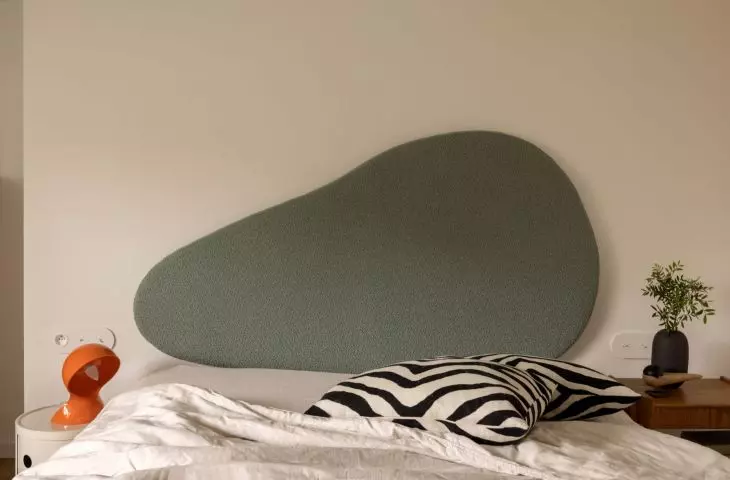
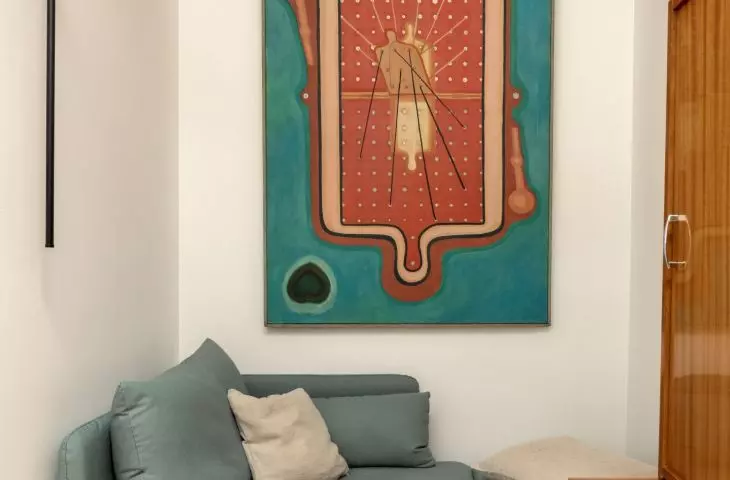
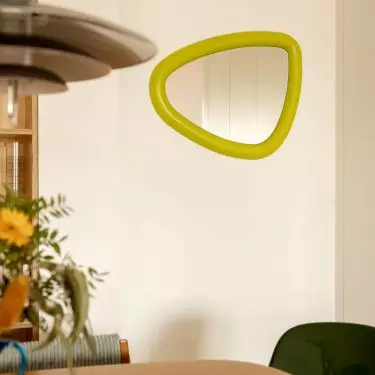
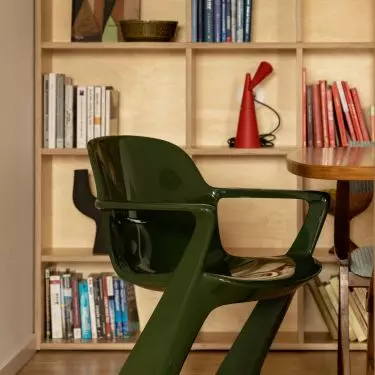
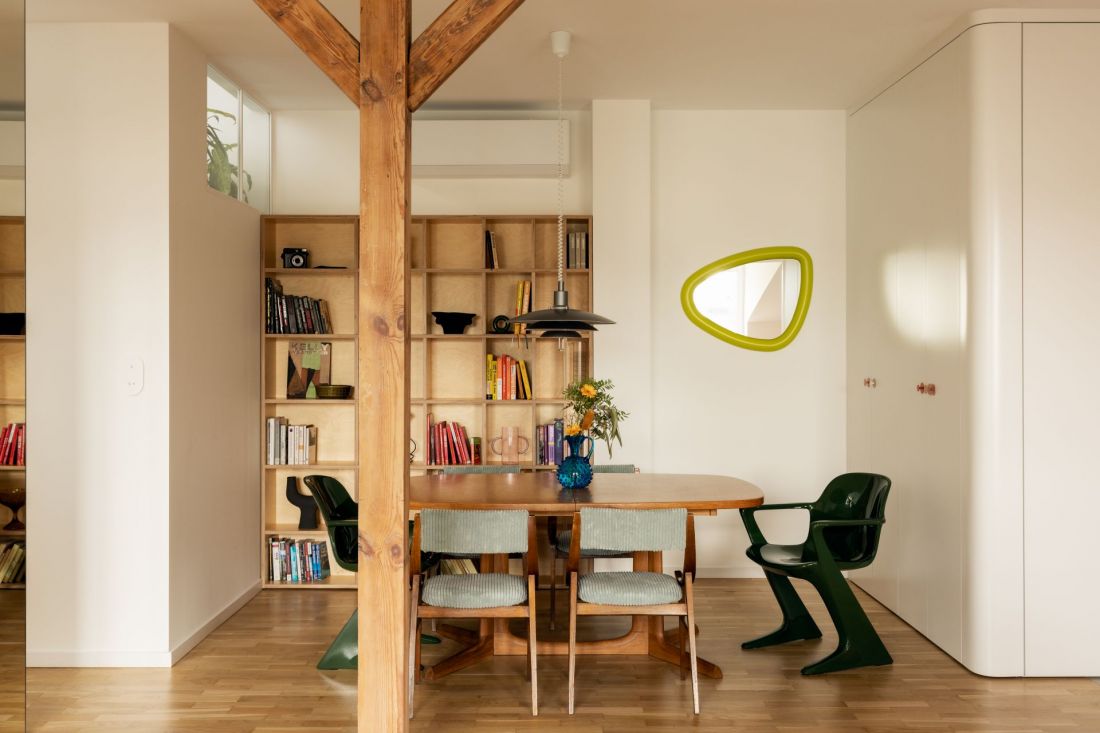
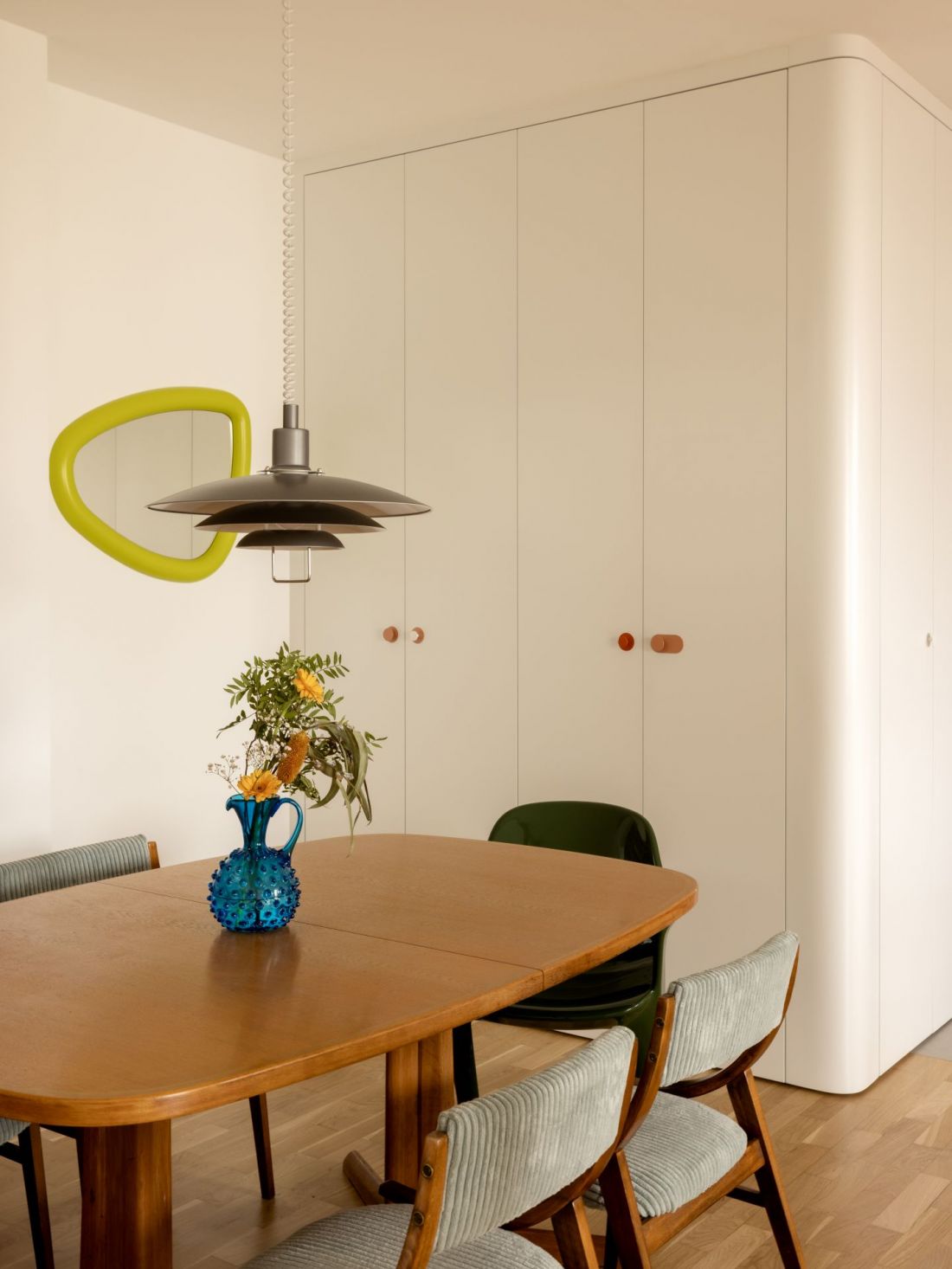
I like trends and playing with them, while I'm also quite hooked on the history of furniture and surrounding myself with objects that mean something more to me. In our house, every piece of furniture has a story - the blue chairs at the table come from my grandmother's family home in Podlasie. They are the famous Skoczki - an icon of Polish design in the 1960s, designed by Juliusz Kędziorek. The dark green Zetki are iconic armchairs bought at auction, which were later given a second life by a friendly car painter. The chiffonier in the bedroom, brought from Denmark, remembers the times when elegant women used underwear boxes with 7 drawers, for each day of the week - hence the name. Meanwhile, the glass book display case in the study is a more than 70-year-old piece of furniture from her grandparents' house, where Kasia used to display her artwork as a little girl. We also have a headrest over the bed at home and a beautiful mirror in a futuristic lime green frame - a design by my sister Ewa, founder of the interior design brand Buket.
Apartment of interior designer Katarzyna Burak
Photo: FUGA Interior Architecture
5 How does this interior change over time?
Are there new elements, other functions, does the layout change?
The biggest change that occurred was the transformation of my study into a room for our daughter, who today I still have in my belly, but I hope that when the article is published she will already be with us :) Due in early July 2025.
Apartment of interior designer Katarzyna Burak
Photo: FUGA Interior Architecture
6 - Is there anything without which this interior would not be "yours"?
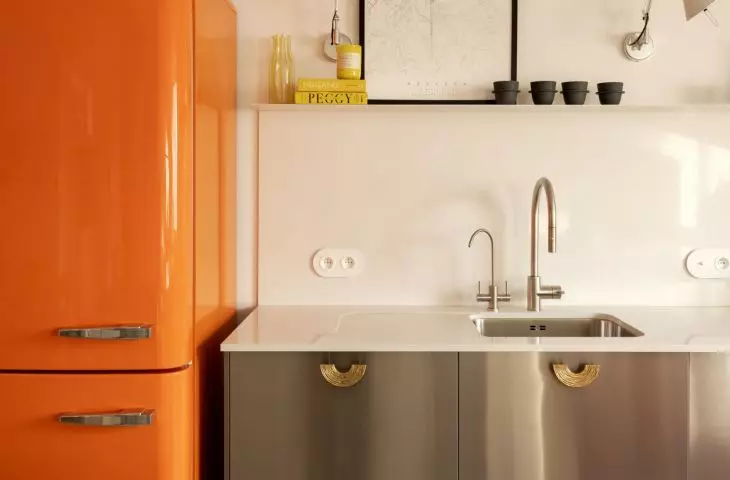
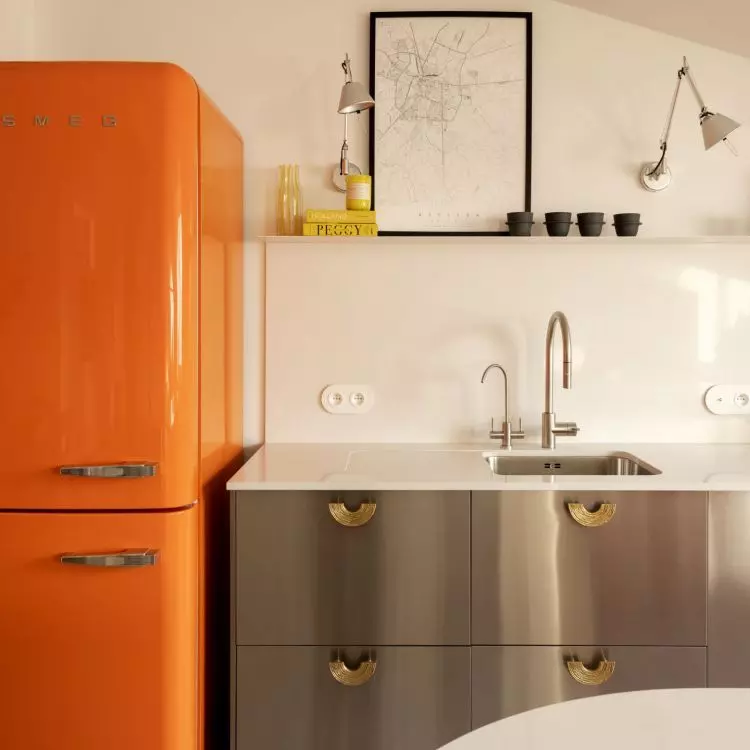
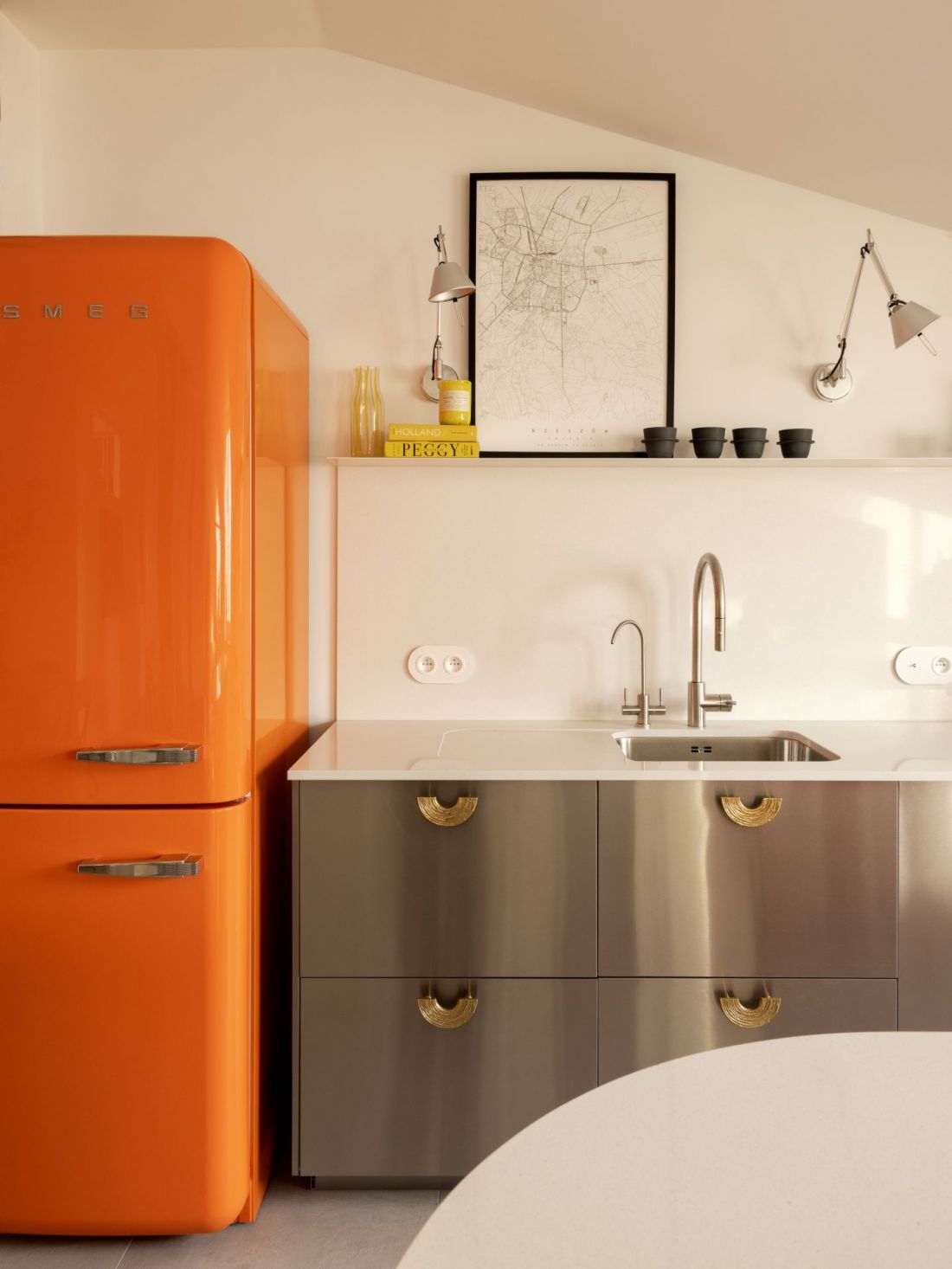
Certainly the juxtaposition of colors and unobvious paternities, like the steel fronts in the kitchen combined with gold handles from the Polish brand pap deco. I would like to remind you that the project was created in 2021, and at that time in truth hardly anyone dreamed of combining silver with gold, which today is already the daily bread. When choosing colors, for example, the orangish refrigerator, or the remarkable lilac for the bathroom cabinet, I deliberately used color therapy to make myself feel better every day just by being at home. There is too much gray in everyday life to condemn myself to boring interiors.
Apartment of interior designer Katarzyna Burak
Photo: FUGA Interior Architecture
7. what is the most important advice to give to a person who wants to create an interior close to himself - but is not a designer? Where to start, what to remember and what to avoid?
Don't rush, give yourself time. Buy only those things that will really steal your heart. It is better to sleep on a mattress and cook on a tourist stove for a few months, so that during this time you can gain confidence and build up the means for accurate decisions. Price is remembered for a short time, while quality stays forever.