


Kai Tak Sports Park,
design: Populous
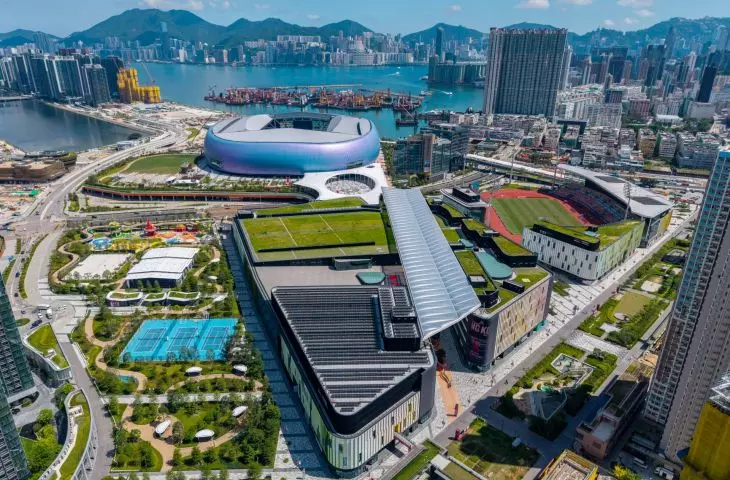
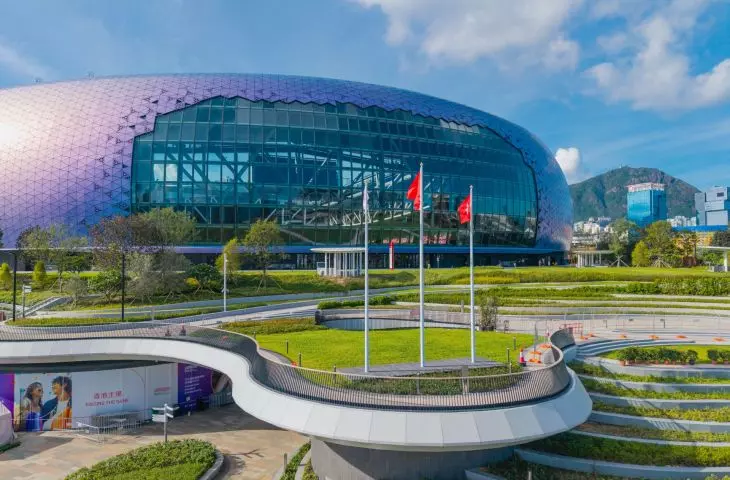
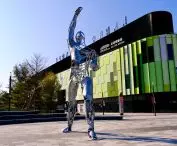
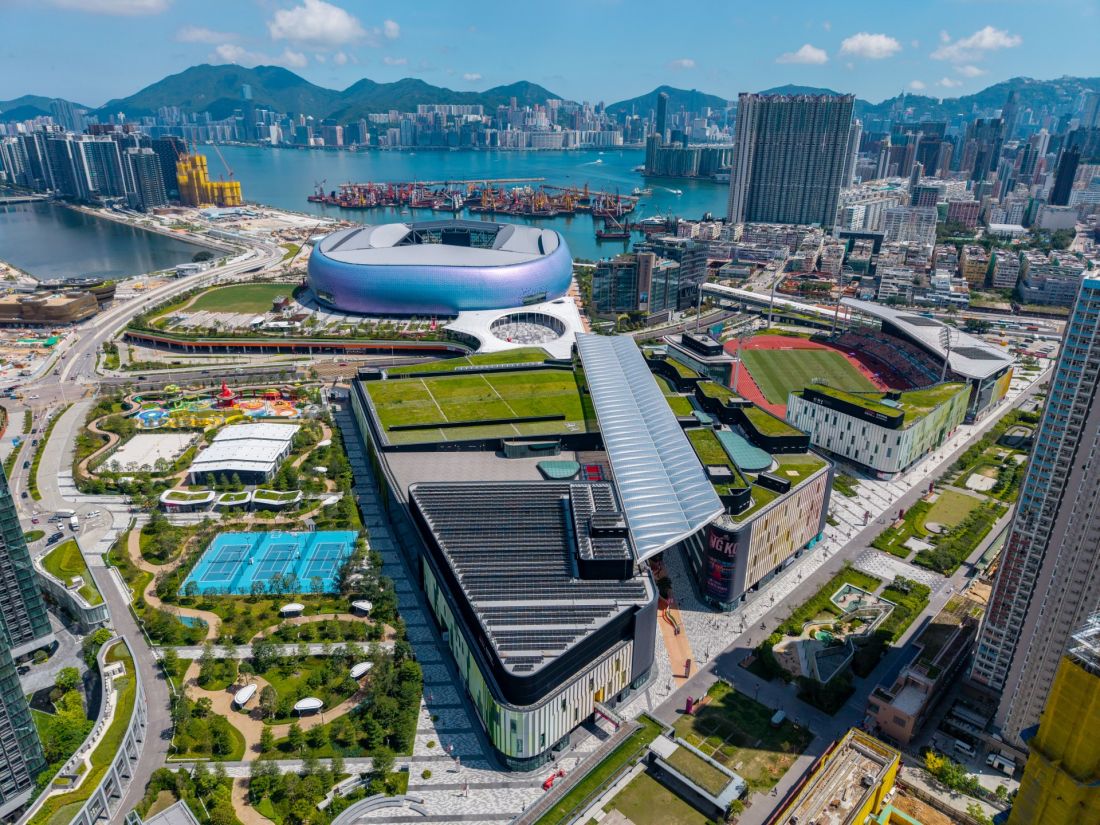
Kai Tak Sports Park in Hong Kong was built on the site of a former airport, which for years was one of the city’s most iconic landmarks. The firm Populous designed a vast sports and recreation complex here, featuring a stadium, an arena, a youth sports field, dining facilities, and walkways leading toward the waterfront. This project is intended to serve not only during major events but also on a daily basis—as an open space for the residents of Kowloon.
Kai Tak Sports Park in Hong Kong — © Simon Kwan & Associates
a sports district on the site of a former airport
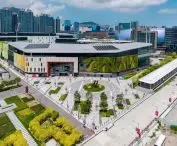
For decades, Kai Tak held a special place in Hong Kong’s collective memory. Located near the densely built-up area of Kowloon, the airport was one of the most recognizable features of the urban landscape, and after its closure, the site became one of the most important investment reserves in this part of the city. The new complex capitalizes on this scale but does not attempt to build yet another enclosed sports facility. Instead of a stadium cut off from its surroundings, a network of interconnected arenas, plazas, gardens, and walking paths has been created. Walkways run throughout the site, connecting subway stations, dining areas, sports facilities, and the Victoria Harbor waterfront. As a result, Kai Tak Sports Park is intended to be not only a place people visit for a game or a concert, but also an integral part of the city’s daily flow.
Kai Tak Sports Park in Hong Kong — © Populous & Getty Images
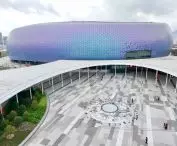
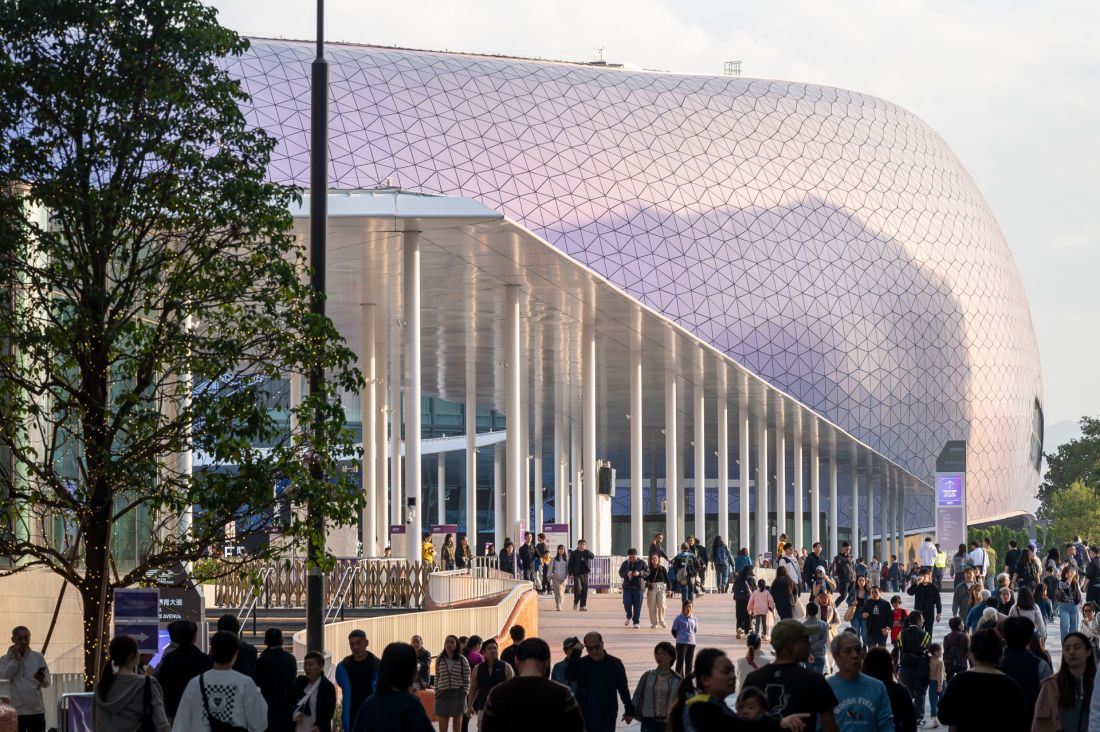
The pearl-like facade overlooking Victoria Harbor
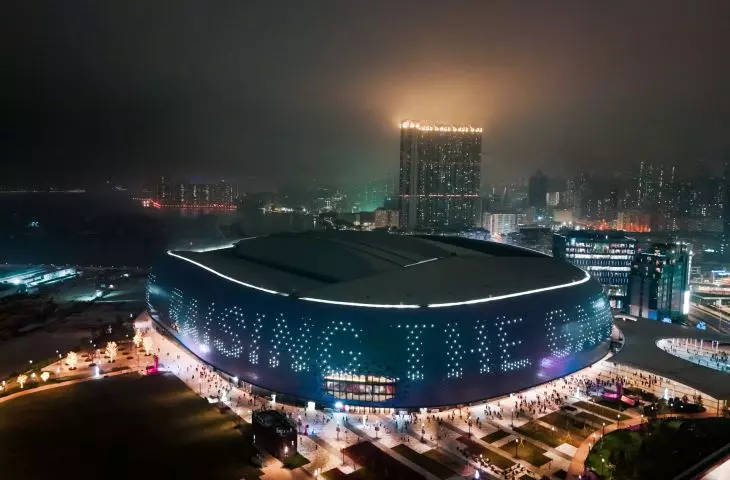
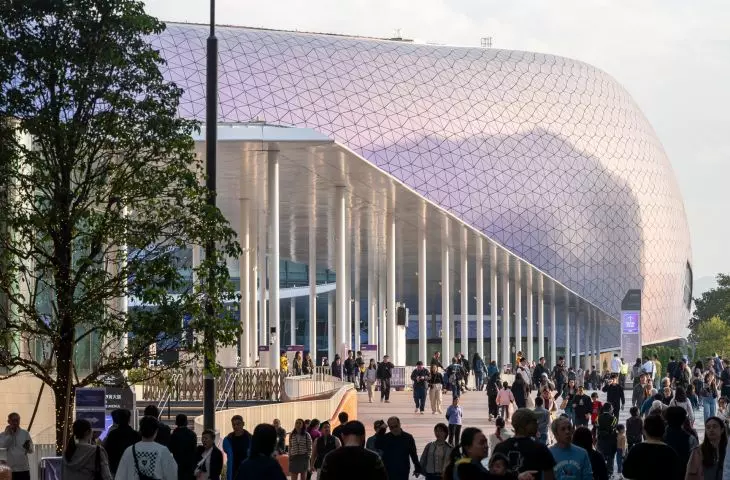
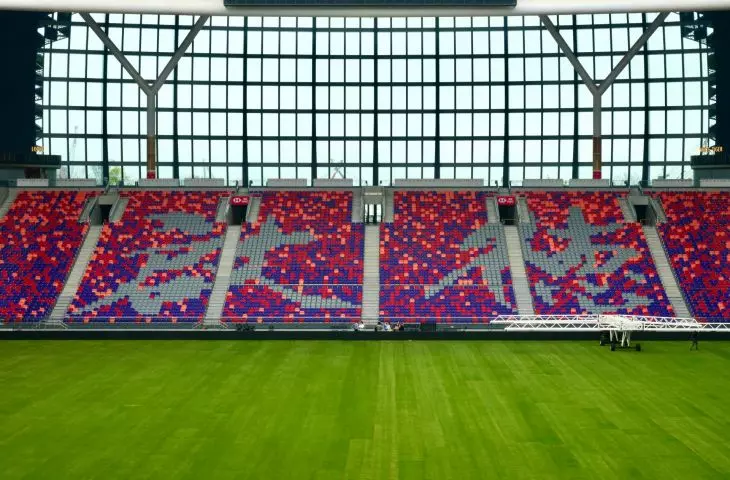
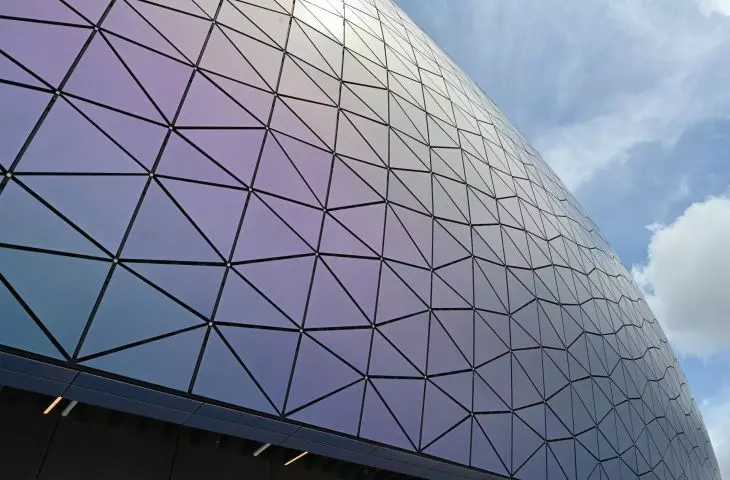
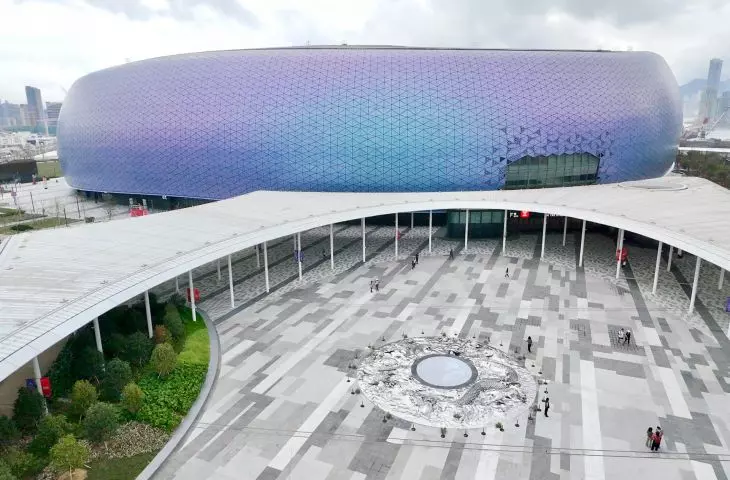
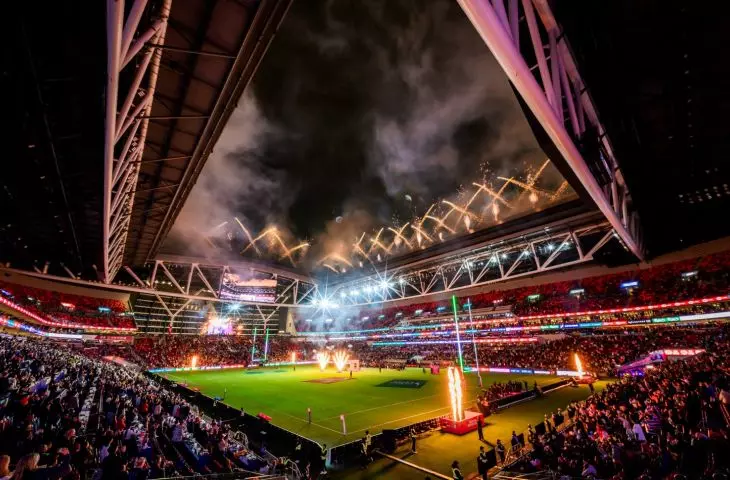
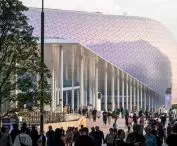
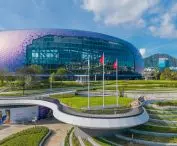
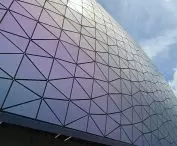
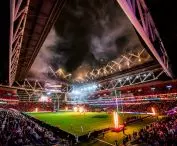
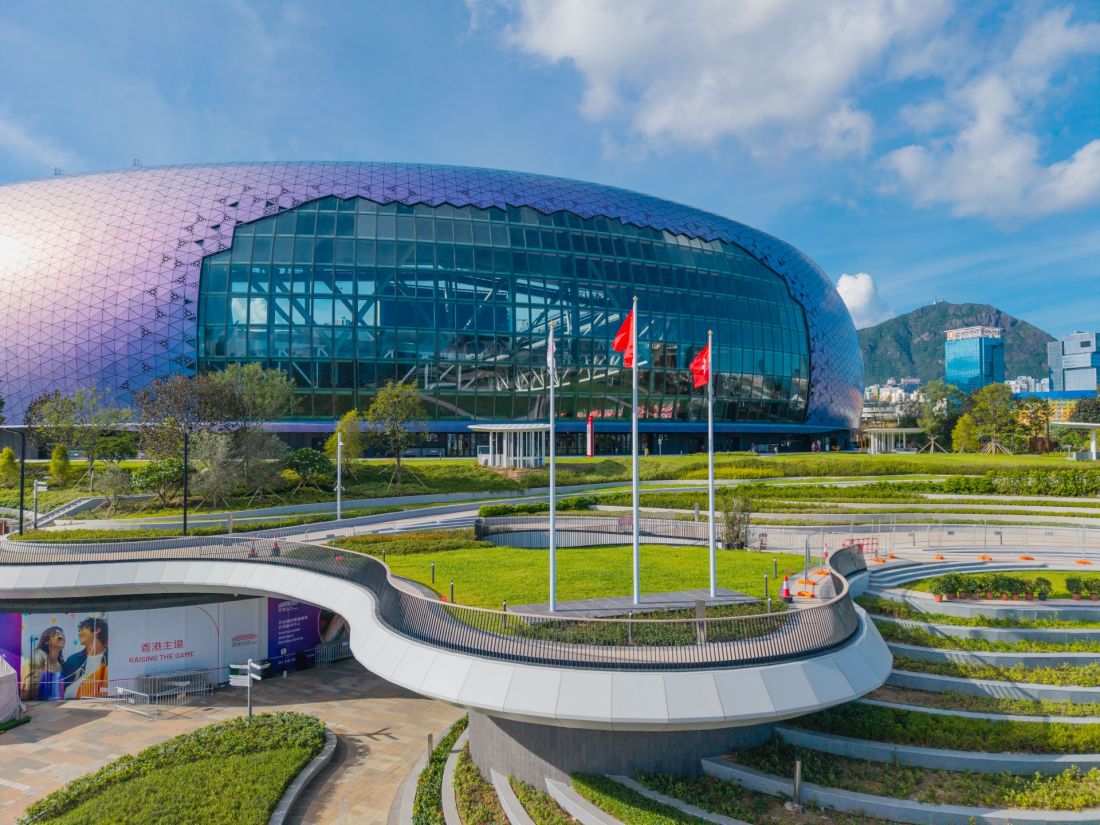
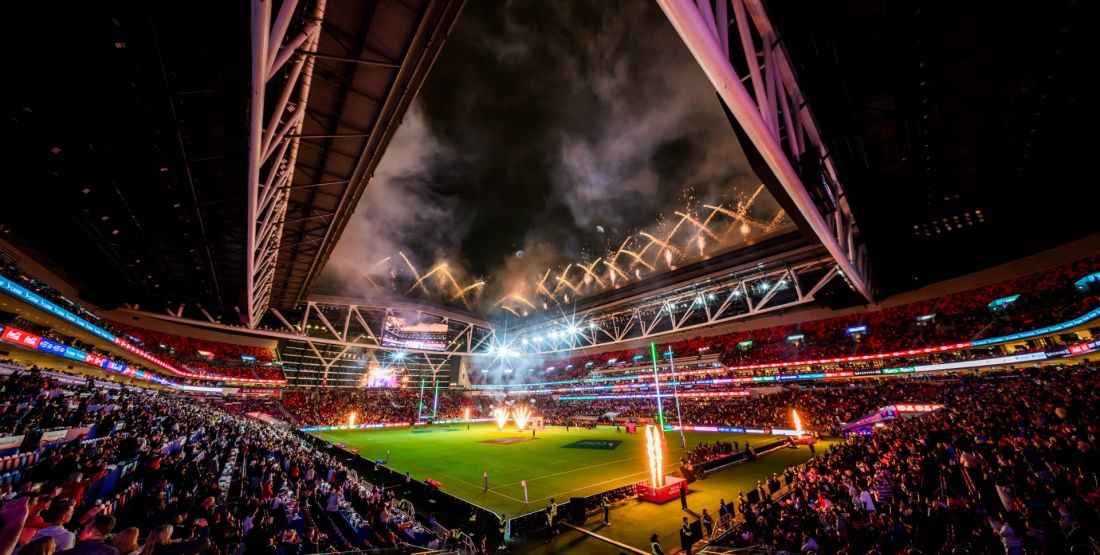
The most recognizable element of the complex is Kai Tak Stadium. The main arena was designed to be a striking landmark in Hong Kong’s skyline, yet without the heaviness typical of many large stadiums. Its shimmering, pearlescent facade references the city’s nickname, “Pearl of the Orient,” and changes appearance depending on the light. Populous treated the façade not only as a striking shell but also as part of a precisely engineered system. Instead of multiplying complex elements, the firm streamlined the geometry of the panels, which simplified production and assembly. The roof was designed with a similar approach. The retractable structure allows the stadium to be quickly adapted for sporting events, concerts, and changing weather conditions, enabling the arena to operate in various configurations throughout the year.
Kai Tak Sports Park in Hong Kong — © Simon Kwan & Associates
Three facilities instead of one stadium
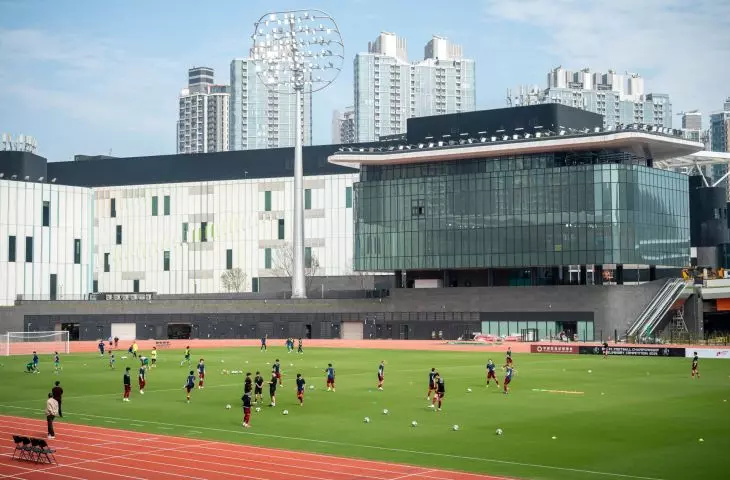
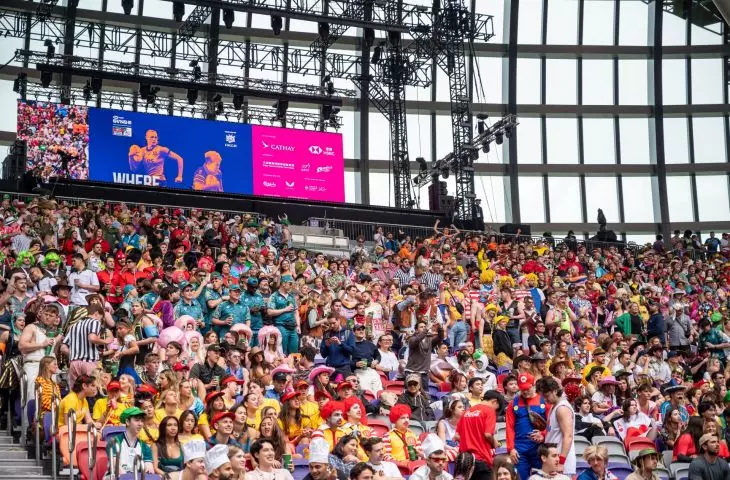
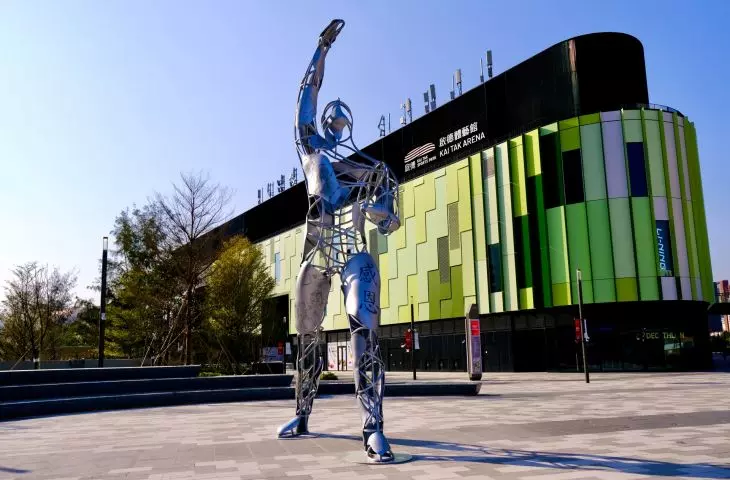
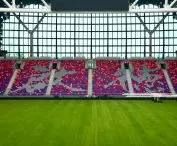
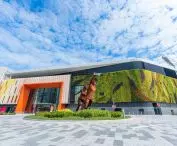
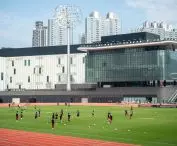
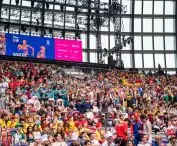
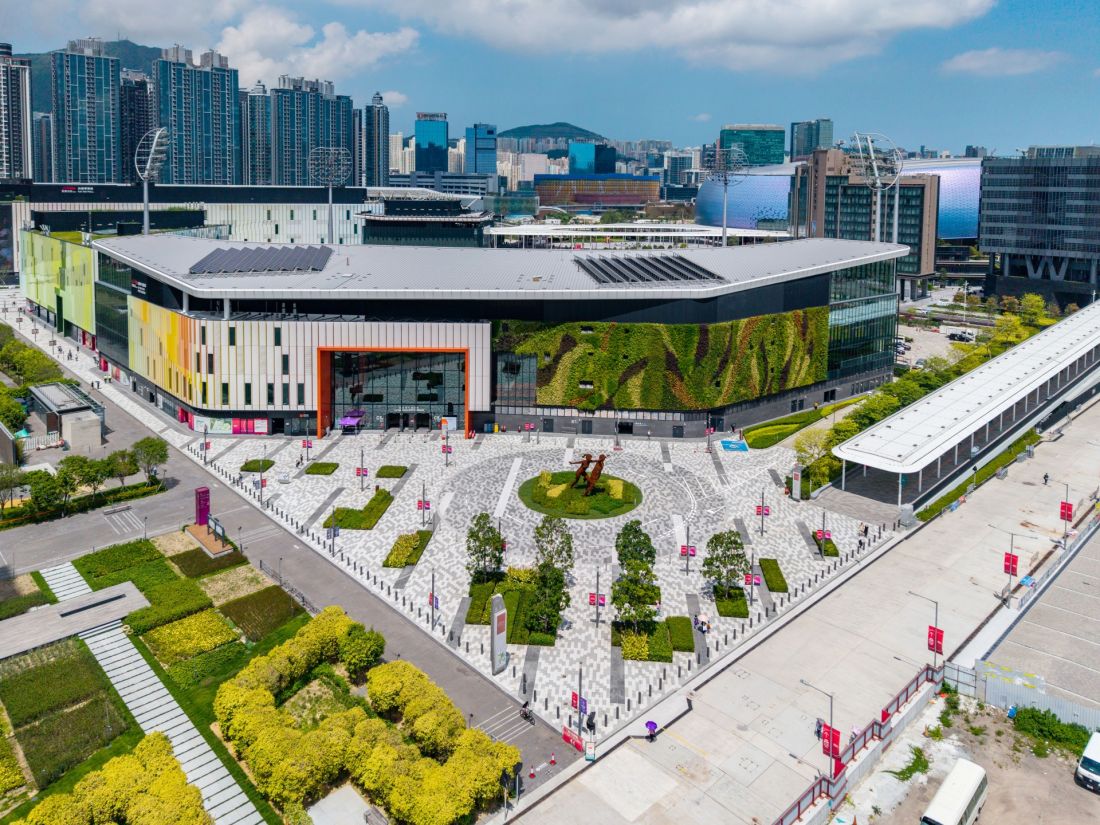
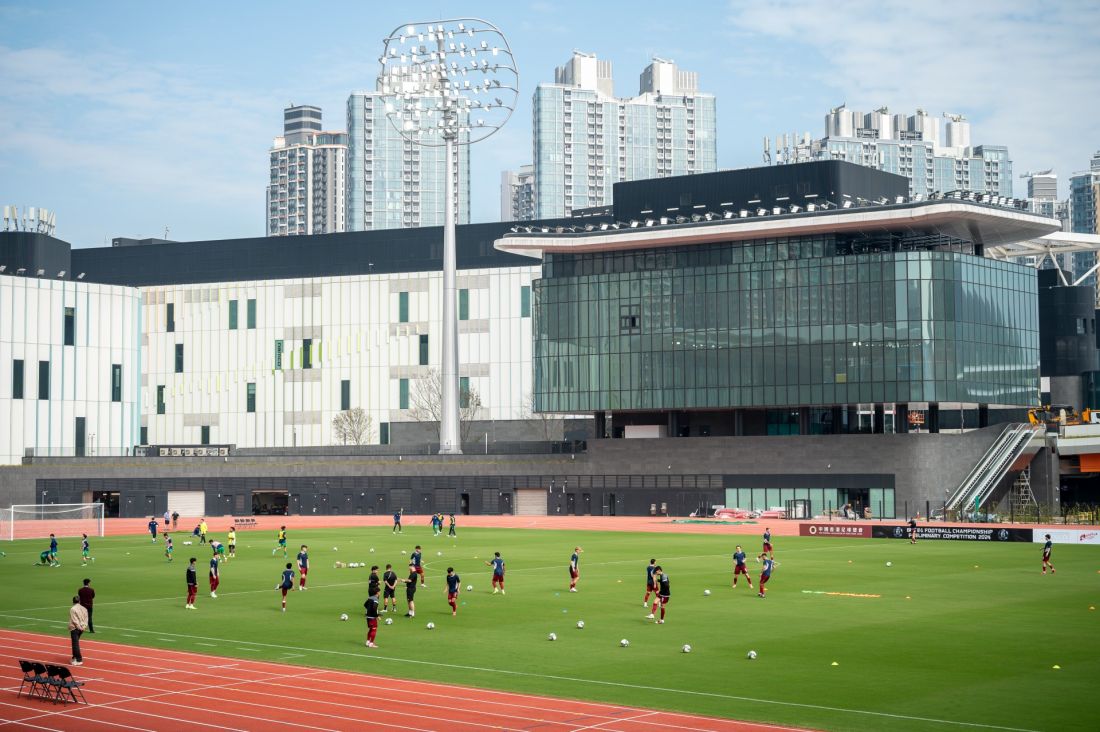
Kai Tak Sports Park is not limited to the main stadium. Adjacent to it is the Kai Tak Arena, a venue designed to host events of various scales—from sports tournaments to concerts, exhibitions, and local gatherings. Retractable and removable seating allows the layout of the audience area to be changed, thereby adapting the interior to the program. The third part of the complex is the Kai Tak Youth Sports Ground, which has a more everyday and accessible character. It is a space designed for training, school competitions, running, and local sporting events. It is precisely this difference in scale that is essential to the project: alongside the infrastructure for international events, there is a space that can serve residents even when nothing is happening at the main stadium.
Kai Tak Sports Park in Hong Kong — © Simon Kwan & Associates
an avenue running through Kai Tak Sports Park
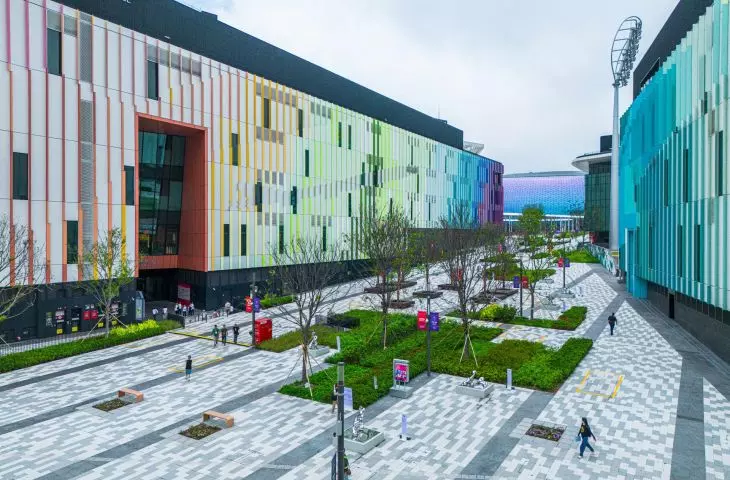
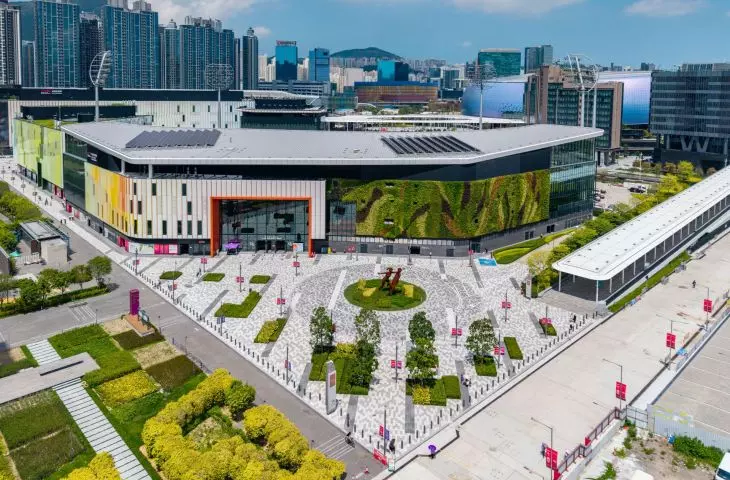
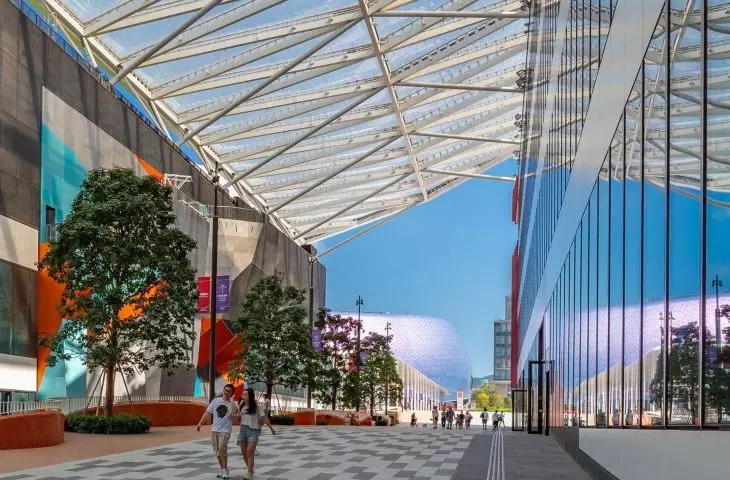
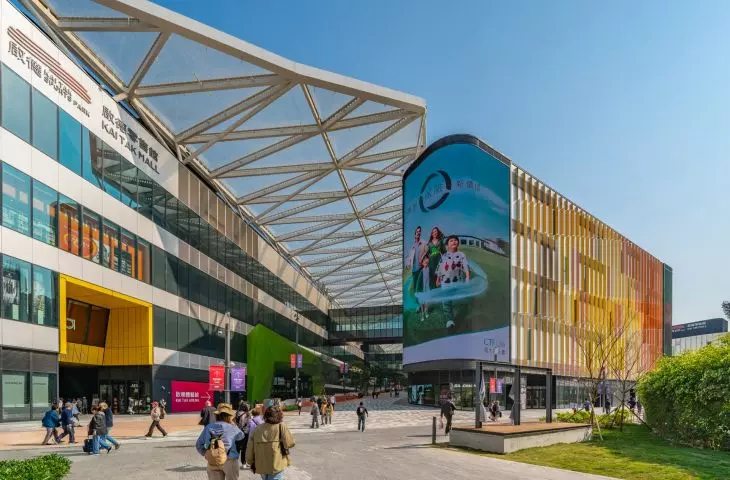
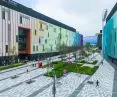
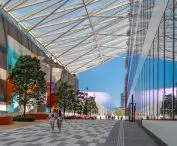
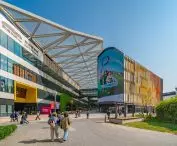
The backbone of the entire complex is Sports Avenue—a pedestrian axis running through the grounds. It connects the most important facilities, facilitates navigation, and allows for the efficient management of crowds after events, but it is not merely a path leading to the stadium. It is a wide urban promenade offering views of the main arenas, entrances, service areas, and the complex’s various green spaces. This design is particularly significant in Hong Kong, where large-scale developments must navigate dense urban fabric, transportation networks, and heavy pedestrian traffic. Kai Tak Sports Park does not turn its back on Kowloon but guides visitors toward the waterfront and organizes the relationships between the new development, public transportation, and the surrounding neighborhoods.
Kai Tak Sports Park in Hong Kong — © Populous & Getty Images
An open park instead of a closed fortress
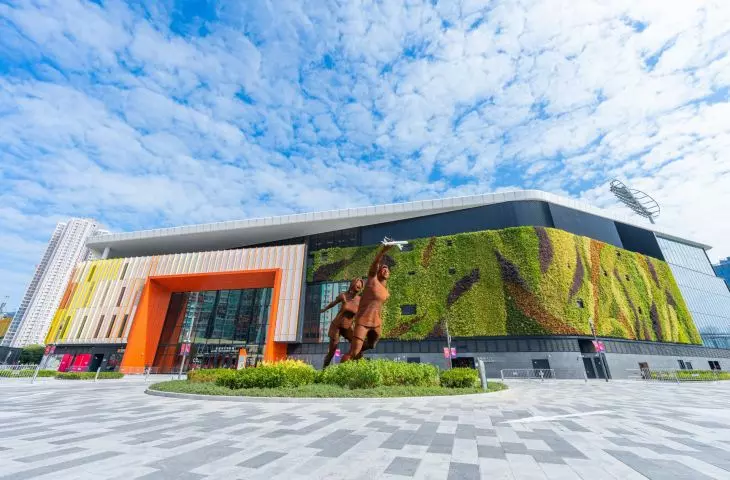
One of the most important decisions was to leave the entire complex unfenced. On days when no events are taking place, residents can use the walkways, recreational areas, gardens, dining options, and retail spaces. Thanks to this, the complex does not turn into an empty, closed-off island between events. This clearly illustrates how thinking about modern sports facilities is changing. A stadium doesn’t have to be a solitary monument that comes to life a few times a month. It can become part of a larger urban infrastructure—one that combines sports, culture, recreation, and simply moving through the city.
Kai Tak Sports Park in Hong Kong — © Hong Kong China Rugby
a former airport, a new gathering place
Kai Tak Sports Park is most interesting when viewed not as a single stadium, but as a new part of Hong Kong. The Populous design combines the scale of major events with spaces intended for everyday use: during training, a walk, an after-work get-together, or a trip to the waterfront. In a place long associated with air traffic, a complex has emerged based on a different kind of flow—pedestrian, urban, and social. The former airport is no longer a gateway to Hong Kong, but a part of the city designed to draw residents back to Victoria Harbor.