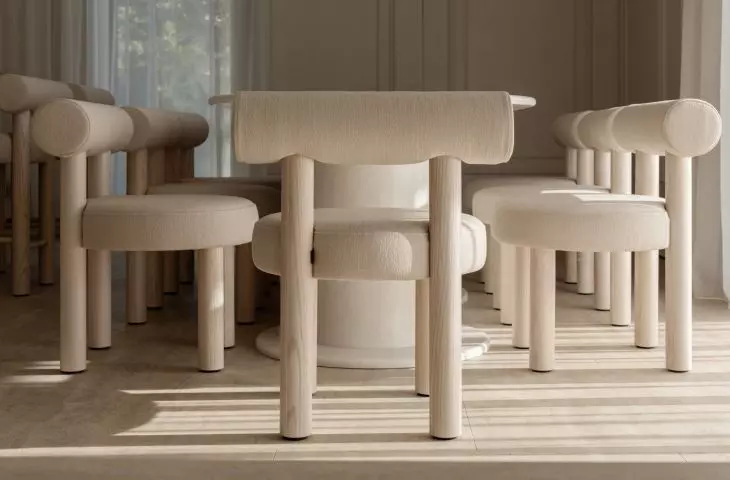
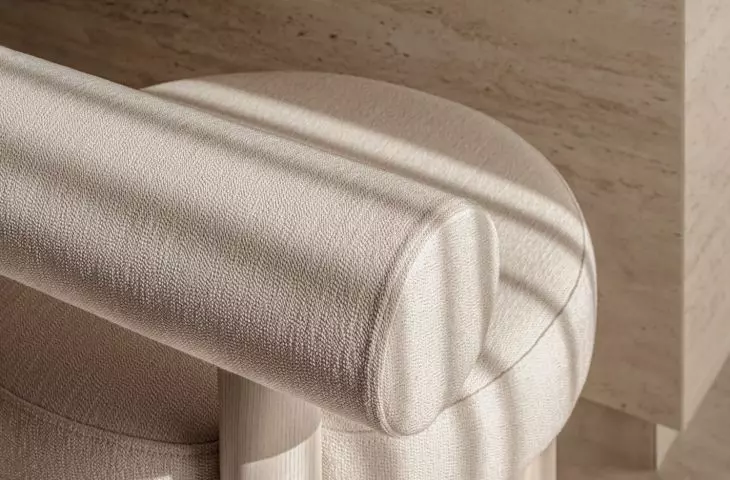
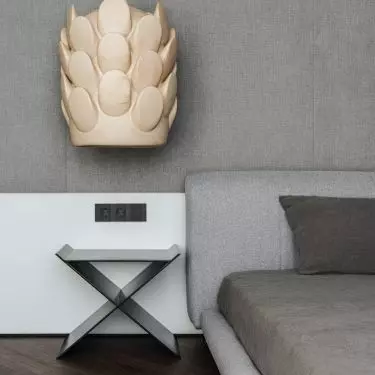
Can an interior evoke palatial elegance while also providing residents with a sense of security and the freedom of everyday life? At Poroda House in Kyiv, classic motifs have been simplified, stripped of their opulence, and combined with functional minimalism. The designers from MAKHNO Studio used stone, wood, copper accents, and soft fabrics to create a home that is elegant yet far from the stiffness of a museum.
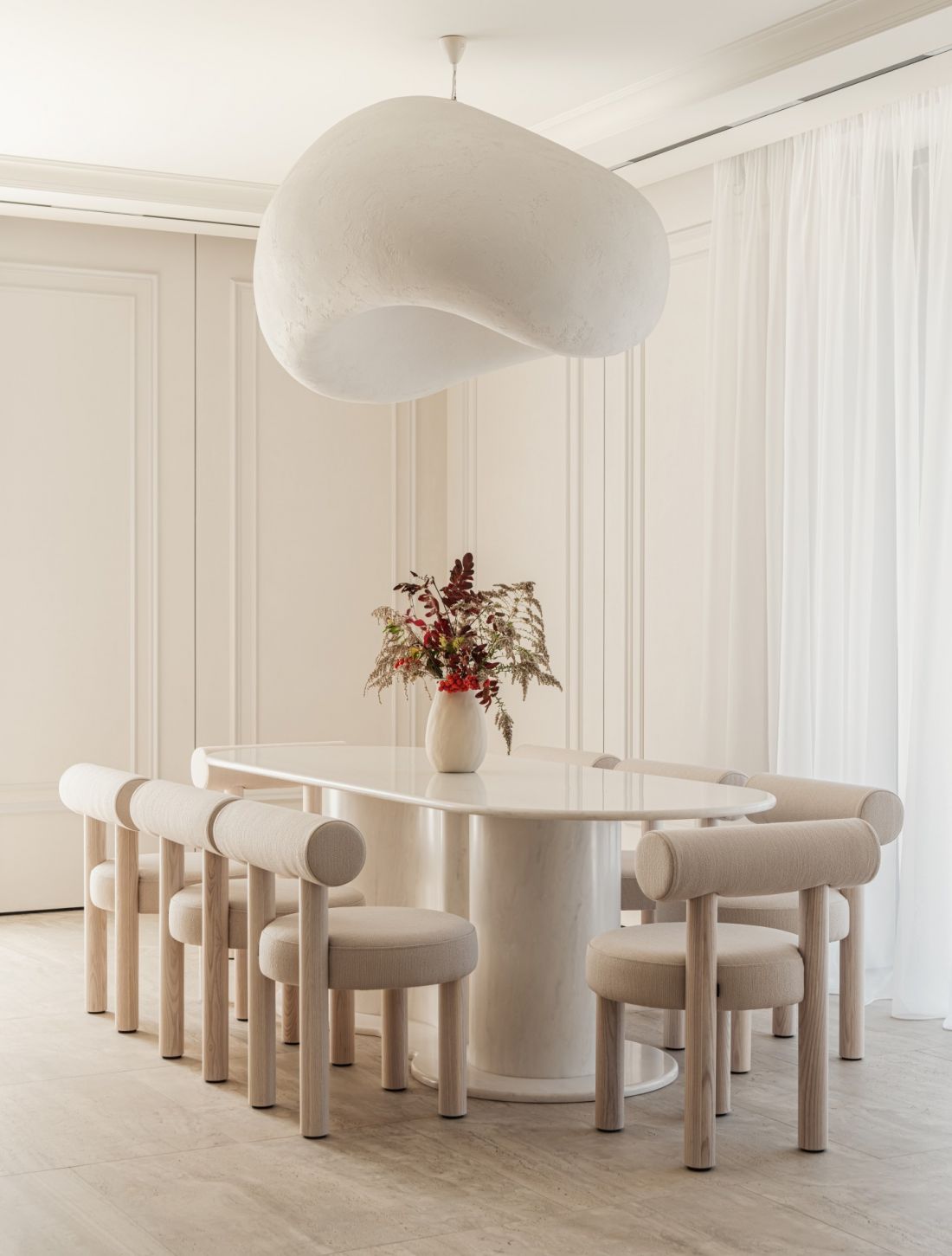
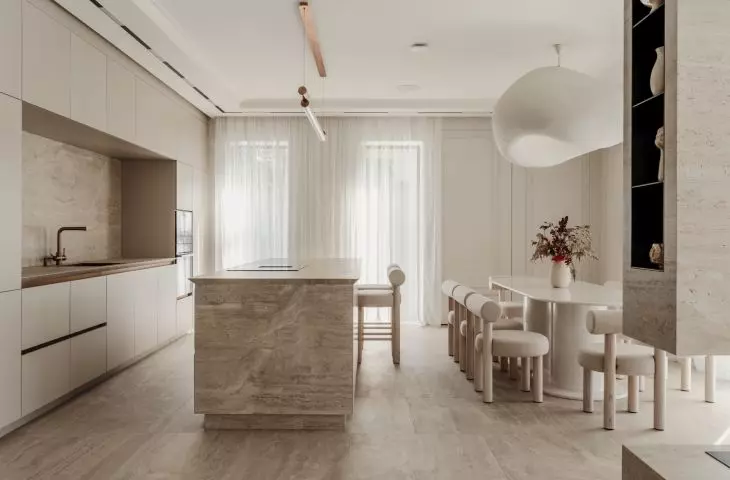
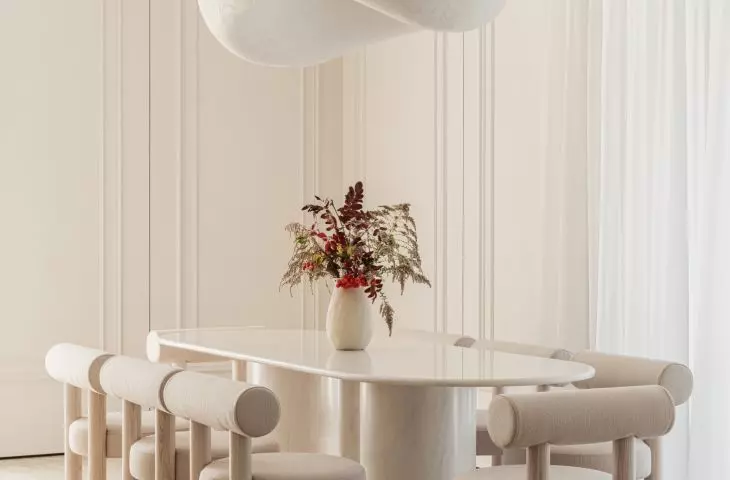
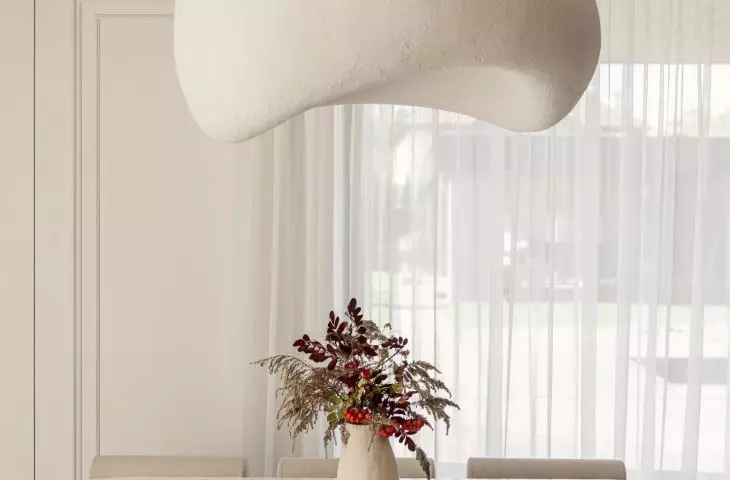
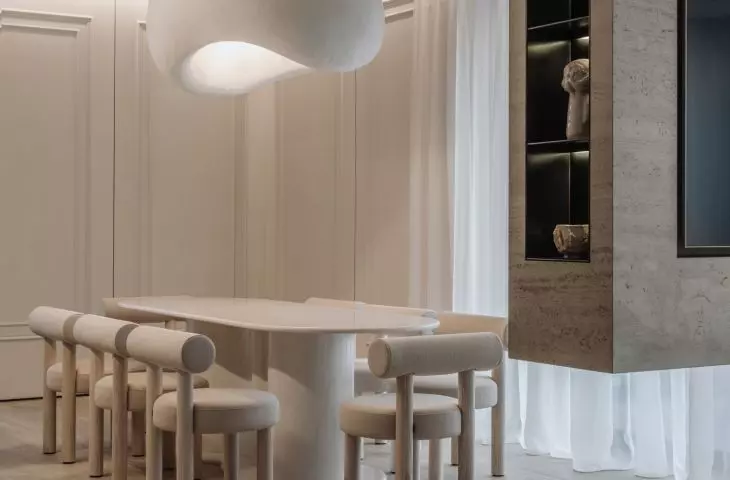
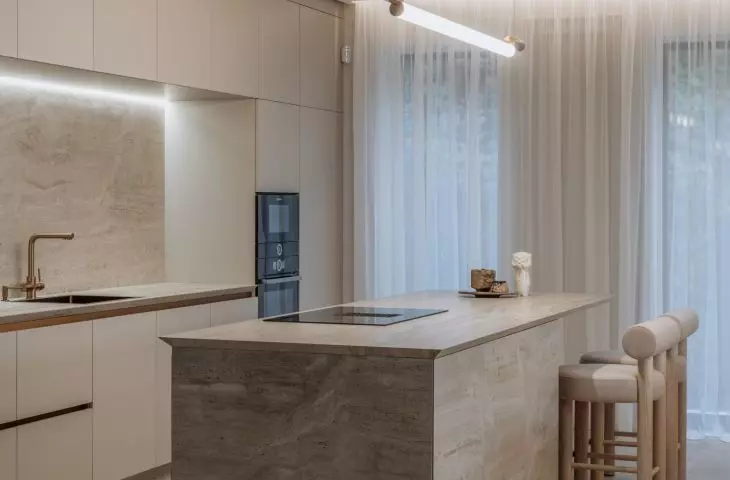
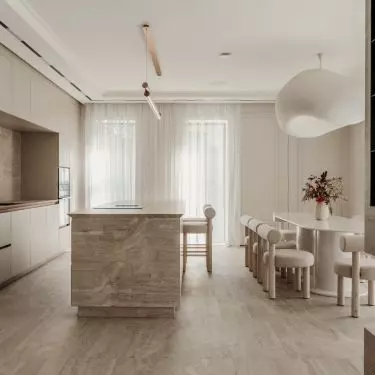
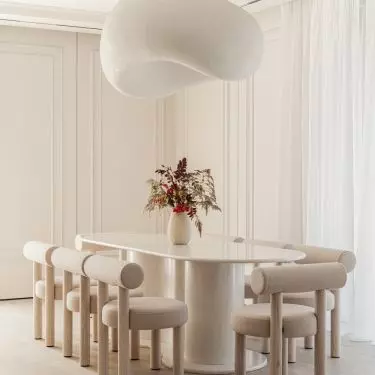
A monumental lamp resembling a cloud hangs above the stone table — ©MAKHNO Studio
A home suited to many roles
Poroda House was created for a young family whose daily life defies a single pattern. The owners are parents, business partners, public figures, creators, and hosts who love to welcome guests. So they needed both a spacious common area and spaces where they could work, relax, and enjoy some solitude. The two-story, 311 m² home was designed so that each of these needs would be adequately accommodated. The ground floor has a more open and formal character. It houses a living room connected to the kitchen, a home theater, and a bathroom. The upper floor is primarily dedicated to private spaces: the master bedroom with a walk-in closet and bathroom, a study, a child’s room, and a guest bedroom.
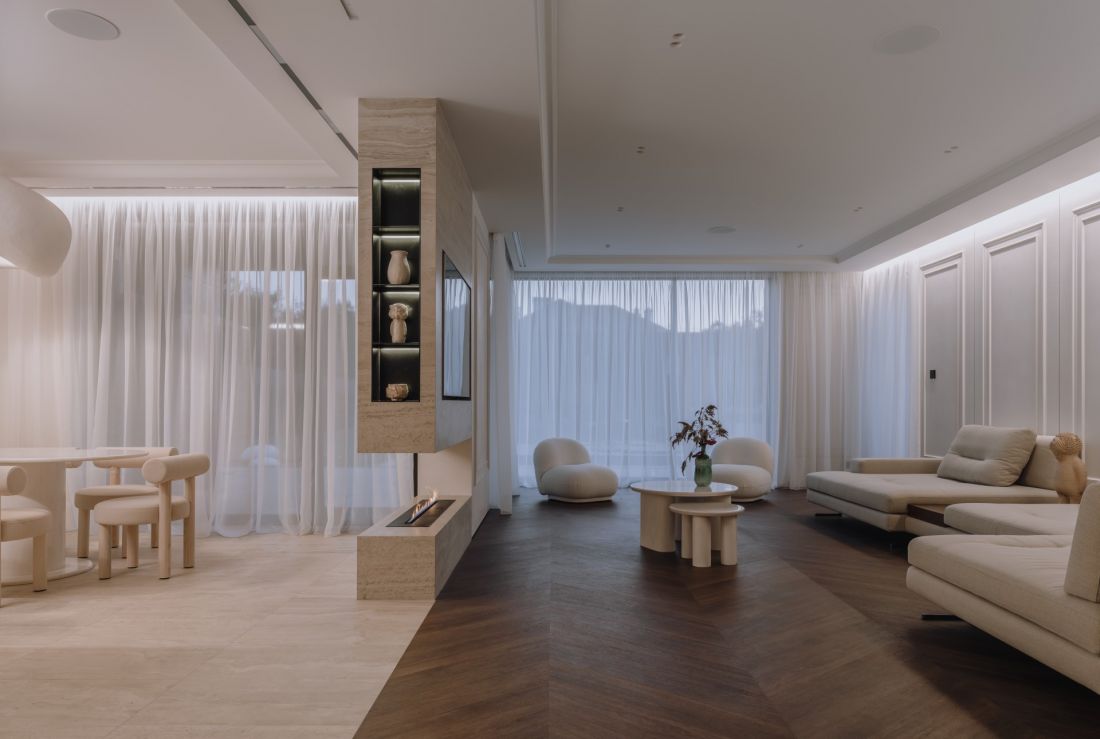
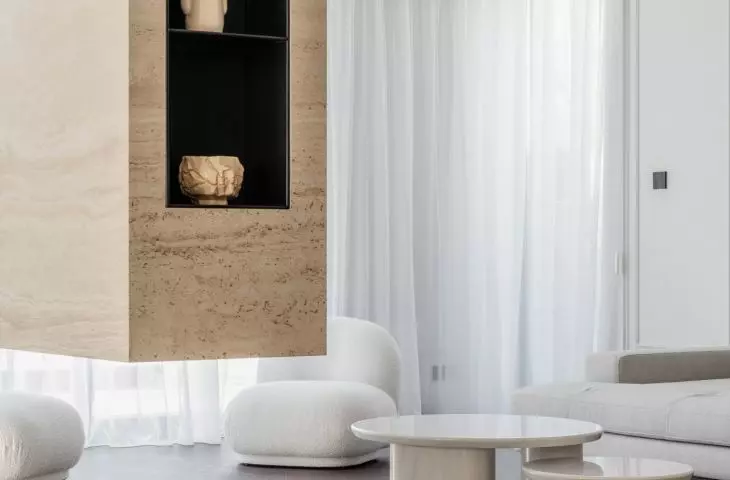
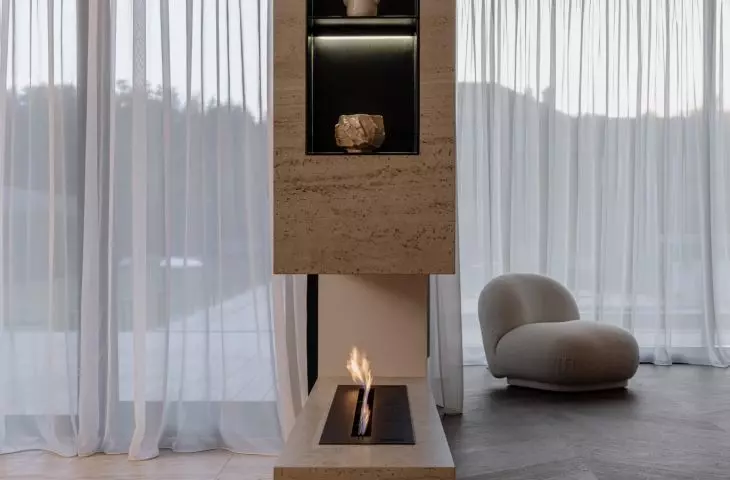
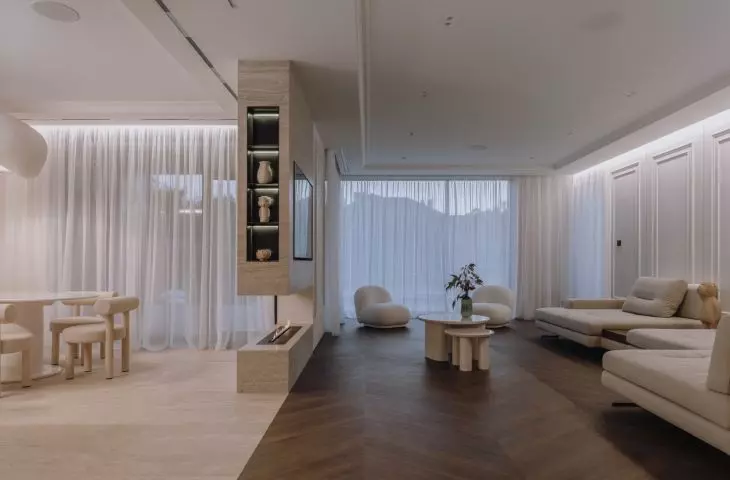
A stone structure with a biofireplace subtly marks the boundary between the living room and the dining room — ©MAKHNO Studio
Stone sets the rhythm of the ground floor
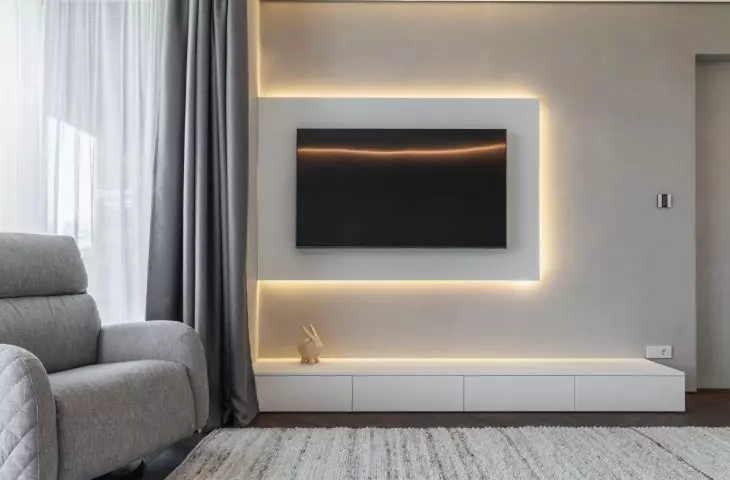
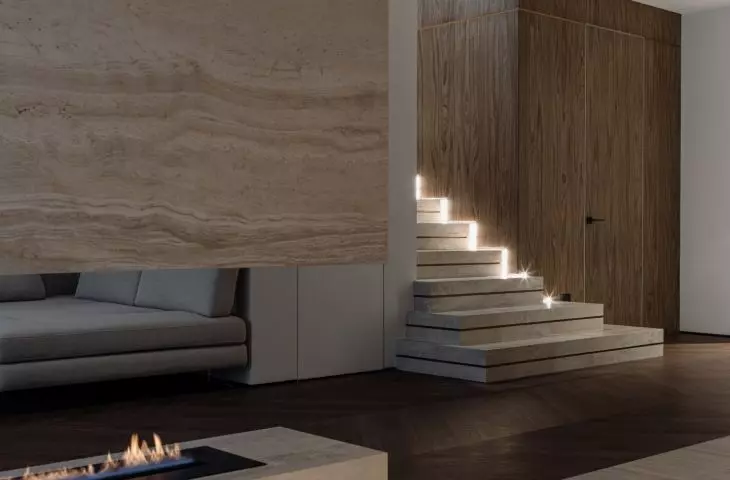
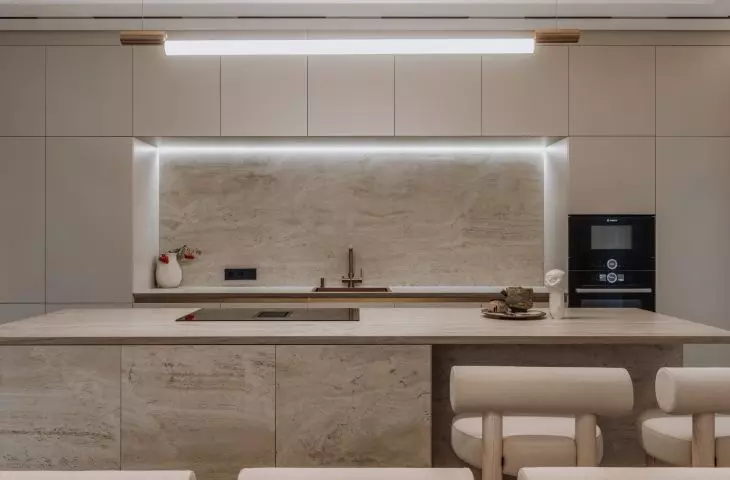
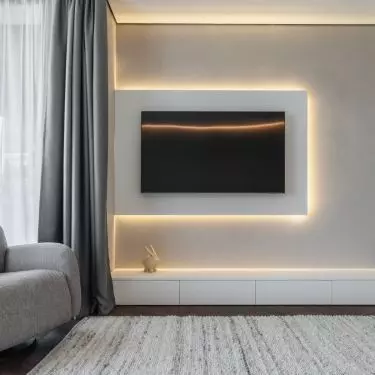
The character of the house is already evident in the bright entryway. The floor is covered with sintered quartz, and a mirror occupies nearly the entire wall. It is accompanied by a custom-designed stone console supported by a slender metal structure. It’s a minimalist composition that introduces the materials most important to the entire project: stone, glass, and metal. Behind it lies a spacious living area, flooded with light through panoramic windows. The designers divided it into a kitchen with a dining area and a living room, without, however, separating the two sections with solid walls. A sintered-stone unit housing a biofireplace and a TV serves as a symbolic boundary. This allows the fire to be viewed from the seating area, while the massive partition organizes the open interior. In the kitchen, the same material appears on the floor, the island, and in the recessed work area. The coolness of the large stone surfaces is softened by the rounded lines of the furniture and diffused light. A monumental, cloud-like lamp hangs above the white table. Its irregular form breaks up the orderly layout of the dining room and becomes the strongest accent on the ground floor.
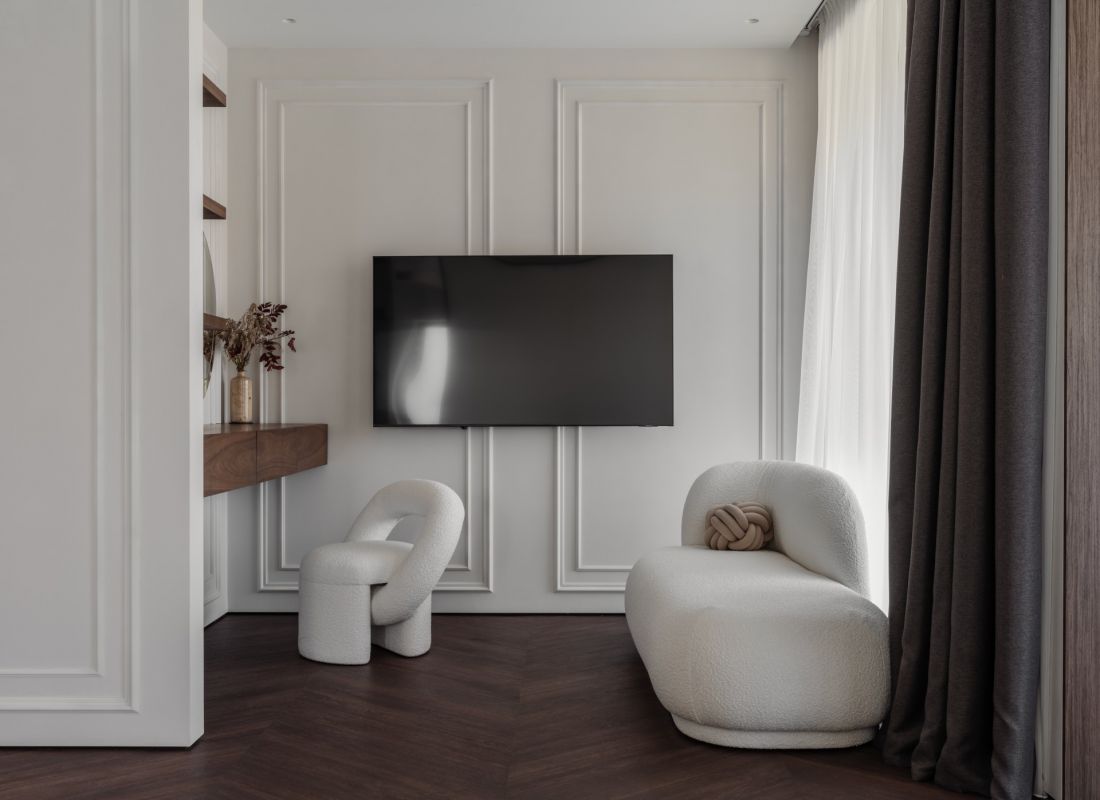
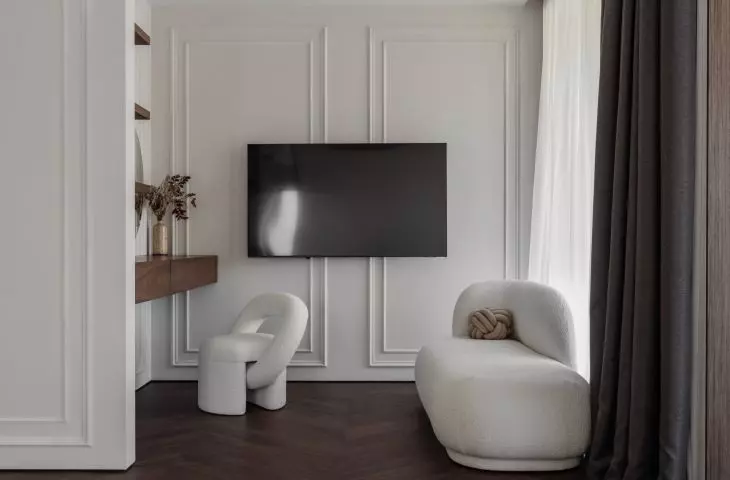
Classic stucco work provides the backdrop for the soft, rounded furniture in the bedroom — ©MAKHNO Studio
classic motifs in a simplified form
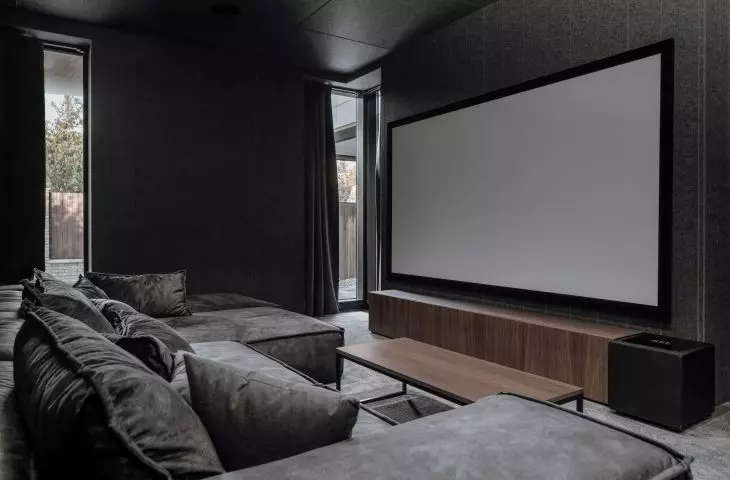
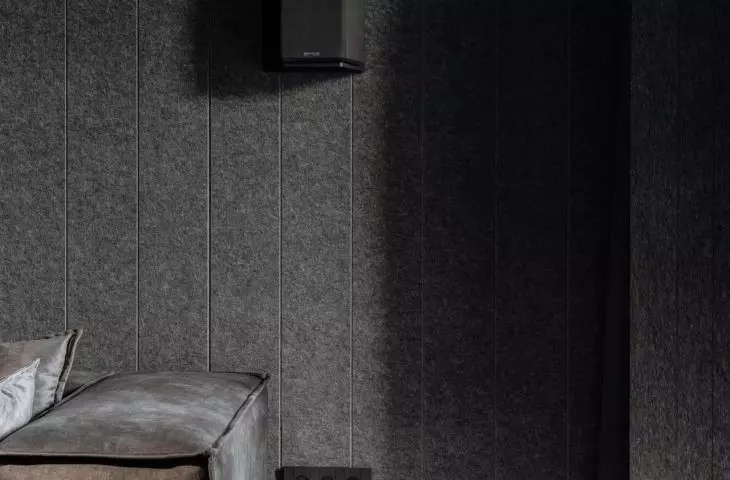
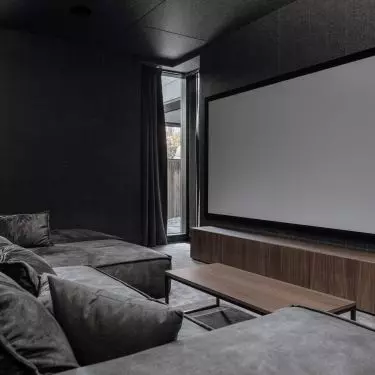
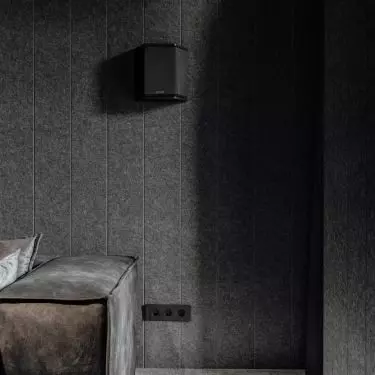
At Poroda House, classic style does not mean an accumulation of decorations. Its traces can be found in symmetry, proportions, wall divisions, and materials associated with stately interiors. Light-colored panels with delicate moldings are complemented by subtle lighting, while stone surfaces are paired with copper accents and rounded furniture. The inspirations do not point to a single, easily identifiable era. The designers freely blend references to antiquity, salon-style interiors, and the elegance of the 1930s. Rather than recreating a historical style, they translate its character into simple, contemporary forms. Thanks to this approach, the home can be both stately and comfortable for everyday use. The home theater offers a more intimate atmosphere. Soft surfaces, carpeting, and soundproofed walls and ceiling improve the acoustics, while automatic curtains allow for complete light blockout. The built-in sound system does not compete with the interior design and remains nearly invisible.
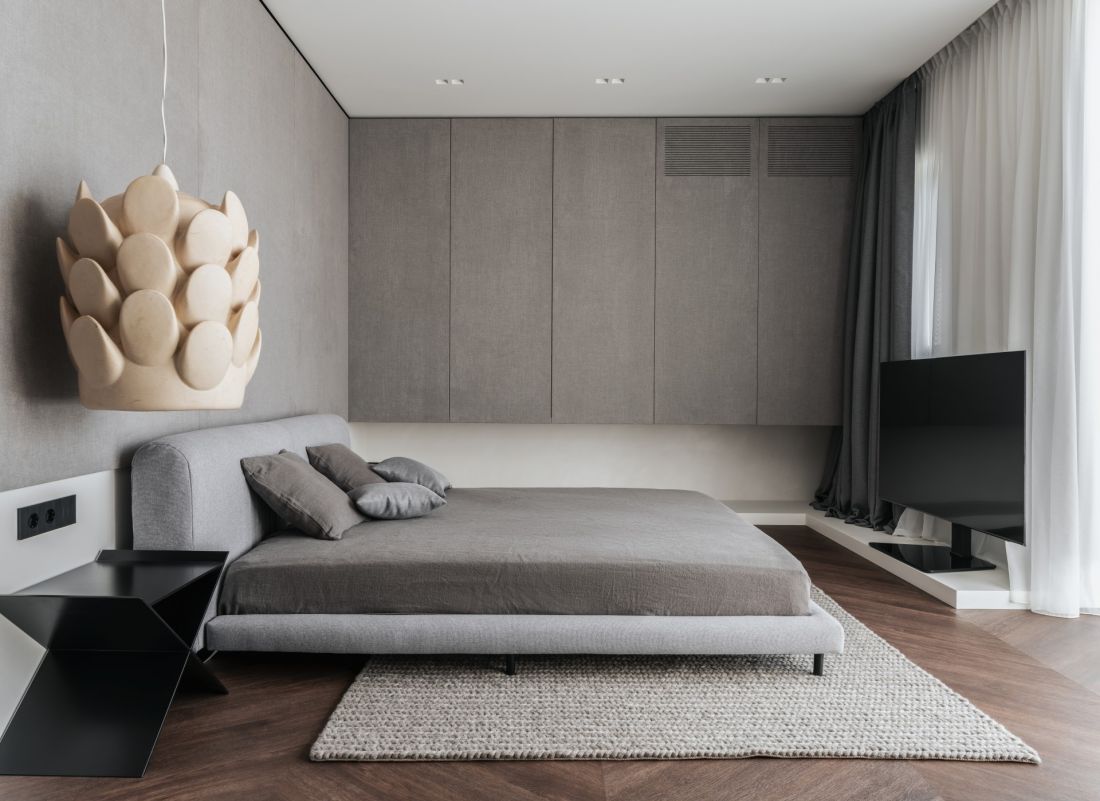
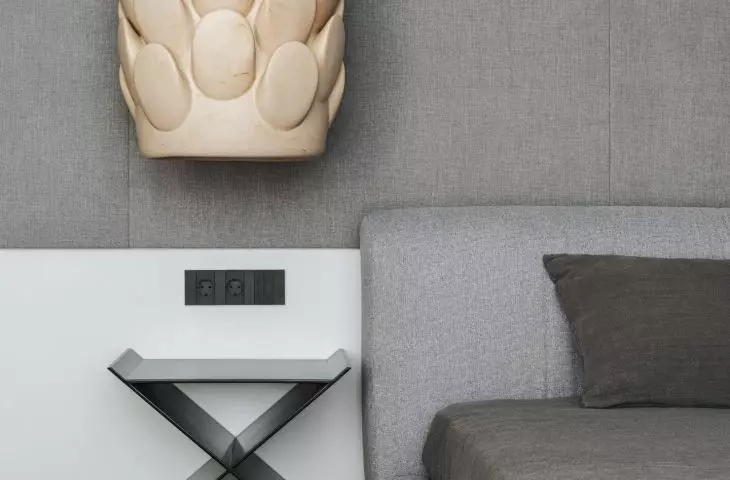
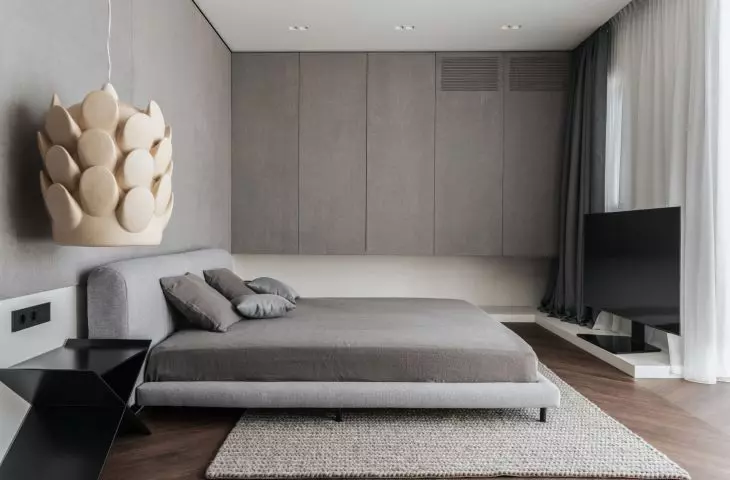
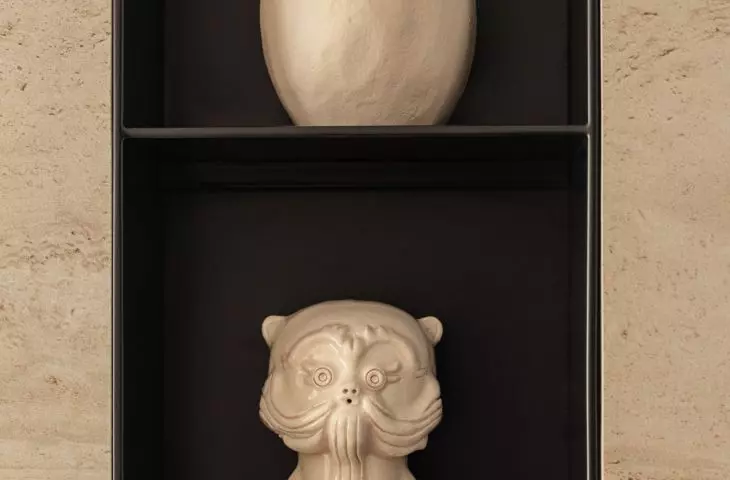
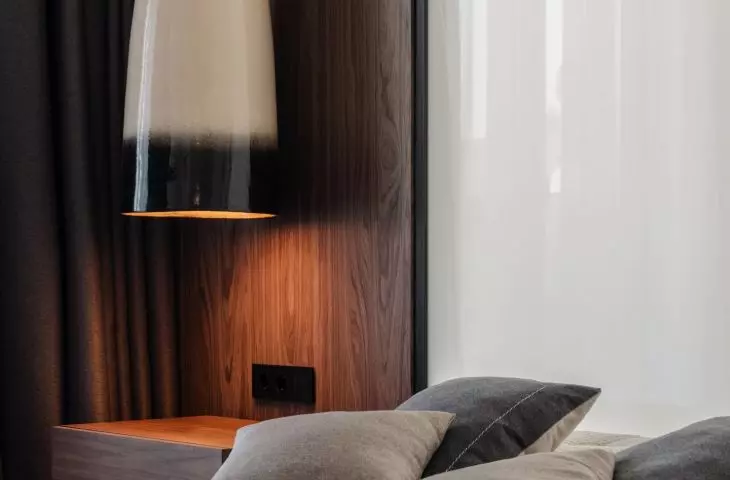
The most interesting element in the guest bedroom is a ceramic lamp with a sculptural form — ©MAKHNO Studio
a private floor overlooking the greenery
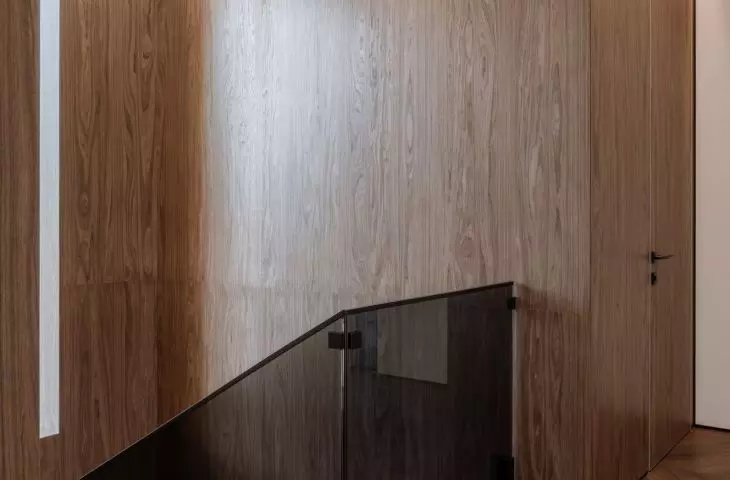
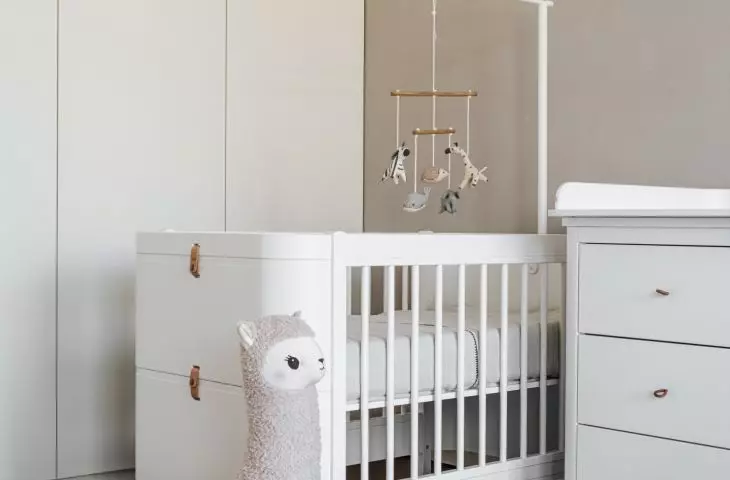
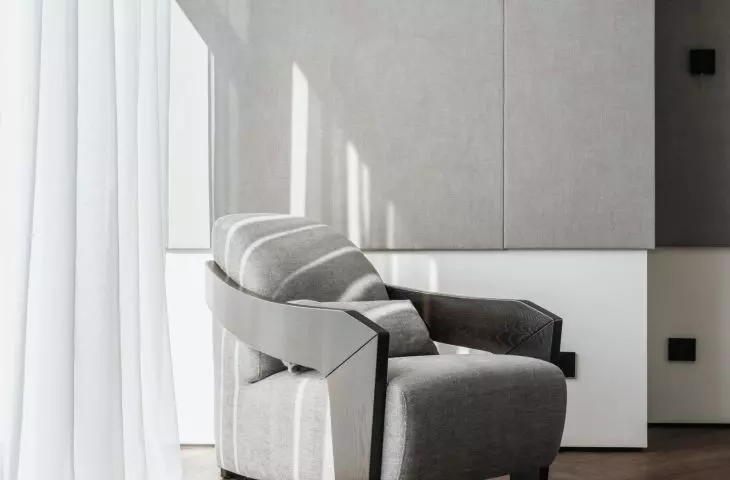
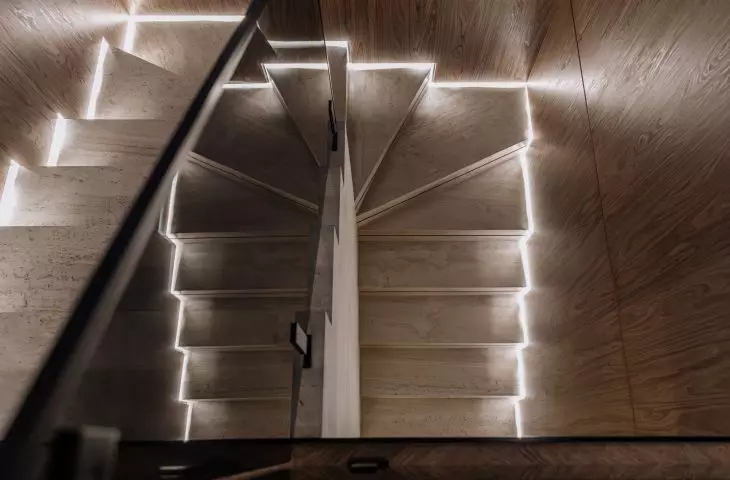
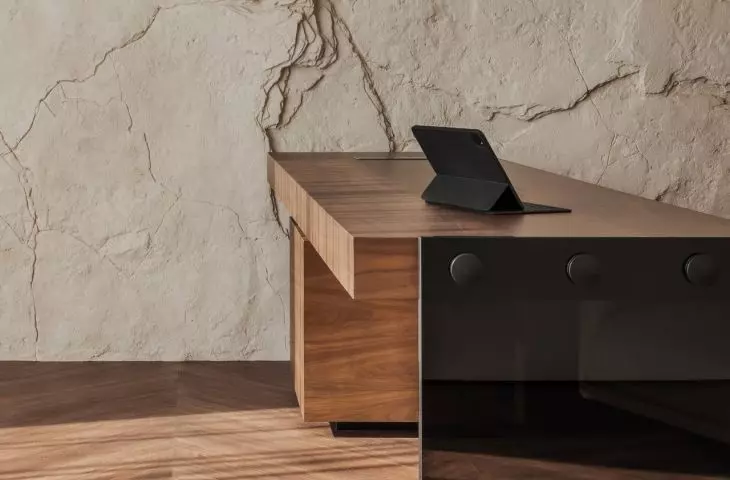
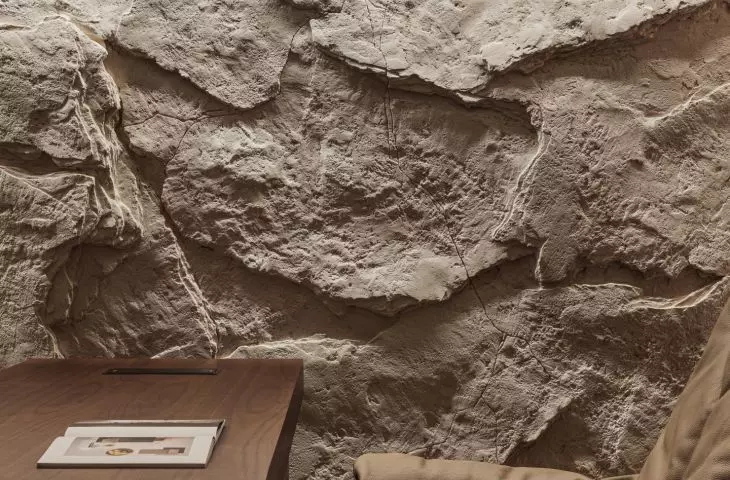
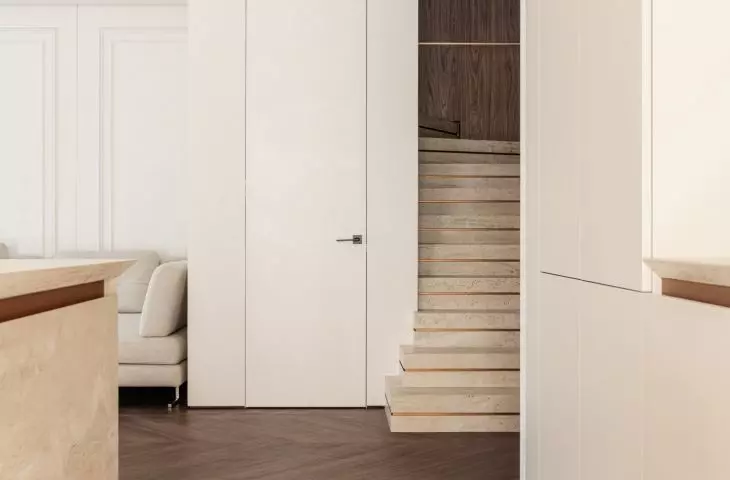
A staircase surrounded by veneered panels and copper moldings leads to the upper floor. Lighting concealed within the built-in elements emphasizes their vertical rhythm and guides the eye toward the more tranquil part of the house. In the study, a wall-to-wall window and a relief surface resembling a section of a rocky slope catch the eye. The artistic plaster is not merely a decorative backdrop. Its irregular texture brings a sense of movement to the orderly interior. The guest bedroom has been made more serene with fabric-covered panels. Gray tones balance the abundance of natural light, and the color-coordinated bed, armchairs, and built-in furniture create a cohesive, enveloping composition. The room opens directly onto the terrace. The child’s room was also designed with the daily routines of young parents in mind. It features an electric rocking chair that makes it easier to put the baby to sleep. Rather than treating this feature as a temporary addition, the designers incorporated it into the room’s permanent layout.
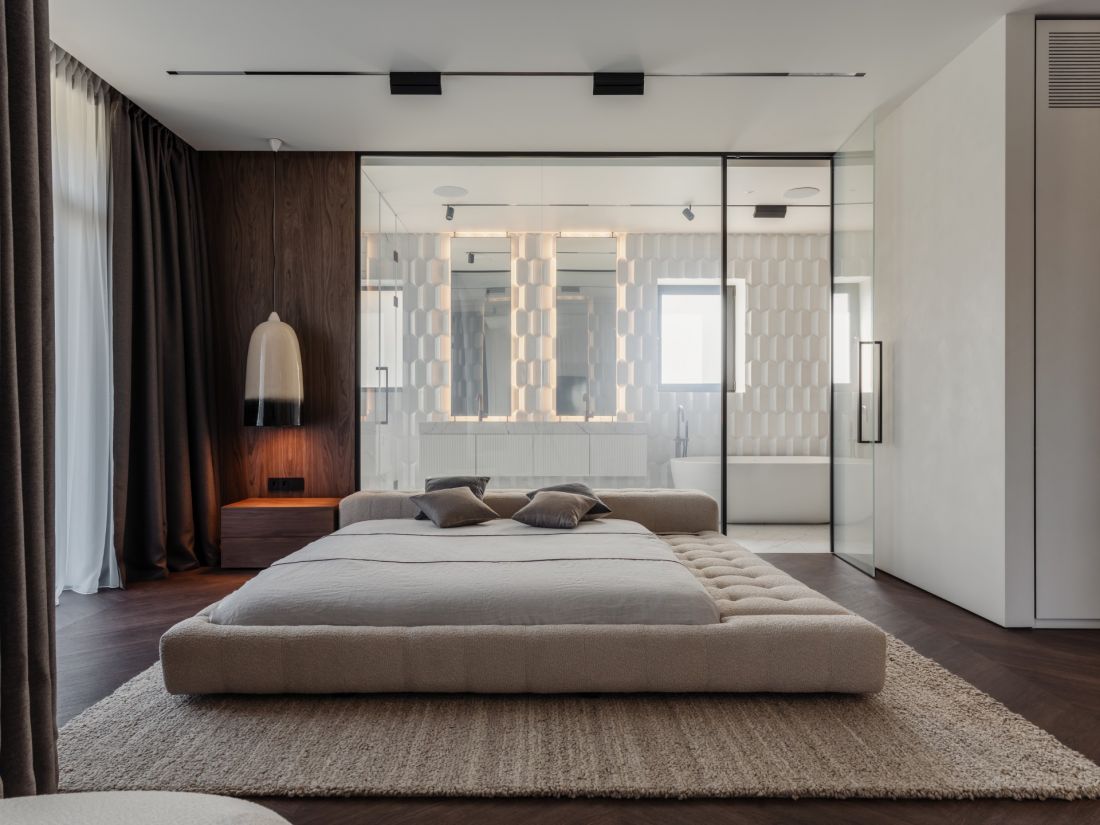
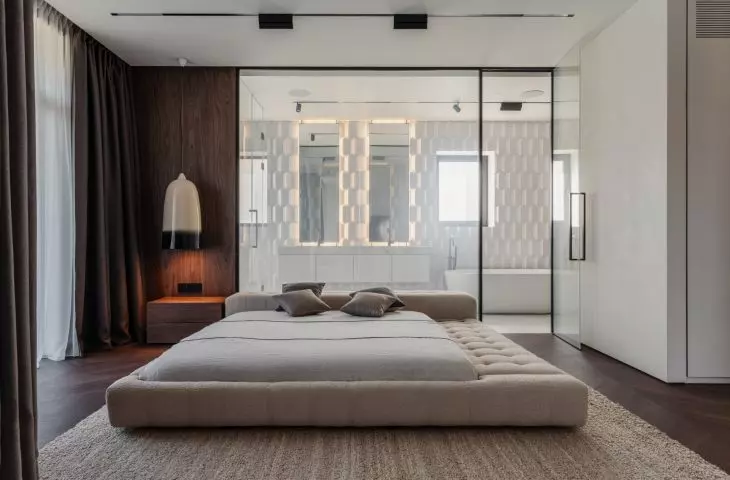
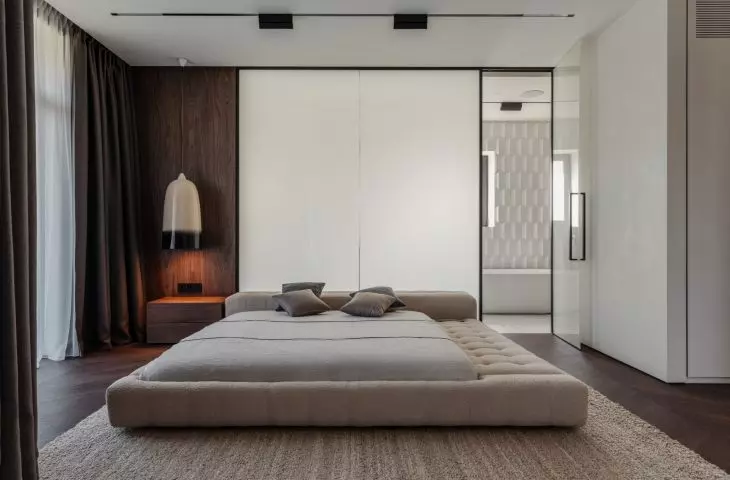
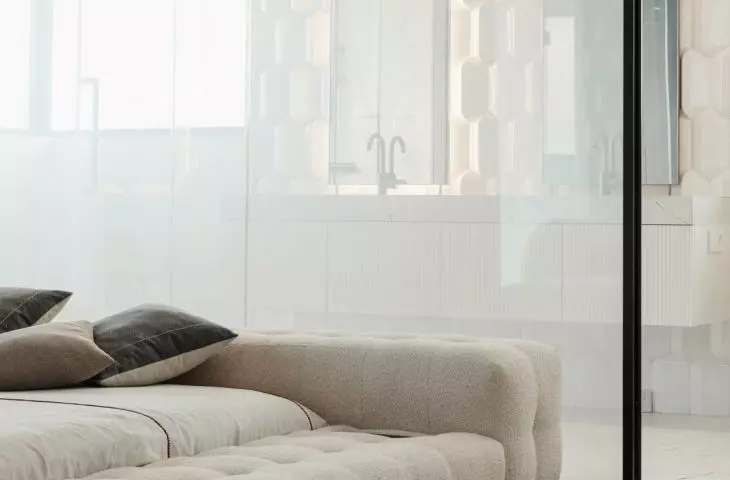
The bathroom is separated from the master bedroom by smart glass that can become transparent or frosted — ©MAKHNO Studio
a bathroom that can disappear behind frosted glass
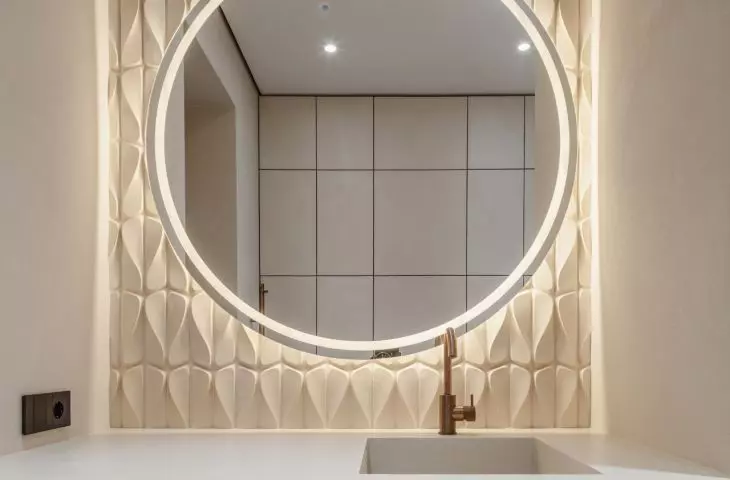
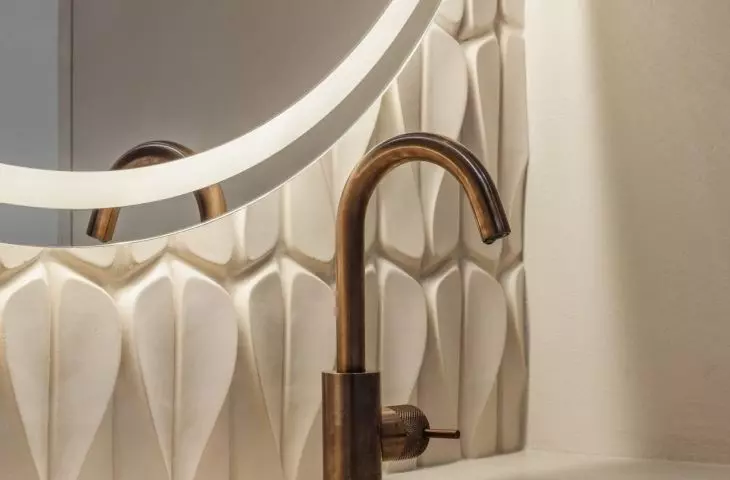
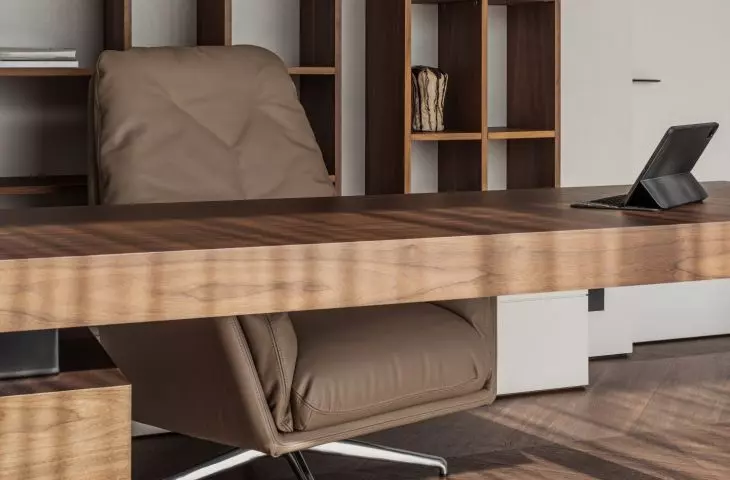
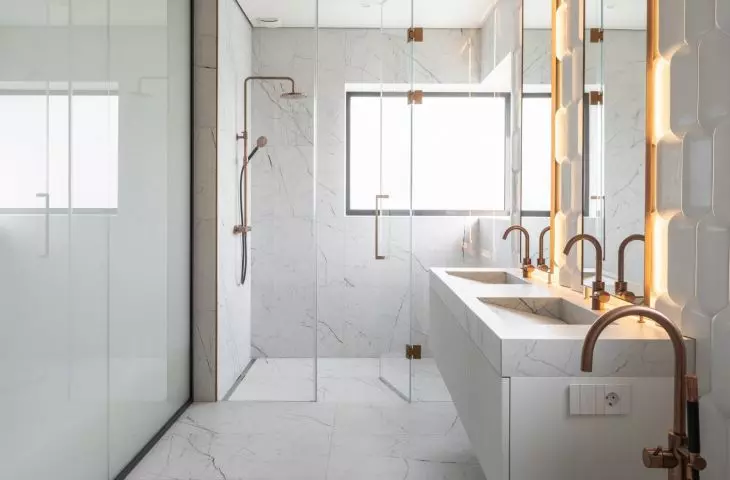
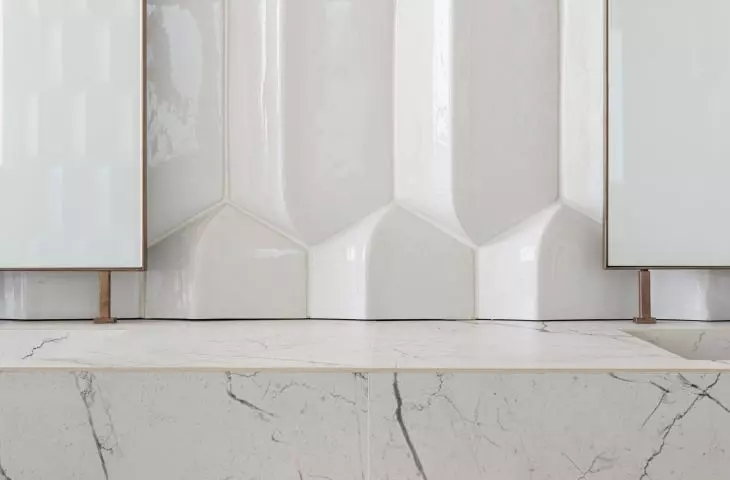
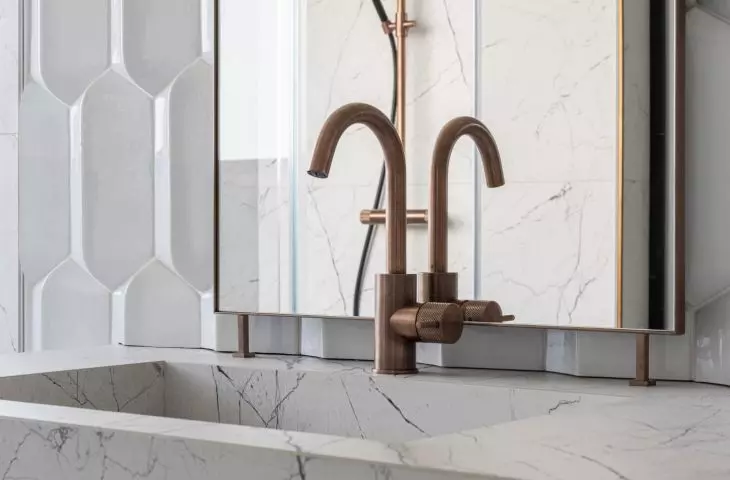
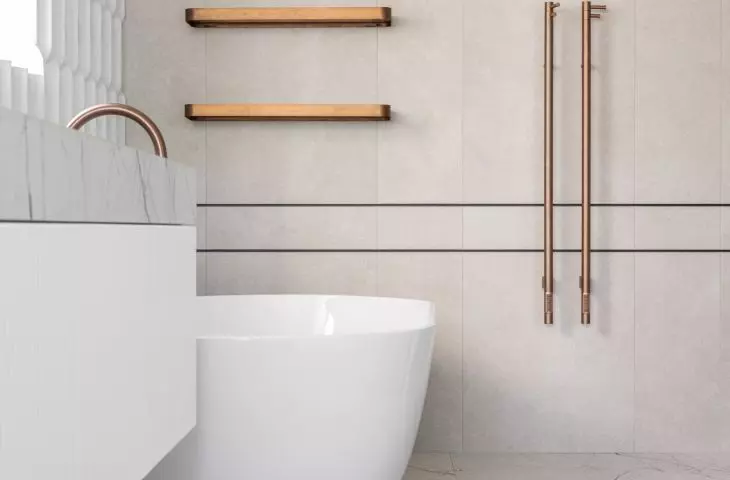
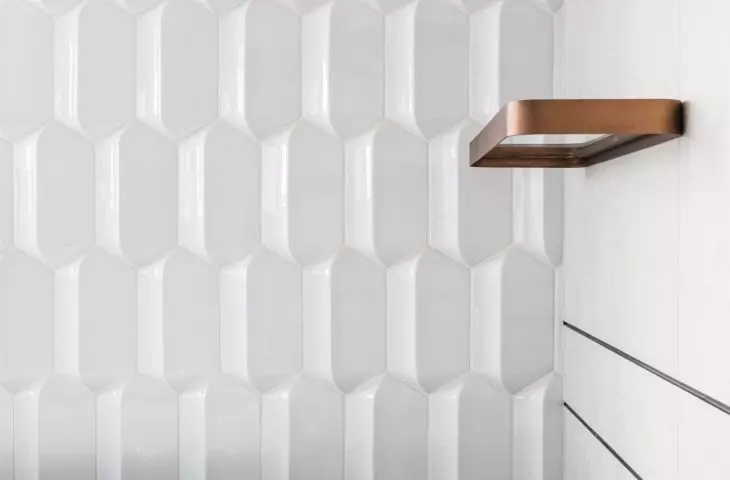
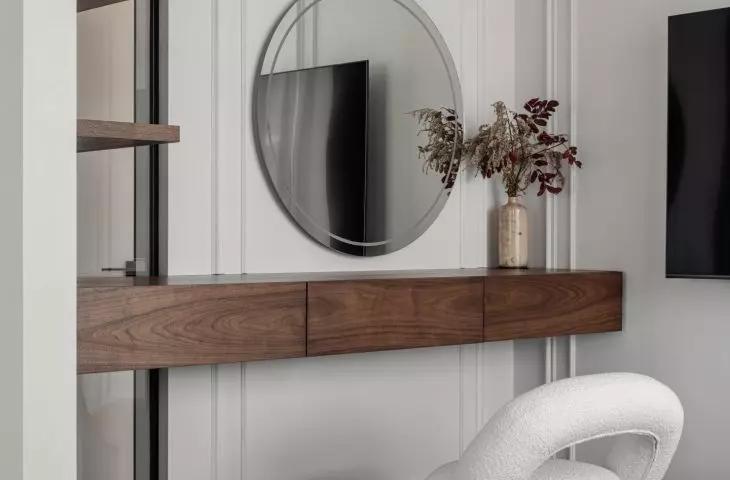
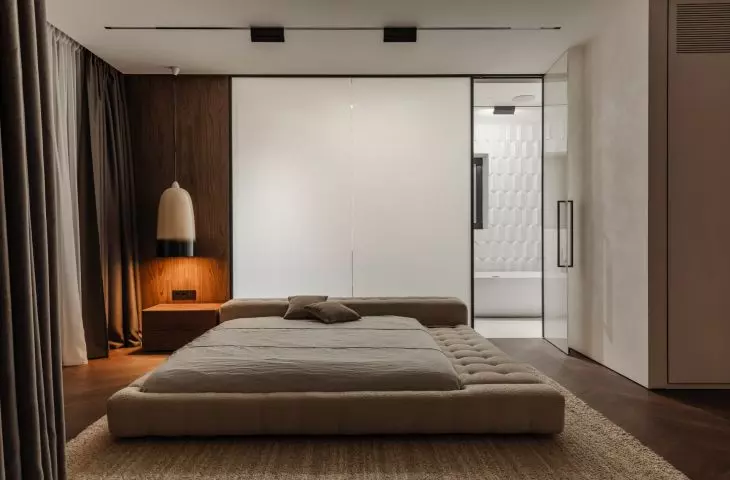
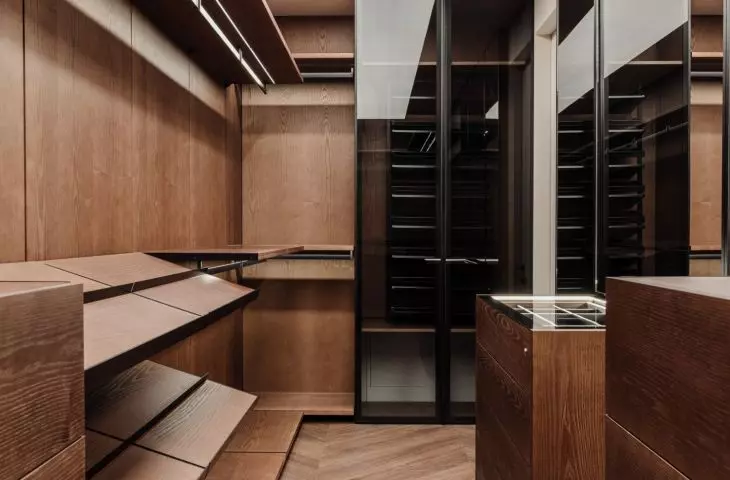
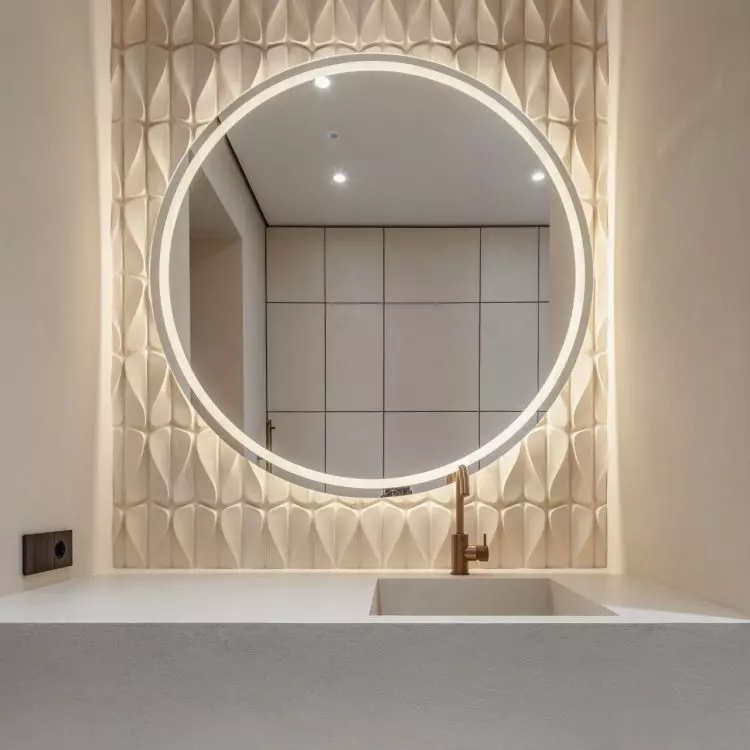
The most elaborate part of the floor is the master bedroom, divided into a relaxation area, a space for a vanity, and a bathroom. Panoramic windows open onto the terrace, while wood veneer and decorative plaster create a serene backdrop for a soft, rounded sofa. The bathroom is separated from the bedroom by smart glass that can change from clear to frosted. This solution allows both areas to open up to each other or, in a matter of seconds, provide residents with privacy. Stone slabs and ceramic tiles are paired with copper-plated fixtures. The warm sheen of the metal lends the interior elegance without detracting from its contemporary character. At the far end of the bedroom is a seating area featuring a veneered tabletop, a rounded seat, and a round mirror framed by a golden glow. Next to it is a walk-in closet made entirely of wood. The storage system features movable shelves, compartments of various sizes, and integrated lighting, allowing it to be adapted to changing needs. Poroda House does not attempt to choose between elegance and homey warmth. Stone, copper, and distinct divisions lend the interiors an elegant setting, while wood, soft fabrics, and the gentle lines of the furniture make their scale more approachable. Here, classic style is not a ready-made set of decorations, but a starting point for creating a home suited to contemporary life.