




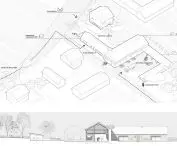

Those studying at Wydział Architektury Politechniki Warszawskiej took part in a subject devoted to architecture and village planning. The group led by Dr. Ewelina Gawell this past summer semester focused on the village of Dluzew, located southeast of Warsaw.
There are regions in Poland that architects rarely visit for professional purposes - places where the art of building has grown out of the experiences of past generations, where rationalism and function dominate, intertwined with the free, uninhibited sense of aesthetics of their inhabitants, she
- is told by Dr. Eng. arch. Ewelina Gawell.
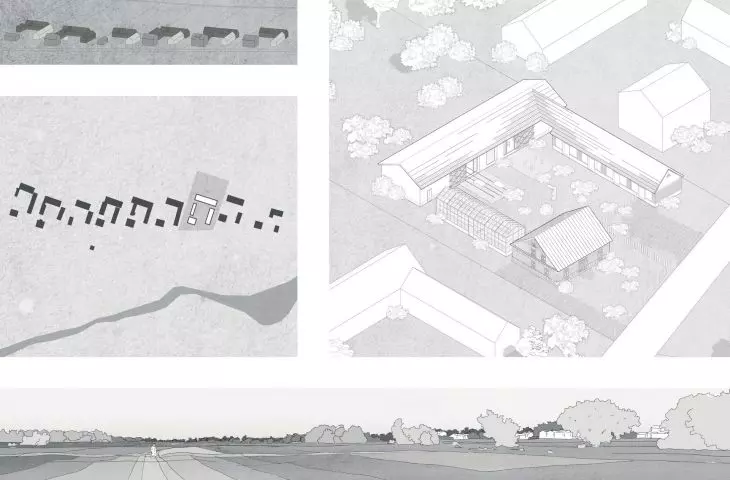
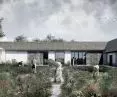
Dluzew is a village located in the valley of the Świder River. It features a historic manor house of Stanislaw Dluzewski from the early 20th century. Characteristic of Dluzew's buildings are homesteads with a repetitive layout, barn module and brick detail. The task of the students during the first stage of their work was to make an inventory of the village and present their vision of it in 30-50 years.
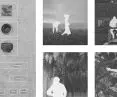
The students, as always, did not disappoint - they not only provided new information about the local community and inspiring insights, but also created interesting scenarios for the future of Dluzew. Among those identified as essential for the development of the village were a return to the sources - history, identity, traditions, local raw materials, etc., and permaculture understood both in the context of the municipality/village, as well as individual homesteads. Pro-environmental aspects shone through clearly in the ideas, conditioning their reality. According to the students' ideas, the agriculture of the future is based on respect for nature, community cooperation and the pursuit of a circular economy
- Ewelina Gawell adds.
Ceramiżew pottery and mosaic farm in Dłużew
proj.: Zosia Kaziród, Natalia Bober and Wiktor Osewski
attachment to the land
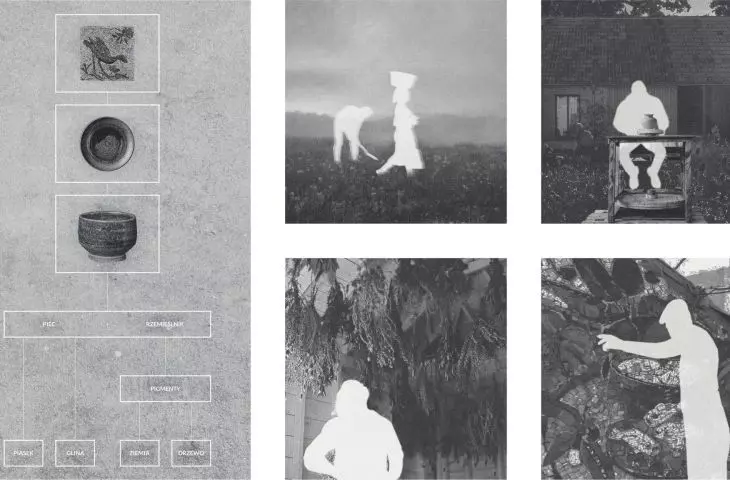
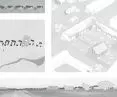
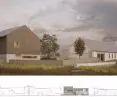
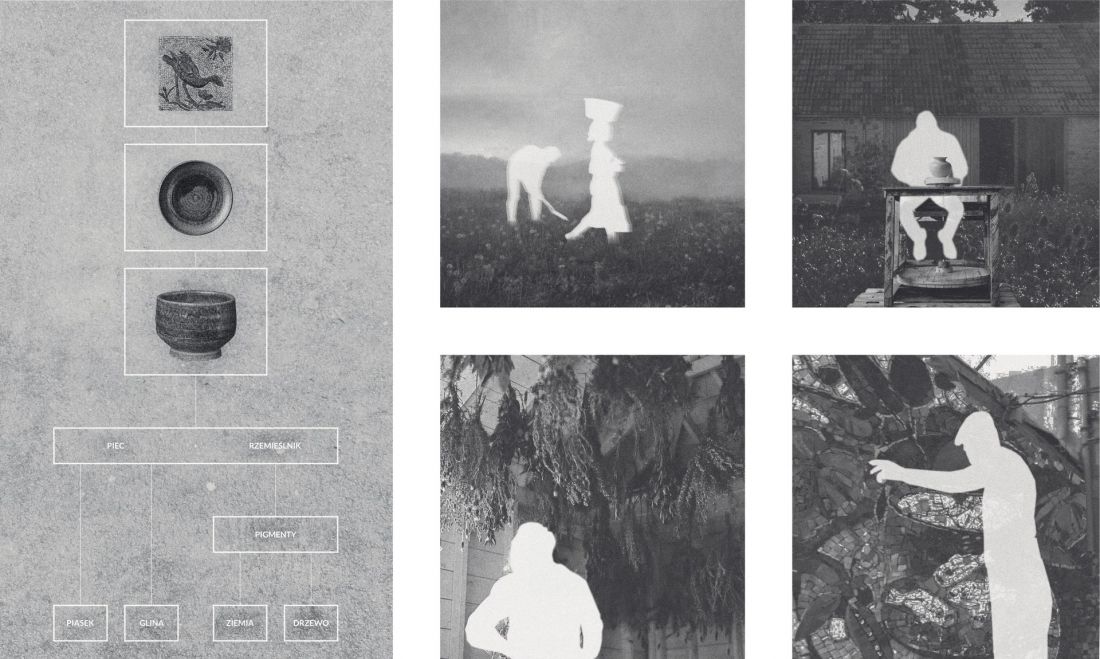
A group composed of Zosia Kaziród, Natalia Bober and Wiktor Osewski created a project for a pottery and mosaic homestead located in Dluzew. The work was inspired by the land - the way it is cultivated and the development of agriculture and services that could be used by artists visiting the village.
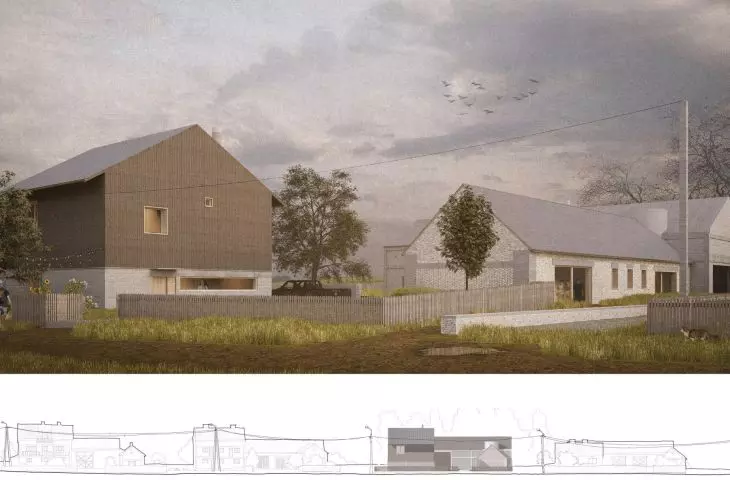
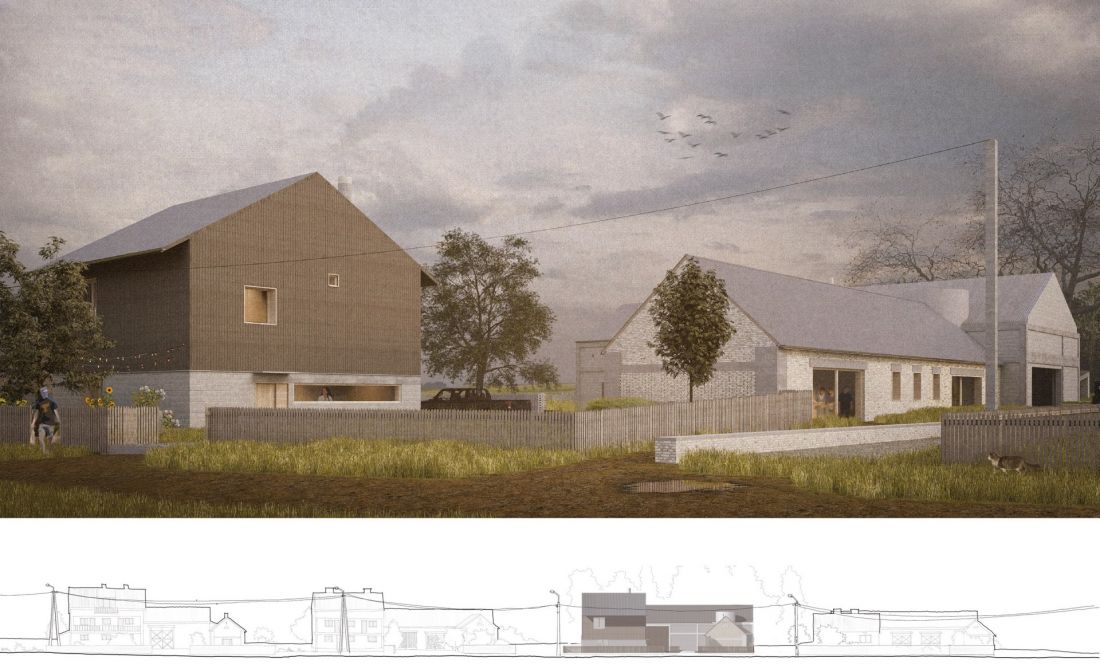
The building is a continuation of the characteristic layouts in the village and fits harmoniously into its context. At the same time, the designed homestead is equipped with the necessary technology to produce pottery. The facility also serves a commercial function.
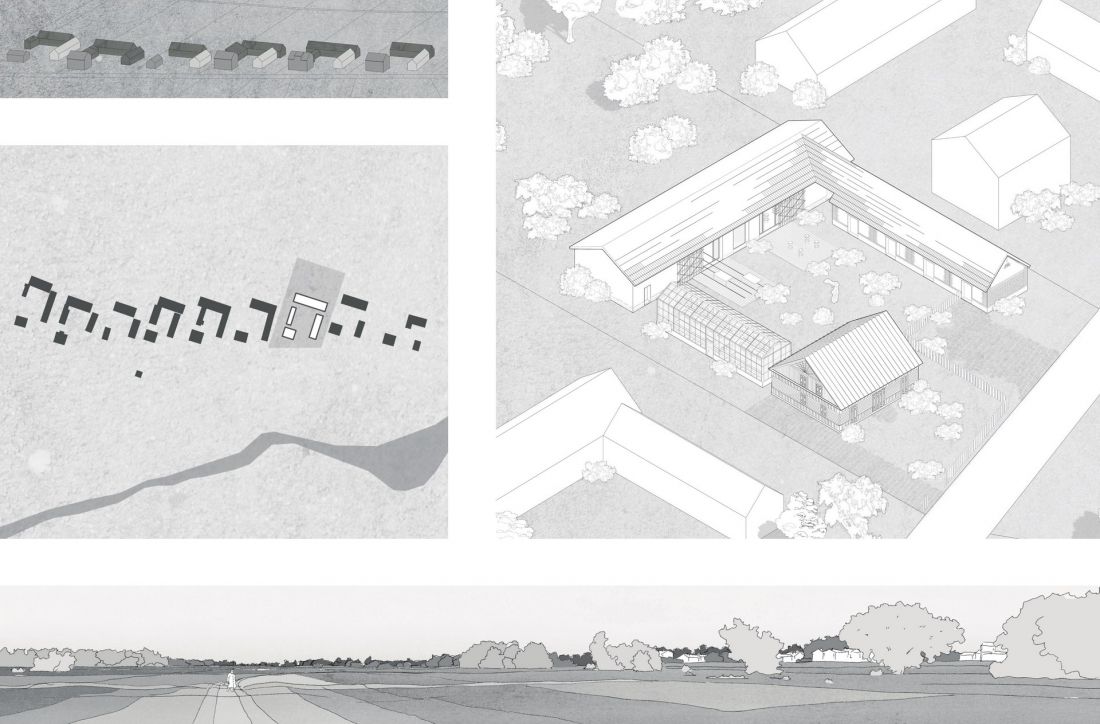
Ceramizev - pottery and mosaic homestead in Dluzhev
designed by Zosia Kaziród, Natalia Bober and Wiktor Osewski.
In addition, the development area is planned to grow plants from which natural dyes can be extracted to decorate products.
Design that respects the local context can help build social ties, strengthen the sense of belonging and create spaces that will be attractive to both residents and visitors. In this way, the countryside can find its own authentic voice, which is a real answer to the problem of urban "sprawl"
- comment the authors.
The group worked under the direction of Dr. Eng. arch. Ewelina Gawell.
Developing regional resilience
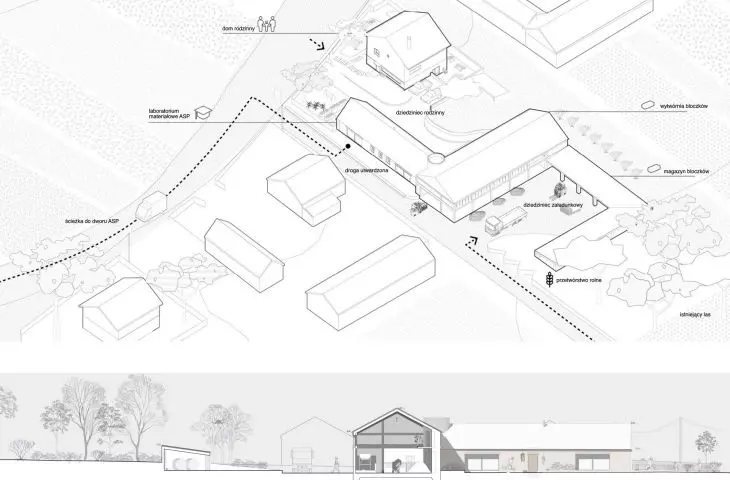
Another participant in the subject, Bartlomiej Glomski, developed a business idea for the rural areas studied. The concept of Sustainable Compressed Earth Block (CEB) Plants is based on the principles of a circular economy and regenerative design.
The concept of Sustainable Compressed Earth Block (CEB) Plants
proj.: Bartlomiej Glomski
In his work, the author combined low-carbon technologies and low-tech construction with contemporary design. In his concept, active community participation is also extremely important.
The facility would serve a commercial function focused on the production of rammed earth blocks. In addition, it would also become a place for experimentation, education and exchange of experiences.
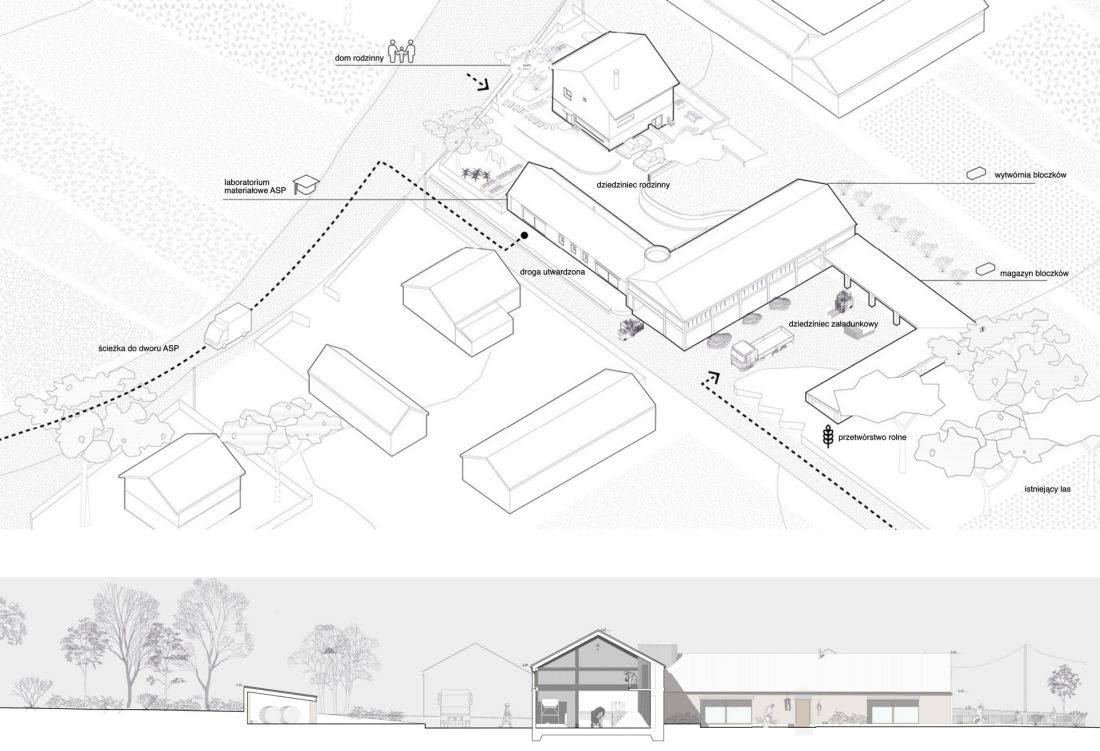
Concept of Sustainable Compressed Earth Block (CEB) Plants
proj.: Bartlomiej Glomski
The project aims to foster regional resilience, as well as strengthen the community, which cultivates a deeper connection to the place where they live through skill-sharing and design.
Today, as the landscape of the Mazovian countryside is increasingly supplemented by directory houses, there is a particular need for ordering activities that are embedded in the overall context of a place - ones that restore legibility to the landscape and support the construction of cultural identity. Drawing on lost traditions, shaped over centuries in the region, is just as important as fitting into the existing situation - so sometimes it's worth looking around and "borrowing" from a neighbor a successful patent for a fence, a bench or a roof eave detail
- adds Bartłomiej Glomski.
His project was coordinated by Dr. Justyna Zdunek-Wielgołaska and Aleksandra Lewicka.
Dairy homesteads and an ostrich farm were also among the projects focused on the village of Dluzew.