

Obama Presidential Center,
design: Tod Williams Billie Tsien Architects
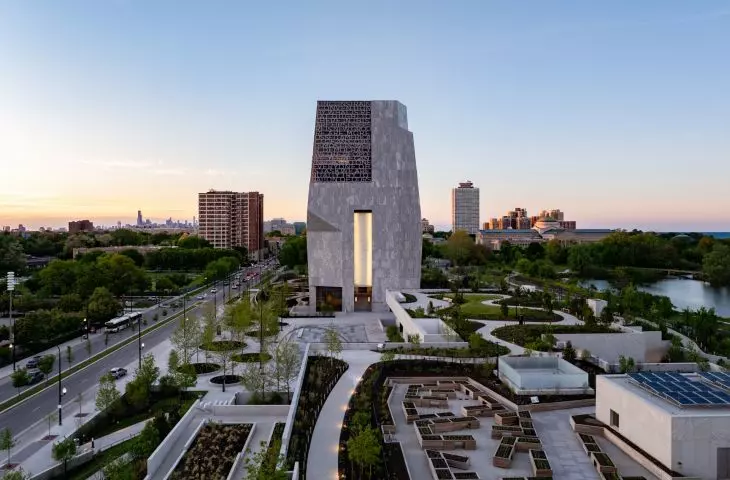
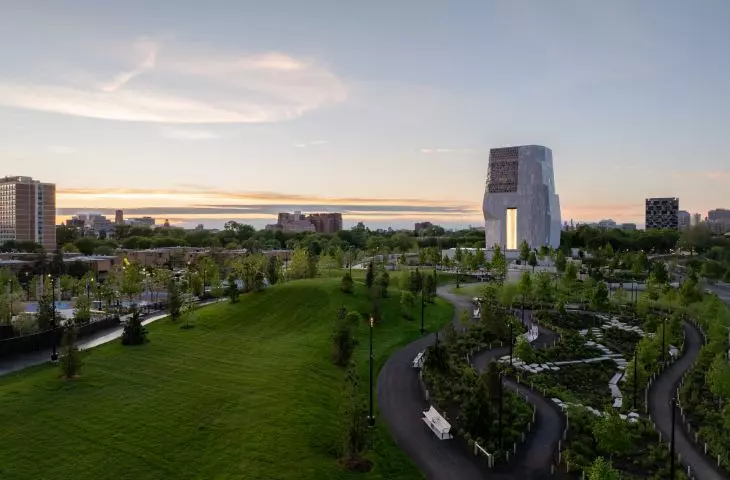
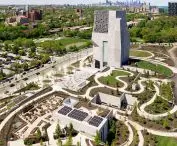
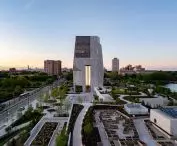
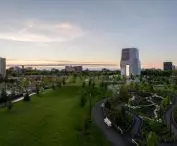
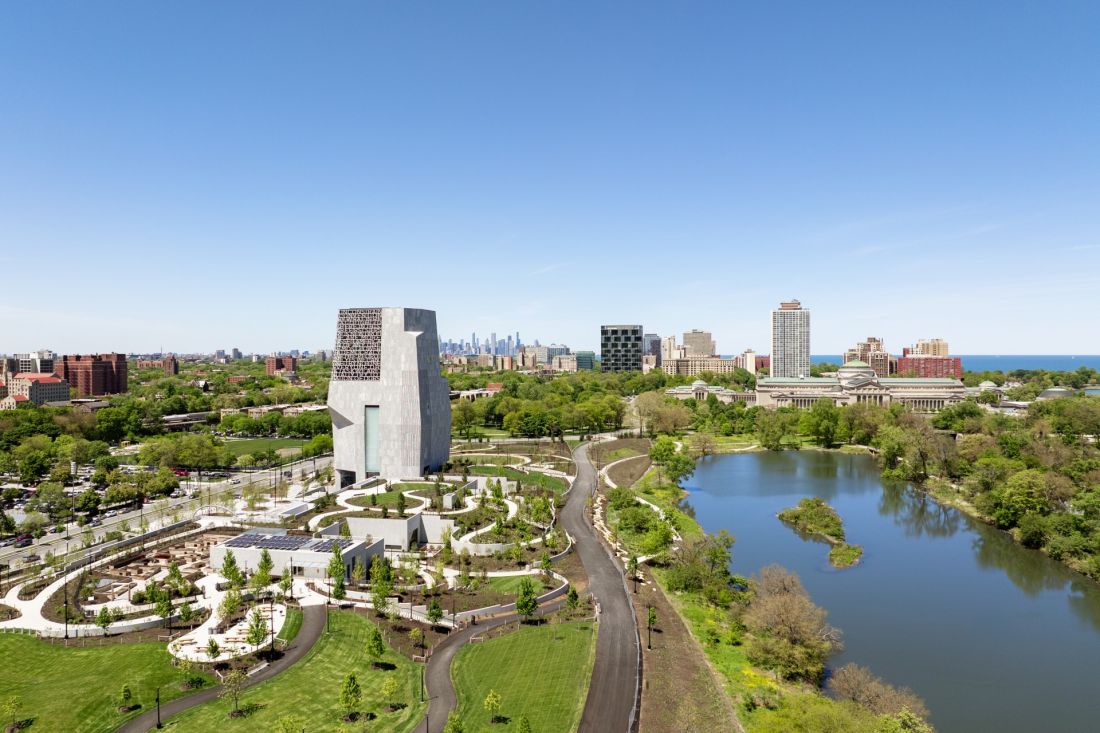
The Obama Presidential Center in Chicago rises from the greenery of Jackson Park as a new gathering place for the South Side. Tod Williams Billie Tsien Architects did not confine the story of Barack and Michelle Obama to a traditional museum, but rather spread it across the entire campus: a library, a forum, gardens, a plaza, public art, and sports facilities. It’s a project you can explore, but also simply use—walk through it on your way through the park, stop at the plaza, visit the library, or view the art without a ticket.
The Obama Presidential Center in Chicago — © The Obama Foundation
The park as a starting point
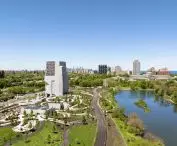
The Obama Presidential Center opened to the public in Jackson Park, a historic park in the southern part of Chicago. The official opening weekend was planned as an open event, featuring music, family activities, and outdoor events, which clearly illustrates the ambition of the entire project: from the outset, the center was intended to function not only as an institution but also as a public space. This premise stems from a location that is far from a neutral backdrop for architecture. Jackson Park is located on the South Side—a part of Chicago deeply connected to the life stories of Barack and Michelle Obama, but also to the debate over inequality, gentrification, and residents’ right to remain in their neighborhood. That is why the Obama Presidential Center was, from the very beginning, more than just an architectural project. It was meant to become a symbol of civic engagement, but at the same time, it found itself at the center of a dispute over who truly benefits from major public investments. For months, local media have been reporting on the concerns of residents of Woodlawn and the Jackson Park area regarding rising living costs, short-term rentals, and pressure on the housing market. That is precisely why the most interesting aspect of this project is not the combination of a museum, library, plaza, and gardens itself. What matters more is whether such a large institution can truly work with the city—rather than merely talking about the community from a safe distance.
The Obama Presidential Center in Chicago — © The Obama Foundation
A stone tower amid greenery
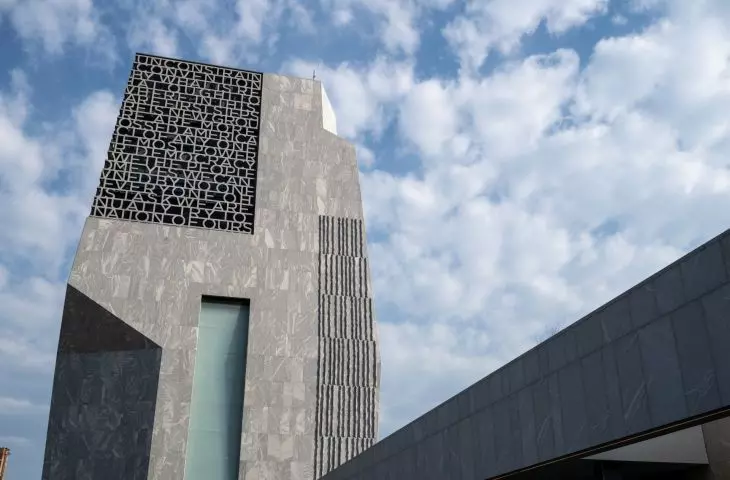
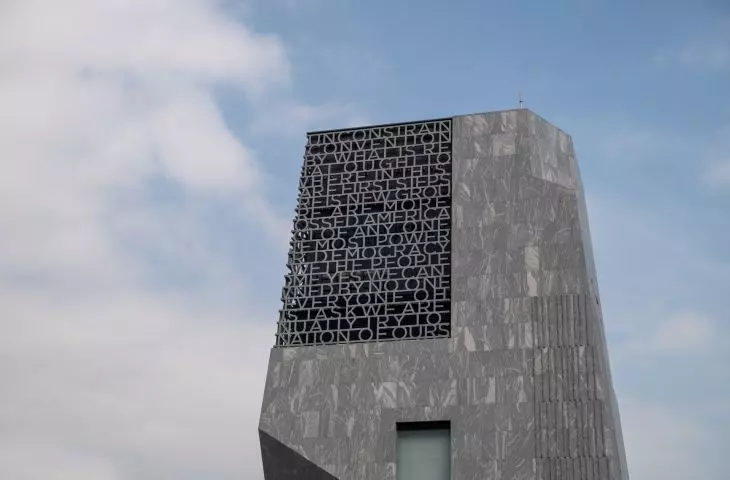
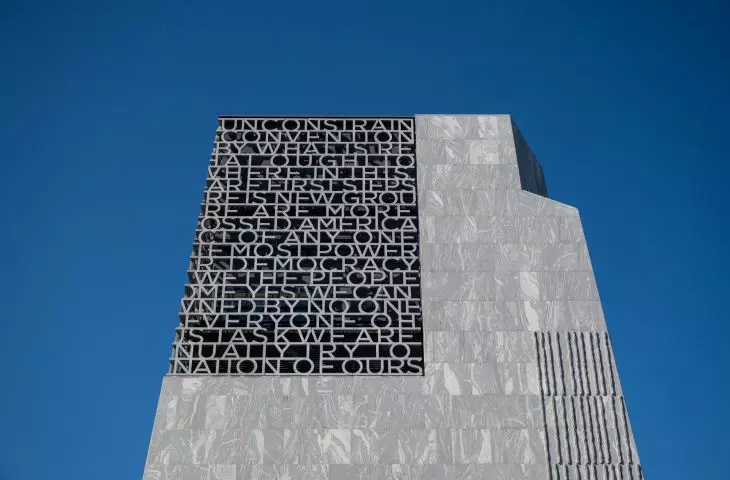
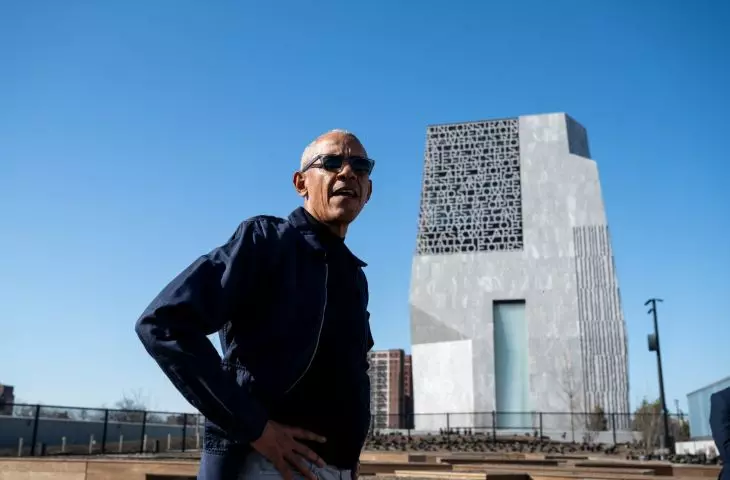
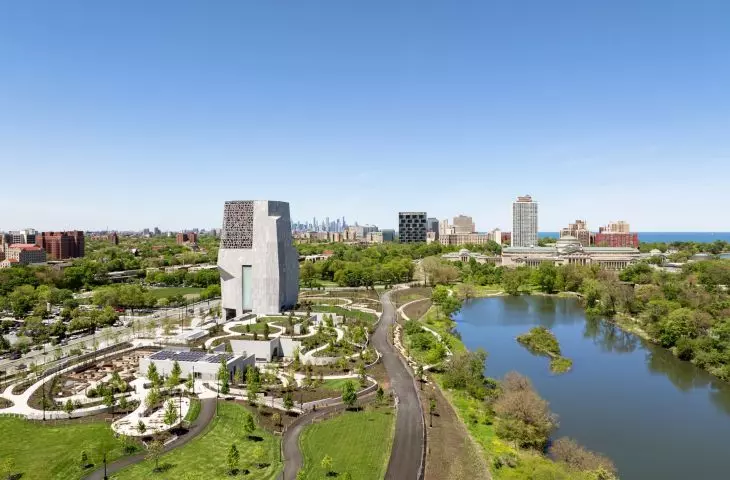
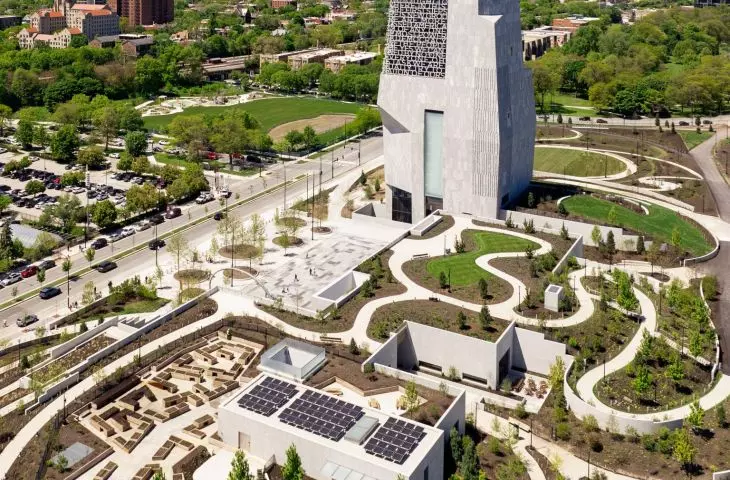
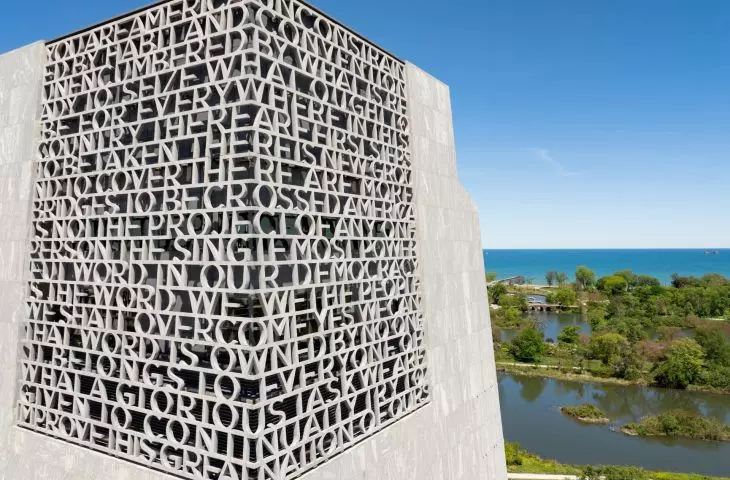
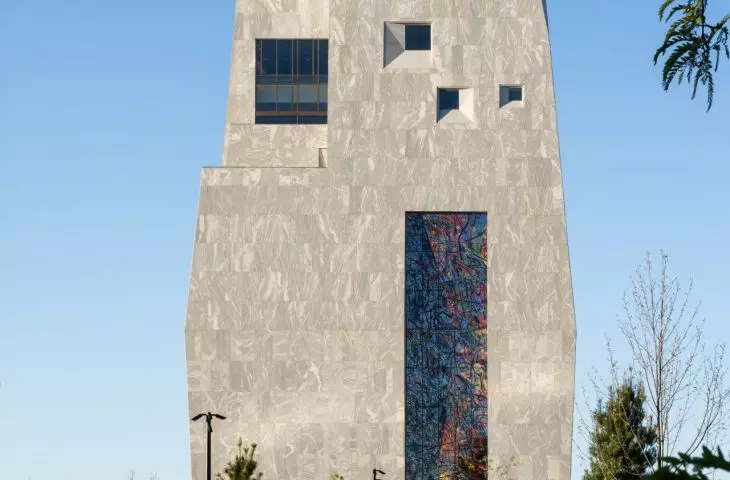
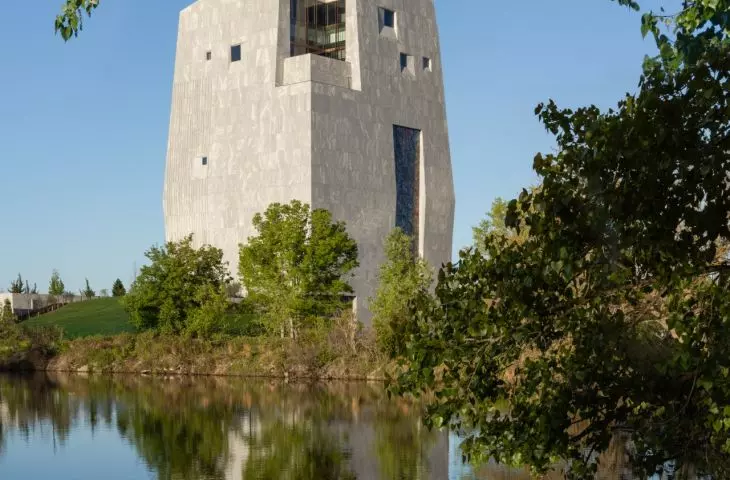
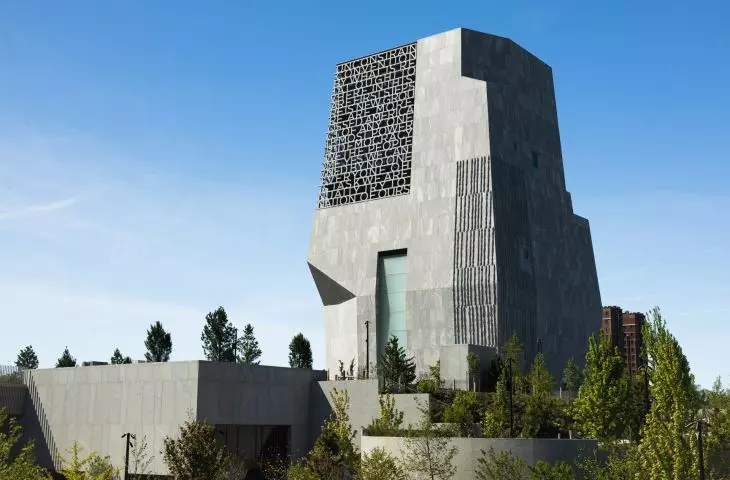
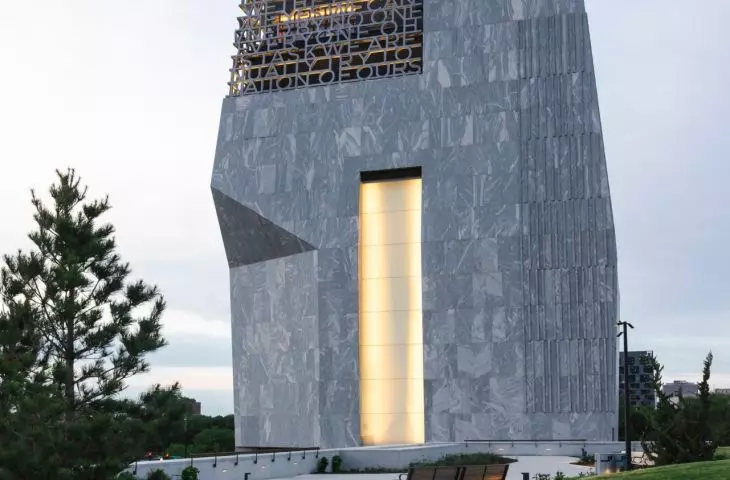
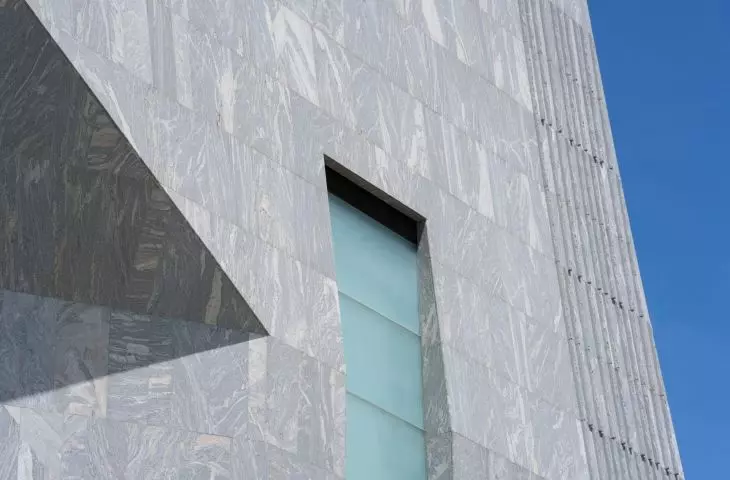
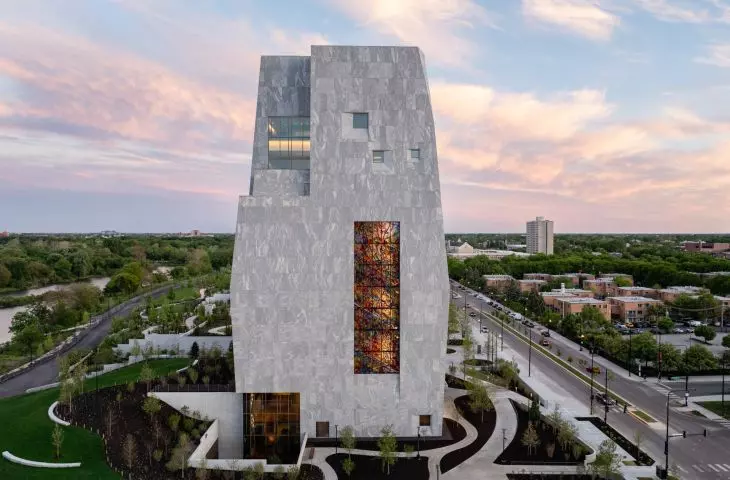
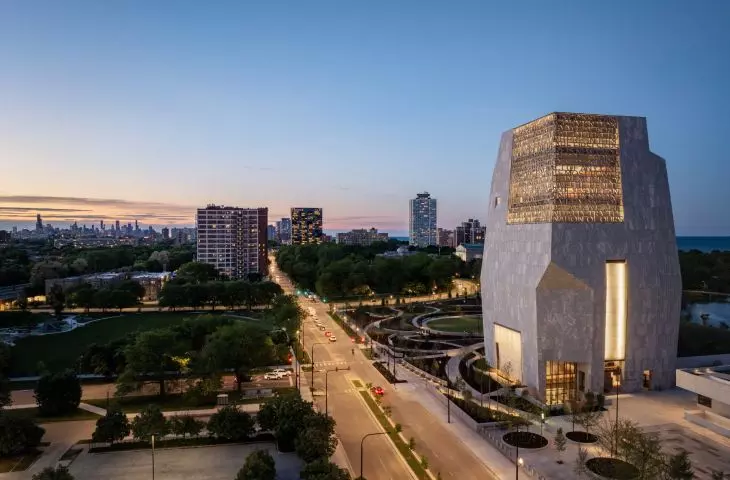
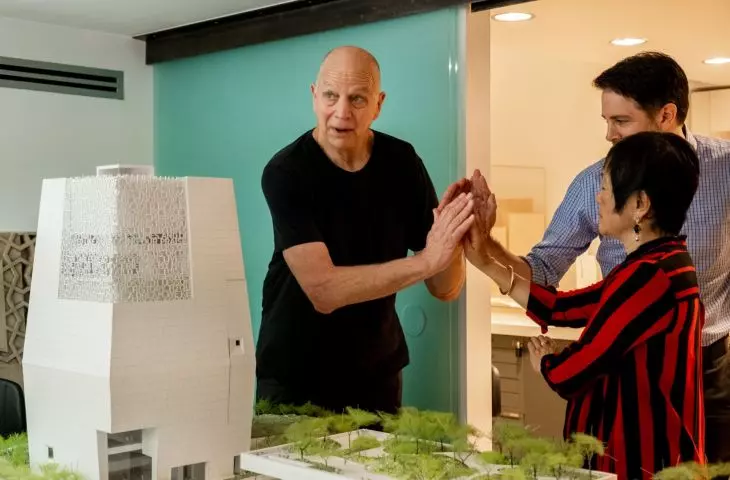
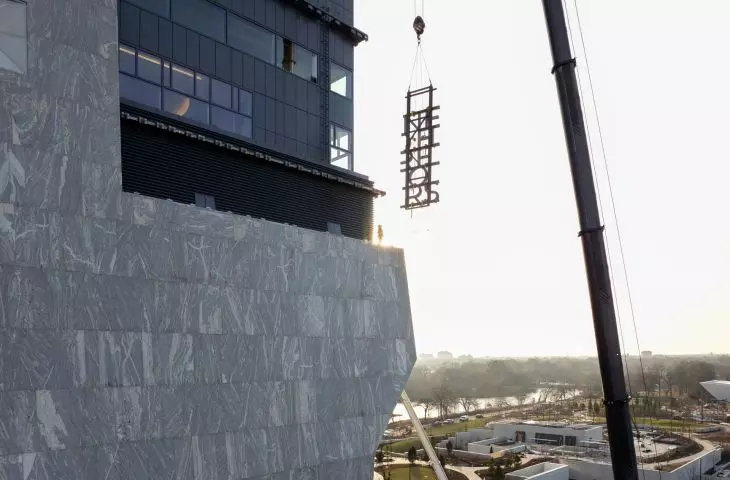
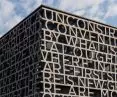
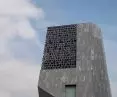
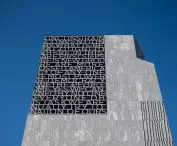
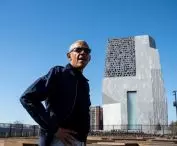
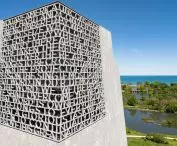
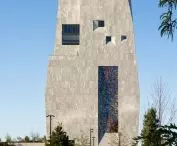
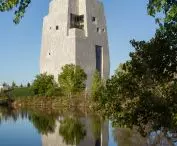
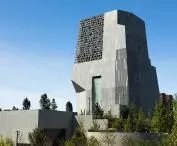
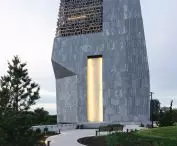
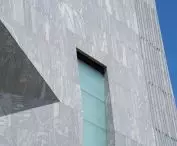
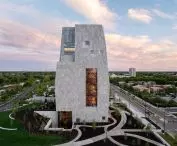
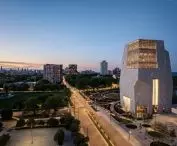
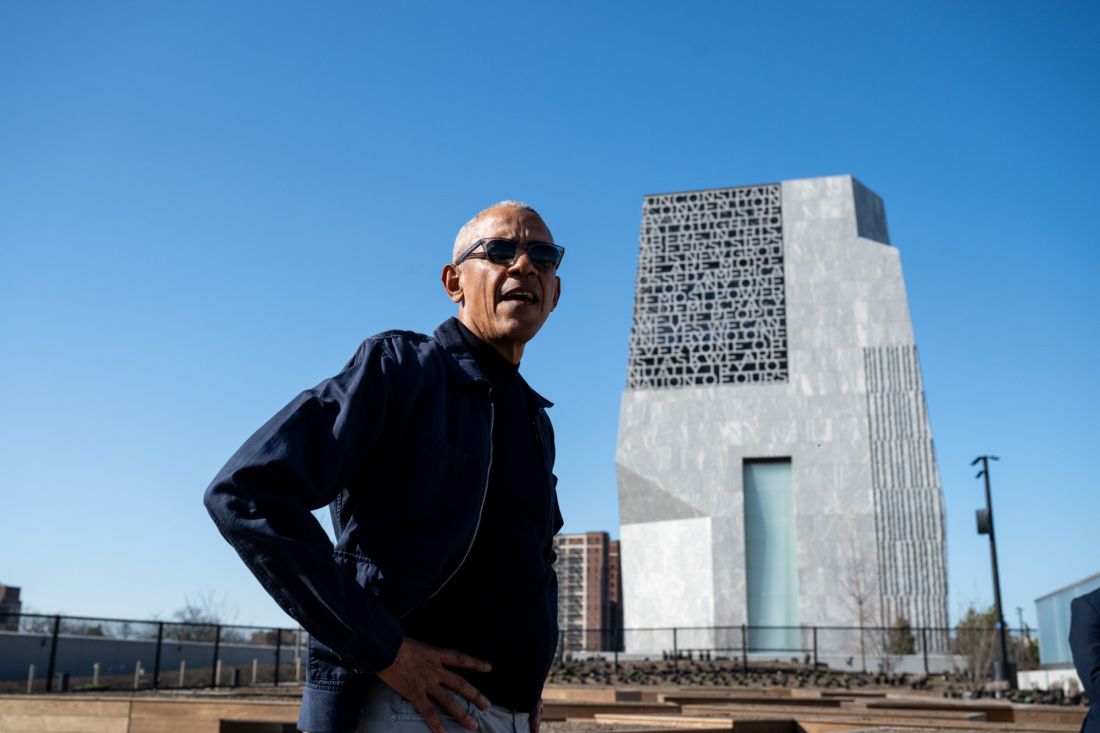
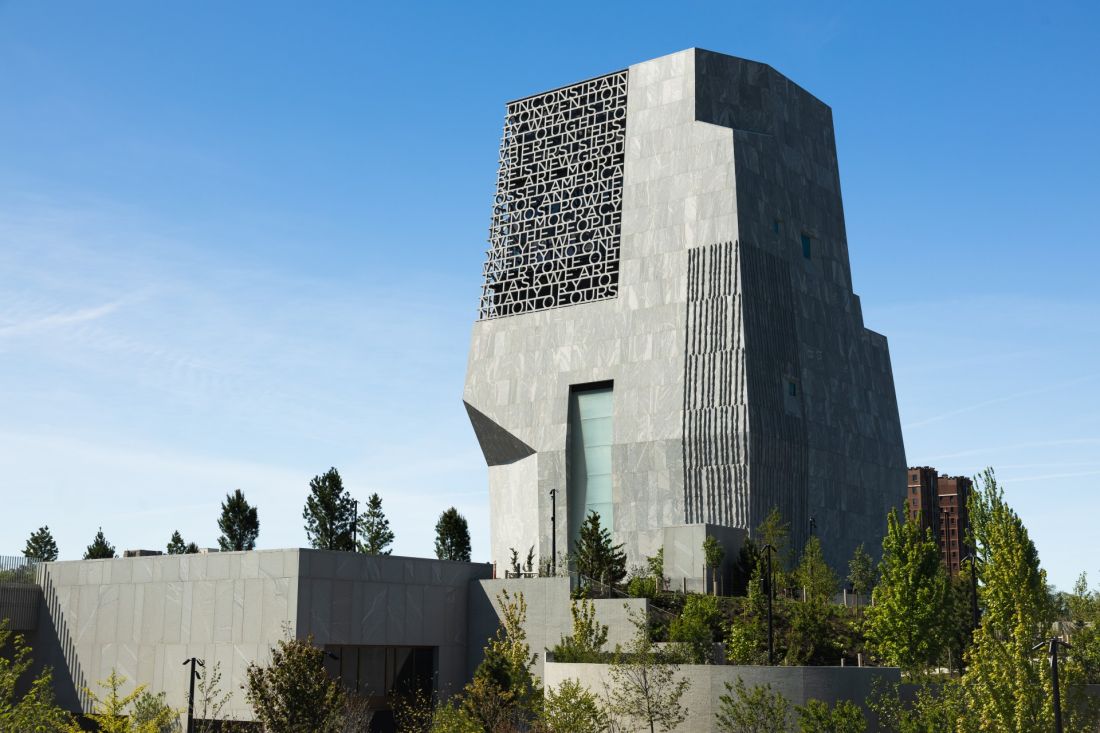
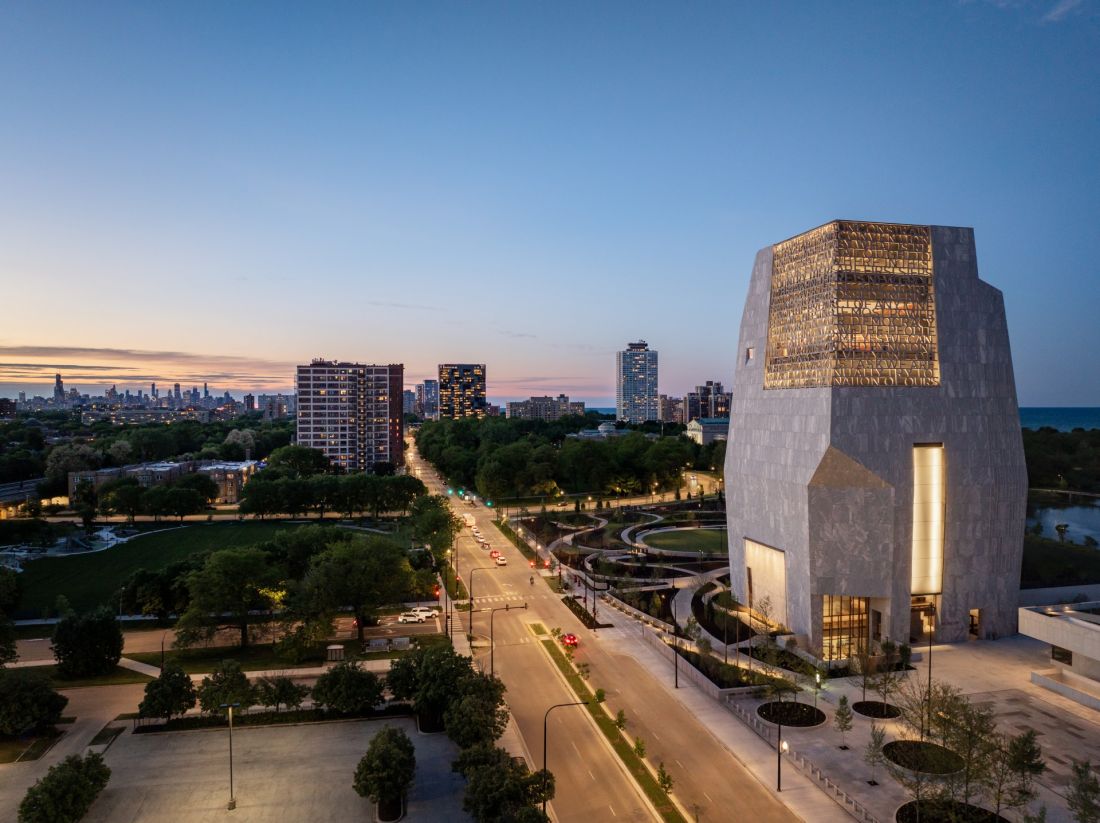
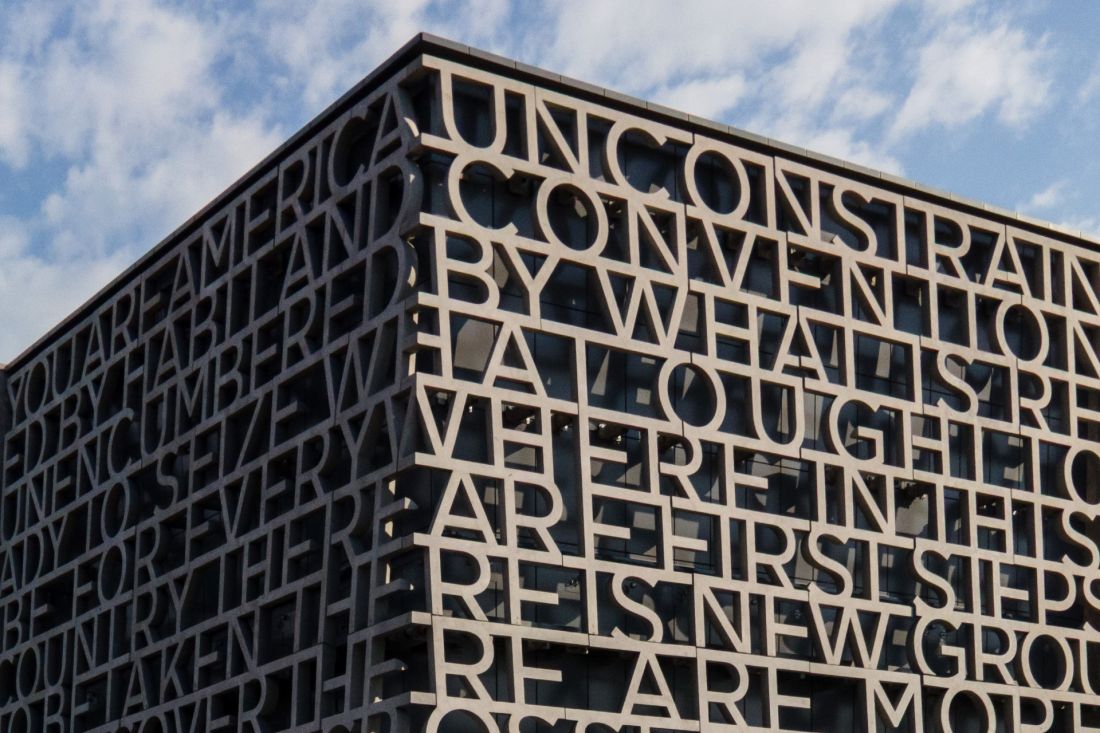
The most recognizable element of the complex is the Museum Building, a tall, compact tower clad in granite. It has the power of a symbol, but it is not the sole focal point of the campus. The architects have juxtaposed it with lower buildings, a plaza, and the landscape, ensuring that the museum’s structure does not dominate the whole in an unambiguously monumental way. The granite facade lends it weight while also introducing a texture that shifts with the light. This is important because the building could easily have become a cold symbol of power. Tod Williams Billie Tsien Architects, however, steer it in a different direction: toward architecture that is strong yet not cut off from the everyday life of the park. The tower organizes the campus and serves as its landmark. The true life of the project, however, unfolds below—among the museum, the forum, the library, the plaza, and the gardens.
The Obama Presidential Center in Chicago — © The Obama Foundation
a museum about democracy, not just the presidency
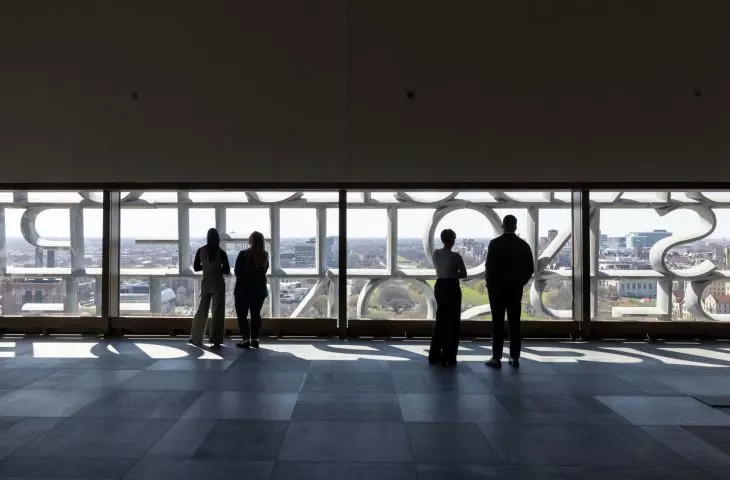
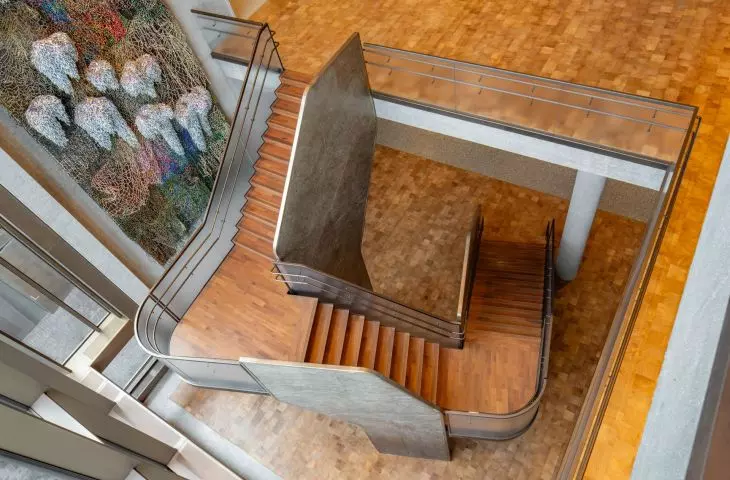
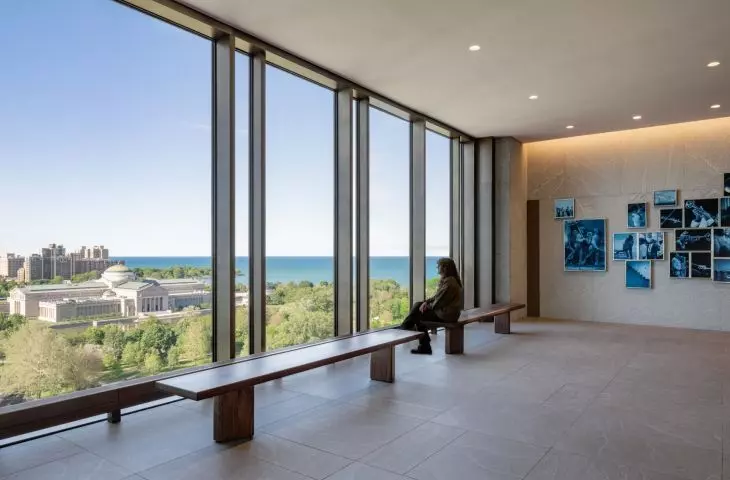
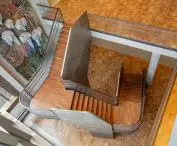
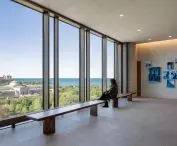
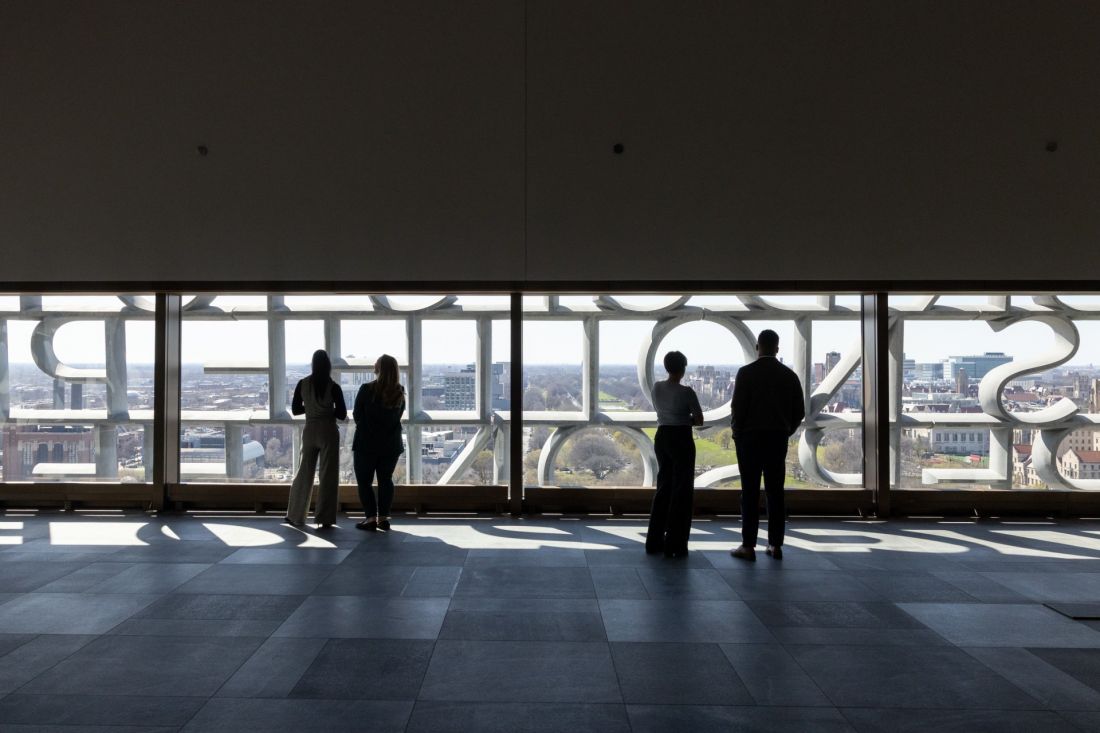
The exhibition in the Museum Building tells the story of Barack and Michelle Obama, but it is not limited to the biographies of the first Black president of the United States and the first lady. The starting point is a broader narrative about democracy, social movements, campaigns, the presidency, and the people who helped shape political change. Among the exhibits are a full-scale replica of the Oval Office, Michelle Obama’s outfits, and memorabilia donated by grassroots supporters from around the world. This is an important curatorial choice: the history of the presidency is presented not only through official documents but also through objects related to civic engagement. At the top of the museum is the Sky Room, which overlooks Lake Michigan. This design choice also reflects the nature of the entire project—the architecture is meant to lead not only to the exhibits but also to an experience of the space itself.
The Obama Presidential Center in Chicago — © The Obama Foundation
plaza, library, and sports field
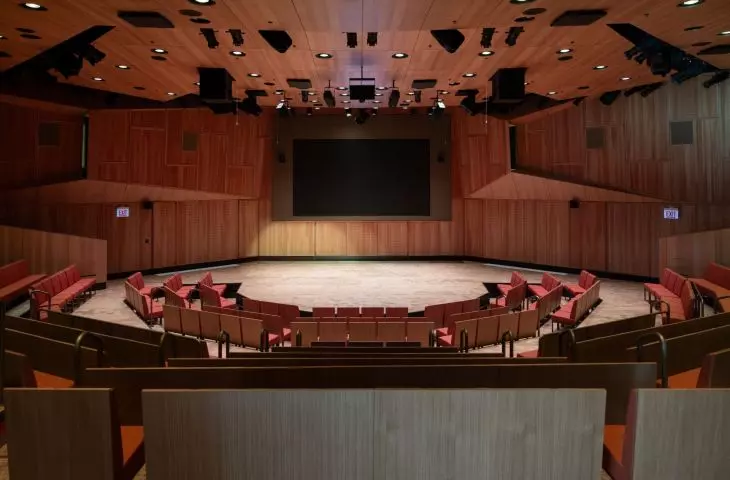
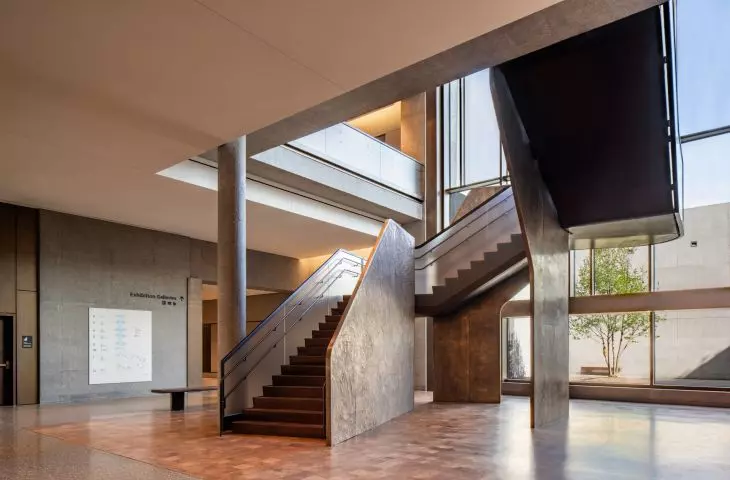
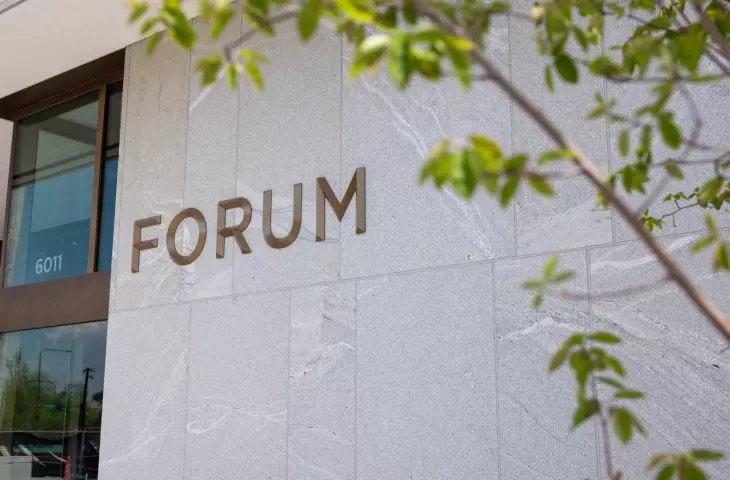
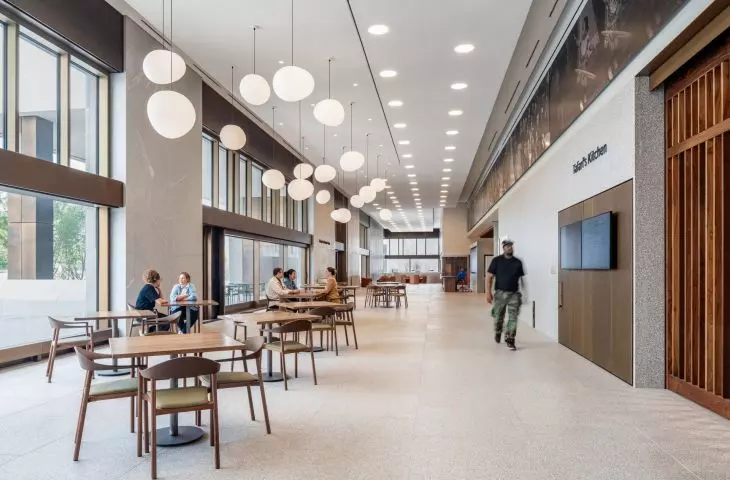
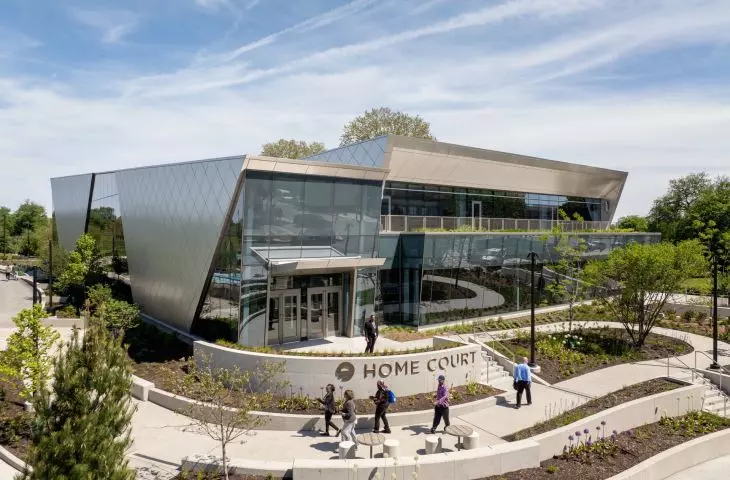
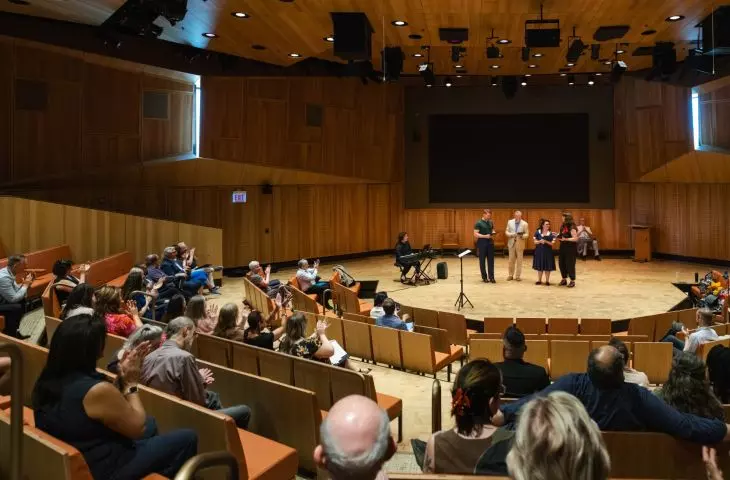
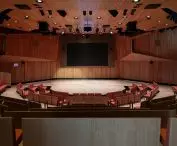
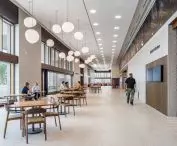
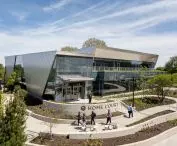
The heart of the campus is John Lewis Plaza. It is a space for gatherings, events, and daily movement between the most important parts of the complex. It does not resemble a ceremonial forecourt that people pass through solely on their way to the entrance. It is more like an urban plaza in a park: open, flexible, and designed with various usage scenarios in mind. Nearby are the Forum Building and a branch of the Chicago Public Library. The Forum houses educational spaces, an auditorium, a recording studio, a restaurant, and the foundation’s offices. The library brings an everyday function to the campus, one not necessarily tied to museum visits. Home Court is a separate element . It is a sports and social space, featuring a sports field, a gym, and venues for local events. As a result, the Obama Presidential Center functions as more than just a museum. It is designed to attract visitors even when they aren’t planning a museum tour—whether for a workout, a meeting, a workshop, or simply an afternoon spent in the park.
The Obama Presidential Center in Chicago — © The Obama Foundation
Art That Goes Beyond the Museum
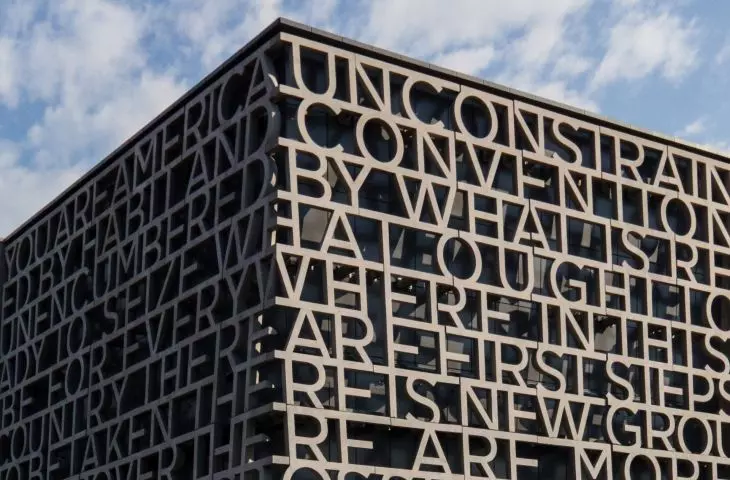
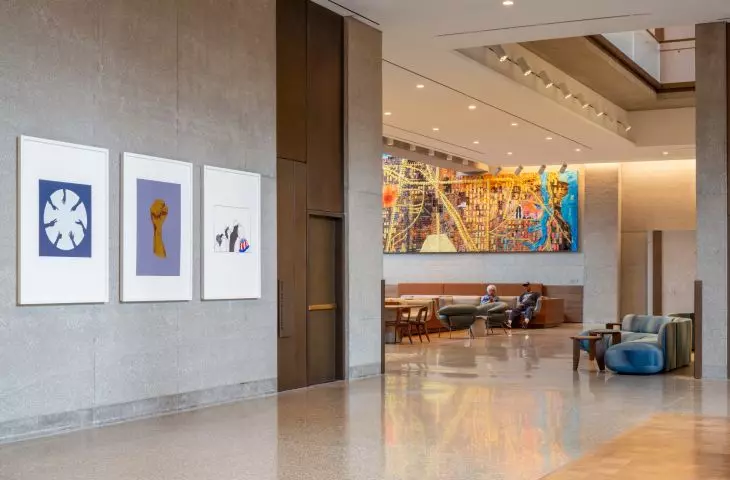
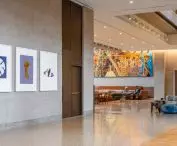
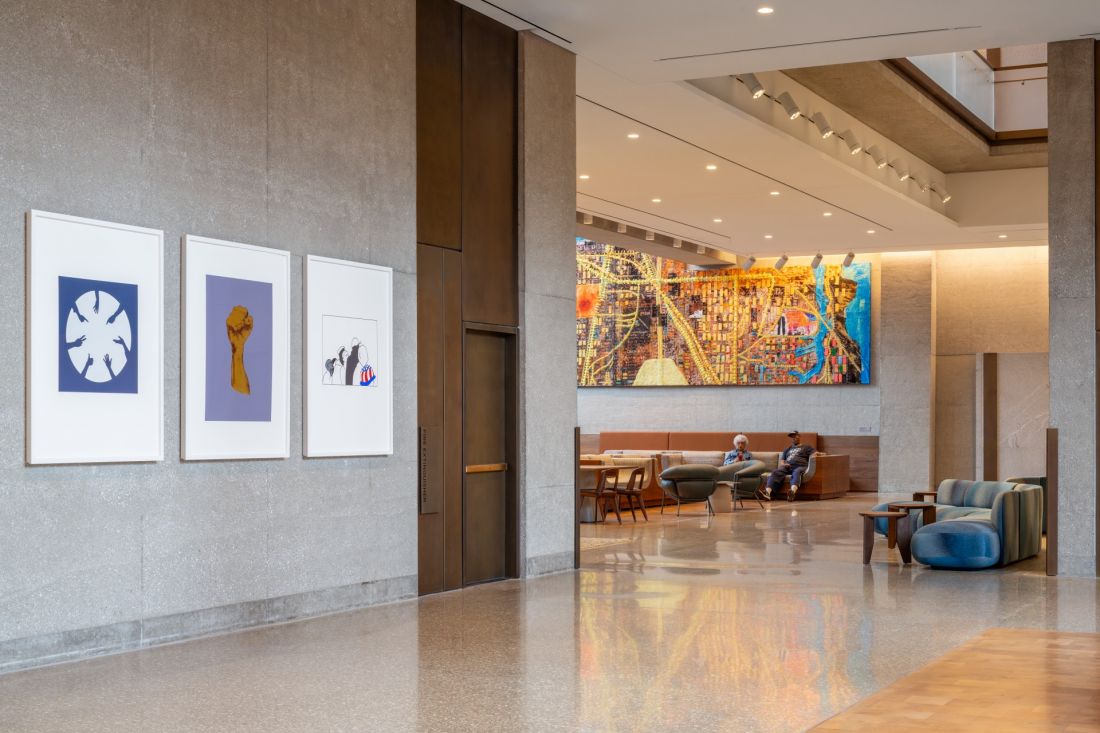
One of the most interesting elements of the campus is public art. Commissioned works appear not only indoors but also outdoors, along paths, in plazas, and in gardens. Most of them can be viewed without a ticket, which reinforces the idea of the center as an open space. The program includes works by, among others, Julie Mehretu, Maya Lin, Richard Hunt, Jenny Holzer, Kiki Smith, Nick Cave, and Marie Watt. They are not merely an addition to the architecture, but a distinct layer of the narrative about community, memory, language, and agency. This is particularly important in the context of the South Side. The Obama Presidential Center not only brings art to the new institution but also expands its presence in the public space of this part of Chicago.
The Obama Presidential Center in Chicago — © The Obama Foundation
Memory in the Digital Age
The Obama Presidential Center also proposes a different model for a presidential library. The archives of Barack Obama’s presidency are to be made available primarily in digital form, so the building does not need to serve as a closed repository for documents. Instead, it becomes a place where history, education, art, and the city come together—and demonstrates that public memory increasingly extends beyond the walls of institutions.
The Obama Presidential Center in Chicago — © The Obama Foundation
Between Symbol and Everyday Life
The most interesting aspect of the Obama Presidential Center is the tension between symbolism and everyday life. The stone tower provides the campus with a distinctive landmark, but its significance goes beyond a mere monumental gesture. The design also comes to life through the library, the sports field, the garden, the plaza, public art, and the freedom to move freely throughout the grounds. Tod Williams Billie Tsien Architects did not design a place that tells a story solely about the past. In Jackson Park, political memory has been translated into public space—one that can be visited, traversed, used, and co-created. The Obama Presidential Center demonstrates that presidential architecture need not be merely a monument. It can become part of the city.