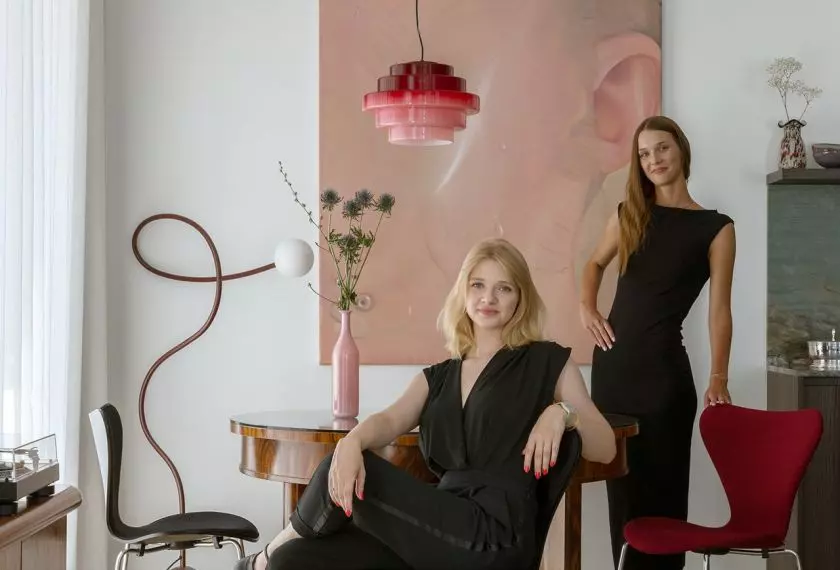


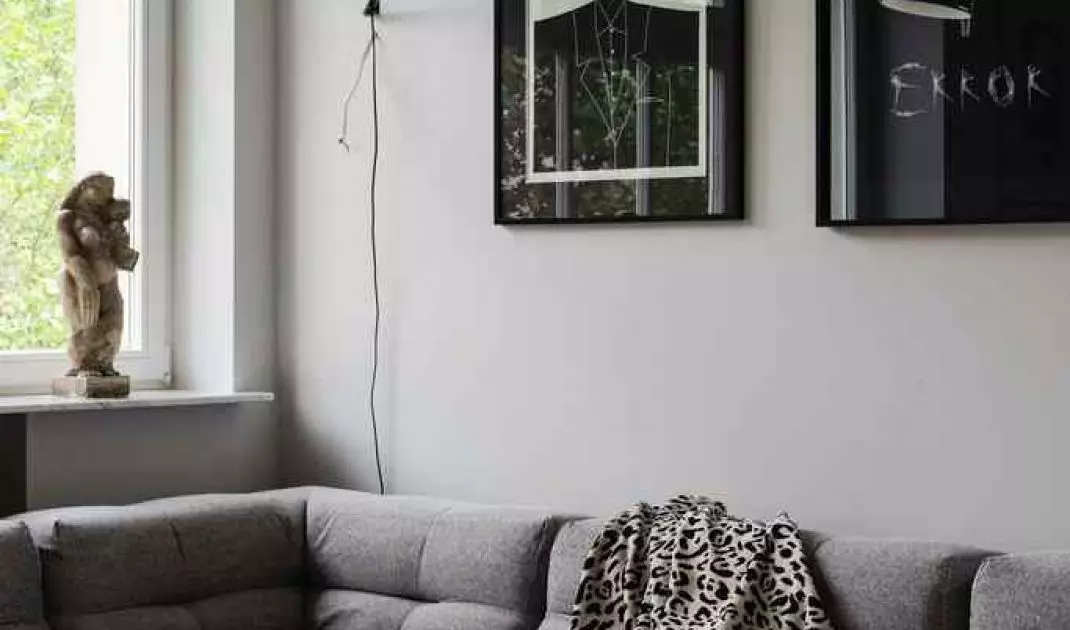
In Old Mokotow, in one of the tenements wrapped in greenery, right next to the iconic Iluzjon Cinema, an interior was created that breaks conventions. The apartment, which not long ago was dark, today teems with light, breath and design consistency. The architects at FUGA Architektura Wnętrz created a space for a woman with extraordinary sensitivity and passion for art. The interior became a scene of everyday life, where art and design play first fiddle, and every decision - from layout to detail - builds a coherent, harmonious narrative.
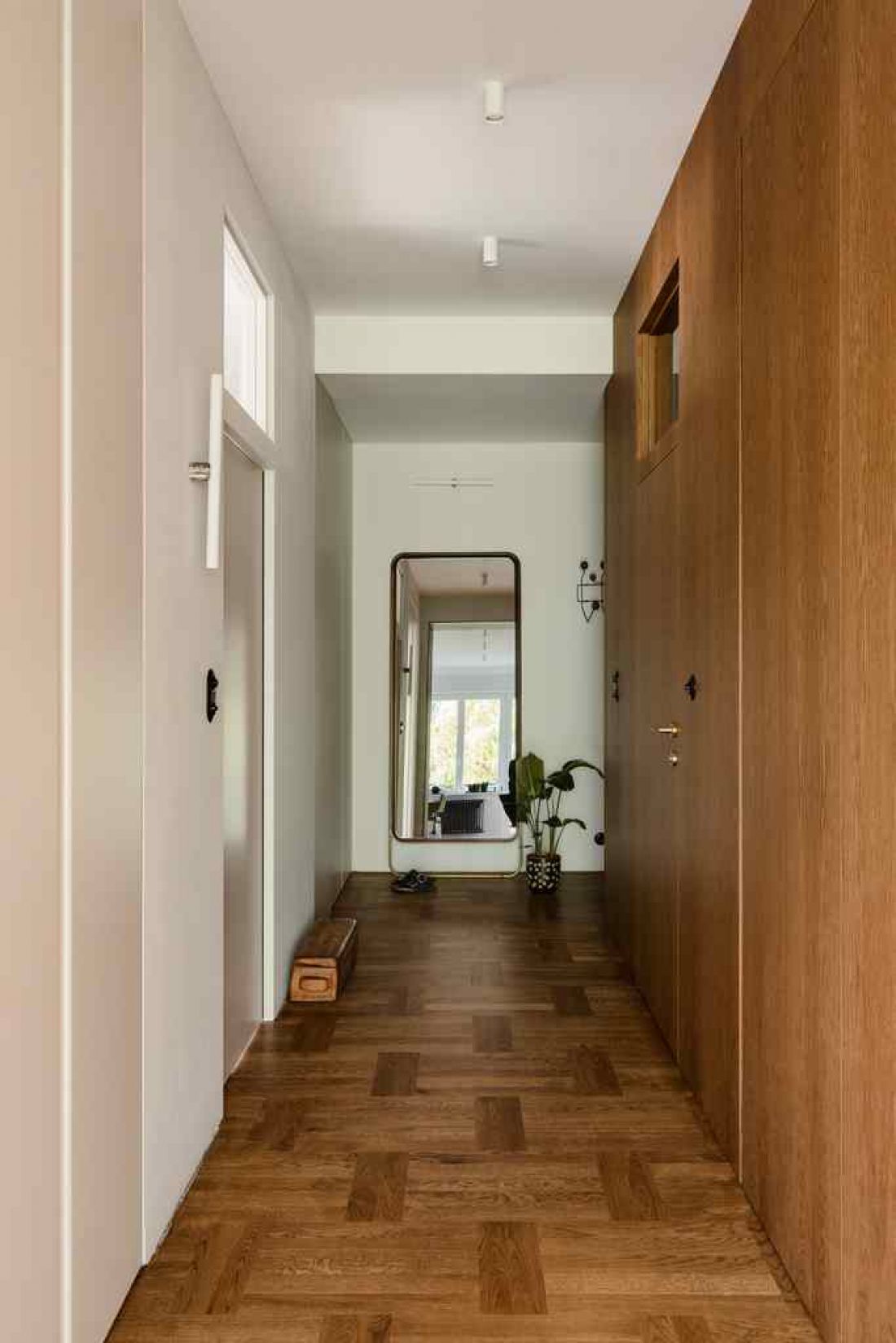
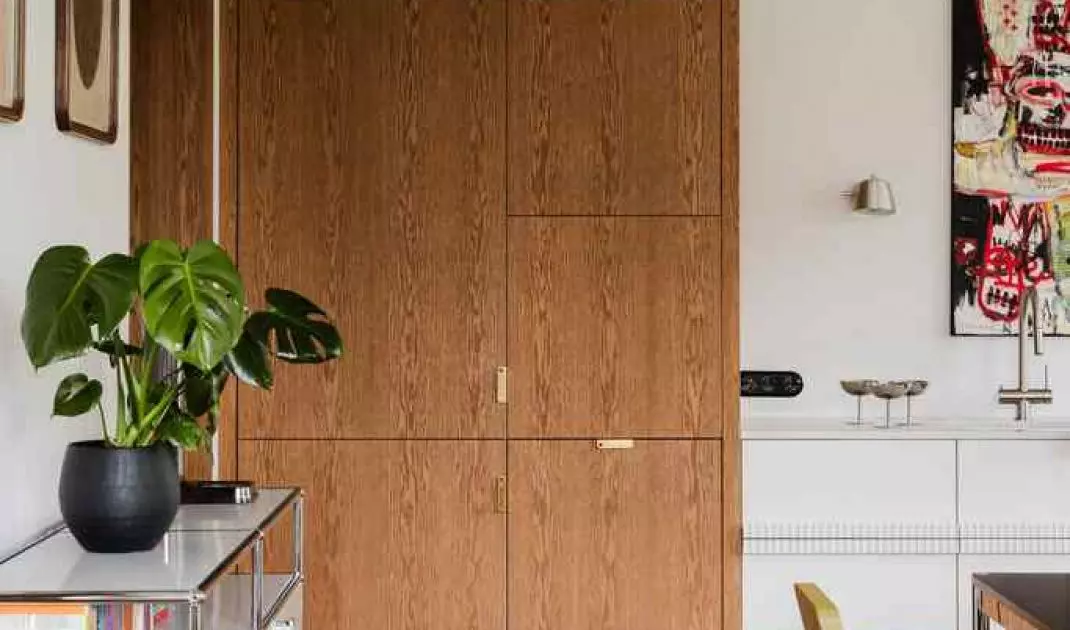
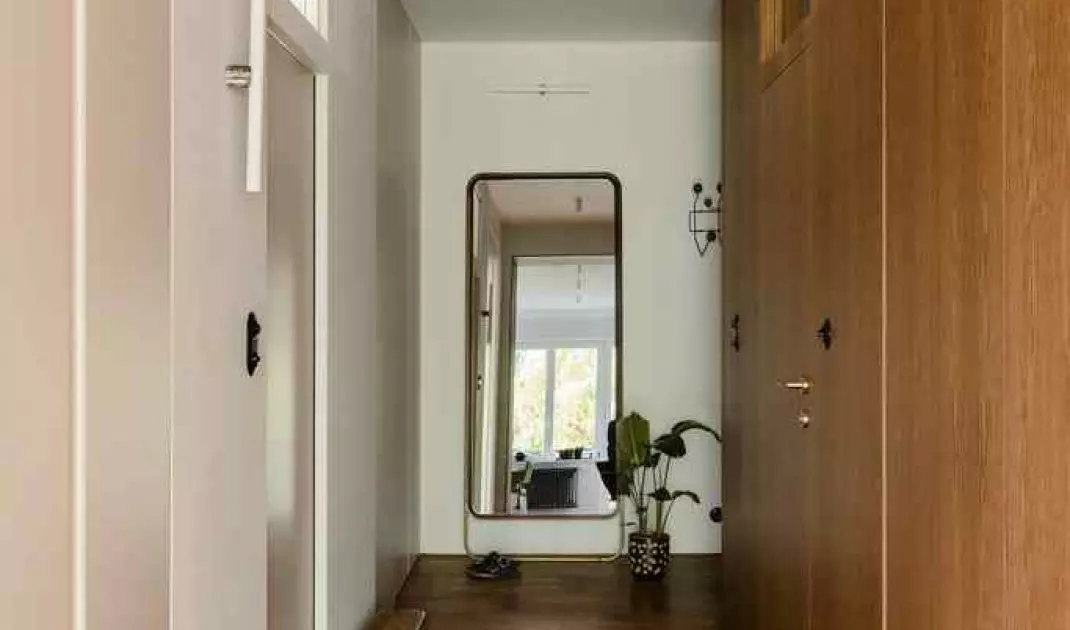
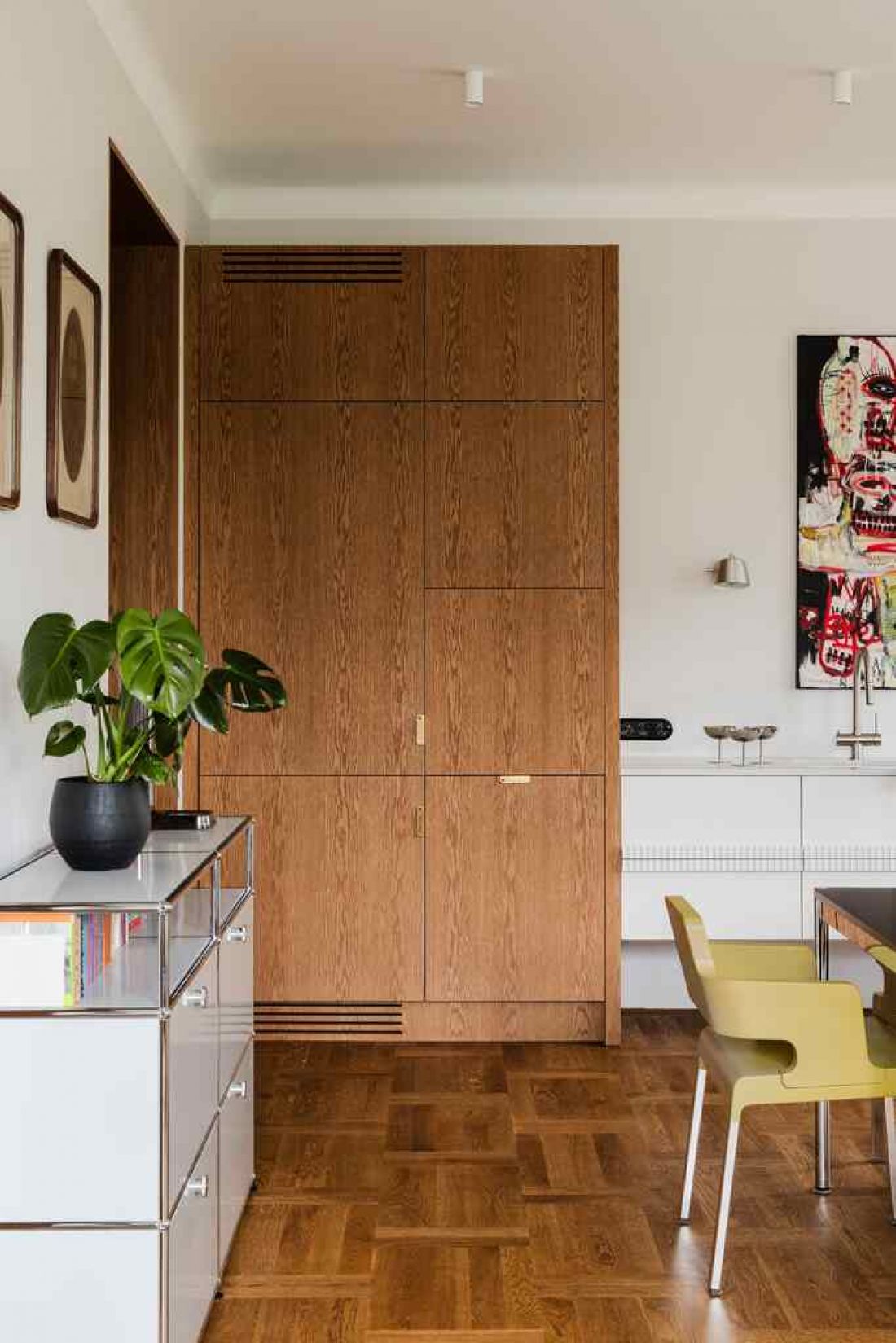
Apartment in Stary Mokotow - a long hallway with minimalist furnishings hides numerous closets
photo by Patryk Polewany
Between ancient rhythm and contemporary gesture
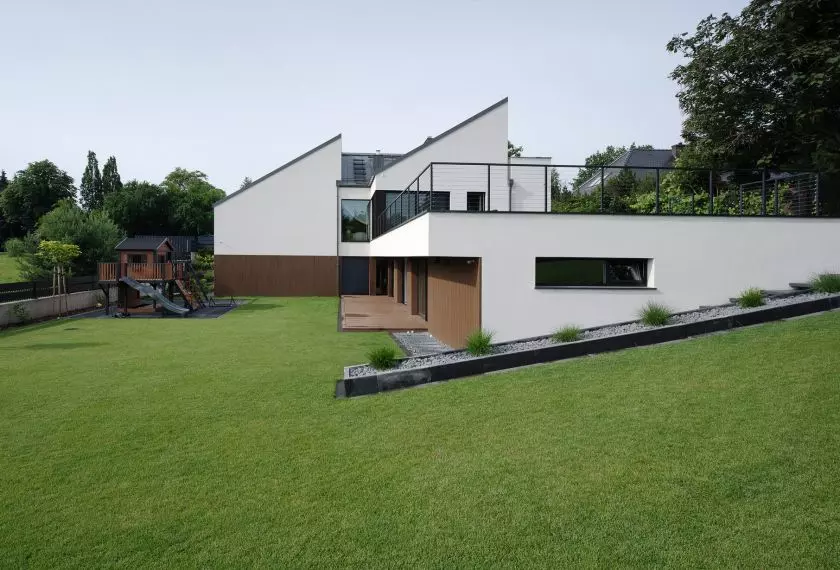
The tenement in which the apartment is located was built in the 1930s from a design by Jerzy Gelbard and Romuald Sigalin. Its proportions, light and architectural details were an important point of reference for the designers from the beginning.
We wanted the apartment to remain in constant dialogue with the spirit of the place, while at the same time responding to the contemporary needs of the investor - an active, sociable, fulfilled, yet devoted mother and grandmother
- recalls designer Antonina Sadurska.
Apartment in Stary Mokotow
photo by Patryk Polewany
The original layout of the apartment, however, was far from ideal. Narrow corridors, small rooms and lack of natural light were not conducive to the openness that the investor was looking for. So the architects decided to make a radical gesture - opening up the space completely. As a result, an amphitheatre layout was created, with rooms flowing smoothly from one to another, and the interior gained rhythm and breath. In the center was the living area - the heart of the house, where the kitchen, dining room and living room meet.
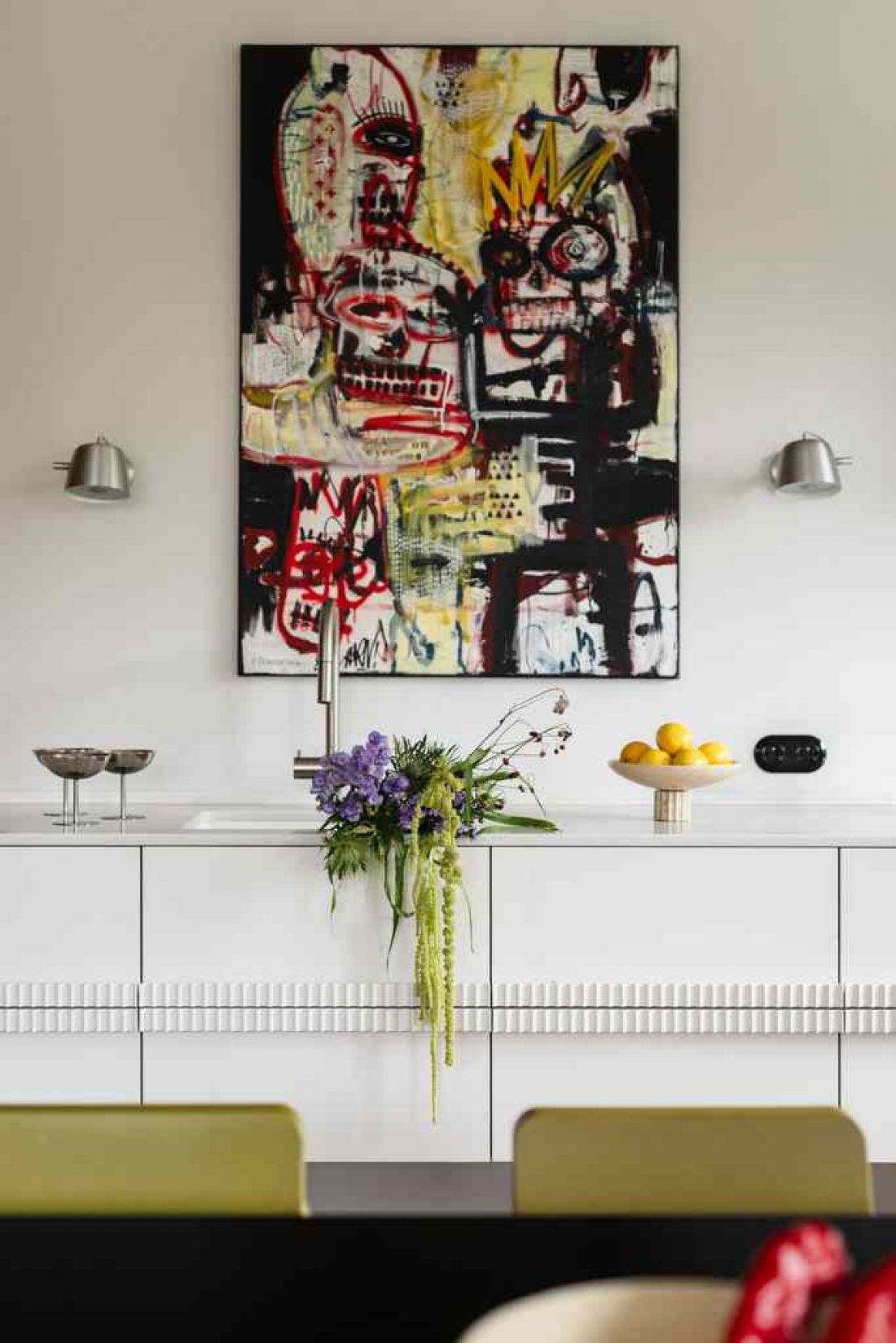
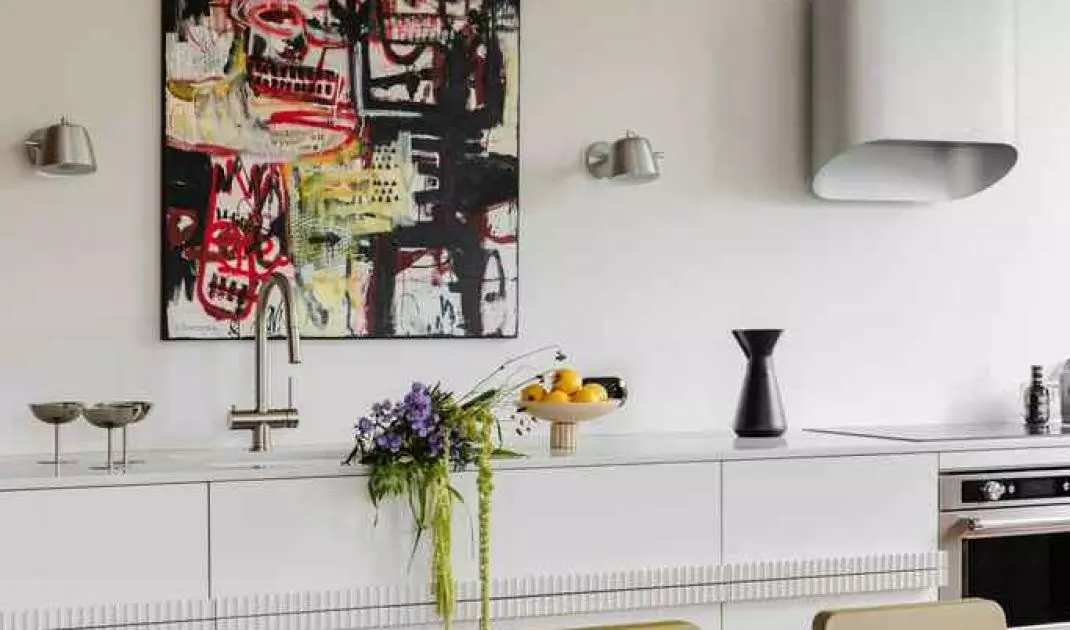
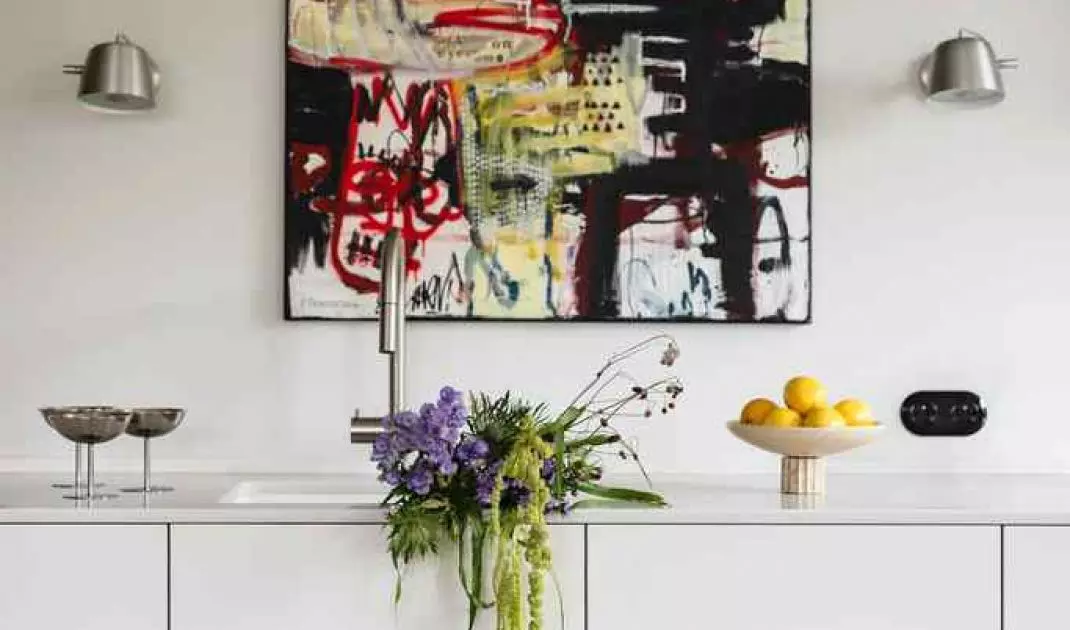
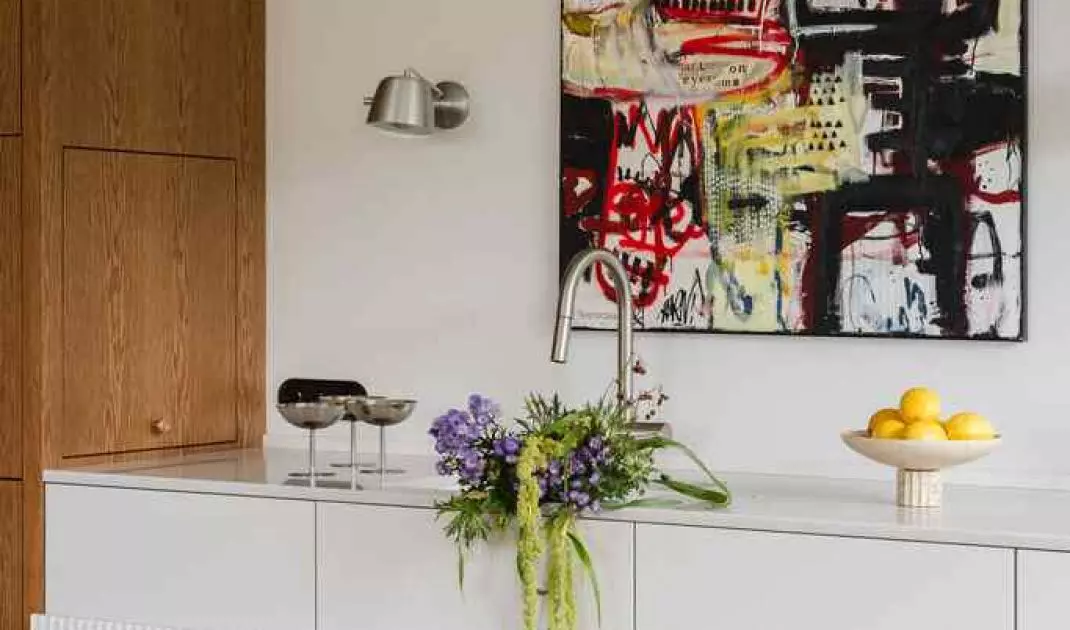
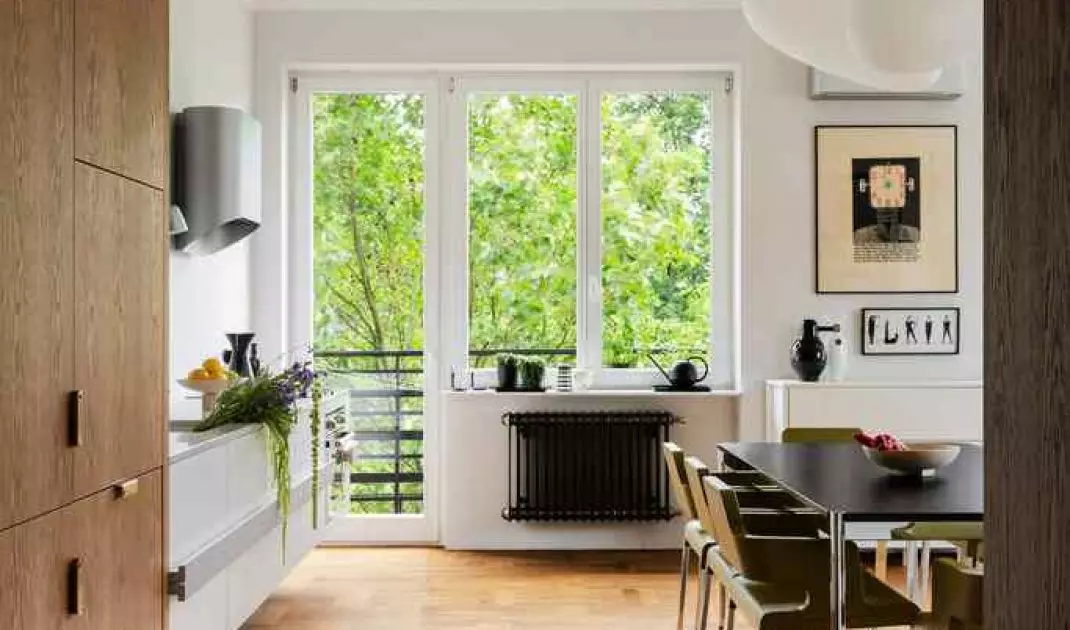
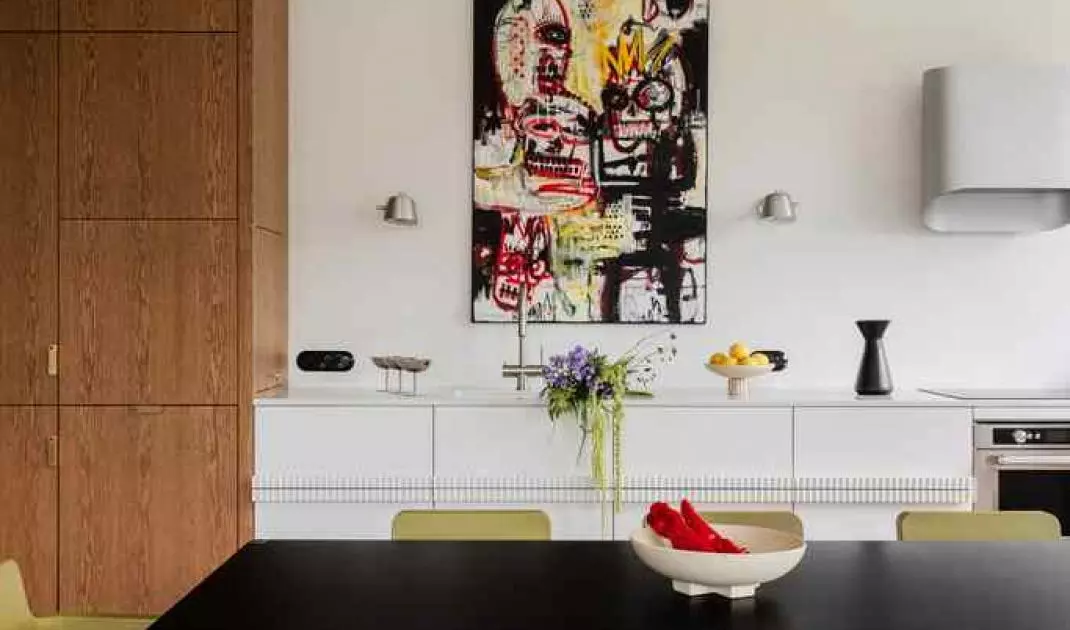
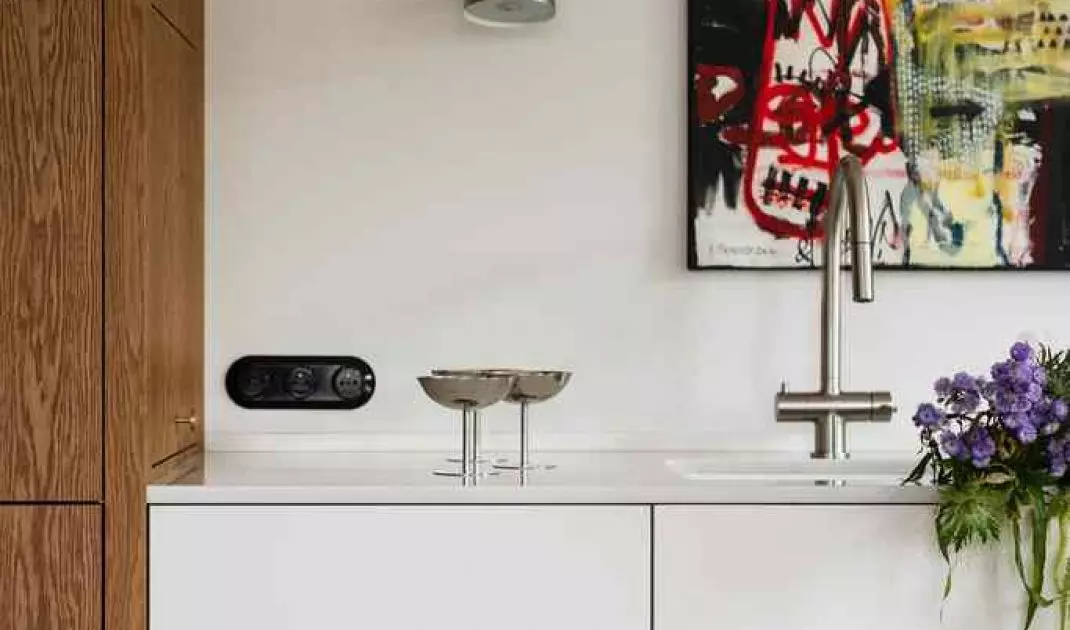
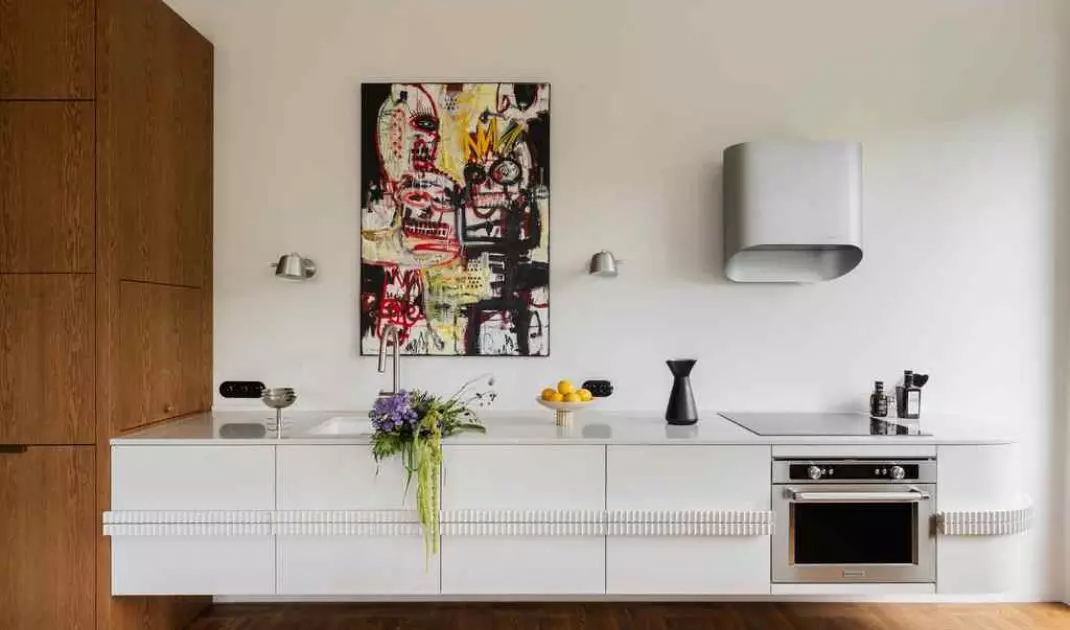
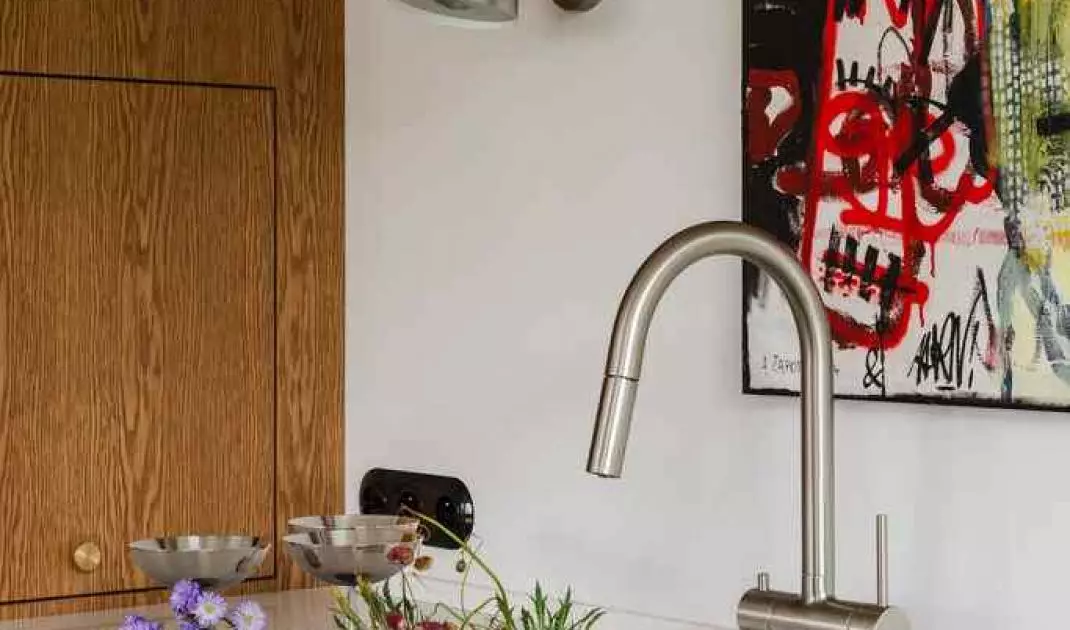
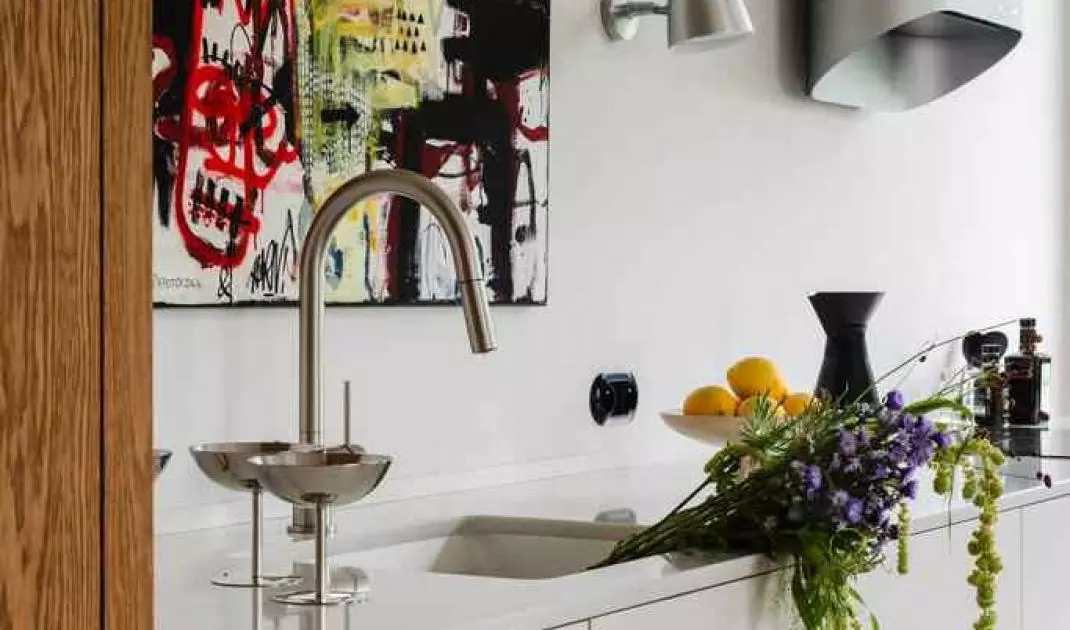
An abstract painting hangs in the kitchen
photo by Patrick Polewany
Introduction to art
The hallway introduces this world with flair. Long, kept in light tones, it hides numerous storage compartments in a minimalist design. It doesn't reveal everything at once - rather, it announces it. Neutral walls, a wooden floor, a delicate play of light - this is just a prelude to the story to come. Every next step brings a new context, a new impression. The interior unfolds like a story, in which successive chapters open up to us with precision and naturalness.
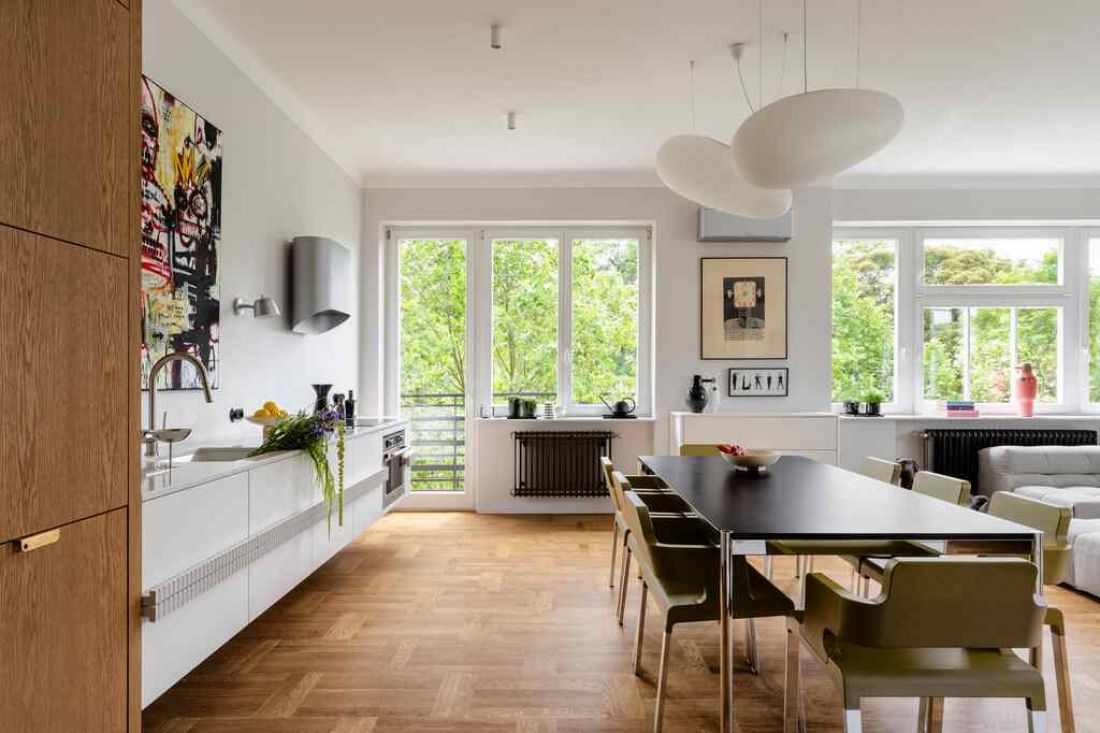
Apartment in Old Mokotow
photo by Patryk Polewany
Common area. Where art meets everyday life
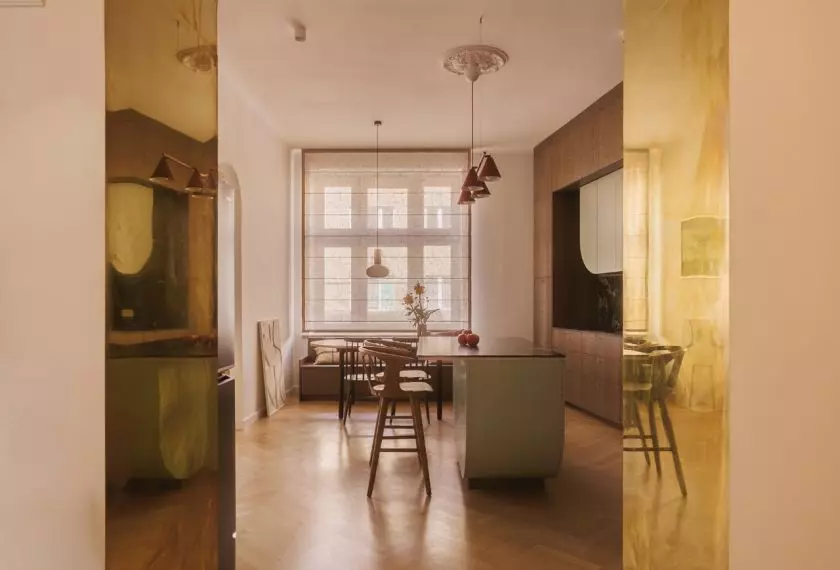
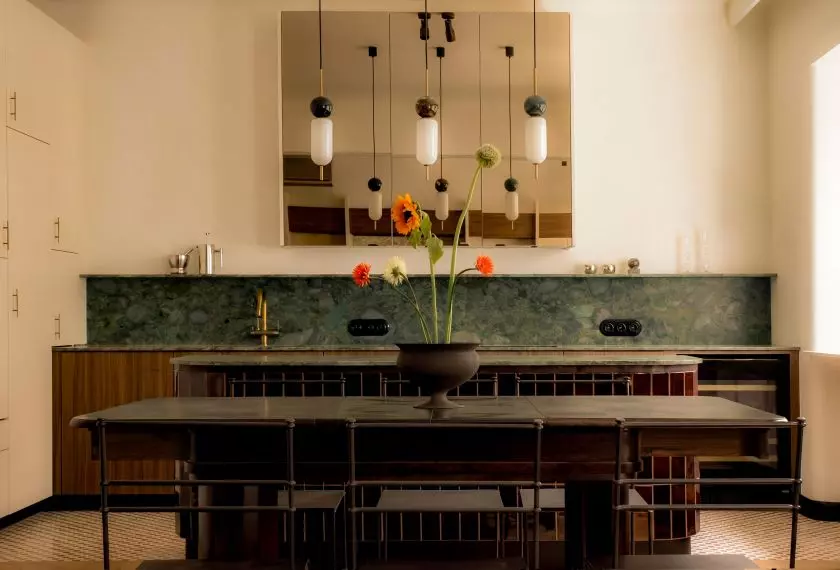
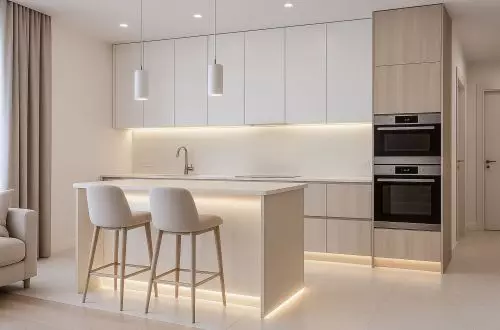
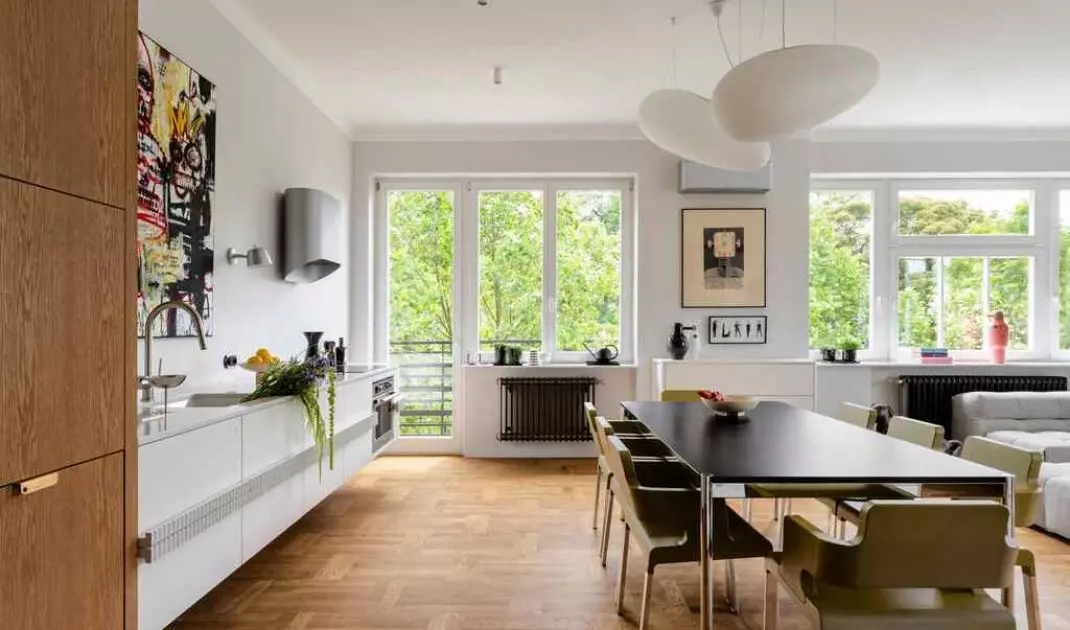
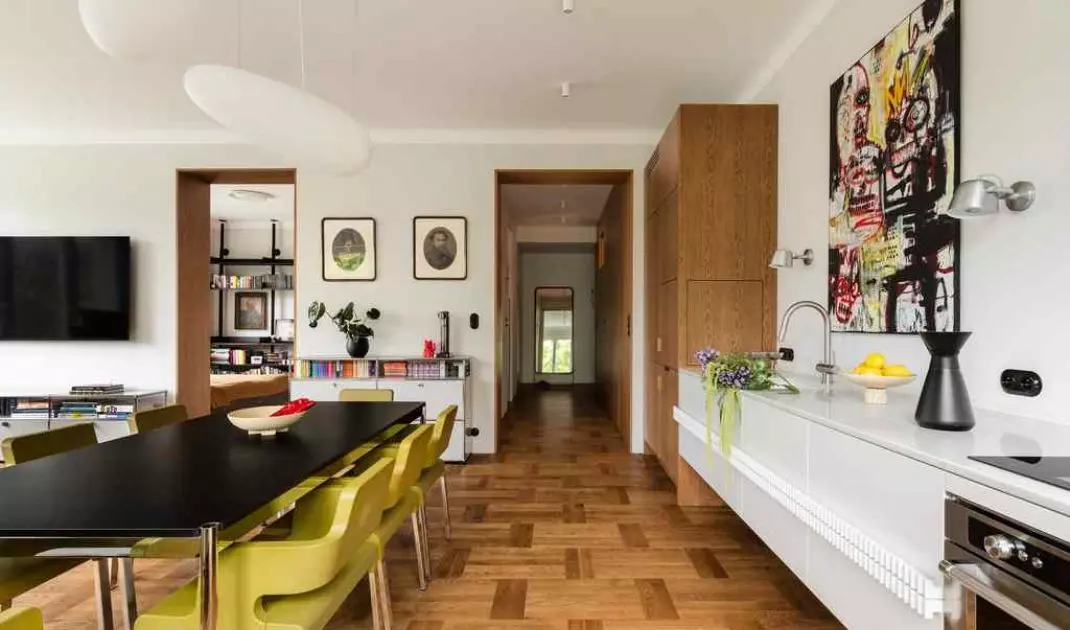
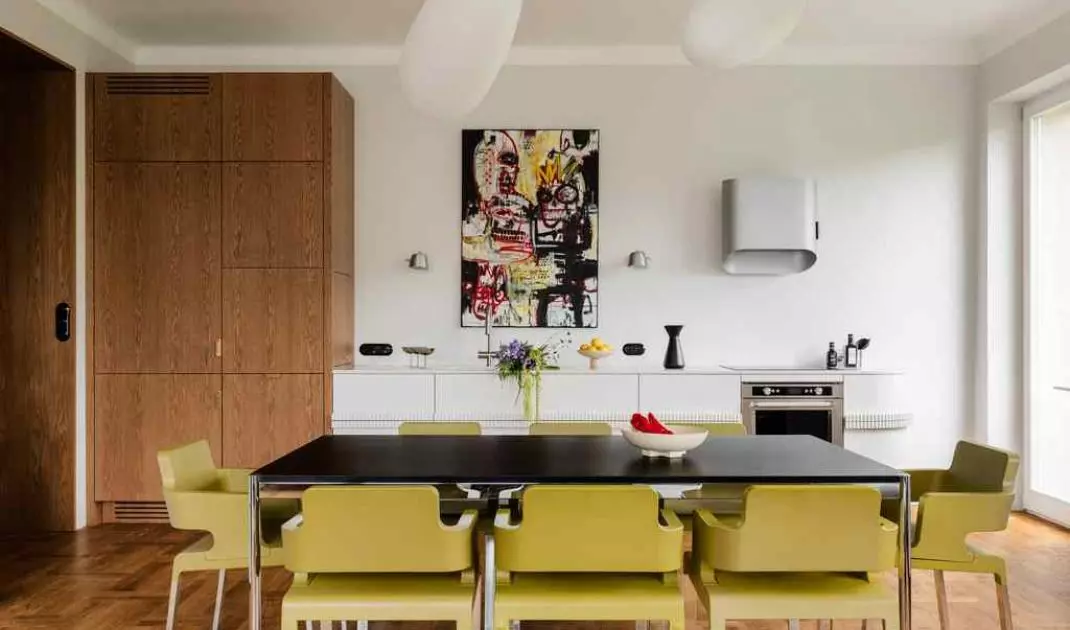
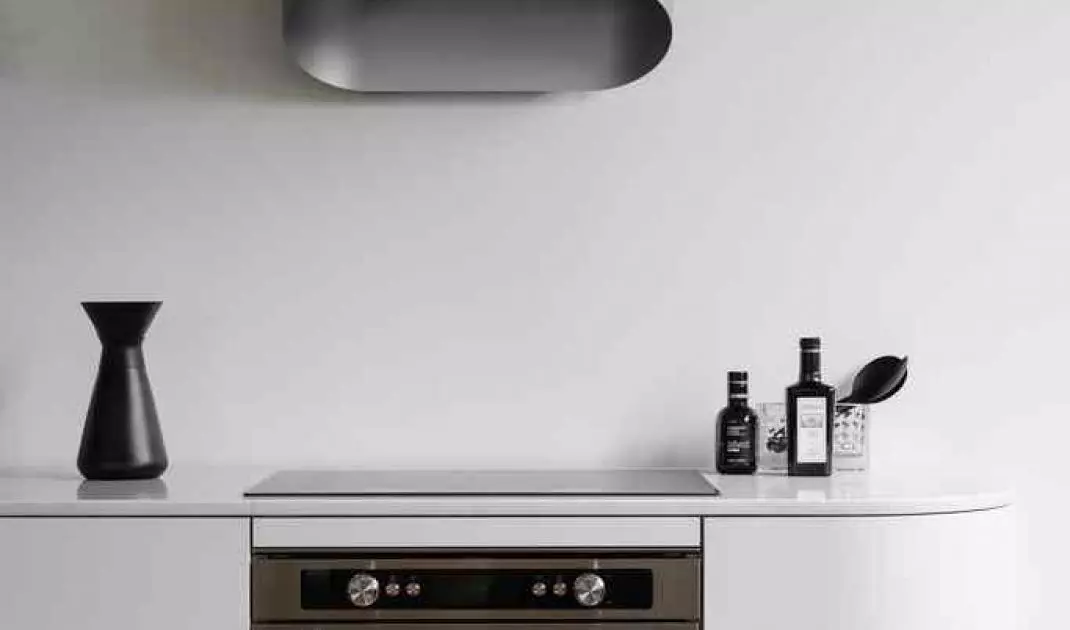
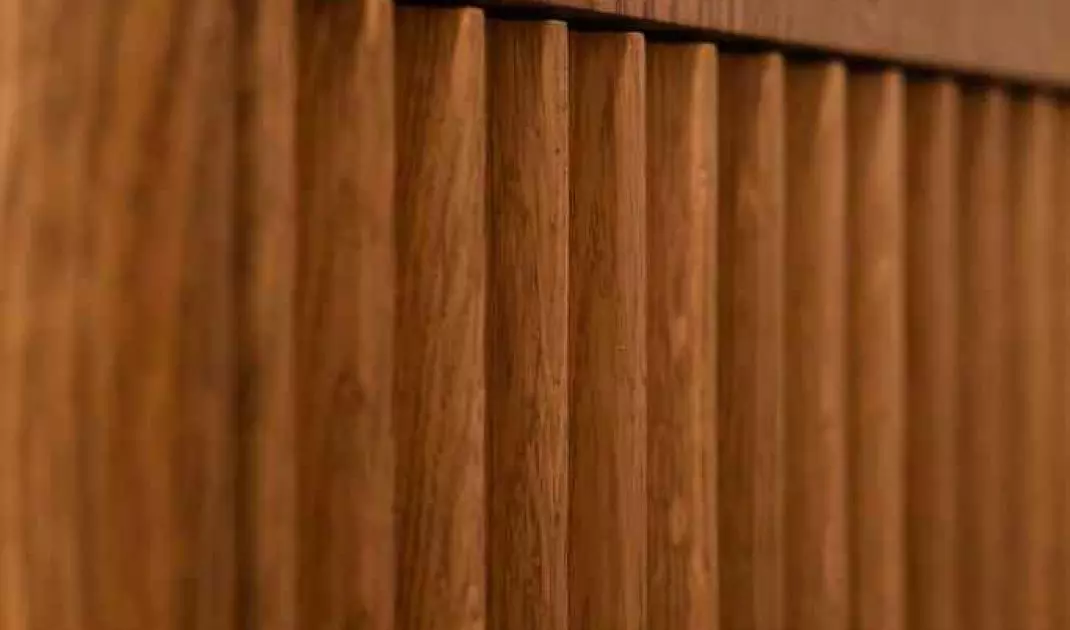
The living area is a space with a non-obvious character - at once orderly and full of life. The kitchen, visible from the entrance, impresses with its lightness and attention to detail. White, suspended cabinetry with fluted fronts and a stone countertop reflects light, adding freshness to the interior. On one of the walls hangs an abstract painting by Agnieszka Kicinska, which defines the artistic tone of the entire project from the first glance.
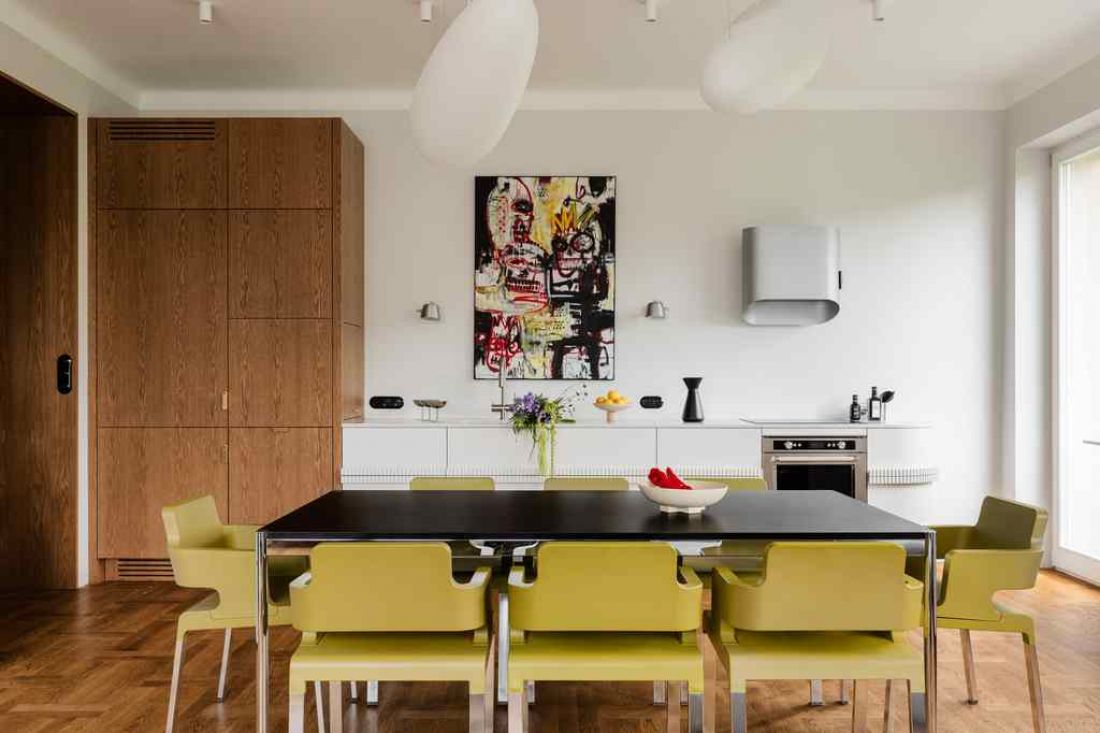
In the dining room, the main fiddle is played by a black USM Haller designer table surrounded by geometric chairs in a shade of lime green designed by Christophe Marchand
photo by Patryk Polewany
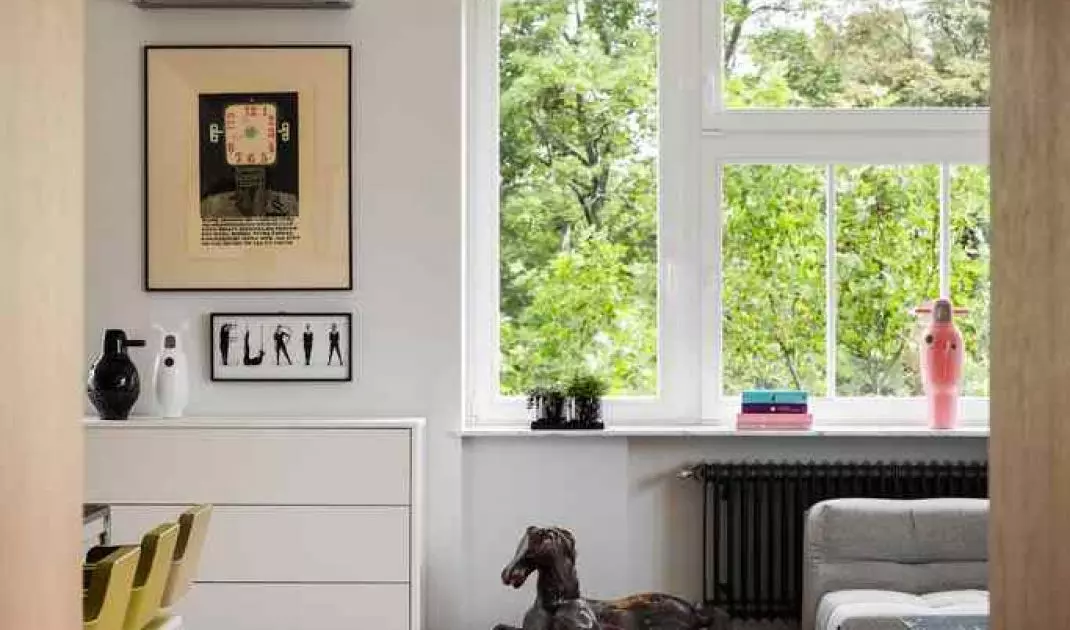
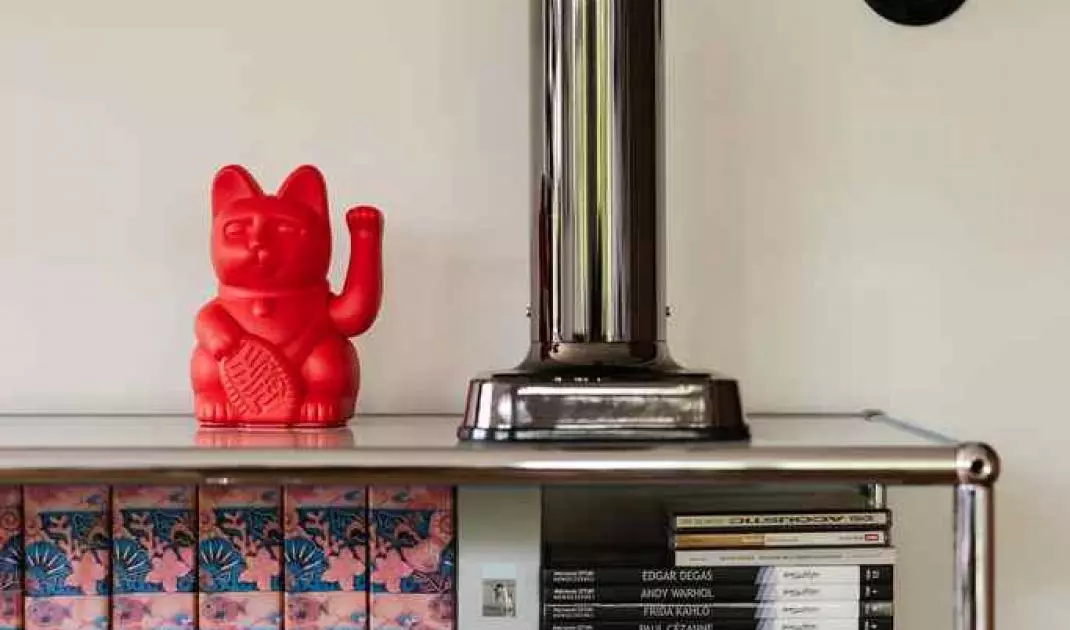
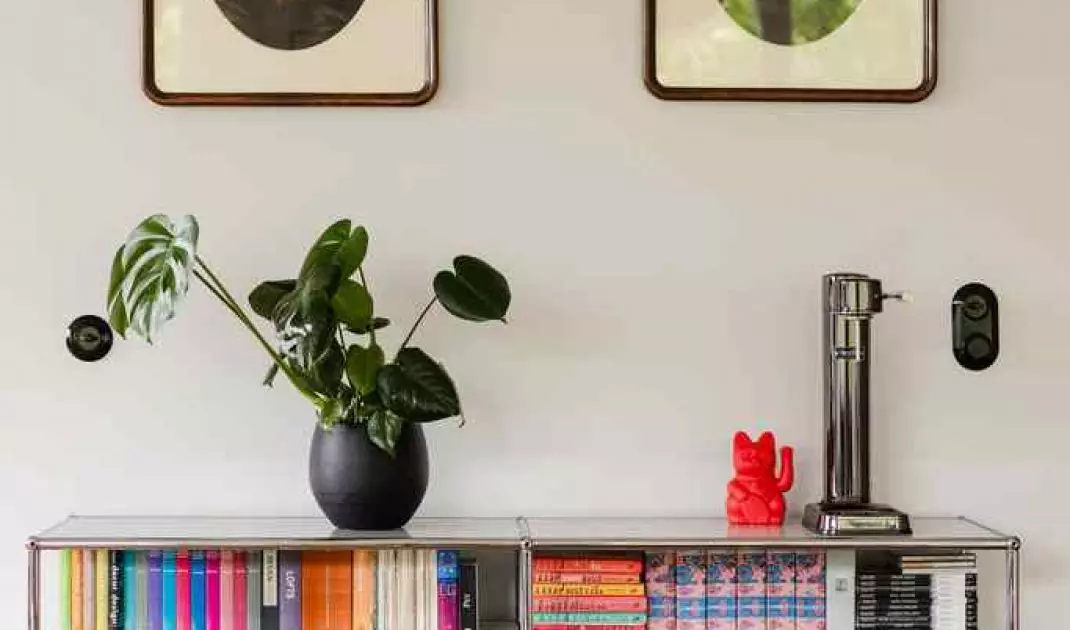
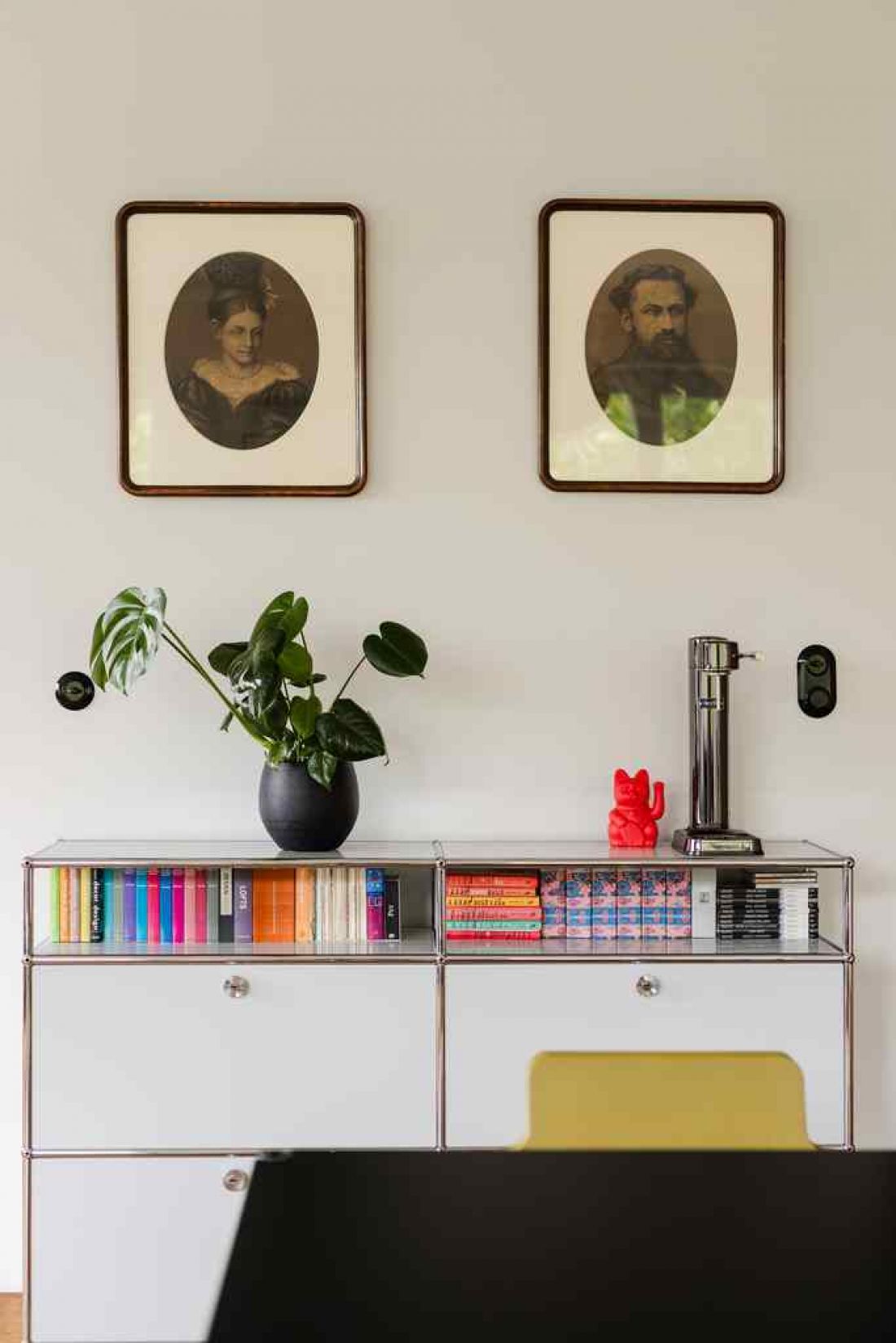
Right next door sits the dining room - open, full of energy, with a black USM Haller table and chairs in a lime green shade designed by Christophe Marchand. This one strong color accent was enough to liven up the neutral base. Opposite is a USM Haller dresser - a classic of modernist design, whose metallic surface discreetly reflects light.
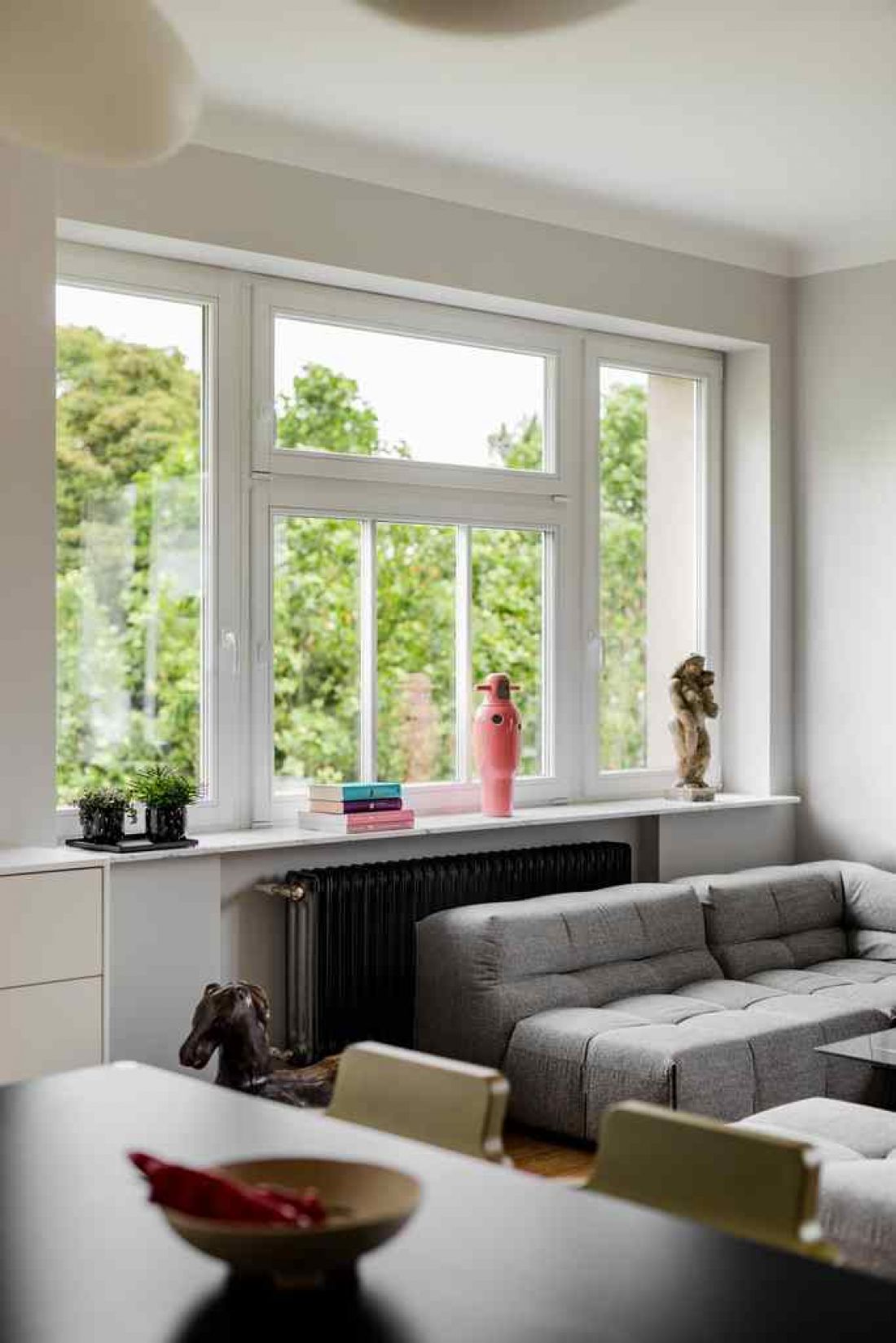
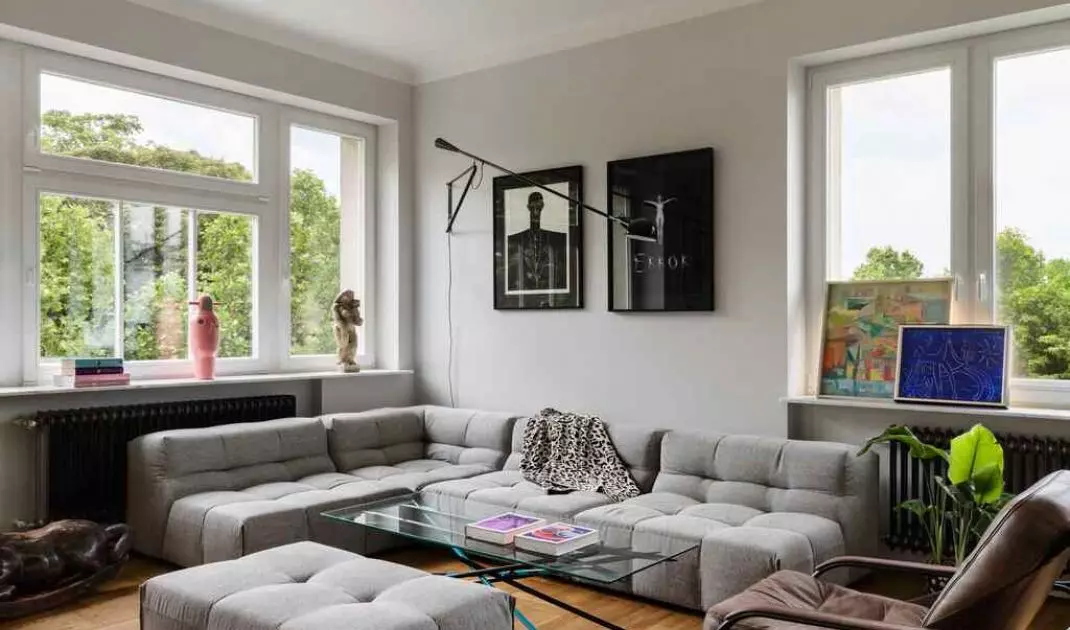
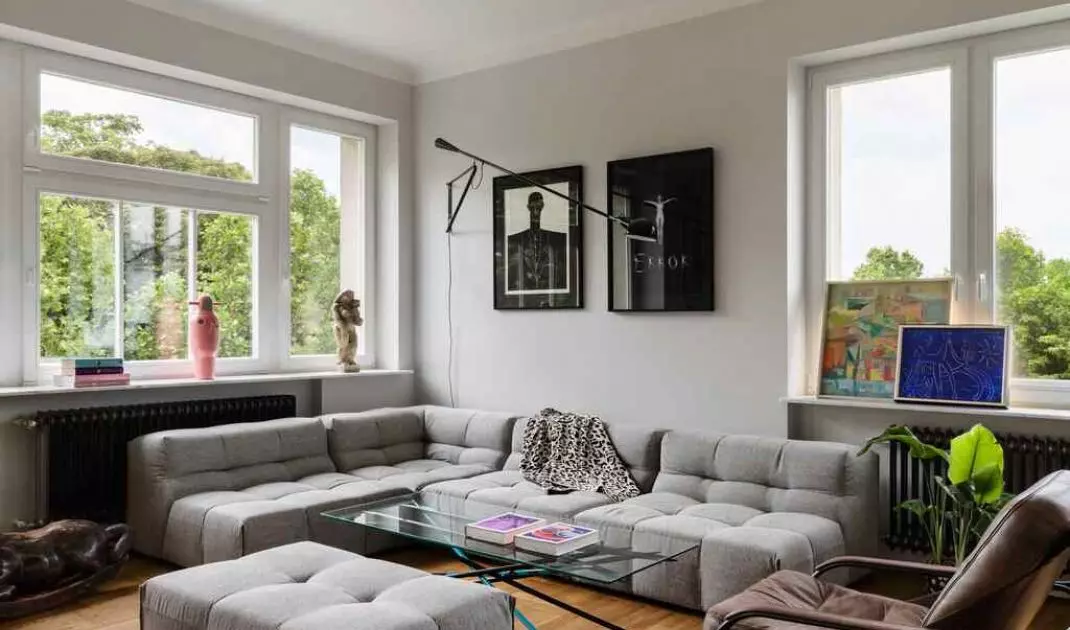
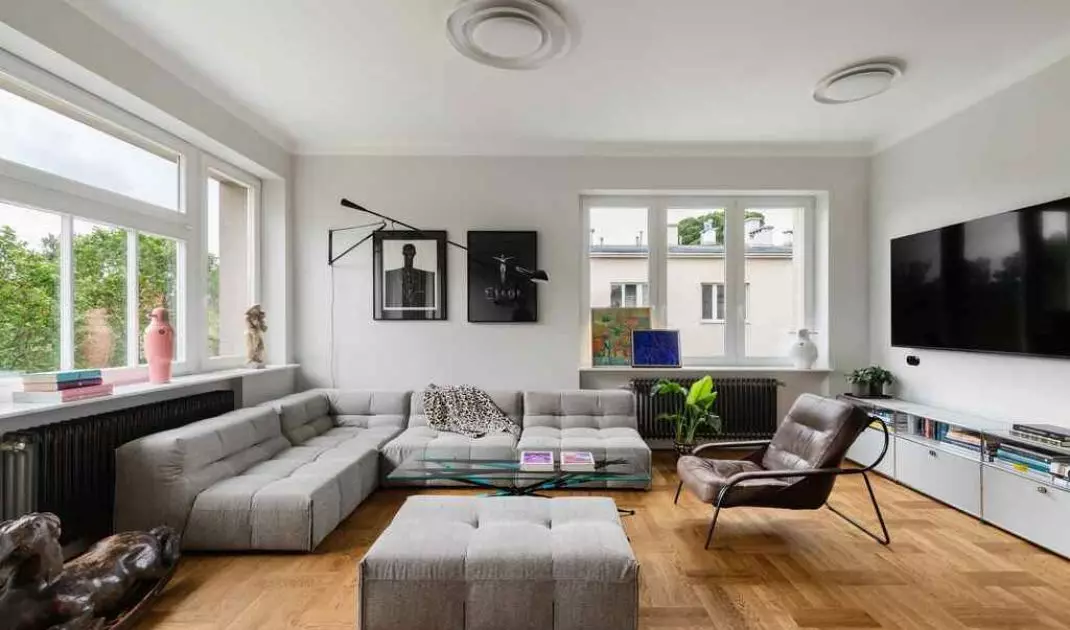
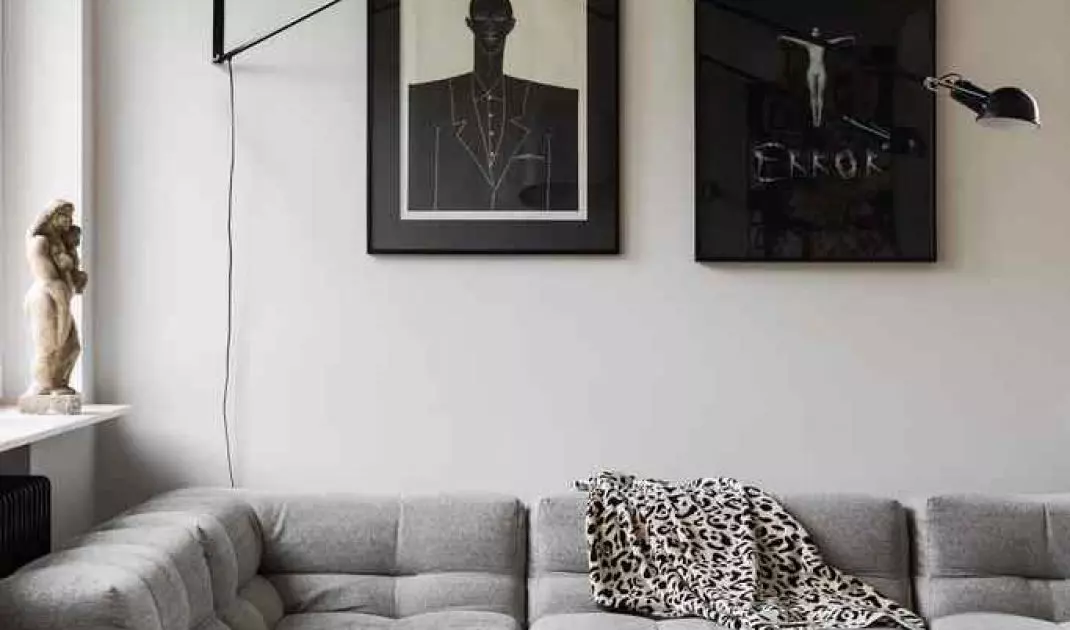
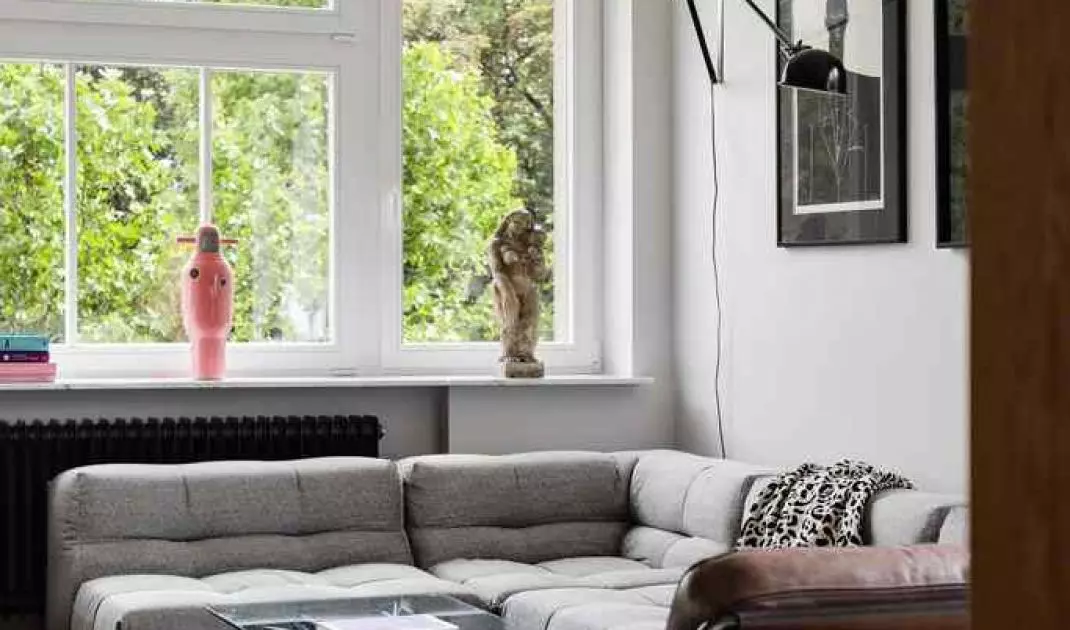
Apartment in Stary Mokotow - view of the living room with a gray corner dresser
photo by Patryk Polewany
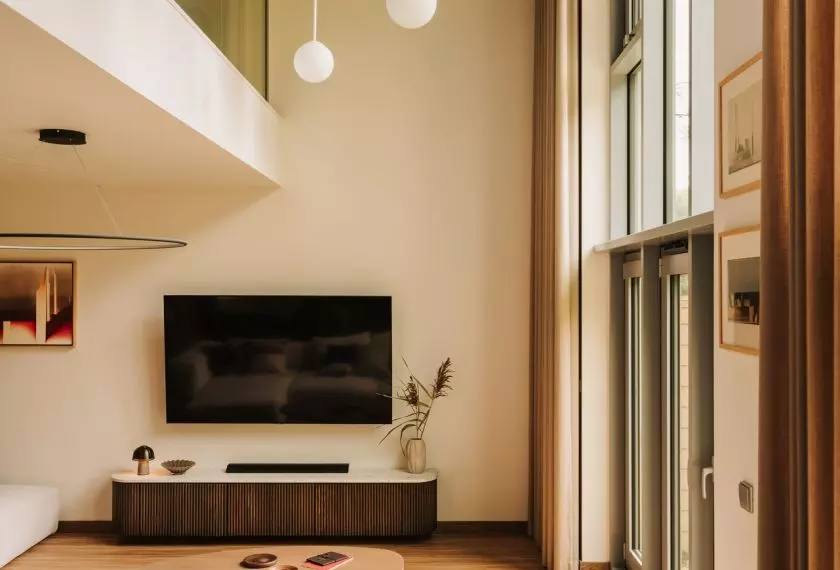
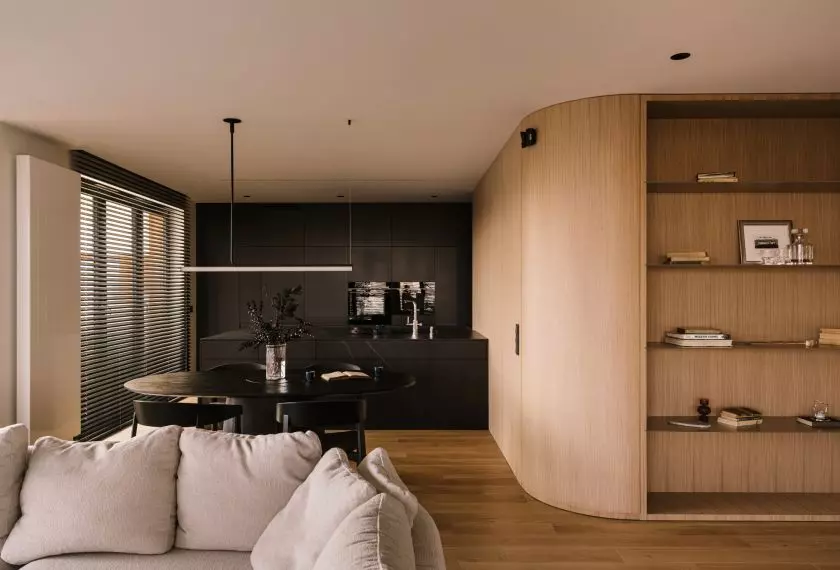
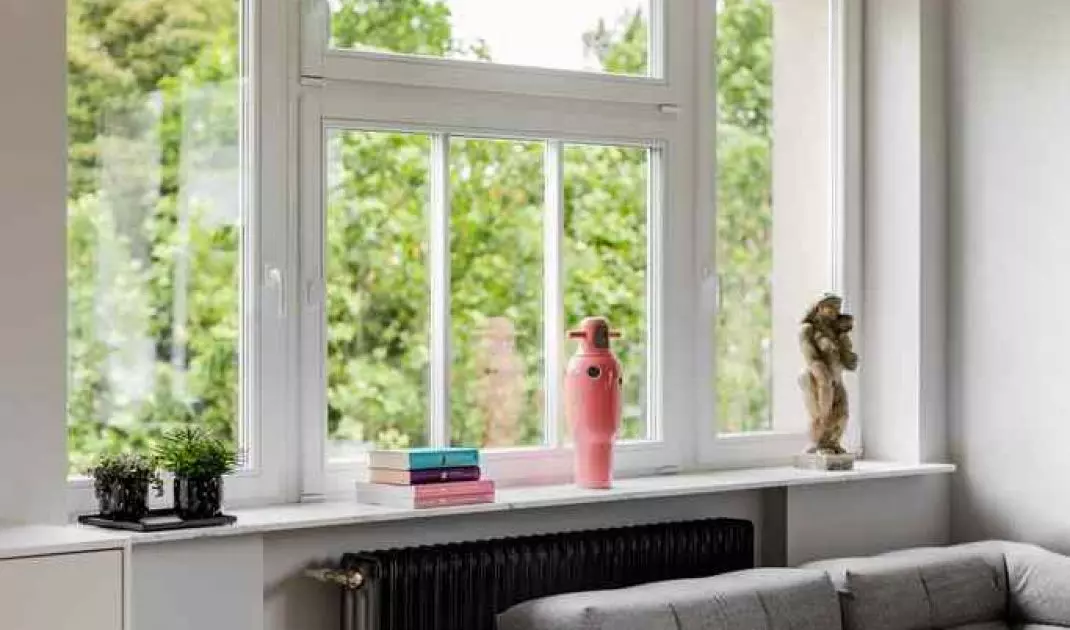
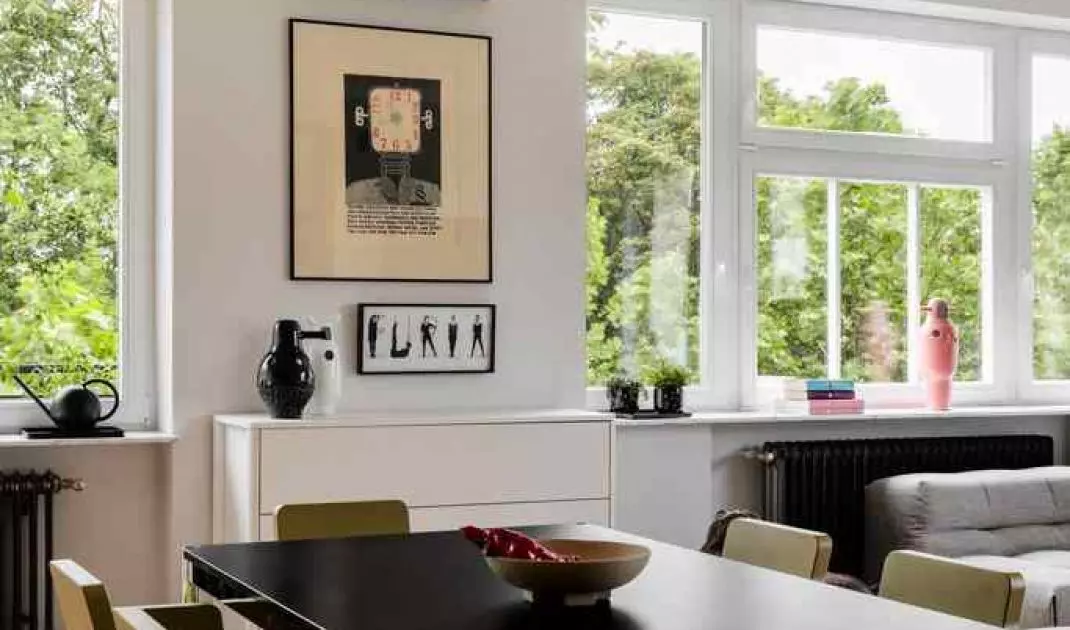
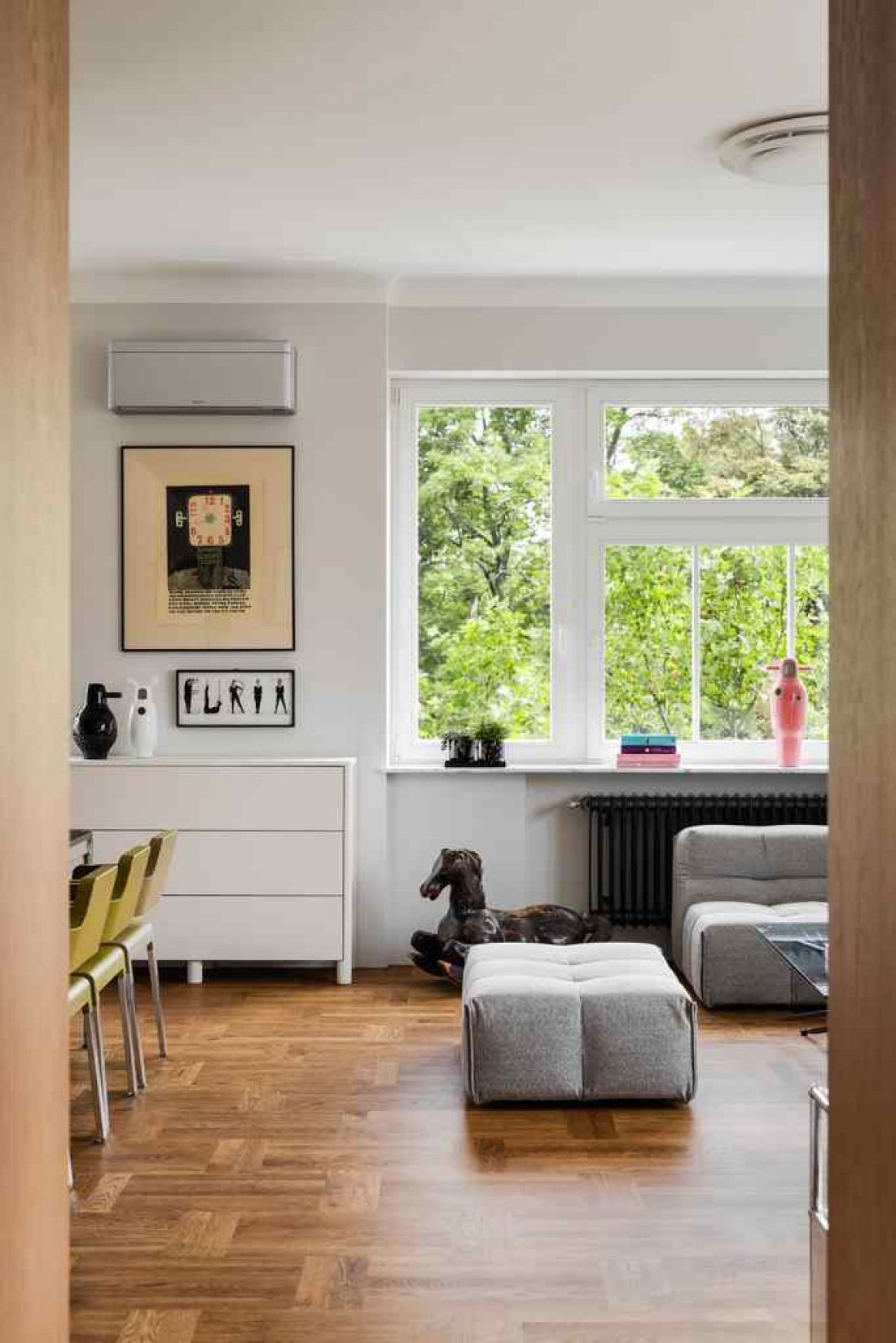
The living room completes this picture. A soft, quilted sofa by Veer in a shade of dove gray, next to it a Maggiolina armchair and a table with a glass top - a combination that combines modern comfort with refined simplicity. The walls are decorated with paintings, prints and sculptures - among them works by contemporary artists, including Jaime Hayon. The interior becomes a gallery of everyday life, where every detail has meaning and every object has a story. This part of the apartment best captures the idea of the project - a balance between art and function. The space is open, but not cold. Artistic, but friendly in everyday use. Everything is in its place here, although nothing seems forced.
Apartment in Stary Mokotow
photo by Patryk Polewany
Bedroom. Time to breathe
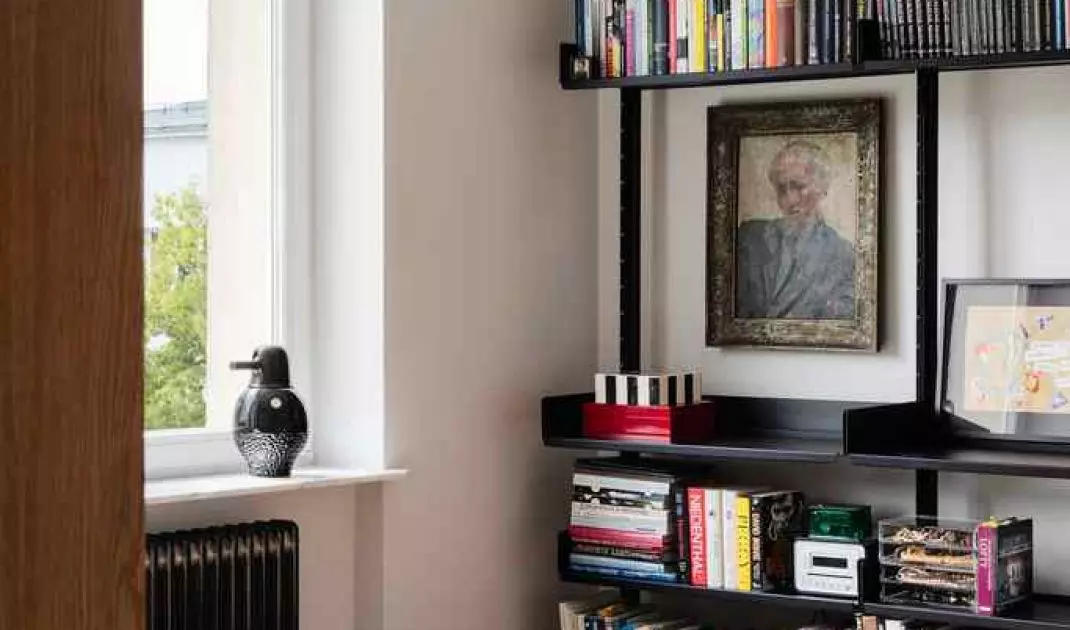
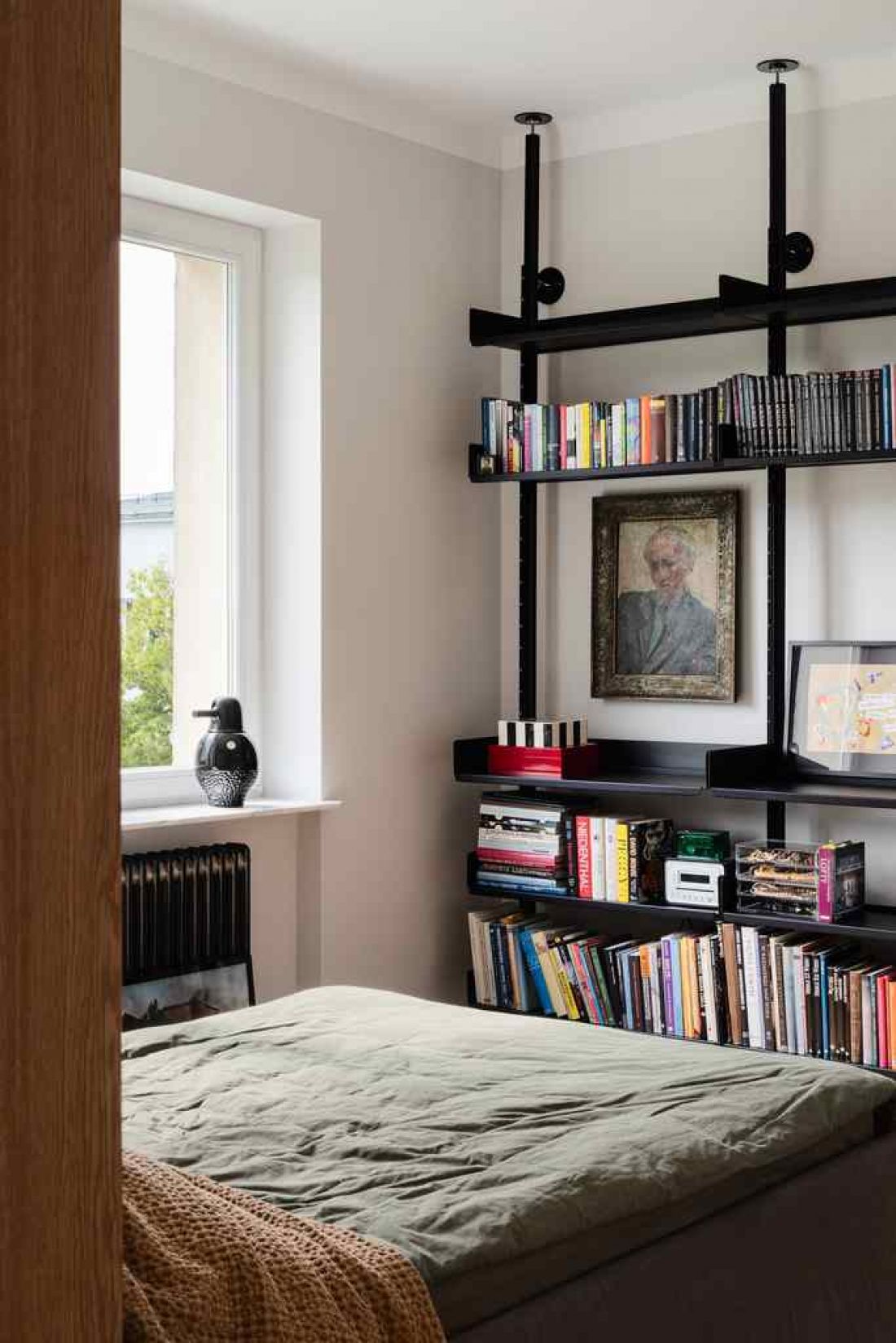
Behind the living area is the bedroom - calm, full of light, wrapped in a neutral color palette. The focal point of the interior became a De Padova bookcase, a piece of furniture with a history, repurchased from a friendly architect. It was around it that the entire arrangement was built. Books on art and architecture were arranged on the shelves, with small sculptures and prints in between. The color scheme remains consistent with the rest of the apartment - whites, beiges, subtle grays. The light naturally softens, and the atmosphere is conducive to tranquility. The bedroom is combined with a dressing room, from which one can return to the hall. This smooth circulation of space reinforces the sense of harmony - nothing ends here, everything remains in gentle motion.
The owner's bedroom
photo by Patryk Polewany
Bathroom. A departure towards the classics
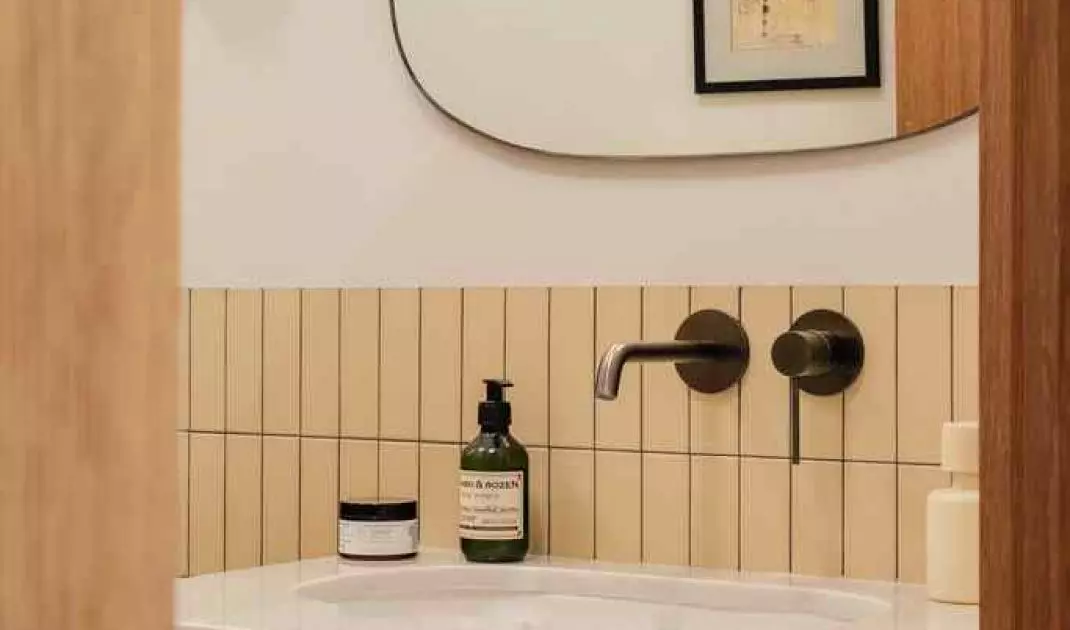
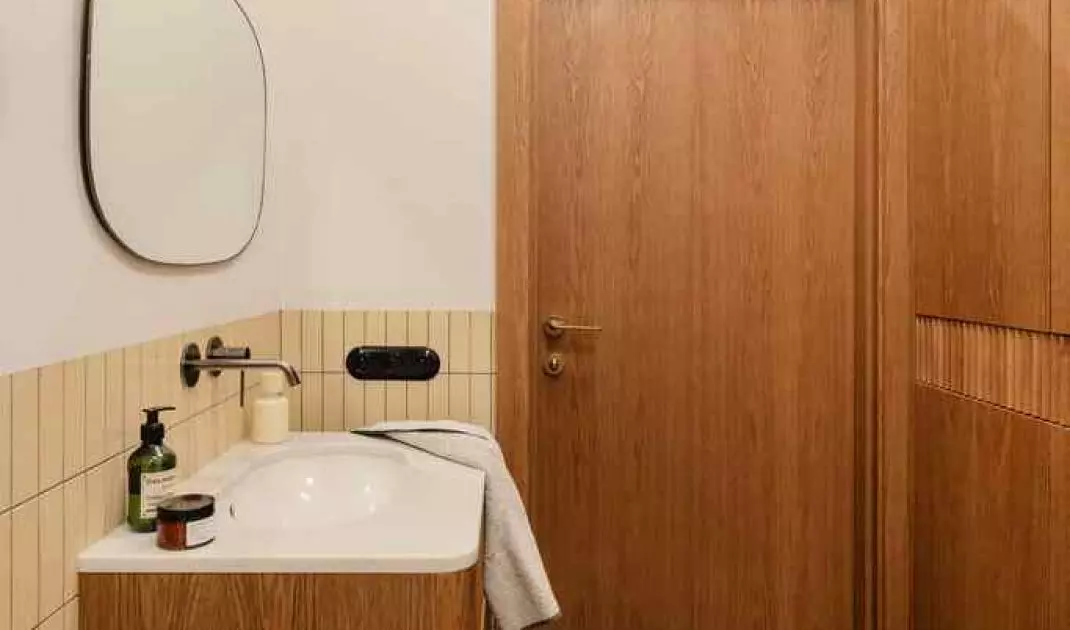
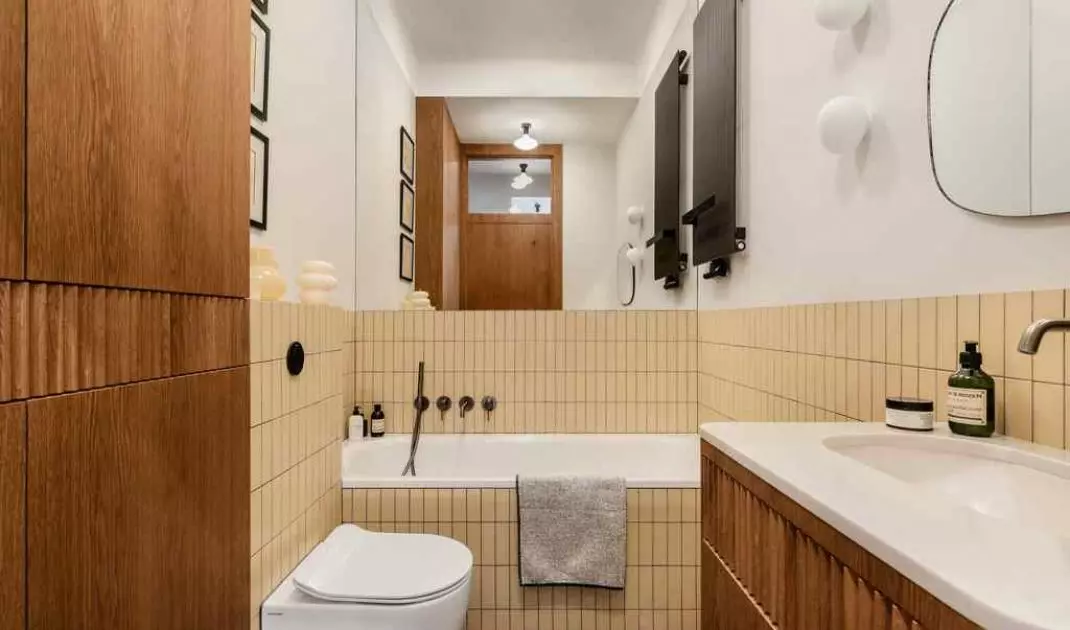
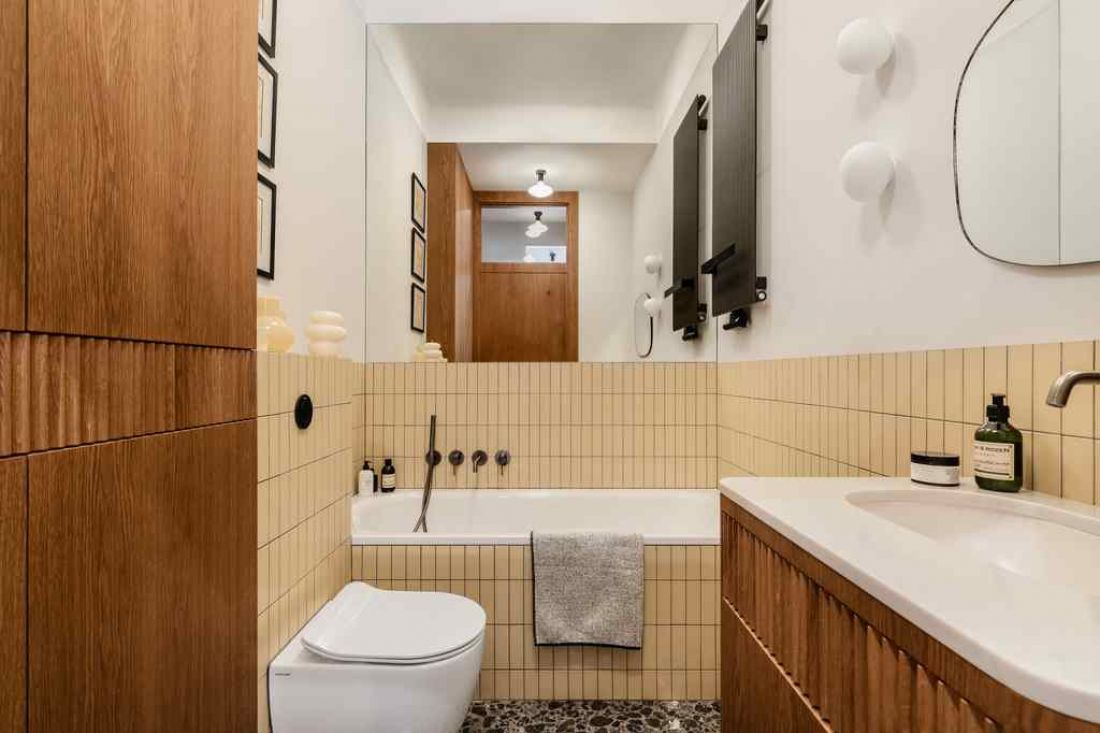
The bathroom completes the story - a contemporary interpretation of the style of decades ago. The vertically stacked tiles in a shade of warm brick, contrasting grout and wooden built-ins evoke the spirit of the 1970s, but in an elegant, streamlined way. Fluted fronts allude to motifs from the kitchen, tying the space together. Terrazzo appears on the floor - a material known from Warsaw tenements, returning here in a new context. It's an interior that doesn't need embellishments - a juxtaposition of textures, light and proportions is enough.
Bathroom in an apartment in Stary Mokotow.
photo by Patryk Polewany
The art of everyday life
The apartment in Stary Mokotow is an example of how the past and present can be sensitively combined. It is an interior where design is not a decoration, but a way of thinking. The architects at FUGA Architecture Interiors have created a space with a clear identity, where every design decision is for harmony, not effect.
Apartment in Stary Mokotow
photo by Patryk Polewany
The apartment, which was supposed to be an investment, became a home - a personal gallery, full of memories, emotions and meanings.