


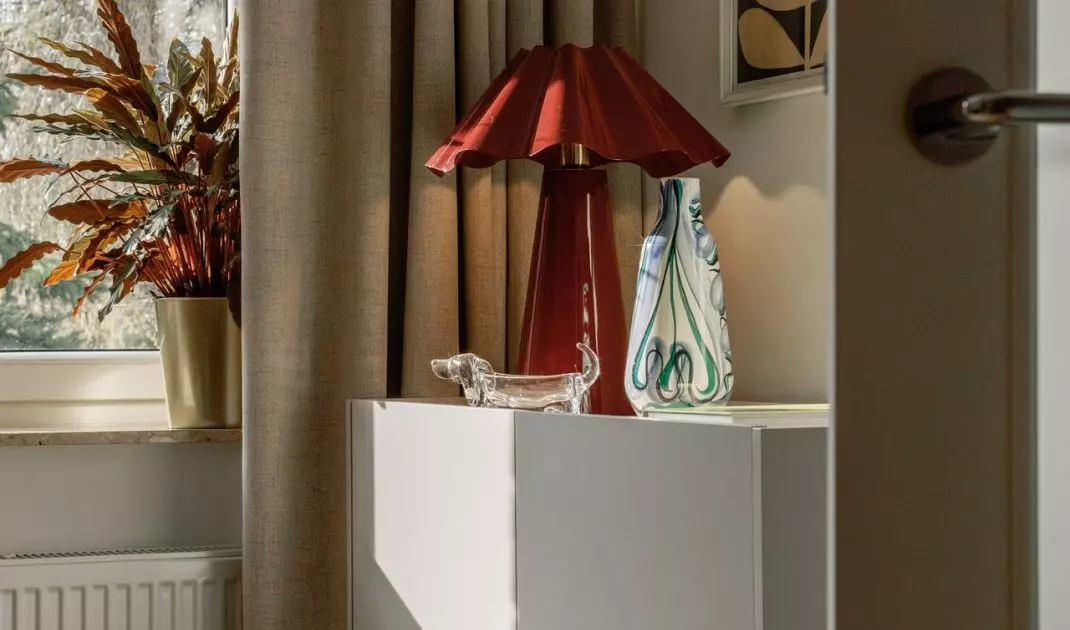
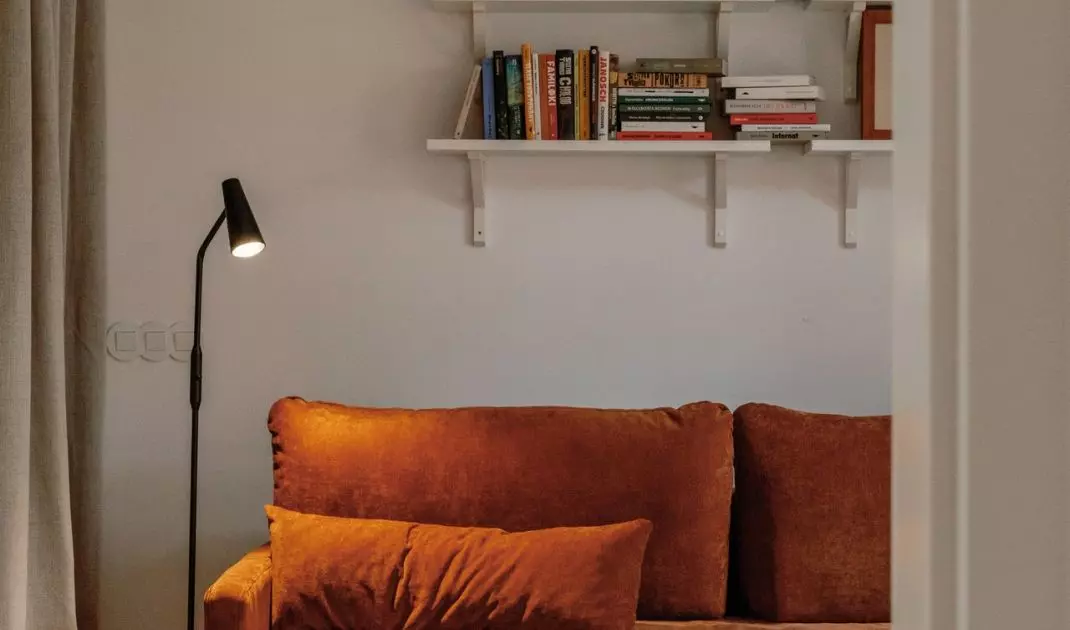
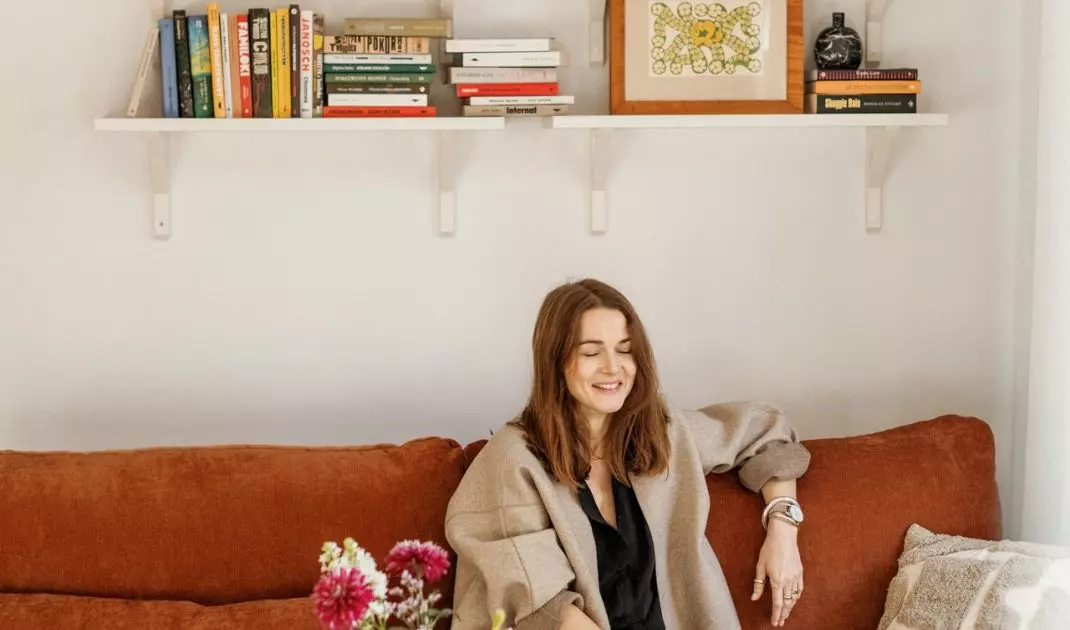
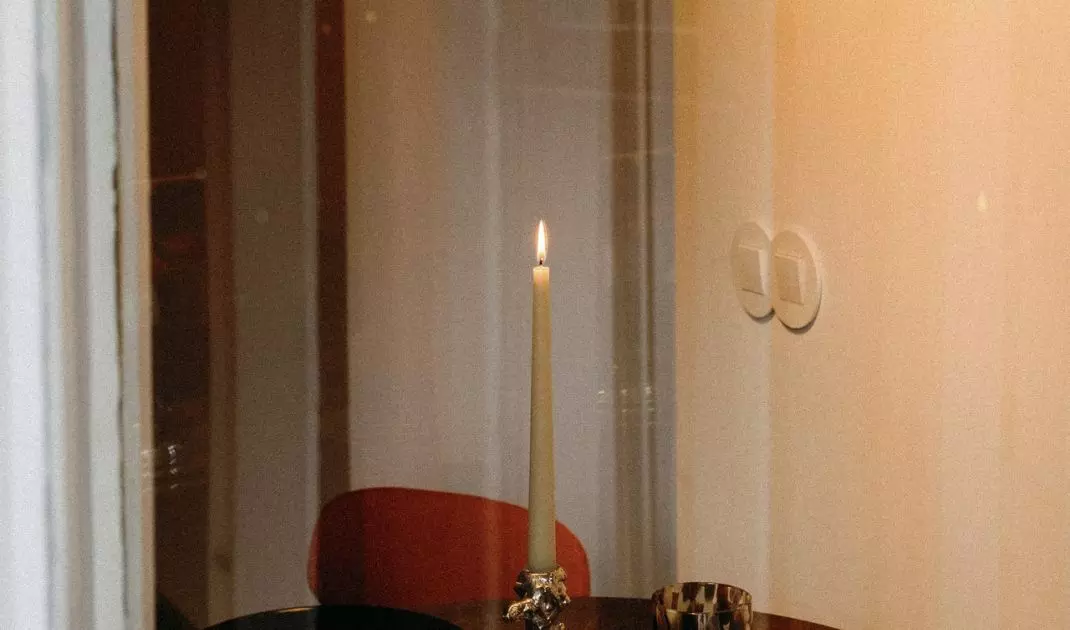
How can you decorate an apartment in a historic neighborhood without turning it into a stylized reconstruction? Anna Wawrzyniak’s design from Laury Studio in Nikiszowiec shows that history can be preserved in a different way — through details, materials, and traces of its past life, combined with contemporary solutions.
Instead of erasing history — bring out its traces
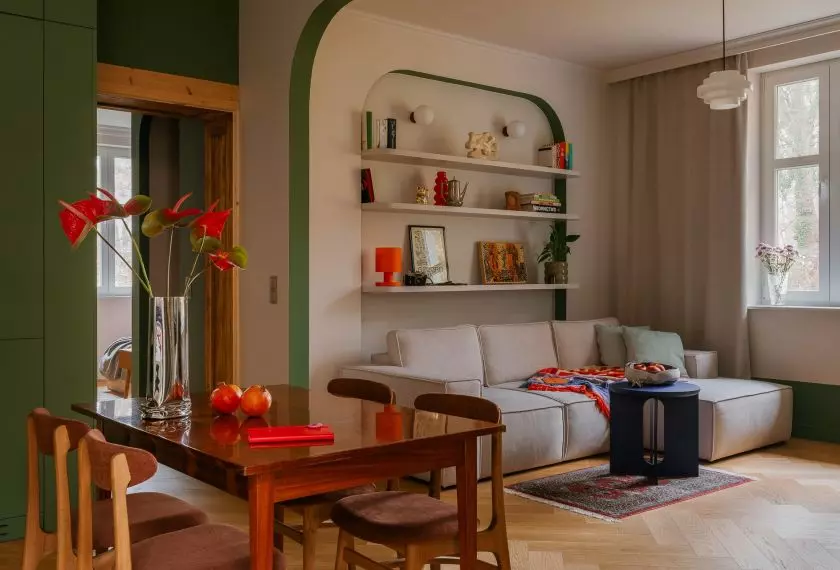
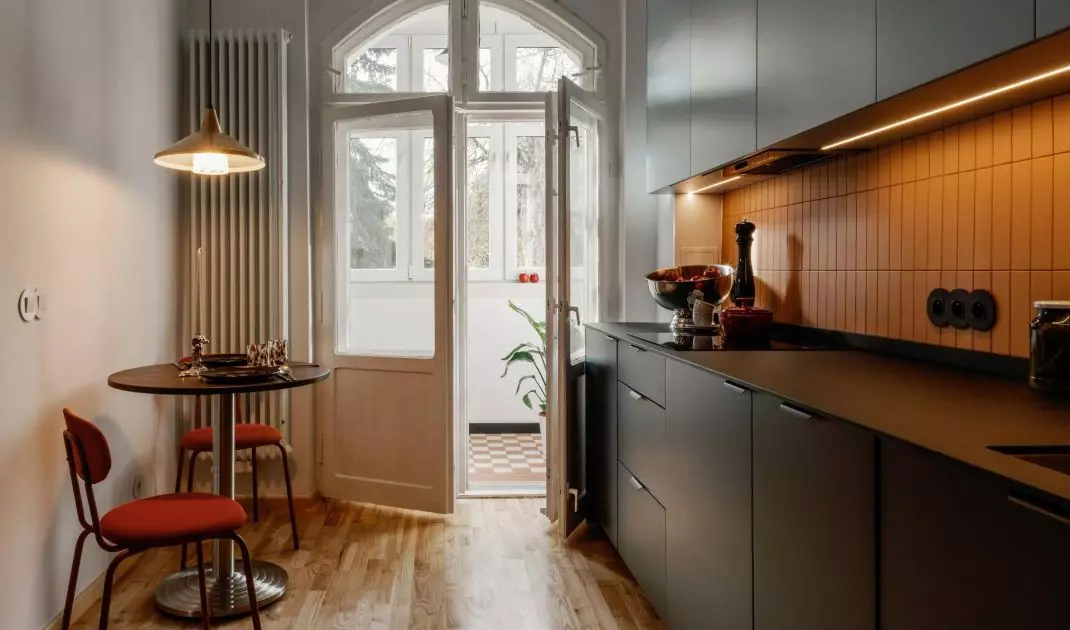
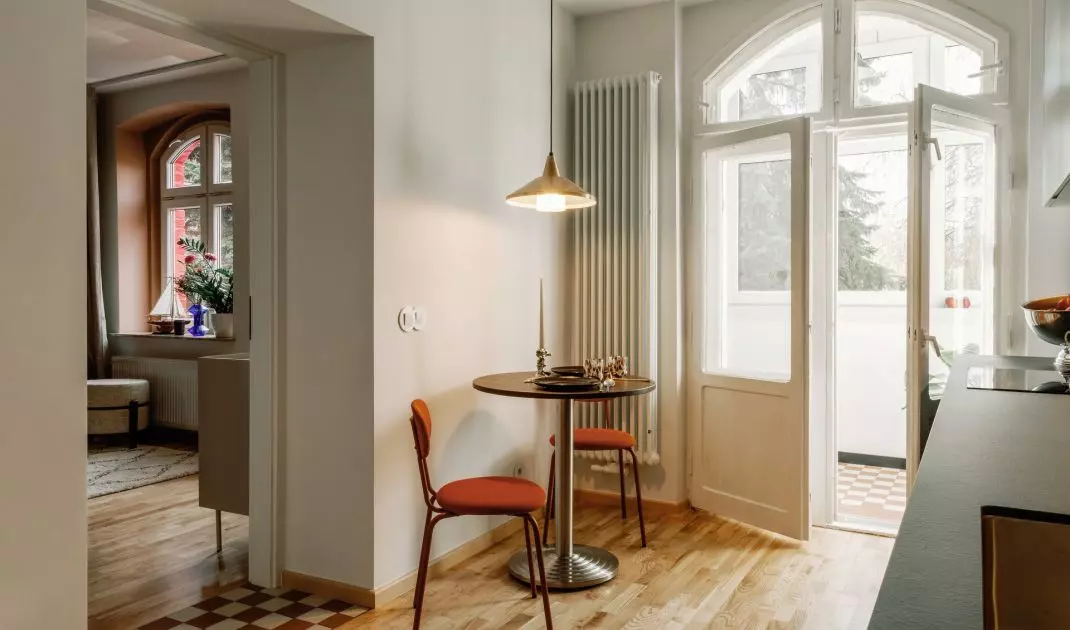
The starting point for the project was an apartment with an unusual layout and in very poor technical condition. The space required a thorough renovation, and an additional challenge was presented by three different floor levels, each of which was in poor condition. With a limited budget, it was necessary to carefully define priorities and find solutions that would be both functional and decorative. One of the biggest expenses turned out to be the new flooring. Ultimately, it became one of the most important elements of the interior design. The natural ash parquet brought warmth to the interior and served as a calm backdrop for more striking materials and colors. However, the project did not aim for a complete transformation of the apartment. On the contrary — a key objective was to preserve its existing structure.
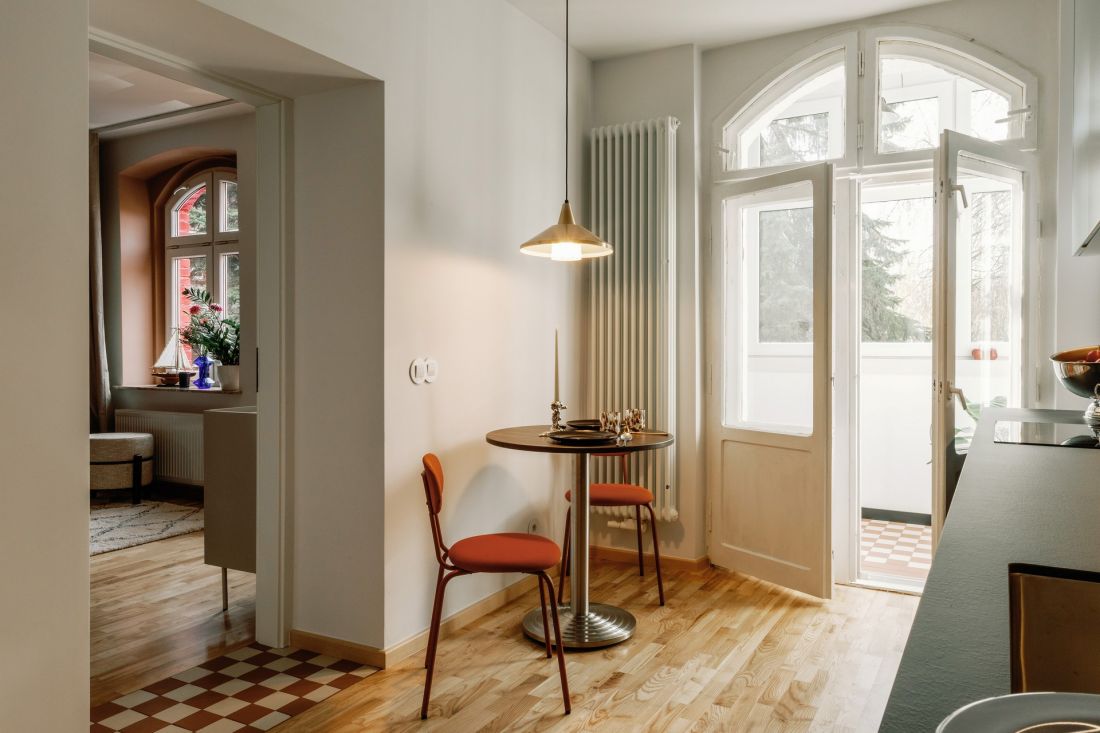
Photo: Anna Pietras
The apartment’s layout remained largely unchanged
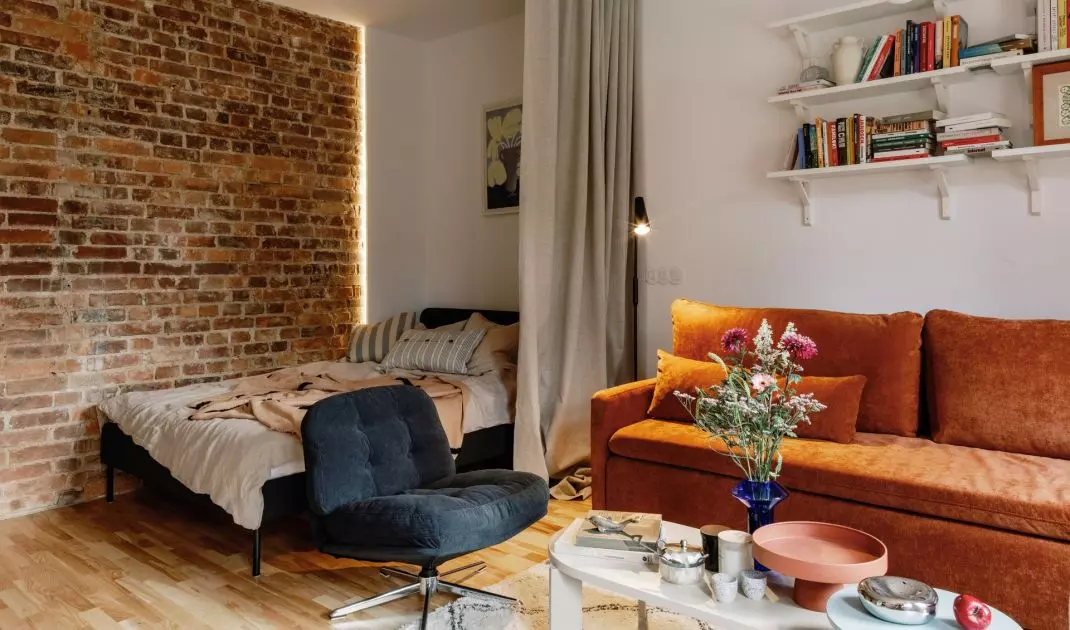
The client wanted to maintain the division into two rooms. The kitchen and the living-bedroom area are separated by a thick, approximately 50-centimeter-wide brick wall. Instead of removing it to open up the space, the original layout was retained and complemented with a stylized door. This solution preserved the apartment’s character while creating an interior that meets contemporary needs. In the main room , an additional division was created using a lightweight curtain that separates the living area from the bedroom and walk-in closet. This fabric partition does not close off the space the way a traditional wall does. It can be moved aside to reveal the bedroom area or drawn closed when more privacy is needed. Thanks to this, the designers were able to create several functional zones within the small apartment without adding additional permanent partitions.
The brick accents echo the Nikiszowiec style.
Photo: Anna Pietras
Nikiszowiec as Inspiration, Not Decoration
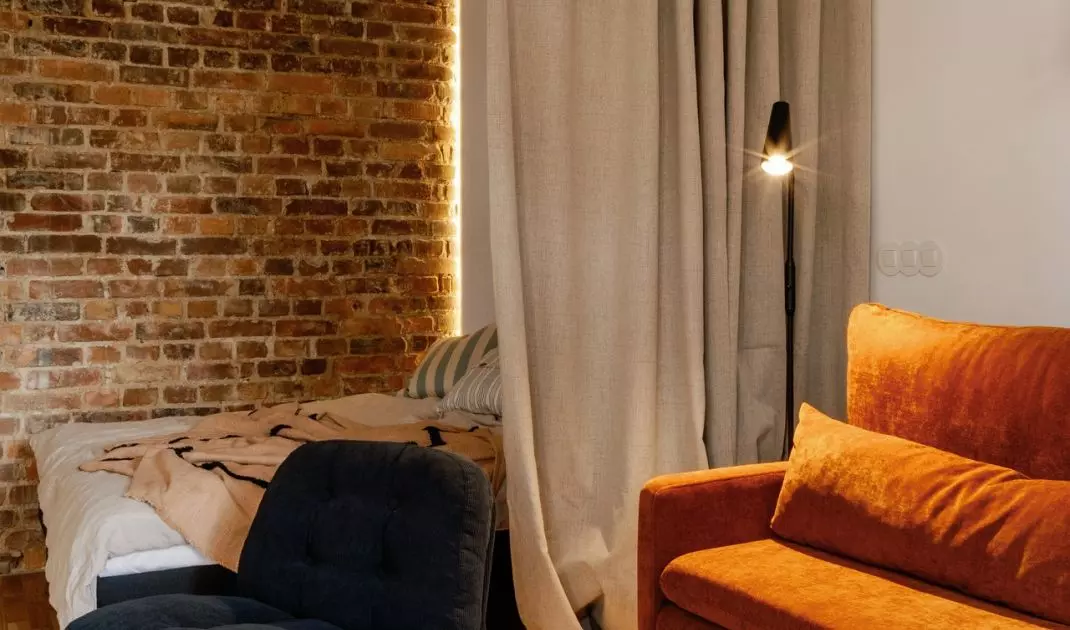
The interior does not attempt to literally recreate the historical character of Nikiszowiec. Instead, the design draws on individual motifs from the site and translates them into a contemporary language. The most striking example is the brick. An original section of the wall was uncovered on one of the walls and subtly highlighted. It was not treated as a decoration added to the new interior — it is an authentic element of the apartment that preserves a trace of its past history. The materials used in the design serve a similar purpose. Ash parquet flooring is paired with stone and tiles whose texture evokes brick. The austerity of these surfaces is softened by color, primarily the blues and navies found in the kitchen. In this way, the contemporary elements do not attempt to imitate the old architecture. Rather, they engage in a dialogue with it.
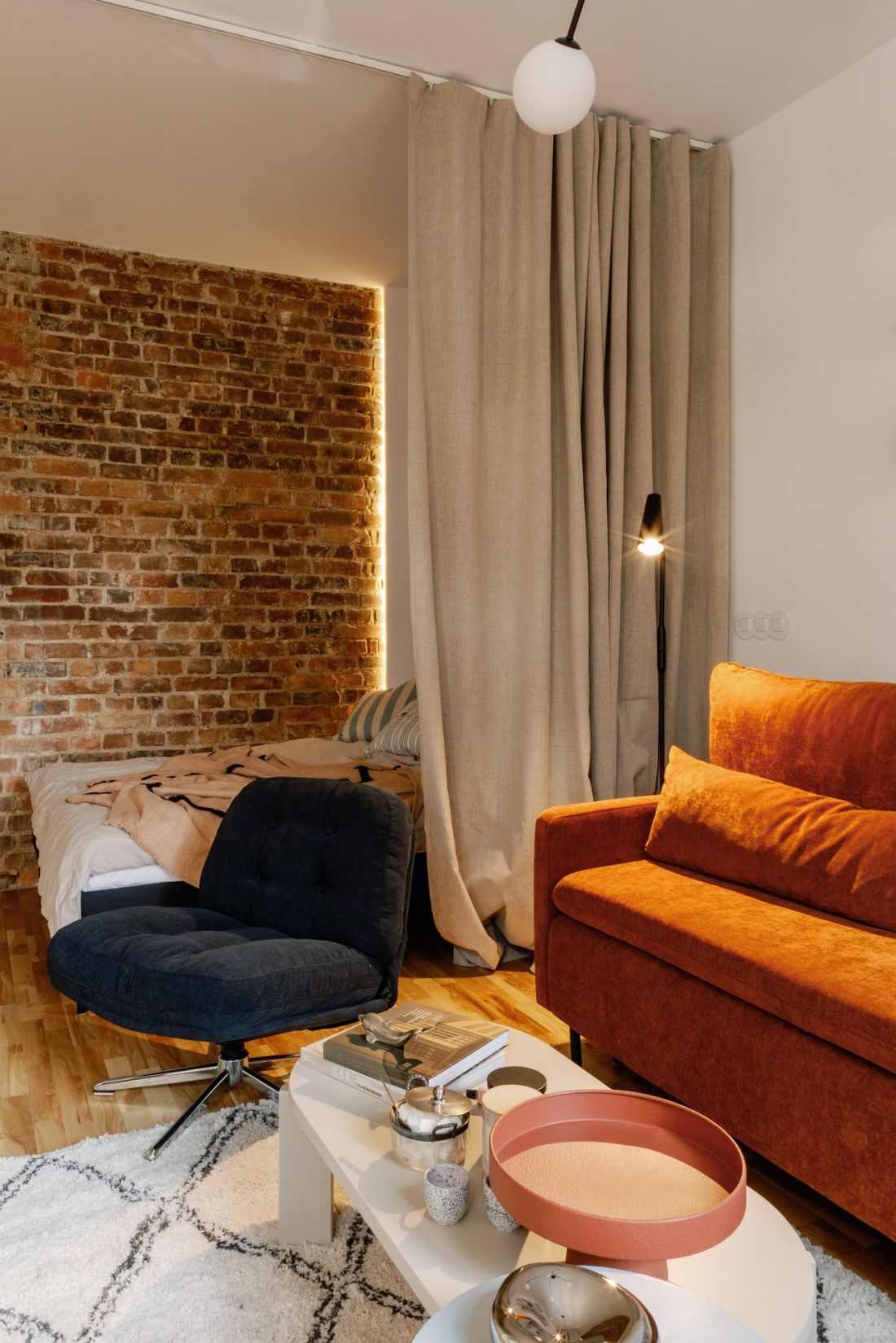
The brick wall has been backlit, which further emphasizes its character.
Photo: Anna Pietras
A kitchen inspired by Silesian byfij
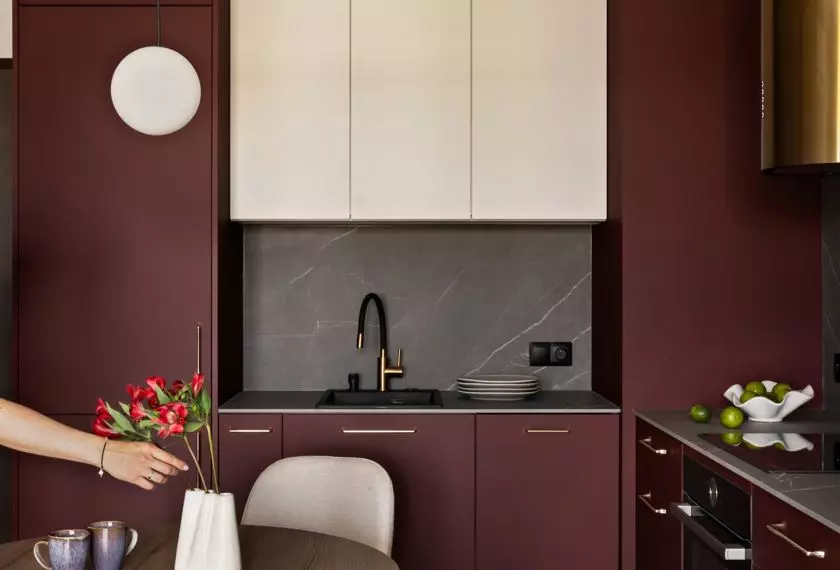
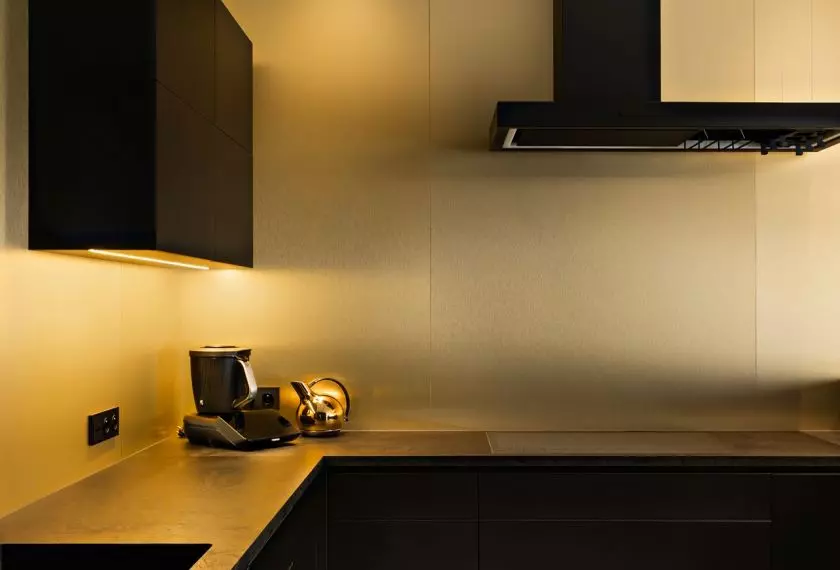
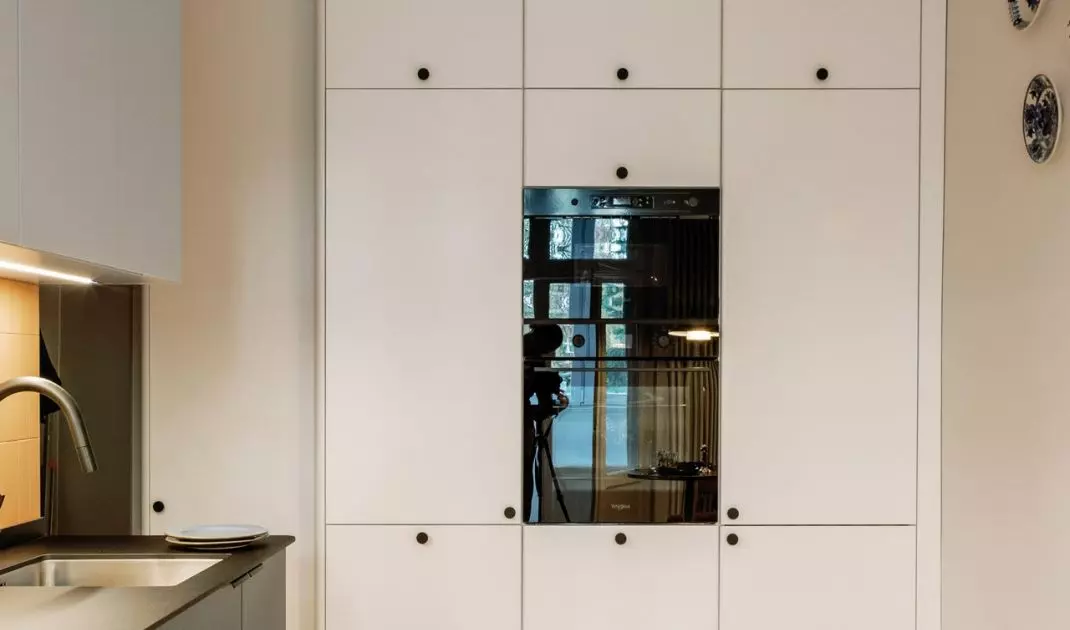
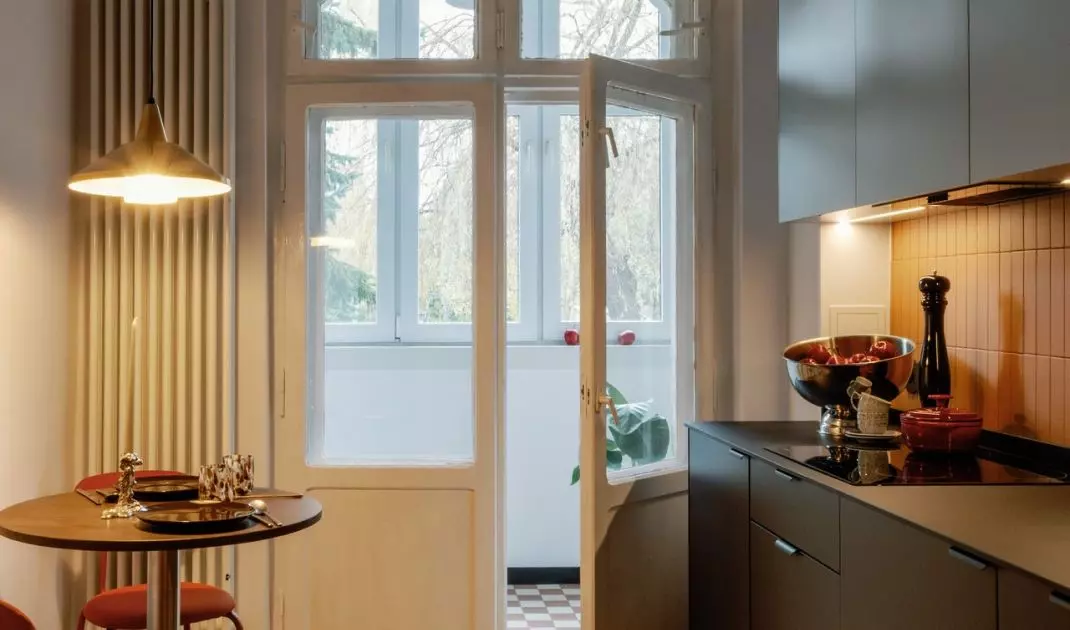
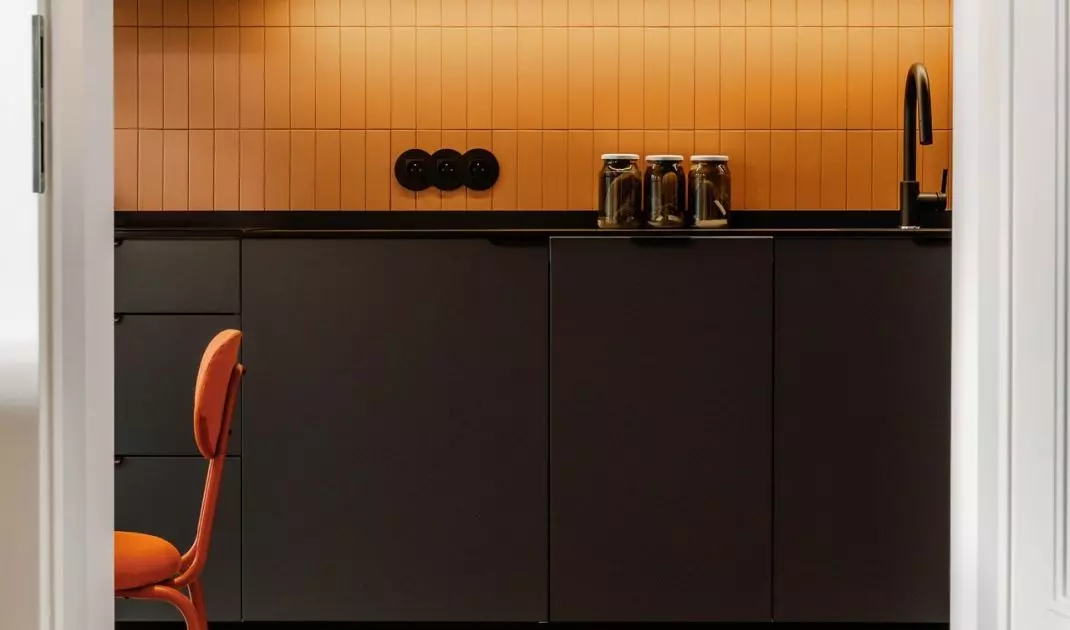
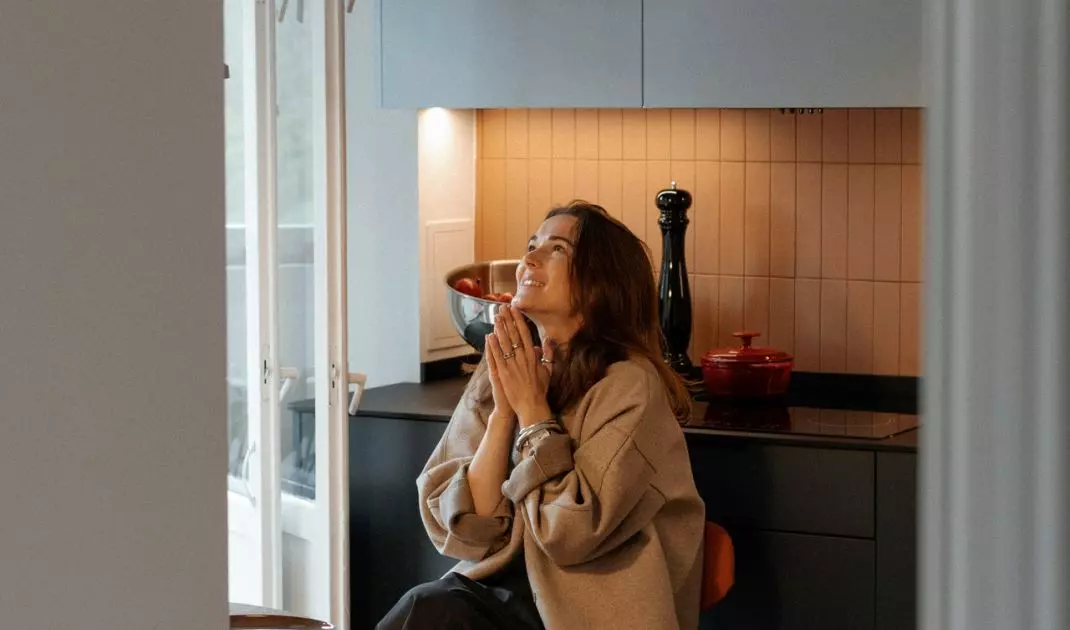
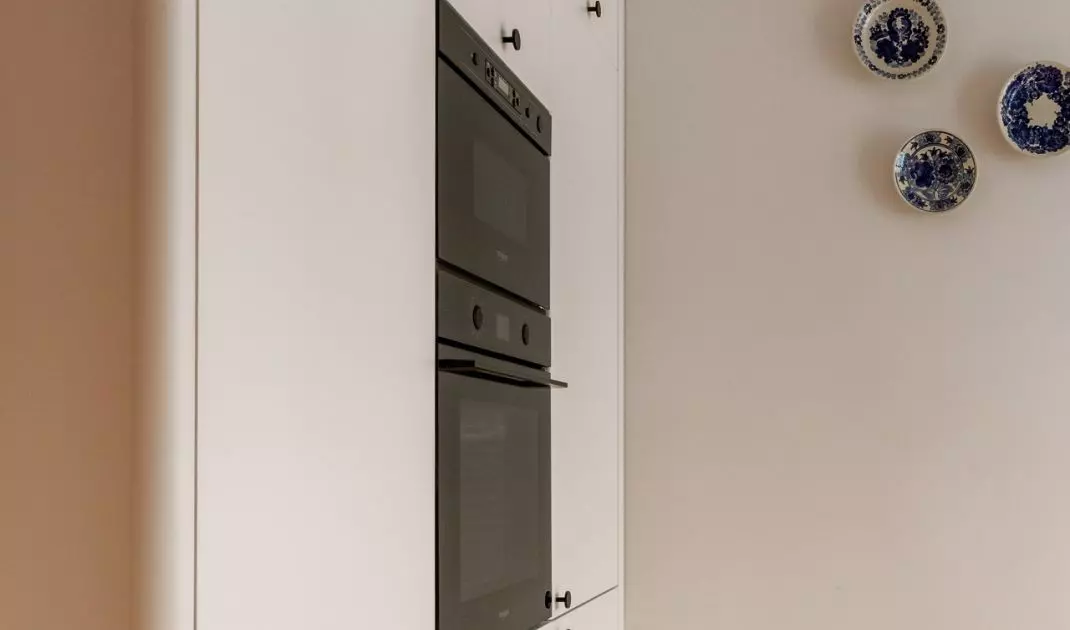
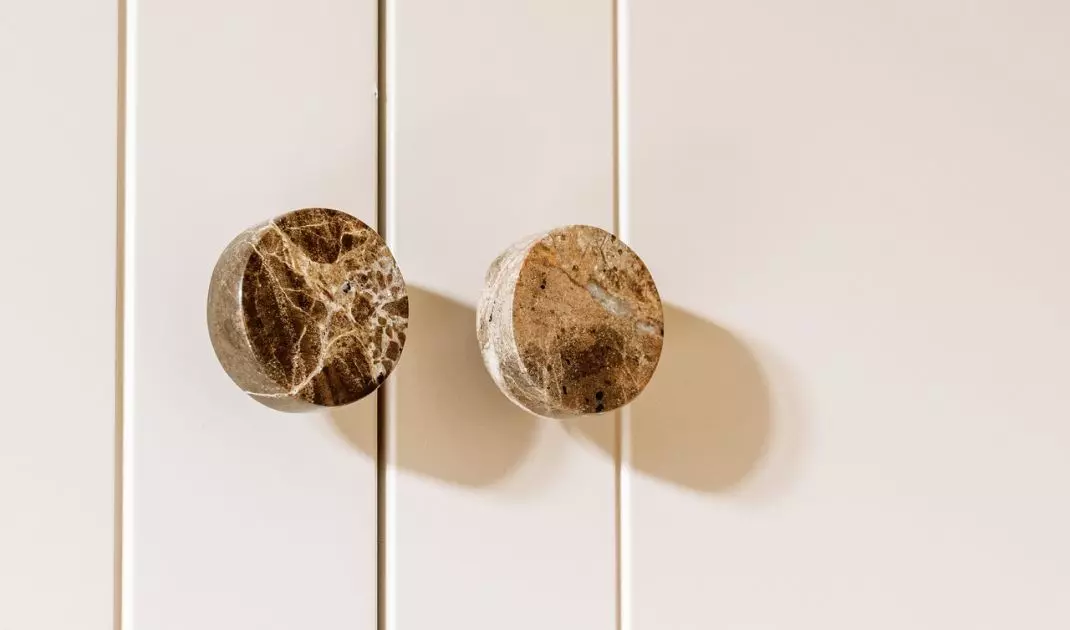
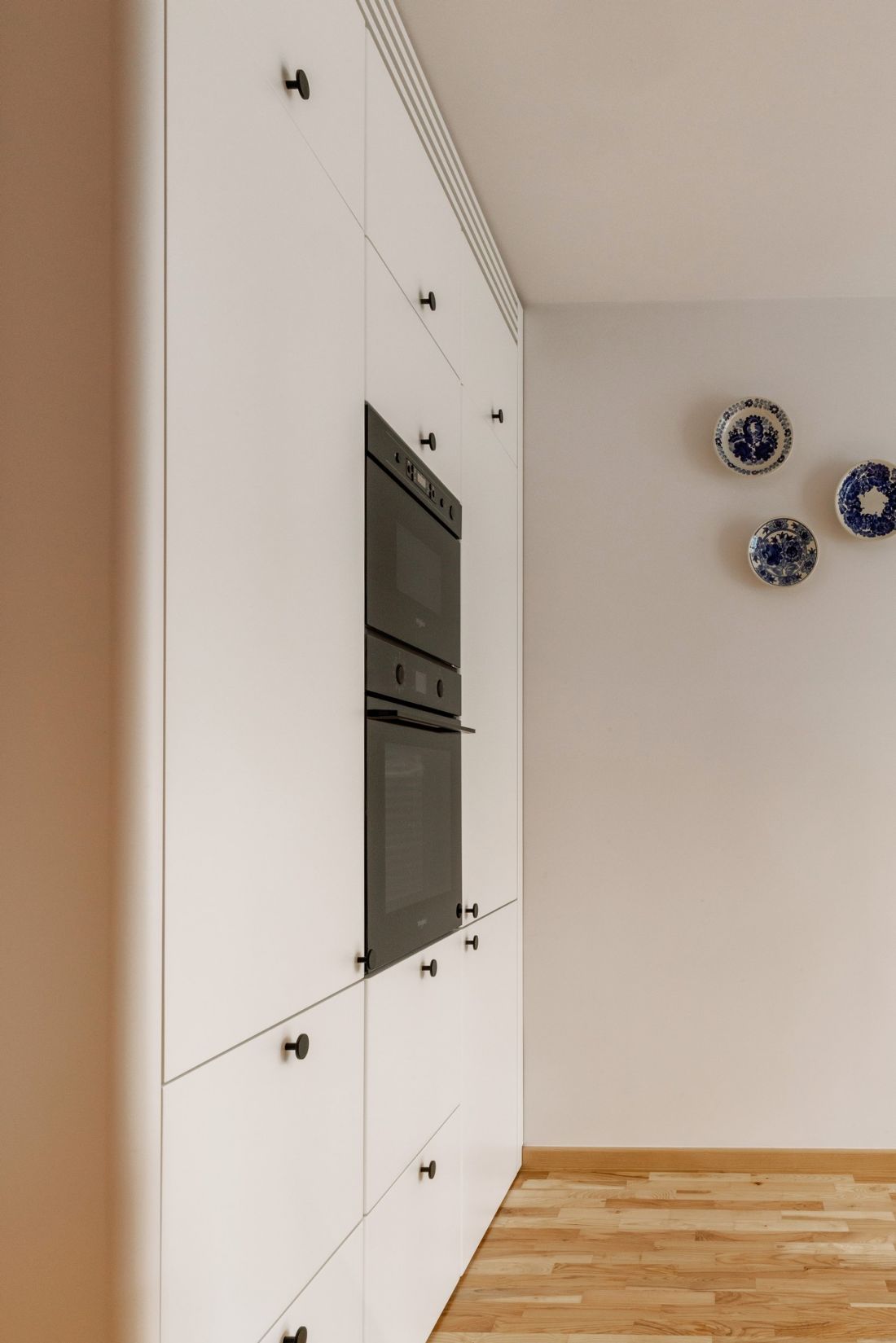
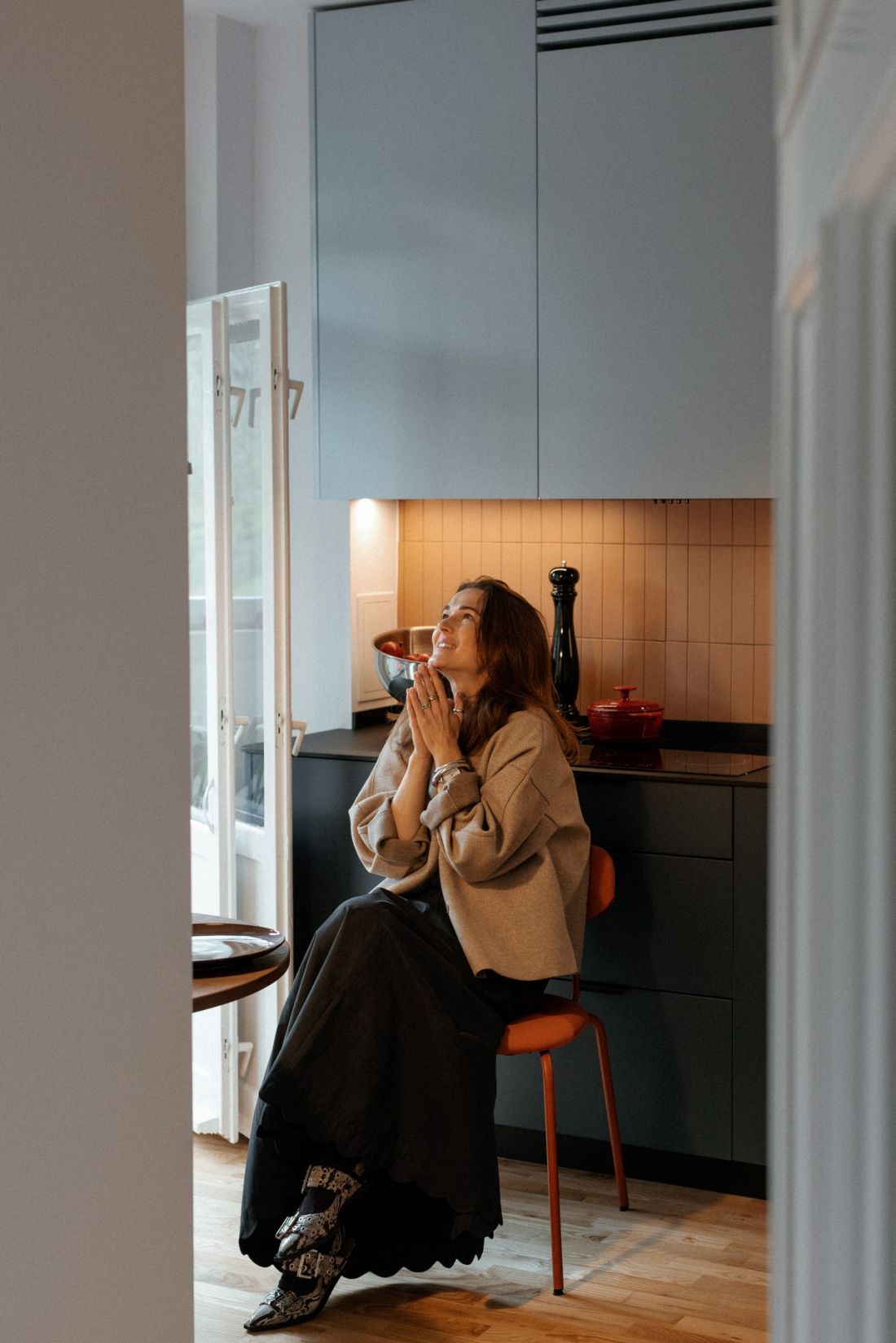
The kitchen features the most local references. Its cabinetry was designed to blend contemporary functionality with a form associated with Silesian tradition. The tall cabinets are a contemporary nod to the “byfyj” — a traditional Silesian sideboard. Rather than copying its appearance, the design draws on the distinctive presence of a large, enclosed piece of furniture and reinterprets it. The gently rounded fronts soften the compact form of the cabinetry, while the black handles evoke the image of small pieces of coal. It’s a small detail, but it clearly illustrates the design philosophy behind the entire interior: references to the location are present, but not literal. At the same time, the kitchen is, above all, functional. The cabinetry makes the most of the limited space, and the washing machine has been concealed under the countertop just outside the bathroom.
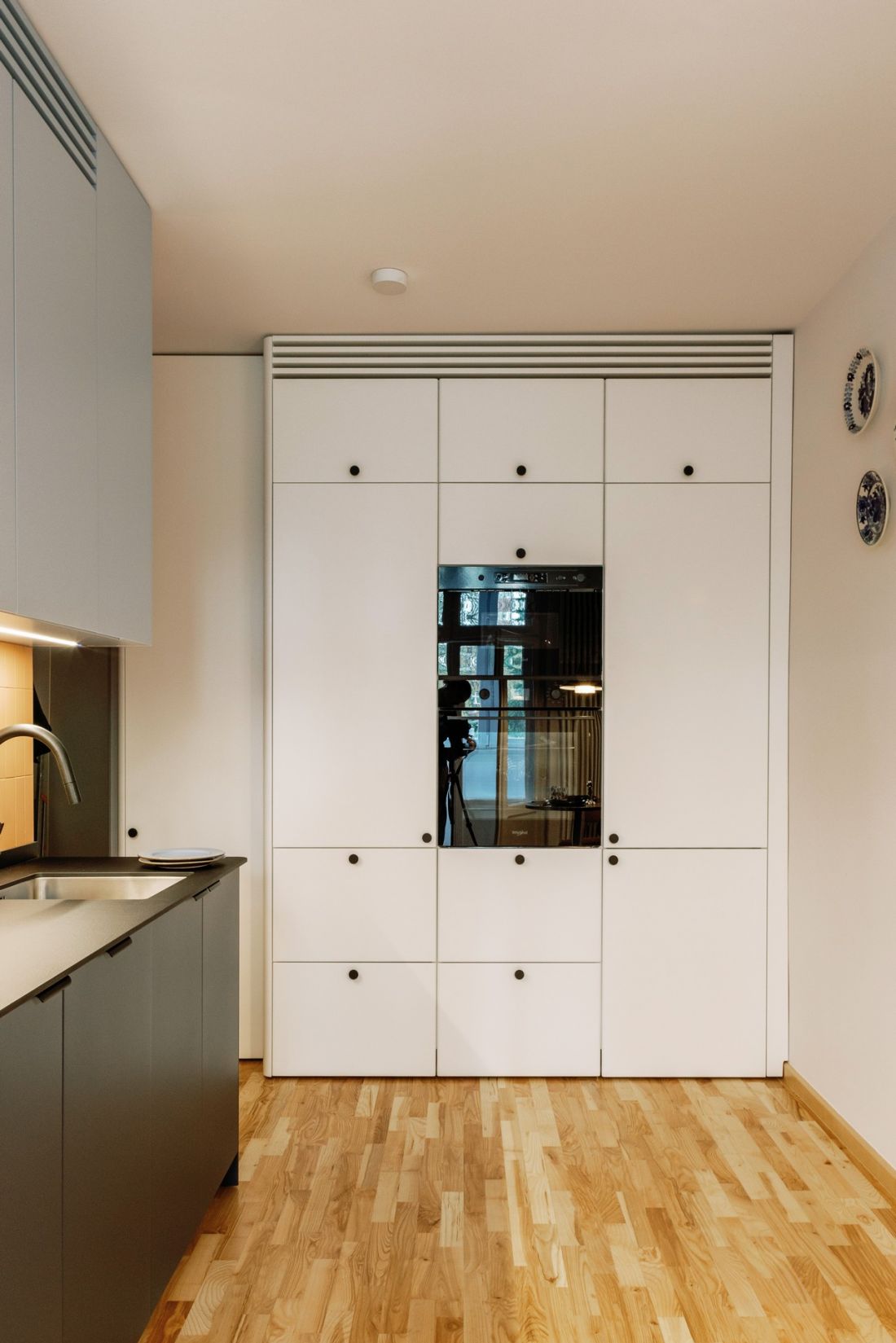
Kitchen cabinets inspired by a typical Silesian piece of furniture.
Photo: Anna Pietras
a brick-colored detail that brings order to the interior
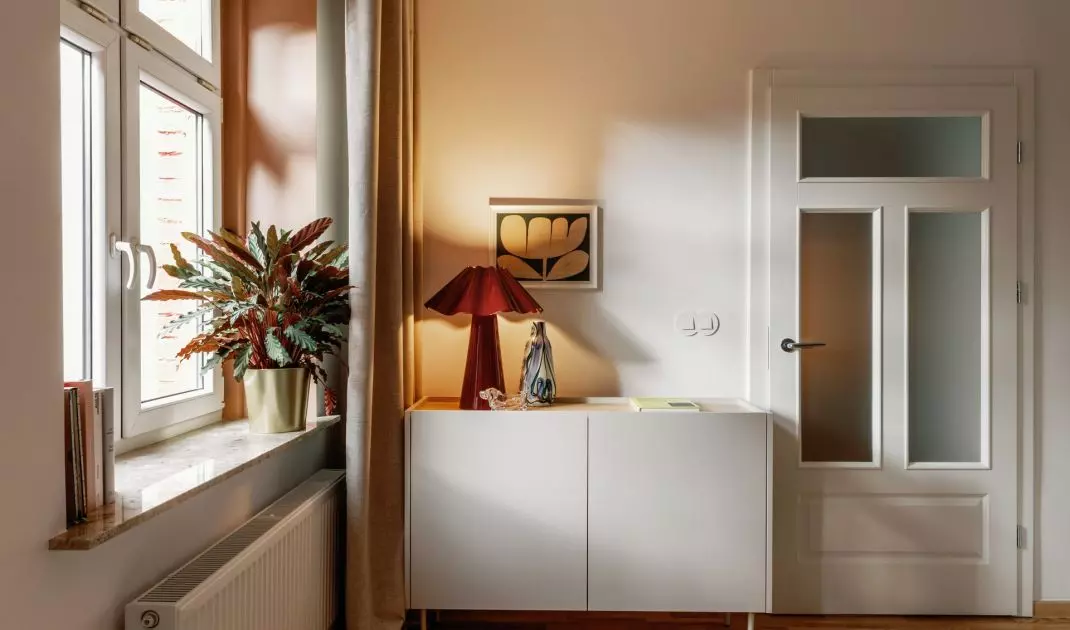
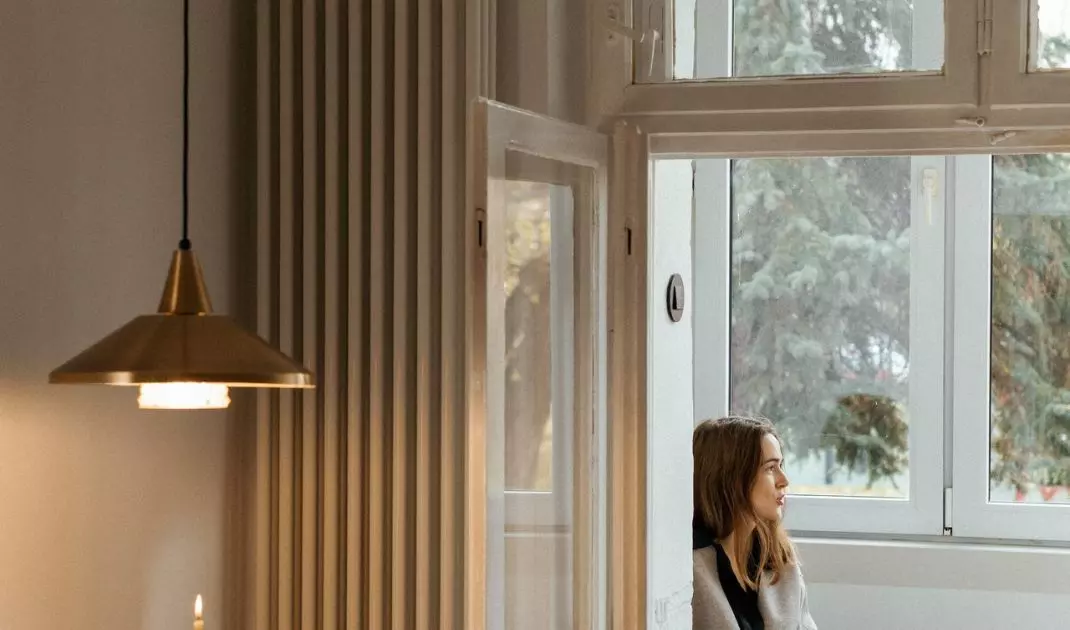
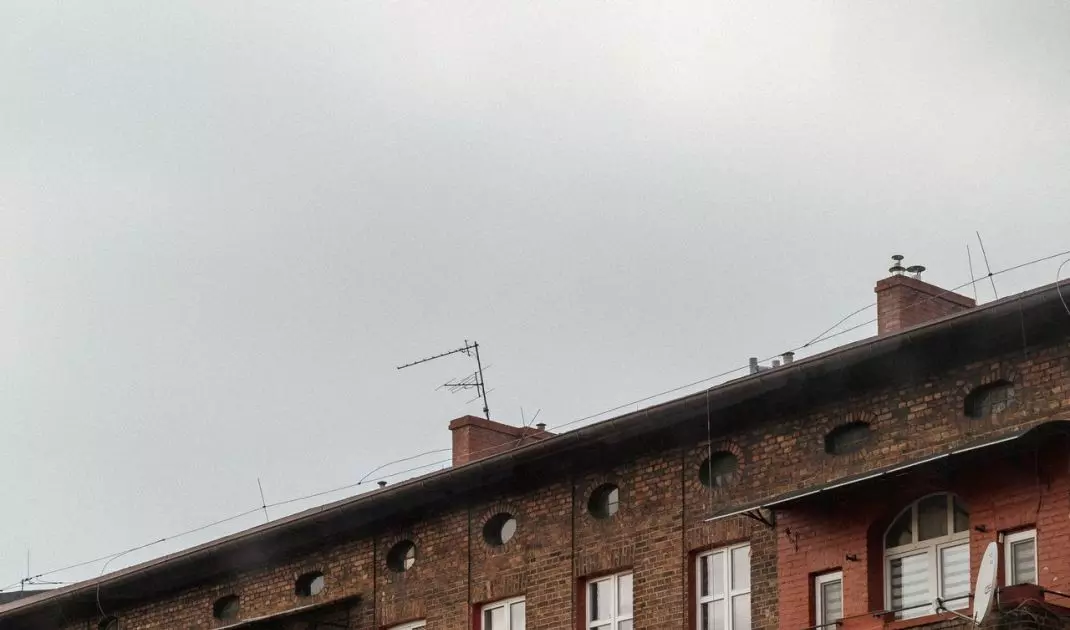
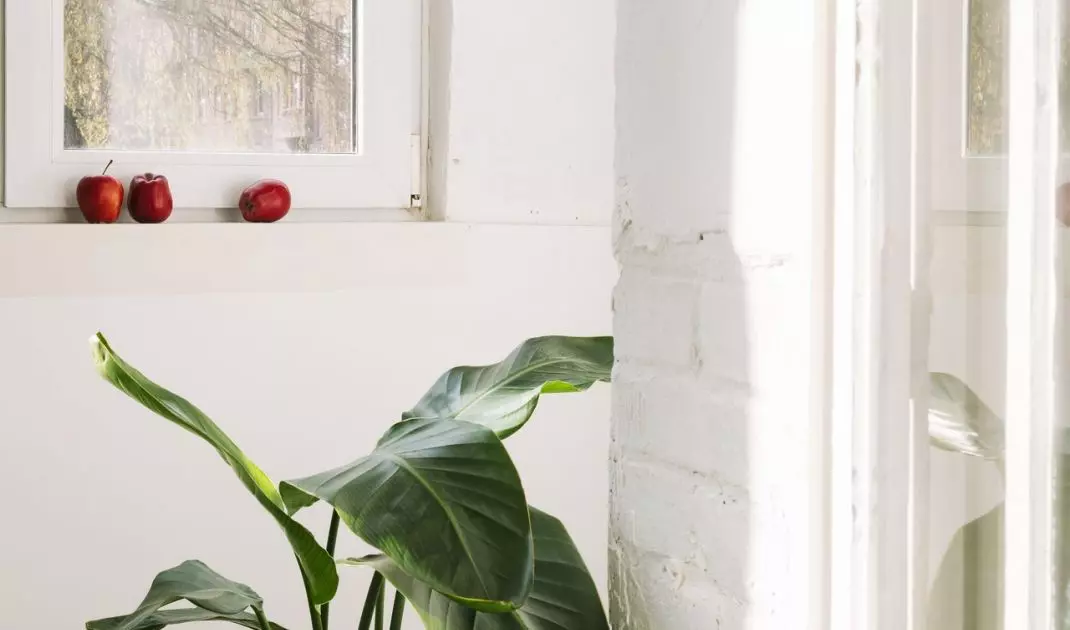
Another nod to Nikiszowiec comes in the form of colorful window frames. The red, painted finishes around the window openings are one of the district’s most recognizable architectural features. In this apartment, this motif has been reinterpreted in a more contemporary way. The window frames in the living room were given a brick-red hue that harmonizes well with the brick, wood, and other materials. However, the color serves more than just a decorative function here. Introducing it into the window recesses also helped to visually unify the older window frames. Signs of wear didn’t have to be completely hidden — they became part of the composition. This is one of the most interesting aspects of the project: instead of striving for a perfectly new interior, the designer allowed certain imperfections to become part of its character.
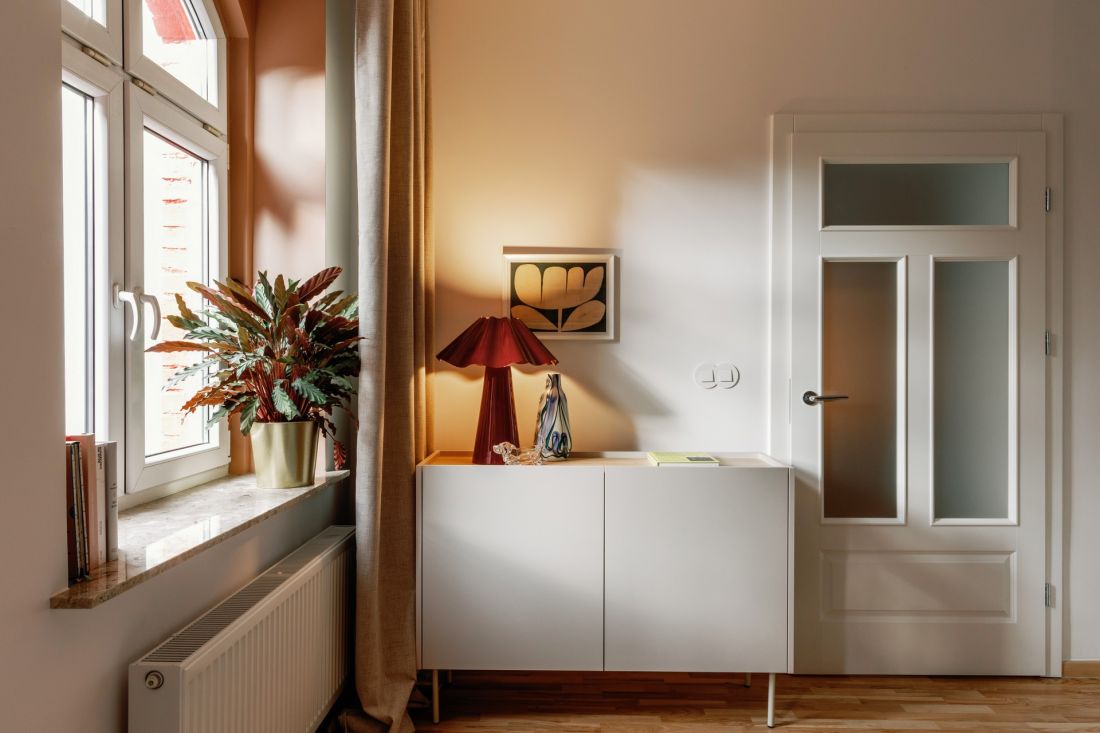
The ash parquet adds warmth. Red glyphs are visible outside the window.
Photo: Anna Pietras
A Checkerboard Pattern with a New Twist
One of the most visually striking motifs is the checkerboard pattern in shades of burgundy and beige. It appears both inside and on the loggia, creating a distinct rhythm against the backdrop of the more subdued parquet flooring. The pattern itself evokes associations with classic flooring, but the unusual color palette gives it a more contemporary feel. In a small apartment, the checkerboard pattern serves as a strong accent — it adds energy to the interior while remaining connected to its material-based, somewhat austere foundation. Importantly, the same motif extends beyond the apartment and appears on the loggia. As a result, the boundary between the interior and the exterior of the apartment becomes less distinct.
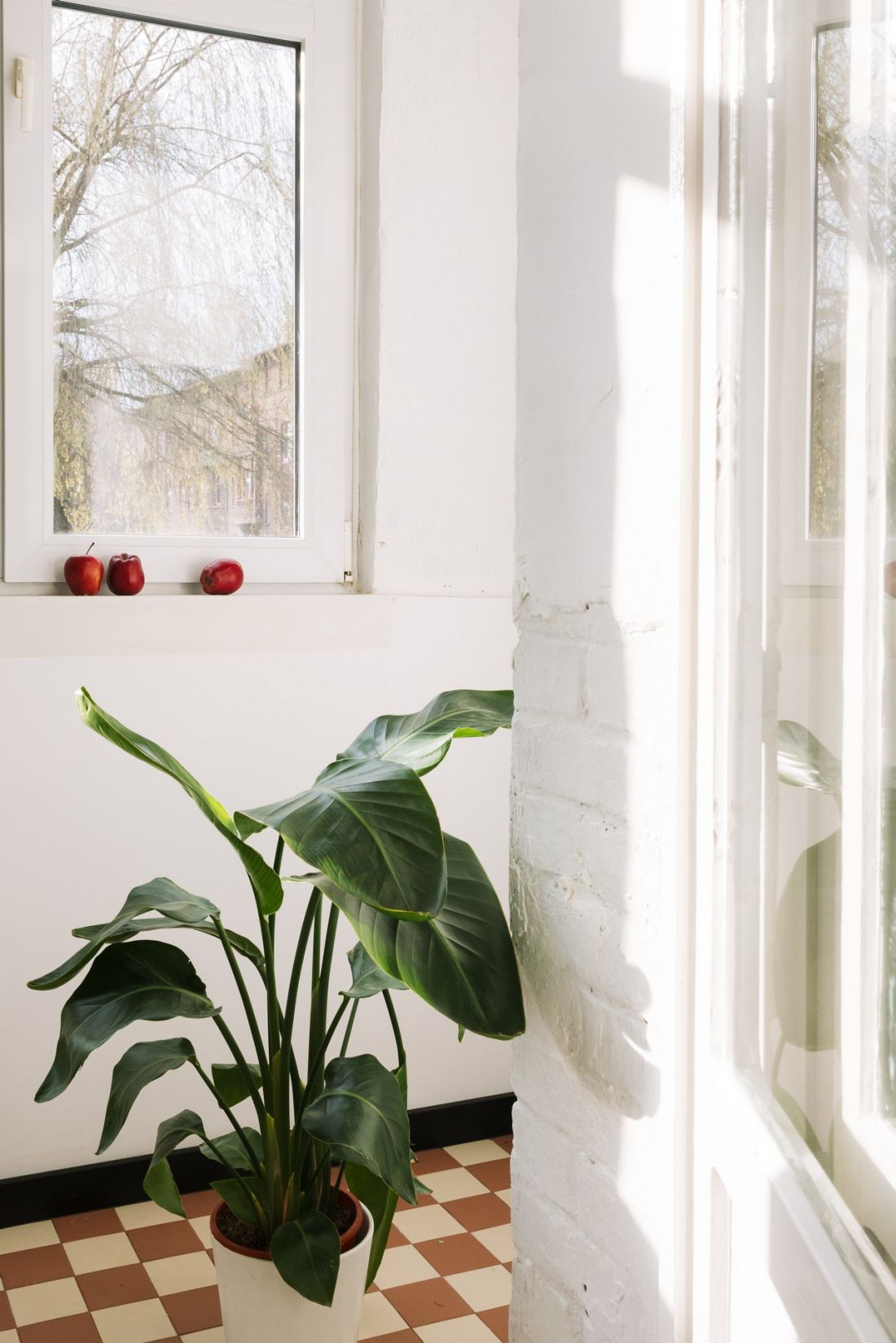
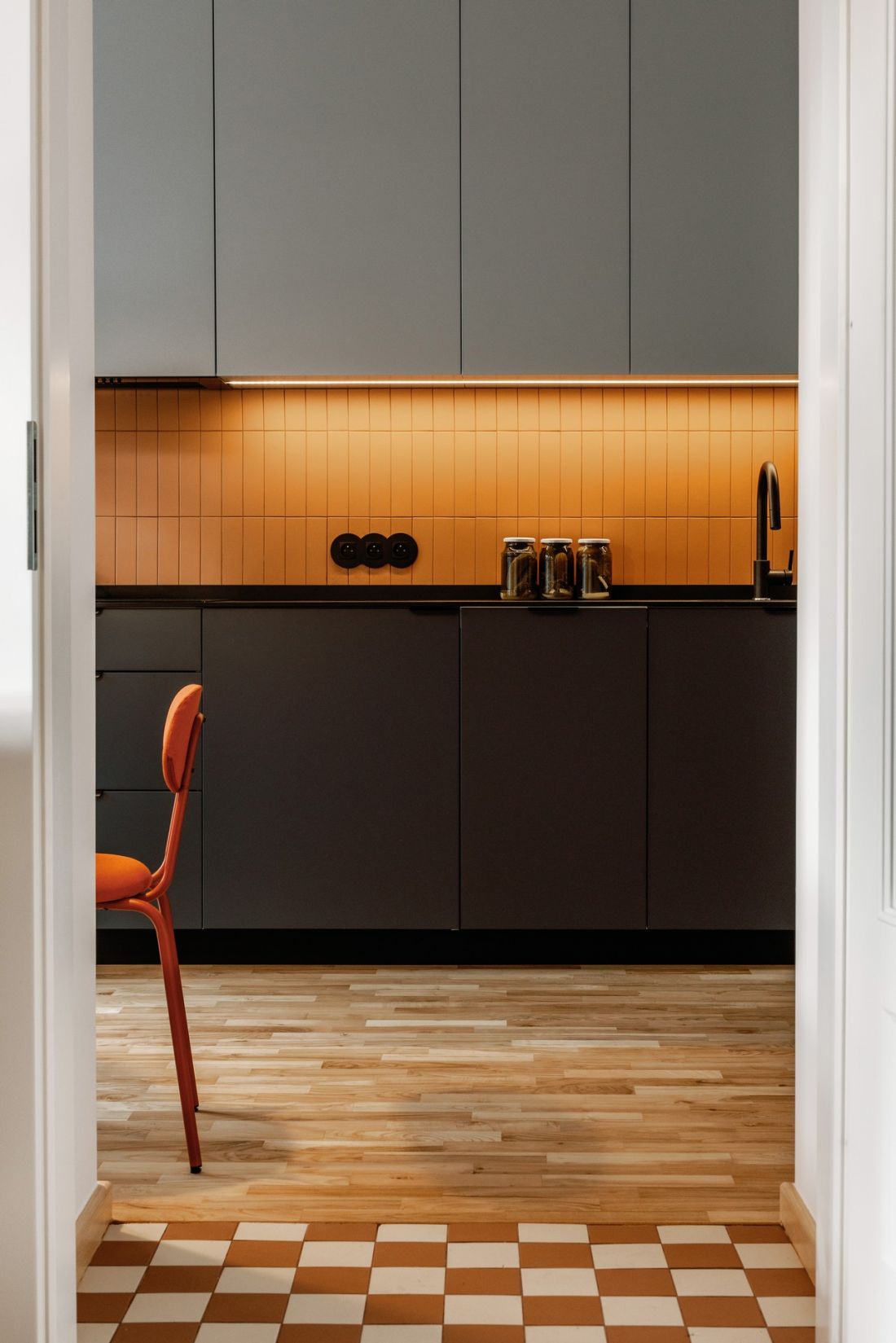
A checkerboard floor and a thick brick wall.
Photo: Anna Pietras
The loggia as a record of a previous life
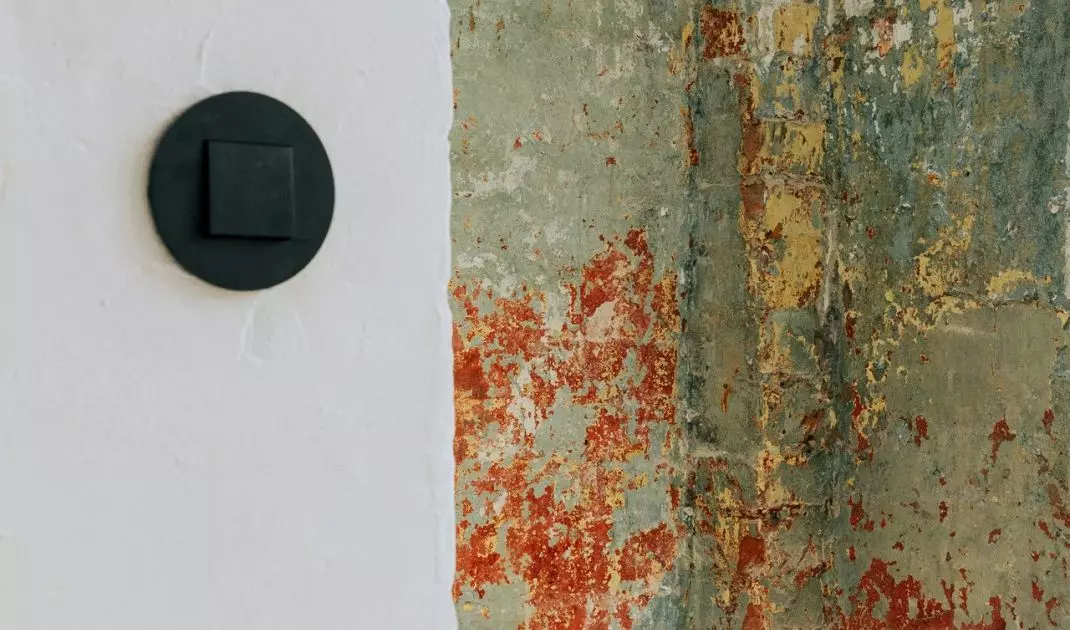
It is on the loggia that one of the project’s most unusual elements appears. Layers of old paint have been left exposed on the wall, revealing traces of the apartment’s previous use. They haven’t been smoothed over or covered with a new finish. Instead, they’ve been treated as a tangible record of history — something left behind by the previous residents. Such a surface stands in contrast to a perfectly finished, new wall. And that is precisely why it harmonizes so well with the rest of the apartment. New furniture, fresh flooring, and carefully selected materials meet here with something authentic and unpredictable.

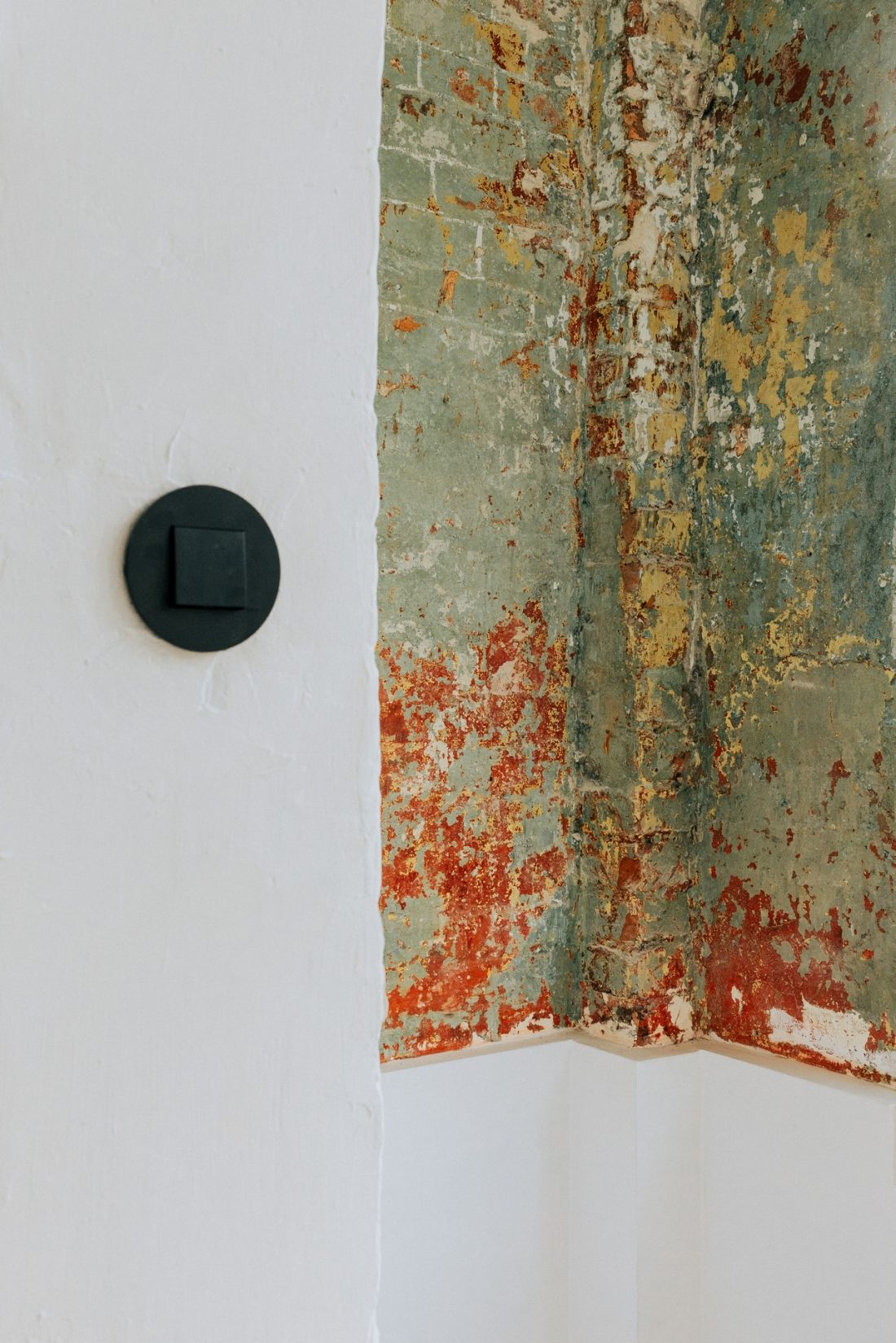
The raw wall surface reveals the history of the place.
Photo: Anna Pietras
Small Bathroom, Big Challenge
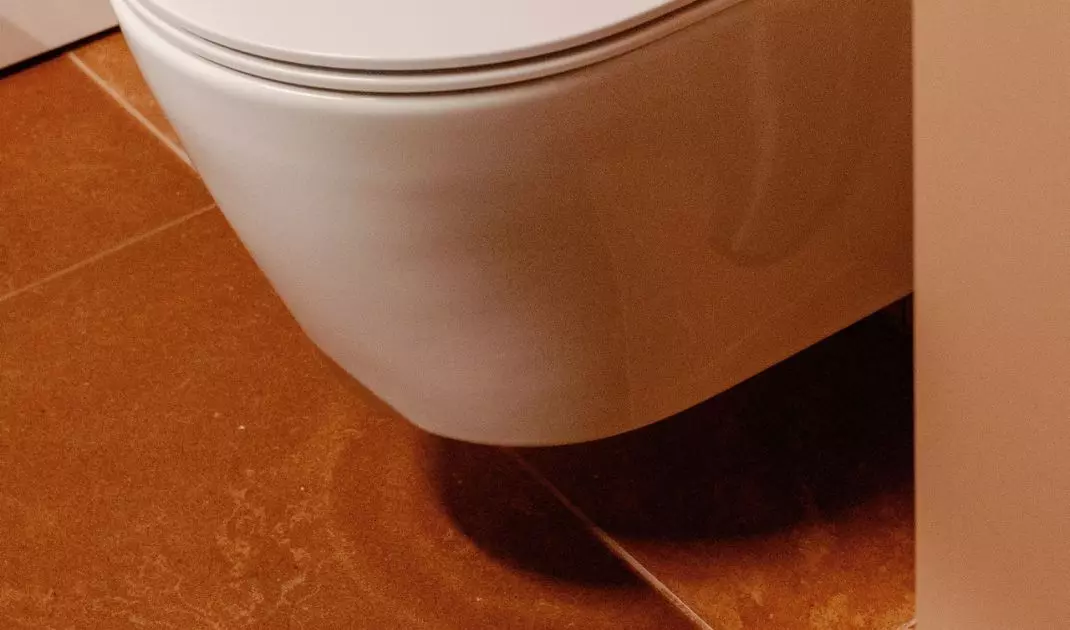
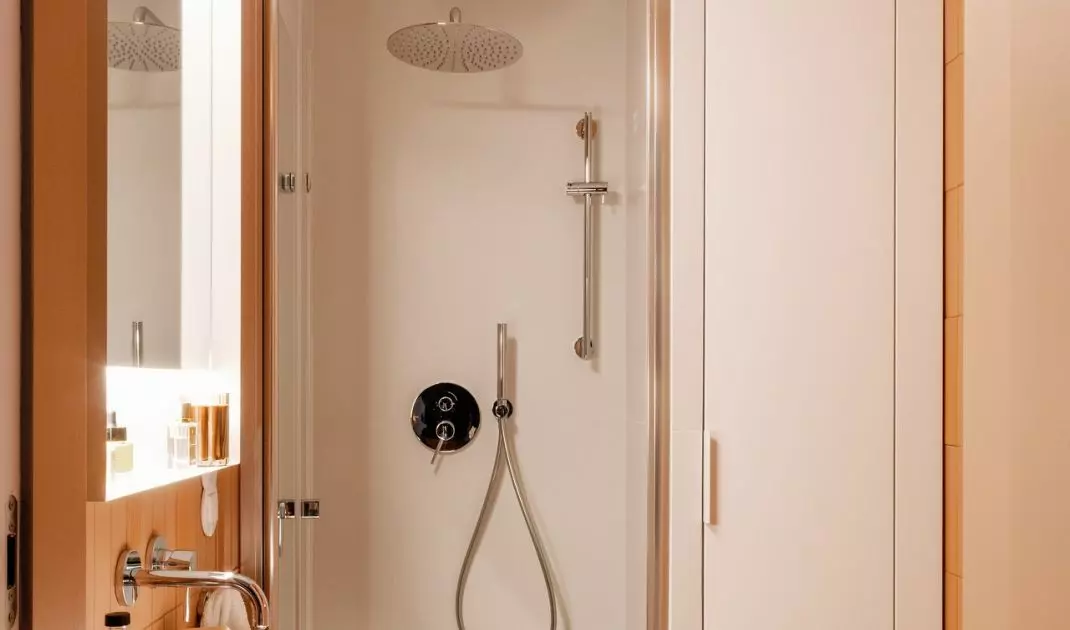
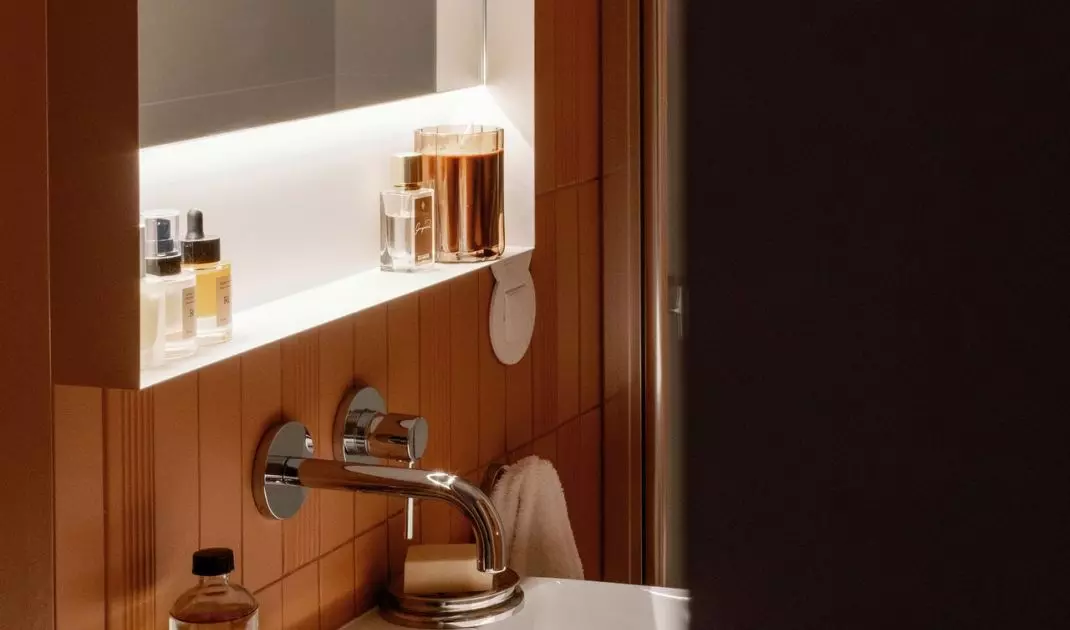
The small bathroom required the most functional work. The existing layout was completely redesigned to make use of every available centimeter. After the reorganization , we managed to create a comfortable shower and a niche for the water heater, cleaning supplies, and bathroom accessories. The washing machine, on the other hand, was moved to the kitchen and concealed in built-in cabinetry under the countertop. Thanks to this, the small bathroom didn’t have to accommodate any additional appliances, and its layout became much more functional. The color scheme here is more limited than in the rest of the apartment. White is paired with a brick-red hue, which appears on the wall and echoes the color scheme of the other rooms. As a result, the bathroom is striking but doesn’t feel cluttered.
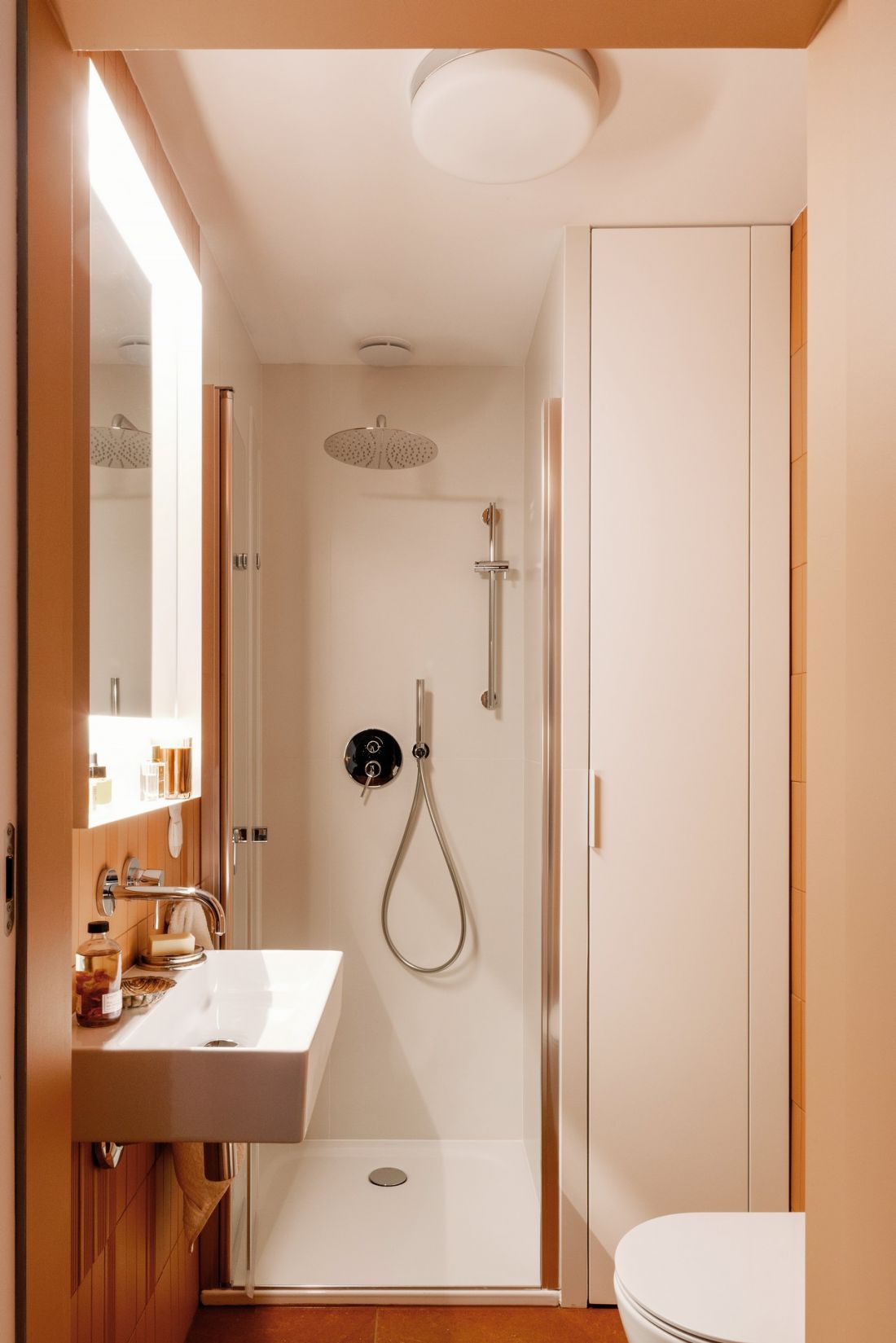
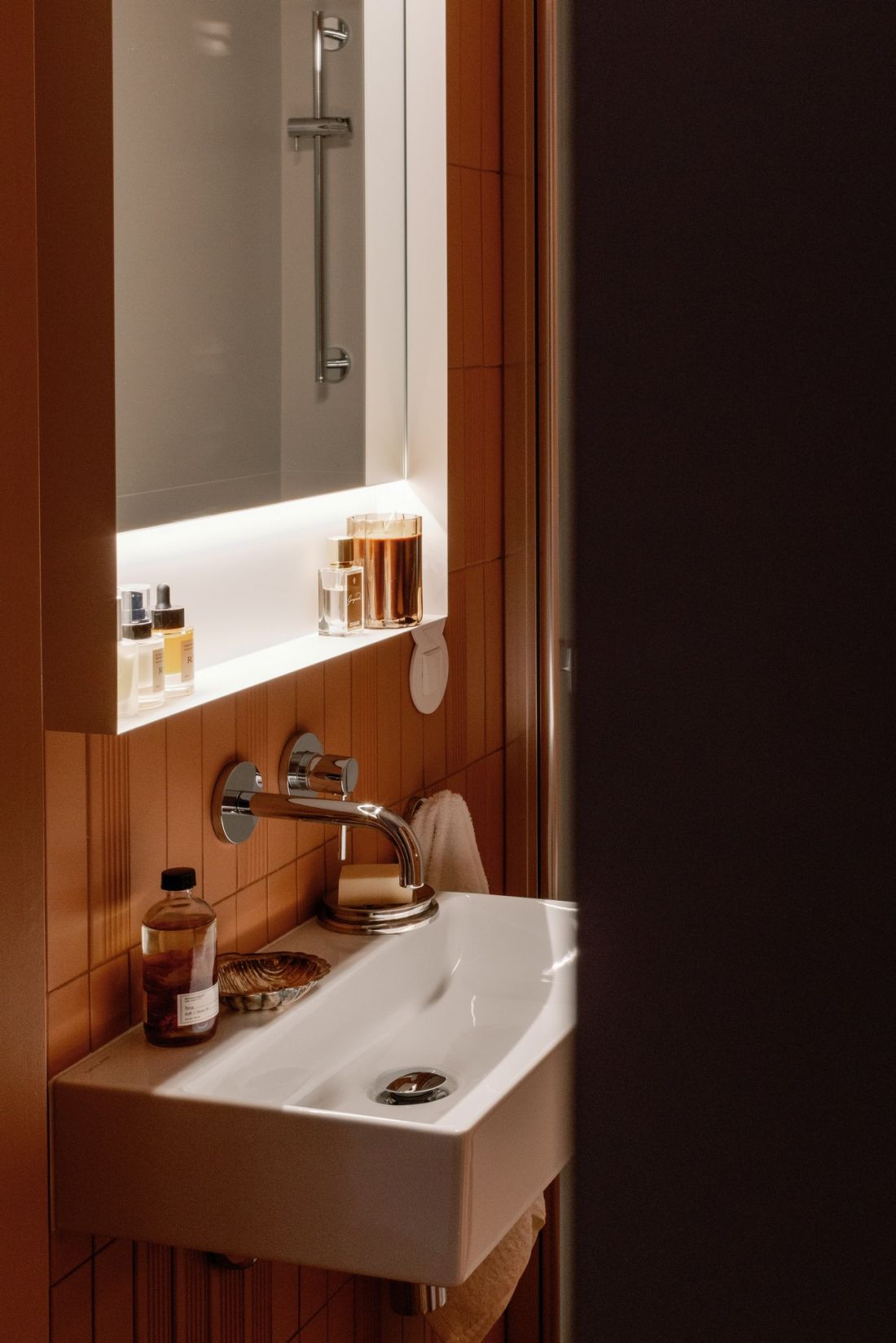
Thanks to its well-thought-out layout, this very small bathroom is highly functional.
Photo: Anna Pietras
Modernity Without Cutting Ties with the Past
This 44-meter studio apartment in Nikiszowiec is an example of a project where renovation does not mean erasing everything that came before. On the contrary—the existing architecture has become one of the main design elements. The brick wall, old tiles, layers of paint on the loggia, the room layout, and inspiration from the Silesian “byfyj” were treated as starting points. The new elements do not attempt to imitate them. As a result, the apartment does not become a stylized version of Nikiszowiec. It retains its own history but gains new functions and a contemporary way of life. It is precisely this combination of authentic traces and new solutions that gives the interior its unique character and allows it to tell the story of its location without needing to literally reference historical aesthetics.