

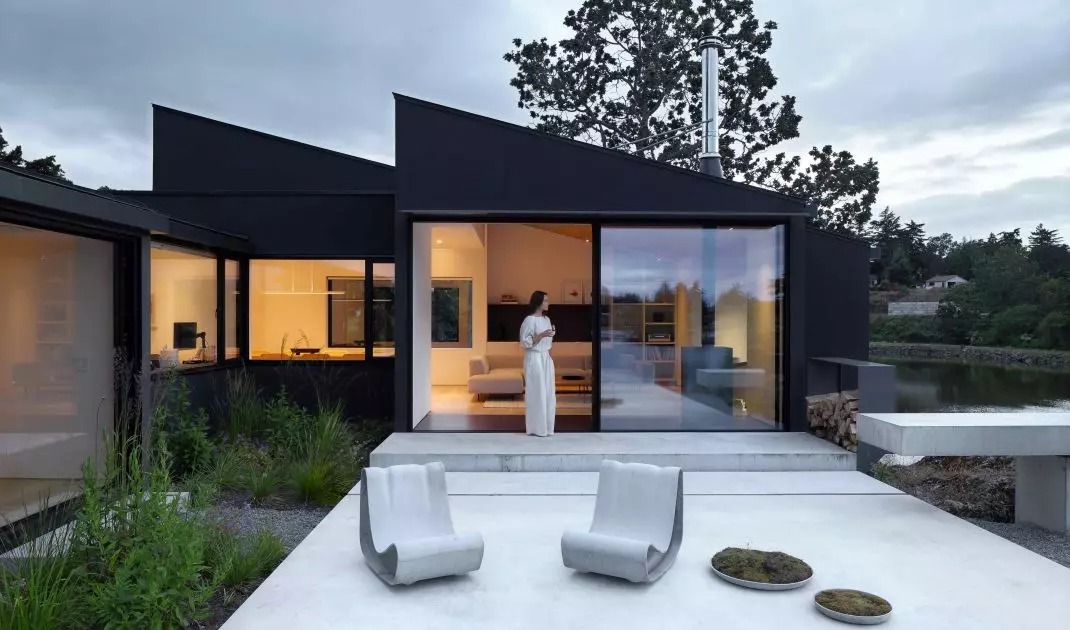
There are houses that become a frame for views. On the rocky shore of Vancouver Island has sprung Shoreline House, a project by Splyce Design that subtly shifts the emphasis: instead of loud gestures, it proposes architecture that builds a relationship with the landscape.
Shoreline House
photo by Ema Peter
The second life of a modernist block
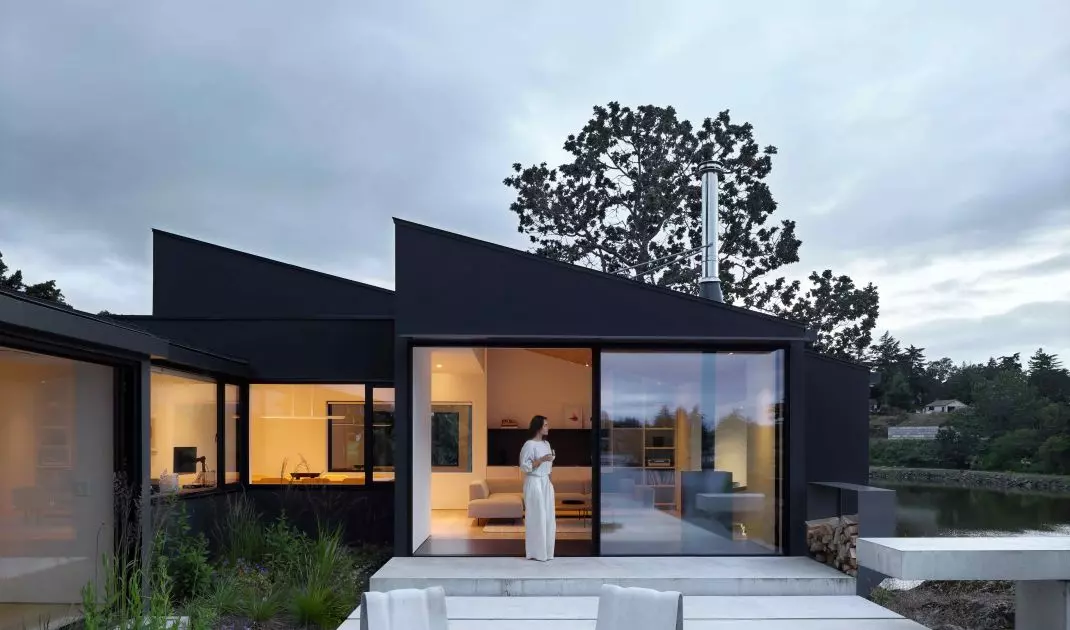
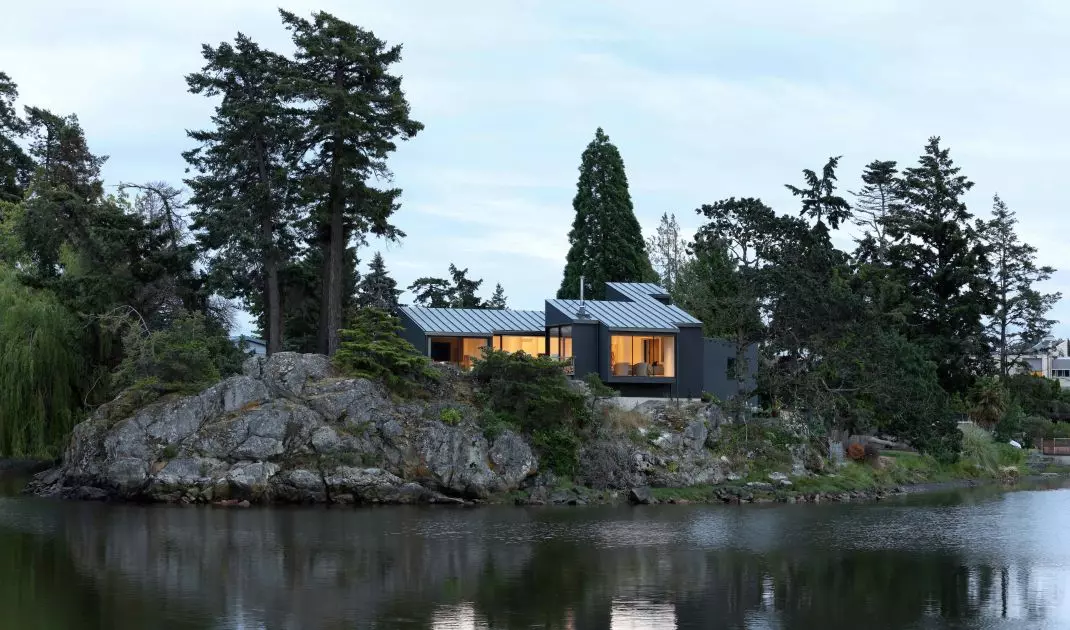
The owners initially planned a radical step - building a new house. However, the architects proposed a scenario with a different tone: to keep what exists and develop the form from the 1960s, giving it a contemporary feel. It's almost a manifesto for a new approach to luxury: less demolition, more thoughtful interventions, maximizing the potential of the site. The added part is a single-story wing, which attracts attention not by its size, but by the quality of its embedding in the site. This is particularly evident in the relationship between the block and the rocks, trees and view of the bay - the new architecture does not compete with its surroundings, but flows with them, as if it had always been embedded in the landscape.
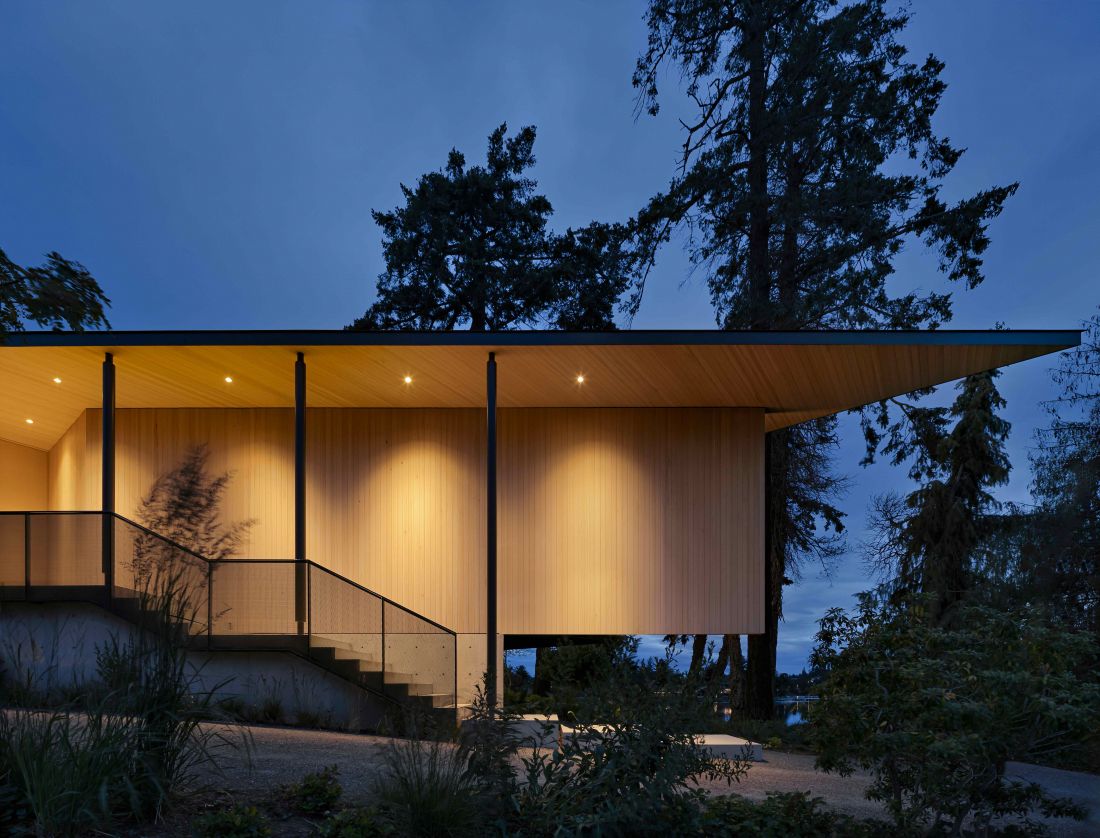
Shoreline House - view of the massing
photo by Ema Peter
Design is born out of constraints
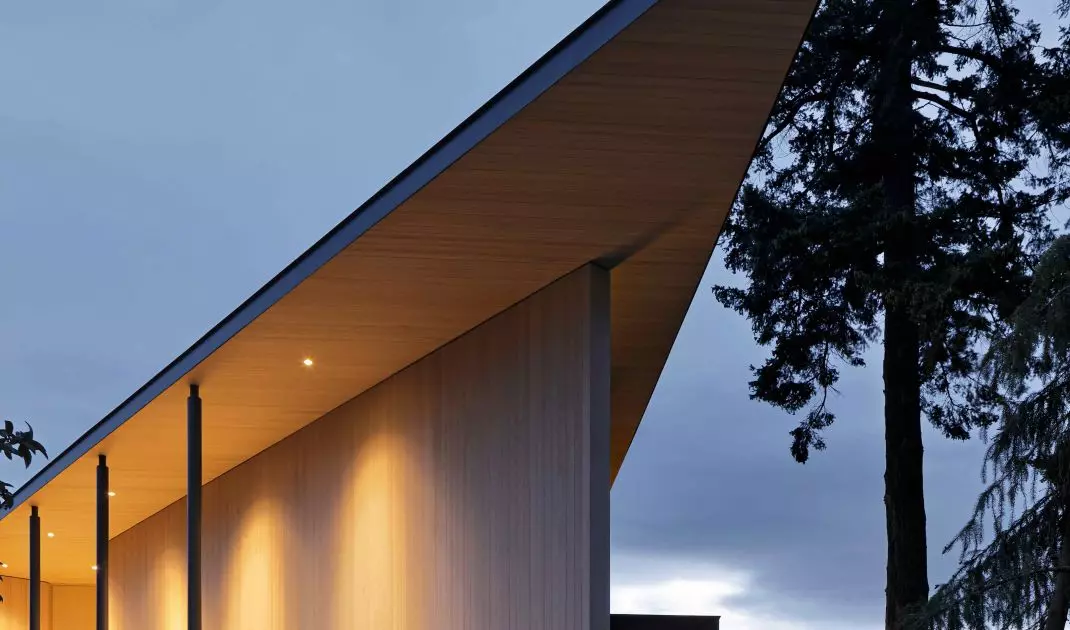
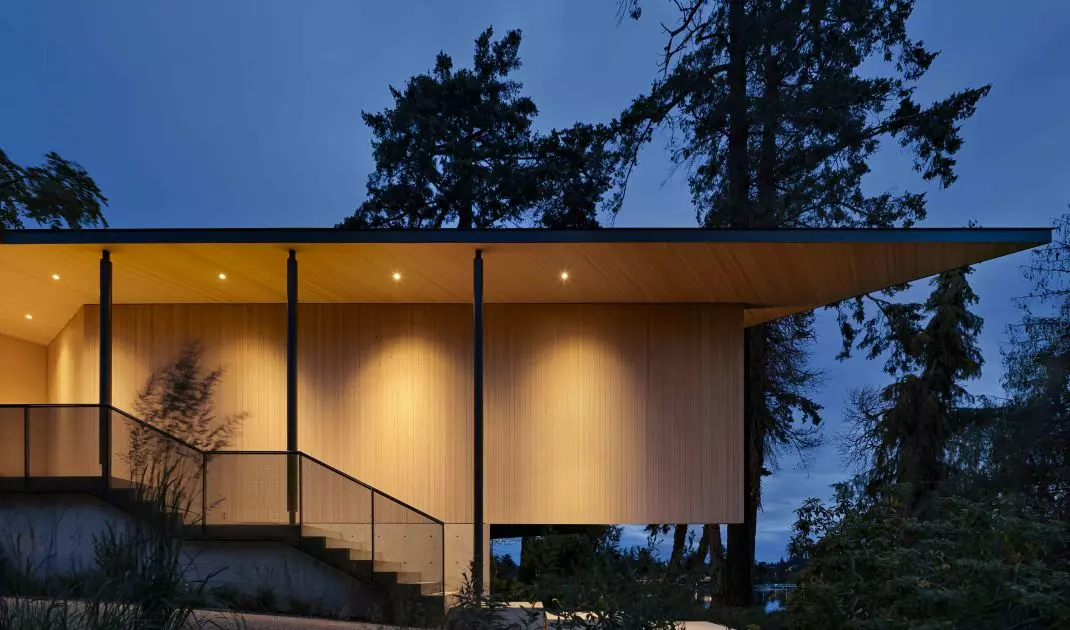
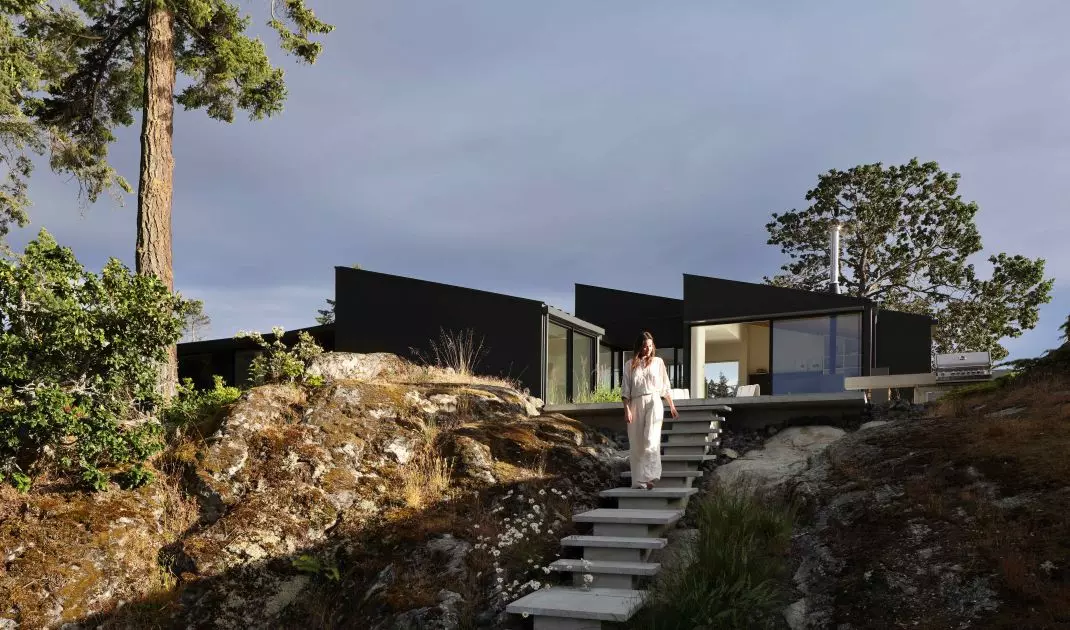
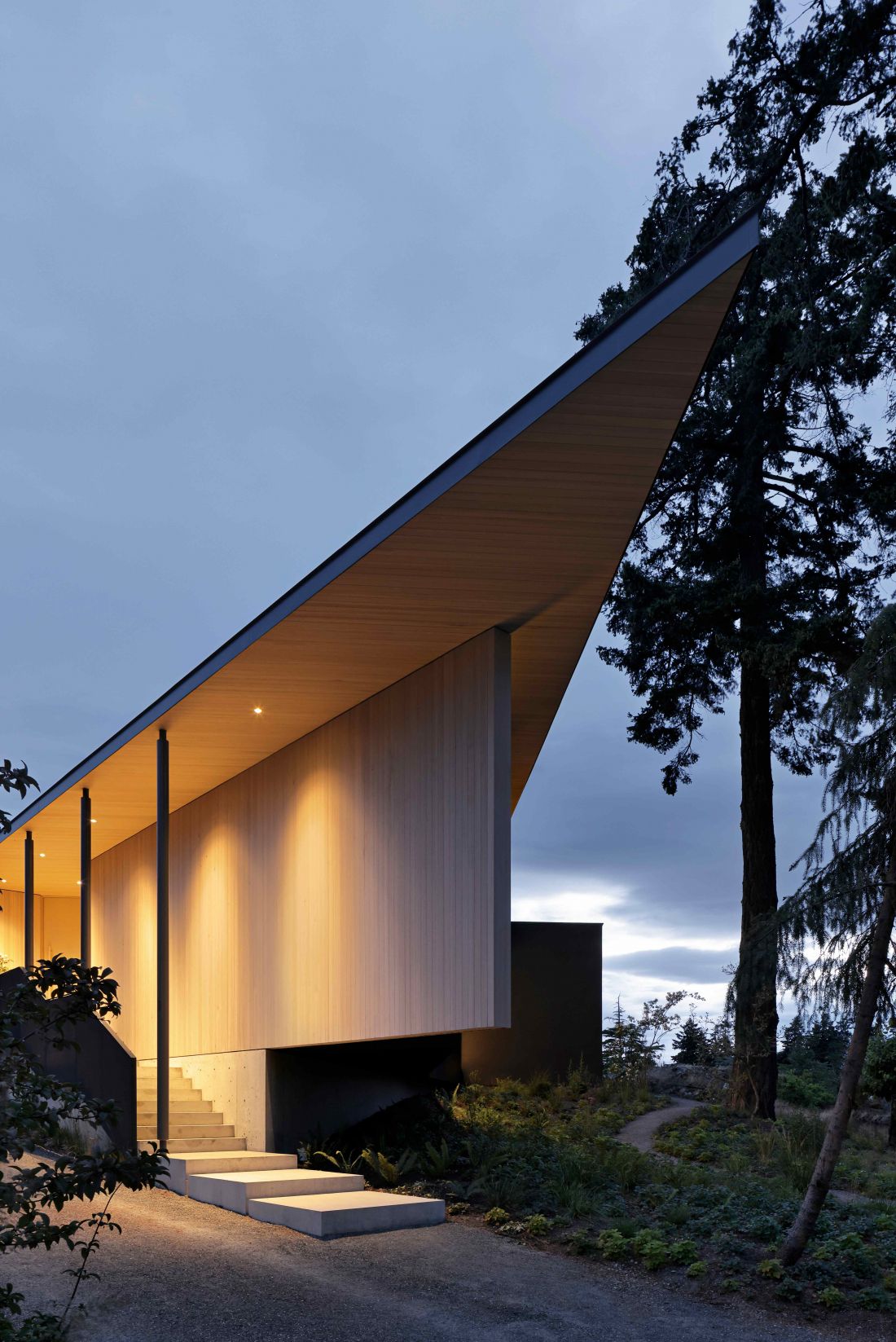
Seemingly stringent coastal constraints became the foundation of the concept. The irregular projection results from the natural course of the land. The receding foundations avoid deep intrusions into the rocks. And the form, with a slight gesture raised above the ground, gives the impression that the house will quietly "sit" on the shoreline, leaving no trace of weight. The most distinctive element - the roof hovering over the glass wall - creates a tension between introspection and openness. It's as if the project balances on the edge: proximity to nature, but without losing the sense of shelter.
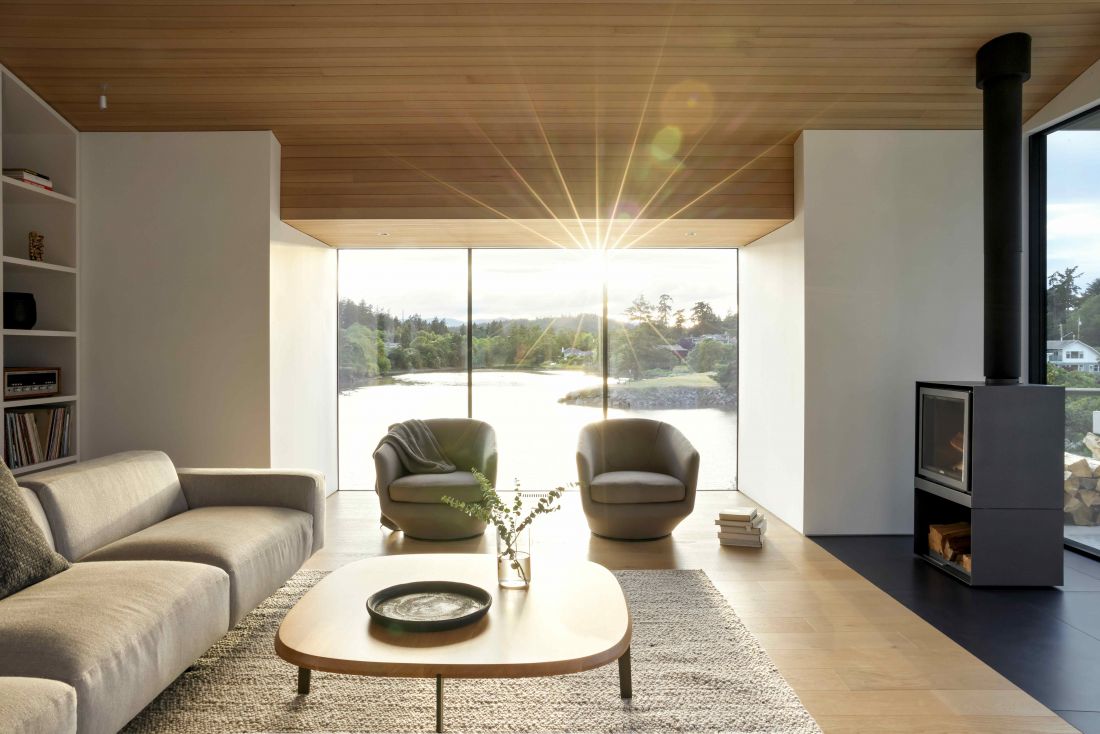
Shoreline House - interior view
photo by Ema Peter
Entrance like a prologue
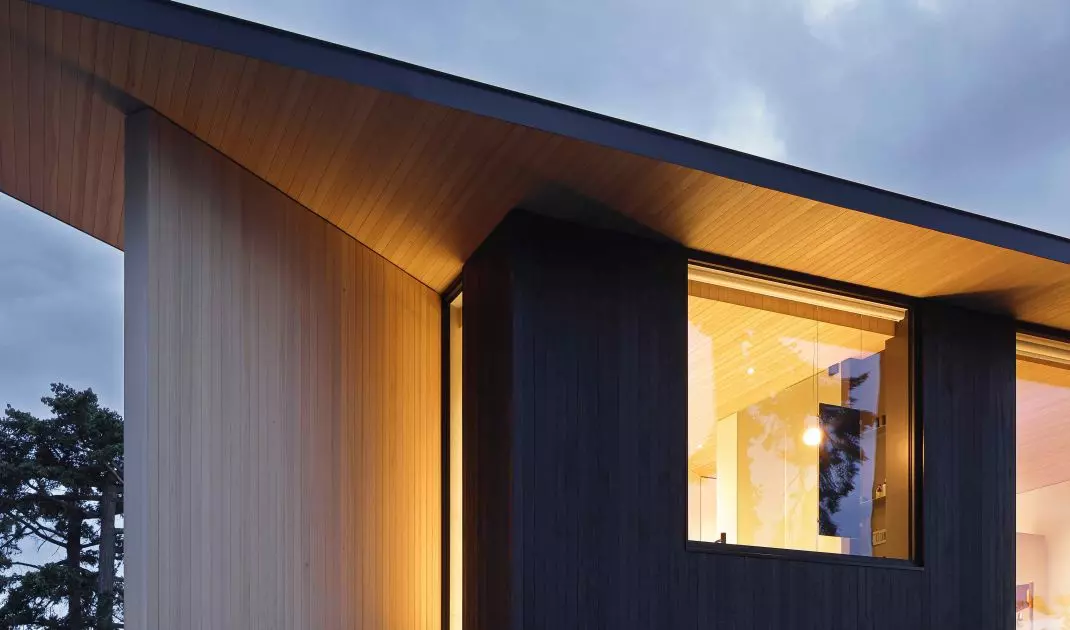
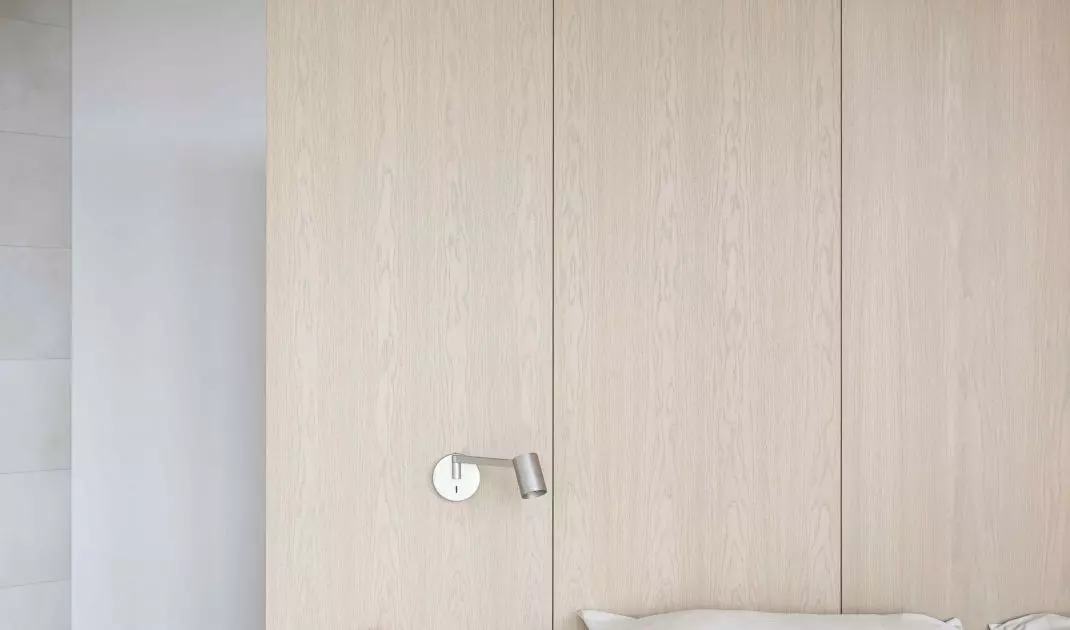
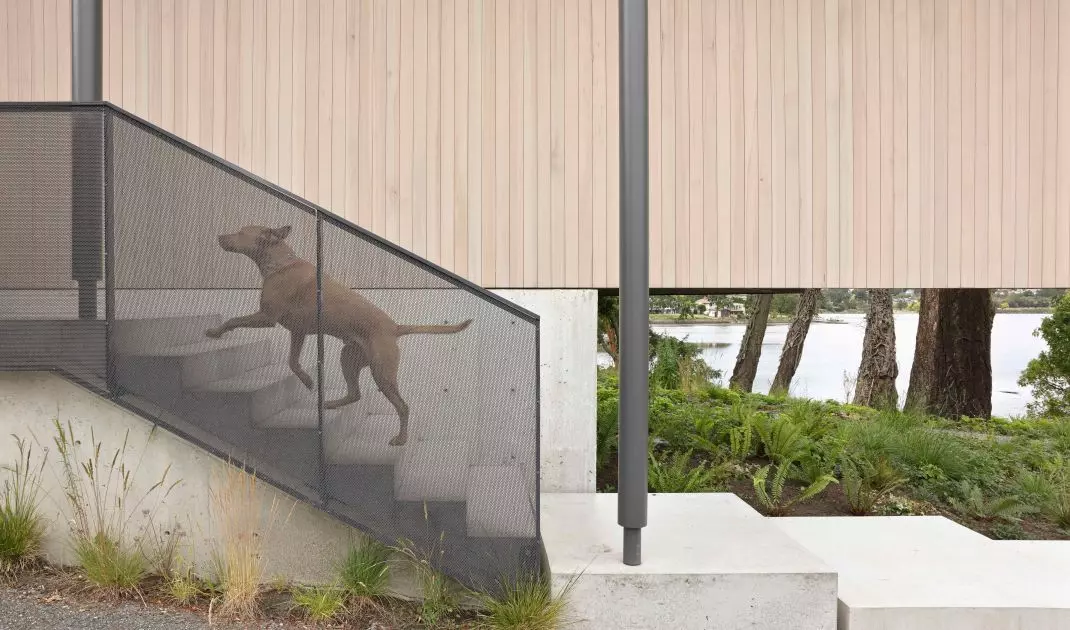
The path leading to the house was designed like a movie script. Successive steps lead toward the entrance with a frame-like rhythm. On one side emerges the horizon, on the other - a line of tall trees. The light cedar wood juxtaposed with the darker elements of the existing structure creates the impression of a dialogue of generations. It's not a contrast for the sake of the principle of contrast, but a meeting of two eras, a juxtaposition of textures and hues that naturally fit in with the coastal climate.
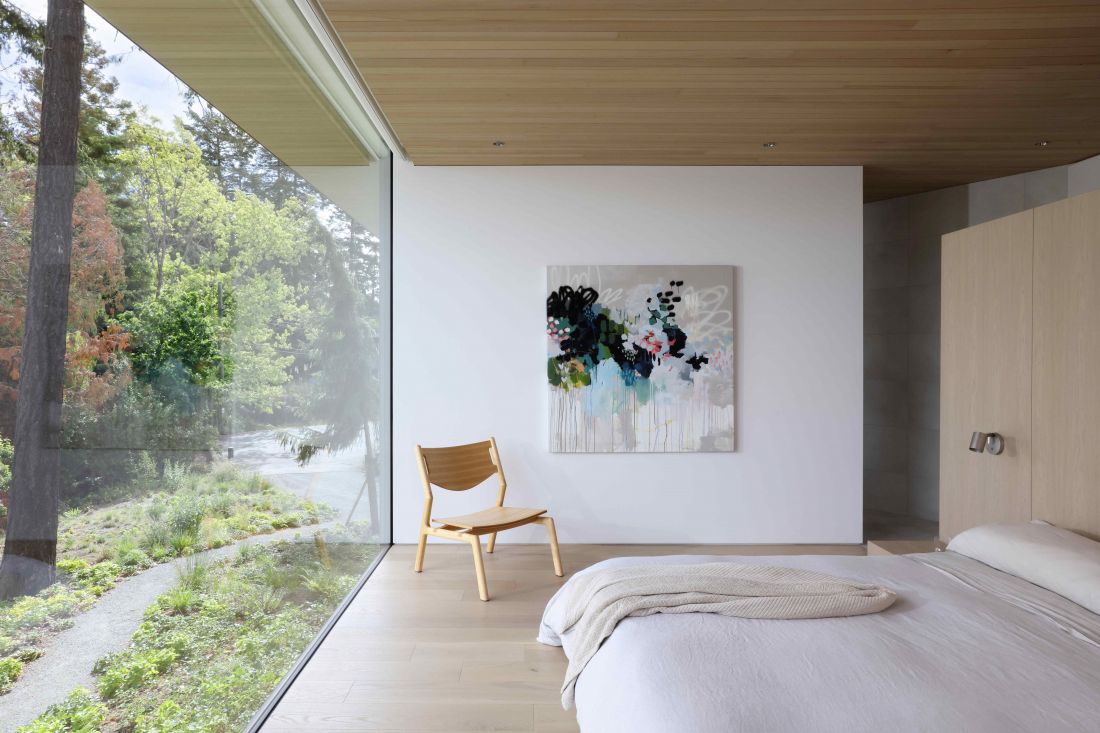
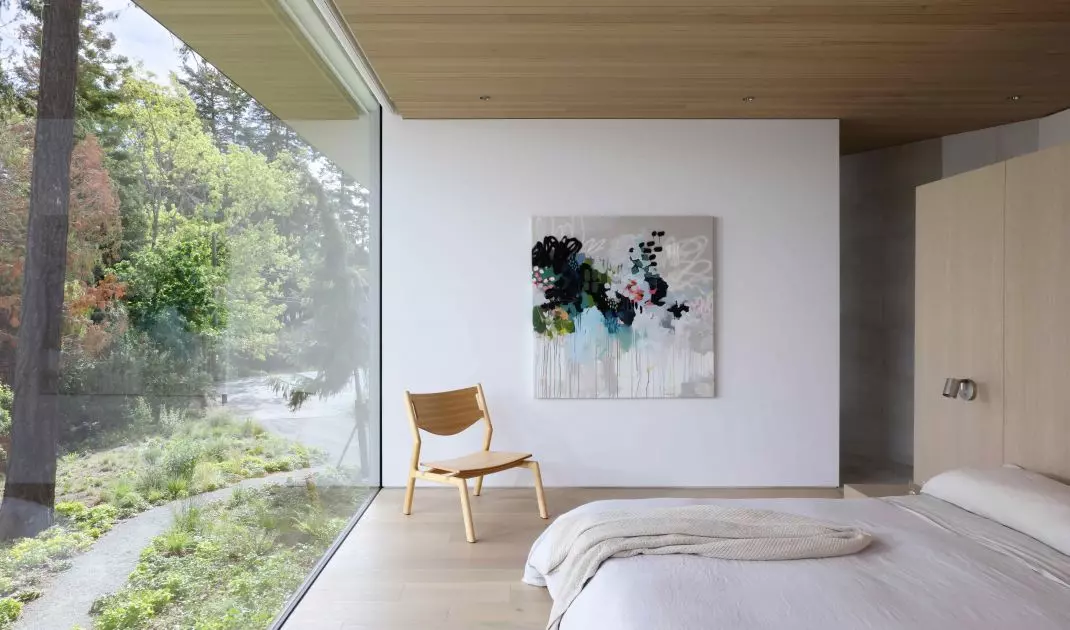
Shoreline House - the owners' bedroom
photo by Ema Peter
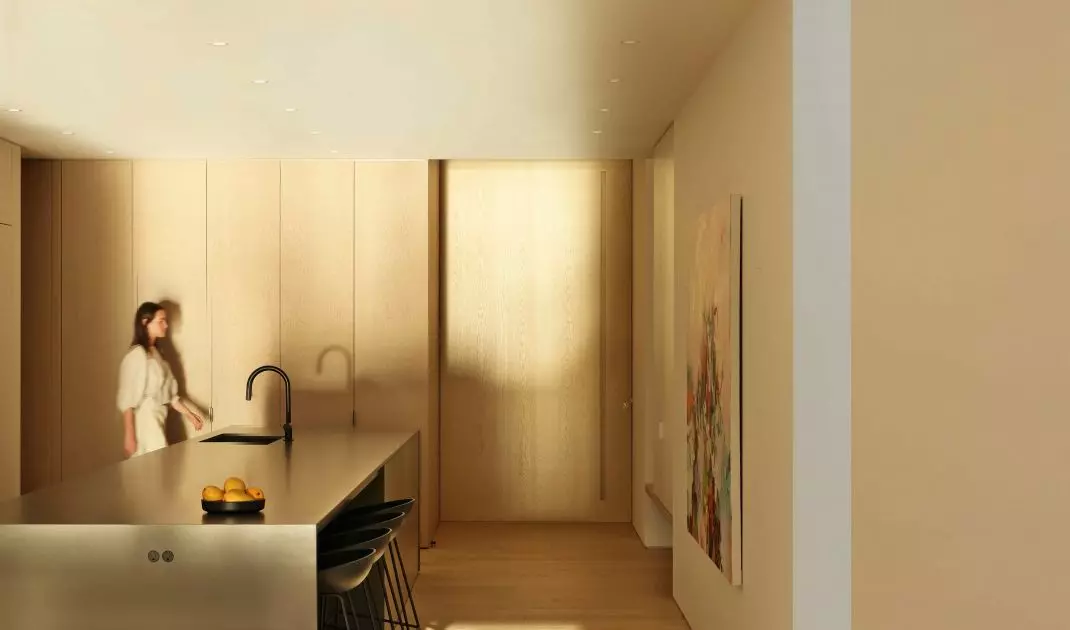
An interior that breathes light
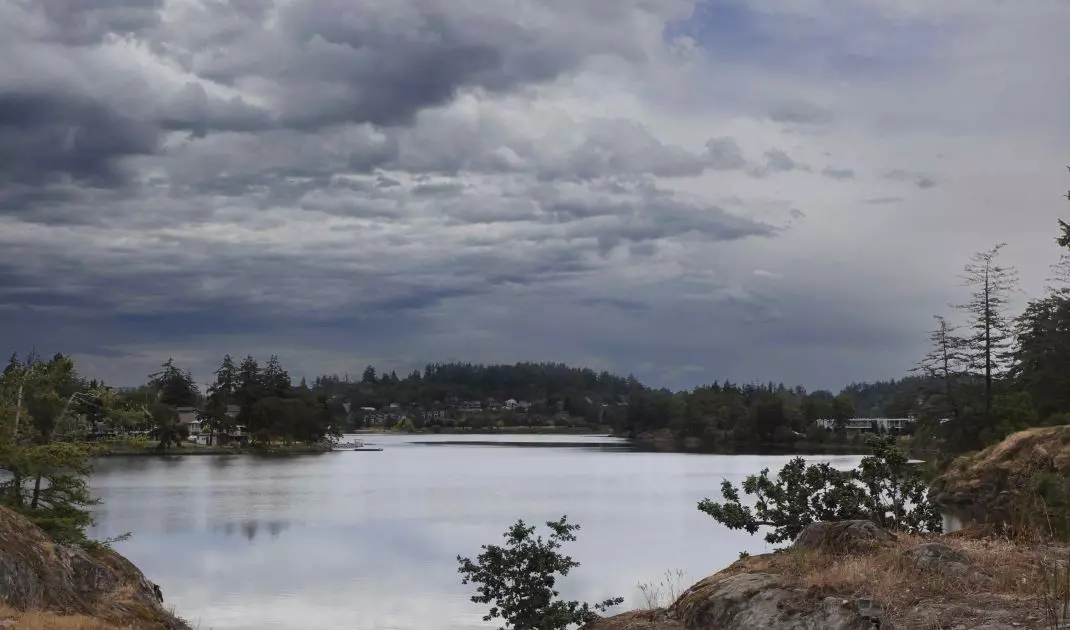
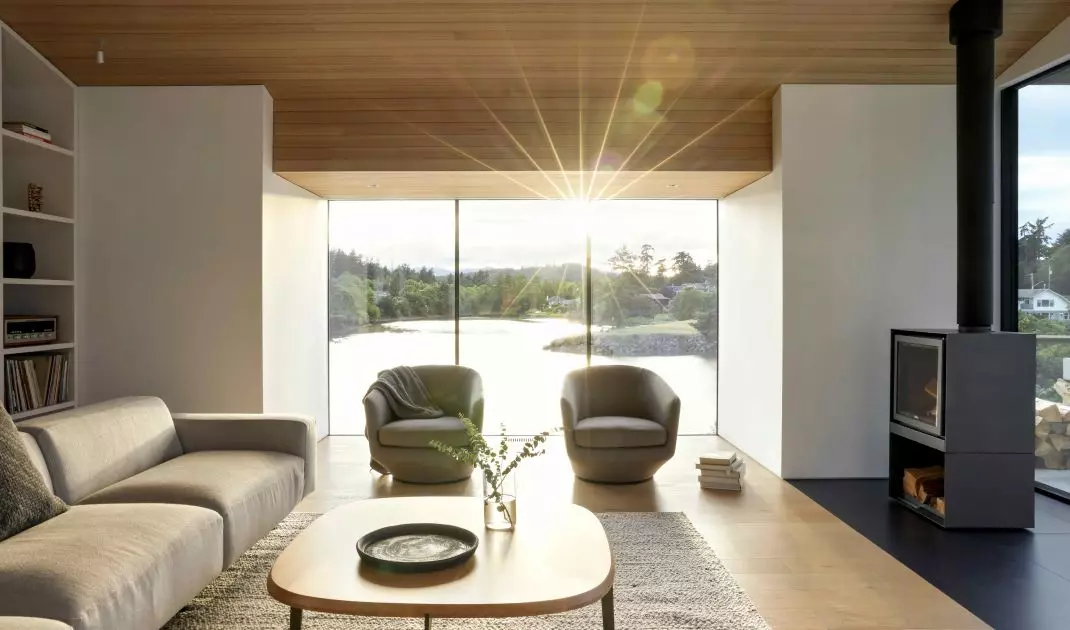
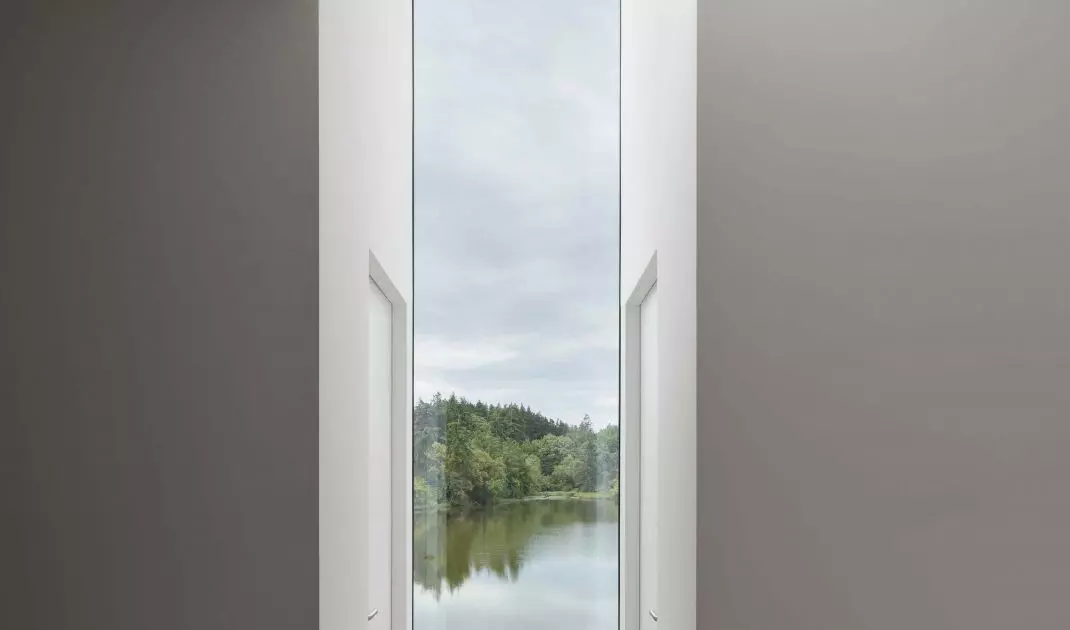
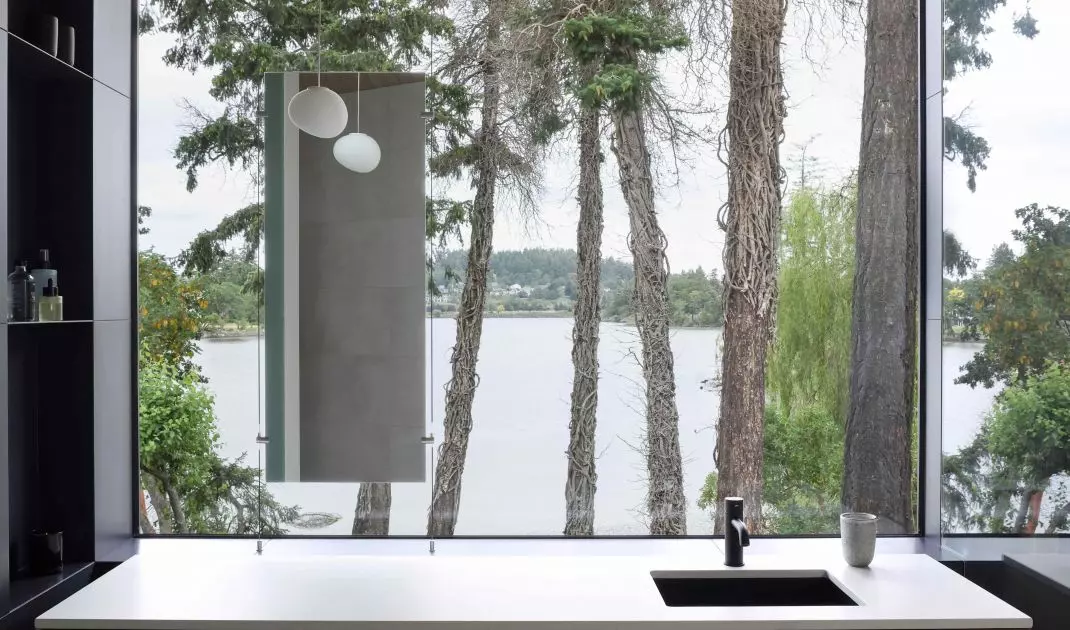
In Shoreline House, light works like a fixture. Extensive glazing, at times almost invisible in its technical structure, opens the space to the ocean, the sky, the glassy shimmering reflections of the water. The shots are laid out like stills: from wide, panoramic, to intimate "snippets" of nature visible like landscape paintings. The house lives with the rhythm of the day - morning light saturates the interiors with radiance, in the evening the waves reflect the last rays, and on cloudy days the panorama acquires a soft, noble haze.
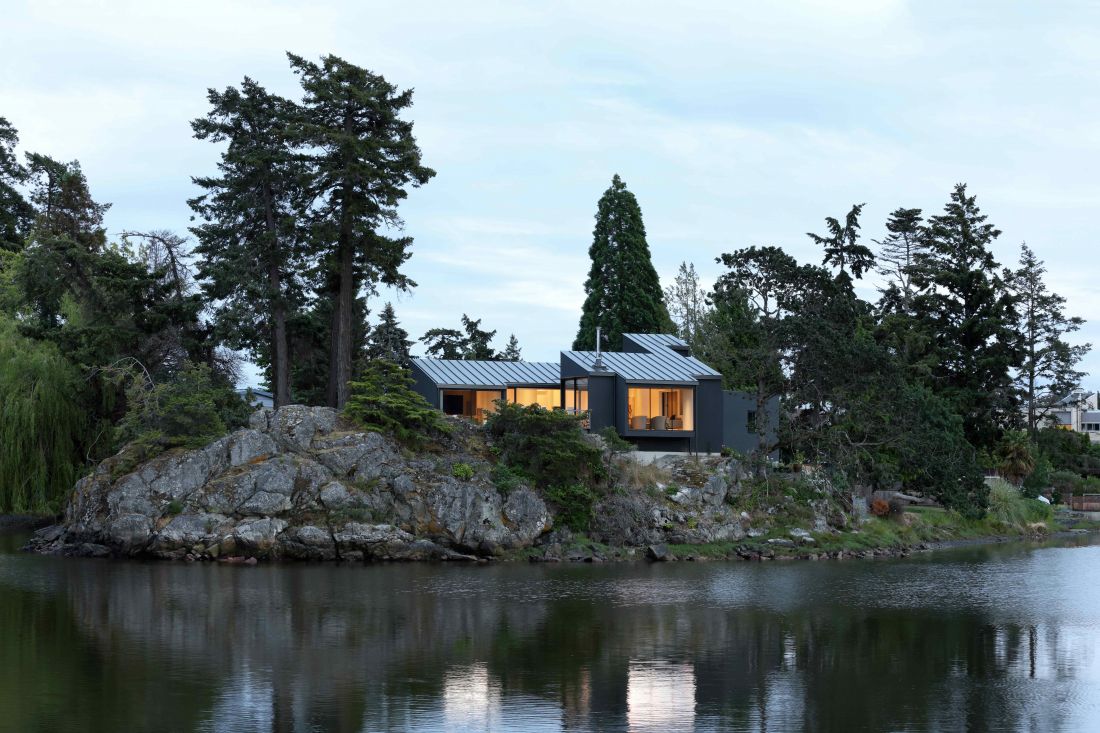
Shoreline House - a view from afar
photo by Ema Peter
Terraces, paths, the breath of nature
The outdoor space here is not a designed setting - it is a natural extension of the interior. The terraces and paths work with the terrain, and the local vegetation does not pretend to be a show garden. Instead of cutting and changing - it organizes and exposes. It's a landscape that breathes with its own rhythm and reminds us that nature takes precedence in this part of the world.
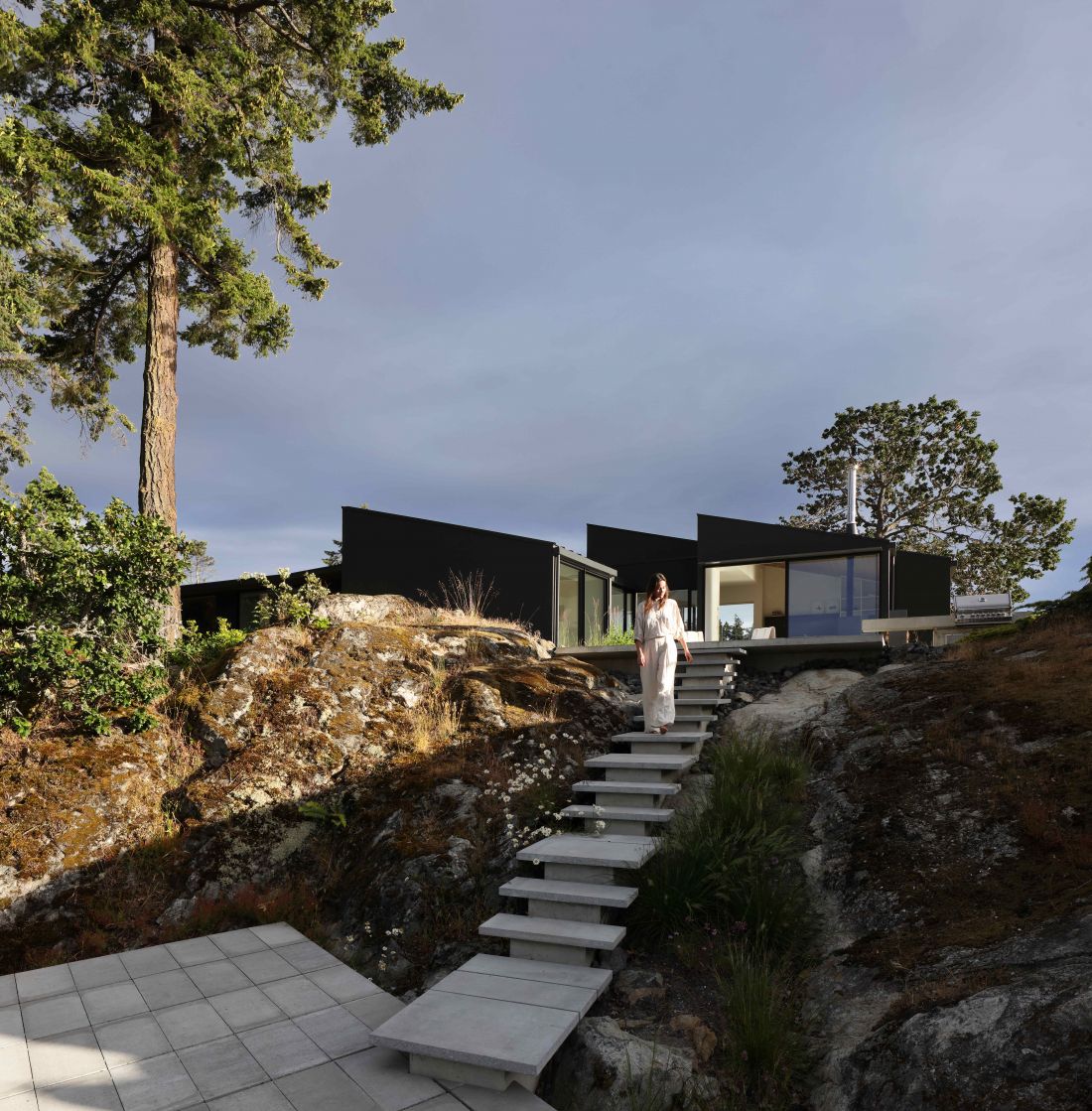
Shoreline House
photo by Ema Peter
Mature subtlety, not a momentary delight
The Splyce Design studio has been developing a vision of design based on craftsmanship, proportion and attentiveness for more than two decades. Shoreline House fits into this language: it's a home that doesn't need showy decorations to make an impression. Its strength comes from harmony, quietness and a consistently realized idea - architecture here is a story, not decoration.
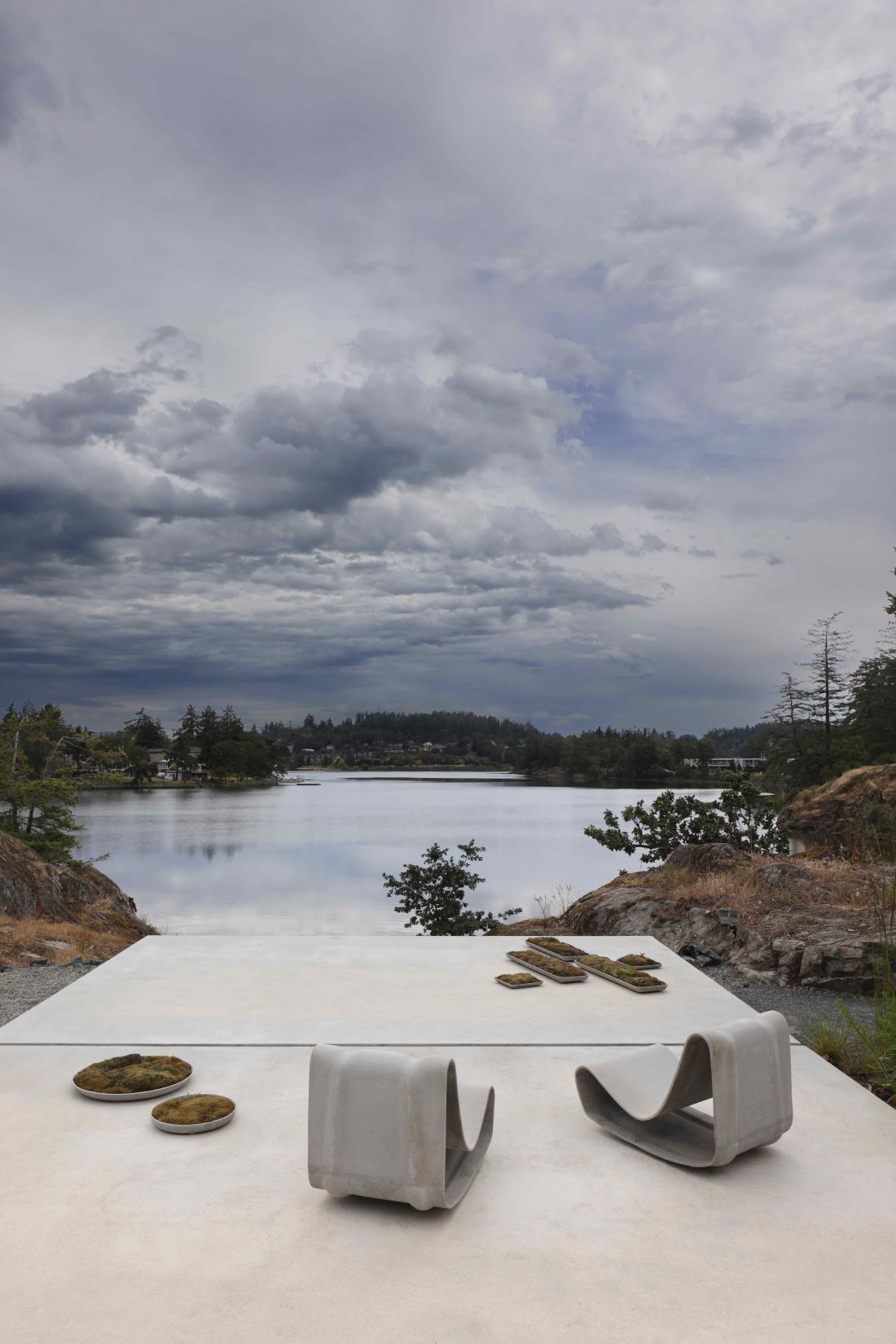
Shoreline House
photo by Ema Peter
Final
Shoreline House shows that contemporary design doesn't have to compete with nature to resonate. It is enough to listen to the rhythm of the place, to give the landscape space, to let it lead the way. This is a house that lasts - in the light, in the sound of the waves, in the shade of the trees. In a world of quick results, it reminds us that the greatest value can be peace, proportion and a long-lasting relationship with a place.