

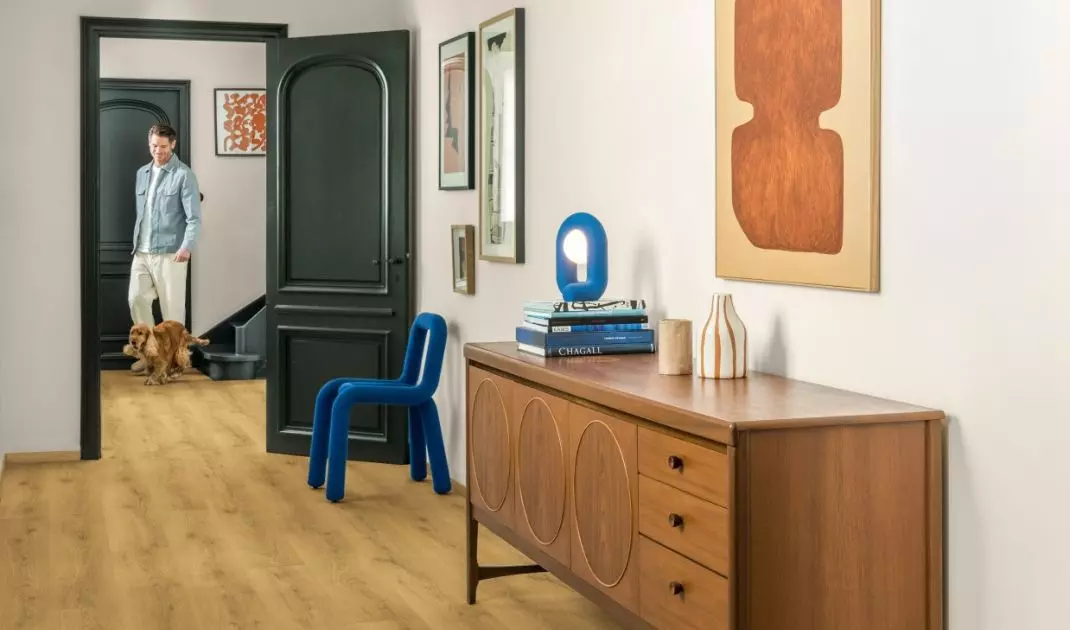
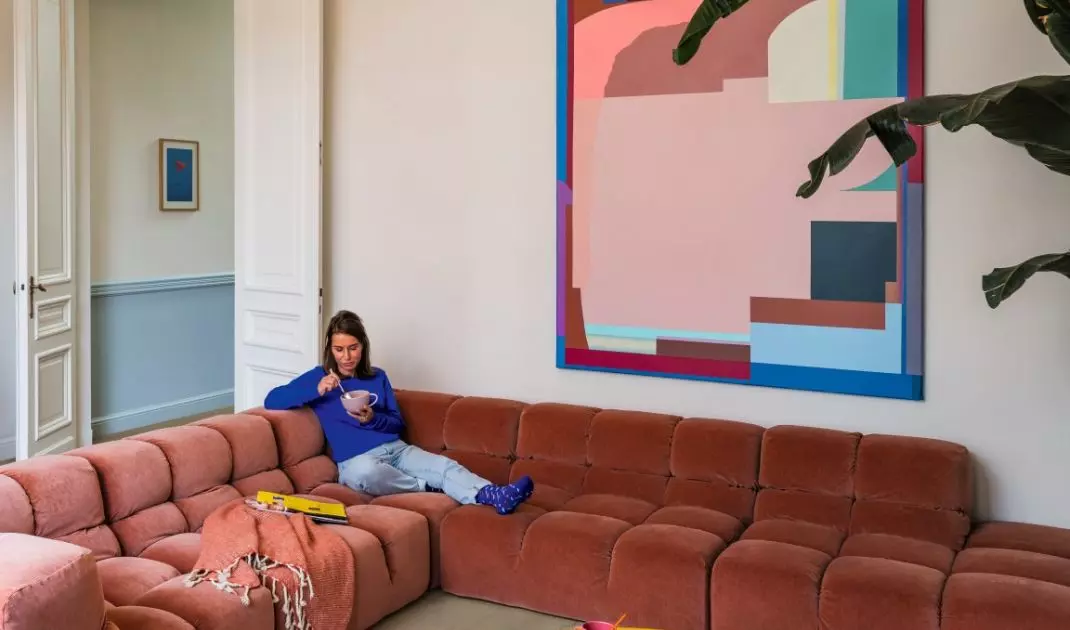
Retro is making a comeback in our homes, but today it’s not about faithfully recreating the interiors of the past. Contemporary vintage embraces freedom: items with a history, warmer colors, distinctive textures, and modern solutions that work well in everyday life. Sometimes, all it takes is a few well-chosen pieces to make an interior feel more personal and less cookie-cutter.
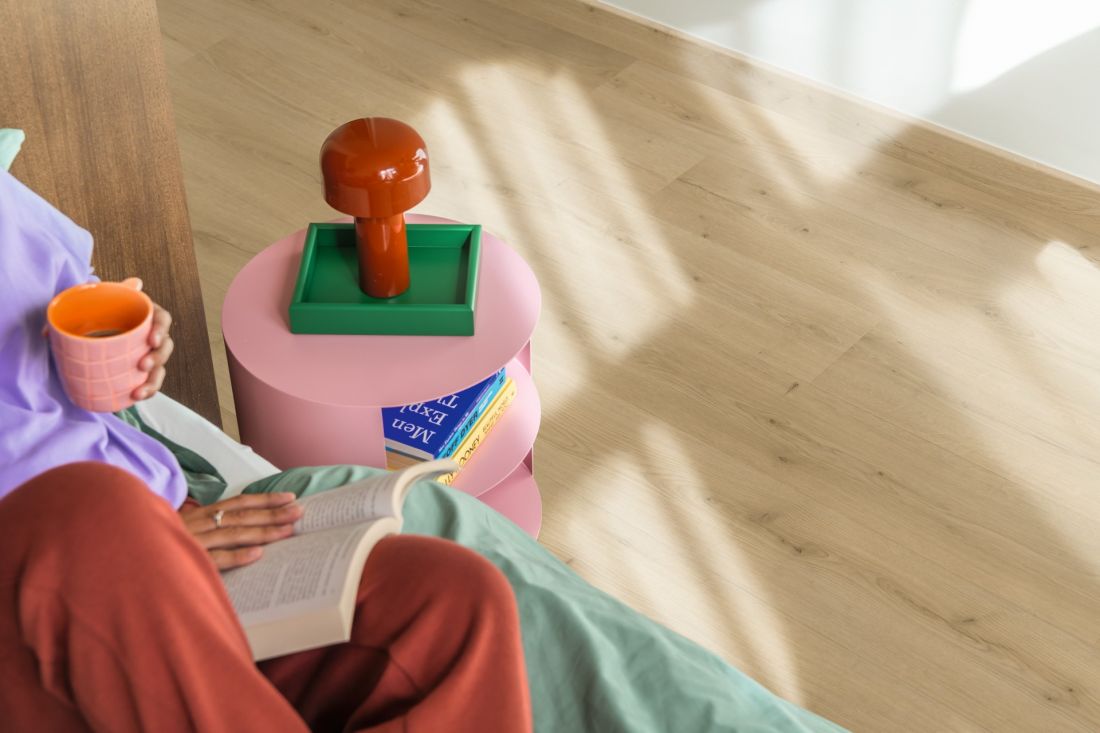
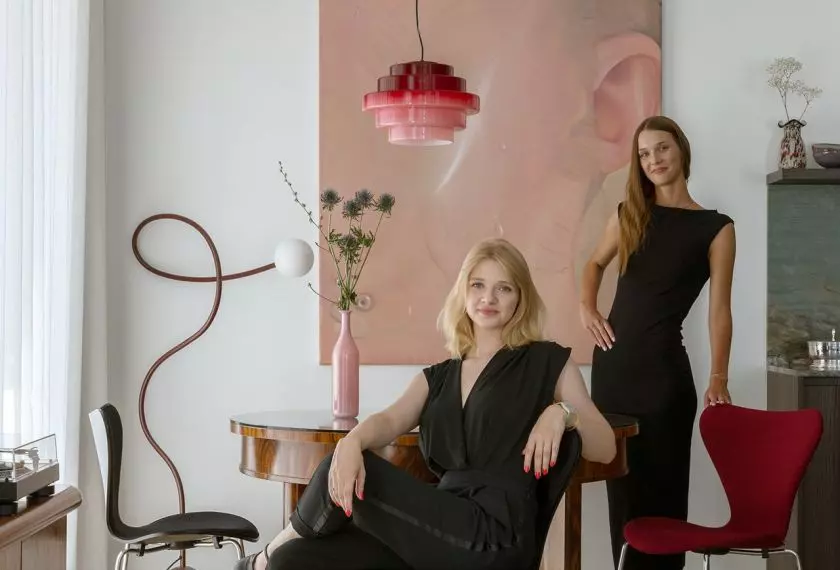
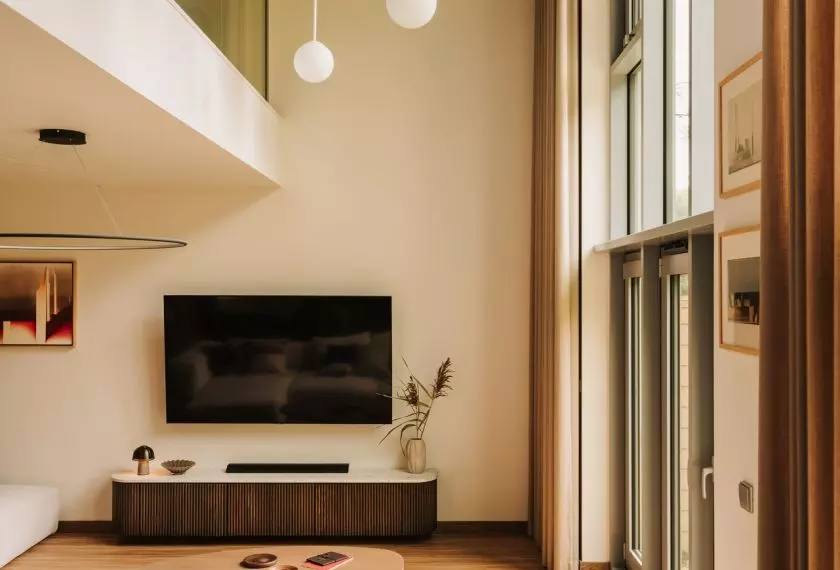
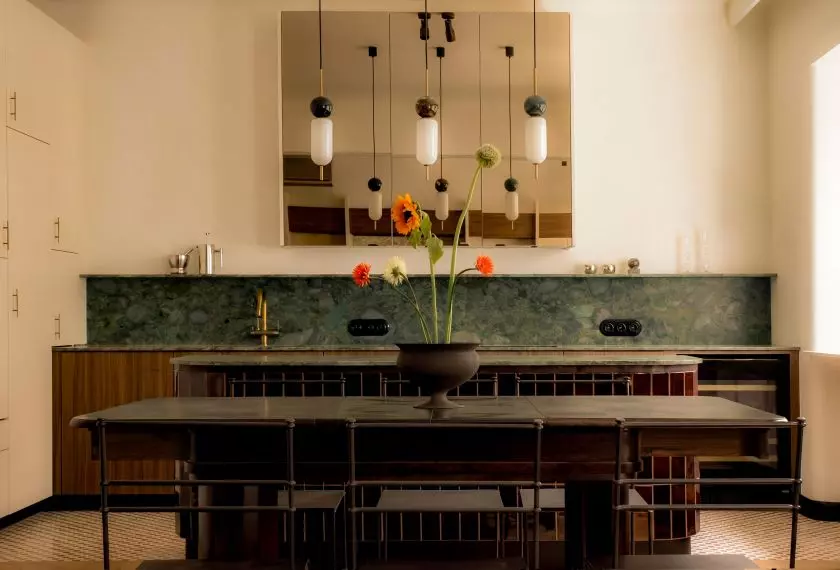
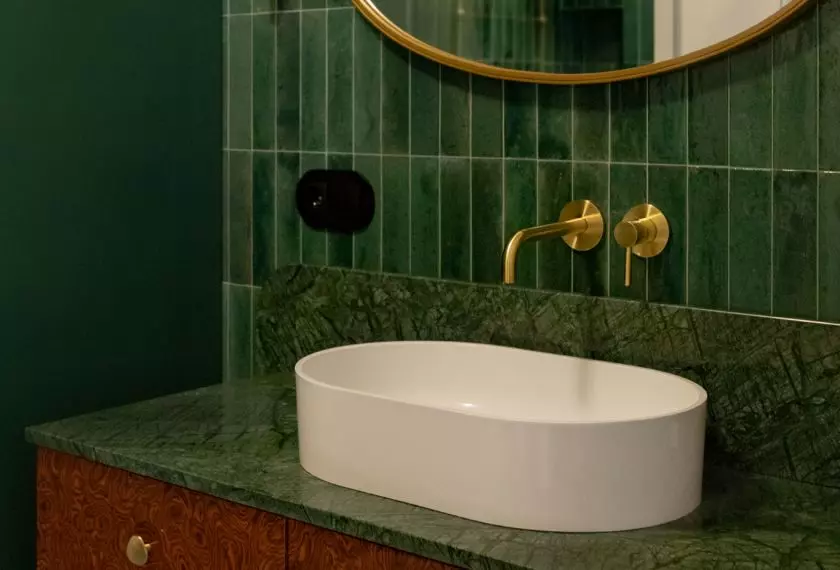
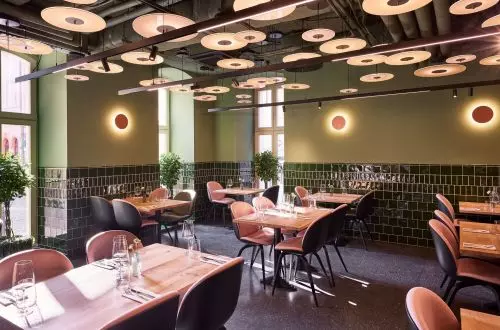
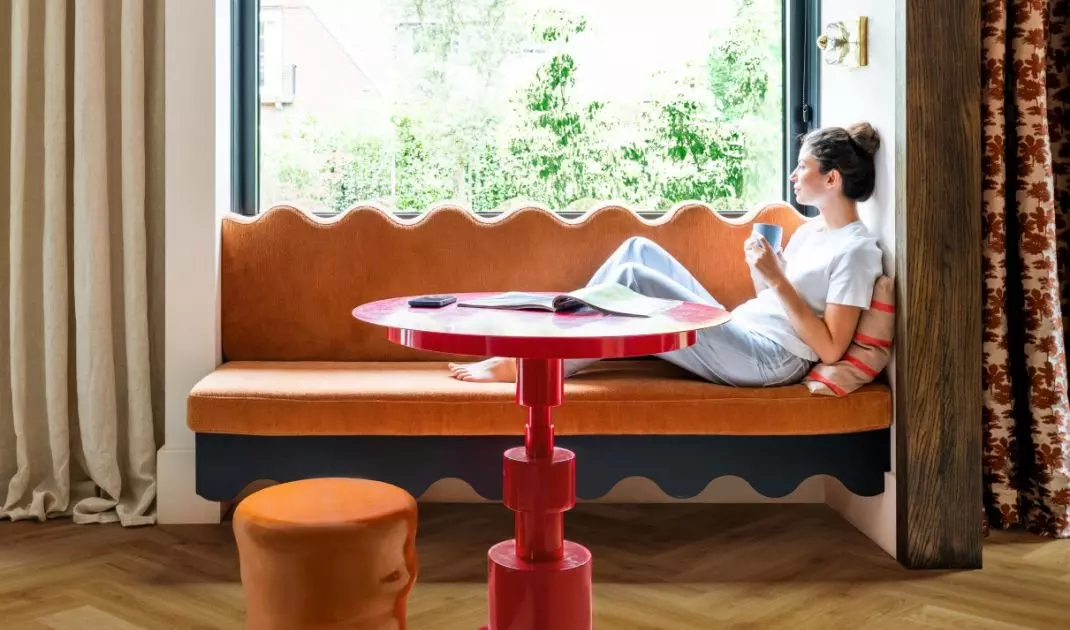
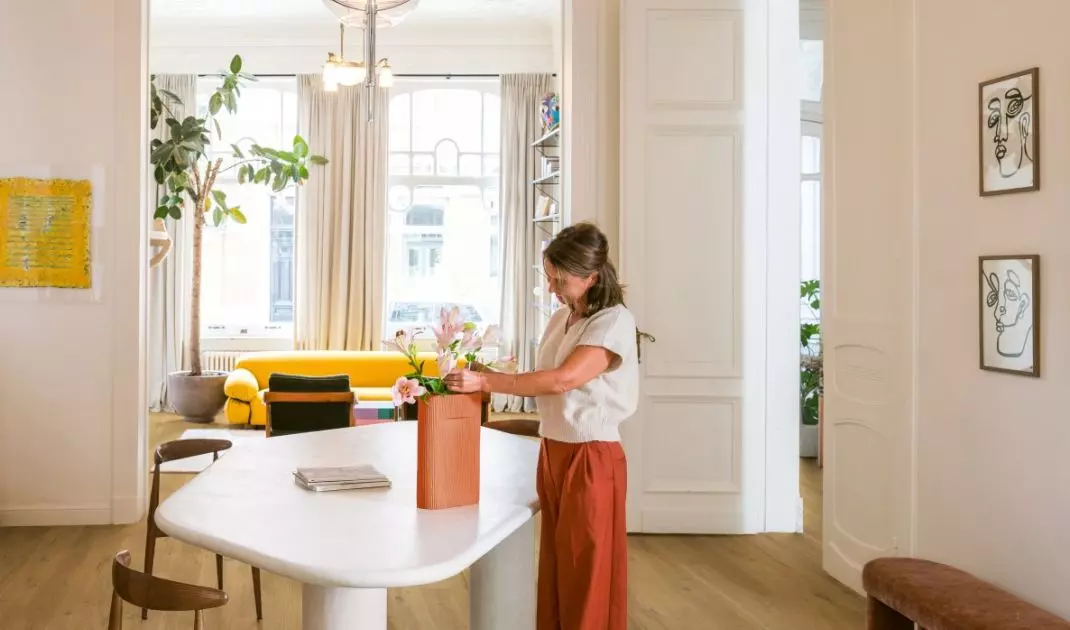
Retro loves items with character: even a small table, a lamp, or a piece of pottery can set the mood of a space — ©Photo: Quick-Step press materials
Vintage: An Interior Curated Over Time
Interiors inspired by the vintage style don’t have to look as if they were transported straight from the ’60s or ’70s. Contemporary retro works best when it’s one element of the design, rather than a ready-made “costume” for the entire apartment. It can appear in the shape of an armchair, the color of a lamp, the texture of a fabric, the floor pattern, or in little trinkets found at a flea market. That’s exactly why the vintage style fits so well in today’s interiors. It doesn’t require perfectly matched sets or rigid adherence to a single era. It allows you to pair a modern sofa with an heirloom dresser, a minimalist kitchen with herringbone flooring, and a simple bedroom with a frosted-glass lamp. In a home like this, it’s not perfection that counts, but the impression that the items found their way into it gradually. Some were bought, others found by chance, and still others hold sentimental value. This makes the space less predictable, warmer, and more personal.
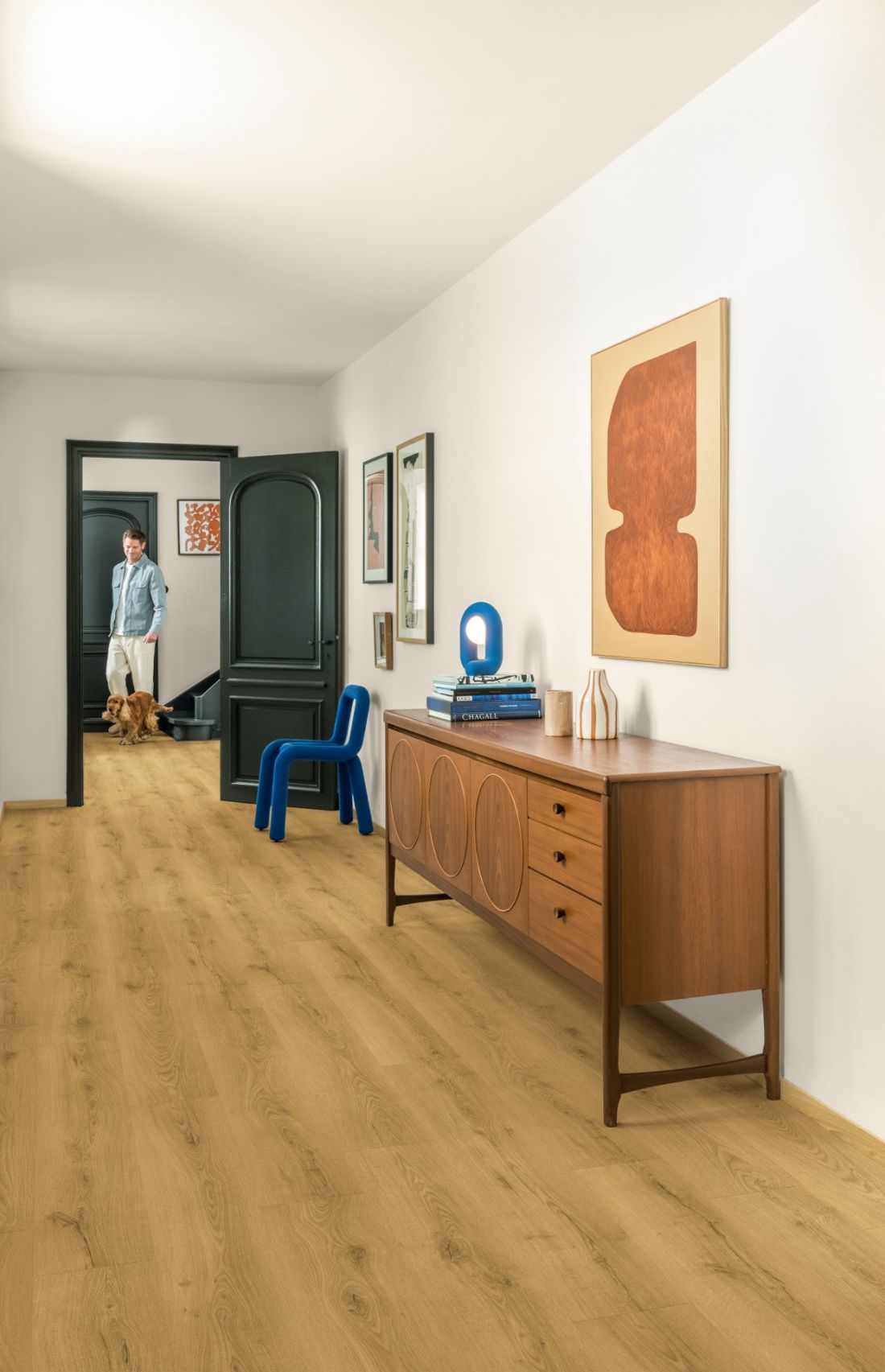
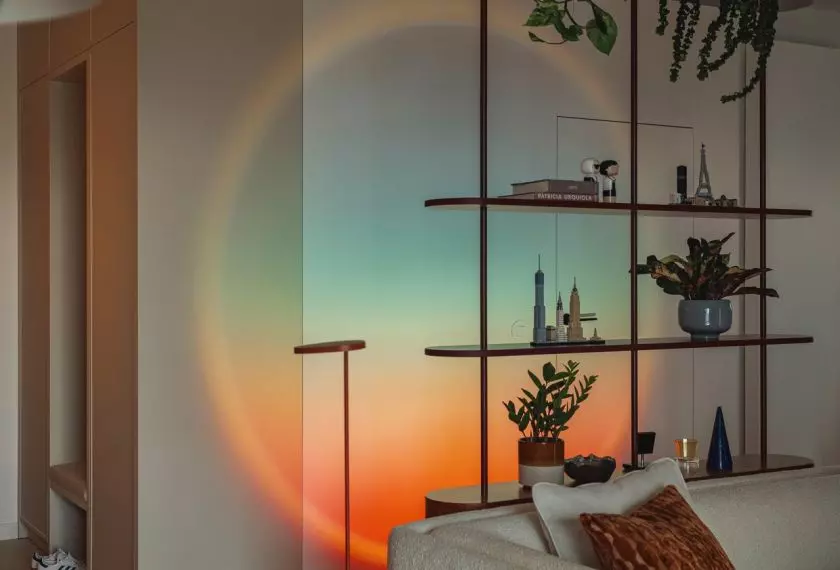
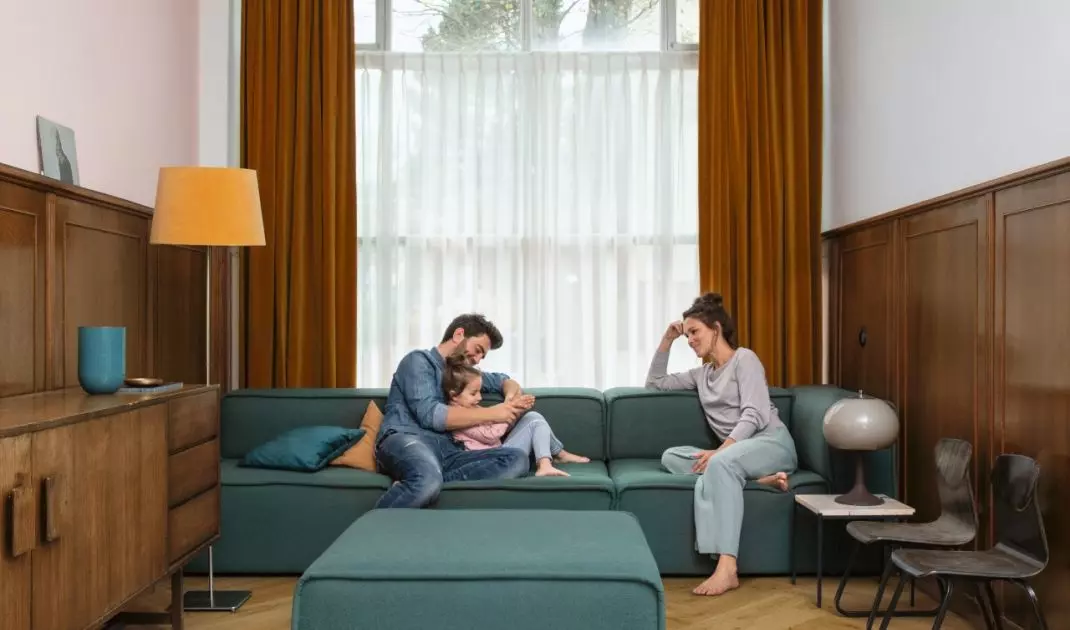
Vintage works best when classic forms meet bolder colors and contemporary details — ©Photo: Quick-Step press materials
A single item can set the tone for the entire design
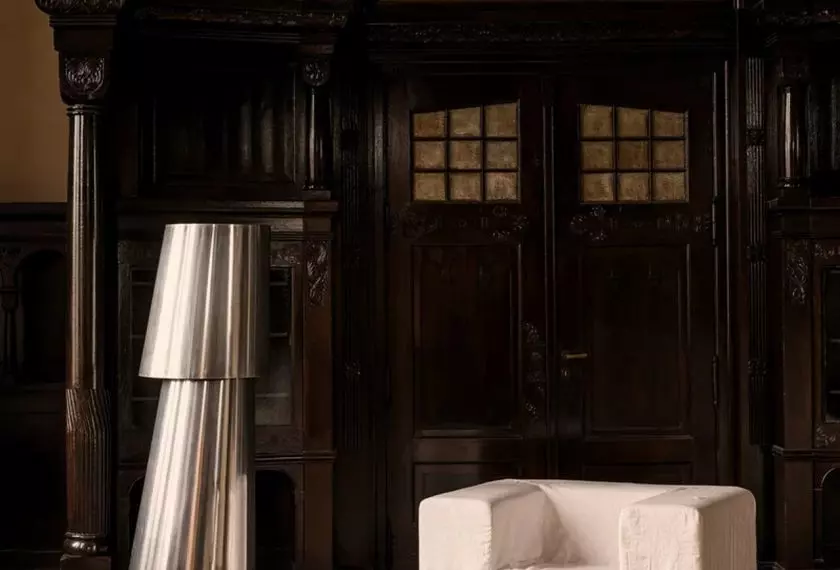
The easiest way to incorporate vintage into your home is by choosing one focal point. It doesn’t have to be large or expensive. Sometimes all it takes is an armchair in a bold color, an old coffee table, a lamp with a chrome base, a poster in a wooden frame, or a ceramic vase with an unusual shape. It’s important not to treat such an item as a standalone decoration. It’s better to let it guide the rest of the design. The color of the armchair can be echoed in a pillow, the wood tone in a mirror frame, and the lamp’s rounded shape in a side table or furniture handles. Thanks to such repetitions, the interior looks cohesive, even if it combines items from different eras. This is a good way to avoid a haphazard look. Vintage style embraces diversity but needs a unifying element. This could be a color, a material, a type of wood, the sheen of metal, or a recurring shape.
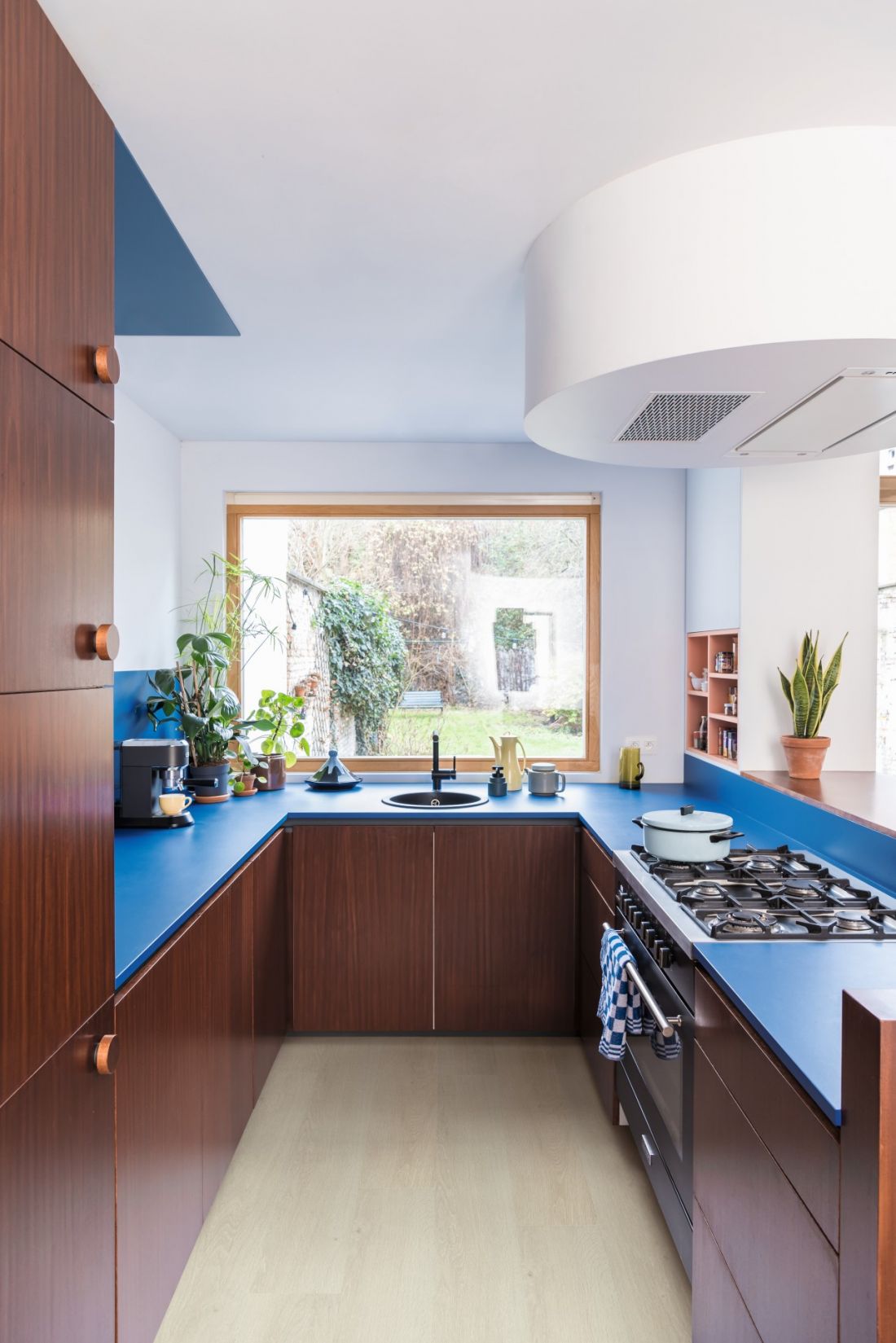
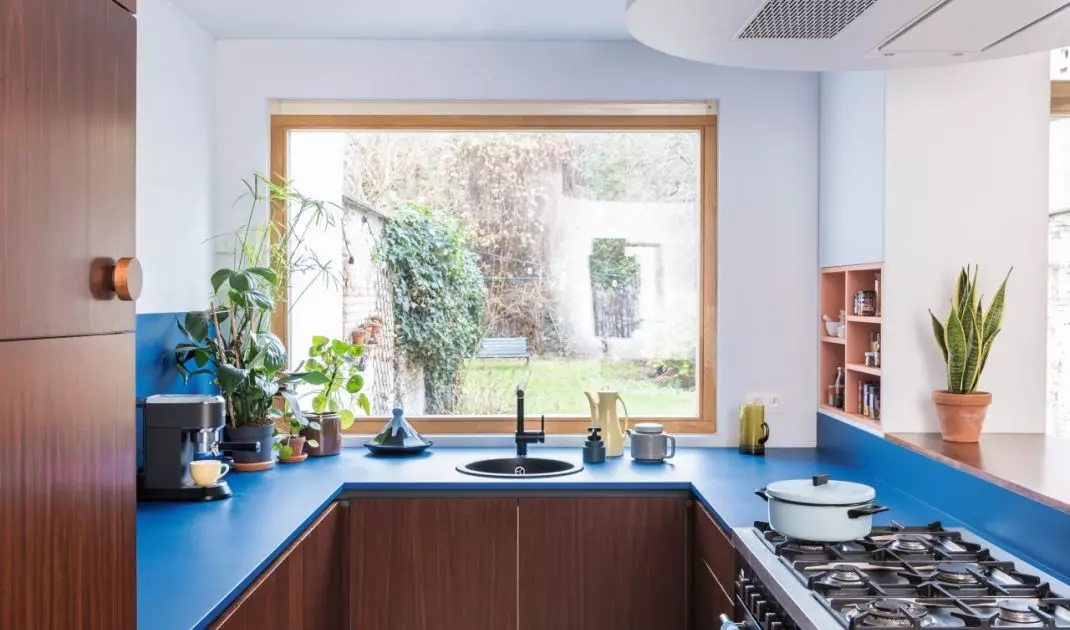
Color doesn’t have to dominate the entire design: sometimes a blue countertop paired with natural wood is enough to give the kitchen character — ©Photo: Quick-Step press materials
colors that warm up a space
Retro really loves color, but that doesn’t have to mean a flashy design. Contemporary vintage interiors often rely on slightly muted hues: olive green, caramel, brown, burgundy, mustard yellow, warm terracotta, or muted pink. They’re bold yet still cozy. It’s safest to introduce them gradually. Instead of painting the entire apartment, you can start with a single wall, curtains, a rug, an armchair, or a lamp. Such accents look great against a neutral background, especially when paired with natural materials: wood, linen, wool, ceramics, or glass. Vintage-style color shouldn’t look random. It’s a good idea to choose two or three shades and repeat them in different places. That way, even bolder colors don’t create chaos but instead set the mood of the interior.
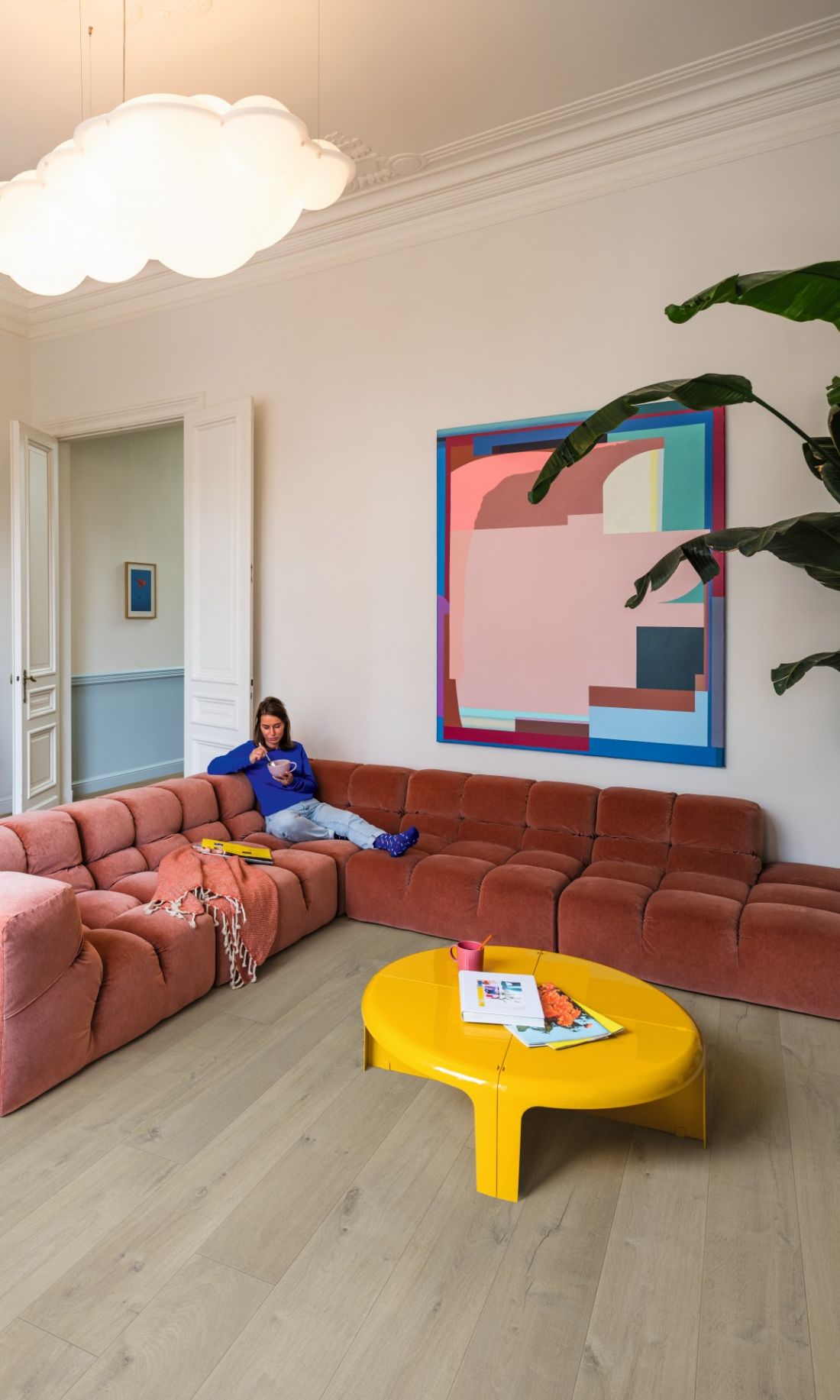
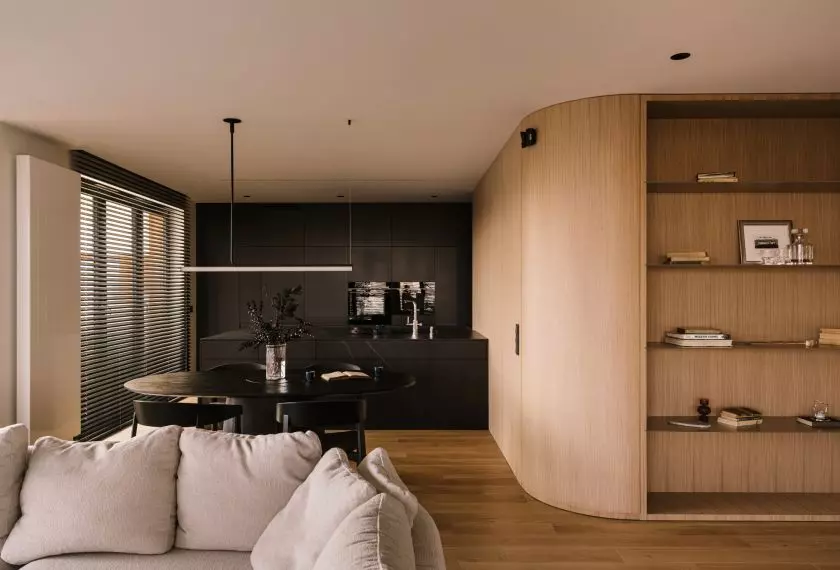
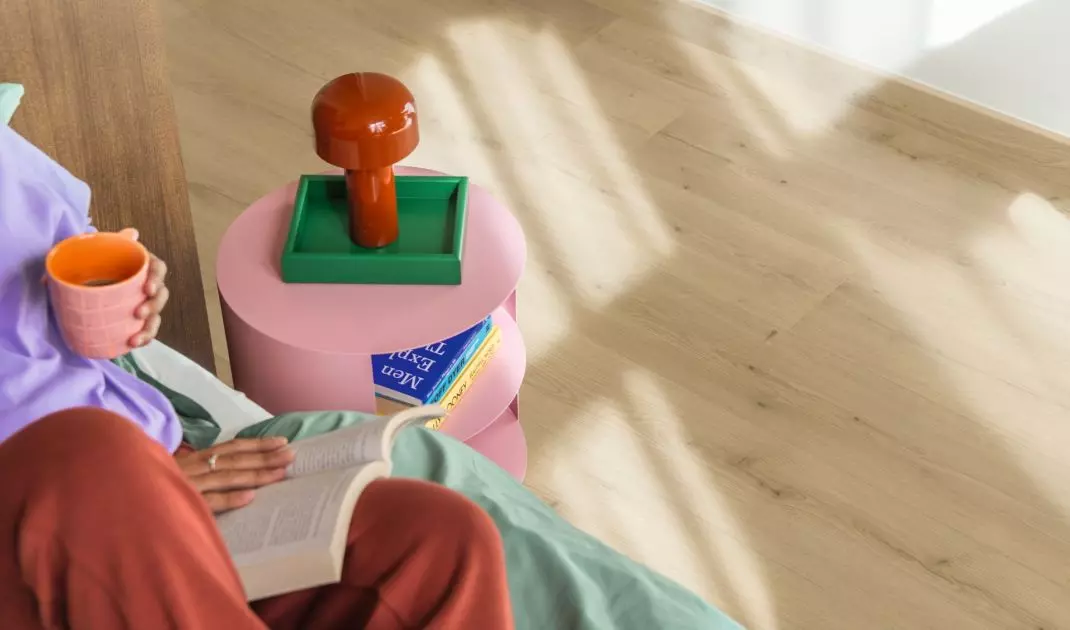
A soft, quilted sofa, light-colored flooring, and graphic accessories demonstrate how textures create a retro vibe in an interior without resorting to literal styling — ©Photo: Quick-Step press materials
textures matter
One reason vintage is making a comeback is a growing weariness with interiors that are too smooth, cold, and predictable. Retro offers the opposite: softness, sheen, roughness, visible wood grain, fabric weave, and rounded edges. Velour adds warmth to the living room. Rattan adds lightness. Frosted glass gently diffuses light. Chrome details introduce a subtle sparkle. Wood, especially with a distinct grain pattern, instantly makes the interior look more natural.
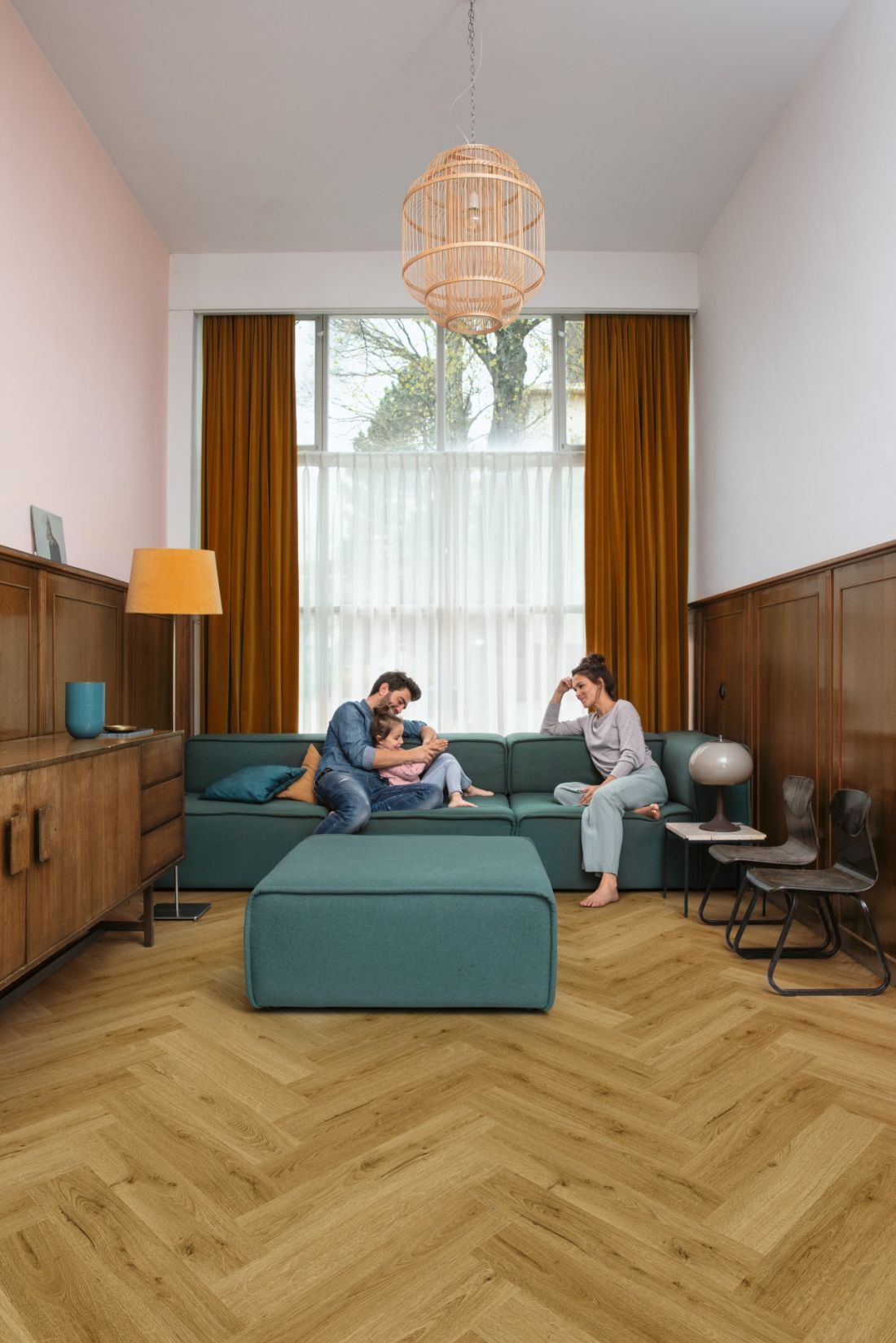
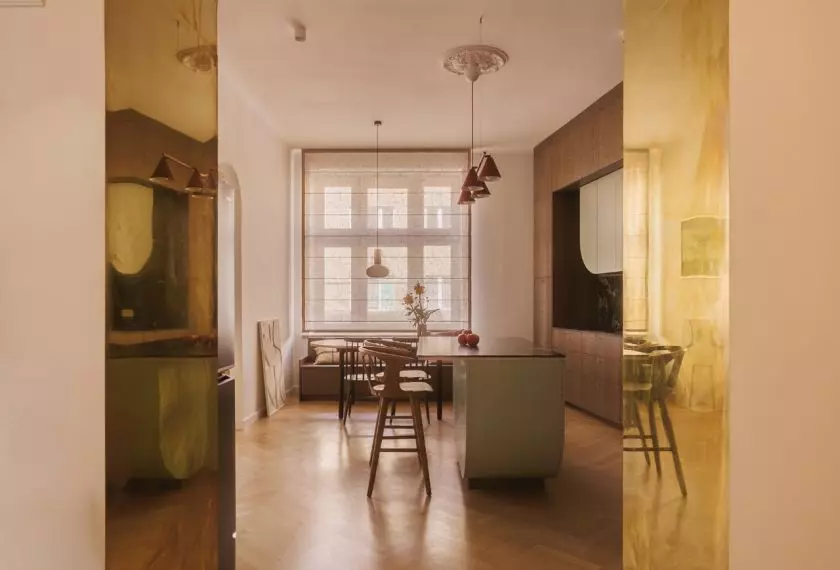
Herringbone flooring also works well in contemporary designs inspired by vintage style — ©Photo: Quick-Step press materials
Herringbone with a modern twist
One of the most recognizable retro motifs is the herringbone pattern. It’s associated with townhouses, old apartments, and interiors that exude elegance without excessive decoration. Today, this pattern is making a comeback in a lighter, more practical version. Herringbone works well when you want to add character to a space without going for an overly stylized look. Simply pair it with simple furniture, neutral walls, and a few bold accessories. In small rooms, it’s best to choose lighter wood tones, which will visually brighten the space. In larger rooms, you can opt for a deeper color and stronger contrast. This design works well not only in the living room. Herringbone flooring also looks great in the bedroom, entryway, an open-concept kitchen, or a home office. Depending on the accessories, it can take on a more classic, minimalist, or retro look.
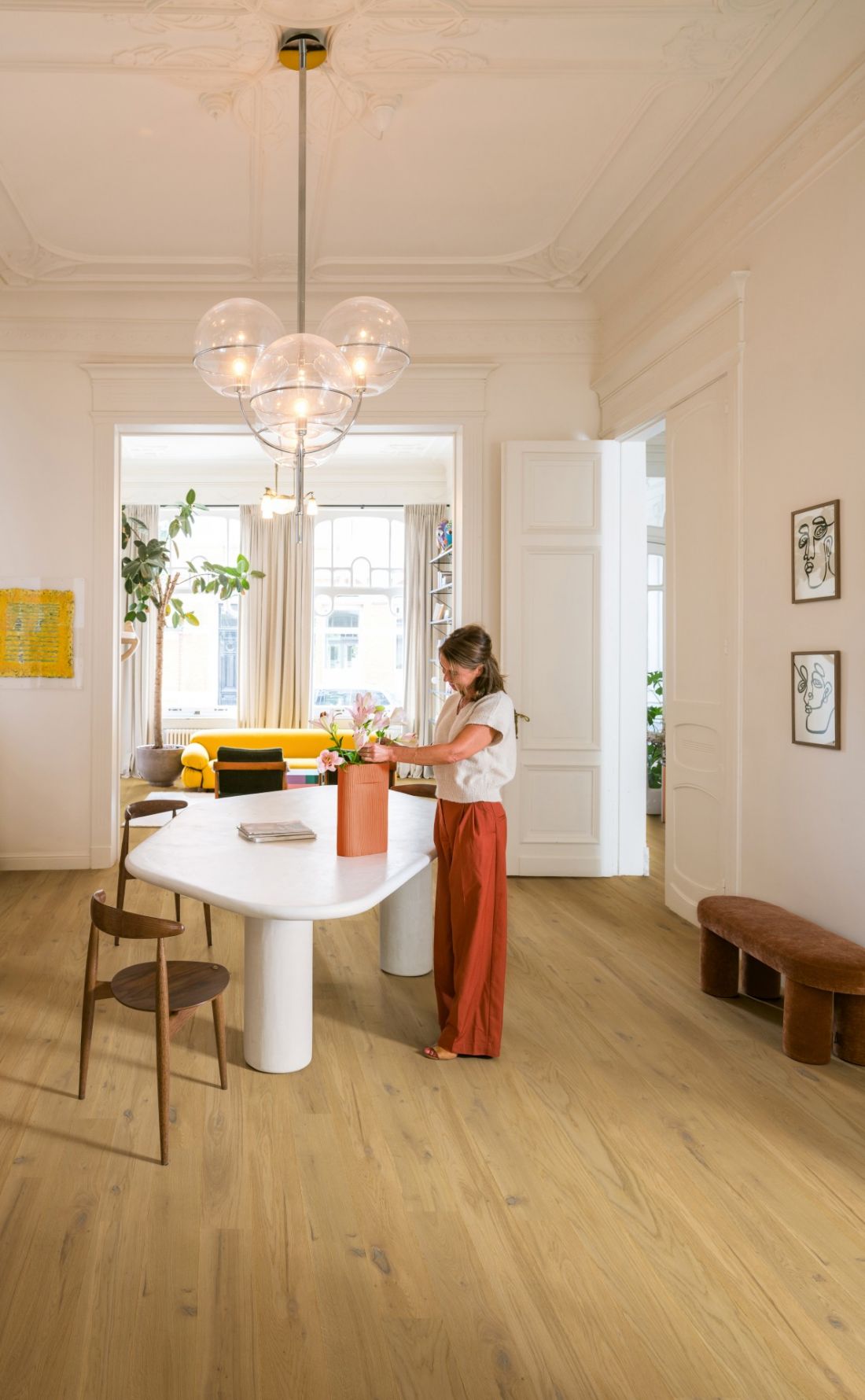
A soft, quilted sofa, light-colored flooring, and graphic accessories demonstrate how textures create a retro vibe in an interior without resorting to literal styling — ©Photo: Quick-Step press materials
An interior with its own story
The most beautiful vintage interiors have an effortless quality to them. They don’t look as though they were decorated in a single day—they’re a little imperfect, but that’s what makes them closer to how we really live. There’s room in them for books, records, mementos, heirlooms, and items bought on a whim. That’s the power of retro: it lets you step away from catalog-perfect designs and create a home that’s more your own—where a single item with a story, a warmer color, an interesting texture, or a classic floor pattern is enough to make the interior truly feel like home.